
Reviewed · WINE TOURS
Austrian Wine Tasting
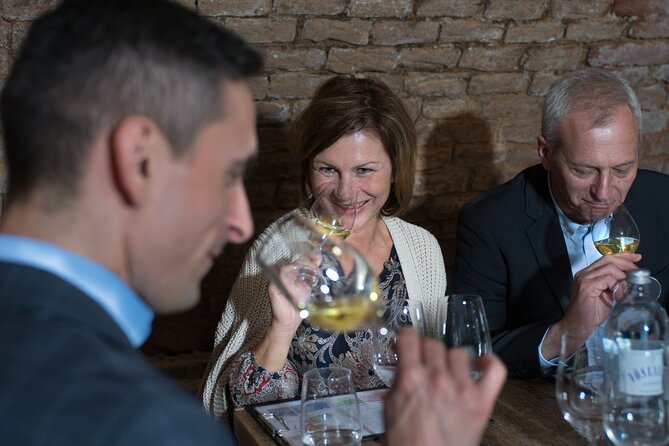
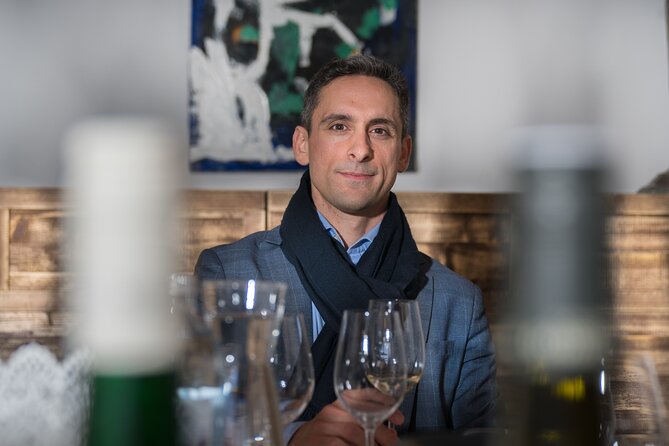
Wine can explain Vienna surprisingly well. In a small tasting room in the city’s 2nd district, sommelier Stylianos Stavridis leads a two-hour introduction to Austrian wines, pairing six pours with local cheese, cured meats, and bread. The session covers grape varieties, wine regions, production methods, and the small details that help you taste with more confidence.
I like the small maximum group of eight, which leaves room for questions and conversation. I also like the clear focus on Austrian bottles rather than a generic international tasting, with past selections including Grüner Veltliner, Sauvignon Blanc, Riesling, Sankt Laurent, and Blaufränkisch.
The main consideration is the food. It is a pleasant cold plate, not a full meal, and one attendee found the serving modest compared with what some photographs suggested. The room may also look more modern than the traditional cellar setting shown in some images, so book this for the wine instruction first and the decor second.
In This Review
- Key Points at a Glance
- What This Vienna Tasting Is Really Like
- Meeting Stylianos in Vienna’s 2nd District
- Six Austrian Wines, Not Just Six Random Pours
- How the Tasting Teaches You to Taste
- Cheese, Cured Meat, and the Limits of the Cold Plate
- Why the Small Group Matters
- What You Learn About Austrian Wine
- The Price: Is $145.18 Worth It?
- Who Should Book This Experience?
- Should You Book the Austrian Wine Tasting?
- FAQ
- Where does the Austrian wine tasting take place?
- How long does the experience last?
- How many Austrian wines are included?
- What food is served?
- Is the tasting offered in English?
- What is the cancellation policy?
Key Points at a Glance
- Six Austrian wines in two hours: Expect a guided tasting that moves through white and red varieties, with the exact bottles changing over time.
- A personal class with Stylianos: His explanations cover tasting technique, Austrian wine law and regions, grape types, and food pairing.
- A small group of up to eight: The format suits questions, note-taking, and easy conversation with the people at your table.
- Cheese, meat, and bread included: The cold plate helps you compare how food changes the taste of each wine.
- A central Vienna meeting point: The experience begins and ends at Hollandstraße 10/1-3 in the 2nd district, near public transportation.
- A good choice for all skill levels: Beginners get a useful foundation, while experienced wine drinkers can explore Austria’s less familiar reds.
What This Vienna Tasting Is Really Like
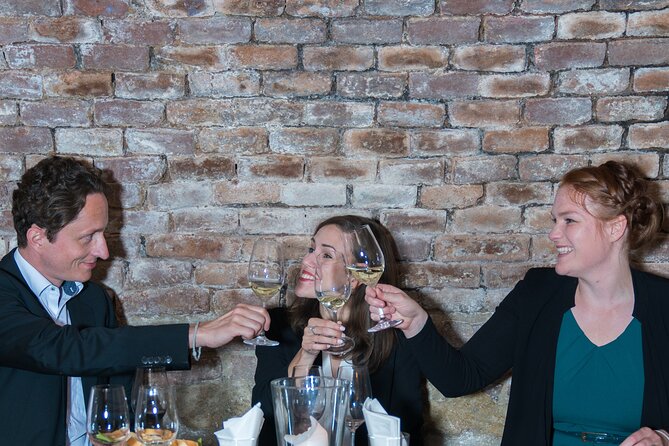
This is not a quick stop where you sip three samples and move on. It is a compact wine class built around six Austrian wines, with Stylianos guiding you through each glass.
The pace gives you time to look at the color, smell the wine, taste it, and discuss what you notice. You do not need to arrive with a polished wine vocabulary. The teaching is designed to help you identify aromas, acidity, body, boldness, and other basic traits without making the process feel stiff.
That makes the experience useful for two kinds of people. If you are new to wine, you get a friendly introduction without having to pretend you know more than you do. If you already drink wine regularly, the Austrian focus gives you a chance to move beyond familiar French, Italian, or California labels.
The session is offered in English. The host’s English and approachable manner have been praised repeatedly, and the format encourages questions rather than a one-way lecture.
More Food and Drink Tours in Vienna
- Vienna: Chocolate Workshop in Chocolate Museum w/ Tasting
★ 4.5 · 1,802 reviews - Vienna for Food Lovers: Cafés, Markets & Austrian Cuisine
★ 5.0 · 1,063 reviews - Wachau Valley Wine Tasting Bike Tour from Vienna
★ 5.0 · 829 reviews
Meeting Stylianos in Vienna’s 2nd District
The meeting point is Wine Tasting Vienna, Hollandstraße 10/1-3, 1020 Vienna. The tasting returns to this same address, so you do not need to coordinate a separate end point or find your way back across the city after drinking.
The location is near public transportation and can also be reached on foot, depending on where you are staying. I would allow a little extra time to find the entrance, especially if you are unfamiliar with Vienna’s numbered districts and building layouts.
The session takes place in a restored traditional Viennese building from the Wilhelminian era. The atmosphere is designed for tasting, with proper stemware and a polished setting. One person found the room more modern than expected, particularly compared with images showing brick and cellar details. That is worth keeping in mind if you are picturing a dark, centuries-old wine cave.
The setting still works well for the purpose. You are indoors, seated, and able to concentrate on the wine rather than rushing between sights. It feels closer to a small private class than to a crowded bar tasting.
Six Austrian Wines, Not Just Six Random Pours
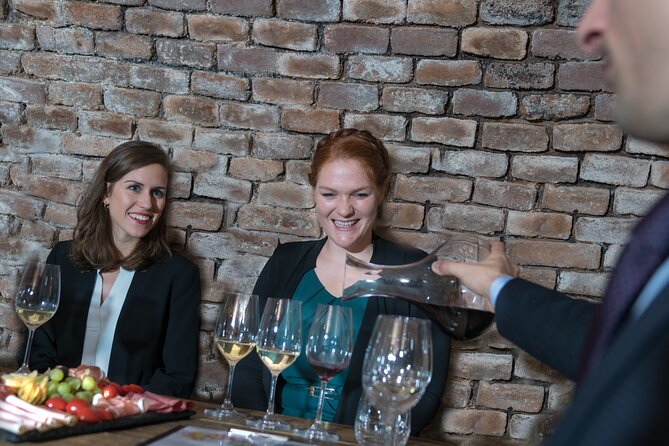
The exact lineup changes, which is a benefit if you are staying in Vienna for more than one visit or plan to return. Past tastings have included Grüner Veltliner, Sauvignon Blanc, and Riesling from Austrian producers, followed by red wines such as Sankt Laurent and Blaufränkisch.
Grüner Veltliner is an important starting point because it is Austria’s best-known grape and can show a wide range of styles. It may be crisp and light, or fuller and more complex depending on where and how it is made. A guided tasting helps you notice those differences instead of treating every bottle with the same broad label.
Sauvignon Blanc gives you a useful comparison. Many people know the grape from New Zealand or France, so an Austrian example can show how place and production affect the final wine.
Riesling adds another white wine reference point. Tasting it beside Grüner Veltliner lets you compare acidity, aroma, texture, and finish in a direct way. That side-by-side approach is more helpful than hearing a list of grape names.
The red wines can provide the surprise. Sankt Laurent and Blaufränkisch are less familiar to many international visitors, yet they can be expressive, structured, and food-friendly. One tasting attendee expected the whites to be the main event and found the Austrian reds to be the unexpected highlight.
Do not assume that every session will contain these exact bottles. Stylianos changes the wines to keep the program fresh, but the aim remains a broad look at Austrian styles and regions.
How the Tasting Teaches You to Taste
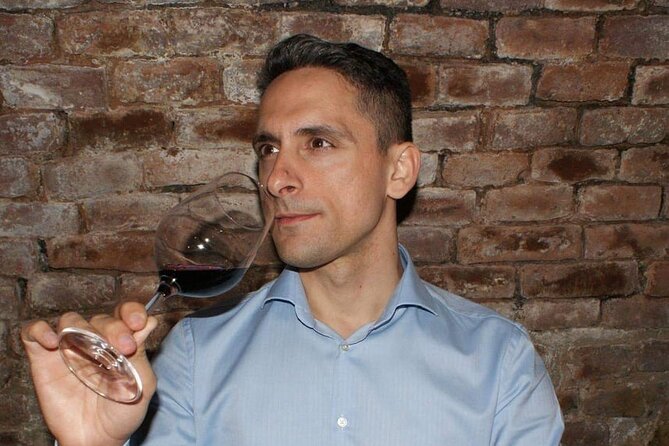
The strongest part of this experience is the method. Each wine is presented and discussed before moving to the next, so you learn how to approach the glass rather than simply hearing a description after the fact.
You may be guided to consider:
- The aromas you notice before taking a sip
- The level and shape of the acidity
- The wine’s body and texture
- How bold or restrained it feels
- How the finish changes after swallowing
- How food affects the wine’s flavor
That structure is valuable because wine tasting can seem vague from the outside. Terms such as acidity or body become easier to understand when you compare six different wines in one sitting.
An educational booklet is also provided. It gives you something to refer to during the tasting and take away afterward. You can take notes and pictures, which helps if you want to remember a bottle for a later dinner or shop visit.
The class does not appear to be aimed at wine professionals. It is more practical than technical, with enough detail for serious wine fans but a relaxed tone for beginners. I would expect the most benefit if you ask questions and taste actively rather than simply waiting for the next pour.
More wine tastings:
- Vienna: Swarovski House Tour with Champagne and Gift
★ 4.7 · 787 reviews - Countryside Half Day Wine Tour near Vienna
★ 5.0 · 545 reviews - Wachau Valley Small-Group Tour and Wine Tasting from Vienna
★ 5.0 · 540 reviews - From Vienna: Half-day Countryside Wine Tour with Meal
★ 4.7 · 526 reviews
Cheese, Cured Meat, and the Limits of the Cold Plate
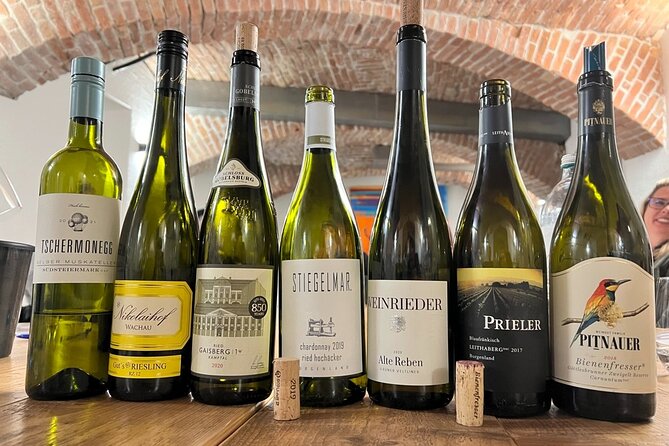
The food is a simple cold plate of locally sourced cheese, cured meats, and bread. The pairings are not an afterthought. Stylianos suggests which cheese or meat works best with each wine, showing how salt, fat, and texture can shift what you taste in the glass.
This is one of the better reasons to choose a guided tasting over drinking alone. You may understand a wine’s acidity on its own, then notice how it cuts through cheese or balances cured meat. That small exercise can improve your choices at Viennese restaurants and wine shops later in your trip.
Keep your expectations in check. The food is a snack, not dinner. One serving was described as a few strips of cheese and several slices of meat, though the ingredients were considered good and well matched. Other descriptions call the cheese selection generous and delicious, so portions may vary with the session.
If you arrive hungry, eat beforehand. The included bread and cold plate are enough to support the tasting, but not enough to replace a meal. The price includes still bottled water as well, which is a welcome practical touch during a two-hour alcohol tasting.
Why the Small Group Matters
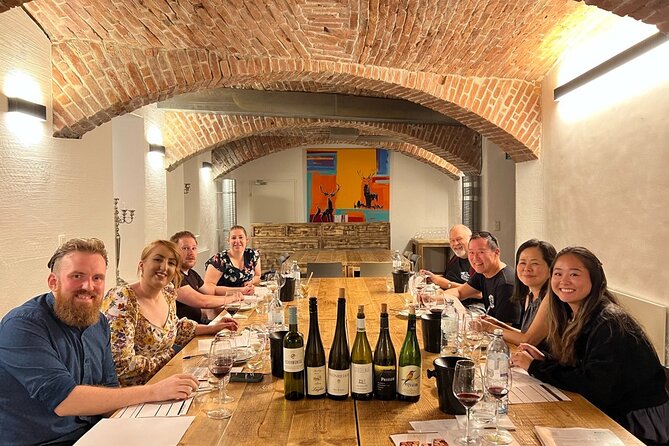
The maximum group size is eight. That number creates a useful middle ground: you get the social energy of a shared experience, but the host can still respond to individual questions.
A solo participant may find the format especially comfortable. The tasting can run with just one person if no one else has booked, according to one account, turning the class into a private lesson. At the other end, a larger group can bring more conversation and comparison, and one repeat participant enjoyed joining a bigger session with people who later continued to a nearby wine bar.
For couples, this is an easy shared activity that does not require one person to be the wine expert. For friends, it gives the evening a clear focus. For solo visitors, it offers a natural way to meet people without the forced feel of a group sightseeing tour.
The group size also affects how much you can learn. In a large commercial tasting, questions may be limited and the host has to keep the schedule moving. Here, you have a better chance to ask about a grape, region, pairing, or winemaking method that catches your attention.
What You Learn About Austrian Wine
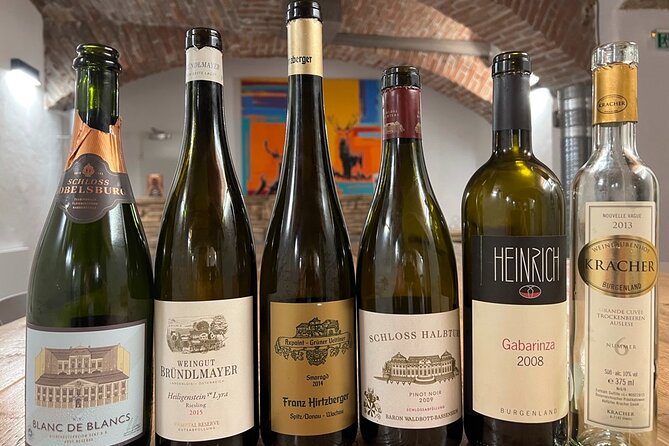
The talk covers Austria’s wine-producing regions, local grape varieties, production methods, wine history, and the way Austria classifies wine. That last topic is particularly useful because European wine labels can be confusing when you are used to New World labeling based mainly on grape variety.
You also get a sense of Austrian wine culture as a whole. The tasting is not only about identifying aromas. It connects the bottle to the place, the grower, the methods used in the vineyard and cellar, and the way the wine is served with food.
Stylianos brings wider wine knowledge to the session, too. Questions about wine traditions in other countries can fit into the conversation, and the experience provider can also host tastings focused on wines from other places. The main subject here, though, is Austria, so I would choose it if you want local context rather than a broad world wine survey.
The information is dense, but the format remains conversational. That balance matters. You can learn a great deal in two hours without feeling as if you have signed up for an academic seminar.
The Price: Is $145.18 Worth It?
At $145.18 per person, this is not a bargain tasting in the casual sense. You are paying for six alcoholic beverages, bottled water, cheese, cured meat, bread, a small group, a dedicated venue, and two hours with a trained wine professional.
The value depends on what you want from the activity. If your goal is simply to sample Austrian wine at the lowest possible price, you could spend less at a wine bar. You would not get the same level of explanation, comparison, or guided pairing.
I think the price makes more sense for someone who treats the tasting as both a meal-adjacent activity and a short class. The instruction can help you order more confidently for the rest of your trip, understand Austrian labels, and recognize grapes you may not have encountered before.
The price also buys convenience. You do not need to plan a day trip to the vineyards outside Vienna to get a structured introduction to the country’s wine. You can fit the session into a city stay, with the meeting point near public transportation and the activity ending where it began.
Still, I would not book it expecting a full dinner or a lavish cellar tour. The value is in the host’s teaching, the range of wines, and the chance to ask questions.
Who Should Book This Experience?
I would recommend it most strongly to:
- Wine beginners who want a clear, friendly introduction
- Experienced drinkers curious about Austrian grapes and regions
- Couples seeking a relaxed indoor activity in Vienna
- Solo visitors who enjoy small-group classes
- People who like learning about a place through food and drink
- Anyone planning to visit Austrian wine shops or restaurants afterward
It is less suitable if you want vineyard views, a countryside excursion, or a full meal. It also may not satisfy someone who prefers a fast, informal tasting with little discussion.
The experience works particularly well early in a Vienna visit. After learning the basics, you can spot Grüner Veltliner on a menu, ask about Blaufränkisch, or make sense of Austrian wine classifications when buying a bottle.
You can book with a mobile ticket, and confirmation is provided at the time of booking. Most people can participate, but remember that six pours over two hours still call for sensible planning. Public transportation is the easiest way to get to and from the tasting.
Free cancellation is available up to 24 hours before the start time for a full refund. Changes or cancellations inside that window are not accepted or refunded.
Should You Book the Austrian Wine Tasting?
Book it if you want to understand Austrian wine, not merely drink it. The strongest reasons are Stylianos’s clear teaching, the small group, the chance to compare six styles, and the food pairings that make the lesson practical.
I would book this for a rainy afternoon, an early evening before dinner, or a mid-trip pause from museums and palaces. I would skip it if your main goal is a substantial meal, a traditional underground cellar, or a countryside winery visit.
For the right audience, this is a polished and friendly way to get oriented to Austrian wine without leaving Vienna. Go in expecting a guided class with good snacks, not a feast, and the experience should deliver strong value.
FAQ
Where does the Austrian wine tasting take place?
It begins and ends at Wine Tasting Vienna, Hollandstraße 10/1-3, 1020 Vienna, Austria, in Vienna’s 2nd district.
How long does the experience last?
The tasting lasts approximately two hours.
How many Austrian wines are included?
Six Austrian wines are included in the tasting. The exact selection can change over time.
What food is served?
The included cold plate contains locally sourced cheese, cured meats, and bread. Still bottled water is also provided.
Is the tasting offered in English?
Yes. The session is conducted in English by a wine professional.
What is the cancellation policy?
You can cancel at least 24 hours before the start time for a full refund. Cancellations or changes made less than 24 hours before the experience are not accepted or refunded.
More Food and Drink Tours
- Vienna: Gerstner KuK Hofzuckerbäcker Baking Show & Tasting
★ 4.8 · 823 reviews - Authentic Vienna Food Tour inc. lunch, street food, 3 drinks
★ 5.0 · 749 reviews - From Vienna: Bratislava City Tour with Food Options
★ 4.0 · 451 reviews - Vienna: Wine Tasting Experience in a Private Wine Cellar
★ 4.8 · 413 reviews
Just added around Vienna
- Mobile puzzle rally tour at the Vienna Central Cemetery★ 4.5 · 3 reviews
- RAXI (E-Rickschaw) big private Vienna tour★ 4.5 · 3 reviews
- 8 days European Highlights PRIVATE TOUR from Budapest including Budapest Vienna Prague and Bratislava★ 5.0 · 3 reviews
- Private Transfer from Vienna to Prague with 1 hour Stop in Kutna Hora★ 4.5 · 3 reviews
- Palais Lobkowitz Audio Guide Tour★ 4.0 · 3 reviews
- Private Tour from Vienna to Melk and Dürnstein★ 4.5 · 3 reviews
- Vienna: Designer Fashion Time Capsule Experience★ 5.0 · 3 reviews
- Private day trip from Munich to Eagle’s Nest & Hallstatt★ 4.7 · 3 reviews
Wine Tours, compared.

Wachau Valley Wine Tasting Bike Tour from Vienna
Read our review →
Wachau Valley Small-Group Tour and Wine Tasting from Vienna
Read our review →
Grape Grazing: Wachau Valley Winery Biking Tour
Read our review →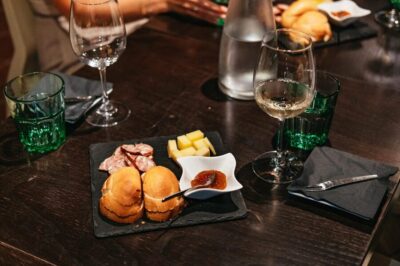
Wine Tasting Experience in a Private Wine Cellar
Read our review →
Browse the lists this tour appears in