
Reviewed · WACHAU VALLEY & DANUBE CRUISES
Vienna: 3.5-Hour Grand Danube River Cruise
See Vienna from its working river. This 3.5-hour cruise links the Danube and Danube Canal, giving you a relaxed view of green Vienna, modern riverfront districts, and central landmarks. I like the easy pace and the chance to pass through two lock systems, but the route can feel slow when the ship waits for bridges or locks.
I also like the choice of indoor comfort or open-air viewing, along with the onboard restaurant serving Viennese food and drinks. The main drawback is limited commentary, so you may spend much of the trip watching scenery without much explanation of what you are seeing.
In This Review
- Key points to know before boarding
- Starting at Schwedenplatz beside the Urania
- The green route through Prater and toward Freudenau
- Marina Wien, Danube Island, and Vienna’s modern side
- The Nussdorf locks and the return through the Danube Canal
- MS Wien, MS Vindobona, and the onboard atmosphere
- Is $51 good value for 3.5 hours?
- What the commentary does, and does not, provide
- Who will enjoy this Vienna river cruise?
- Practical tips for getting more from the 3.5 hours
- Should you book the Grand Danube River Cruise?
- FAQ
- Where does the Grand Danube River Cruise start?
- Where does the cruise end?
- How long is the cruise?
- What languages are available?
- Is food included in the ticket?
- Which ships operate the cruise?
- Is the cruise wheelchair accessible?
- Can I cancel the booking?
Key points to know before boarding
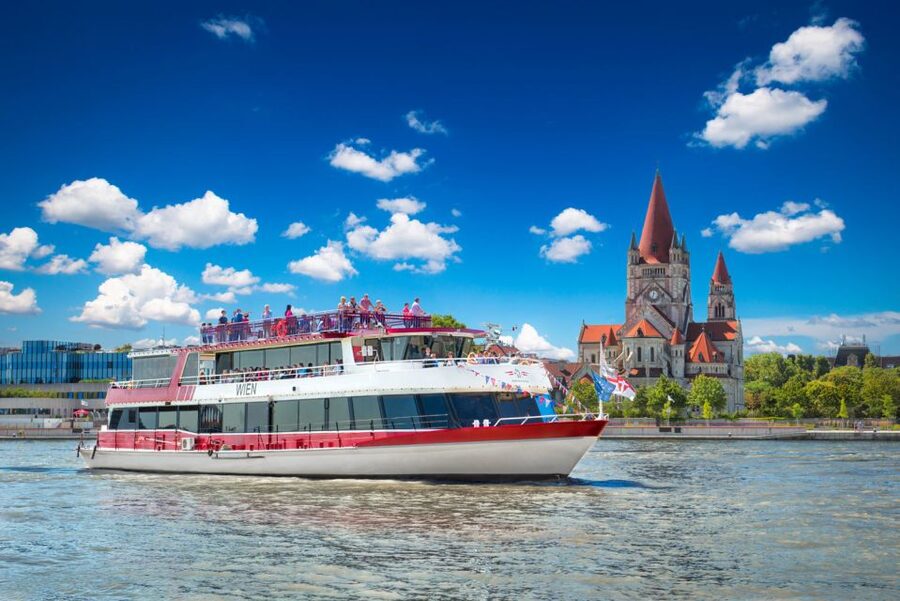
- Two river worlds in one trip: The cruise covers the Danube and Danube Canal, moving from wooded Prater areas to Vienna’s modern skyline and central architecture.
- A Hundertwasser-designed ship: MS Vindobona was given its colorful look by artist Friedensreich Hundertwasser and is an attraction in its own right.
- Lock systems are part of the show: The Freudenau and Nussdorf lock areas add a bit of working-river drama, though they also take time.
- A relaxed afternoon or morning: At 3.5 hours, this is best for slowing down rather than packing in a long list of major sights.
- Food is available, not included: You can order Viennese dishes, snacks, and drinks onboard, with card payment available.
- Simple central departure: The ship leaves from the DDSG Blue Danube ticket office at Schiffstation Wien City beside Schwedenplatz and returns there.
Starting at Schwedenplatz beside the Urania
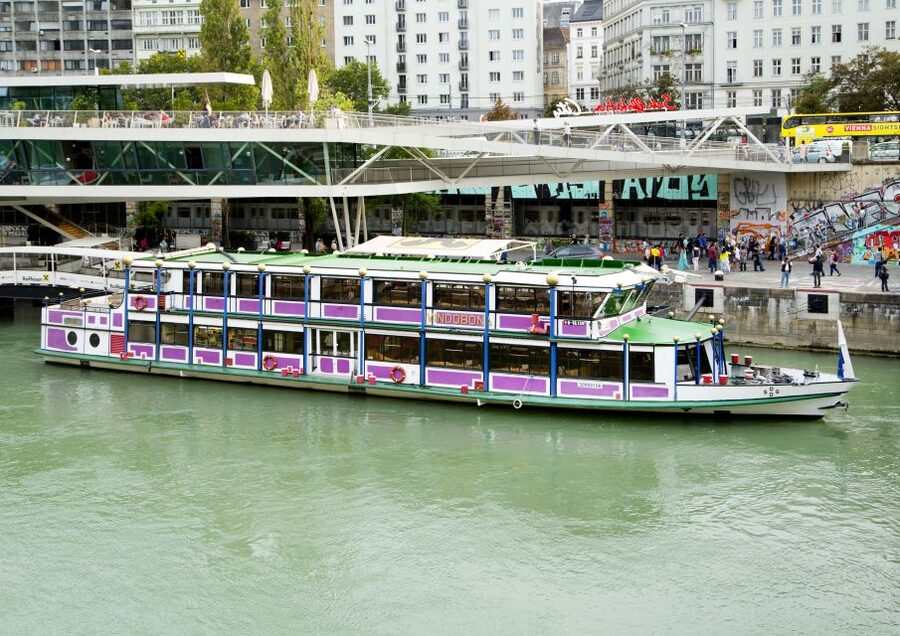
The cruise begins at Schiffstation Wien City, the ship station at Schwedenplatz. This is a useful central starting point, especially if you are already exploring Vienna’s Innere Stadt, the Danube Canal, or the Urania observatory.
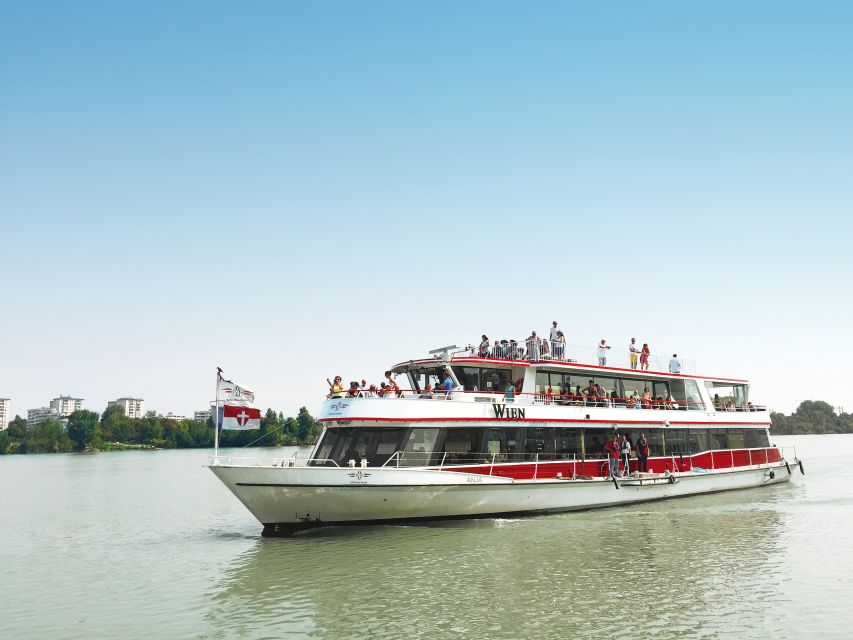
You board either MS Wien or MS Vindobona. The second vessel is the more visually memorable of the two. Friedensreich Hundertwasser designed its distinctive colors and shapes, making the ship part of Vienna’s unusual architectural story before it even leaves the dock.
I would arrive ready for a slow change of pace. This is not a fast sightseeing boat that races from landmark to landmark. The appeal is the long, calm view of the city, with time to sit, eat, take pictures, and watch Vienna shift from central buildings to broad river districts.
The tour starts by passing the Urania observatory. That building is easy to recognize and gives you an early orientation point. From there, the route moves into a less polished and more open side of Vienna, where the river becomes the main subject.
More Boat Trips in Vienna
- Vienna: City Cruise with Optional Lunch
★ 3.4 · 3,982 reviews - Vienna: City Cruise
★ 3.3 · 2,978 reviews - Vienna: 3-Course Evening Dinner Cruise
★ 3.9 · 1,655 reviews
The green route through Prater and toward Freudenau
The first major section is often described as green Vienna. The ship follows the Danube toward the wooded Prater area, one of the city’s large open spaces. You will see more trees and river margins here than grand palace facades.
That change matters. Vienna is often sold through imperial architecture, concert halls, coffeehouses, and museums. This cruise shows you another side: a city with wide waterways, flood-control areas, wooded stretches, and working transport infrastructure.
The views are pleasant rather than packed with famous monuments. If you need a landmark every few minutes, this section may feel thin. If you want a quiet break from museums and crowded streets, it does its job well.
The ship continues downstream toward the Freudenau lock. Passing through a lock is one of the most distinctive parts of the outing. The ship enters a controlled section of water, waits as the level changes, and then continues along the river.
The lock can also explain why the trip feels leisurely. A fair amount of time may go into the lock process and waiting for bridges or other river traffic. I would not treat this as wasted time, but you should know that the full 3.5 hours is not spent moving past new sights.
After Freudenau, the boat reaches the Marina Wien station. The route then follows the shores of Danube Island. This long island is a major part of Vienna’s modern river system, used for recreation and flood protection. From the water, you get a broad view of the island and the city’s river planning rather than a close-up look at individual attractions.
Marina Wien, Danube Island, and Vienna’s modern side
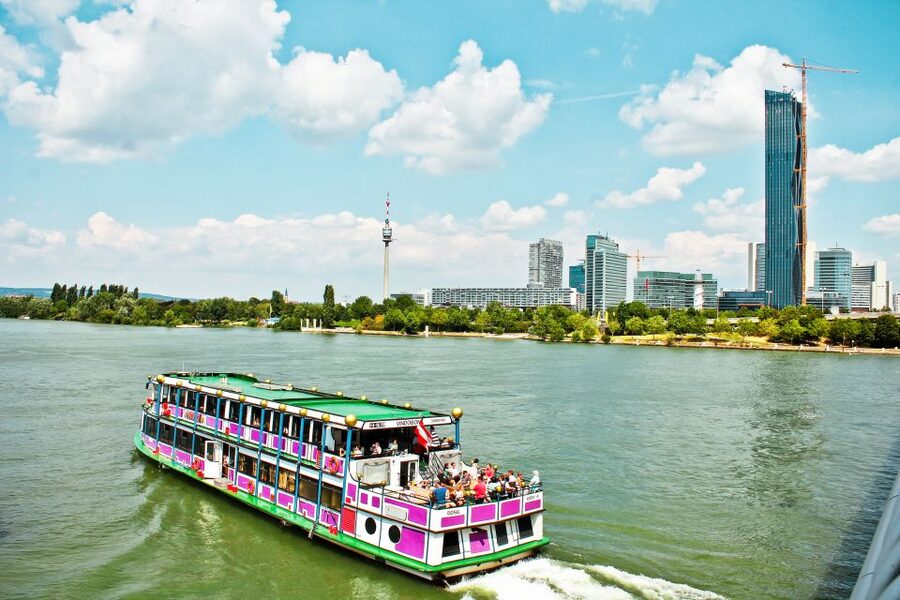
The next section brings a sharper change in scenery. You pass a grain silo that has been converted into a hotel, along with a stadium. These are the sorts of details that make the cruise different from a standard city bus loop. You are seeing structures shaped by industry, sports, housing, and river commerce.
The ship continues to the Reichsbrücke station. From the Marina Wien or Reichsbrücke area, the cruise turns toward what the route presents as modern Vienna. Here, the skyline becomes more urban and more vertical.
Look for the Danube plateau skyline, the Danube Tower, and the Millennium Tower. These sights help explain the part of Vienna that grew beyond the old center. The city is not only baroque streets and nineteenth-century ring-road buildings. Along the Danube, you see offices, towers, large-scale infrastructure, and newer development.
This is one of the best reasons to take the boat instead of repeating a walk through the center. The river gives you distance. You can see how buildings relate to one another, something that is harder to grasp from street level.
Still, keep your expectations in check. The cruise does not provide a stop for visiting the Danube Tower, Millennium Tower, the stadium, or the converted silo hotel. You see them from the ship, so this is a visual overview, not a sightseeing tour with visits inside.
The Nussdorf locks and the return through the Danube Canal
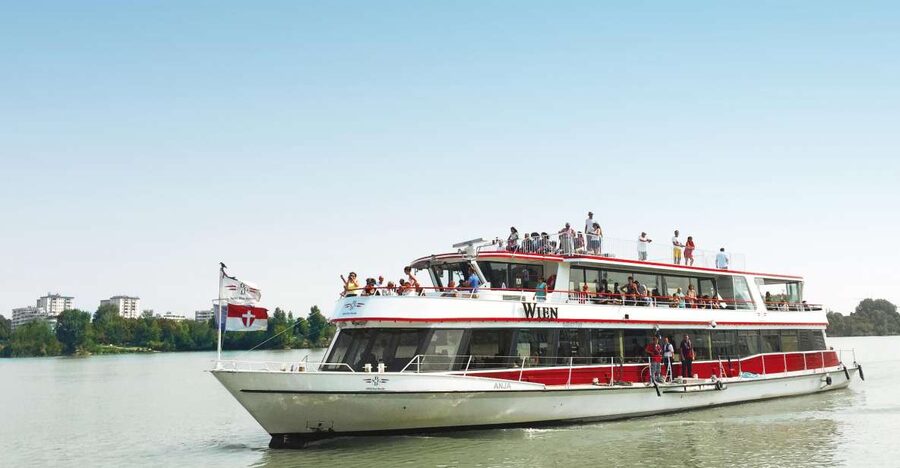
The route eventually reaches the Nussdorf lock system. Like Freudenau, this is a working part of the journey and one of the most interesting technical moments onboard.
The lock passage is also where the schedule can stretch. If you enjoy watching the ship rise or lower and seeing how river traffic is managed, the pause adds character. If your ideal cruise means constant forward movement, you may find the waiting repetitive.
After Nussdorf, the boat enters the Danube Canal. This brings you closer to central Vienna and changes the mood again. The canal offers more city architecture and less of the broad, open river feeling.
This part can feel like a moving architectural sampler. You pass the Hundertwasser District Heating Plant in Spittelau, a highly unusual industrial building with colorful, irregular design. It is a good reminder that Vienna’s architecture is not confined to palaces and formal apartment blocks.
The route also passes the Roßau Barracks, Ringturm, and the Urania observatory. Some sights are easier to identify than others, and the amount of spoken information may vary. The sound system reaches both indoor and outdoor areas, but the commentary is not always detailed or continuous.
That is an important practical point. I would use the cruise mainly for atmosphere and broad city views, not as your only source of information about Vienna. If you want a constant stream of facts, names, and dates, you may find the narration too light.
The ship returns to Schwedenplatz, completing the loop. Since the start and finish are at the same station, you do not need to arrange a separate ride back across the city.
More Wachau and Danube cruises:
- Vienna: Wachau Valley, Melk Abbey Tour with Danube Boat Trip
★ 4.5 · 1,413 reviews - Vienna: Danube River Cruise w/ optional Viennese Specialties
★ 3.0 · 1,017 reviews - Wachau Valley Wine Tasting Bike Tour from Vienna
★ 5.0 · 829 reviews - Wachau Valley Small-Group Tour and Wine Tasting from Vienna
★ 5.0 · 540 reviews
MS Wien, MS Vindobona, and the onboard atmosphere
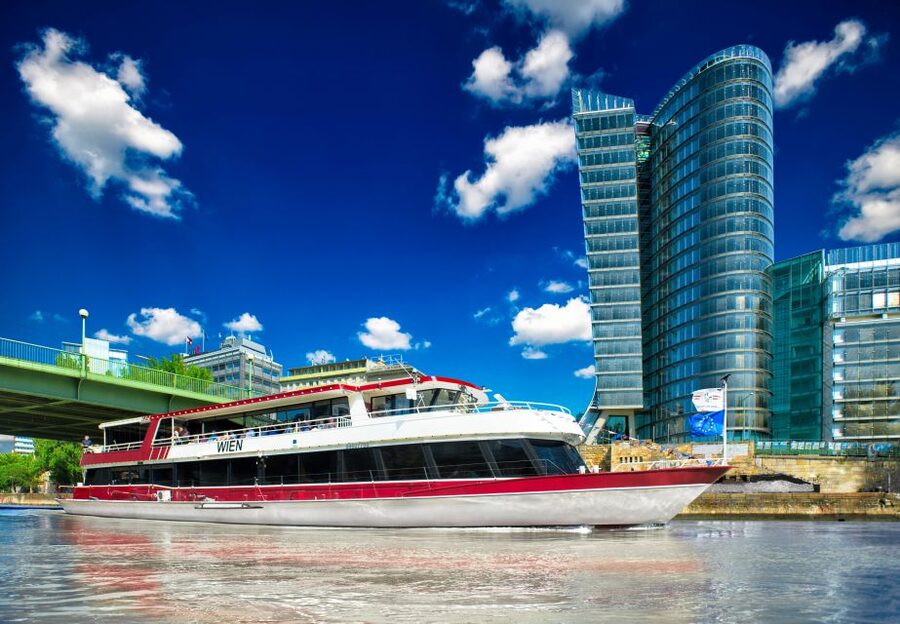
The ships provide a comfortable base for a long ride. MS Vindobona is the more memorable choice visually because of Hundertwasser’s design, though the actual vessel assigned to your departure is not guaranteed in the information provided.
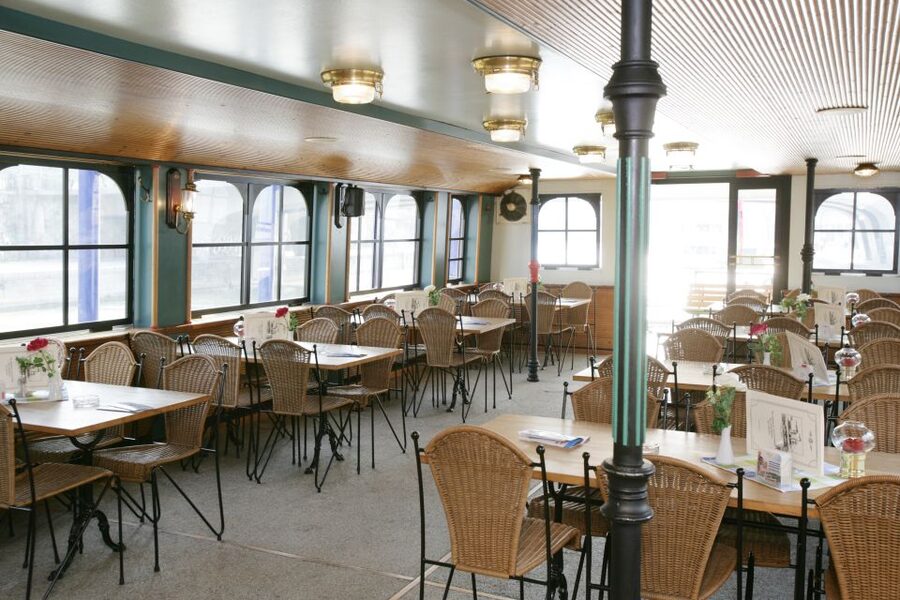
You can move between indoor and outdoor areas for different views. Indoor seating is useful in cool or cloudy weather, and one sailing was described as warm inside despite poor weather. Outdoor seating gives you clearer pictures and a stronger sense of the river, but commentary can be harder to follow there.
The onboard restaurants are an important part of the experience. Food and drinks are not included in the $51 price, but you can order Viennese dishes and beverages during the journey. The service has been praised for being quick and attentive, and card payment is accepted.
I would consider ordering something if you want the cruise to feel like a full outing rather than transport with a view. A table, a drink, and the slow passage through the locks fit the mood well. If you are focused on saving money, eat before boarding and treat the ship’s restaurant as optional.
The food is reasonably priced according to the available information, but the value of the cruise does not depend on buying a meal. You are paying chiefly for the route, the time on the water, and the unusual view of Vienna.
Is $51 good value for 3.5 hours?
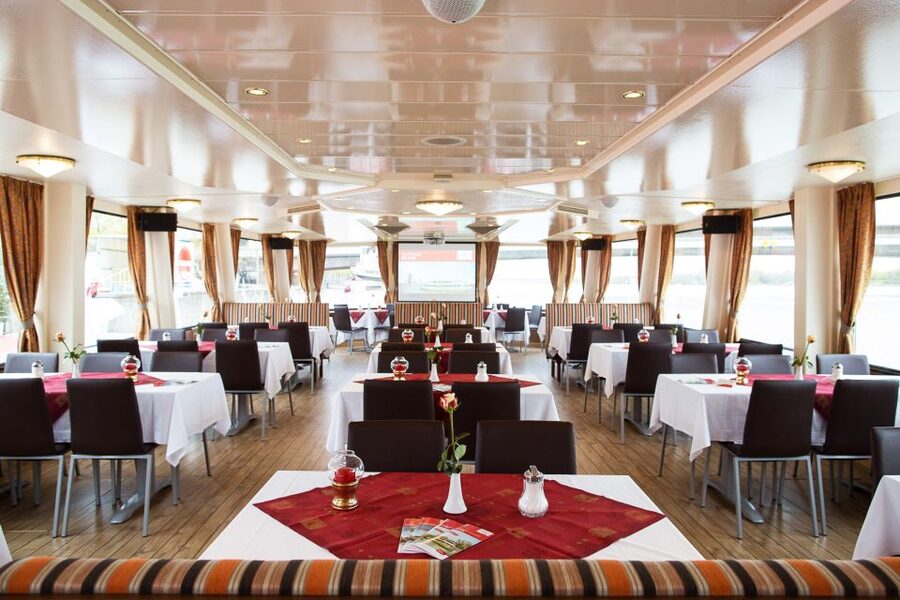
At $51 per person, this is not a bargain boat ride. The price makes more sense if you value a long, organized outing with a central departure, indoor seating, onboard service, and a route that combines the Danube with the canal.
I see the strongest value in the length. Many city cruises are short loops that show you a few waterfront buildings and return to the dock. This trip gives you enough time to reach the greener river sections, pass the locks, view modern Vienna, and return through the canal.
The value is weaker if you want close views of Vienna’s famous central sights. The boat does not replace walking through the old center, visiting a museum, touring a palace, or taking a dedicated architecture tour. Much of the route is outside the postcard core.
The best comparison is with an afternoon activity. You get a seat, a changing view, a restaurant, and a simple way to rest your feet. On a sunny day, the open deck can make the price feel fair. On a gray day, the warm interior and food service help protect the experience, though the scenery may feel less dramatic.
Free cancellation up to 24 hours before departure and reserve-now, pay-later booking make it easier to fit the cruise into a changing Vienna schedule. Starting times depend on availability, so you should check the departure you want rather than assume a fixed daily timetable.
What the commentary does, and does not, provide
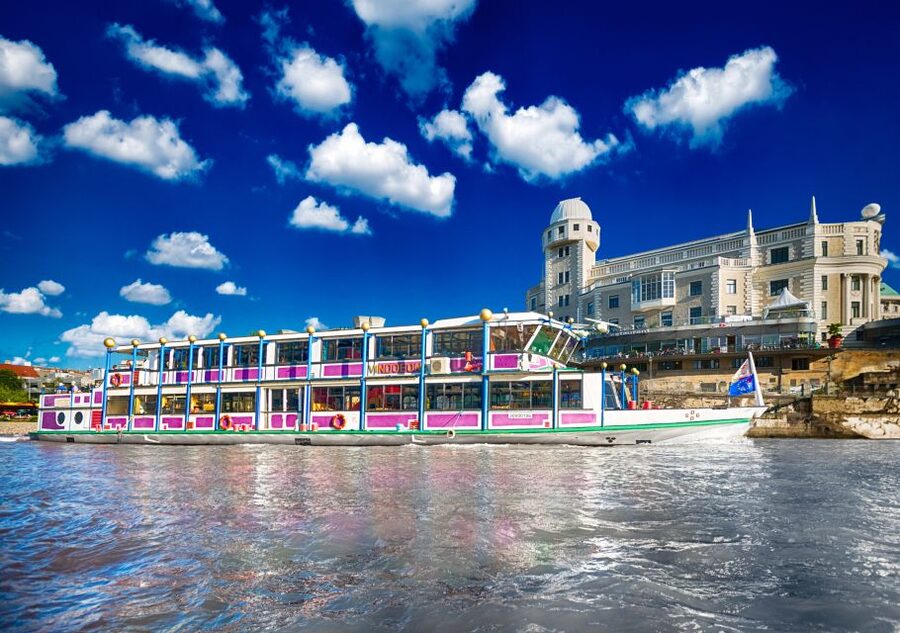
English and German are available, with a host or greeter in those languages. The sound system can be heard indoors and outdoors, but the amount of commentary is not always enough to explain every building or river section.
I would plan to supplement the narration with your own awareness of the route. Know the broad sequence: Schwedenplatz, Urania, Prater and the green river section, Freudenau, Marina Wien, Danube Island, Reichsbrücke, the modern skyline, Nussdorf, the Danube Canal, and the return to Schwedenplatz.
The cruise works best when you are comfortable simply looking. You might spot a familiar building, notice how Vienna’s skyline changes, or enjoy the odd contrast between a grain silo, a tower, a barracks, and Hundertwasser’s playful heating plant.
Some people would prefer music during the ride, especially classical music associated with Vienna. That is not a standard feature described for this cruise, so do not book it expecting a soundtrack of Mozart, Strauss, or Haydn.
Who will enjoy this Vienna river cruise?
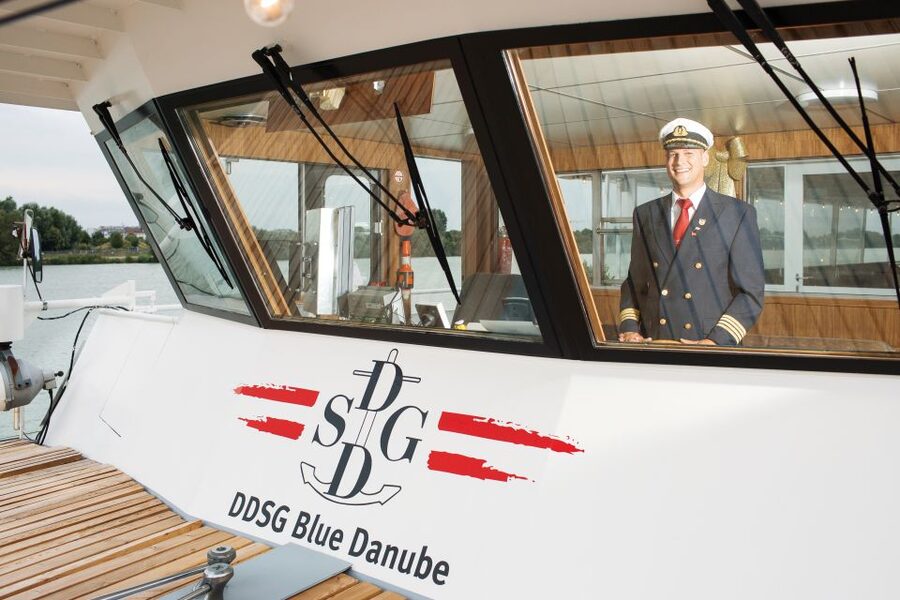
I would recommend it most strongly to you if you want a calm half-day break from walking. It suits couples, older visitors, families who need a seated activity, and anyone interested in seeing Vienna beyond the historic center.
It is also a good choice if you like infrastructure. The locks, canal entrance, river stations, bridges, island, stadium, and modern towers give the cruise more substance than a simple view of ornate buildings.
The boat is wheelchair accessible, which makes a long sightseeing outing easier for visitors who need step-free access. The supplied information does not specify every detail of boarding or accessible restroom arrangements, so you should confirm those points if they matter to your booking.
I would be less keen to recommend it as a first and only Vienna activity. You should see the central sights on foot or by another city tour first. Then use this cruise to understand how the Danube fits into the larger city.
Weather matters, but it does not decide everything. Sunny conditions make the outer river sections more enjoyable and improve photography. Cloud or rain pushes you indoors, where the heated lounge, restaurant, and broad windows can still make the trip worthwhile.
Practical tips for getting more from the 3.5 hours
Choose a departure time that leaves you enough flexibility before dinner or another timed attraction. Lock passages and bridge waits can make the ride feel less predictable, even though the cruise is scheduled for 3.5 hours.
If views are your priority, spend time outside when the boat is moving through the open Danube sections. Move indoors for food, warmth, or a break from wind. Since you can see the city from different parts of the vessel, avoid treating your first seat as your permanent base.
Bring a simple route plan in your head. The commentary may not always identify each sight clearly, and knowing that the next section is the modern Danube skyline or the return through the canal will make the changes easier to follow.
Consider buying a drink or light meal onboard if you like slow travel. The staff can deliver food and drinks efficiently, and card payment is available. Still, the meal is an extra cost, not part of the ticket.
Most of all, allow the cruise to be unhurried. Its pleasure comes from watching Vienna pass by, not from collecting a long list of stops.
Should you book the Grand Danube River Cruise?
Book it if you want a relaxing 3.5-hour view of Vienna, appreciate river locks and modern city planning, and like having food and drinks available onboard. The central Schwedenplatz departure, return to the same point, wheelchair access, and indoor seating add practical value.
Skip it if you have only one short day in Vienna and still need to visit the city’s main museums, palaces, and old-town sights. Also think twice if detailed commentary or nonstop sightseeing is essential to your enjoyment.
For most people, this works best as a second-day activity or a restful afternoon between more demanding visits. At $51, it is a considered purchase rather than an automatic bargain, but the combination of river, canal, locks, Prater greenery, modern towers, and Hundertwasser design gives you a view of Vienna that a walking tour cannot provide.
FAQ
Where does the Grand Danube River Cruise start?
It starts at the DDSG Blue Danube ticket office in the ship station Schiffstation Wien City at Schwedenplatz.
Where does the cruise end?
The cruise ends back at Schwedenplatz, the same station where it begins.
How long is the cruise?
The activity lasts 3.5 hours. Available starting times depend on the date you choose.
What languages are available?
German and English are available, including the host or greeter and the tour information.
Is food included in the ticket?
No. Food and drinks are not included, but you can order Viennese dishes and beverages at the onboard restaurants.
Which ships operate the cruise?
The cruise uses MS Wien and MS Vindobona. MS Vindobona was designed with distinctive coloring by artist Friedensreich Hundertwasser.
Is the cruise wheelchair accessible?
Yes, the activity is listed as wheelchair accessible.
Can I cancel the booking?
Yes. You can cancel up to 24 hours in advance for a full refund. Reserve-now, pay-later booking is also available.
More Boat Trips
- From Vienna: Guided Tour to Bratislava with Speed Boat Ride
★ 4.2 · 1,404 reviews - Hallstatt Guided Day Trip from Vienna With Boat Ride Option
★ 4.5 · 1,301 reviews - Vienna: Evening Cruise Along The Danube
★ 3.5 · 1,280 reviews - Bratislava Day Trip from Vienna With Catamaran Cruise on Danube
★ 3.5 · 723 reviews
Just added around Vienna
- Mobile puzzle rally tour at the Vienna Central Cemetery★ 4.5 · 3 reviews
- 8 days European Highlights PRIVATE TOUR from Budapest including Budapest Vienna Prague and Bratislava★ 5.0 · 3 reviews
- RAXI (E-Rickschaw) big private Vienna tour★ 4.5 · 3 reviews
- Private Transfer from Vienna to Prague with 1 hour Stop in Kutna Hora★ 4.5 · 3 reviews
- Palais Lobkowitz Audio Guide Tour★ 4.0 · 3 reviews
- Private Tour from Vienna to Melk and Dürnstein★ 4.5 · 3 reviews
- Vienna: Designer Fashion Time Capsule Experience★ 5.0 · 3 reviews
- Vienna Sight & Gourmet Tour – individual private tour★ 4.5 · 3 reviews
Wachau Valley & Danube Cruises, compared.
Wachau Valley, Melk Abbey Tour with Danube Boat Trip
Read our review →
Danube River Cruise w/ optional Viennese Specialties
Read our review →
Wachau Valley Wine Tasting Bike Tour from Vienna
Read our review →
Wachau Valley Small-Group Tour and Wine Tasting from Vienna
Read our review →
Grape Grazing: Wachau Valley Winery Biking Tour
Read our review →
Private Day Tour Trip Salzburg Hallstatt and Melk from Vienna
Read our review →
Browse the lists this tour appears in