
Reviewed · MOZART EXPERIENCES
Vienna: Mythos Mozart Experience
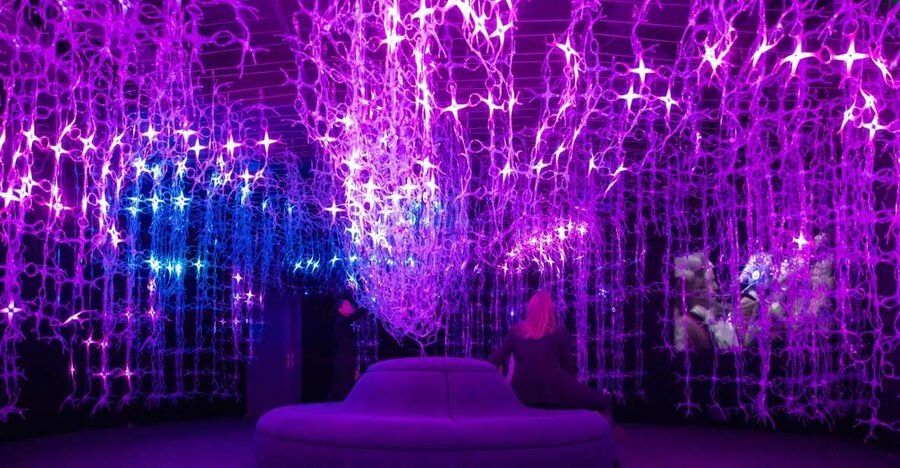
Mozart’s final year becomes a sensory journey. In Vienna’s center, Mythos Mozart combines music, moving images, light, and historical scenes inside the building where Mozart lived during the last year of his life. I especially like the room of 1,500 candles and the playful instrument room, which keeps the visit from feeling like a standard museum. The main drawback is that the presentation is more about mood and visual impact than detailed biography or musical analysis.
For about $27, you get a polished one-hour attraction in a central location. The 360-degree view of Vienna in 1791 is a clever way to picture Mozart’s city, while the Sky and Roofgarden gives you a modern view over the First District. If you want labels, long explanations, or a traditional house museum, this may feel brief and light on facts.
In This Review
- Key things to know before you go
- What Mythos Mozart is trying to do
- Starting with death in the REQUIEM room
- Seeing VIENNA 1791 from rooftops and balloons
- The Little Night Music room puts you to work
- The final rooms and the role of modern technology
- The pace: six rooms in about one hour
- The historic setting matters
- The Sky and Roofgarden adds a useful finish
- Practical details that make the visit easier
- Who will enjoy Mythos Mozart most?
- Is the $27 ticket worth it?
- Should you book Mythos Mozart?
- FAQ
- How long does the Mythos Mozart experience take?
- Where does the Mythos Mozart experience take place?
- Is Mythos Mozart available in English?
- Should I book a time slot in advance?
- Is Mythos Mozart wheelchair accessible?
- Are food and drinks included?
Key things to know before you go
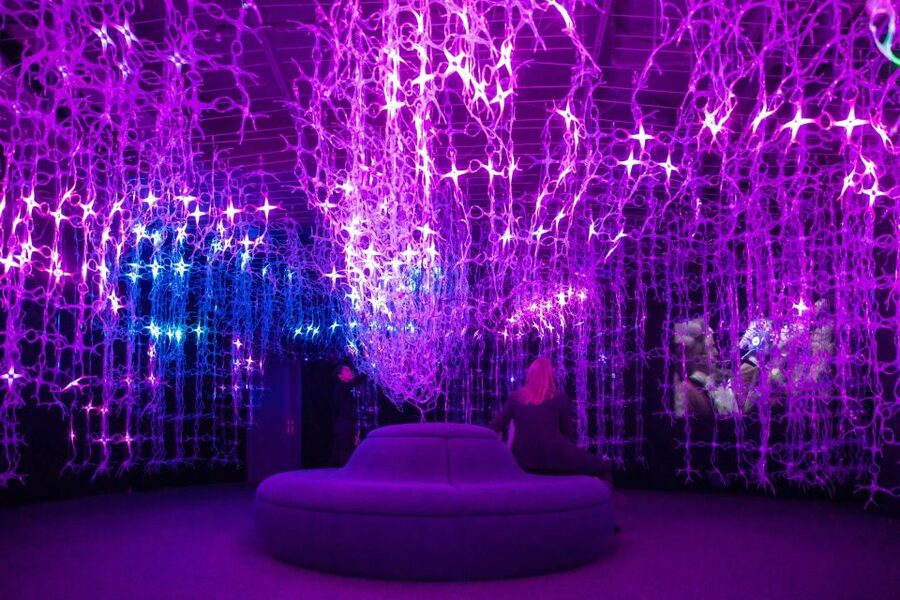
- Mozart’s final address: The experience is housed in the building where Mozart spent the last year of his life and composed The Magic Flute and The Requiem.
- 1,500-candle opening room: The REQUIEM, MOZART’S DEATH room uses candlelight and music to create a solemn start.
- Vienna in 1791: A 360-degree audiovisual room lets you move through Mozart’s city, look over rooftops, and see the house where he died.
- Hands-on music: The Little Night Music room includes instruments from around the world, making this a good stop for families.
- Strong rainy-day choice: The entire attraction is indoors, with free lockers and toilets, followed by access to a roof terrace and café.
- One hour, but not a lecture: You get a carefully paced multimedia artwork, not a full museum course on Mozart’s life.
What Mythos Mozart is trying to do
Mythos Mozart is best understood as a piece of audiovisual theater inside a historic site. It does not ask you to read wall panels for an hour. Instead, it uses sound, projection, animation, lighting, and interactive displays to give you a feeling for Mozart’s world.
That approach works well if you know only the basics. You do not need to recognize a sonata or understand Classical-era music theory. Mozart’s compositions carry much of the visit, while the rooms provide the setting and visual story.
I like that the experience welcomes people who would normally skip a music museum. Several visitors who described themselves as non-specialists still found the music and visual effects powerful. That is important in Vienna, where many cultural attractions assume a fair amount of background knowledge.
The tradeoff is clear. You will leave with a stronger sense of Mozart’s atmosphere, final year, and musical genius, but you may not learn a great deal about his daily life, relationships, or individual compositions. Think of Mythos Mozart as an introduction through the senses, not a complete biography.
More Mozart Experiences in Vienna
- Vienna: Mozart Concert at the Golden Hall
★ 4.6 · 3,986 reviews - Vienna: Classical Concert at Mozart’s First House
2,423 reviews - Vienna: Mozart and Strauss Concert at Schönbrunn
★ 4.5 · 2,364 reviews
Starting with death in the REQUIEM room
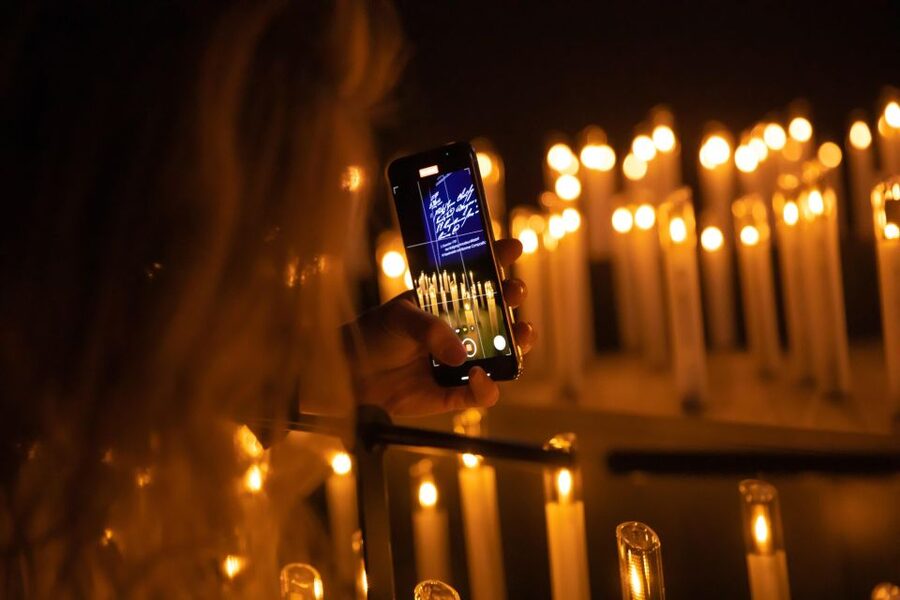
The first room is REQUIEM, MOZART’S DEATH, and its design makes an immediate impression. Around 1,500 candles fill the space, creating a dark, solemn setting tied to the unfinished Requiem and Mozart’s death in 1791.
British-German lighting designer Moritz Waldemeyer created the candle installation. The result is less like entering a normal exhibition room and more like stepping into a memorial built from light and sound.
I can see why this room is often the most praised part of the experience. The candles give the music physical weight. You are not simply listening to the Requiem through speakers while standing in a gallery. You are surrounded by small points of light, with the room designed to make you slow down and pay attention.
The opening can feel a little heavy, especially if you arrive expecting a cheerful introduction to Mozart. One visitor found the choice of beginning with death unusual, but also felt that it made sense as the program moved toward Mozart’s creative power. That is a fair reading. The room sets up the shortness of Mozart’s life before the experience turns toward his city, work, and imagination.
If you are sensitive to flashing light, loud music, or dark rooms, keep this in mind. The information provided does not give detailed sensory warnings, so asking at the Welcome Desk is sensible if those conditions affect you.
Seeing VIENNA 1791 from rooftops and balloons
The next major section, VIENNA 1791, MOZART’S CITY, shifts from private grief to a picture of Vienna during Mozart’s lifetime. You move through projected streets, look across rooftops, and rise above the city in a balloon-like sequence.
The highlight is the 360-degree panorama of 18th-century Vienna. Instead of seeing a small painting or a few historic objects, you get a broad visual impression of the city Mozart knew. The attraction also brings you in front of the house where he died, connecting the projected city to the actual building around you.
This room helps answer a basic question: what did Mozart’s Vienna feel like? You get busy streets, rooflines, movement, and a sense of how close together the important places were. It is not a substitute for walking central Vienna, but it gives useful context before or after seeing the city in person.
The visual style is theatrical. You are not studying an exact architectural model with scholarly notes beside every building. You are being carried through a version of Vienna designed to support Mozart’s music. If you want precise historical detail, you may wish there were more commentary or subtitles.
That point matters because the attraction is primarily in English, with an English-speaking host or greeter. Some people enjoyed the audio information, while others wanted more explanation or subtitles. I would not book this expecting a guided history tour. The pictures and music do most of the talking.
The Little Night Music room puts you to work
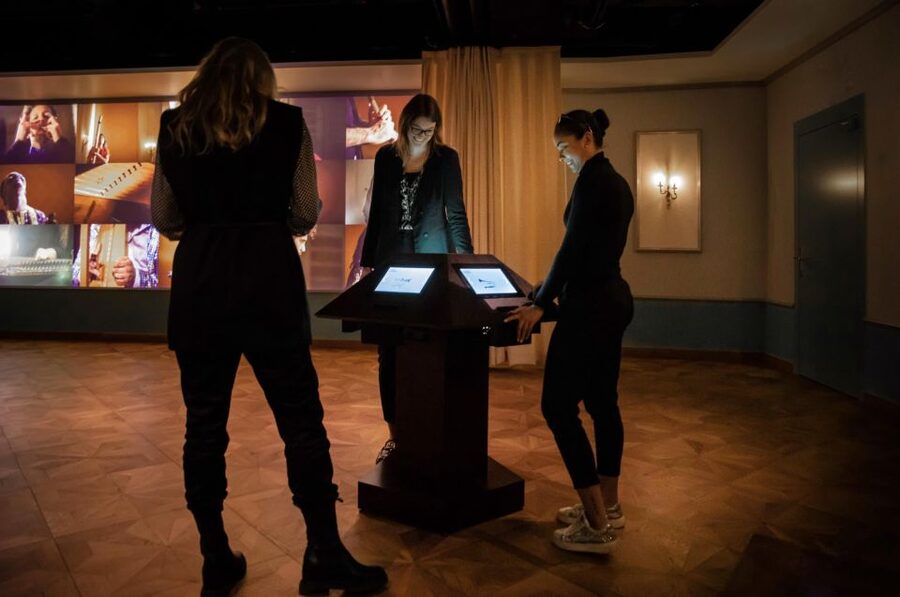
The Little Night Music room is the most playful part of the route. You can interact with instruments from different parts of the world, rather than simply looking at them behind glass.
This change of pace is useful. After the candle room and historical projections, the instrument area gives you something active to do. Children can connect with music through touch and sound, and adults who are not classical music fans get a break from passive listening.
The room also broadens the experience beyond Mozart himself. The attraction uses his music as its central thread, but the international instruments encourage you to think about sound as something physical and shared. You do not need to play well. The point is participation, curiosity, and a bit of fun.
Families have found the exhibition suitable for children, especially as an introduction to Mozart. Teenagers can also appreciate the interactive design more than a quiet collection of portraits and handwritten scores.
Do not expect a full musical workshop. The provided information does not promise instruction, performances, or a scheduled lesson. Treat this as a hands-on gallery within a larger multimedia show.
More Mozart experiences:
- Vienna: Tickets for Mozarthaus Vienna with Audio Guide
★ 4.2 · 2,344 reviews - Vienna Mozart Concert in Historical Costumes at the Musikverein
★ 4.5 · 888 reviews - Vienna: Mozart & Strauss Classical Concert at Börse Palace
★ 4.5 · 810 reviews - Vienna: Mozart Concert at the Vienna State Opera
★ 4.6 · 461 reviews
The final rooms and the role of modern technology
Later sections bring together projected images, animation, and Mozart’s music in a more contemporary visual style. LED screens and digital effects help turn individual pieces of music into moving scenes.
The final presentation has made a strong impression on many people, particularly because it brings Mozart into conversation with modern technology. An AI-generated room asks you to consider what Mozart might have done with 21st-century tools. That is an unusual choice for a historic music attraction.
I find the idea more interesting than a simple digital spectacle. Mozart was known for experimentation and theatrical energy, so using artificial intelligence and modern composition tools gives the exhibition a question to think about: is new technology a threat to art, or another instrument for a creative mind?
Still, this section will not appeal to everyone. One visitor felt that the AI display was the weakest part, while others called it one of the most memorable. If you prefer a strictly historical presentation, the modern material may feel out of place. If you enjoy the meeting of art, science, and technology, it may be the moment you remember most.
The visual effects are a major reason to visit, but they also explain why the exhibition can feel light on facts. Mozart’s life is presented as a series of sensations and ideas rather than a detailed timeline.
The pace: six rooms in about one hour
The advertised duration is one hour, and that seems about right for the planned route. You move between rooms that focus on different stages of Mozart’s life, death, city, and music. The timing gives you space to look around without making the visit feel like a rushed queue.
The attraction appears designed around roughly ten minutes in each section. That is enough time to absorb a room, listen, and watch the projections, but not enough for extensive reading or repeated visits to every interactive feature.
I like this length for a packed Vienna itinerary. It fits before dinner, between major sights, or on a wet afternoon when you want something cultural without committing to half a day. Several people found the pace relaxed, while one family thought the whole activity was a little short.
At $27 per person, the value depends on your expectations. For one hour of carefully produced sound, lighting, projection, and interaction in a historic Mozart location, the price is reasonable. It is less compelling if you measure value by the number of artifacts or pages of information.
I would compare it with the cost of a concert, but not too closely. Mythos Mozart does not replace hearing live musicians perform Mozart. It offers a different product: a visual and spatial interpretation of his music, with a few interactive elements and a city viewpoint.
The historic setting matters
The building itself gives the attraction a useful anchor. Mozart spent the last year of his life here, and he composed The Magic Flute and The Requiem during this period. He also died here in 1791.
That connection prevents the experience from floating entirely in the digital world. You are not watching a Mozart-themed projection in an anonymous shopping center. The historic address gives the rooms a physical link to the composer.
The exhibition does not turn the building into a traditional apartment tour. If you want to inspect Mozart’s rooms, furniture, or domestic surroundings in detail, you may find the multimedia format less satisfying. The house is the setting and historical foundation, while the artistic presentation takes center stage.
This balance is worth understanding before you book. The attraction uses history as a launch point for sound and imagery. It does not try to recreate every detail of Mozart’s home life.
The Sky and Roofgarden adds a useful finish
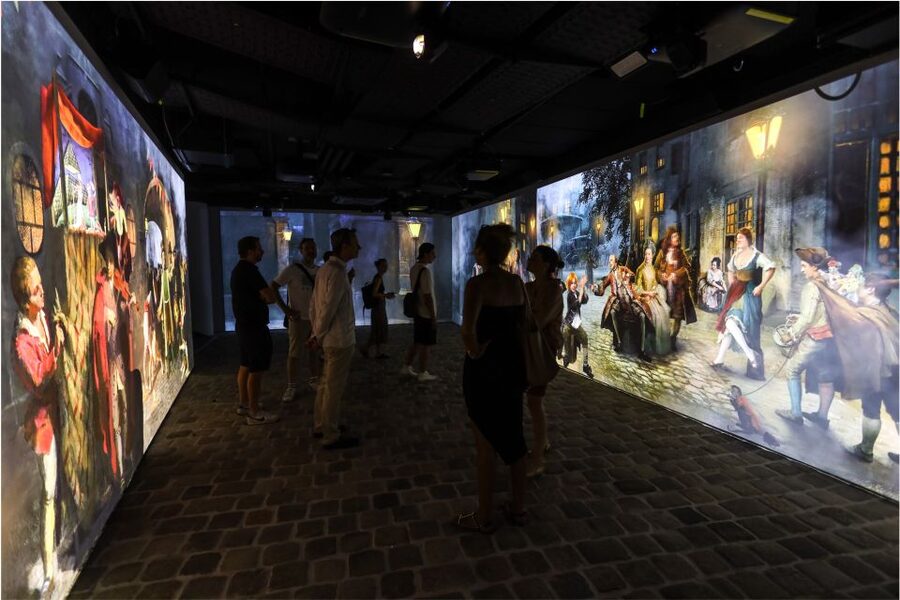
After the interior rooms, you can visit the Sky and Roofgarden. From the roof terrace, you may see the First District, Karlskirche, the Ferris wheel, and St. Stephen’s Cathedral.
These views add value because they connect the historical city on the screens with Vienna as it looks today. You can watch a digital panorama of 1791, then step outside and look across the modern skyline.
The Sky Café and Restaurant sells food and drinks, and the roof terrace offers panoramic views. This makes it possible to extend the visit with a coffee or meal, though food and drinks are not included in the ticket.
Weather will affect how much you enjoy this part. On a clear day, the terrace is a welcome extra. On a rainy day, the indoor exhibition remains the main reason to come, and the roof may be less useful.
Practical details that make the visit easier
Book a time slot in advance. You should report to the Mythos Mozart Welcome Desk up to 15 minutes before your start time and exchange your ticket there. Spontaneous entry may be possible when occupancy allows, but I would not rely on it during busy periods.
Bring a passport or ID card, and take a student card if you are using student identification. Pets are not allowed.
The building is wheelchair accessible. Free lockers and toilets are available, which is handy if you are carrying shopping bags or planning to continue sightseeing afterward.
The activity is listed in English, and the host or greeter is English-speaking. If you depend on written translations, ask what is available before entering. A few people wanted more commentary or subtitles, so this is one area where your preferred learning style matters.
Cancellation is flexible if your plans are uncertain: you can cancel up to 24 hours in advance for a full refund. You can also reserve now and pay later, which helps if you are arranging several Vienna activities at once.
Who will enjoy Mythos Mozart most?
I would recommend it most strongly to:
- First-time Vienna visitors who want a short cultural activity
- Mozart fans who enjoy music presented through light and video
- Families looking for something children can interact with
- Adults who do not know much about classical music
- Anyone needing a good indoor plan for a rainy day
- People who enjoy technology, digital art, and experimental displays
You may want to skip it if your main goal is a serious study of Mozart’s biography, original manuscripts, instruments, or musical structure. The attraction gives you some facts, but its strength is emotional and visual rather than academic.
It also works best if you accept the format. Do not stand in each room waiting for a traditional guide to explain every detail. Watch, listen, interact, and let the music carry the story.
Is the $27 ticket worth it?
For me, the answer is yes if you value presentation and atmosphere. The candle room, the Vienna panorama, the interactive instruments, and the roof terrace give you several distinct experiences in one hour.
The ticket is harder to justify if you only want historical information. At $27, you are paying for production quality and a memorable setting, not a large collection of objects. The short duration may also bother you if you prefer attractions that fill half a day.
The strongest value comes when you pair it with nearby sightseeing in central Vienna. You can visit the attraction, take in the rooftop views, and then continue on foot through the First District. It is also a smart choice when rain puts a stop to outdoor plans.
Should you book Mythos Mozart?
Book it if you want Mozart presented through music, light, film, and movement rather than shelves of text. I especially recommend it for families, casual classical music listeners, and anyone curious about a modern take on one of Vienna’s most famous composers.
Skip it if you want a detailed house museum or a full guided account of Mozart’s life. For everyone else, the candle room alone makes a strong first impression, and the 360-degree Vienna scene plus the hands-on music room give the hour enough variety. Mythos Mozart is short, polished, and easy to fit into a Vienna day, with just enough history to give the spectacle a solid foundation.
FAQ
How long does the Mythos Mozart experience take?
The advertised duration is one hour. The route moves through several rooms, with about ten minutes suggested for each section.
Where does the Mythos Mozart experience take place?
It takes place in the building where Mozart spent the last year of his life, composed The Magic Flute and The Requiem, and died in 1791.
Is Mythos Mozart available in English?
Yes. The listed language is English, and the host or greeter is English-speaking.
Should I book a time slot in advance?
Yes. All visitors should book a time slot and report to the Welcome Desk up to 15 minutes before the start. Spontaneous visits may be possible if there is space.
Is Mythos Mozart wheelchair accessible?
Yes, the experience is wheelchair accessible.
Are food and drinks included?
No. Food and drinks are not included, but they can be purchased at the Sky Café and Restaurant, which has a large roof terrace with panoramic views.
Just added around Vienna
- Mobile puzzle rally tour at the Vienna Central Cemetery★ 4.5 · 3 reviews
- RAXI (E-Rickschaw) big private Vienna tour★ 4.5 · 3 reviews
- 8 days European Highlights PRIVATE TOUR from Budapest including Budapest Vienna Prague and Bratislava★ 5.0 · 3 reviews
- Private Transfer from Vienna to Prague with 1 hour Stop in Kutna Hora★ 4.5 · 3 reviews
- Palais Lobkowitz Audio Guide Tour★ 4.0 · 3 reviews
- Private Tour from Vienna to Melk and Dürnstein★ 4.5 · 3 reviews
- Vienna: Designer Fashion Time Capsule Experience★ 5.0 · 3 reviews
- Private day trip from Munich to Eagle’s Nest & Hallstatt★ 4.7 · 3 reviews
Mozart Experiences, compared.
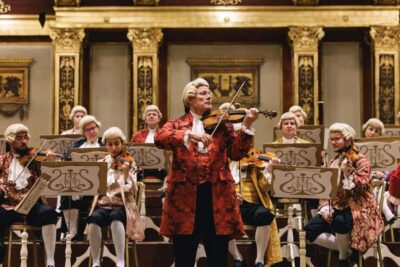
Tickets for Mozarthaus Vienna with Audio Guide
Read our review →
Salzburg 2.5-Hour Walking Tour: Mozart, Old Town & More
Read our review →
Vienna Mozart Concert in Historical Costumes at the Musikverein
Read our review →Browse the lists this tour appears in