
Reviewed · WALKING TOURS
An Introduction to Vienna Walking Tour
Vienna reveals itself one grand building at a time. This 2.5-hour walk gives you a useful first look at the city, linking the Hofburg, Stephansdom, Ringstraße, Secession, Graben, and major museum district with stories about emperors, artists, musicians, war, and daily life. I especially like the small group limit and the focus on an historian guide rather than a guide who simply points at buildings. I also like that the walk includes both famous sights and less obvious details, such as Adolf Loos’s controversial Loos House and the musical world of Klimt and Mahler.
The main drawback is the price. At $181.02 per person, this is expensive for a walking tour, even with a small group and a highly trained guide. You are paying for close attention, flexibility, and serious historical context, not entrance tickets or food. If you only want quick facts and exterior views, a cheaper large-group tour may suit you better.
In This Review
- Key points to know before booking
- Why this walking tour works best at the start of your stay
- Michaelerplatz and the Hofburg: Vienna’s power center
- Kohlmarkt, the Graben, and Stephansdom
- The Ringstraße and Vienna’s grand nineteenth-century makeover
- Maria-Theresien-Platz and the city’s museum quarter
- The Secession building, Klimt, and Vienna around 1900
- Naschmarkt and the everyday side of Vienna
- The value of a group capped at eight
- What the guides add to the experience
- Who should book this Vienna walk?
- Should you book it?
- FAQ
- How long does the Vienna walking tour last?
- What language is the tour offered in?
- Where does the tour begin?
- Where does the tour end?
- What sights are included on the route?
- Does the tour include entry to the Hofburg or museums?
- Are food and drinks included?
- Is hotel pickup included?
- How many people can join the tour?
- Can I cancel for a refund?
Key points to know before booking
- A strong first-day orientation: The route connects Vienna’s major central sights and helps you understand how the imperial city fits together.
- Small groups matter: Bookings are limited to six people, with no more than eight on the activity.
- Historian-led storytelling: Guides such as Katarina, Annelie, Ilse, Wolfgang, Christina, and Elisabeth have been praised for clear explanations and personal local insight.
- Mostly exterior sightseeing: You see major buildings from the outside, so this is not a substitute for visiting the Hofburg museums, Stephansdom interior, or Vienna’s art collections.
- Useful local advice: Guides have offered suggestions for coffeehouses, schnitzel, sausages, Sacher torte alternatives, and further sights.
- Good for curious visitors: The tour suits anyone who wants architecture, politics, art, music, and Austrian history woven into one walk.
Why this walking tour works best at the start of your stay
Vienna can feel like several cities at once. It is a former imperial capital, a center of classical music, a city of grand museums, and a place where ordinary cafés and markets still shape daily life. A good orientation walk helps you sort those pieces out before you spend time inside individual museums and palaces.
This tour does that by moving through the central districts in a logical sweep. You begin at Michaelerplatz, next to the Hofburg, then continue through the old center and along the Ringstraße before reaching Maria-Theresien-Platz and the Secession area. The exact pacing can depend on the guide and group, but the route gives you a clear mental map.
I would book it for your first or second day in Vienna. Several guides have been praised for pointing out places to return to, explaining public transportation directions, and suggesting restaurants and coffeehouses. That kind of advice has more value early in a trip than on your final afternoon.
The walk is conducted in English and includes an historian guide. It does not include food, drinks, hotel pickup, or hotel drop-off. You meet at Café Hawelka on Dorotheergasse, a central location that is easy to pair with other sightseeing.
More Walking Tours in Vienna
- Vienna: Guided Walking Tour of City Center Highlights
★ 4.7 · 4,989 reviews - Vienna: Vienna Central Cemetery Guided Walking Tour
★ 4.8 · 3,307 reviews - Vienna: Guided Walking Tour of City Highlights & Hidden Gems
★ 4.9 · 2,180 reviews
Michaelerplatz and the Hofburg: Vienna’s power center
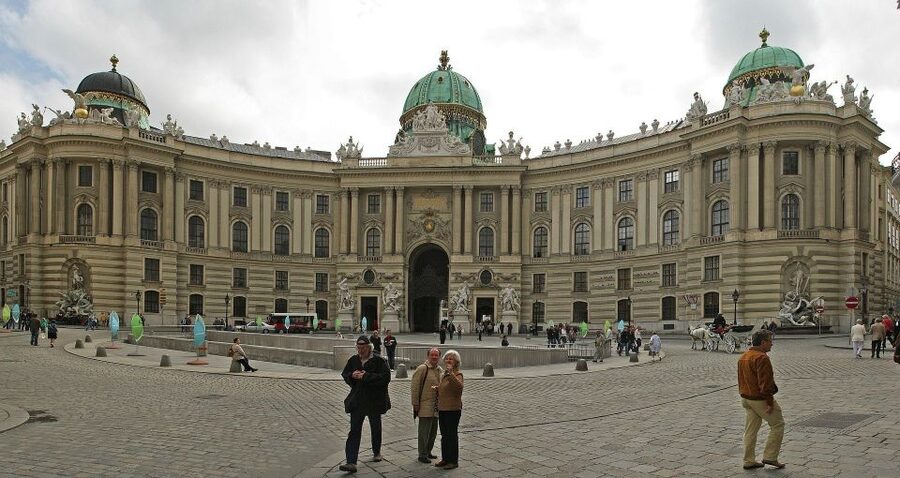
The tour begins at Michaelerplatz, where the Hofburg dominates the square. This is an excellent starting point because the palace is not just another grand building. It was the seat of Habsburg power from the 13th century onward, and its wings reflect the dynasty’s long growth and changing ambitions.
Here, your guide can help you read Vienna politically as well as architecturally. The palace complex tells you how the Habsburgs ruled, how court life shaped the city, and why so much of central Vienna feels ceremonial. You will see the palace from the outside, not tour its museums or imperial apartments as part of this walk.
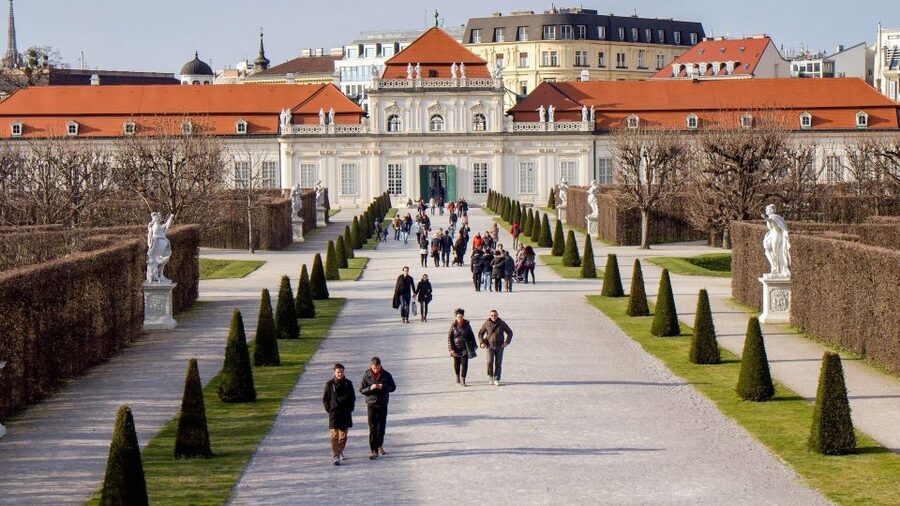
One useful detail is the Loos House, visible clockwise from the Hofburg. Designed by Adolf Loos, the green and gray building became famous for its plain exterior at a time when ornate decoration was expected. It gives the tour a welcome change of pace. Vienna is not only Baroque domes and imperial façades. It also produced bold modern ideas that challenged old taste.
A guide who can explain that contrast well adds real value. Reviews of Wolfgang, Katarina, Annelie, and Ilse repeatedly praise their ability to connect architecture with people, politics, and everyday life instead of listing dates.
Kohlmarkt, the Graben, and Stephansdom
From the Hofburg, the walk reaches Kohlmarkt and the Graben, now among Vienna’s most fashionable shopping streets. The setting can feel polished and expensive, but the guide brings attention to what lies beneath the modern shops.
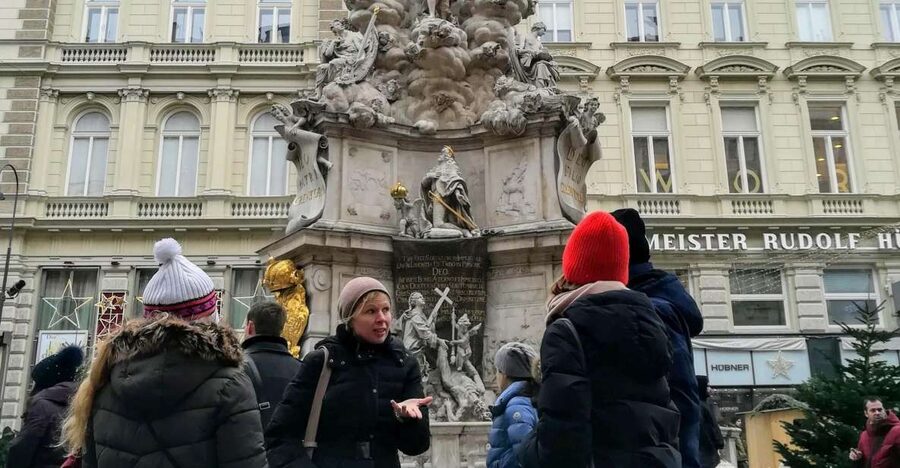
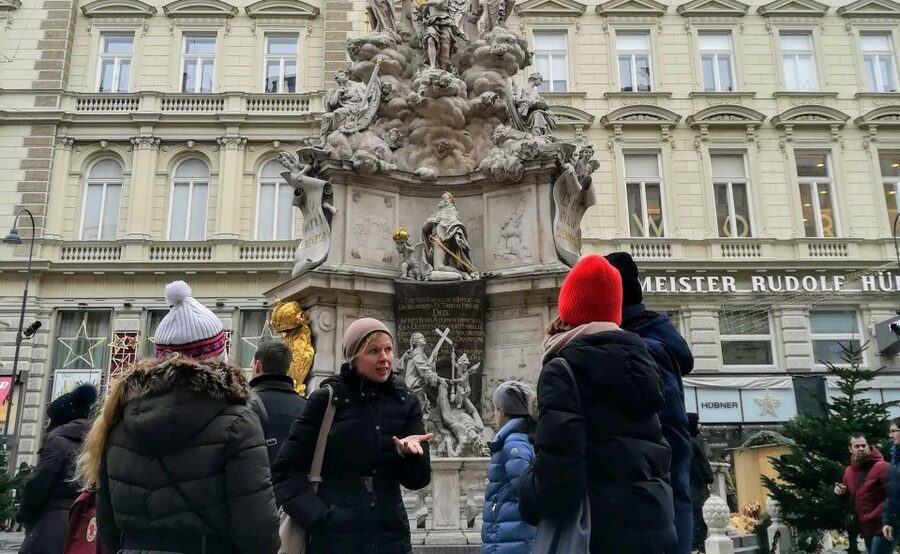
The Graben is home to the Pestsäule, or plague column, built to commemorate the 17th-century outbreak of bubonic plague. This is one of the places where a good explanation matters. A quick photograph tells you little. The sculpture, religious imagery, and location make more sense when connected to the fear and devotion that followed the epidemic.
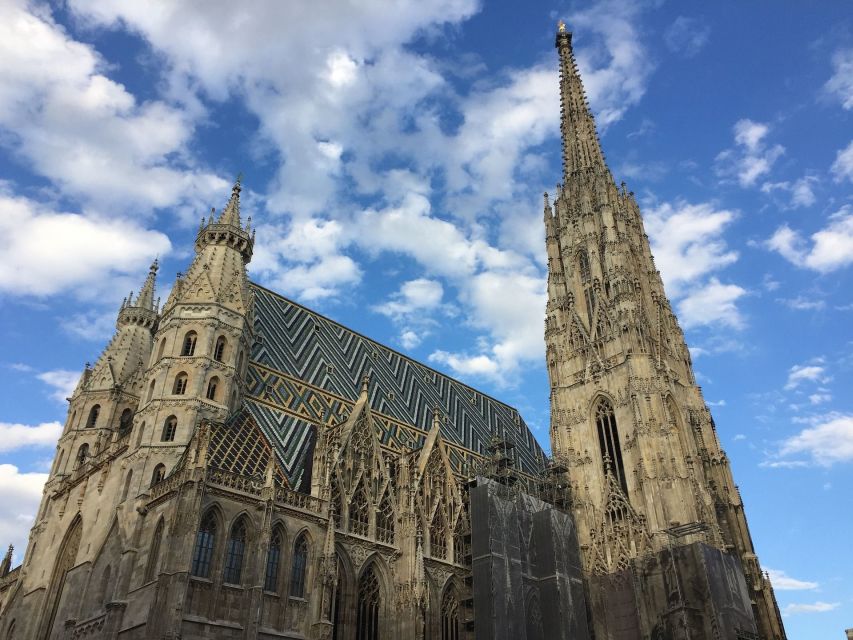
Stephansdom is another major stop. Its patterned roof and tall tower make it Austria’s best-known architectural symbol. The tour lets you see the cathedral as part of the city center and explains its place in Viennese life. You should note that the itinerary describes seeing Stephansdom, not entering it or spending time inside.
That distinction matters if you want a full church visit. You may want to return later for the interior, but the walking tour gives you a helpful introduction before you do so.
The Ringstraße and Vienna’s grand nineteenth-century makeover

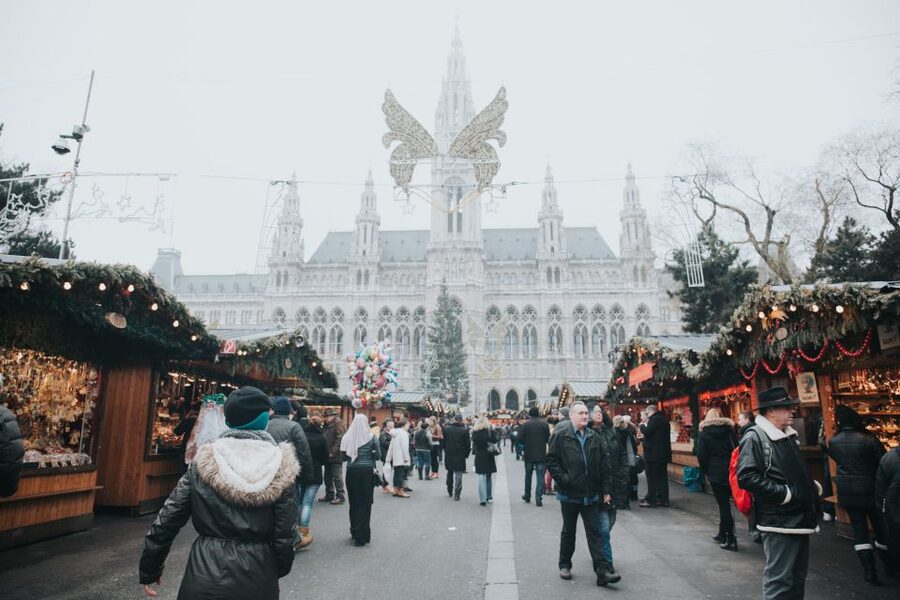
The Ringstraße gives the tour a broader scale. Built in the middle of the 19th century, this grand boulevard replaced the old defensive walls and opened room for monumental public buildings, museums, hotels, and civic institutions.
Your guide uses the boulevard to explain Vienna’s transformation from a fortified medieval center into a modern imperial capital. The route passes luxury hotels established inside former palaces, a detail that helps you understand how the city’s old aristocratic spaces were reused for later urban life.
This part of the walk is especially useful for architecture fans. Instead of treating each building as an isolated sight, the tour places them within a city plan. You can see how the Habsburg court, wealthy families, public culture, and commercial ambition all shaped the Ringstraße.
The tradeoff is time. Vienna has more major Ringstraße buildings than any 2.5-hour walk can cover in detail. You will get an overview rather than a full architectural survey. If you want to study Parliament, City Hall, or the Opera House closely, ask your guide how much the route can include on your date.
One past participant specifically wished the walk had included City Hall, Parliament, the plague column, and the Holy Lance. Those sights are not guaranteed parts of this experience, so you should not book it expecting a complete checklist of central Vienna.
More walking tours:
- Vienna: Viennese Underworld Guided Walking Tour
★ 4.7 · 1,865 reviews - Vienna: World War II Historical Walking Tour
★ 4.8 · 1,772 reviews - Vienna Historic Center Small Group Walking Tour
★ 5.0 · 1,746 reviews - Vienna: Private Walking Tour with a Local Guide
★ 4.6 · 1,420 reviews
Maria-Theresien-Platz and the city’s museum quarter
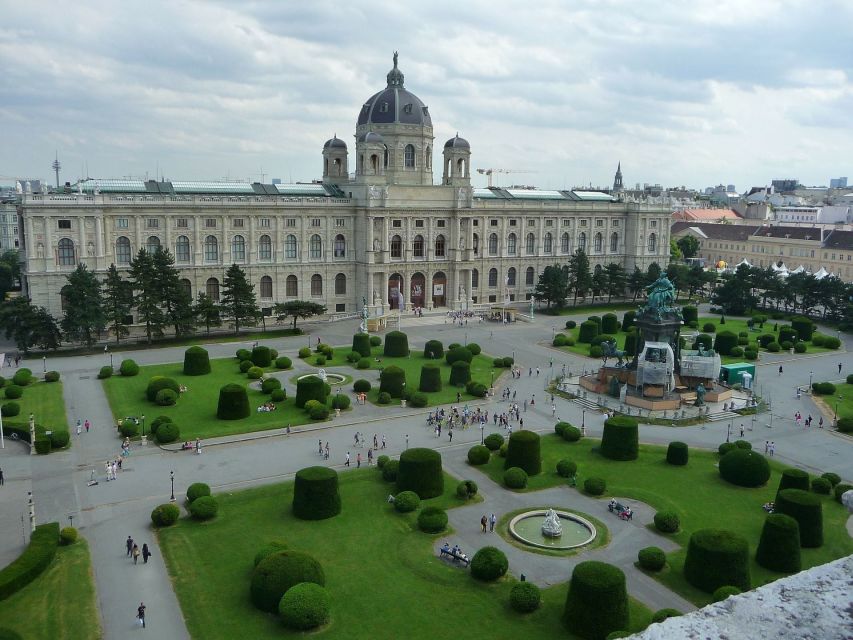
Maria-Theresien-Platz contains Vienna’s largest concentration of museums and gives the tour another useful theme: the Habsburgs as collectors and patrons of culture.
The square helps explain why Vienna became such a powerful center for art, music, scholarship, and public display. A guide can point out how the imperial project continued through museums and institutions long after the palace itself ceased to be the center of political life.
This stop will appeal to you if you are deciding which museums deserve your limited time. The tour does not include museum admission, but an informed guide can help you choose based on your interests. Past guiding has covered subjects ranging from art and music to housing and ordinary life, so you can ask for more than a standard list of dates.
The group size also matters here. With only a few people, it is easier to ask why one museum suits you better than another. In a group of 30 or 40, that sort of personal planning is much harder.
The Secession building, Klimt, and Vienna around 1900
The Secession building brings the route into Vienna’s turn-of-the-century avant-garde. Its unusual dome and clean, expressive design signal a break from older academic traditions.
This is where you hear about artists such as Gustav Klimt and the cultural world around composers including Gustav Mahler. Vienna around 1900 was full of tension between imperial tradition and new ideas in art, music, architecture, and psychology. The Secession makes that conflict visible in one building.
I like this stop because it keeps the tour from becoming only a Habsburg palace walk. You get a sense of the city’s later creative life as well as its imperial past. It also creates a useful link to Vienna’s museums, especially if you plan to see Klimt works afterward.
The guide’s skill is important here. Names and movements can quickly become a lecture. The strongest guides, including Annelie, Katarina, and Ilse, have been praised for using anecdotes, humor, music, and small visual details to keep the material lively. One guide even added Mozart and Haydn recordings, Sisi’s favorite candies, and a Viennese snack during a particularly personal outing. Those extras are not promised, but they show the kind of flexibility some guides bring.
Naschmarkt and the everyday side of Vienna
The walk also passes the Naschmarkt, Vienna’s traditional food market. It is a useful counterpoint to the palaces, churches, and ceremonial boulevards.
Here, you see a place associated with shopping, meeting friends, and ordinary city life. The tour does not include food or drinks, so you should not expect a tasting session. Still, the market gives your guide a chance to talk about Viennese habits and local places to eat.
Past guidance has included suggestions for schnitzel, sausages, cafés, and alternatives to waiting at the well-known Sacher Hotel for cake. That is practical advice, especially because famous food names in Vienna can come with long lines and high prices.
Do not assume the market will be explored at length. The route only states that you pass by Naschmarkt. If food is your main interest, ask how much time your guide expects to spend there, then return independently if you want to browse and eat.
The value of a group capped at eight
The advertised price is $181.02 per person, and that demands an honest look at value. This is not a bargain walk. You are not paying for admission to attractions, a meal, or transportation. You are paying for a small group and a guide with strong historical and local knowledge.
The maximum is eight people, while each booking can include up to six. That creates the possibility of a quiet, conversational tour rather than a procession behind a flag. Many of the strongest experiences described by participants involved only one couple or one individual, effectively turning the scheduled walk into a private or semi-private outing.
That can change the experience greatly. Guides have adjusted the route, answered many questions, slowed their English for a person with limited fluency, and added recommendations based on individual interests. If that level of attention is important to you, the price may be fair.
Still, small group does not guarantee a private tour. The activity can fill to eight people. You should book it for personal contact and flexibility, not because you assume you will have the guide alone.
What the guides add to the experience
The guide team is one of the tour’s biggest strengths. Elisabeth has been praised for handling both beautiful and painful chapters of Austrian history. Christina received credit for adapting the itinerary and making the walk comfortable. Wolfgang has been singled out for less-touristed paths and for making historical facts feel personal rather than dry.
Katarina appears especially strong for visitors who enjoy detail. She has been praised for explaining small historical points, encouraging questions, and sharing both her life in Vienna and her family’s connection to the city. Annelie has been described as bringing academic knowledge and personal interest together, with music, sweets, and unexpected local stops.
Ilse has also earned praise for clear English, warmth, and strong academic preparation. Angelika, Billie, and others have been noted for useful restaurant advice and a friendly manner.
You generally cannot choose your guide, so I would not book solely to obtain a particular person. But the repeated praise suggests that the company’s value rests heavily on its guide team. Your experience will depend more on the individual guide and group makeup than on the route alone.
Who should book this Vienna walk?
I would recommend it if you:
- Are visiting Vienna for the first time
- Want a clear overview before choosing museums and palaces
- Enjoy architecture, politics, art, music, and social history
- Prefer asking questions to listening to a fixed script
- Value restaurant and coffeehouse suggestions
- Are comfortable paying a premium for a small group
I would think twice if you:
- Want to enter major attractions during the walk
- Need a low-cost introduction
- Prefer a fast list of sights and photo stops
- Have already studied Vienna’s central landmarks in detail
- Expect every Ringstraße building or major monument to be covered
The walk is approximately 2 hours and 30 minutes. Wear comfortable shoes and plan for outdoor conditions, since this is a true walking experience. One highly praised outing continued through rain and wind, but bad weather can make a long exterior tour less pleasant.
Confirmation is provided when you book. The meeting point is Café Hawelka, Dorotheergasse 6, in Vienna’s 1010 district, near public transportation. Most people can take part. You can cancel for a full refund up to 24 hours before the start time, but changes or cancellations inside that window are not accepted.
Should you book it?
Book this tour if you want Vienna explained by a serious local guide, not just photographed from the pavement. The combination of Hofburg power, Stephansdom, Ringstraße planning, Secession modernism, museum culture, and market life gives you a strong first framework for the city.
The price is the sticking point. At $181.02, it makes sense only if you will ask questions, use the guide’s local suggestions, and value a group small enough for real conversation. If that sounds like your style, this can be one of the most useful first activities in Vienna. If you simply want to see the landmarks cheaply, choose a larger group walk and spend the savings inside the museums.
FAQ
How long does the Vienna walking tour last?
The tour lasts approximately 2 hours and 30 minutes.
What language is the tour offered in?
The tour is offered in English.
Where does the tour begin?
It begins at Café Hawelka, Dorotheergasse 6, 1010 Vienna, Austria.
Where does the tour end?
The listed end point is Vienna, Austria.
What sights are included on the route?
The route includes Michaelerplatz and the Hofburg, the Loos House, the Ringstraße, Maria-Theresien-Platz, the Secession building, Stephansdom, Naschmarkt, Kohlmarkt, and the Graben.
Does the tour include entry to the Hofburg or museums?
No entrance tickets are listed as included. The experience describes seeing and discussing the sites during a guided walk.
Are food and drinks included?
No. Food and drinks are not included unless specifically stated.
Is hotel pickup included?
No. Hotel pickup and drop-off are not included.
How many people can join the tour?
Each booking can include up to six people, and the activity has a maximum of eight participants.
Can I cancel for a refund?
Yes. You can cancel at least 24 hours before the start time for a full refund. Cancellations or changes made less than 24 hours before the start time are not accepted.
Just added around Vienna
- Mobile puzzle rally tour at the Vienna Central Cemetery★ 4.5 · 3 reviews
- 8 days European Highlights PRIVATE TOUR from Budapest including Budapest Vienna Prague and Bratislava★ 5.0 · 3 reviews
- RAXI (E-Rickschaw) big private Vienna tour★ 4.5 · 3 reviews
- Private Transfer from Vienna to Prague with 1 hour Stop in Kutna Hora★ 4.5 · 3 reviews
- Palais Lobkowitz Audio Guide Tour★ 4.0 · 3 reviews
- Private Tour from Vienna to Melk and Dürnstein★ 4.5 · 3 reviews
- Vienna: Designer Fashion Time Capsule Experience★ 5.0 · 3 reviews
- Vienna Sight & Gourmet Tour – individual private tour★ 4.5 · 3 reviews
Walking Tours, compared.

Guided Walking Tour of City Center Highlights
Read our review →

Guided Walking Tour of City Highlights & Hidden Gems
Read our review →


Vienna Historic Center Small Group Walking Tour
Read our review →
Browse the lists this tour appears in