
Reviewed · HISTORICAL TOURS
Vienna: World War II Historical Walking Tour
Vienna’s grand center carries painful stories. This 2.5-hour walking tour connects Hitler’s early years, the Nazi annexation of Austria, the destruction of Vienna’s Jewish community, and the city’s difficult postwar years. I like the way it uses real streets and surviving buildings rather than treating World War II as a list of dates. I also like the serious, thoughtful guiding, especially from guides such as Dieter, Stefan, Siggi, Michael, Wolfgang, and Charles.
The tour costs $31 per person, which is fair for 150 minutes with a live English-speaking guide. You get a strong historical introduction to central Vienna, but you do not enter attractions, and the subject matter is grim. You should also expect about 4 kilometers of walking and a finish away from the starting point.
In This Review
- Key points at a glance
- Beginning at the Albertina and the Opera House
- Hitler’s Vienna, explained without simple answers
- The synagogue that survived the Nazi regime
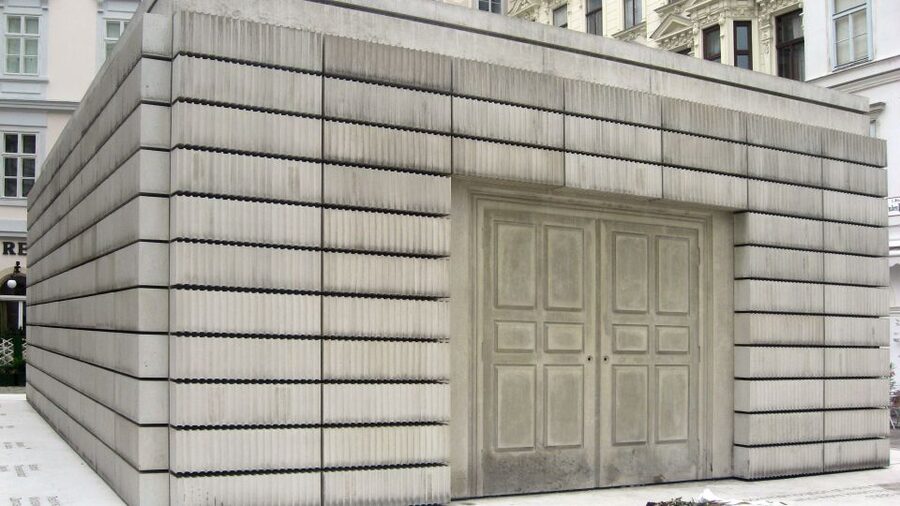
- Vienna’s Holocaust memorial and the weight of remembrance
- Bomb damage and the physical scars of war
- The divided city after 1945
- How the walking itself feels
- Headsets, group size, and guiding quality
- Is $31 a fair price?
- Who should book this Vienna history walk?
- My verdict: book it for context, not spectacle
- FAQ
- Where does the Vienna World War II Historical Walking Tour begin?
- How long does the walking tour last?
- What language is the tour in?
- Does the tour include attraction entrance fees?
- How much walking should I expect?
- Does the tour return to the starting point?
Key points at a glance
- Starts beside the Vienna Opera House: Meet under the green umbrella by Albrechtsbrunnen, downstairs from the Albertina Museum and close to Karlsplatz/Oper subway station.
- Connects Hitler’s Vienna to World War II: The guide explains how Vienna’s social and political climate shaped the young Adolf Hitler and later helped create the setting for annexation.
- Includes Vienna’s only synagogue to survive the Nazi regime: This is one of the tour’s most meaningful stops, linking architecture with the fate of the city’s Jewish community.
- Pauses at the Holocaust memorial: Expect a quiet, serious section of the walk focused on remembrance rather than spectacle.
- Shows wartime damage and postwar division: The route covers the effects of more than 100,000 bombs and explains Vienna’s unusual Allied occupation.
- Uses audio equipment for larger groups: Headsets help you hear the guide clearly while walking through city streets, a small touch that makes a real difference.
Beginning at the Albertina and the Opera House
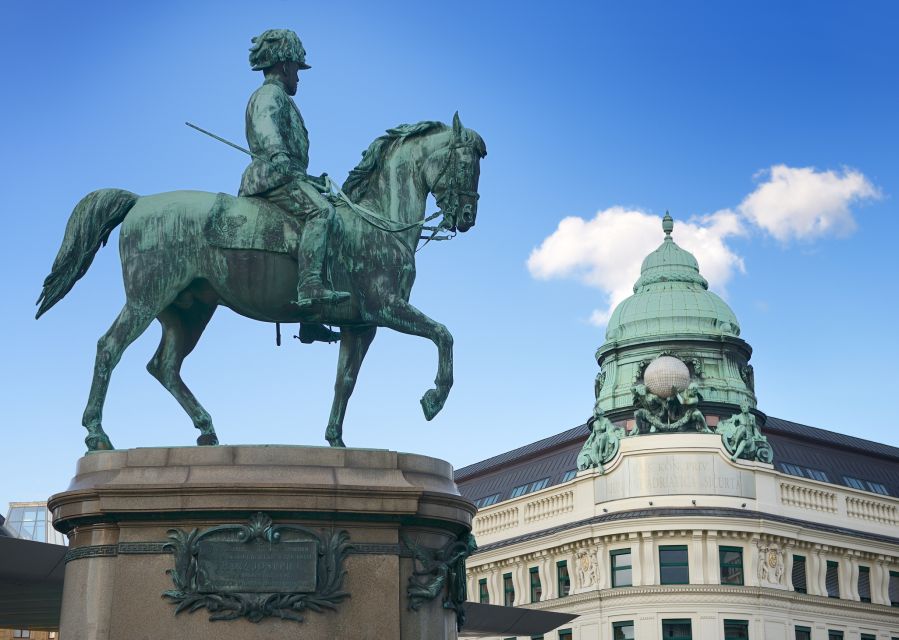
The meeting point is easy to locate if you know what to look for: a green umbrella in front of Albrechtsbrunnen, the fountain below the Albertina Museum. The meeting area is next to the Vienna Opera House and near the Karlsplatz/Oper subway stop, so it fits neatly into a day spent exploring central Vienna.
Starting here gives the tour a useful contrast. You are surrounded by imperial buildings, museums, and one of Europe’s famous opera venues. Yet within minutes, the guide turns your attention from Vienna’s polished public image to the political tensions and social divisions that helped shape the 20th century.
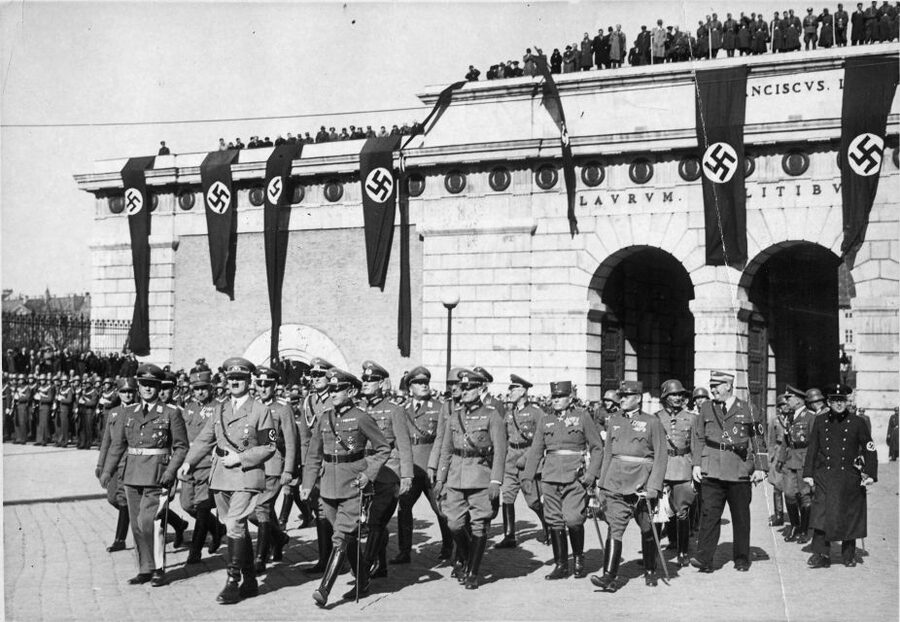
Your guide begins with Hitler’s early years and his time as an art student. The purpose is not to excuse his later crimes or reduce history to a simple psychological explanation. Instead, the tour looks at how Vienna’s political culture, ethnic rivalry, antisemitism, and fear formed part of the setting in which his ideas developed.
That context is valuable because Hitler’s rise can feel distant when you study it only through major events. Walking through the city where he spent formative years makes the subject more immediate. You begin to see Vienna not only as a beautiful capital, but also as a place where modern mass politics, prejudice, and nationalist anger were already in play.
More Walking Tours in Vienna
- Vienna: Guided Walking Tour of City Center Highlights
★ 4.7 · 4,989 reviews - Vienna: Vienna Central Cemetery Guided Walking Tour
★ 4.8 · 3,307 reviews - Vienna: Guided Walking Tour of City Highlights & Hidden Gems
★ 4.9 · 2,180 reviews
Hitler’s Vienna, explained without simple answers
The strongest guides keep the discussion balanced. Dieter is praised for linking many parts of the story together, while Stefan is noted for giving a broad account with strong storytelling. Wolfgang’s approach focuses on context and interpretation, and Siggi has used printed photographs to make past events easier to picture.
That range matters. A tour about Hitler can easily become sensational or overly focused on one personality. The better approach is to show the social world around him, then explain how his ideas developed within and later exploited that environment.
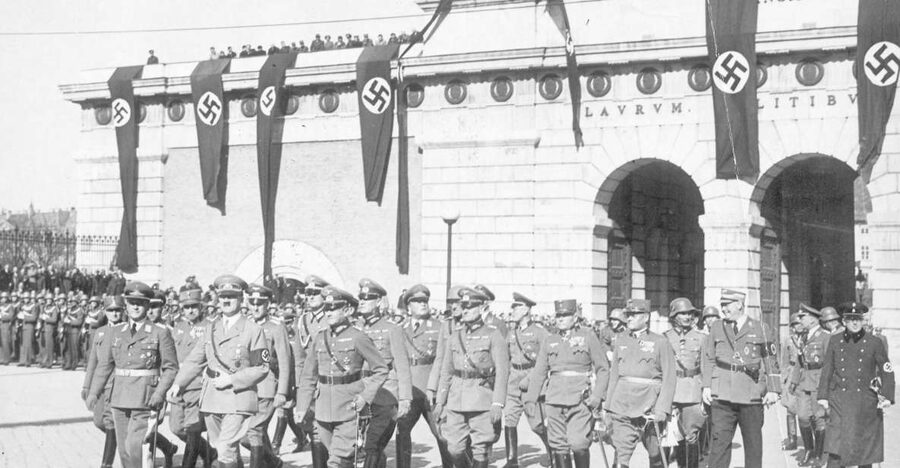
You will hear about Vienna’s political and social climate, including ethnic tensions and the way fear affected public life. You will also learn about the annexation of Austria, the event that brought the country into Nazi Germany, and how Vienna responded.
I especially like the tour’s moral seriousness. The guide does not simply recite facts and move on. Several guides have encouraged questions and posed difficult issues for the group to consider. That makes the walk useful even if you already know the basic outline of World War II.
If you have studied this period before, do not assume the tour will feel repetitive. The Austrian and Viennese viewpoint adds a different angle, especially regarding the annexation, local cooperation, liberation, and the city’s later attempt to deal with its past.
The synagogue that survived the Nazi regime
One of the key stops is the only synagogue in Vienna described as having survived the Nazi regime. Seeing the building in person gives the subject a physical anchor. You are not just hearing about the Jewish community in abstract terms. You are looking at one of the few surviving places connected directly to that religious and cultural life.
The stop also helps explain what was lost. Vienna once had a large Jewish population, and the tour addresses what happened when ethnic rivalry and fear spread through the city. The story is difficult, but the guide’s role is to place it in context and explain how persecution affected ordinary people and the city itself.
Do not expect a long interior visit. Entrance fees are not included, and the experience is primarily an outdoor walking tour. The value here comes from the location, the explanation, and the connection between the surviving building and the community that Nazi rule tried to destroy.
This is a good example of why a guided walk can add more than a museum label. A building can look quiet and ordinary until someone explains the events tied to it. At this stop, the guide turns a surviving structure into part of a much larger story about identity, fear, and memory.
Vienna’s Holocaust memorial and the weight of remembrance
The Holocaust memorial is another major stop. It is a somber place, and the tone changes noticeably. The tour is not designed as light sightseeing, so you should give yourself room to listen and think.
The memorial helps move the focus away from political leaders and military events. World War II was not only about annexation, bombing, occupation, and liberation. It was also about the destruction of human lives and communities. The memorial gives that reality a central place in the walk.
Several guides are praised for handling difficult material with sympathy and care. Charles, in particular, is described as thoughtful when dealing with complex and painful history. That matters because the subject calls for more than facts. The guide needs to explain clearly without turning suffering into entertainment.
You may find this section especially useful if you want to understand how Vienna remembers the Holocaust today. The tour does not erase the city’s beauty, but it refuses to let the grand architecture hide the past.
More historical tours:
- Vienna: Time Travel and Magic Vienna History Tour
★ 4.6 · 3,879 reviews - Vienna Historic Center Small Group Walking Tour
★ 5.0 · 1,746 reviews - Time Travel-Magic Vienna History Tour Ticket
★ 4.5 · 1,099 reviews - Skip-the-Line Schonbrunn Palace Guided Tour and Vienna Historical City Tour
★ 3.5 · 940 reviews
Bomb damage and the physical scars of war
The walk also examines the effect of more than 100,000 bombs on Vienna. The point is not simply to count destruction. It is to show how the war altered the city’s buildings, streets, and daily life.
Some damage may be visible in surviving structures or explained through locations along the route. Other details come through photographs and stories shared by the guide. Siggi’s use of historical images is particularly helpful because it lets you compare present-day Vienna with wartime scenes.
This part of the tour works best when you slow down and look closely. Vienna’s center can seem almost untouched at first glance, especially beside its grand palaces and monumental avenues. The guide helps you notice the traces that are easy to miss and understand how much rebuilding shaped the city you see today.
The bombing section also adds balance. The tour does not focus only on Nazi crimes or only on Hitler’s biography. It follows the war through its wider effects, including destruction, civilian suffering, liberation, and the hard work of rebuilding.
The divided city after 1945
After the war, Vienna entered another unusual chapter. The city was divided among the Allied powers, and it was the only city in the world where the Allied powers managed a shared zone together.
That arrangement can be hard to grasp from a map or textbook. On foot, the explanation becomes easier to follow because the guide links the political system to actual parts of Vienna. You learn how the city was administered after the fighting ended and how the occupation shaped Vienna’s postwar identity.
This is one of the tour’s less familiar subjects, and it gives the walk a wider time frame. You are not finished with the story in 1945. The tour continues into the years when Vienna was divided, occupied, and rebuilding its political life.
I find this especially useful for understanding why Vienna feels different from other European capitals affected by the war. The city’s postwar experience was shaped not only by destruction, but also by cooperation and tension among the Allied powers.
How the walking itself feels
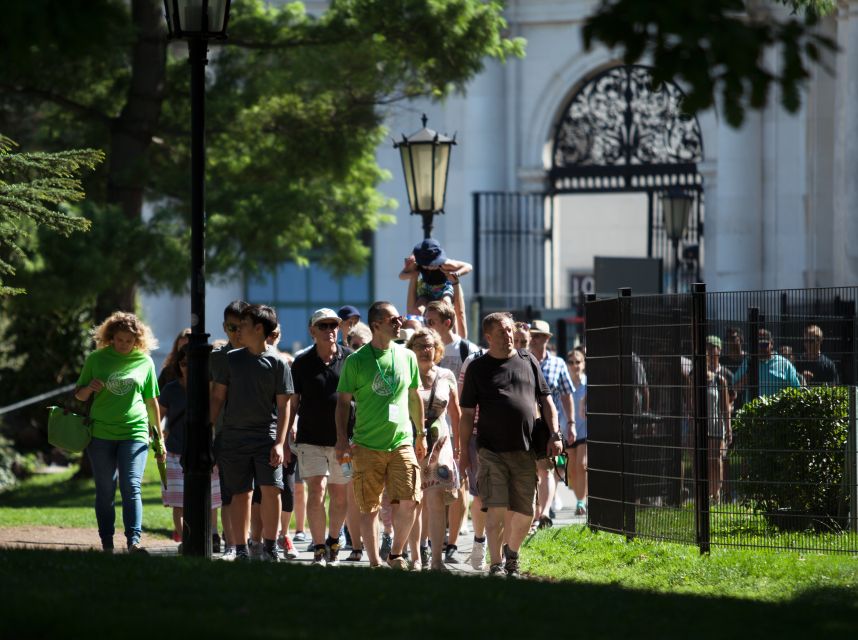
The route covers about 4 kilometers over 2.5 hours, based on practical details shared about the walk. That is a reasonable distance for most people who are comfortable walking through a city, but it is not a stationary talk.
You alternate between walking, listening, and stopping at points of interest. Several guides build in chances to sit, use a restroom, or take a short break. On rainy or cold days, they may pause indoors or look for shelter, and one guide adjusted the timing during heavy rain.
You should wear comfortable shoes and dress for the weather. Vienna’s weather can change quickly, and a historical walk becomes much less enjoyable when you are cold, wet, or distracted by sore feet.
The tour does not return to the Albertina starting point. A subway stop is close to the end, which makes it easy to continue sightseeing or return to your hotel, but you should not plan to leave luggage or arrange transport on the assumption that you will finish where you began.
The route is described as manageable even for one person with mobility issues, although conditions can vary by day and group. If you have limited mobility, ask the provider for current route details before booking rather than relying only on general impressions.
Headsets, group size, and guiding quality
One of the most useful practical features is the audio headset system. The guide speaks through a microphone, and the group listens through earpieces. This means you can hear clearly without crowding around the guide or walking within a few feet of the speaker.
That is especially helpful on busy streets and with larger groups. It also lets you look at a building while listening instead of constantly watching the guide’s position.
The main strength of the tour is the quality of its guides. Dieter is frequently praised for his depth of knowledge, clear explanations, patience, and storytelling. Stefan is described as entertaining and very well informed. Michael is noted for connecting separate events into one understandable story.
Other guides bring different strengths. Siggi has adapted discussions to the group’s interests and used photographs to explain events. Wolfgang has offered interpretation rather than simply listing dates. Charles has handled difficult subjects with care, and Florian has shown flexibility when weather disrupted the walk.
Because the guide can change, your experience may vary in style. The consistent thread is strong subject knowledge, clear speaking, and a willingness to answer questions. That is important on a topic where a poor guide can make the walk feel like a lecture, while a good one can make two and a half hours pass quickly.
Is $31 a fair price?
At $31, this is good value if you want historical interpretation rather than a basic orientation walk. You are paying for 150 minutes of live guiding, a carefully connected route, and access to a subject that is difficult to understand from sightseeing alone.
The price does not include entry to attractions or transport. That keeps the cost simple, but you should budget separately if you want to visit museums, memorial interiors, or other paid sites afterward.
The value is highest for people who would otherwise spend time reading plaques or piecing together the story themselves. A guide can show you how Hitler’s early years, Vienna’s Jewish community, bombing, annexation, liberation, and Allied occupation fit together.
I would book it near the beginning of your Vienna stay if World War II history matters to you. One guide specifically suggested that timing because the tour helps you understand the city and gives you a stronger frame for later sightseeing.
Free cancellation up to 24 hours before the start and the option to reserve without paying immediately also make it easier to fit into a changing itinerary. These are useful safeguards, especially when weather may affect a long outdoor walk.
Who should book this Vienna history walk?
I recommend this tour if you:
- Want the Austrian perspective on World War II
- Have an interest in Hitler’s early years and the annexation of Austria
- Prefer historical sites explained in their city setting
- Can walk about 4 kilometers over 150 minutes
- Are comfortable with serious material about antisemitism, persecution, war, and the Holocaust
- Want a live English-speaking guide who can answer questions
It may not suit you if you want a relaxed sightseeing stroll with little political discussion. It is also not the best choice if you need indoor attractions, extensive museum time, or a route that returns to the starting point.
Families with older teenagers may find the walk useful, but parents should judge how suitable the subject is for their children. The tone is serious, and the Holocaust section requires maturity.
My verdict: book it for context, not spectacle
I would book the Vienna World War II Historical Walking Tour if you want to understand how war and dictatorship affected Vienna itself. The surviving synagogue, Holocaust memorial, bombing history, and divided-city story give the walk a strong range, while the best guides add empathy and clear context.
The main tradeoff is that you spend 2.5 hours walking outdoors without entering attractions. Still, at $31, the tour offers a thoughtful look at parts of Vienna you could easily pass without understanding. Bring good shoes, dress for the weather, and arrive at the green umbrella by the Albertina. If the city’s 20th-century past matters to you, this is time and money well spent.
FAQ
Where does the Vienna World War II Historical Walking Tour begin?
It begins in front of the Albrechtsbrunnen fountain, downstairs at the Albertina Museum, next to the Vienna Opera House. The closest subway stop is Karlsplatz/Oper.
How long does the walking tour last?
The tour lasts 150 minutes, or 2.5 hours.
What language is the tour in?
The live guided tour is conducted in English.
Does the tour include attraction entrance fees?
No. Entrance fees to attractions are not included. The experience includes the live guide and walking tour.
How much walking should I expect?
The route covers about 4 kilometers over the 2.5-hour tour. Comfortable shoes and clothing suited to the weather are recommended.
Does the tour return to the starting point?
No. The tour does not return to the Albertina meeting point, but a subway stop is close to the end of the route.
More Walking Tours
- Vienna: Viennese Underworld Guided Walking Tour
★ 4.7 · 1,865 reviews - Vienna: Private Walking Tour with a Local Guide
★ 4.6 · 1,420 reviews - Vienna: 1.5-Hour Underground Walking Tour
★ 4.9 · 1,146 reviews - Vienna: Ghosts and Legends Guided Nighttime Walking Tour
★ 4.4 · 1,088 reviews
Just added around Vienna
- Mobile puzzle rally tour at the Vienna Central Cemetery★ 4.5 · 3 reviews
- 8 days European Highlights PRIVATE TOUR from Budapest including Budapest Vienna Prague and Bratislava★ 5.0 · 3 reviews
- RAXI (E-Rickschaw) big private Vienna tour★ 4.5 · 3 reviews
- Private Transfer from Vienna to Prague with 1 hour Stop in Kutna Hora★ 4.5 · 3 reviews
- Palais Lobkowitz Audio Guide Tour★ 4.0 · 3 reviews
- Private Tour from Vienna to Melk and Dürnstein★ 4.5 · 3 reviews
- Vienna: Designer Fashion Time Capsule Experience★ 5.0 · 3 reviews
- Vienna Sight & Gourmet Tour – individual private tour★ 4.5 · 3 reviews
Historical Tours, compared.


Vienna Historic Center Small Group Walking Tour
Read our review →
Skip-the-Line Schonbrunn Palace Guided Tour and Vienna Historical City Tour
Read our review →
Vienna Mozart Concert in Historical Costumes at the Musikverein
Read our review →
Browse the lists this tour appears in