
Reviewed · ATTRACTION TICKETS IN SALZBURG
DomQuartier Day Ticket
History opens behind those palace doors. The DomQuartier brings Salzburg’s Residenz state rooms, cathedral collections, St. Peter’s treasures, and the Cathedral Arches Terrace into one well-planned visit. I especially like the way the route restores the old links between the palace, cathedral, and abbey, and I like the freedom to leave and return during the same day. The main drawback is timing: the complex is large, and arriving too close to closing can leave you rushing or even turned away.
At about $14 per person, this is a strong-value ticket for anyone who wants more than a quick look at Salzburg’s famous cathedral. The online audio guide helps explain the rooms and objects in several languages, though you need your own smartphone and an internet connection. Bring time, not luggage. Large bags, food, drinks, cameras, umbrellas, and selfie sticks are not allowed.
In This Review
- Key points at a glance
- Why the DomQuartier matters in Salzburg
- The Salzburg Residenz: power in painted rooms
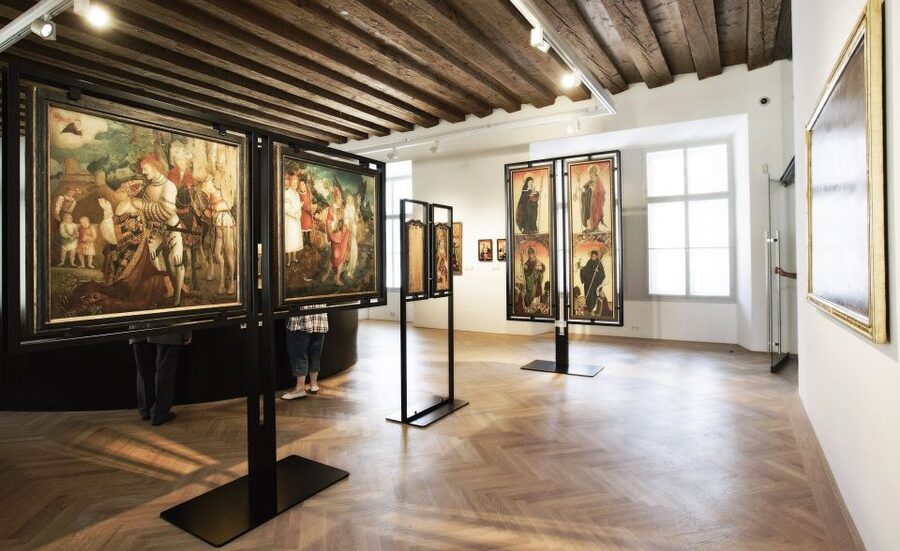
- The Residenz Gallery and its European paintings
- The Cathedral Arches Terrace and the view over Salzburg
- The North Oratory and changing exhibitions
- The cathedral organ loft and Cathedral Museum
- The Long Gallery and St. Peter’s treasures
- The Franciscan Church view and Carabinieri Hall
- How much time should you allow?
- Audio guide, languages, and family use
- Price, restrictions, and practical value
- Who will enjoy the DomQuartier most?
- Should you book the DomQuartier Day Ticket?
- FAQ
- Where does the DomQuartier visit start and end?
- How long is the DomQuartier ticket valid?
- What does the ticket include?
- Is an audio guide included?
- Which languages are available for the audio guide?
- Can I bring food, drinks, or a large bag?
- Is the DomQuartier wheelchair accessible?
Key points at a glance
- 2,000 objects across 15,000 square meters: The route covers 1,300 years of art, religion, and political power.
- A restored historic connection: Walk through passages that once linked the Residenz, Salzburg Cathedral, and St. Peter’s Abbey.
- The Cathedral Arches Terrace: Pause above the city for one of the complex’s best views.
- A self-guided visit with flexibility: Your ticket allows multiple admissions on the same day, so you can break up the visit.
- Five major museum areas: See the Residenz Gallery, Cathedral Museum, North Oratory, Long Gallery, and Museum St. Peter.
- A good price for a long visit: At roughly $14, it offers far more than a single-room palace admission.
Why the DomQuartier matters in Salzburg
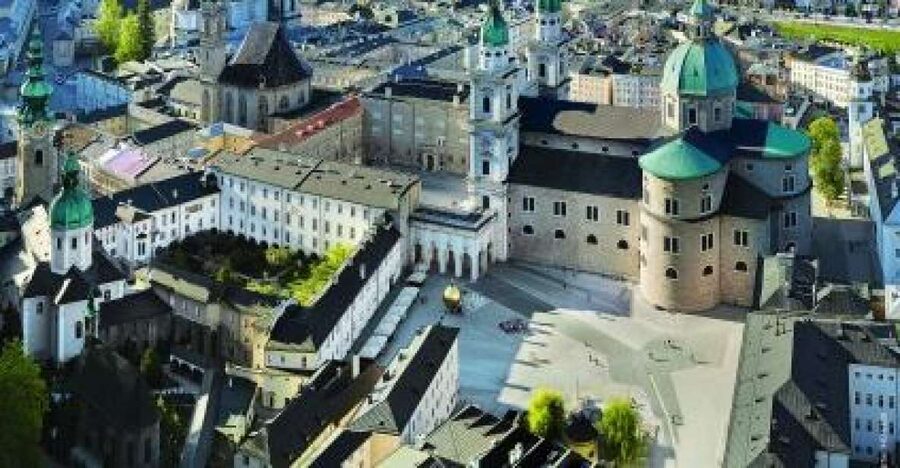
Salzburg’s cathedral and Residenz form the historic center of the city, but for 200 years their connections were blocked or walled off. The DomQuartier reopened those links to the public in 2014, allowing you to walk through the same network of rooms, galleries, terraces, and passages that once joined the centers of religious and political power.
That layout is the real idea behind the visit. You are not simply moving from one unrelated museum to another. The route shows how Salzburg worked under its prince archbishops, who governed both church affairs and the city itself. Their palace was the secular seat of power, while the cathedral and St. Peter’s Abbey represented religious and intellectual authority.
I find that context useful because Salzburg can otherwise feel like a collection of attractive façades. The DomQuartier lets you see how the buildings fit together and why they were built with such scale and ceremony.
The complex also reflects the work of Prince Archbishop Guidobald von Thun, who ruled from 1654 to 1668. During those 14 years, he helped shape the cathedral squares, the Residenz, the cathedral arches, the art gallery, and the connecting passageways. His building program explains much of the Baroque character you see along the route.
More Attraction Tickets in Salzburg
- Salzburg: Hohensalzburg Fortress Admission Ticket
★ 4.6 · 2,236 reviews - Salzburg: Salt Mine Entrance Ticket
★ 4.8 · 258 reviews - Salzburg: The Magic Flute at Marionette Theater Ticket
★ 4.7 · 255 reviews
The Salzburg Residenz: power in painted rooms
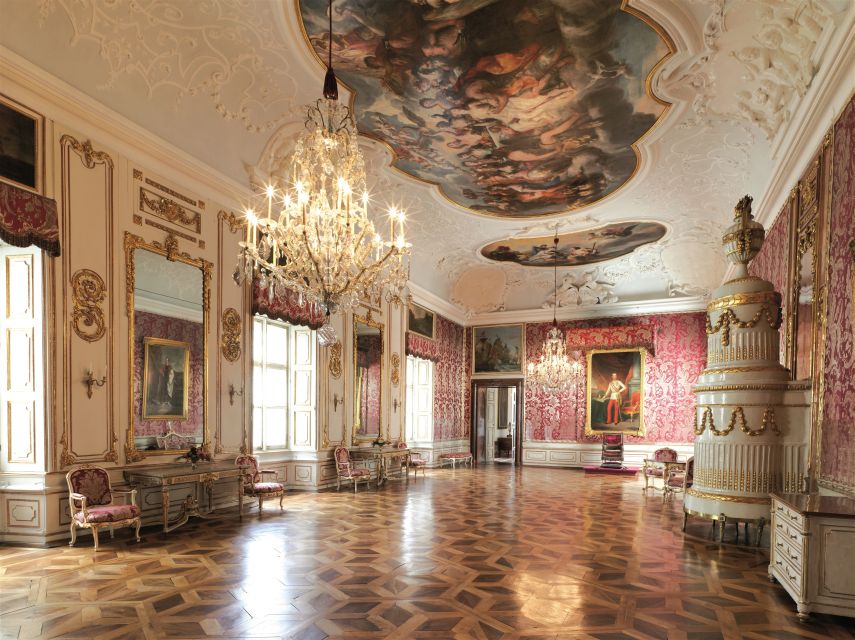
Begin with the State Rooms of the Salzburg Residenz, the former living quarters and official rooms of the prince archbishops. These spaces were designed to impress, and they succeed before you even start studying the individual works of art.
Expect lavish stucco, ceiling frescoes, and interiors that turn government into theater. The rooms communicate rank through decoration, scale, and careful views between spaces. The point was not quiet comfort. It was to show visitors that Salzburg’s rulers had the money and authority to command this kind of setting.
The audio guide is particularly useful here because a grand room can otherwise become a blur of gilded details. I would listen to the explanation of each room, then look up and around without trying to memorize every name and date. The best approach is to notice how the rooms change in size and decoration as the route continues.
The State Rooms are also a good place to understand why the DomQuartier works better than a palace-only visit. The palace was not an isolated royal residence. It was tied directly to the cathedral and the wider church complex. Once you leave the rooms, the next parts of the route make more sense.
One practical note matters here: some areas may be closed on certain days because of conversion work or events in the State Rooms or cathedral. If a particular room is essential to your visit, check ahead with the DomQuartier before arriving.
The Residenz Gallery and its European paintings
The Residenz Gallery presents European paintings from the 16th through the 19th centuries, with a strong focus on the Baroque period. This is a welcome change of pace after the architecture of the State Rooms.
I like the contrast. In the palace rooms, the decoration surrounds you. In the gallery, you can focus on individual paintings and compare the artistic tastes of the people who assembled the collection. The setting still feels formal, but the paintings give the visit a more traditional museum rhythm.
You do not need to be an art expert to enjoy this section. Look for the difference between religious subjects, portraits, and grand Baroque compositions. The audio guide can give you a path through the collection, but you can also move at your own speed.
The gallery is located on the third floor and provides access to the terrace. A small museum shop there sells drinks, which can be useful during a longer visit. Food and drinks are not allowed in the exhibition areas, so do not plan on carrying refreshments through the route.
The Cathedral Arches Terrace and the view over Salzburg
The Cathedral Arches Terrace is one of the most memorable parts of the visit because it brings the city outside the museum walls. From this elevated passage, you can look across Salzburg from a position that feels suspended between the palace and cathedral.
The terrace combines the secular and religious sides of the complex in a single view. You have the Residenz behind you, the cathedral close by, and Salzburg opening out beyond the arches. It is a smart place to pause and get your bearings before continuing indoors.
I would not rush this stop. The route contains many rooms and objects, so the terrace gives your eyes a needed break. It also helps you understand the physical relationship between the buildings, which is one of the main reasons to visit the DomQuartier.
Access can be restricted in exceptional cases, including a special event or storm warning. The terrace is not a guaranteed stop in every kind of weather, but under normal conditions it is included with the ticket.
A few more trips of this kind worth comparing:
- The Original Sound of Music Tour in Salzburg
★ 4.5 · 6,129 reviews - Salzburg: Original Sound of Music Tour
★ 4.8 · 5,059 reviews - From Salzburg: Half-Day Tour to Hallstatt
★ 4.6 · 3,596 reviews - Salzburg: Mozart Concert at Mirabell Palace
★ 4.8 · 3,498 reviews
The North Oratory and changing exhibitions
The North Oratory preserves part of the cathedral’s original structure and is used for special exhibitions. The material can change, so this section is less predictable than the permanent museums.
An initial exhibition presence includes the Salzburg Museum and the Rossacher collection. I would treat this area as an added benefit rather than the sole reason to buy the ticket. Its value depends on what is being shown during your visit.
The North Oratory also helps reveal the cathedral’s earlier arrangement. Instead of viewing the cathedral only as a finished Baroque landmark, you get a sense of its changing spaces and uses. That makes the DomQuartier feel more architectural than a standard art museum.
The cathedral organ loft and Cathedral Museum
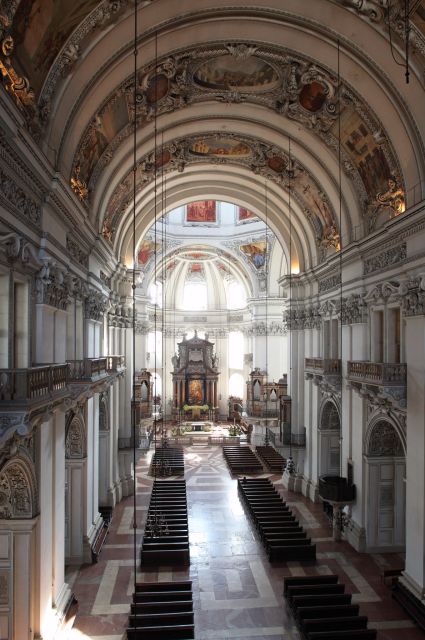
From the organ loft, you gain an impressive view into Salzburg Cathedral. This is another point where the route does more than place art in display cases. It gives you a new angle on a building you may already have seen from the floor.
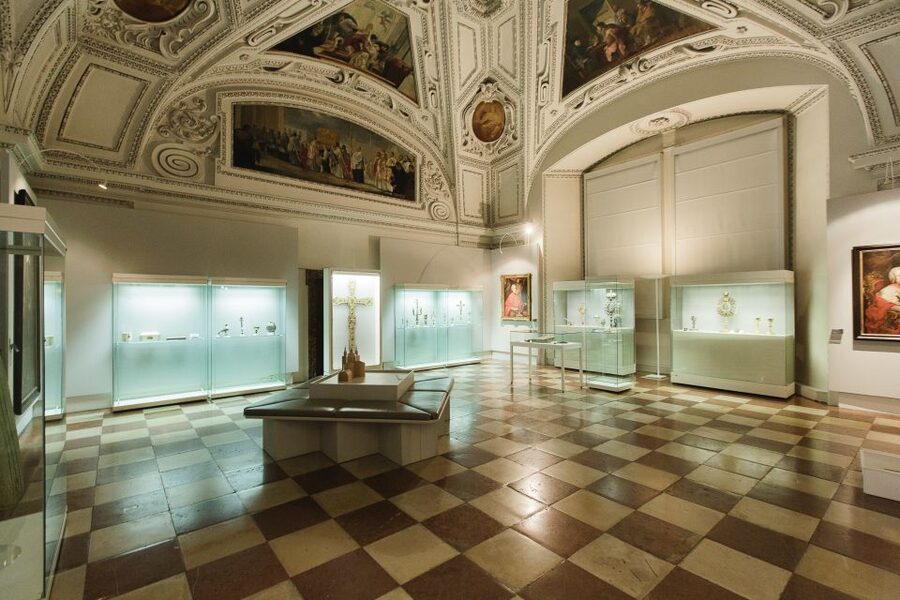
The Cathedral Museum then brings together centuries-old religious art and objects connected with the cathedral. The displays cover a long span of Salzburg’s cultural life, so you might find the section more rewarding if you take time with the audio guide rather than trying to race through it.
I would pay attention to the change in mood. The Residenz rooms are about political display, while the Cathedral Museum turns toward worship, ritual, and artistic devotion. The two areas belong together, but they tell different parts of Salzburg’s story.
The route may also include access to a Kunstkammer, or chamber of art and curiosities. These collections traditionally gather unusual, precious, and finely made objects, offering a glimpse into how rulers and church institutions displayed learning and wealth.
The Long Gallery and St. Peter’s treasures
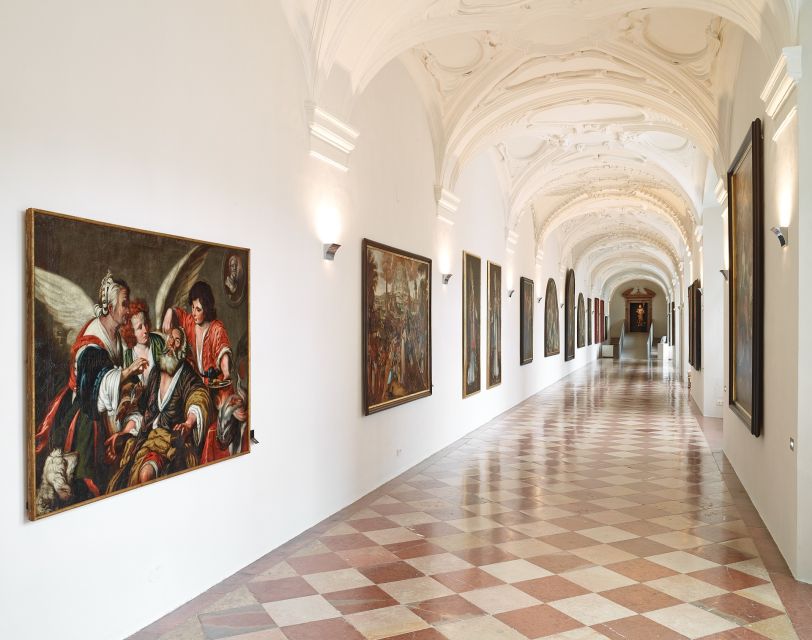
The Long Gallery at St. Peter’s Abbey continues the art-focused side of the visit. The gallery is linked to the building program of Guidobald von Thun, who created the original art gallery as part of the connected complex.
The Museum St. Peter is perhaps the most distinctive stop for anyone interested in Salzburg’s religious culture. St. Peter’s Abbey is considered the oldest continuously operating monastery in the German-speaking countries, and its cultural role reaches well beyond the cathedral precinct.
The abbey has an art collection estimated at 40,000 objects. The museum presents a selection of its finest pieces in a specially designed permanent display. These treasures had not been shown together in this way since 1982, so the museum gives you access to material that was not always part of a public visit.
You might find this section quieter and more reflective than the palace. It also completes the story of the complex. Salzburg’s prince archbishops used architecture and art to project power, while St. Peter’s Abbey helped shape the city’s intellectual and cultural life over many centuries.
The Franciscan Church view and Carabinieri Hall
The route includes a look into the Gothic choir of the Franciscan Church. This provides another architectural contrast, since the church’s Gothic character differs from the grand Baroque spaces elsewhere in the DomQuartier.
The visit ends in the magnificent Carabinieri Hall of the Salzburg Residenz. Ending back in the palace is fitting. After seeing the cathedral, galleries, abbey treasures, and connecting passages, you return to the building that represented the prince archbishops’ official power.
I like this route design because it gives the visit a clear beginning and end. One visitor described it as easy to follow, with little worry about missing sections. That matters in a complex of this size, especially when you are trying to fit the DomQuartier into a busy Salzburg day.
How much time should you allow?
The ticket is valid for one day and permits multiple admissions on that day. You can interrupt the visit and return later, which is a major advantage if you want lunch elsewhere, a cathedral service, or a break from indoor museums.
The complex contains enough material for several hours. One person who enjoyed the visit said half a day would have been easy to spend there, and I agree that two hours should be treated as a minimum rather than a target.
Arrive early enough to avoid a rushed final hour. The practical advice is to get there at least two hours before closing. If you arrive only one hour before closing, admission may not be allowed, and even if you enter, you will have little time for the major sections.
A sensible plan is to visit the Residenz and gallery first, take your terrace pause, then continue through the cathedral and St. Peter areas. If you have a full day in Salzburg, you can split the DomQuartier into two visits and use the re-entry privilege.
Audio guide, languages, and family use
The audio guide is available online, so you use your own smartphone rather than automatically borrowing a device. No pre-installation is needed. You need a current web browser and an internet connection, and free Wi-Fi is available in the museum.
The guide is offered in German, English, Dutch, Italian, French, Spanish, Russian, Mandarin, Korean, and Japanese. A children’s version is available in German, English, and Italian, which gives families a better way to keep younger visitors involved.
From 2025, a borrowed audio guide may be available for a €2 fee. If you prefer not to use your phone, ask about that option when you arrive. I would also bring a charged phone and headphones, since the online format depends on your device.
There is no live guide included. That keeps the price low and gives you control over your pace, but visitors who prefer conversation and immediate answers may find the experience less personal.
Price, restrictions, and practical value
At around $14 per person, the DomQuartier offers good value because the ticket covers a large group of connected museums rather than one short exhibit. The all-day validity makes the price even more attractive. You can see the major rooms, take a break, and return without paying again.
The restrictions are strict but understandable in a museum complex. Smoking, food, drinks, flash photography, cameras, selfie sticks, umbrellas, pets, and large bags are not allowed. Assistance dogs are permitted.
Wheelchair access is available. Still, because the complex includes historic rooms, passages, and several linked institutions, it is wise to ask ahead about any temporary access changes, especially if construction or an event is taking place.
There are no transfers included, so you make your own way to DomQuartier Salzburg. The activity begins and ends at the DomQuartier, making it easy to combine with other central Salzburg sights.
Free cancellation is available up to 24 hours before the visit for a full refund, and you can reserve now and pay later if that option is offered at booking. Those policies are useful when weather or a changing Salzburg schedule affects your plans.
Who will enjoy the DomQuartier most?
I would recommend this ticket to you if you enjoy historic buildings, church art, palace interiors, and self-guided museum visits. It is especially good for people who want to understand how Salzburg’s cathedral, palace, and abbey formed one working center of power.
Families can benefit from the children’s audio guide, while art lovers will find plenty to study in the Residenz Gallery, Cathedral Museum, Long Gallery, and Museum St. Peter. The terrace also gives the visit a welcome outdoor pause.
You may want to skip it if you have only a short stop in Salzburg and prefer a single major sight. The DomQuartier rewards patience. With limited time, you could see the State Rooms and terrace but miss the full story told by the cathedral and St. Peter sections.
Should you book the DomQuartier Day Ticket?
Book it if you want a substantial cultural visit at a modest price and like exploring at your own speed. The strongest reasons are the restored connections between the buildings, the State Rooms, the Cathedral Arches Terrace, and the chance to see St. Peter’s collections in a public museum setting.
I would plan at least two hours, arrive well before closing, and charge your phone for the audio guide. If you can spare half a day, the ticket becomes one of Salzburg’s better values. If you want a short, guided introduction with a live expert, this self-guided format may not be your best match.
FAQ
Where does the DomQuartier visit start and end?
The visit starts at DomQuartier Salzburg and ends back at the same meeting point.
How long is the DomQuartier ticket valid?
The ticket is valid for one day. It allows multiple admissions on the day of validity, and you can interrupt the visit and resume it later that same day.
What does the ticket include?
It includes admission to the DomQuartier and access to the Cathedral Arches Terrace, except when the terrace is closed for an exceptional event or storm warning. Free Wi-Fi is also available.
Is an audio guide included?
An online audio guide is included for use on your own smartphone. You need an up-to-date web browser and an internet connection, and no pre-installation is required. From 2025, a borrowed audio guide may be available for a €2 fee.
Which languages are available for the audio guide?
The audio guide is available in German, English, Dutch, Italian, French, Spanish, Russian, Mandarin, Korean, and Japanese. A children’s version is available in German, English, and Italian.
Can I bring food, drinks, or a large bag?
No. Food, drinks, large bags, umbrellas, cameras, selfie sticks, and smoking are not allowed inside. Drinks can be purchased in the museum shop located in the Residenz Gallery on the third floor.
Is the DomQuartier wheelchair accessible?
Yes, the experience is wheelchair accessible. Some areas may have temporary partial closures because of conversion work or events, so you can check with the DomQuartier before your visit.
Just added around Salzburg
- Salzburg & “The Sound of Music” Full Day Driver-Guided Tour★ 5.0 · 3 reviews
- MONDSEE: The Strudelgirl – bake your Apple Strudel Dream★ 5.0 · 3 reviews
- Zell am See Alpine Village Private Day Trip from Salzburg★ 5.0 · 3 reviews
- Salzburg “Sound of Music” Private Driver-Guided Tour★ 5.0 · 3 reviews
- Private Transfer from Salzburg to Vienna: Door-to-door, English-speaking driver★ 4.5 · 3 reviews
- From Vienna: Austrian Lakes and Salzburg Private Tour★ 5.0 · 3 reviews
- Salzburg für Salzburger★ 5.0 · 3 reviews
- Private Tour: Discover Salzburg and the Stunning Lake District★ 5.0 · 3 reviews
Attraction Tickets in Salzburg, compared.
Salzburg Cathedral: Guided Tour with Entry Ticket
Read our review →
The Sound of Music at Marionette Theater Ticket
Read our review →
Stiegl Brewery Museum Entry Ticket & Beer Tasting
Read our review →Browse the lists this tour appears in