
Reviewed · ATTRACTION TICKETS IN SALZBURG
Salzburg: The Magic Flute at Marionette Theater Ticket
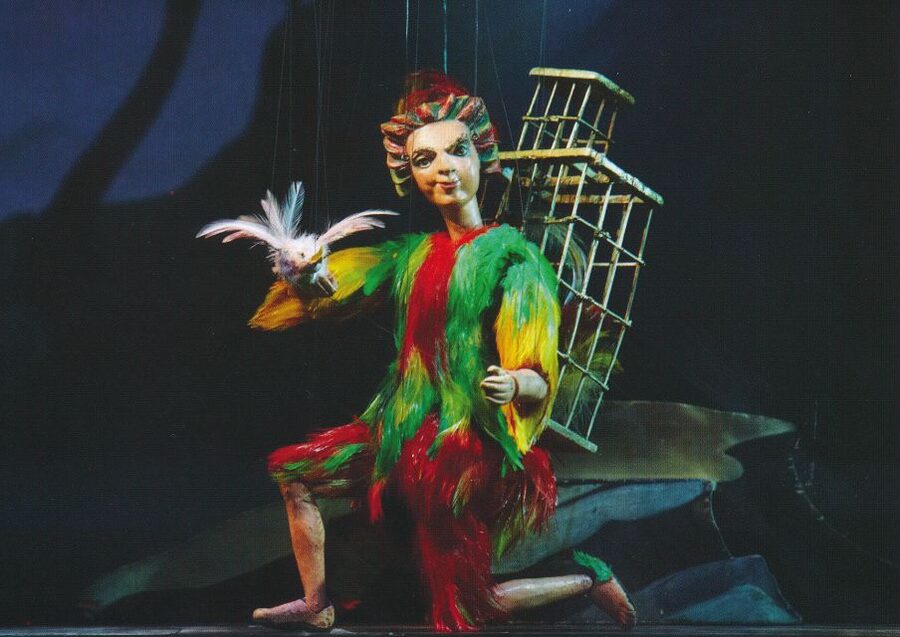
Magic comes on tiny strings. Salzburg’s Marionette Theatre turns Mozart’s The Magic Flute into a compact opera with hand-operated puppets, live singing, dancing, stage surprises, and a remarkable show of manual skill. I like the chance to see this famous work in a 350-seat Baroque-style auditorium, and I like that the production works for families as well as opera fans. The theater itself is part of Salzburg’s UNESCO-listed cultural tradition, which gives the evening more weight than a standard stage show.
The main drawback is language and sound clarity. The opera is performed in German, and the puppets can be hard to understand, especially for younger children. English, Spanish, French, and Chinese explanations are projected on a wall near the stage, but this is still a visual performance first, not an easy English-language introduction to Mozart.
In This Review
- Key points to know before booking
- Why Salzburg’s puppet opera is worth your evening
- Entering the 350-seat Baroque-style auditorium
- How the 65-minute and two-hour versions differ
- What happens during the performance
- German singing, projected explanations, and the family question
- The puppeteers are the real stars
- Mozart’s music without the promise of a full live orchestra
- Is $38 a fair price?
- Who should book this Salzburg experience?
- Practical tips for getting more from the show
- Should you book The Magic Flute at the Marionette Theatre?
- FAQ
- Where does The Magic Flute puppet show take place?
- What opera is performed?
- How long does the performance last?
- How much does the ticket cost?
- Is the performance in English?
- Is this experience suitable for children?
- What is included with the ticket?
- Are food and drinks included?
- Can I cancel the booking?
- Can I reserve now and pay later?
Key points to know before booking
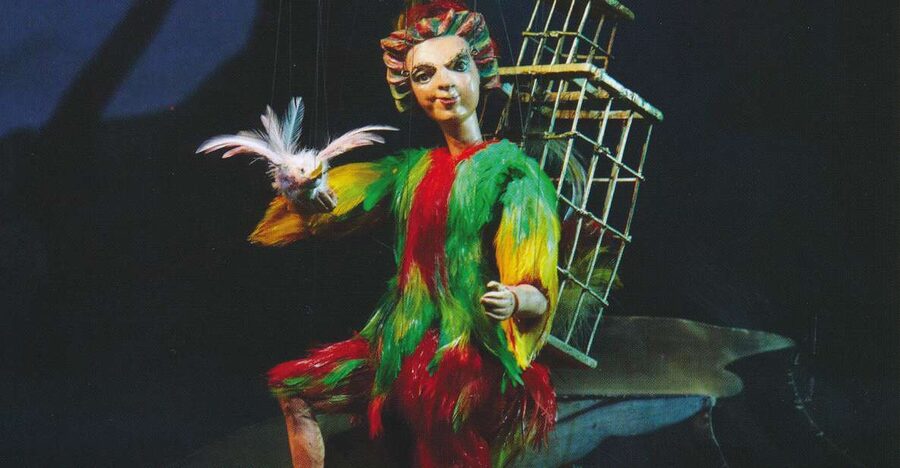
- Hand-operated puppets tell Mozart’s most famous opera: The attraction is the careful control of each figure, not just the novelty of seeing puppets on stage.
- The theater is part of the experience: You enter a historic miniature opera house with a 350-seat Baroque-style auditorium.
- Choose between roughly 65 minutes and two hours: Check the available performance length and start time before booking.
- German is the performance language: Projected explanations are available in English, Spanish, French, and Chinese.
- A strong family culture experience: The show is designed for all ages, though younger children may struggle with the German singing and puppet voices.
- The opening stage setup can be a treat: The production may let you watch scenery being placed before the performance begins.
Why Salzburg’s puppet opera is worth your evening
Many people know The Magic Flute by reputation, but an opera can feel formal and hard to approach. This version lowers the barrier. You do not need to know every plot turn or understand every German phrase to appreciate the bright stage pictures, the movement of the figures, and the comic spirit of the story.
I especially like the way this production puts the performers’ hands at the center of the experience. The puppets do not simply sit on strings and glide around by themselves. A professional team controls them with precision, matching movement to music, character, and mood. That makes the show part opera, part theater, and part craft demonstration.
The result is unusual without feeling like a cheap gimmick. Mozart’s music remains the anchor, while the puppets add a layer of visual fantasy. You get a familiar work through an art form closely tied to Salzburg’s cultural identity.
More Attraction Tickets in Salzburg
- Salzburg: Hohensalzburg Fortress Admission Ticket
★ 4.6 · 2,236 reviews - Salzburg: Salt Mine Entrance Ticket
★ 4.8 · 258 reviews - Salzburg: Cathedral Entry Ticket with Audio Guide Option
★ 4.4 · 134 reviews
Entering the 350-seat Baroque-style auditorium
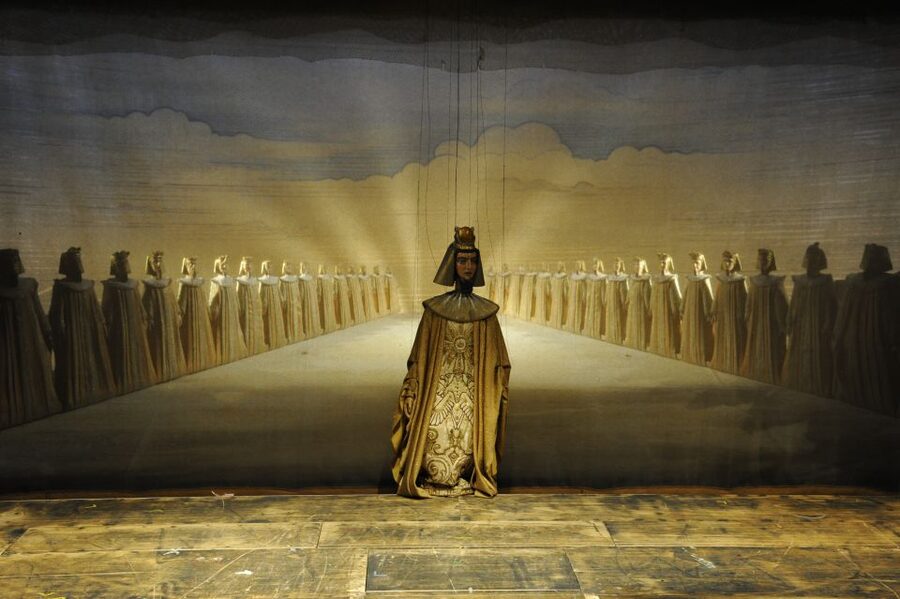
Before the curtain rises, take a moment to look at the theater itself. The venue is described as an iconic miniature opera house, with a 350-seat Baroque-style auditorium. That setting matters because it makes the performance feel like a small cultural ritual rather than a quick tourist attraction.
The scale is also part of the charm. A puppet opera needs a sense of closeness. You are watching a small stage, carefully controlled figures, and a compact cast of characters rather than a huge modern production built around spectacle.
One particularly appealing detail is the possibility of seeing the scenery placed before the performance starts. The stage setup can reveal some of the mechanics behind the illusion. Instead of hiding every practical detail, the theater may let you watch the set being arranged, which gives you a better sense of the work required before the first note.
That brief glimpse is useful for children and adults alike. It shows that the magic comes from preparation, timing, lighting, and many practiced hands. Once the performance begins, you can appreciate the illusion more because you have seen a small part of the machinery behind it.
How the 65-minute and two-hour versions differ
You can choose between a shorter version of about 65 minutes and a longer production lasting up to two hours. The exact option and start time depend on availability, so check carefully before you pay.
The shorter version is the easier fit if you have a packed Salzburg schedule. It gives you a taste of the story, Mozart’s music, the puppet technique, and the theater without asking you to reserve a large part of your evening. I would consider it the safer choice for families with young children or anyone unsure how much opera they want.
The two-hour version gives the material more room. The Magic Flute has a large cast, several changes in mood, and a mix of serious, comic, and fantastical moments. A longer performance can make the story easier to follow and give the puppeteers more time to show the full range of their work.
The tradeoff is attention span. Puppet movement is subtle, and German singing can be demanding if you do not speak the language. For children, the shorter version may hold interest better. For adults who want a fuller artistic experience, the longer option is likely the better value.
What happens during the performance
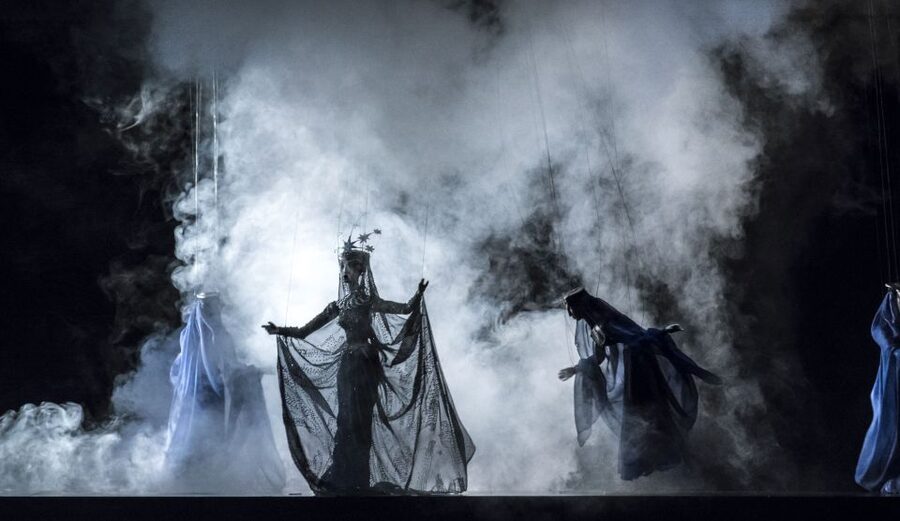
The show follows Mozart’s The Magic Flute, presented through puppets rather than full-size performers. Expect singing, dancing, stage movement, and visual surprises, all framed by the music and the fairy-tale qualities of the opera.
The puppets are the main attraction. Their movement requires more than pulling a cord at the right moment. The performers must coordinate posture, gestures, entrances, exits, and interaction with other figures. They also need to keep the characters expressive enough for the audience to understand their mood from a distance.
That is why you should watch the figures closely rather than treating them as simple decorations. A small turn of the head, a change in stance, or a carefully timed gesture can carry the meaning of a scene. The craft is easy to miss if you focus only on the singing.
The production also has a funky and playful quality. It is not presented as a stiff museum piece. The adaptation gives the opera a lighter, more accessible feel, which helps explain its appeal to families and people who might not normally book an opera.
Do not expect a standard English-language theater show. The singers perform in German, and explanations in English, Spanish, French, and Chinese are projected on a wall near the stage. These projections help you follow the action, but they do not turn the performance into a fully translated opera.
A few more trips of this kind worth comparing:
- The Original Sound of Music Tour in Salzburg
★ 4.5 · 6,129 reviews - Salzburg: Original Sound of Music Tour
★ 4.8 · 5,059 reviews - From Salzburg: Half-Day Tour to Hallstatt
★ 4.6 · 3,596 reviews - Salzburg: Mozart Concert at Mirabell Palace
★ 4.8 · 3,498 reviews
German singing, projected explanations, and the family question
The language issue deserves a clear warning. If you understand German, you will have a natural advantage. If you do not, you can still follow the broad story with the projected explanations, visual action, and familiar fairy-tale structure.
I would sit where you can keep both the stage and the projection area in view. The information is projected near the stage, so you may need to shift your attention between the text and the puppets. That is manageable for adults, but it can be harder for children who want to watch every movement.
The production is promoted for people of all ages and as a family experience. That is fair, but age and patience still matter. A child who enjoys music, puppets, and visual storytelling may have a wonderful time. A child who needs constant spoken explanation may find the German difficult.
One useful family tip comes from the audience response: the puppets can be hard to understand, and the show may work best for children around 12 and older. That is not a strict age rule, but it is a sensible guide if your children are not used to opera or foreign-language performances.
The puppets themselves can also feel magical to younger viewers. Their movement is distinctive, and the production offers something different from a film or a conventional theater show. I would explain beforehand that the story will be in German and that the figures may be more important than the words.
The puppeteers are the real stars
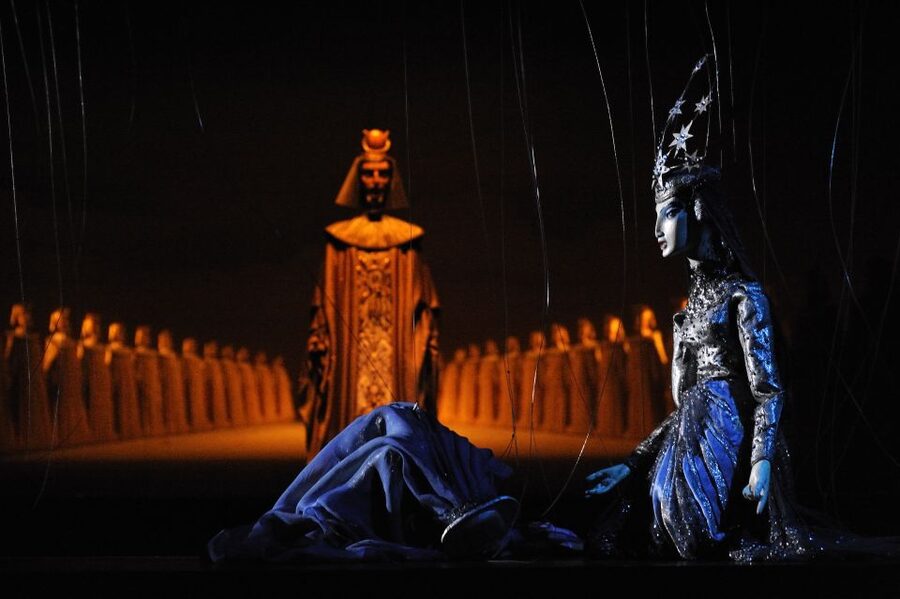
The most praised part of the experience is the puppeteers’ control. Their work combines musical timing, coordination, acting, and hand skill. You are not only watching The Magic Flute. You are watching a group of performers make wood, fabric, and small stage figures appear alive.
That skill becomes especially clear in group scenes. Several puppets must move in relation to one another while the singing and stage action continue. The performers need to keep the characters visually distinct and maintain the rhythm of the production.
Lighting adds another layer. The team behind the scenes helps shape the mood, reveal the scenery, and direct your attention. A personal thank-you in the audience response singled out both the puppeteers and the lighting staff, and that combination makes sense. Puppet theater depends on more than the figures alone.
The craft also gives this experience lasting value. You can hear Mozart in other settings, but it is rare to see his opera presented through such demanding hand work. The performance offers a close look at a traditional theater form while still feeling playful and accessible.
Mozart’s music without the promise of a full live orchestra
The music is central, but you should set your expectations carefully. The material promises a live performance with singing and dancing, yet it does not specify a live orchestra. One audience response noted that live music would have been ideal, so I would not book this expecting a full orchestral pit.
That does not make the experience poor. The puppets and singers remain the focus, and the production is built around the relationship between sound and movement. Still, music lovers who want a concert-level orchestral experience should see this as a puppet adaptation of Mozart’s opera, not a substitute for a major opera-house staging.
For many people, that distinction will not matter. The unusual presentation is the reason to choose this performance. If your priority is hearing every musical detail in the grandest possible form, compare it with a conventional opera before deciding.
Is $38 a fair price?
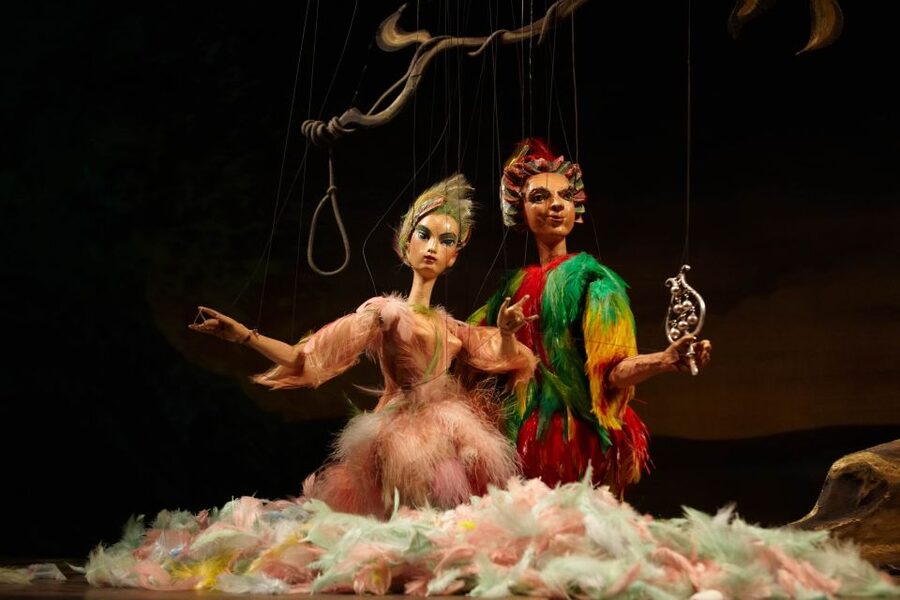
At about $38 per person, the ticket is not the cheapest evening activity in Salzburg. It becomes better value when you consider what is included: entry to the historic theater and the complete puppet production of The Magic Flute. You are paying for a specialized art form, a professional team, and a performance in a celebrated venue.
The price feels strongest for the longer version, especially if you already enjoy opera, classical music, or traditional theater. A two-hour cultural event in a historic setting can make a worthwhile evening centerpiece.
The shorter version may be better value for families who want a manageable introduction rather than a full night of opera. You still see the theater, the puppets, and the essential production, but you reduce the risk of restlessness.
Food and drinks are not included. That is easy to plan around, since the ticket is for the performance only. If you are arranging an evening meal, allow time before or after the show rather than expecting refreshments as part of the theater visit.
Free cancellation up to 24 hours before the performance also gives you some protection if your Salzburg schedule changes. The reserve-now, pay-later option can help if you want to secure a time while keeping your plans flexible.
Who should book this Salzburg experience?
I would recommend it most strongly to:
- Adults who want a different way to encounter Mozart
- Families with children who enjoy puppets and visual theater
- Visitors interested in Salzburg’s performing-arts traditions
- Opera newcomers who prefer a shorter and less formal introduction
- Fans of stagecraft, lighting, and hand-operated figures
- People looking for an indoor cultural activity with a clear time limit
I would be more cautious if you need an English-language performance, dislike reading projected explanations, or want a full live orchestral concert. The show can still be enjoyable, but it may not match your main reason for attending.
It is also worth checking the selected duration. The two-hour version may be too much for a young child, while the 65-minute version may feel brief if you want a full opera treatment.
Practical tips for getting more from the show
Read a short plot outline of The Magic Flute before you go. You do not need to study Mozart or memorize character names. A basic idea of the story will let you focus on the puppets, music, and staging instead of trying to work out every event.
Pay attention at the start. If the scenery is placed while the audience watches, that opening may be one of the most revealing parts of the visit. It shows how much labor goes into creating a polished miniature stage.
Keep your eyes moving between the action and the projected explanations. Since the words appear near the stage, you may not be able to read and watch every detail at the same time. For children, it can help to explain the main story before the curtain rises.
Finally, do not judge the puppets only by their size. Their effect comes from controlled movement. Watch how they respond to the music and to one another. That is where the performers’ skill becomes clearest.
Should you book The Magic Flute at the Marionette Theatre?
Yes, if you want a distinctive Salzburg evening that combines Mozart, historic theater, and demanding puppet work. The beautifully controlled puppets, the Baroque-style auditorium, and the chance to see scenery and stage mechanics make this more than a routine opera ticket.
Book with realistic expectations. German is the performance language, translations are projected rather than spoken, and a full live orchestra is not promised. For families, consider the shorter version and remember that children around 12 and older may follow the production more easily.
At $38, this is a fair splurge for a specialized cultural experience. I would choose it for its artistry and setting, not simply because it features a famous Mozart title.
FAQ
Where does The Magic Flute puppet show take place?
It takes place at the Salzburg Marionette Theatre in Salzburg, Austria. The theater has a 350-seat Baroque-style auditorium.
What opera is performed?
The production is an adaptation of Mozart’s The Magic Flute.
How long does the performance last?
Available versions last about 65 minutes or up to two hours. Check the available option and starting time when booking.
How much does the ticket cost?
The listed price is $38 per person.
Is the performance in English?
No. The Magic Flute is performed in German. Explanations are projected near the stage in English, Spanish, French, and Chinese.
Is this experience suitable for children?
Yes. The performance is presented as suitable for people of all ages and as a family experience. Children may find the German singing and puppet dialogue difficult to understand.
What is included with the ticket?
The ticket includes admission to The Magic Flute performance at the Salzburg Marionette Theatre.
Are food and drinks included?
No. Food and drinks are not included.
Can I cancel the booking?
You can cancel up to 24 hours in advance for a full refund.
Can I reserve now and pay later?
Yes. The reserve-now, pay-later option allows you to book your spot without paying immediately.
Just added around Salzburg
- Salzburg & “The Sound of Music” Full Day Driver-Guided Tour★ 5.0 · 3 reviews
- MONDSEE: The Strudelgirl – bake your Apple Strudel Dream★ 5.0 · 3 reviews
- Zell am See Alpine Village Private Day Trip from Salzburg★ 5.0 · 3 reviews
- Salzburg “Sound of Music” Private Driver-Guided Tour★ 5.0 · 3 reviews
- Private Transfer from Salzburg to Vienna: Door-to-door, English-speaking driver★ 4.5 · 3 reviews
- Salzburg für Salzburger★ 5.0 · 3 reviews
- From Vienna: Austrian Lakes and Salzburg Private Tour★ 5.0 · 3 reviews
- Private Tour: Discover Salzburg and the Stunning Lake District★ 5.0 · 3 reviews
Attraction Tickets in Salzburg, compared.

Salzburg Cathedral: Guided Tour with Entry Ticket
Read our review →
The Sound of Music at Marionette Theater Ticket
Read our review →
Stiegl Brewery Museum Entry Ticket & Beer Tasting
Read our review →Browse the lists this tour appears in