
Reviewed · WALKING TOURS
Introducing Vienna Walking Tour: The Capital of the Habsburgs
Vienna’s imperial center packs centuries into a few blocks. This two-hour walking tour gives you a clear introduction to the city, linking Roman ruins, Habsburg palaces, grand squares, wartime memorials, and St. Stephen’s Cathedral with stories from a professional guide. I especially like the small group limit of 15 people, which makes questions and conversation easier, and the way the route finishes near central Vienna’s chocolate shops. The main consideration is pace: you see many important places from outside, but there is little time to stop for photos or enter sights.
I would take this tour early in a Vienna stay, when the city still feels like a puzzle of palaces and formal squares. Guides such as Herbert Stojaspal bring local perspective, humor, old photographs, restaurant suggestions, and useful advice about what to see next. Just double-check that you book the English-language departure, since tours may operate in different languages on different days.
In This Review
- Key details before you book
- Why this is a smart first look at Vienna
- Michaelerplatz and St. Michael’s Church
- White stallions and the imperial court
- The Hofburg, home of the Habsburgs
- Hero’s Square and Austria’s government
- Imperial treasures and Europe’s past
- Joseph’s Square and Maria Theresa
- Albert and Maria Christina at the Albertina
- War, fascism, and Vienna’s harder memories
- The Vienna State Opera and the three-euro tip
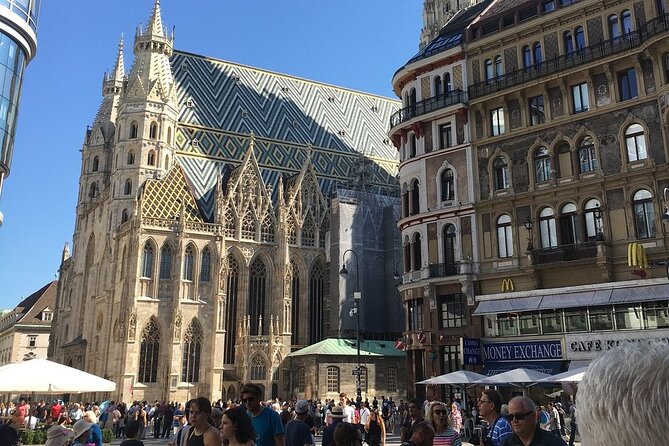
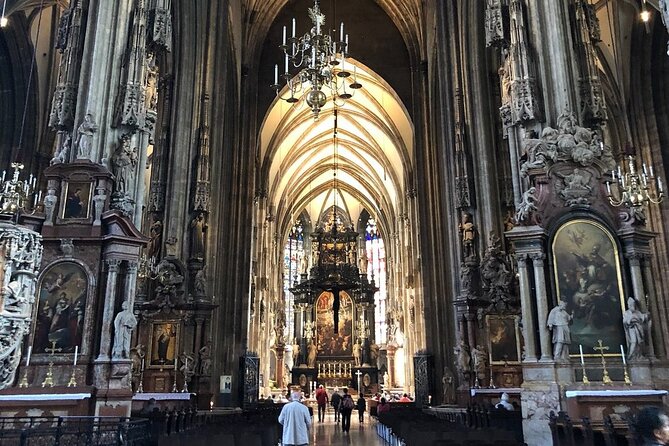
- Finishing at St. Stephen’s Cathedral
- What the two-hour format feels like
- Price, language, and who gets good value
- Should you book the Habsburg walking tour?
- FAQ
- How long is the Vienna walking tour?
- What language is the tour offered in?
- How many people can join the tour?
- Where does the tour start?
- Where does the tour end?
- Is the tour close to public transportation?
- Is hotel pickup included?
- Are food and drinks included?
- Can I take the tour in bad weather?
- Can I cancel for a full refund?
Key details before you book
- A Habsburg-focused route in two hours: The walk concentrates on Vienna’s historic center and the imperial story that shaped the city.
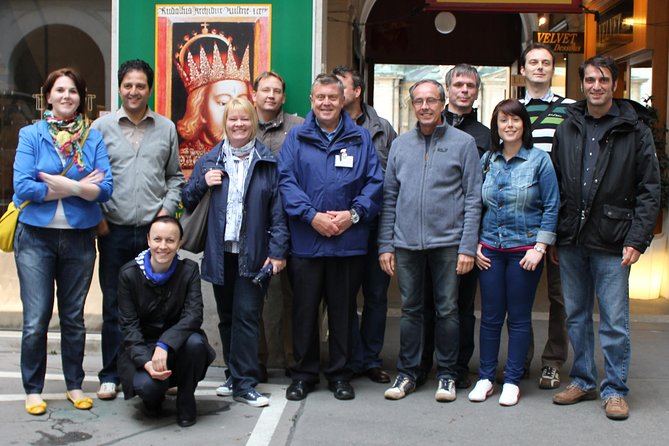
- A genuinely small group: The maximum is 15 people, a useful size for hearing the guide and asking questions.
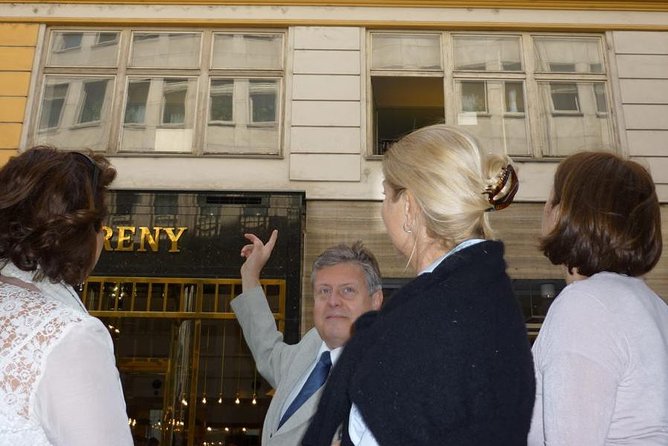
- Local guidance from Herbert Stojaspal: Herbert is Viennese and is praised for explaining history with humor, patience, and personal connection.
- Big sights without museum admissions: You pass the Hofburg, Hero’s Square, Joseph’s Square, the Albertina area, the opera, and St. Stephen’s Cathedral.
- A practical ending point: The tour finishes at the Lindt Chocolate Boutique near Stephansplatz, close to the U1 and U4 subway lines.
- English is important to confirm: The activity is offered in English, but language scheduling needs careful attention when booking.
Why this is a smart first look at Vienna
Vienna can seem grand to the point of confusion. You walk from one ceremonial square to another, see palace wings in several directions, and hear names such as Maria Theresa, Albert, Maria Christina, and the Habsburgs before you know how they fit together.
This tour provides a useful framework. Instead of treating each building as a separate photo stop, the guide connects the imperial residence, government, religion, art, music, and war memorials. You begin to understand why so much of central Vienna feels carefully ordered and politically symbolic.
I like the balance between famous landmarks and smaller explanations. You get the Hofburg, the opera, and St. Stephen’s Cathedral, but you also hear about Roman and medieval remains, the meaning of Hero’s Square, and the changing role of the Austrian government. That makes the walk more than a parade of impressive façades.
The tour is also a good way to plan the rest of your visit. A guide can point out museums and explain which places deserve more of your time. Several people have found it useful before returning to particular buildings for a closer look and better photographs.
More Walking Tours in Vienna
- Vienna: Guided Walking Tour of City Center Highlights
★ 4.7 · 4,989 reviews - Vienna: Vienna Central Cemetery Guided Walking Tour
★ 4.8 · 3,307 reviews - Vienna: Guided Walking Tour of City Highlights & Hidden Gems
★ 4.9 · 2,180 reviews
Michaelerplatz and St. Michael’s Church
The meeting point is Michaelerplatz 3, in front of St. Michael’s Church. This is a strong place to begin because the square brings several layers of Vienna together in one view.
The church area includes Roman and medieval ruins, so the first stop immediately reaches beyond the familiar imperial postcard. Your guide can show how Vienna developed over time rather than appearing fully formed as a palace city.
Michaelerplatz also places you at the edge of the Hofburg complex. From here, the scale of the former imperial residence becomes easier to read. You are not simply looking at one palace. You are entering the center of a court and government system that grew over many centuries.
The drawback is that the square can be visually busy, and the tour has a full route ahead. If you want carefully composed photographs, take note of the places you want to revisit after the walk.
White stallions and the imperial court
One stop focuses on Vienna’s famous white stallions. The guide provides detailed information about them, adding a living tradition to the stone-and-marble story of the Hofburg.
This is valuable because the imperial center was not just a collection of rooms and monuments. Court life included ceremony, performance, animals, protocol, and public display. The stallions help make that world more concrete.
The stop appears designed for explanation rather than a full horse show, so you should not book this walk expecting a riding performance. Its value is the background: you learn why the white horses matter and how they fit into Vienna’s imperial identity.
The Hofburg, home of the Habsburgs
The route then turns to the Hofburg, the residence of the Habsburg dynasty from the 12th century. This is the central subject of the walk, and it gives the tour its shape.
The guide explains how the residence changed as the dynasty expanded its power. The enormous complex can be hard to understand on your own, but a walking explanation helps you connect courtyards, wings, public squares, and ceremonial spaces.
This is one of the strongest parts of the experience for first-time visitors. You see the outside of a major landmark while learning what it meant politically. The Habsburg story was not confined to Austria. It affected European borders, marriages, wars, religion, and royal succession.
You will not have time to tour every Hofburg museum during a two-hour walk. That is not a flaw if you treat the tour as an orientation. I would use the guide’s explanations to decide which palace collections deserve a separate visit.
More walking tours:
- Vienna: Viennese Underworld Guided Walking Tour
★ 4.7 · 1,865 reviews - Vienna: World War II Historical Walking Tour
★ 4.8 · 1,772 reviews - Vienna Historic Center Small Group Walking Tour
★ 5.0 · 1,746 reviews - Vienna: Private Walking Tour with a Local Guide
★ 4.6 · 1,420 reviews
Hero’s Square and Austria’s government
Hero’s Square, known as Heldenplatz, offers a chance to discuss both symbolism and modern government. The name is not self-explanatory, and the guide explains why the square is called Hero’s Square.
This stop also covers Austria’s government system. That is an important addition because Vienna’s monumental buildings can otherwise make the country’s political structure seem buried under imperial ceremony.
The square has strong visual power, but it also carries difficult political associations. A good guide helps you see it as more than a grand open space. You learn how public architecture can honor military figures, project power, and shape national memory.
I appreciate this kind of context because it keeps the tour from becoming an uncritical celebration of royalty. The walk gives attention to both achievement and the political machinery behind the monuments.
Imperial treasures and Europe’s past
The tour discusses remarkable objects tied to European and imperial history, including the Holy Lance, described in tradition as the lance that pierced Jesus, and the crown of the Holy Roman Empire.
These objects are useful starting points for understanding how rulers used sacred and historical symbols. The point is not only whether a relic can be proven authentic. The bigger question is why people believed in its importance and how such objects supported the authority of emperors.
Expect explanation rather than a museum visit. The experience does not include food, drinks, or entry fees, and the listed route is a walking introduction. If the imperial regalia catches your interest, ask the guide which museum or collection to visit afterward.
This is one area where the guide’s storytelling matters most. A bare list of objects would be forgettable. Their legends, political use, and place in European memory make them worth hearing about.
Joseph’s Square and Maria Theresa
Joseph’s Square, or Josefsplatz, brings the walk back to the court and its rulers. Here, the guide explains more about Maria Theresa’s reign and the secrets or lesser-known details connected with her rule.
Maria Theresa is one of the key figures for understanding the Habsburg state. Her reign links palace life with administration, reform, family politics, and the question of how a woman ruled a major European power.
The square is a good place for this subject because the setting feels formal and controlled. You can begin to picture how the court presented itself, while the guide adds the personal and political details that a façade cannot provide.
This is also a useful stop for visitors who know the names but not the relationships. The walk helps put Maria Theresa and other Habsburg figures into a workable timeline without burying you in dates.
Albert and Maria Christina at the Albertina
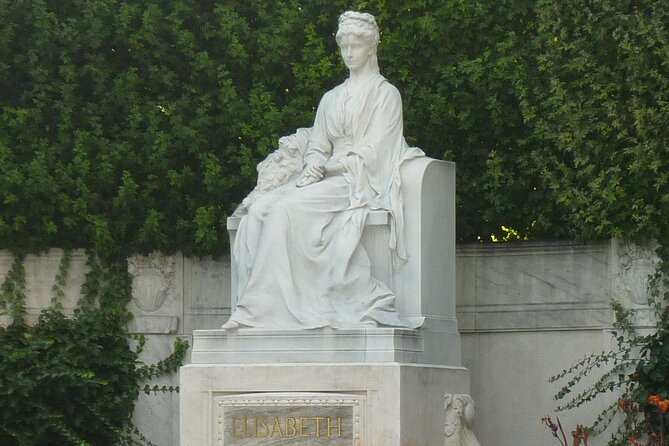
The route continues to the former residence of Albert and Maria Christina. Today, the building houses the Albertina, noted here for its enormous drawing collection.
This stop gives the tour a welcome shift from dynastic power to art. You see how a former aristocratic residence can become a public cultural institution, and you get a practical clue about a museum worth considering during your stay.
The guide does not turn the walking tour into a full Albertina visit. That is sensible. A drawing collection requires time, quiet, and close looking, none of which fits neatly into a fast route through central Vienna.
If you enjoy works on paper, make a note to return. The tour’s job is to place the museum on your mental map and explain why the building matters.
War, fascism, and Vienna’s harder memories
One of the most important stops is the monument officially called Monument Against War and Fascism. It remembers victims of war, including those affected by Nazi rule in Austria.
This changes the tone of the walk. After imperial palaces, crowns, and court squares, you confront the damage caused by war and dictatorship. Vienna’s past is not only elegant architecture and famous rulers.
I value this inclusion because it gives the city a more honest introduction. The guide addresses difficult memory in the same central area where visitors encounter imperial pride. That contrast helps you understand modern Vienna more clearly.
The monument may not be the most decorative stop, but it is one of the most meaningful. Give it your attention rather than treating it as a quick photograph on the way to the next palace.
The Vienna State Opera and the three-euro tip
The Vienna State Opera adds the city’s musical identity to the route. You learn that the opera schedule changes daily and that the cheapest tickets can cost three euros.
That is excellent practical information. Opera tickets may seem out of reach if you only see the grand façade and imagine formal evening prices. Knowing about the lowest-cost option gives you a reason to investigate the schedule while you are in town.
The tour does not include an opera performance or ticket. Treat this stop as both cultural background and a useful tip for your own plans.
The opera is also a good reminder that Vienna is not only a museum of the past. Its imperial buildings continue to frame modern performances and daily city life.
Finishing at St. Stephen’s Cathedral
The walk ends near St. Stephen’s Cathedral, at the Lindt Chocolate Boutique, Stephansplatz 8A. This is a practical finish in the heart of Vienna, with the cathedral close by and the U1 and U4 subway station at Stephansplatz.
Ending here works well. You can continue exploring the cathedral, make your own way to another sight, or pause for chocolate after two hours of history. The route gives you a useful central reference point for later walks.
The stop itself is a shop rather than an included tasting, so food and drinks are not part of the price. Still, the location makes it easy to add your own sweet finish.
One helpful tip is to return to some of the earlier places after the tour. The walk covers a lot of ground, and one person found there was not always time to stop for photographs. Use the tour to learn where you want to go, then revisit at your own speed.
What the two-hour format feels like
Two hours is enough to cover a surprising number of central landmarks, especially because the route stays in a compact area. The terrain is described as easy and flat, which makes the walk manageable for most people.
The pace is purposeful. You will hear many names, dates, buildings, and political connections, so this is not a slow stroll with long breaks. It is better suited to someone who wants a strong overview and plans to explore selected sights later.
The small group helps. A maximum of 15 people gives the guide a better chance to answer questions and keep everyone together. Herbert is praised for patience, humor, local knowledge, and answering questions in detail. Dorothea has also guided the experience and received praise for making the route interesting and well paced.
The tour operates in all weather. Vienna’s central squares can feel cold and windy, particularly in the morning and evening during March, so wear suitable layers and shoes. Younger children may find the historical content and pace less appealing, since the activity is not recommended for them.
Price, language, and who gets good value
At $35.07 per person, this is a reasonable price for a two-hour guided introduction, especially if you are new to Vienna. You are paying for a certified professional guide, a carefully chosen central route, and explanations that can save you from treating every palace as a generic grand building.
The value is strongest when you take the tour early. You can use the advice about museums, restaurants, food, the opera, and further sights for the rest of your visit. On a final day, it can still work, particularly if your museum visits have already given you background and you want the city’s major buildings to fit together.
The language deserves careful attention. The activity is offered in English, but one booking problem occurred when a German-language departure was selected. Check the language printed on your ticket and confirm it before the day if anything is unclear. Do not assume that booking from an English-speaking country automatically means an English tour.
Free cancellation is available up to 24 hours before the start time. Changes or cancellations inside that window are not accepted for a refund, so keep the local cut-off time in mind.
Should you book the Habsburg walking tour?
I would book it if you want a compact, history-focused introduction to central Vienna, especially on your first day. It suits adults, older children who enjoy stories, museum fans, architecture lovers, and anyone who wants practical suggestions for the rest of a short stay.
I would skip it if you want extensive time inside museums, long photo stops, or a relaxed food walk. You will see many landmarks from the outside and cover a lot in two hours.
For most visitors, the strongest reasons to go are the Viennese perspective, the small group, and the clear route through imperial power, art, music, and wartime memory. Book the English departure carefully, wear weather-ready shoes, and keep an hour afterward for St. Stephen’s Cathedral or a return visit to the places that caught your eye.
FAQ
How long is the Vienna walking tour?
The tour lasts approximately two hours.
What language is the tour offered in?
The experience is offered in English. Check your selected departure carefully because tours may operate in different languages on different days.
How many people can join the tour?
The maximum group size is 15 travelers.
Where does the tour start?
It starts at St. Michael’s Church, Michaelerplatz 3, 1010 Vienna.
Where does the tour end?
It ends at the Lindt Chocolate Boutique, Stephansplatz 8A, near St. Stephen’s Cathedral.
Is the tour close to public transportation?
Yes. The ending point is near the Stephansplatz subway station, served by lines U1 and U4. Use the Stephansplatz exit.
Is hotel pickup included?
No. Hotel pickup and drop-off are not included.
Are food and drinks included?
No. Food and drinks are not included in the tour price.
Can I take the tour in bad weather?
Yes. The tour operates in all weather conditions.
Can I cancel for a full refund?
Yes, if you cancel at least 24 hours before the experience start time. Cancellations made less than 24 hours before the start time are not refunded.
Just added around Vienna
- Mobile puzzle rally tour at the Vienna Central Cemetery★ 4.5 · 3 reviews
- 8 days European Highlights PRIVATE TOUR from Budapest including Budapest Vienna Prague and Bratislava★ 5.0 · 3 reviews
- RAXI (E-Rickschaw) big private Vienna tour★ 4.5 · 3 reviews
- Private Transfer from Vienna to Prague with 1 hour Stop in Kutna Hora★ 4.5 · 3 reviews
- Palais Lobkowitz Audio Guide Tour★ 4.0 · 3 reviews
- Private Tour from Vienna to Melk and Dürnstein★ 4.5 · 3 reviews
- Vienna: Designer Fashion Time Capsule Experience★ 5.0 · 3 reviews
- Vienna Sight & Gourmet Tour – individual private tour★ 4.5 · 3 reviews
Walking Tours, compared.

Guided Walking Tour of City Center Highlights
Read our review →

Guided Walking Tour of City Highlights & Hidden Gems
Read our review →


Vienna Historic Center Small Group Walking Tour
Read our review →
Browse the lists this tour appears in