
Reviewed · MOZART EXPERIENCES
Mozarthaus Vienna Admission Ticket
Mozart’s Vienna comes alive here. I like the original apartment setting, where Mozart lived from 1784 to 1787, and the clear audio guide, available in 13 adult languages and 8 children’s languages. I also like that the visit follows Mozart’s work and social world, not just a collection of portraits. The main drawback is that the rooms are not fully restored with Mozart’s original furniture, so you need to come for the story and music rather than a perfectly preserved home.
You can spend about one to two hours moving through three floors at your own pace. The central apartment is genuinely important: Mozart wrote The Marriage of Figaro and three of his six Haydn Quartets there. Still, the museum’s presentation includes copies and reconstructions, and a few people have found the organization confusing or had a brief delay getting mobile tickets accepted at the entrance.
In This Review
- Key points to know before you go
- Why Mozart’s Vienna years matter
- The first floor: Mozart’s apartment from 1784 to 1787
- The second floor: da Ponte, opera, and musical partnerships
- The third floor: Mozart’s personal and social world
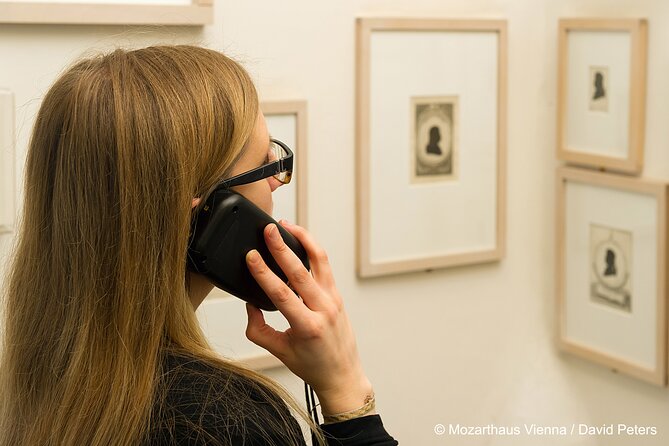
- What the audio guide adds
- Manuscripts, performance clips, and the limits of the collection
- Location near St. Stephen’s Cathedral
- Is $19.27 a fair price?
- How long to allow and how to plan the visit
- Who will enjoy Mozarthaus Vienna most?
- Should you book the Mozarthaus Vienna ticket?
- FAQ
- Where is Mozarthaus Vienna located?
- What are the opening hours?
- How long does the visit take?
- Is the ticket mobile?
- Is an audio guide included?
- Can I see Mozart’s actual apartment?
- What music did Mozart compose there?
- Can I cancel the ticket for a refund?
Key points to know before you go
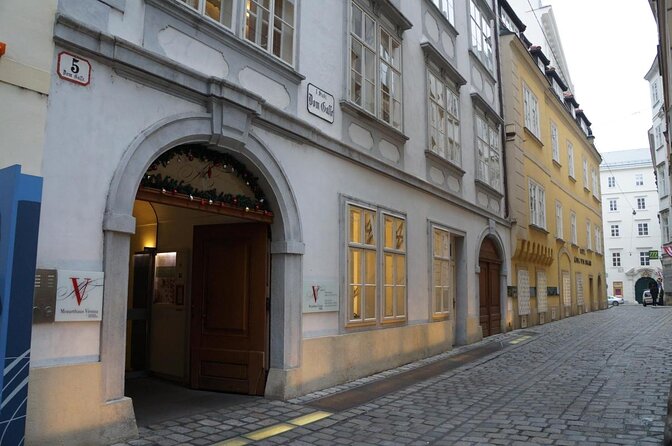
- Mozart’s largest and most elegant Vienna apartment: See the only Mozart residence in Vienna that remains intact.
- Three floors, three different angles: Follow his personal life, musical partnerships, and home life from 1784 to 1787.
- The Marriage of Figaro was written here: The apartment connects directly with one of Mozart’s best-known operas.
- Audio guide included: Choose from 13 languages for adults and 8 for children, making the self-guided visit easy to follow.
- Near St. Stephen’s Cathedral: The museum fits neatly into a walk through central Vienna.
- Best for music and history fans: The experience offers context and atmosphere, but not a room-by-room period recreation.
Why Mozart’s Vienna years matter
Mozart’s years in Vienna were not a quiet retirement chapter. They were the period when his career reached its creative peak, and the Mozarthaus focuses on that point rather than trying to tell every detail of his life from childhood to death.
Mozart lived in this apartment from 1784 to 1787. Those years brought major works, important professional relationships, and a more prosperous lifestyle than he had known in many earlier homes. This was the largest, most elegant, and most expensive apartment he ever occupied.
That detail gives the visit a useful frame. You are not simply entering a famous person’s former address. You are seeing the setting of Mozart’s most successful Vienna period, when he had status, commissions, collaborators, and enough space to live and work at a high level.
I find that this makes the museum more rewarding for anyone who already knows a little of Mozart’s music. If The Marriage of Figaro, Don Giovanni, or the Haydn Quartets mean something to you, the rooms acquire a stronger sense of place. If you know less, the audio guide helps connect the names, events, and compositions.
More Attraction Tickets in Vienna
- Vienna: Classic Ensemble Vienna in St. Peter’s Church Ticket
★ 4.7 · 4,819 reviews - Vienna Kunsthistorisches Museum Day Admission Ticket
★ 4.6 · 3,690 reviews - Vienna: Tickets for Mozarthaus Vienna with Audio Guide
★ 4.2 · 2,344 reviews
The first floor: Mozart’s apartment from 1784 to 1787
The first floor holds the heart of the visit: Mozart’s apartment. This is where you get closest to the physical setting of his Vienna life, and it is the part most people come to see.
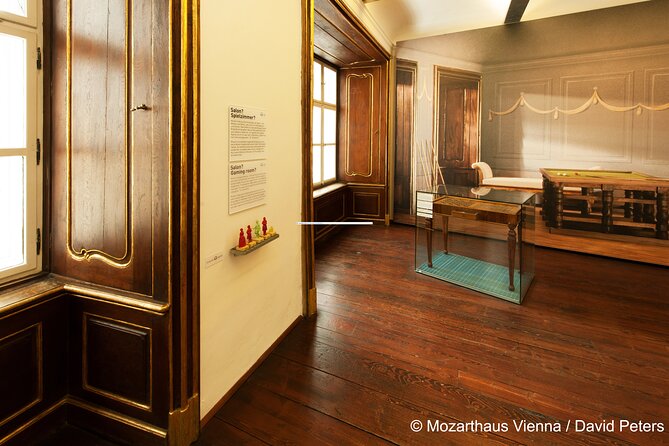
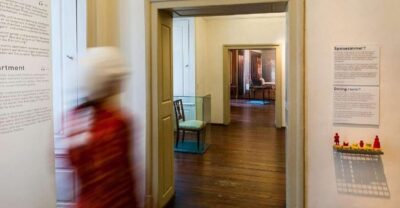
The apartment is still intact, but that does not mean every object inside belonged to Mozart. Expect a presentation that combines the surviving rooms with explanatory material, reproductions, and selected displays. The museum is open about the limits of what can be proved and preserved.
That honesty matters. You will not find a fully furnished stage set that claims to show every chair, table, and curtain exactly as Mozart knew them. Instead, you get the address, the structure, the scale of the home, and the knowledge that Mozart composed major works here.
I especially like the connection to The Marriage of Figaro. The opera was written during Mozart’s time in this apartment, as were three of the six Haydn Quartets. Standing in the same residence does not recreate the act of composition, of course, but it gives those works a firm physical anchor.
The apartment can also help you understand Mozart as a working professional. The size and elegance of the place point to a composer who had achieved real standing in Vienna. This was not just a cramped lodging where he happened to produce masterpieces.
Allow time to move slowly here. Some of the most meaningful moments may come from small details, such as the view from a window or the realization that the surrounding streets were part of Mozart’s daily routine. Photography rules can apply inside, so check the instructions before taking out your phone.
The second floor: da Ponte, opera, and musical partnerships
The second floor shifts attention from Mozart’s home to his professional world. It looks at major musical and composing colleagues in Vienna, with particular attention to the librettist Lorenzo da Ponte.
That partnership is central to understanding Mozart’s operas. Music does not appear in isolation, and the connection between Mozart and da Ponte shows how composition, words, theater, and collaboration came together. The displays focus on their work on The Marriage of Figaro and Don Giovanni.
For me, this floor adds value because it moves beyond the familiar image of Mozart as a solitary genius. You see more clearly how much his success depended on relationships, commissions, performers, and the theatrical world around him.
The museum uses documents, visual material, and audio content to make those connections. Some displays include copies rather than original objects, so do not expect a large collection of personal belongings. The strength here is the explanation of the work and its setting.
If opera is your main interest, spend extra time with this section. It gives more meaning to the apartment upstairs, since you can connect the physical home with the people and projects that shaped Mozart’s career.
The third floor: Mozart’s personal and social world
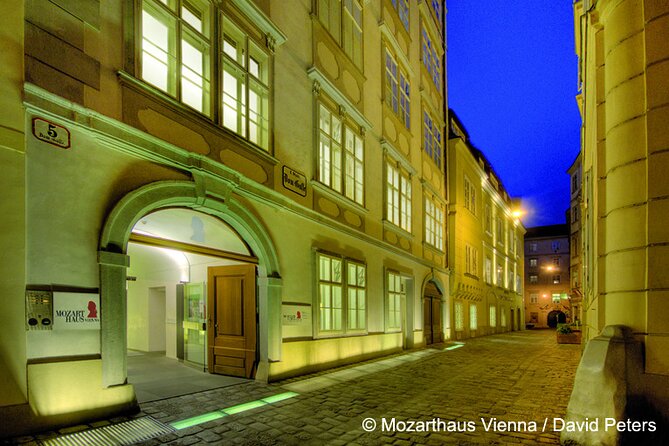
The third floor takes a wider view. It begins with Mozart’s personal and social situation in Vienna and places his work within the city where he lived and built his career.
This section helps fill in the person behind the compositions. Mozart’s life in Vienna involved more than writing notes on a page. His social position, working relationships, and daily circumstances all affected the way he lived and created.
The exhibition begins this floor with a statement Mozart wrote to his father Leopold about his Vienna home. The line sets up the idea that this residence was a major change in his life. It also gives the museum a personal entry point, rather than starting with dates and dry labels.
You might find this floor more informative than visually dramatic. It is built around context, documents, and interpretation, so the audio guide is especially useful. Without listening, some of the displays may feel less connected.
The three-floor arrangement works best when you follow the full route. The apartment provides the emotional center, the second floor explains Mozart’s creative partnerships, and the third floor adds his personal and social setting. You can visit at your own pace, but rushing through one floor will make the whole story less complete.
More Mozart Experiences in Vienna
- Vienna: Mozart Concert at the Golden Hall
★ 4.6 · 3,986 reviews - Vienna: Classical Concert at Mozart’s First House
2,423 reviews - Vienna: Mozart and Strauss Concert at Schönbrunn
★ 4.5 · 2,364 reviews - Vienna: Mythos Mozart Experience
★ 4.5 · 895 reviews
What the audio guide adds
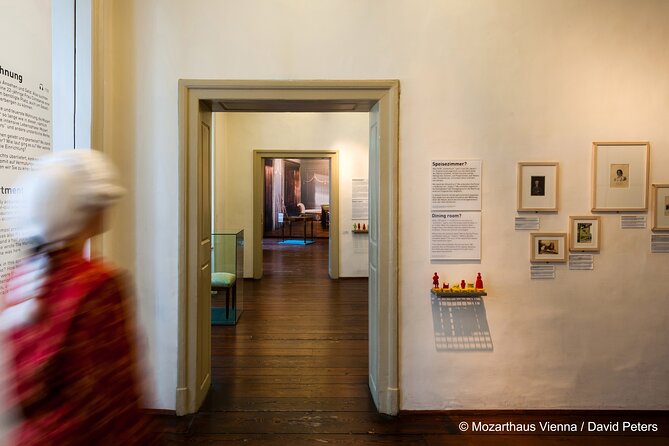
The audio guide is included, and it is one of the strongest practical features of the ticket. Adult content is available in 13 languages, with 8 language options for children.
You do not need to bring your own headphones, according to the visitor information available for this experience. That removes one small nuisance, especially if you are moving around Vienna with limited luggage or do not want to prepare another device before entering.
The guide also gives the museum a clearer shape. Some rooms contain relatively few objects, and the displays can include copies of documents or reconstructed elements. Listening helps explain why each room matters and how it connects to Mozart’s life.
Plan on roughly one hour if you listen selectively and keep moving. Two hours is more realistic if you hear the full commentary, pause over manuscripts, watch performance clips, and take time in the apartment.
Children who already enjoy music may benefit from the child audio options. For younger children with no interest in Mozart, the visit may feel serious and document-heavy. The family language choices help, but they do not turn the museum into an interactive attraction.
Manuscripts, performance clips, and the limits of the collection
Mozarthaus Vienna is not packed with Mozart’s personal possessions. That is the key expectation to set before you buy a ticket.
You can see manuscript material, including part of the original manuscript for the Requiem, along with other documents and visual displays. These objects can be powerful, particularly if you appreciate the difference between a modern printed score and the composer’s own handwritten work.
The exhibition also uses clips from opera performances, including productions associated with the Metropolitan Opera. These help connect the displays with music you can hear and recognize, rather than leaving the experience entirely to labels and glass cases.
Still, much of the material is made up of copies, reproductions, and contemporary presentation elements. A few rooms have limited furniture from Mozart’s period, and you will not see a complete set of original household objects.
I see this as a museum about place, music, and interpretation. It is not a treasure house of authenticated Mozart belongings. If you want original artifacts above all else, the price may feel less convincing. If you want to understand where Mozart worked and how his Vienna career developed, the material is enough to build a satisfying visit.
Location near St. Stephen’s Cathedral
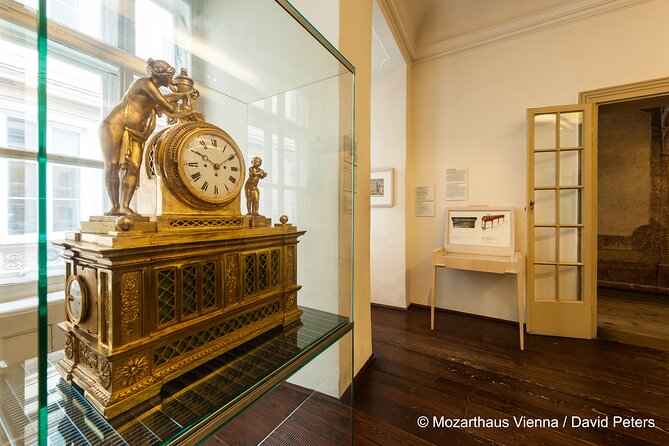
Mozarthaus Vienna is close to St. Stephen’s Cathedral in central Vienna. That makes it easy to pair with a walk through the historic center rather than planning a special cross-city trip.
The location is one of the ticket’s quiet advantages. You can visit the museum before or after seeing the cathedral and the surrounding streets. The central setting also makes it practical for a short gap in your day.
Public transportation is nearby, and most people can participate without special arrangements. Service animals are allowed. The museum is open daily from 10 a.m. to 7 p.m., with the listed hours covering both 2025 and 2026.
Because the ticket is mobile, keep the booking confirmation ready on your phone. There has been at least one report of a short delay while staff checked a mobile voucher at the entrance. It was resolved, but arriving with the ticket easy to display is sensible.
The experience is listed with a maximum of 10 people, though this is fundamentally a self-guided admission rather than a traditional guided group tour. That means you are not tied to a guide’s pace, and you can linger over the apartment or move quickly through a section that interests you less.
Is $19.27 a fair price?
At about $19.27 per person, this is not the cheapest small museum visit in Vienna. The value depends on what you want from the experience.
The price makes more sense if you plan to spend 90 minutes to two hours, use the audio guide, and take time with the apartment and manuscript displays. You are paying for access to a significant Mozart residence, a structured exhibition across three floors, and multilingual interpretation.
The value is weaker if you expect a lavishly restored home filled with Mozart’s original belongings. The museum cannot provide that, and its limited furniture and use of copies may disappoint anyone looking for an intensely object-focused collection.
I would compare the cost with your interest level. A serious Mozart fan, opera lover, or classical music student can get a lot from the visit. A casual sightseer who has only a passing interest in Mozart may prefer to admire the exterior and spend the money elsewhere.
The visit also gains value because of its location. Since you can combine it with central Vienna sightseeing, the museum does not require a separate half-day commitment. The admission is easier to justify when it fits into an existing walking route.
How long to allow and how to plan the visit
Set aside at least one hour for a proper look. Give yourself closer to two hours if you want the full audio commentary and time with the documents, music clips, and apartment.
The museum is open every day from 10 a.m. to 7 p.m. That broad schedule gives you room to fit it around meals, concerts, cathedral visits, or other central Vienna plans.
I would avoid treating this as a quick photo stop. The apartment is the emotional center, but the surrounding floors explain why it matters. Start with enough time to hear the context before deciding how long to linger.
Since the experience is self-guided, you can adjust the pace to your interests. Listen closely to the sections on da Ponte and the operas if you love theater. Spend more time with the apartment and manuscripts if you care most about Mozart’s working life.
Free cancellation is available if you cancel at least 24 hours before the scheduled start time. Changes or cancellations inside that 24-hour window are not accepted for a refund, with cut-off times based on Vienna’s local time.
Who will enjoy Mozarthaus Vienna most?
I would recommend it first to people who already listen to Mozart or want a stronger connection to his music. The apartment and the link to The Marriage of Figaro give familiar works a real address.
It also suits visitors interested in composers’ working lives. The museum shows how home, career, collaborators, and social position came together in Vienna.
Families can make it work, especially with the child audio guide options. The visit is not designed around hands-on activities, though, so children may need an adult to help connect the displays with the music.
It is less suitable for anyone expecting a grand, fully furnished historical home. You will see the intact apartment, but not a complete recreation of Mozart’s daily rooms with every object confirmed as original.
The museum is also a good choice if you enjoy independent visits. You do not have to keep pace with a live guide, and the multilingual audio content lets you decide how much explanation you want.
Should you book the Mozarthaus Vienna ticket?
Book it if Mozart, opera, or Vienna’s musical story is a real part of your trip. The strongest reasons are the intact apartment, the connection to The Marriage of Figaro, the three-floor presentation, and the useful audio guide.
Go with realistic expectations. This is not a perfectly restored home, and the collection includes reproductions and relatively few original furnishings. Its value comes from being in Mozart’s most important surviving Vienna residence and understanding what happened there.
At $19.27, I consider it a fair choice for music lovers who will stay for the full one to two hours. If you are undecided, place it near St. Stephen’s Cathedral on your walking route and let your interest in Mozart make the final call.
FAQ
Where is Mozarthaus Vienna located?
Mozarthaus Vienna is in central Vienna, near St. Stephen’s Cathedral and public transportation.
What are the opening hours?
The museum is open daily from 10 a.m. to 7 p.m. The listed hours apply throughout 2025 and 2026.
How long does the visit take?
The visit takes approximately one to two hours, depending on how much of the audio guide and exhibition material you use.
Is the ticket mobile?
Yes. A mobile ticket is provided, so you can show your booking confirmation on your phone.
Is an audio guide included?
Yes. The audio guide is included with the admission ticket. Adult content is available in 13 languages, and children’s content is available in 8 languages.
Can I see Mozart’s actual apartment?
Yes. The first floor contains the apartment where Mozart lived from 1784 to 1787. It is described as the only one of his residences still intact, though the presentation does not recreate every furnishing as it would have appeared in Mozart’s time.
What music did Mozart compose there?
Mozart composed The Marriage of Figaro and three of his six Haydn Quartets while living in the apartment.
Can I cancel the ticket for a refund?
Yes, if you cancel at least 24 hours before the experience start time. Cancellations or changes made less than 24 hours before the start time are not accepted for a refund.
More Mozart Experiences
- Vienna Mozart Concert in Historical Costumes at the Musikverein
★ 4.5 · 888 reviews - Vienna: Mozart & Strauss Classical Concert at Börse Palace
★ 4.5 · 810 reviews - Vienna: Mozart Concert at the Vienna State Opera
★ 4.6 · 461 reviews - Vienna: Classical Concert at Mozarthaus with Museum Entry
★ 4.8 · 371 reviews
Just added around Vienna
- Mobile puzzle rally tour at the Vienna Central Cemetery★ 4.5 · 3 reviews
- RAXI (E-Rickschaw) big private Vienna tour★ 4.5 · 3 reviews
- 8 days European Highlights PRIVATE TOUR from Budapest including Budapest Vienna Prague and Bratislava★ 5.0 · 3 reviews
- Private Transfer from Vienna to Prague with 1 hour Stop in Kutna Hora★ 4.5 · 3 reviews
- Palais Lobkowitz Audio Guide Tour★ 4.0 · 3 reviews
- Private Tour from Vienna to Melk and Dürnstein★ 4.5 · 3 reviews
- Vienna: Designer Fashion Time Capsule Experience★ 5.0 · 3 reviews
- Private day trip from Munich to Eagle’s Nest & Hallstatt★ 4.7 · 3 reviews
Mozart Experiences, compared.
Tickets for Mozarthaus Vienna with Audio Guide
Read our review →
Salzburg 2.5-Hour Walking Tour: Mozart, Old Town & More
Read our review →
Browse the lists this tour appears in