
Reviewed · WALKING TOURS
Private Vienna Art Nouveau Walking Tour
Vienna’s rebel side wears marble and brass. This private three-hour walk reveals the city’s Art Nouveau through metro stations, exhibition halls, apartment buildings, and Otto Wagner’s elegant designs. I like the private format, which lets you ask questions and set the pace, and I like the mix of famous sights with easy-to-miss details. The main drawback is cost: at $490 per group, it is a serious expense for two people, though far better value for a larger group of up to 10.
I also like that the route connects architecture with Vienna’s artistic revolt, rather than treating each building as a pretty facade. Guides such as Barbara, Wolfgang, and Annelie have been praised for clear explanations and thoughtful answers. You should budget extra for the Secession Building and, from April through October, the Otto Wagner Pavilion.
In This Review
- Key points
- Why Vienna’s Art Nouveau deserves three hours
- Starting with rebellion at the Secession Building
- A quieter pause in Stadtpark
- Reading Otto Wagner at Karlsplatz
- Inside the Otto Wagner Pavilion
- The practical elegance of Postsparkasse
- Ending near Naschmarkt
- What the private format changes
- Is $490 a fair price?
- Who will enjoy this walk most?
- Small details that help you plan
- Should you book it?
- FAQ
- How long is the Private Vienna Art Nouveau Walking Tour?
- Is this a private tour?
- What is included in the tour price?
- Are entrance fees included?
- Where does the tour begin?
- Can I cancel for a full refund?
Key points
- A private three-hour route lets only your group take part, with room for questions and a slower look at details.
- Otto Wagner’s metro stations show how Vienna turned public transport into serious modern design.
- The Secession Building includes Gustav Klimt’s famous Beethoven Frieze, with admission paid separately.
- The route mixes art with daily life, moving through Stadtpark, Karlsplatz, Postsparkasse, and Naschmarkt.
- The $490 group price makes the tour costly for one or two people, but reasonable when shared by six to 10.
- Guide quality is central, and Barbara, Wolfgang, and Annelie have all received especially warm praise.
Why Vienna’s Art Nouveau deserves three hours
Vienna’s Art Nouveau, known locally as Jugendstil and closely tied to the Vienna Secession, was not just a decorative fashion. It marked a break with older artistic institutions and stiff imperial taste. This tour gives you a way to see that change in physical form, from a building crowned with a golden laurel dome to subway stations designed with unusual care.
I find the subject especially useful for visitors who already know Vienna’s palaces and Baroque churches. The city can seem heavily tied to the Habsburg past, but this walk introduces a more experimental Vienna from the late 19th and early 20th centuries. Artists and architects were testing new lines, materials, patterns, and uses for public space.
The private setup matters here. Art Nouveau details are easy to miss if you are walking alone. A guide can point out repeated motifs, explain why a station was built in a certain style, and connect Otto Wagner’s transport work to his larger ideas about modern cities.
The tour lasts about three hours. That is enough time for a meaningful introduction without turning into an all-day architecture course. You will walk between stops, so comfortable shoes are sensible. The route also passes through places where you can continue exploring on your own after the guide leaves.
More Private Tours in Vienna
- Vienna: Private Walking Tour with a Local Guide
★ 4.6 · 1,420 reviews - Vienna: Private Walking Tour with a Guide
★ 4.7 · 962 reviews - Vienna: Wine Tasting Experience in a Private Wine Cellar
★ 4.8 · 413 reviews
Starting with rebellion at the Secession Building
The Secession Building is the strongest opening stop because it explains the artistic mood behind everything that follows. Joseph Maria Olbrich completed this exhibition hall in 1898 as an architectural statement for artists who had broken away from Vienna’s established fine art institution.
Look up first. The building’s famous dome of gilded foliage gives it an instantly recognizable profile. It is playful, strange, and deliberately unlike the grand imperial buildings nearby. That contrast helps you understand the Secession as a group that wanted new art and new rules.
Inside, the main prize is Gustav Klimt’s Beethoven Frieze. The work was painted for one of the original Secession exhibitions and is one of Vienna’s essential Art Nouveau experiences. It is not a quick portrait or a small decorative panel. The long, symbolic composition rewards time and explanation, especially if Klimt is familiar to you mainly through his gold-toned paintings.
Admission is not included. From Tuesday through Sunday, entry to the Secession House is listed at €9.50 for adults and €6 for students and seniors. Your guide helps with payment, which is useful when you want to avoid fumbling with details during a tightly timed walk.
The building visit is scheduled for about 30 minutes. That is enough for an introduction and a look at the frieze, though art lovers may wish they had longer. If you want to study every section closely, ask your guide how much time is available before the tour begins.
A quieter pause in Stadtpark
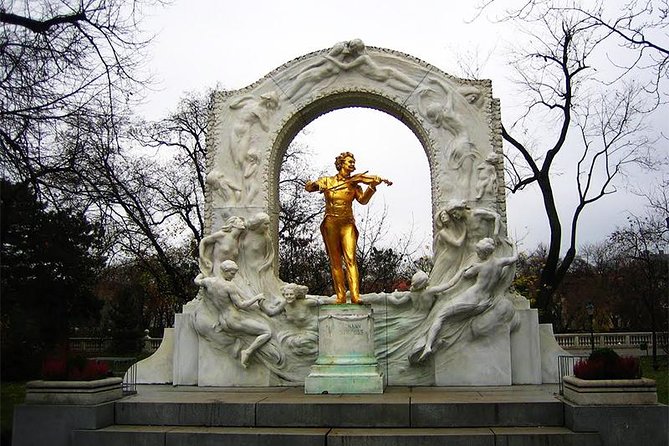
Stadtpark offers a change of pace after the Secession Building. The municipal park stretches from the Ringstraße in Vienna’s first district toward Heumarkt, giving the walk a little breathing room between architecture stops.
The planned visit lasts about 15 minutes and admission is free. Do not expect a major architectural lecture here. Instead, this is a useful pause in the route, with a chance to reset your eyes before returning to buildings, facades, and station design.
I appreciate this sort of stop on a walking tour. Three hours of looking upward and listening can become tiring. A short park visit keeps the tour from feeling like a nonstop list of dates and architects. It also places Vienna’s modern design in the city’s everyday public setting, rather than keeping the experience inside museums.
Reading Otto Wagner at Karlsplatz
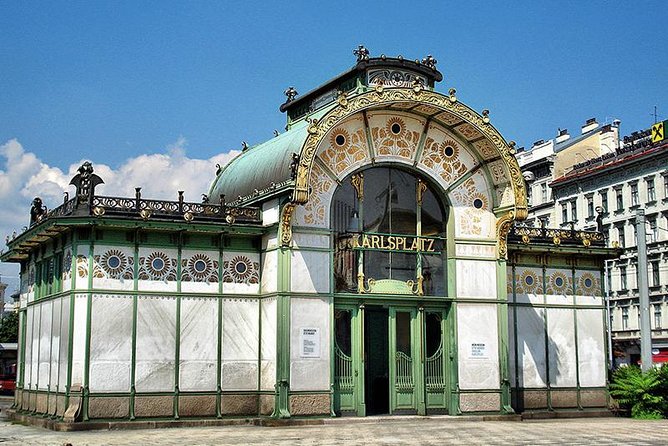
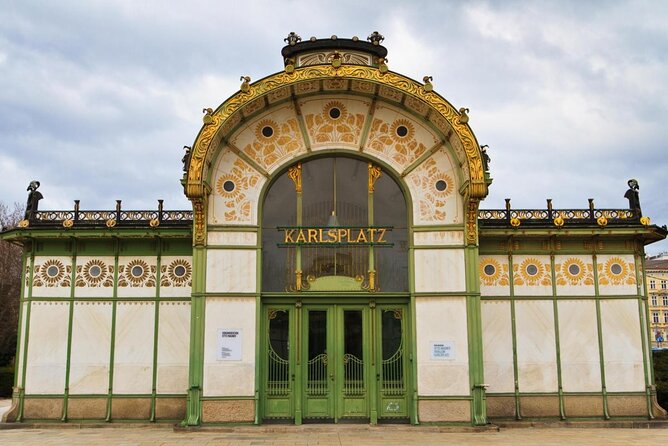
Karlsplatz is one of the tour’s key locations. Its former Stadtbahn station buildings are widely recognized examples of Jugendstil architecture, designed by Otto Wagner with Joseph Maria Olbrich. These structures show how functional transport buildings could receive the same care as monuments.
The point is not simply that the stations are attractive. Wagner was working on infrastructure, and he treated the city’s transport system as part of modern urban life. The combination of practical purpose and ornamental detail is what makes the stations so important.
The Karlsplatz stop is scheduled for about 20 minutes. Admission is listed as not included, so confirm with the guide what you will see from outside and what, if anything, requires entry. The nearby Otto Wagner Pavilion adds another layer to the visit.
More Walking Tours in Vienna
- Vienna: Guided Walking Tour of City Center Highlights
★ 4.7 · 4,989 reviews - Vienna: Vienna Central Cemetery Guided Walking Tour
★ 4.8 · 3,307 reviews - Vienna: Guided Walking Tour of City Highlights & Hidden Gems
★ 4.9 · 2,180 reviews - Vienna: Viennese Underworld Guided Walking Tour
★ 4.7 · 1,865 reviews
Inside the Otto Wagner Pavilion
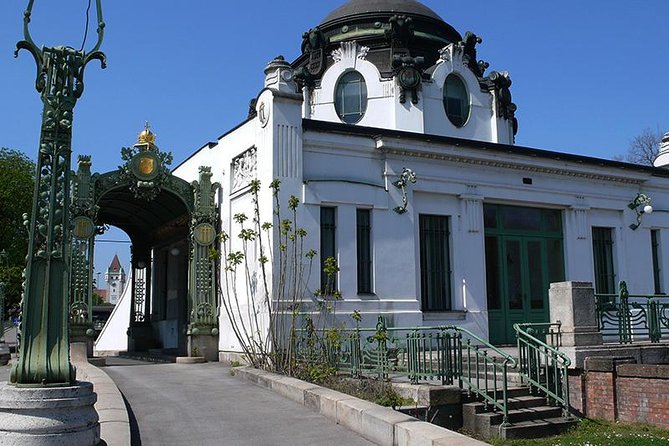
The Otto Wagner Pavilion at Karlsplatz is housed in a former 1898 station building designed by Wagner. It now presents an exhibit on his life and work. That makes it a useful companion to the outdoor station discussion, since you can move from the building’s appearance to the architect’s broader career.
From April through October, when the museum is open, the tour incorporates the pavilion. Admission is €5 for general entry, or €4 for seniors, students, Vienna Card holders, and people with disabilities.
The visit is listed at about 15 minutes. That is a short window, so do not expect a full museum afternoon. Think of it as a focused stop that gives context to the stations you have just seen. If Wagner’s work is your main reason for booking, ask whether the timing allows you to spend extra minutes here.
This is also one place where the season matters. If you book outside the museum’s April through October opening period, the interior exhibit may not be part of the experience. The outdoor architecture still matters, but the visit will be different.
The practical elegance of Postsparkasse
The Austrian Postal Savings Bank, or Postsparkasse, is another major Otto Wagner work. It is regarded as an important Vienna Secession building, and it gives you a chance to see how Art Nouveau ideas entered a serious financial institution.
The building’s appeal comes from the tension between business and design. A postal savings bank had a practical public role, but Wagner did not treat it as a plain box. The architecture turns an everyday institution into a statement about modern Vienna.
The stop lasts about 25 minutes and admission is listed as free. That makes it one of the better value points on the route. You get substantial time with an important building without another ticket added to the tour price.
A guide is particularly helpful here because the significance may not be obvious from a quick glance. The building belongs to the same artistic world as the Secession, but its purpose is different. Seeing both helps you understand how Vienna’s new style moved beyond galleries and into civic life.
Ending near Naschmarkt
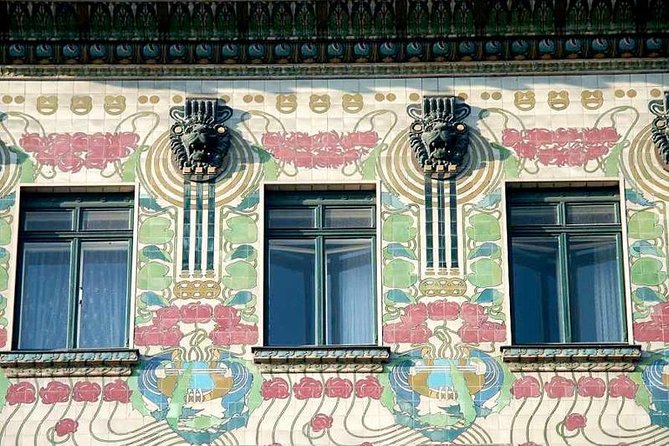
Naschmarkt brings the tour back to the ordinary pleasures of Vienna. The city’s best-known culinary market has around 120 colorful stands and lively restaurants. The visit is planned for about 10 minutes, with no admission fee.
This is not a food tour, and food and drinks are not included. Still, it is a smart ending. After a morning or afternoon spent studying architecture, you can continue at the market for a snack, meal, or casual browse. I would save any serious eating for after the tour because 10 minutes is too short for a relaxed market meal.
The market also connects with Art Nouveau Vienna in a practical way. The tour makes art, public design, commerce, and daily life part of one route. You are not left with architecture floating apart from the city around it.
One guide-led route can also include nearby Art Nouveau highlights beyond the main stops. Previous guests specifically enjoyed the Beethoven Frieze, the Majolica Houses near Naschmarkt, and the Zacherl House downtown. Since those locations are not all listed as formal stops here, ask your guide at the start if they fit the day’s route or can be recommended for later.
What the private format changes
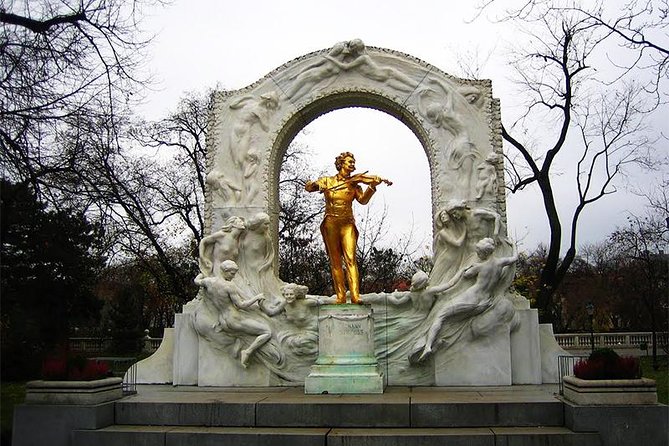
This is not a large group tour where you follow a flag and wait for a dozen people at every crossing. Only your group participates, with a maximum of 10 people. That makes the experience more flexible and gives you a better chance to ask about details that interest you.
If you are an architecture enthusiast, this format is a real advantage. You can ask about materials, design choices, the Secession movement, or the relationship between Wagner and Olbrich. If someone in your party is new to Art Nouveau, the guide can explain the basics without assuming too much.
The private arrangement is less important if you only want quick exterior photographs. You can see some of these buildings independently. The value comes from interpretation, connections, and the ability to shape the conversation around your interests.
The guides named in the feedback are a strong reason to feel confident about the experience. Barbara was praised for thorough explanations of Vienna’s past and present. Wolfgang helped make the movement accessible to someone who knew little about it. Annelie was singled out for her detailed grasp of Vienna Secessionism and the city itself.
Of course, a private tour depends heavily on the individual guide assigned to your date. That is true of any walking tour. The provider is Insight Cities, and the available feedback points to an emphasis on expert-led urban history rather than a quick sightseeing circuit.
Is $490 a fair price?
The price is $490 per group of up to 10 people. For a couple, that works out to $245 each, before entrance fees. For a group of five, it is $98 per person. At the full group limit, it becomes $49 per person, which is much easier to justify.
The price makes sense if you care about architecture and want a guide focused on one specific subject. You are paying for a private specialist-style experience, not just transportation between landmarks. The guide’s explanations are the main product.
You should also add the separate admission costs. The Secession Building is €9.50 for adults and €6 for students and seniors when touring Tuesday through Sunday. The Otto Wagner Pavilion costs €5, or €4 for eligible reduced-price visitors, when open from April through October.
Food and drinks are not included. Hotel pickup and drop-off are also listed as not included, even though pickup is noted among the tour features. Because those details appear inconsistent, ask Insight Cities exactly what pickup means for your booking rather than assuming a hotel transfer is part of the price.
The tour is booked, on average, 11 days ahead. That suggests you should not leave it until the last morning if the subject matters to you, especially if you want a particular date or guide. Confirmation is provided at booking, and the experience is near public transportation.
Who will enjoy this walk most?
I would recommend it first to people who care about architecture, design, urban planning, or Klimt. It also suits anyone who has already seen Vienna’s main imperial sights and wants a different view of the city.
It works well for mixed-interest groups because the route is not limited to museum interiors. Stadtpark and Naschmarkt add variety, while the stations and Postsparkasse keep the focus on design. Someone who knows little about Art Nouveau can still follow the story, provided they enjoy looking closely and asking questions.
It may be less suitable if you want a food-focused outing, a general overview of Vienna, or a low-cost group activity. Three hours on foot with several architecture stops requires attention. The tour is also not the best choice if your only goal is to see Klimt, since the Secession visit is just one part of a wider program.
Most travelers can participate, and the route is near public transportation. Still, you should contact the provider with any mobility concerns because the precise walking conditions and interior access are not described in the available details.
Small details that help you plan
The meeting point is Operngasse 7, 1010 Vienna. The tour ends in Vienna, with the exact final point not specified beyond the route ending near the city’s central sights. Build a little flexibility into your schedule after the tour.
Plan for admission fees in cash or another accepted payment method, though your guide will help you pay at the Secession House. Since the tour moves through public streets and markets, weather can affect comfort. A coat, water, and comfortable shoes are sensible choices.
Free cancellation is available if you cancel at least 24 hours before the start time. Changes made less than 24 hours before the experience are not accepted, and the local Vienna cutoff applies.
Should you book it?
Book this tour if you want Vienna’s Art Nouveau explained by a dedicated guide, not simply photographed from the sidewalk. The Secession Building, Beethoven Frieze, Karlsplatz stations, Otto Wagner Pavilion, Postsparkasse, Stadtpark, and Naschmarkt create a well-shaped introduction to the city’s modern artistic side.
For two people, the price is high. For six or more, it becomes far more reasonable, and the private format adds real value when your group has questions or different levels of interest. I would especially choose it early in a Vienna visit if you want the rest of your sightseeing to make more sense.
Skip it if you prefer a broad city tour, dislike walking-focused sightseeing, or want every admission included. But if Otto Wagner, Klimt, Jugendstil, and Vienna’s artistic break with tradition sound appealing, this is a focused and worthwhile way to spend three hours.
FAQ
How long is the Private Vienna Art Nouveau Walking Tour?
The tour lasts approximately three hours.
Is this a private tour?
Yes. Only your group participates, with a maximum of 10 people.
What is included in the tour price?
The price includes a three-hour guided tour of Vienna Art Nouveau metro stations and major buildings, plus a professional guide.
Are entrance fees included?
No. Secession House admission is separate, and the Otto Wagner Pavilion also has a separate fee when its museum is open from April through October.
Where does the tour begin?
The listed meeting point is Operngasse 7, 1010 Vienna, Austria.
Can I cancel for a full refund?
Yes, if you cancel at least 24 hours before the experience start time. Cancellations or changes made less than 24 hours before the start are not accepted for a refund.
More Walking Tours
- Vienna: World War II Historical Walking Tour
★ 4.8 · 1,772 reviews - Vienna Historic Center Small Group Walking Tour
★ 5.0 · 1,746 reviews - Vienna: 1.5-Hour Underground Walking Tour
★ 4.9 · 1,146 reviews - Vienna: Ghosts and Legends Guided Nighttime Walking Tour
★ 4.4 · 1,088 reviews
Just added around Vienna
- Mobile puzzle rally tour at the Vienna Central Cemetery★ 4.5 · 3 reviews
- RAXI (E-Rickschaw) big private Vienna tour★ 4.5 · 3 reviews
- 8 days European Highlights PRIVATE TOUR from Budapest including Budapest Vienna Prague and Bratislava★ 5.0 · 3 reviews
- Private Transfer from Vienna to Prague with 1 hour Stop in Kutna Hora★ 4.5 · 3 reviews
- Palais Lobkowitz Audio Guide Tour★ 4.0 · 3 reviews
- Private Tour from Vienna to Melk and Dürnstein★ 4.5 · 3 reviews
- Vienna: Designer Fashion Time Capsule Experience★ 5.0 · 3 reviews
- Private day trip from Munich to Eagle’s Nest & Hallstatt★ 4.7 · 3 reviews
Walking Tours, compared.

Guided Walking Tour of City Center Highlights
Read our review →

Guided Walking Tour of City Highlights & Hidden Gems
Read our review →


Vienna Historic Center Small Group Walking Tour
Read our review →
Browse the lists this tour appears in