
Reviewed · WALKING TOURS
Salzburg Introduction Walking Tour
Salzburg rewards a slow start. This walking tour links Mozart, baroque squares, and medieval lanes into one useful introduction, led by a professor, historian, journalist, art critic, doctoral student, or published author. I like the small-group format and the way the route mixes famous sights with less obvious passageways and local stories. The main concern is that the historical commentary may feel scattered if you want a clear, broad timeline first.
I also like the personal guiding style. Guides such as Lisa, Liza, Claudia, and Astrid have adapted the walk to interests, weather, and even a delayed train. You should expect plenty of time on foot, though, and the advertised duration varies between about two and a half and three hours.
In This Review
- Key points at a glance
- Starting on Linzer Gasse at 9:30 a.m.
- Getreidegasse and the medieval heart of Salzburg
- Baroque squares and the archbishops’ Salzburg
- Mozart’s birthplace and the Mozart family story
- Festival Halls and Salzburg’s musical identity
- St. Peter’s Abbey, founded in 696
- Science, medicine, and everyday Salzburg
- The von Trapps beyond the movie
- How the guides shape the experience
- Price, timing, and practical value
- Who should book this Salzburg walk?
- Should you book the Salzburg Introduction Walking Tour?
- FAQ
- Where does the Salzburg Introduction Walking Tour start?
- What time does the tour start?
- How long does the walking tour last?
- What language is the tour offered in?
- How large is the group?
- Is a professional guide included?
- Is Mozart Residence admission included?
- Are food, drinks, or hotel transfers included?
- Can I cancel for a full refund?
Key points at a glance
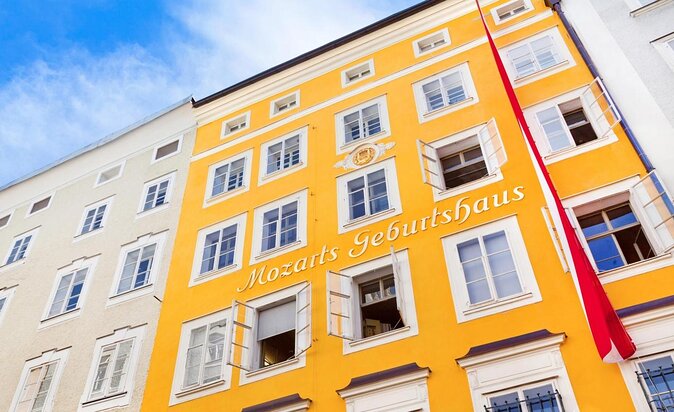
- A compact route through Salzburg’s Old Town: Walk from narrow Getreidegasse lanes to grand baroque squares, Mozart sites, the Festival Halls, and St. Peter’s Abbey.
- Small groups make a difference: The experience is described as limited to six people, with additional information listing a maximum of eight.
- Guides with academic and local backgrounds: The guide team includes historians, professors, doctoral students, journalists, art critics, and published authors.
- More than a Mozart tour: You’ll hear about salt commerce, medical advances, Michael Haydn, local customs, and Salzburg’s political past.
- Sound of Music context: The von Trapp story is presented as a real family history, including its refugee experience during the Second World War.
- Best booked early: The tour is booked about 44 days ahead on average, so last-minute availability may be limited.
Starting on Linzer Gasse at 9:30 a.m.
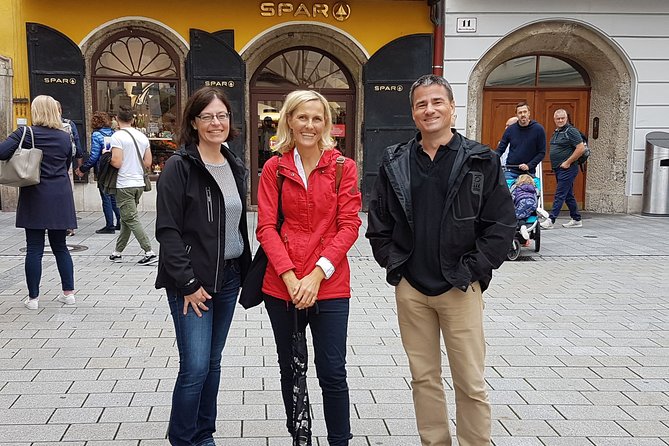
The tour begins at Linzer Gasse 39, a convenient point near public transportation. The stated start time is 9:30 a.m., with morning and afternoon departures also available according to the tour details. Check the exact departure shown for your booking, since the published information gives both a fixed morning start and broader departure choices.
Starting here puts you near Salzburg’s transition between its newer side and historic center. Your guide will lead you toward the old town on foot, so this is not a coach tour with a few quick photo stops. You need comfortable shoes and a willingness to keep walking.
The pace appears moderate. One account describes more than 10,000 steps but calls the speed comfortable, while another says the guide did not try to cover too much ground. Those two details fit together: this is a thorough city walk, but not a race through a checklist.
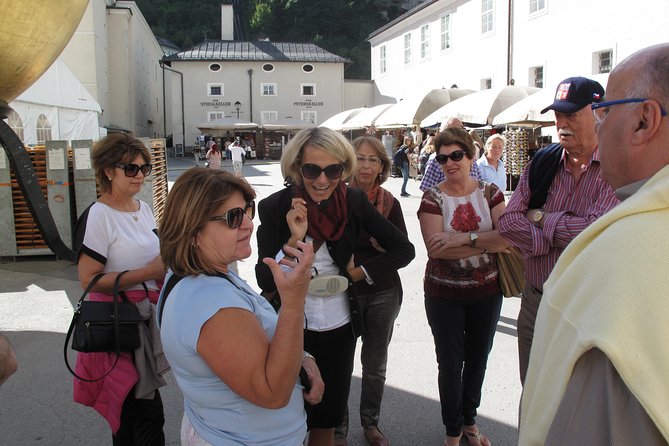
The small group is one of the strongest parts of the setup. The tour is promoted as limited to six people, while the additional information gives a maximum of eight. Either way, you should get a better chance to ask questions than on a large group outing. In some departures, the group may be only two people, allowing the guide to shape the route around your interests.
More Walking Tours in Salzburg
- Salzburg 2.5-Hour Walking Tour: Mozart, Old Town & More
★ 4.2 · 987 reviews - Salzburg: Old Town, Mozart, & Mirabell Gardens Walking Tour
★ 4.8 · 461 reviews - Salzburg Oldtown: Sightseeing Walking Tour with Licensed Local Guide
★ 5.0 · 392 reviews
Getreidegasse and the medieval heart of Salzburg
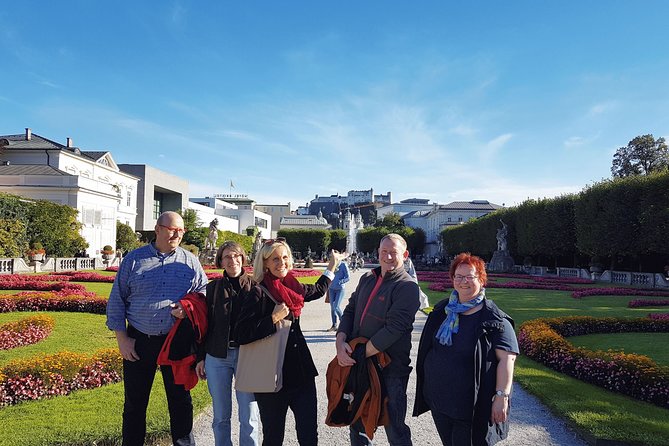
Getreidegasse is one of Salzburg’s most memorable streets. Its narrow route, crooked little lanes, and passageways preserve the feel of the old commercial center. The famous shop signs and tightly packed buildings are pleasant to see, but a guide gives the street more meaning.
Here you learn how trade helped shape Salzburg. Salt commerce was central to the city’s wealth and power, and the walk connects that economic story to the buildings and streets around you. This is a useful correction to the idea that Salzburg is only a city of music and pretty churches.
The passageways are easy to miss if you walk alone with your eyes fixed on a map. A guide can point out how the old town worked as a place of business, religion, and government. You’ll also learn about local customs and traditions, which helps the city feel like a living place rather than a preserved stage set.
This part of the walk is best for first-time visitors. It gives you bearings quickly and shows you places you can revisit later for shopping, food, or photographs. The tradeoff is that narrow streets can be crowded and noisy, and the tour does not promise extended time inside every building.
Baroque squares and the archbishops’ Salzburg
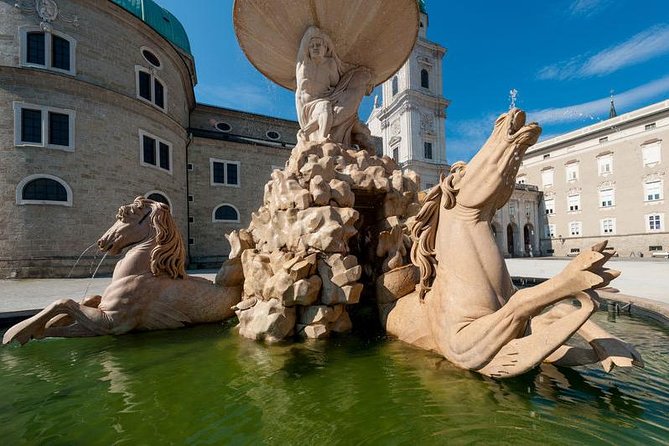
The narrow lanes open into broad baroque squares. The contrast is the point. Medieval Salzburg feels tight and practical, while the large squares reflect the authority and ambition of the archbishops who governed the city from their Residence.
Your guide explains the political and cultural role of those church leaders, helping you read the architecture instead of simply admiring its decoration. The buildings and open spaces show how power was displayed in Salzburg, with grand planning used to frame religious and civic life.
This is where an academic guide can be especially useful. The tour team’s backgrounds suggest a strong focus on context, not just dates and names. You can ask about politics, art, religion, music, or daily life, and the small group gives the guide room to follow up.
One limitation is worth keeping in mind. The experience is not a full museum visit. It focuses on the streets and exterior views, and Mozart Residence admission is not included. If you want to see the inside of Mozart’s former home, plan a separate visit and budget for its admission.
Mozart’s birthplace and the Mozart family story
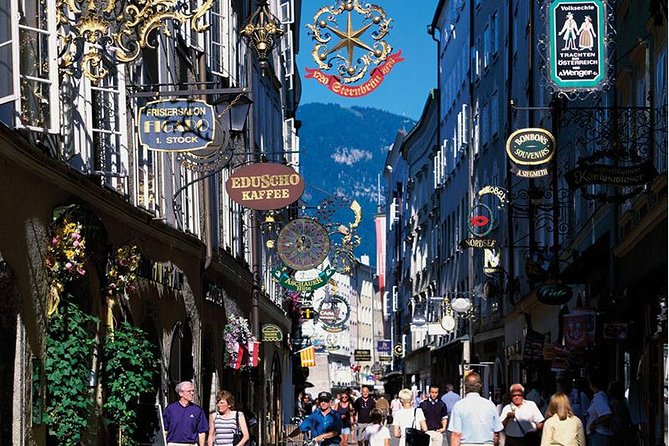
Mozart’s birthplace is one of the route’s central stops. You’ll pass the building and hear about Wolfgang Mozart’s childhood in Salzburg, as well as his sister Nannerl. That family focus adds more depth than a simple stop at the yellow facade.
The walk also brings in Michael Haydn, the other major musical son associated with Salzburg. This is a worthwhile detail because it broadens the city’s musical story beyond its most famous name. You get a sense of Salzburg as a place that produced and supported several important musicians.
Guides have used photographs to make the Mozart story easier to follow. Liza, in particular, has been praised for bringing helpful images and for combining historical detail with local lore. That kind of visual aid can make a difference when you are standing in a busy street and trying to picture the people who lived there centuries ago.
If you are a serious Mozart fan, you may want more time than this walk provides. The tour gives you context and a solid orientation, but it does not replace a museum visit or a concert. For most first-time visitors, though, it is a good way to decide which Mozart sites deserve a closer look.
More walking tours:
- Salzburg Old Town Walking Tour, Mozart, Mirabell Gardens
★ 4.5 · 201 reviews - Salzburg Old Town Highlights Private Walking Tour
★ 4.5 · 78 reviews - Salzburg Private Walking Tour
★ 4.6 · 48 reviews - Private Walking Tour of Salzburg
★ 5.0 · 42 reviews
Festival Halls and Salzburg’s musical identity
The Festival Halls are another major stop. They connect the city’s older musical traditions with its modern role as a center for performance. Your guide can explain why Salzburg’s music culture matters, rather than leaving you with only a grand facade and a quick photograph.
The tour’s musical content does not stop with Mozart. The route connects the city’s musical identity to Michael Haydn and to the long relationship between Salzburg, church institutions, and performance. That wider frame makes the city easier to understand.
The walk does not include a performance or entry into the Festival Halls. You should treat this as an exterior orientation and a chance to learn what you are seeing. If you plan to attend a concert later, the tour can make the setting more meaningful.
St. Peter’s Abbey, founded in 696
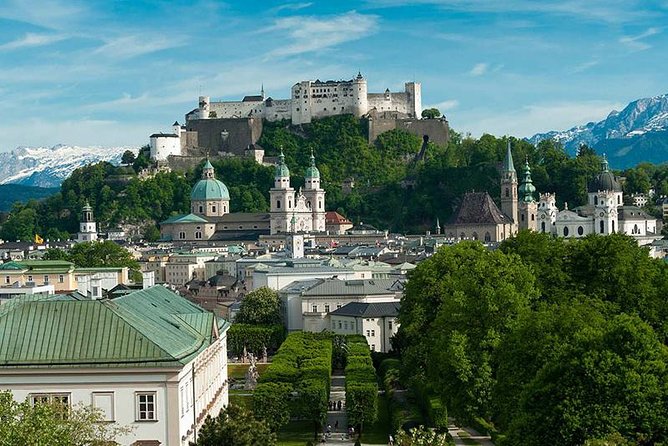
St. Peter’s Abbey gives the route one of its oldest anchors. The Benedictine monastery dates to 696, making it an important stop for understanding Salzburg before its later baroque makeover.
Here the tour connects religion, education, politics, and daily life. The monastery was not just a decorative church complex. It formed part of the institution-building that made Salzburg an important center in the region.
The churches and historic buildings are among the most praised parts of the walk. One guide also took a group into the chapel of Nonnberg Abbey while a choir rehearsed, creating an especially memorable moment. That stop is not listed as a guaranteed part of every route, so you should see it as a possible example of how a guide may respond to timing and local conditions, not as a promise.
St. Peter’s is also a good place to slow down. The route covers plenty of ground, and historic religious buildings can blur together if you hurry. The guide’s job here is to help you notice how the old town’s spiritual and civic worlds fit together.
Science, medicine, and everyday Salzburg
The tour includes stories about medical innovations, a welcome change from the usual parade of rulers and composers. These details help you picture how people lived, worked, and solved problems in earlier Salzburg.
This wider approach is one reason the tour suits history-minded visitors. You hear about salt, medicine, religion, architecture, political power, music, and family life. The walk does not present Salzburg as a single-theme destination.
Still, the amount of material can create a problem. One less enthusiastic experience found the narration broken up and wished for a clearer overview of Salzburg’s history before the individual stories began. If you prefer a simple chronological lecture, you may need to ask your guide to pause and connect the pieces.
That is an easy request in a small group. I would begin by asking for the basic timeline: medieval salt town, church-ruled state, baroque capital, and modern cultural center. Then the smaller stories will have somewhere to land.
The von Trapps beyond the movie
The Sound of Music is part of Salzburg’s tourist identity, and this tour handles it as a real family story rather than only a collection of film locations. You’ll learn about the von Trapp family singers and their refugee experience during the Second World War.
That historical context matters. The movie is cheerful and memorable, but the family’s departure was tied to serious political danger. An Austrian guide can also offer a local view of the film and the family, which may differ from the way the story is presented in popular American tourism.
The route includes filming locations and places connected with the family story, although this is not a dedicated Sound of Music tour. If the movie is your main reason for visiting Salzburg, book a specialized excursion as well. If you want Mozart and broader city history first, this walk gives you a better foundation.
Liza has also offered practical advice on the best places to stand in a garden for photographs. Details like that are small but useful. They turn a passing reference into something you can use later during your own exploring.
How the guides shape the experience
The guide is the key variable. The company uses professionals with backgrounds in academia, journalism, art, and history, but personalities and teaching styles will differ.
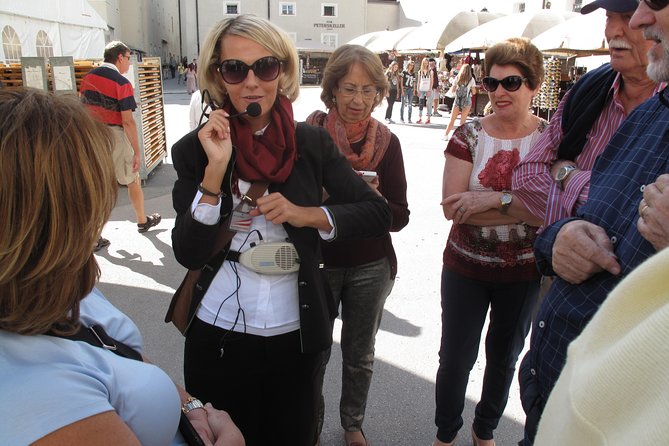
Lisa has been praised for clear English, thoughtful pacing, and moving the group into shade during intense heat. Liza has adjusted to a delayed train, stayed patient, and still provided recommendations for snacks and ice cream. Claudia has been described as relaxed, structured, humorous, and good at showing parts of the city that are easy to miss.
Astrid brings a local angle, having grown up and still living in Salzburg. Gabe has been praised for his educational approach and his treatment of the city’s churches. These examples suggest a guide team that can combine formal study with everyday familiarity.
You should not expect every guide to give the same tour word for word. That can be a benefit. The route has enough room for questions and personal interests, and a private-feeling small group may feel more like a conversation than a lecture.
Price, timing, and practical value
At $180.21 per person, this is expensive for a walking tour. The price makes the most sense when the group stays very small and the guide gives you tailored attention. It is harder to justify if you only want a quick orientation or basic facts you could gather from a guidebook.
The strongest value comes from using the walk early in your stay. A good introduction can help you choose museums, understand the churches, spot filming locations, and return to places that caught your eye. Several guides also offer practical local suggestions, which can save time later.
The tour is offered in English and includes a professional scholarly guide. Food, drinks, hotel pickup, and hotel drop-off are not included. Mozart Residence admission is also separate.
The duration is listed as approximately two hours and 30 minutes, while the included features describe a three-hour walk. I would allow a full three hours in your schedule, especially if you want time for questions or the group moves at an unhurried pace.
You may cancel for a full refund up to 24 hours before the local start time. Changes or cancellations inside that window are not accepted for a refund.
Who should book this Salzburg walk?
I would choose this tour if you enjoy history, architecture, music, and personal stories more than a rapid list of photo stops. It is also a good fit for couples, families with older children, and small groups who want to ask questions without shouting across a crowd.
It suits first-time visitors especially well, but repeat visitors can benefit too. One couple who had already taken a Sound of Music tour found that this walk gave them a different way to understand Salzburg.
You may want another option if your mobility makes several hours of walking difficult, if you need guaranteed interior access, or if you want only film locations. The supplied information says most people can participate, but it does not provide detailed accessibility specifications, so ask before booking if you have specific needs.
Should you book the Salzburg Introduction Walking Tour?
Book it if you want a serious introduction led by a guide who can connect Salzburg’s streets with its politics, music, religion, trade, and local life. The small group, strong guide lineup, and flexible conversation are the main reasons to pay the premium.
Skip it if your budget is tight or you prefer to explore independently with a map and audio guide. Also skip it as your only Sound of Music activity if the movie is your main focus.
For the best value, schedule it near the beginning of your stay, wear comfortable shoes, and ask for a clear city timeline before the details begin. That simple step can turn a very full walk into a memorable key to Salzburg.
FAQ
Where does the Salzburg Introduction Walking Tour start?
It starts at Linzer G. 39, 5020 Salzburg, Austria. The meeting point is near public transportation.
What time does the tour start?
The listed start time is 9:30 a.m. Morning and afternoon departures are also offered, so check the departure time available when booking.
How long does the walking tour last?
The tour is described as approximately two hours and 30 minutes. Its included features also describe a three-hour walk, so allow about three hours.
What language is the tour offered in?
The tour is offered in English.
How large is the group?
The tour is promoted as a small group limited to six people. Additional information gives a maximum of eight travelers, so the exact limit should be confirmed at booking.
Is a professional guide included?
Yes. The tour includes a professional scholarly guide. The guide team includes professors, doctoral students, historians, journalists, art critics, and published authors.
Is Mozart Residence admission included?
No. Admission to the Mozart Residence is not included in the tour price.
Are food, drinks, or hotel transfers included?
No. Food and drinks are not included, and the tour does not include hotel pickup or drop-off.
Can I cancel for a full refund?
Yes. You can cancel at least 24 hours before the local start time for a full refund. Cancellations or changes made less than 24 hours before the start are not refunded or accepted.
Just added around Salzburg
- Salzburg & “The Sound of Music” Full Day Driver-Guided Tour★ 5.0 · 3 reviews
- MONDSEE: The Strudelgirl – bake your Apple Strudel Dream★ 5.0 · 3 reviews
- Zell am See Alpine Village Private Day Trip from Salzburg★ 5.0 · 3 reviews
- Salzburg “Sound of Music” Private Driver-Guided Tour★ 5.0 · 3 reviews
- Private Transfer from Salzburg to Vienna: Door-to-door, English-speaking driver★ 4.5 · 3 reviews
- From Vienna: Austrian Lakes and Salzburg Private Tour★ 5.0 · 3 reviews
- Salzburg für Salzburger★ 5.0 · 3 reviews
- Private Tour: Discover Salzburg and the Stunning Lake District★ 5.0 · 3 reviews
Walking Tours, compared.

Guided Walking Tour of City Center Highlights
Read our review →

Guided Walking Tour of City Highlights & Hidden Gems
Read our review →


Vienna Historic Center Small Group Walking Tour
Read our review →
Browse the lists this tour appears in