
Reviewed · WALKING TOURS
Vienna Art Nouveau Walking Tour
Vienna’s finest details hide in plain sight. This small-group tour makes the city’s 1900-era design easier to read, linking Otto Wagner’s metro stations, apartment buildings, the Secession, and an imperial railway pavilion into one clear story. I especially like the maximum group size of eight, which gives the guide room to answer questions, and the way the tour combines street architecture with public transport rather than treating Vienna as a series of isolated monuments.
I also like the strong sense of place. You do not simply look at pretty façades. You learn why a river channel had to be redesigned for the city railway, how Jugendstil artists used materials and symbols, and why the Emperor needed his own lavish station. The main consideration is price: at $180.04 per person, this is a serious spend for roughly two and a half hours, before some museum admissions and transport costs.
The tour is listed in English, with mobile tickets and group discounts available. It is usually reserved well ahead, about 36 days in advance, so I would not leave it until the last morning of a short Vienna visit. The pace involves walking, standing, and using the U4 metro line, but one guide even offered a car transfer on a cold, rainy day, showing useful flexibility.
In This Review
- Key things to know before you book
- Why Vienna’s Art Nouveau deserves a dedicated tour
- Starting at the Otto Wagner Pavilion on Karlsplatz
- Reading the Stadtpark station and the redirected river
- The Secession building and Vienna’s artistic break
- Kettenbrücke and the shift from walking to the U4
- The imperial station near Schönbrunn
- What the guide adds to the experience
- Is $180.04 good value?
- Who should book this Vienna Art Nouveau tour?
- Final verdict: a smart choice for art-minded visitors
- FAQ
- How long does the Vienna Art Nouveau Walking Tour last?
- What language is the tour offered in?
- Where does the tour begin?
- How many people can join the tour?
- Are entrance fees included?
- Does the tour include hotel pickup, food, or drinks?
- Can I cancel for a full refund?
Key things to know before you book
- Otto Wagner’s metro design is the main subject: You see original stations as working parts of Vienna’s transport system, not just as museum pieces.
- The Secession and Beethoven Frieze add Klimt: From Tuesday through Sunday, seeing the frieze costs extra, but it gives the tour a major artistic payoff.
- The Emperor’s station completes the story: The small pavilion near Schönbrunn shows how a mostly bourgeois style was adapted for imperial display.
- Small groups improve the conversation: A maximum of eight people makes it easier to ask about architecture, history, and local recommendations.
- The tour helps with Vienna’s public transport: You use the metro during the route, and guides can explain how the system works.
- Budget for extra admissions: Outdoor viewing is free, while the Otto Wagner Pavilion and Secession House may charge separate entrance fees.
Why Vienna’s Art Nouveau deserves a dedicated tour
Vienna around 1900 was a city in motion. New transport lines, new public buildings, new apartment houses, and new artistic ideas were all changing the imperial capital at once. Art Nouveau, known locally as Jugendstil, was not just decoration added to old buildings. It was part of a larger argument about what modern Vienna should look like.
That argument can be hard to follow when you visit sites on your own. One building may catch your eye for its floral ornament, another for its tilework, and a metro station for its curved metal details. Without context, they can seem like unrelated curiosities. A good guide connects them.
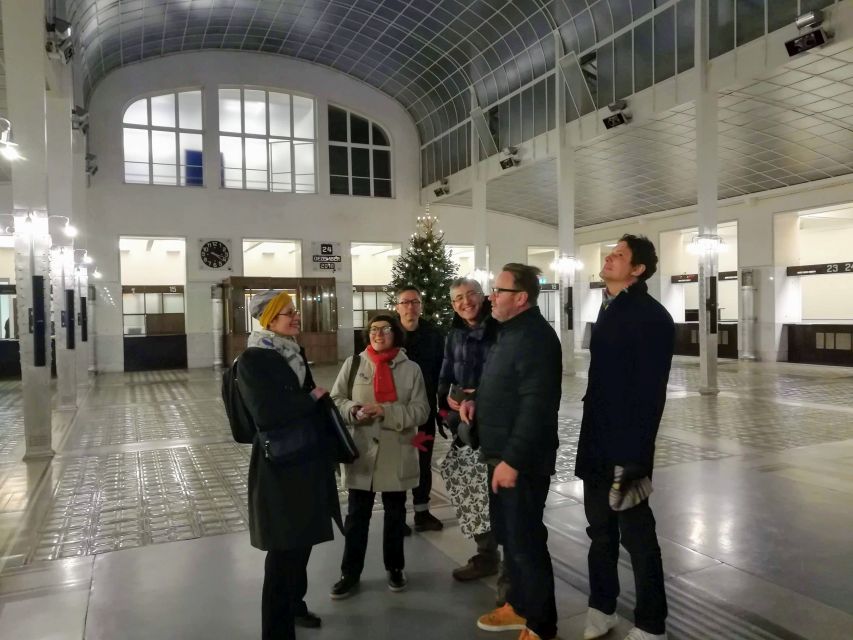
That is the strength of this experience. Guides such as Jan, Stephan, Suzanne, Ilse, Angelina, and Wolfgang Augsten have been praised for explaining art, architecture, and Austrian history in a personal way. The most useful guides do not merely name architects. They explain how public transport, city planning, imperial politics, and artistic rebellion met in the same streets.
You also get a useful comparison between different kinds of Art Nouveau. Otto Wagner’s stations were practical structures built for daily use, yet they received careful attention. The Secession building was a bold statement by artists who wanted freedom from older academic rules. The imperial station near Schönbrunn used related ideas, but with more ceremonial weight.
The result is less a checklist of buildings and more a way to understand Vienna. Afterward, you may notice Jugendstil details in places you would otherwise pass without a second glance.
More Walking Tours in Vienna
- Vienna: Guided Walking Tour of City Center Highlights
★ 4.7 · 4,989 reviews - Vienna: Vienna Central Cemetery Guided Walking Tour
★ 4.8 · 3,307 reviews - Vienna: Guided Walking Tour of City Highlights & Hidden Gems
★ 4.9 · 2,180 reviews
Starting at the Otto Wagner Pavilion on Karlsplatz
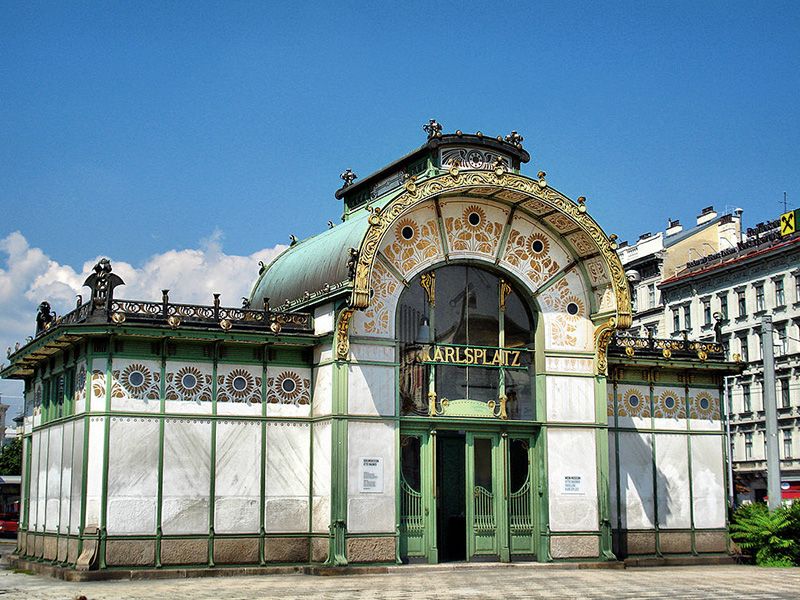
The tour begins at Operngasse 7 in central Vienna. The route starts near Karlsplatz, where the Otto Wagner Pavilion gives you a compact introduction to the architect and the city railway system.
The pavilion is one of Vienna’s most recognizable Art Nouveau structures. Its pale green and white exterior, ornamental panels, and carefully arranged metalwork show how Wagner could make a transport building feel almost like a piece of fine art. It was designed for a practical purpose, but it was never treated as an ordinary shelter.
Inside, the small Wagner Museum provides background for the rest of the walk. The setting is useful because you encounter the architect’s ideas before seeing more of his work in the city. Your guide can point out repeated design choices, materials, and the relationship between function and appearance.
From April through October, when the museum is open, admission is not included. General admission is €5, while seniors, students, Vienna Card holders, and people with disabilities pay €4. The outdoor structure can still be appreciated without entering, but the museum adds context if you want more than a quick photograph.
Allow a little time to find the meeting point. The stated start is Operngasse 7, and one account describes meeting near the Museum Cafe before walking to the Secession area. Check the exact confirmation details you receive so you are not trying to solve Vienna’s address system at the last moment.
Reading the Stadtpark station and the redirected river
From Karlsplatz, the route continues toward Stadtpark. This is where the tour shifts from a single building to the wider engineering problem behind Vienna’s city railway.
The Stadtpark station is regarded as the best-preserved original metro station still in use. That matters because you see Art Nouveau not frozen behind glass, but serving an everyday transport function. Trains, commuters, and modern Vienna continue to pass through a structure designed during the city’s great period of expansion.
A particularly good detail here is the artificial riverbed beside the station. The Vienna River had to be redirected when the railway was built, creating a problem that was both practical and visual. The new water channel had to fit into the changing city while the railway cut through the area.
This small piece of infrastructure helps explain the period better than ornament alone. Vienna’s modern identity was being built through bridges, stations, channels, streets, and public works. Architecture had to make all of that look orderly and intentional.
Your guide will likely spend time showing how the station’s materials and shapes fit the wider Jugendstil vocabulary. Look closely at the details rather than rushing to the next stop. The point is not only to see what is attractive, but to understand how Wagner and his contemporaries made a new form of public architecture acceptable to the city.
For visitors who want a broad introduction to Vienna, this is one of the tour’s most valuable sections. You learn how design, engineering, and urban planning worked together. You also get a practical lesson in using Vienna’s excellent public transport, which can help you get around for the rest of your stay.
The Secession building and Vienna’s artistic break
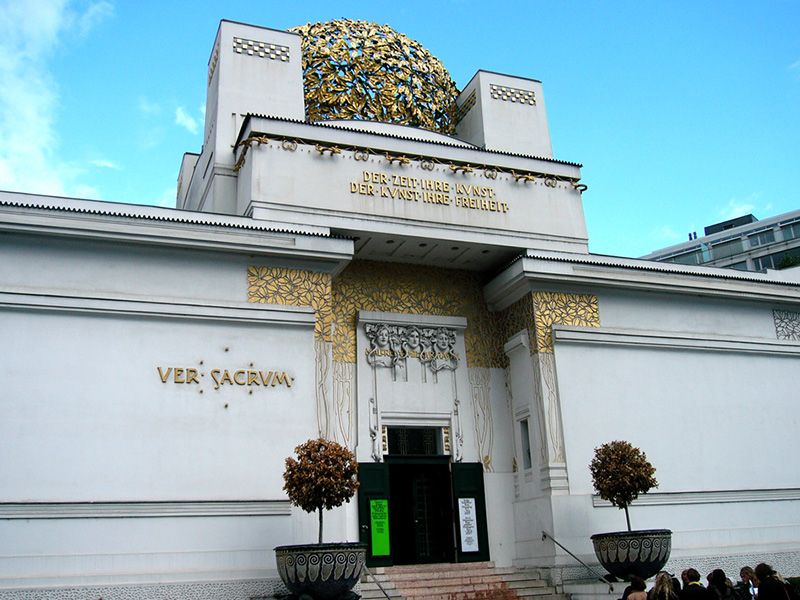
The route then moves toward the Secession building, the clearest symbol of Viennese Jugendstil. Its unusual white exterior, geometric forms, and famous dome of gilded laurel leaves make it easy to recognize, but the story behind it is even more important.
The Secession was built by artists who wanted to break away from the established art institutions of the day. The building announced that modern art deserved its own place and its own rules. That makes it more than a photogenic stop. It represents a cultural dispute about who had the right to define art in Vienna.
This is where a specialist guide earns the fee. You can see the building on your own, but a guide can explain its symbols, materials, and place in the city’s artistic life. The discussion also helps you compare the Secession with Otto Wagner’s work. Both belong to the same broad period, yet they express different aims.
Inside, the major draw is Gustav Klimt’s Beethoven Frieze. The work is large, symbolic, and closely tied to the Secession’s original artistic ideals. It can be a highlight for anyone interested in Klimt, late nineteenth-century art, or Vienna’s cultural history.
Admission to Secession House is extra if you visit Tuesday through Sunday. The listed cost is €9.50 for adults and €6 for students and seniors, with the guide helping you pay. The tour can still be worthwhile without entering, but I would include the frieze if your schedule and budget allow. It gives the artistic side of the route a stronger finish.
You also see two apartment houses by Otto Wagner on the way. These buildings are useful because they show how Art Nouveau reached ordinary urban life. The style was not limited to museums and grand public projects. It appeared in residences, entrances, façades, and details meant to be seen by people going about their daily business.
More walking tours:
- Vienna: Viennese Underworld Guided Walking Tour
★ 4.7 · 1,865 reviews - Vienna: World War II Historical Walking Tour
★ 4.8 · 1,772 reviews - Vienna Historic Center Small Group Walking Tour
★ 5.0 · 1,746 reviews - Vienna: Private Walking Tour with a Local Guide
★ 4.6 · 1,420 reviews
Kettenbrücke and the shift from walking to the U4
The route continues to Kettenbrücke station, another important part of the city railway story. This section gives your guide a chance to pull together the visual details introduced at Karlsplatz and Stadtpark.
The tour is described both as approximately two hours and 30 minutes and as a three-hour walk. I would plan for about two and a half to three hours, especially if the group asks questions or enters the Secession and Wagner Pavilion. Weather can also affect the pace.
At Kettenbrücke, you do not simply continue on foot. You take the U4 metro line to the final station. That short ride is practical as well as thematic. You experience the transport system that helped shape the buildings you have been studying.
One past guide adapted the route by using the U4 to reduce walking and give the group a chance to warm up. Another helped the group understand how to navigate Vienna’s trains and public transport. If you have a day pass, bring it. The tour information does not state that public transport fares are included, so you should expect to cover your own ticket unless your booking instructions say otherwise.
The metro portion also keeps the experience from becoming an exhausting march across central Vienna. You still need comfortable shoes and weather protection, but the mix of walking and rail travel makes the route more manageable.
The imperial station near Schönbrunn
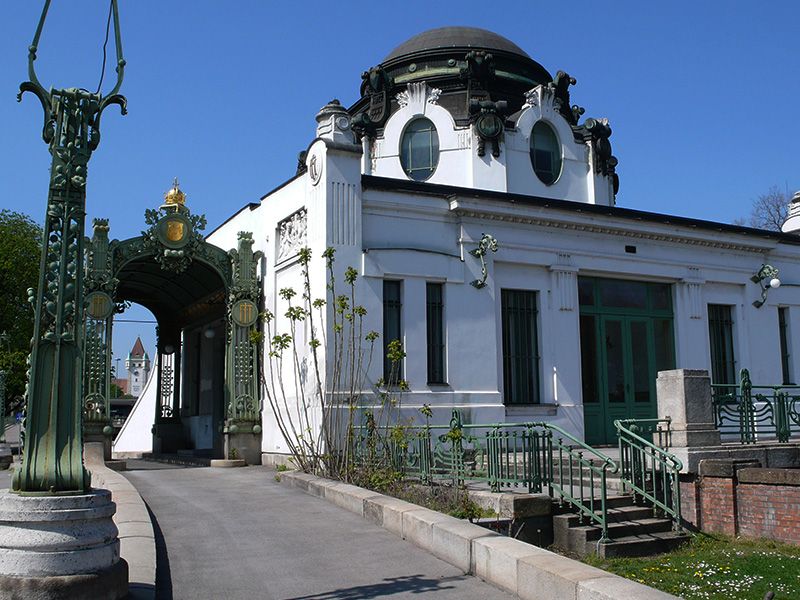
The last stop is the imperial station built outside Schönbrunn Palace for the Emperor. It was not a regular station for the general public. Its purpose was partly practical, but also political.
The Emperor’s support mattered because Vienna’s railway project faced critics. This small building helped show that the imperial court accepted the new transport system. In other words, the station was a message as much as a piece of infrastructure.
Architecturally, it is the perfect final stop. You can identify the design elements seen earlier, then notice how Wagner changed their effect for an imperial setting. Art Nouveau’s clean lines and decorative details are still present, but the scale of the ambition feels more ceremonial.
This contrast is one of the tour’s best teaching moments. Earlier stations served a growing urban public. The Schönbrunn station served the Emperor and carried symbolic weight. The same general style could express modern city life in one place and imperial grandeur in another.
The station is also a reminder that Vienna’s Art Nouveau was not one fixed look. It could be practical, rebellious, domestic, or ceremonial. Seeing these examples in sequence gives you a much clearer idea of the range of the movement.
The route ends in Vienna, with the final stop near the Schönbrunn area. Hotel pickup and drop-off are not included, so you will need to make your own way back afterward. Since the tour uses public transport, getting back into central Vienna should be easier once you have followed the route with the guide.
What the guide adds to the experience
The guide is the main reason to pay for this tour rather than simply visit the stations independently. The strongest feedback centers on clear explanations, enthusiasm, flexibility, and the ability to answer questions across art, architecture, and Austrian history.
A guide named Suzanne tailored the route for a small group and used the U4 to save walking time. Jan was praised for his passion for Vienna. Stephan offered suggestions about places to visit and eat, while also helping the group feel more confident with public transport. Angelina was described as prepared and willing to go the extra mile.
You may be assigned a different guide, so I would not book on the assumption that one particular person will lead your tour. Still, the pattern is clear: the company places value on guides who can adjust the discussion to the people in front of them.
That flexibility matters. If you already know Klimt, you can ask about Wagner’s city planning. If you are new to architecture, you can focus on how to recognize Jugendstil details. If the weather turns unpleasant, the guide may be able to adjust the route, though no specific alternative is guaranteed.
The small group limit of eight is a real advantage here. Art and architecture tours work best when you can stop, look up, ask a question, and hear the answer without competing with a large crowd. It also gives the guide a better chance to notice whether the group needs a shorter walking stretch or more time at a particular building.
Is $180.04 good value?
At $180.04 per person, this is not a budget walking tour. You are paying for a specialist-led experience, a very small group, and a route that combines several parts of Vienna’s Art Nouveau story. The professional guide is included, but food, drinks, hotel transfers, public transport, and some entrance fees are not.
The price makes the most sense for a visitor who already values guided cultural tours. If you are deeply interested in architecture, design, Klimt, or Vienna around 1900, the connections between the stops may justify the cost. The tour can also save you time by organizing several sites into one efficient route.
It is less convincing for someone who only wants a general city orientation. You can see many exterior details for free, and the tour does not include a meal or hotel transportation. If your main goal is to collect photographs, you may not get enough added value.
Group discounts may reduce the per-person cost, and the eight-person maximum keeps the experience intimate. Before booking, add the possible €5 Otto Wagner Pavilion fee, the €9.50 Secession admission, and any metro fare to your budget.
The cancellation terms are fair but firm. You can cancel up to 24 hours before the start for a full refund. Changes or cancellations inside that 24-hour window are not accepted or refunded.
Who should book this Vienna Art Nouveau tour?
I would recommend it most strongly to:
- Art and architecture enthusiasts who want more than exterior photographs
- Visitors interested in Klimt, Otto Wagner, Jugendstil, or Vienna around 1900
- Repeat visitors who have already seen the main imperial sights
- First-time visitors who want a focused introduction to the city’s design
- Small groups who value questions and personal attention
- People who want practical help using Vienna’s metro system
I would be more cautious if you dislike walking, standing, or public transport. The route is not presented as difficult, and most people can participate, but it is still an active city tour. Cold or rainy weather can affect comfort, so dress for the forecast.
I would also think twice if your Vienna schedule is packed with major museums and palace visits. The tour takes about two and a half to three hours, and adding the Secession interior may require more time. For a short stay, its value depends on how much you care about this particular period.
Final verdict: a smart choice for art-minded visitors
Book this tour if you want Vienna’s Art Nouveau to make sense as a movement, not just a collection of attractive buildings. The route links public transport, urban planning, artistic rebellion, residential architecture, Klimt, and imperial politics in a way that is difficult to reproduce efficiently on your own.
The strongest reasons to go are the small group, the expert-led explanations, and the progression from Wagner’s practical stations to the imperial pavilion. The main weakness is the high price, especially once extra admissions and transport are added.
For a dedicated art or architecture fan, I think the cost can be justified. For a casual sightseer, choose it only if you are willing to trade part of a general sightseeing day for a focused look at Vienna’s modern beginnings.
FAQ
How long does the Vienna Art Nouveau Walking Tour last?
The experience is approximately two hours and 30 minutes. It is also described as a three-hour walking tour, so you should allow roughly two and a half to three hours.
What language is the tour offered in?
The tour is offered in English.
Where does the tour begin?
The stated meeting point is Operngasse 7, 1010 Vienna, Austria.
How many people can join the tour?
A maximum of eight people can be included in one booking and on the activity.
Are entrance fees included?
No. The guide is included, but some entrance fees are extra. From April through October, the Otto Wagner Pavilion museum costs €5 for general admission and €4 for eligible seniors, students, Vienna Card holders, and people with disabilities. Secession House costs €9.50 for adults and €6 for students and seniors from Tuesday through Sunday.
Does the tour include hotel pickup, food, or drinks?
No. Hotel pickup and drop-off are not included, and food and drinks are excluded unless specifically stated otherwise.
Can I cancel for a full refund?
Yes. You can cancel at least 24 hours before the experience begins for a full refund. Cancellations or changes made less than 24 hours before the start time are not accepted or refunded.
Just added around Vienna
- Mobile puzzle rally tour at the Vienna Central Cemetery★ 4.5 · 3 reviews
- 8 days European Highlights PRIVATE TOUR from Budapest including Budapest Vienna Prague and Bratislava★ 5.0 · 3 reviews
- RAXI (E-Rickschaw) big private Vienna tour★ 4.5 · 3 reviews
- Private Transfer from Vienna to Prague with 1 hour Stop in Kutna Hora★ 4.5 · 3 reviews
- Palais Lobkowitz Audio Guide Tour★ 4.0 · 3 reviews
- Private Tour from Vienna to Melk and Dürnstein★ 4.5 · 3 reviews
- Vienna: Designer Fashion Time Capsule Experience★ 5.0 · 3 reviews
- Vienna Sight & Gourmet Tour – individual private tour★ 4.5 · 3 reviews
Walking Tours, compared.

Guided Walking Tour of City Center Highlights
Read our review →

Guided Walking Tour of City Highlights & Hidden Gems
Read our review →


Vienna Historic Center Small Group Walking Tour
Read our review →
Browse the lists this tour appears in