
Reviewed · WALKING TOURS
Vienna Art Nouveau Walking Tour
Art Nouveau runs beneath Vienna. I like this tour because Otto Wagner’s metro stations show how art and public transport grew together, and because the walk links stations with Secession House, apartment buildings, and imperial architecture. The main consideration is the price, $176 per person, plus separate admission for the Wagner pavilion and Secession House.
The guide-led format gives you much more than a quick look at pretty façades. Guides such as Wolfgang, Peter, and Giuseppina have been praised for their knowledge, enthusiasm, and ability to answer questions about Austrian history, architecture, and even less obvious places of worship. You should also expect plenty of walking, and the advertised duration varies between 2.5 and 3 hours, depending on the description and selected option.
In This Review
- Key points before you book
- Why Vienna needed a new kind of transport
- Starting at Café Museum near the Opera
- The Karlsplatz pavilion and Otto Wagner’s design language
- Stadtpark station and the metro as public art
- Secession House and Klimt’s Beethoven Frieze
- Otto Wagner’s apartment houses and everyday Jugendstil
- Kettenbrücke station and the practical side of beauty
- The imperial station at Hietzing
- How the guide affects the experience
- Is $176 good value for three hours?
- Who should take this Art Nouveau walk?
- Practical advice for getting more from the walk
- Should you book it?
- FAQ
- Where does the Vienna Art Nouveau Walking Tour meet?
- How long does the tour last?
- What language is the tour conducted in?
- Is the tour private or shared?
- Is admission to the Otto Wagner Pavilion included?
- Is admission to Secession House included?
- Can I see Klimt’s Beethoven Frieze on the tour?
- What can I cancel the tour?
Key points before you book
- Otto Wagner’s metro vision: Learn how Vienna’s expanding suburbs pushed the city toward a modern underground railway system.
- Two surviving stations: Visit the Stadtpark and Kettenbrücke stations, with a final look at the imperial station near Schönbrunn.
- Secession House and Klimt: On Tuesday through Sunday, you can enter the building to see Gustav Klimt’s Beethoven Frieze, but admission costs extra.
- A walking tour with real context: The guide explains Art Nouveau’s ideas, materials, symbols, and social meaning instead of simply naming buildings.
- Small-group value: Private and small-group options allow the guide to adjust the pace and answer detailed questions.
- Expect a long walk: One recent booking described walking miles, so comfortable shoes are essential.
Why Vienna needed a new kind of transport
Vienna changed fast in the late 19th century. Its population grew, suburbs expanded, and the old ways of moving around the city could no longer carry everyone efficiently. City leaders began planning metro lines that would connect outer districts with the center and the Ringstrasse.
This is where Otto Wagner enters the story. He was not asked merely to design practical railway structures. He was expected to give the new system a clear visual identity, one that signaled modern Vienna and its international outlook.
Wagner chose Art Nouveau, known in Vienna as Jugendstil. The style favored flowing lines, floral forms, geometric patterns, decorative metalwork, and careful use of modern materials. Yet Wagner’s work was never decoration for decoration’s sake. His stations had to be easy to recognize, durable, and suited to a modern public system.
That mix is what makes this tour worthwhile. You are not only looking at old buildings. You are seeing a city use design to announce that it was changing.
I especially like the way the tour connects public infrastructure with private and imperial buildings. The same artistic period appears in a metro pavilion, a concert hall, an apartment house, a bank, and a station built for the emperor. The differences tell you as much as the similarities.
More Walking Tours in Vienna
- Vienna: Guided Walking Tour of City Center Highlights
★ 4.7 · 4,989 reviews - Vienna: Vienna Central Cemetery Guided Walking Tour
★ 4.8 · 3,307 reviews - Vienna: Guided Walking Tour of City Highlights & Hidden Gems
★ 4.9 · 2,180 reviews
Starting at Café Museum near the Opera
The stated meeting point is Café Museum at Operngasse 7, in Vienna’s first district. The selected option can affect the starting location, so check the exact confirmation before setting out.
Beginning near Café Museum puts you close to several important central sights. The opening part of the tour includes a guided look at the café and then moves toward Otto Wagner’s pavilion at Karlsplatz. The café itself is part of Vienna’s long café tradition, but the real architectural focus soon shifts to Wagner.
You should arrive ready to walk rather than expecting a series of short transfers. One guide may spend more time on design and construction, while another may follow your questions into Austrian politics, religion, or urban development. That flexibility is one reason a private or small-group booking can be useful.
Peter, one of the named guides, received especially strong praise for answering a wide range of questions about Austrian history and architecture. That matters here because Art Nouveau makes more sense when you understand the city around it. A building’s shape, materials, and symbols often reflect the people who commissioned it and the public they wanted to impress.
The Karlsplatz pavilion and Otto Wagner’s design language
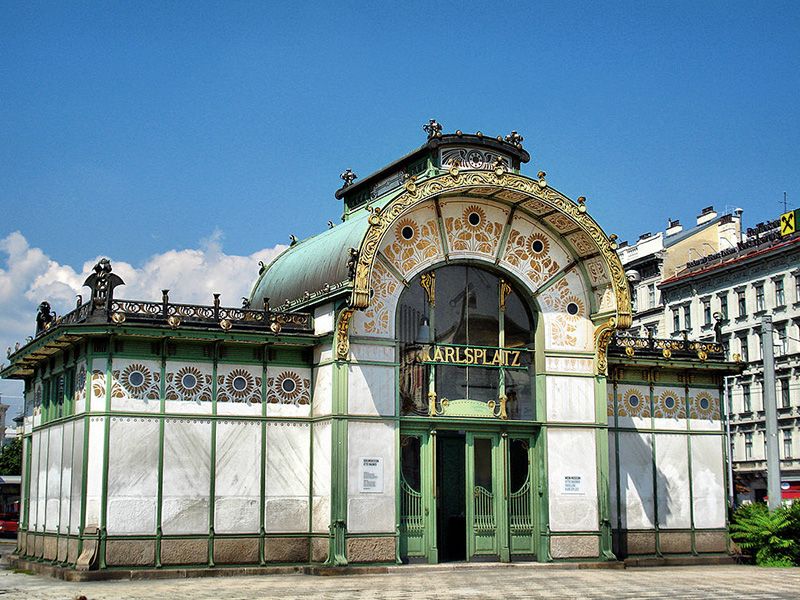
The Wien Museum Otto Wagner Pavillon Karlsplatz is an elegant place to begin the architectural portion. Its curved forms, pale surfaces, decorative details, and controlled symmetry show Wagner working in a style that is refined but not overloaded.
The pavilion once served the city’s railway system. Today, it helps you see how Wagner wanted public transport to look. He treated a station entrance as part of Vienna’s civic face, not as a purely functional shelter.
Admission to the Otto Wagner Pavillon is not included in the tour price. That extra cost is worth considering if you want the full interior experience and more direct contact with Wagner’s work. If you prefer to keep additional expenses down, the exterior still gives the guide plenty to discuss, but you should confirm exactly what the group will enter.
This stop also introduces one of the tour’s best ideas: Art Nouveau was not a single fixed look. In Vienna, it could be restrained and geometric, floral and decorative, or adapted for grand imperial use. The guide helps you notice those changes instead of treating every decorated building as part of one large style box.
Stadtpark station and the metro as public art
The Stadtpark station is described as the best-preserved original metro station still in use. That makes it a key stop, not a quick photo pause.
Here you can focus on how Wagner balanced decoration with the demands of a working transport system. The station had to be recognizable, weather-resistant, and connected to the city’s daily life. Its Art Nouveau character is not tucked away in a museum. It belongs to a transport network that continues to serve Vienna.
The discussion at this point is also about symbolism. Art Nouveau artists favored certain natural forms and materials, but those choices were not random. Curving lines could soften a structure, metal could signal modern production, and repeated motifs could give a public building its own visual language.
I find this part especially helpful for visitors who normally admire architecture without knowing what to look for. Your guide can point out the relationship between shape, surface, and purpose. You begin to see why one entrance feels formal, another feels domestic, and another was designed to project power.
The walking route between stops adds useful context. You are not whisked from station to station with no sense of place. You move through Vienna and see how Wagner’s railway design relates to surrounding buildings.
More walking tours:
- Vienna: Viennese Underworld Guided Walking Tour
★ 4.7 · 1,865 reviews - Vienna: World War II Historical Walking Tour
★ 4.8 · 1,772 reviews - Vienna Historic Center Small Group Walking Tour
★ 5.0 · 1,746 reviews - Vienna: Private Walking Tour with a Local Guide
★ 4.6 · 1,420 reviews
Secession House and Klimt’s Beethoven Frieze
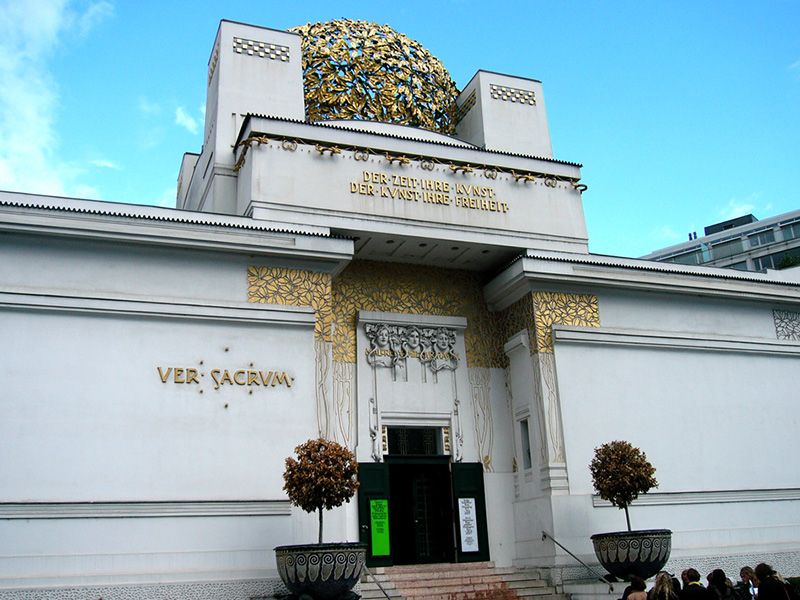
The walk to the Secession House brings you to the building most closely associated with Viennese Jugendstil. Its white exterior, unusual dome, and strong geometric forms make it impossible to confuse with a standard historicist building on the Ringstrasse.
The Secession movement represented a break from older artistic institutions and established tastes. The building’s design makes that break visible. It is bold, compact, and deliberately different from the grand historical styles that dominate much of central Vienna.
On tours running Tuesday through Sunday, the visit includes the interior and Gustav Klimt’s famous Beethoven Frieze. Admission is not part of the $176 tour price. Adults pay €9.50, while students and seniors pay €6, and the guide helps with the payment.
This extra charge is important because the frieze is one of the strongest artistic reasons to choose this walk. The building alone is memorable, but seeing Klimt’s work gives the Art Nouveau discussion a human and symbolic center. The guide can explain how the images relate to Beethoven’s Ninth Symphony and the search for happiness, art, and redemption.
Do not assume the Secession visit is included simply because it appears in the route. Budget for the ticket, and check the day of your booking. The supplied details specifically identify Tuesday through Sunday as the schedule for seeing the Beethoven Frieze.
Otto Wagner’s apartment houses and everyday Jugendstil
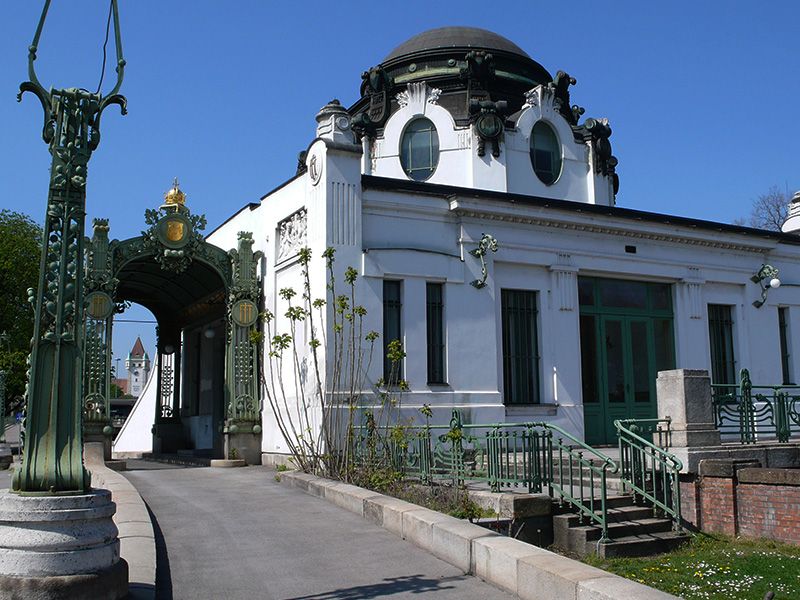
The route also includes two apartment houses designed by Otto Wagner. These are valuable stops because they show how Art Nouveau moved beyond public buildings and entered ordinary urban life.
A metro pavilion can be carefully designed as a civic symbol. An apartment building has different demands. It must house people, fit into a street, and still express the owner’s taste and the architect’s ideas. Look for the relationship between the building’s broad structure and its smaller decorative details.
This is also where the tour can help you avoid a common mistake. Art Nouveau is not only about sweeping floral decoration. Wagner often worked with order, proportion, repeated patterns, and modern materials. His buildings can feel elegant without being fussy.
The guide discusses the philosophy behind the style, including favored symbols and materials. That conversation gives the apartment houses a purpose beyond nice façade. You learn to ask what the decorative elements are doing, who they were meant to address, and how they fit the building’s use.
Giuseppina was praised for being friendly, attentive, and able to explain Art Nouveau clearly. That kind of guide makes a difference on a walking tour, since you may want to stop and ask about details that are easy to miss from the pavement.
Kettenbrücke station and the practical side of beauty
Kettenbrücke station is another of the remaining Wagner stations included in the tour. It helps complete the picture of the original metro system and gives you another chance to compare Wagner’s design choices.
By this point, you will have seen Art Nouveau in a pavilion, a railway station, a major exhibition building, and apartment architecture. Kettenbrücke helps bring the focus back to transport. The system had to function for the public, not just impress architects.
The tour then uses the metro for the final station visit. The metro ride is not an isolated sightseeing trick. It reinforces the central point of the experience: Wagner’s work belonged to a real network intended to connect Vienna.
Your exact order may vary with the selected option and the guide’s plan. The written route describes Karlsplatz, Stadtpark, Kettenbrücke, and the imperial station, while the itinerary also lists Café Museum, Secession House, Otto Wagner’s Hofpavillon Hietzing, and the Austrian Postal Savings Bank. Treat the route as a guided architectural circuit rather than a rigid checklist.
The imperial station at Hietzing
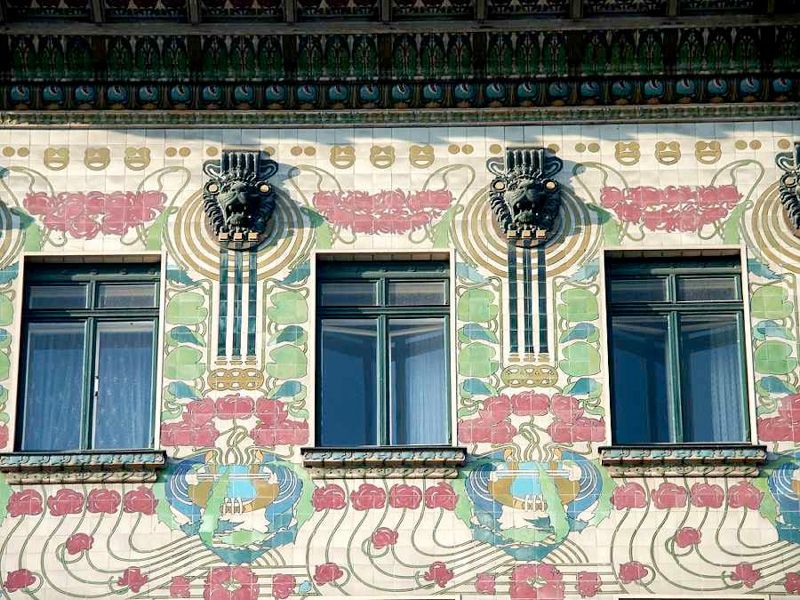
The final station is the Hofpavillon Hietzing, also called the imperial station. It was built outside Schönbrunn exclusively for the emperor.
This is the crown jewel of the railway line, not because it is the largest station, but because its purpose was political as well as practical. Critics of Vienna’s metro system could see that the emperor supported the project. The station made modern transport part of the imperial image.
Wagner had to adapt a generally bourgeois Art Nouveau style for a monarch. The result shows how the same design language could be given more ceremony and grandeur. You can watch for the changes in scale, decoration, and formal presentation as the guide explains how Wagner translated modern design into an imperial setting.
This stop gives the tour a satisfying argument. It begins with public transport for a growing city and ends with a station built for one powerful passenger. Between those points, you see Art Nouveau serve ordinary commuters, private residents, artists, civic leaders, and royalty.
The itinerary also lists the Austrian Postal Savings Bank as a guided stop. Its inclusion broadens the tour beyond the metro and shows how modern design could work for a major financial institution. If that building is part of your selected route, your guide can connect it to Wagner’s wider architectural work and his interest in clear, modern forms.
How the guide affects the experience
This tour depends heavily on the guide. The buildings are worth seeing on your own, but the meaning behind them is not always obvious from the street.
The strongest guide reports emphasize three qualities: subject knowledge, enthusiasm, and flexibility. Wolfgang adjusted the experience for a very small party, while Peter handled detailed questions about Austrian history and architecture. Giuseppina was described as approachable and attentive throughout the walk.
That feedback suggests a good fit for curious visitors who want conversation rather than a memorized speech. If you are interested in Jewish history, religious buildings, urban planning, or the politics of imperial Vienna, ask about those subjects. One booking specifically praised Peter for pointing out less obvious places of worship, including hidden synagogues.
A small group can also make the pace more personal. You may spend longer at one building if the subject catches your interest, or move along when you have had enough. Private tours offer the most control, but they also make the $176 per-person price harder to justify if you are traveling alone.
Is $176 good value for three hours?
At $176 per person, this is a costly walking tour. The price includes three hours with a historian guide, but it does not include admission to the Otto Wagner Pavilion or Secession House.
The value depends on what you want from Vienna. If you only need the locations for photographs, the price will feel high. You can see several buildings from the outside without paying for a guided experience.
I see better value if you want architecture explained in a connected way. The tour links transport planning, Art Nouveau ideas, city growth, imperial politics, Klimt, and Wagner’s private and public buildings. That is a lot of ground for three hours, particularly if your guide welcomes questions.
The price also makes more sense for a private or very small group that can shape the discussion. For a larger party, ask how many people will attend and how much time you will have at each stop. The supplied details confirm that private and small-group options are available, but they do not specify a maximum group size.
The listed rating is 4.4 from 33 reviews, with especially strong praise for the guides and the chance to tailor the route. I would treat that as a sign that the human side of the experience matters as much as the buildings. A less engaging guide could make the same walk feel ordinary.
Who should take this Art Nouveau walk?
I would recommend it to you if you enjoy architecture, urban planning, design history, or Vienna beyond the palace circuit. It is also a good choice if you have already seen the city’s major imperial sights and want to understand how modern Vienna took shape.
Art and design students should find plenty to study, especially in the contrast between the metro stations, Secession House, apartment buildings, and imperial pavilion. Visitors who like Gustav Klimt will appreciate the chance to see the Beethoven Frieze, provided the tour runs Tuesday through Sunday and they are willing to pay the extra admission.
I would be more cautious if you dislike walking or want a relaxed café-and-palace outing. One recent participant described walking miles, and the route covers several separate sites. Wear comfortable shoes and expect to move at a steady pace.
The tour is conducted in English. Since the duration is described as both 2.5 and 3 hours, confirm the exact timing when you select your date. That small difference can matter if you are planning a Schönbrunn visit, concert, or train departure afterward.
Practical advice for getting more from the walk
Read a little about Otto Wagner before you go, but do not overload yourself. Knowing that the metro was built for a rapidly expanding Vienna is enough to make the first station meaningful.
Bring a way to take notes or photographs, if permitted. The guide may point out patterns, materials, or symbols that you will want to remember later. At Secession House, allow for the extra €9.50 adult admission or €6 student and senior admission.
Keep the booking terms in mind when planning. You can cancel up to 24 hours before the tour for a full refund, and reserve now while paying later. Starting times depend on availability, and the meeting point may change with the selected option.
Most of all, ask questions. The best moments appear to come when the guide moves beyond the planned route and explains the city’s social, religious, and political background. That is where this walk earns its price.
Should you book it?
Book this tour if you want Vienna’s Art Nouveau buildings to make sense as part of one city story. The metro stations are the hook, but the Secession House, Klimt’s Beethoven Frieze, Wagner’s apartment buildings, and the emperor’s private station give the walk real range.
Skip it if you mainly want a cheap sightseeing stroll or if three hours of walking sounds tiring. The separate entrance fees also push the total cost higher.
For architecture fans, design students, and curious first-time visitors, I think the tour is a strong choice, especially in a private or small group. Pick a Tuesday through Sunday departure if the Beethoven Frieze matters to you, confirm the exact duration, and arrive ready to walk. Vienna’s Art Nouveau is much easier to appreciate when you see it working in the streets, stations, and buildings that shaped the modern city.
FAQ
Where does the Vienna Art Nouveau Walking Tour meet?
The stated meeting point is Café Museum at Operngasse 7, A-1010 Vienna. The starting location can depend on the selected tour option, so check your booking details.
How long does the tour last?
The activity is advertised as a three-hour tour. The description also refers to a 2.5-hour guided tour, so confirm the exact duration for your chosen option.
What language is the tour conducted in?
The live guided tour is conducted in English.
Is the tour private or shared?
Private and small-group options are available.
Is admission to the Otto Wagner Pavilion included?
No. Admission to the Otto Wagner Pavillon Karlsplatz is not included in the tour price.
Is admission to Secession House included?
No. The entrance fee is separate. Adults pay €9.50, while students and seniors pay €6.
Can I see Klimt’s Beethoven Frieze on the tour?
If your tour runs Tuesday through Sunday, the visit includes Secession House and the chance to see Gustav Klimt’s Beethoven Frieze. The entrance fee is extra, and the guide assists with payment.
What can I cancel the tour?
You can cancel up to 24 hours in advance for a full refund. A reserve-now, pay-later option is also available.
Just added around Vienna
- Mobile puzzle rally tour at the Vienna Central Cemetery★ 4.5 · 3 reviews
- RAXI (E-Rickschaw) big private Vienna tour★ 4.5 · 3 reviews
- 8 days European Highlights PRIVATE TOUR from Budapest including Budapest Vienna Prague and Bratislava★ 5.0 · 3 reviews
- Private Transfer from Vienna to Prague with 1 hour Stop in Kutna Hora★ 4.5 · 3 reviews
- Palais Lobkowitz Audio Guide Tour★ 4.0 · 3 reviews
- Private Tour from Vienna to Melk and Dürnstein★ 4.5 · 3 reviews
- Vienna: Designer Fashion Time Capsule Experience★ 5.0 · 3 reviews
- Private day trip from Munich to Eagle’s Nest & Hallstatt★ 4.7 · 3 reviews
Walking Tours, compared.

Guided Walking Tour of City Center Highlights
Read our review →

Guided Walking Tour of City Highlights & Hidden Gems
Read our review →


Vienna Historic Center Small Group Walking Tour
Read our review →
Browse the lists this tour appears in