
Reviewed · WALKING TOURS
Vienna: Educational Walk Exploring Homelessness
Vienna has another story to tell. This two-hour walking tour looks beyond palaces and polished streets at homelessness, poverty, and the social systems around them. I like the honest mix of personal experience and clear facts, and I like that the tour does not put homeless people, shelters, or private facilities on display. The main drawback is simple: this is not a traditional sightseeing walk, so you will get little historical information about Vienna’s monuments.
The guide may have personal experience of homelessness, which gives the subject a human voice rather than a classroom feel. Past guides including Tamara, Peter, and Josef have been praised for openness, empathy, humor, and easy interaction. Come ready to listen, ask respectful questions, and think. This is serious subject matter, but the tone can still be warm and approachable.
In This Review
- Key points to know before booking
- A different way to read Vienna’s grand center
- Meeting your guide on Bäckerstraße
- What the route shows, and what it does not
- Personal experience gives the subject a human voice
- Why the Vienna setting matters
- Weather, walking comfort, and accessibility
- Is $29 a fair price for two hours?
- Who will get the most from this experience?
- Should you book the Vienna homelessness walk?
- FAQ
- How long is the Vienna homelessness tour?
- How much does the experience cost?
- What language is the tour conducted in?
- Where does the tour meet?
- How will I recognize the guide?
- Does the tour visit homeless shelters?
- Does the experience put homeless people on display?
- Is the tour wheelchair accessible?
- What happens if it rains heavily?
Key points to know before booking
- A formerly homeless guide leads the walk: Personal stories help connect broad social questions with real life.
- The route uses public places linked to homelessness: You discuss the issue without visiting shelters or displaying people.
- Vienna’s beauty forms part of the lesson: The city’s grand setting makes the contrast with poverty hard to ignore.
- Personal stories and facts work together: Guides such as Peter, Josef, and Tamara have brought different styles, including humor and open discussion.
- The tour is in German: This matters if you need an English-language experience.
- It costs $29 for two hours: The price is reasonable if you want a thoughtful social tour rather than a standard city walk.
A different way to read Vienna’s grand center
Most first walks through Vienna lead you toward imperial buildings, elegant squares, and famous coffeehouses. This one asks you to look at the same city through another lens. You still move through central Vienna, but the focus is on places and situations connected with homelessness.
That contrast gives the walk its force. Vienna is known for order, wealth, public services, and a high quality of life. Yet homelessness and poverty still exist within that polished setting. You are encouraged to consider why, and to think about the line between being poor, receiving welfare, and becoming homeless.
I appreciate that the experience does not treat homelessness as a spectacle. You do not visit a shelter. You do not enter a facility to observe people. You do not watch homeless people going about their day. Instead, the guide uses selected sites to explain how the issue works and why simple answers rarely fit.
This approach also means the walk may feel less visually dramatic than a palace tour. The value comes from discussion, context, and reflection. If you want a list of famous buildings, this is the wrong choice. If you want to understand a difficult part of modern Vienna, it offers a more thoughtful use of two hours.
More Walking Tours in Vienna
- Vienna: Guided Walking Tour of City Center Highlights
★ 4.7 · 4,989 reviews - Vienna: Vienna Central Cemetery Guided Walking Tour
★ 4.8 · 3,307 reviews - Vienna: Guided Walking Tour of City Highlights & Hidden Gems
★ 4.9 · 2,180 reviews
Meeting your guide on Bäckerstraße
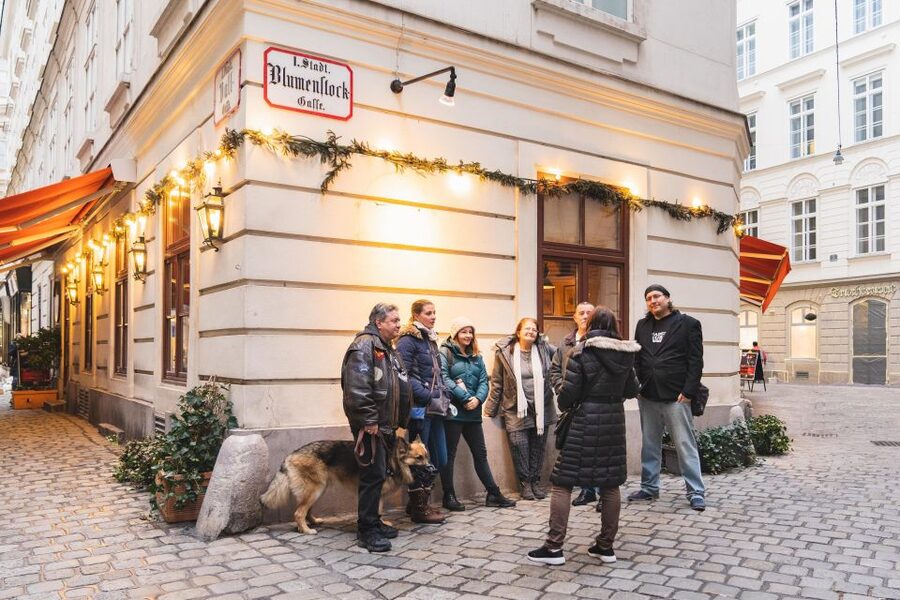
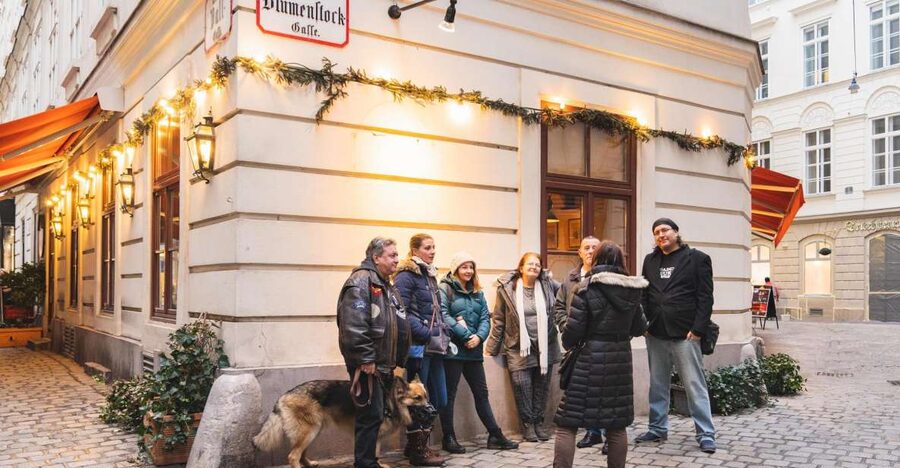
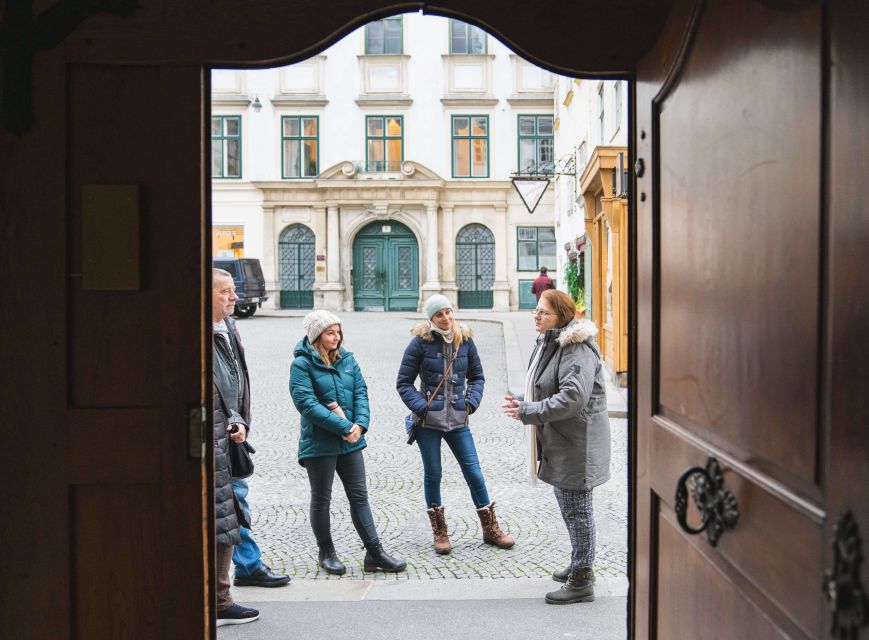
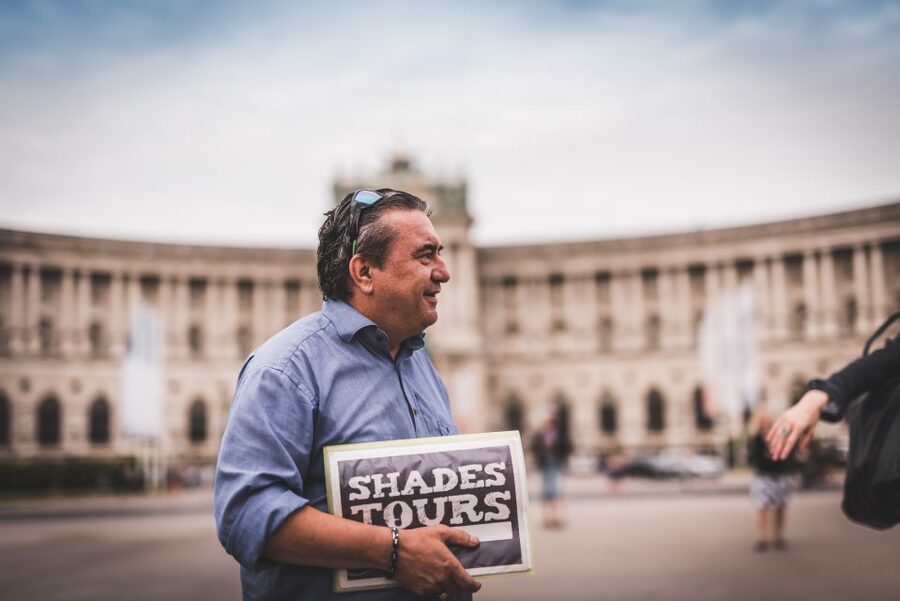
The meeting point is in front of restaurant INIGO at Bäckerstraße 18, 1010 Wien. Look for the SHADES TOURS guide holding a folder. That small detail is useful in a busy central area, where several groups may gather near restaurants and shops.
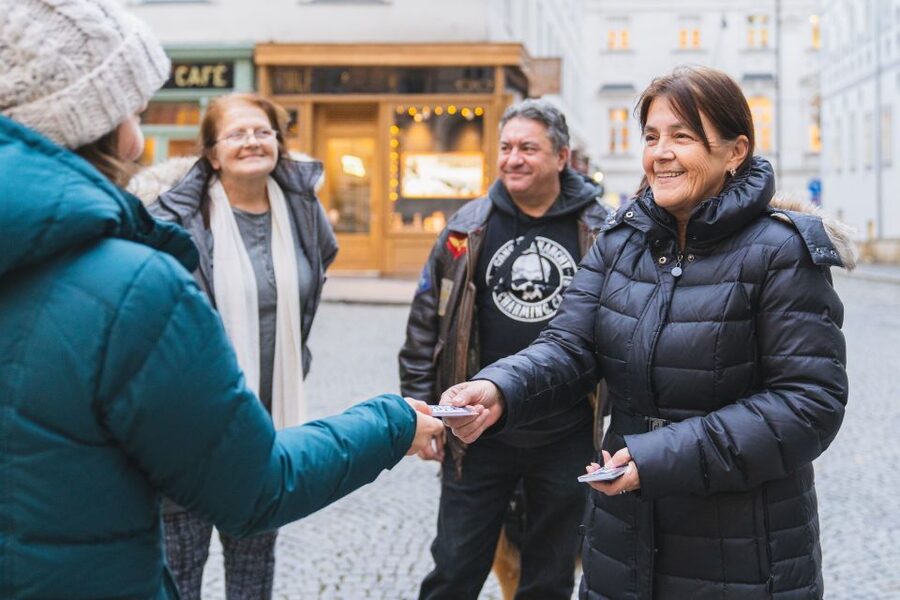
The guide is central to the experience. This is not a walk built around an audio recording or a distant academic lecture. Your guide speaks about homelessness through facts and personal experience, creating room for questions along the way.
The people who have led recent walks have brought different personalities. Tamara was praised for her openness, relaxed manner, and interaction with the group. Peter was described as authentic, empathetic, and capable of giving a complex subject a human face. Josef used humor while telling his story, helping keep the conversation accessible without making light of the subject.
You should not expect every tour to feel identical. The guide changes, and each person will explain the topic through their own life and style. That variation can be a strength. It keeps the walk personal rather than scripted, though the tone and amount of personal detail may differ from one departure to the next.
The listed language is German. If you are not comfortable following a sustained German conversation, this will affect how much you get from the tour. The subject depends on discussion, nuance, and questions, so basic tourist German may not be enough.
What the route shows, and what it does not
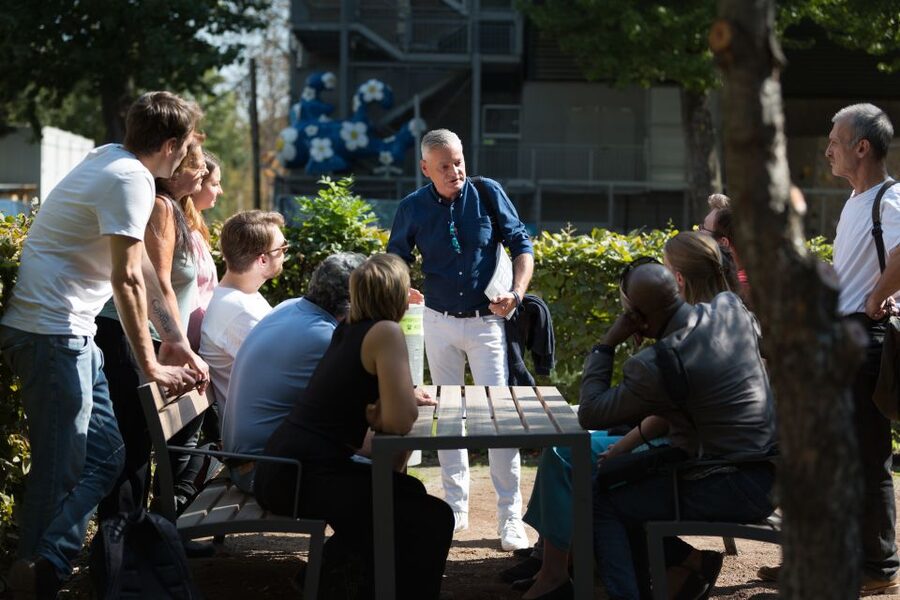
The walk takes place outdoors and lasts two hours. The exact stops are chosen to explain homelessness, but no detailed stop-by-stop route is provided. You can expect to visit public places related to the issue rather than famous attractions presented for their architectural value.
At each location, the guide connects the surroundings with a wider question. You might discuss where poverty becomes visible, how welfare affects people’s choices, or how a person can move from temporary hardship into homelessness. The purpose is not simply to point at a place and say that homelessness exists there. The purpose is to examine the forces behind it.
That distinction matters. A short walk cannot explain every cause or solution, and it will not give you a complete picture of Austria’s social policy. But it can help you notice how public space, social support, and personal circumstances meet in the real city.
The tour also avoids a common problem with poverty-themed experiences: turning other people’s hardship into entertainment. By not visiting homeless shelters or displaying homeless people, SHADES TOURS places the attention on education and conversation. You are invited to ask your guide about their own experience, not to inspect the lives of strangers.
This makes the experience more respectful, but it also requires maturity from the group. Questions should be direct without becoming intrusive. The guide has chosen to share personal experiences, yet that does not mean every private detail is available for discussion.
Personal experience gives the subject a human voice
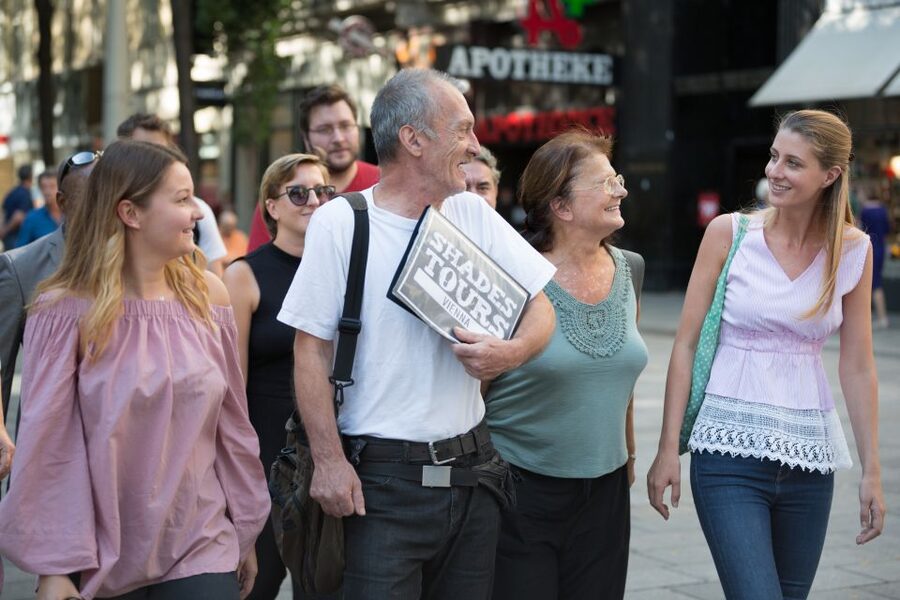
Statistics can explain the scale of homelessness, but they do not always explain what it feels like or how quickly circumstances can change. A guide who has experienced homelessness can add a layer that a standard city guide may not provide.
The strongest part of the walk is likely the connection between personal stories and broader facts. Josef’s use of humor, for example, shows how a difficult story can be told without making the entire experience grim. Peter’s empathy and authenticity suggest a more reflective style. Tamara’s relaxed interaction points to a conversation rather than a one-way speech.
These different qualities matter because homelessness is not one single story. Personal choices, family circumstances, income, welfare, health, housing, and access to support can all enter the discussion. The guide helps you see that a person without stable housing cannot be reduced to one label.
You can ask questions about the guide’s experience, but remember that this is a public tour with a limited time. The best questions are ones that help you understand the subject rather than demand a personal confession. A good guide can set that boundary while still encouraging honest conversation.
The personal element also makes this tour less predictable than a typical sightseeing walk. You may finish thinking less about the places themselves and more about the assumptions you brought with you. That is a useful result, though not every visitor will want such a serious focus during a city break.
More walking tours:
- Vienna: Viennese Underworld Guided Walking Tour
★ 4.7 · 1,865 reviews - Vienna: World War II Historical Walking Tour
★ 4.8 · 1,772 reviews - Vienna Historic Center Small Group Walking Tour
★ 5.0 · 1,746 reviews - Vienna: Private Walking Tour with a Local Guide
★ 4.6 · 1,420 reviews
Why the Vienna setting matters
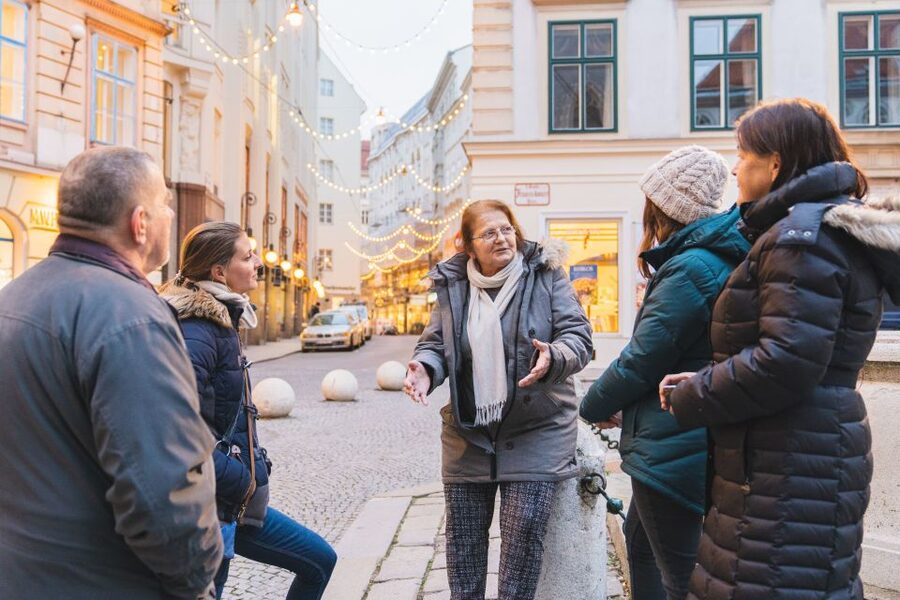
The city’s splendor is not just background scenery. It forms a deliberate contrast with the subject. Walking through a wealthy, orderly capital while discussing poverty can make the issue feel immediate rather than abstract.
You are not being asked to judge Vienna simply because homelessness exists there. The point is more complicated. A city can provide strong public systems and still face people who fall through gaps. A person can receive welfare and still lack secure housing. Someone can be poor without being homeless, while homelessness can involve problems that money alone does not solve.
The tour encourages you to examine those distinctions. That is one of its most useful features. It moves the conversation away from quick explanations and toward the systems and circumstances that shape people’s lives.
Do not expect historical commentary about the buildings along the way. The tour is specifically described as not being a historical sightseeing experience. You might pass impressive architecture, but it serves as context for the social discussion rather than as a subject in its own right.
For that reason, I would not schedule this as your only central Vienna walking tour. Pair it with a conventional city tour or explore the major sights separately. This experience works best when you want to add another layer to your understanding of the city.
Weather, walking comfort, and accessibility
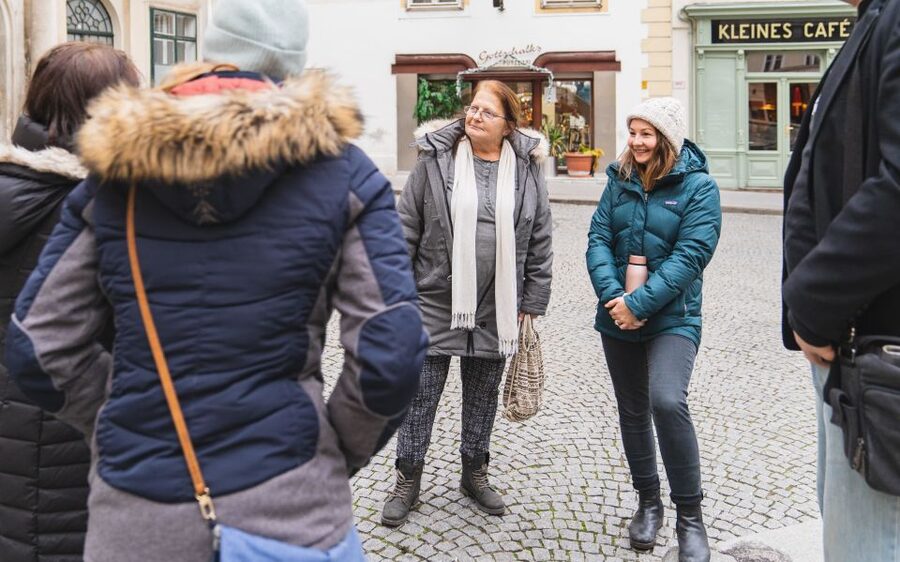
The full two hours take place outside, so comfortable shoes are important. Wear weatherproof clothing, especially if the forecast is uncertain. The tour is wheelchair accessible, which makes it more practical for people who need step-free access, though you should still be prepared for ordinary city walking and changing weather.
Heavy rain may change the plan. The guide can ask the group if it would like to continue in a nearby coffeehouse. That offers shelter and keeps the discussion going, but it may alter the feel of the walk. You will no longer be seeing the relevant public spaces in the same way, and the coffeehouse option depends on the weather and the group’s choice.
A light rain should not automatically put you off. The subject does not rely on a grand view or a specific indoor attraction. Still, Vienna’s weather can make two hours outside feel long, so dress for the conditions rather than hoping the clouds clear.
Is $29 a fair price for two hours?
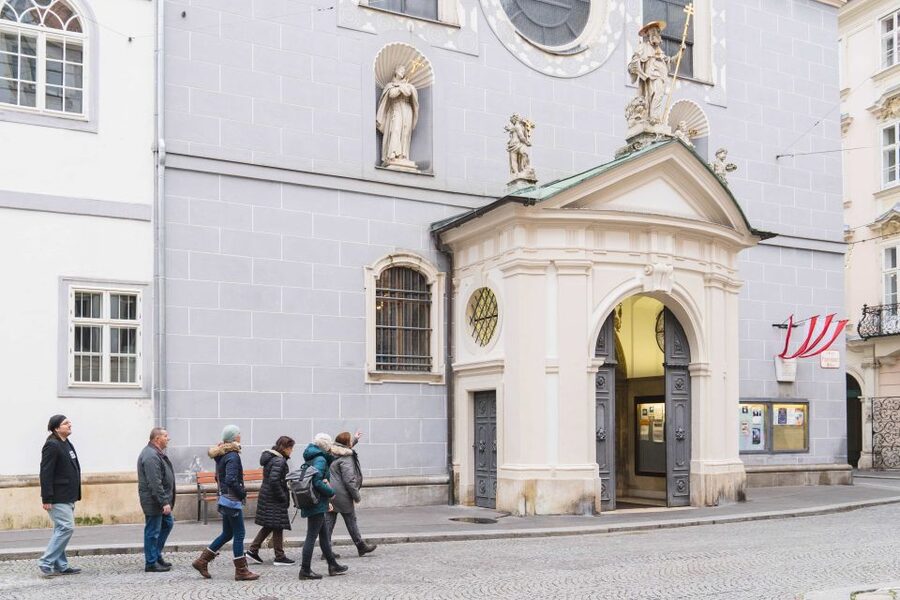
At $29 per person, the price is fair if you value guided discussion and personal insight. You are paying for a live guide, a planned route, and access to a conversation that would be difficult to recreate on your own. The guide’s experience is the main value, not admission to a monument or a collection of sights.
That also makes the price harder to compare with a regular walking tour. A standard city walk may cover more buildings and provide more visual variety. This one offers a narrower subject, but it gives that subject more attention.
The tour can be especially worthwhile for visitors who have already seen Vienna’s major sights and want to understand present-day social questions. It may also suit students, educators, social workers, and anyone interested in poverty and welfare policy. Couples and small groups should book it if they are comfortable discussing serious issues together.
It may not be good value for you if you want entertainment, photography, or a broad introduction to Vienna. The experience asks for attention and reflection. You should not expect a light activity that fills time between coffee and dinner.
Free cancellation up to 24 hours before the start makes the booking less risky, and the reserve-now, pay-later option gives you flexibility. Those policies are useful when your Vienna schedule is still shifting, though the main decision should be your interest in the subject and your ability to follow German.
Who will get the most from this experience?
I would recommend this walk to you if you want to:
- Understand homelessness beyond common stereotypes
- Hear a first-person account from someone who has experienced it
- Ask respectful questions in a small discussion setting
- Connect Vienna’s public spaces with current social concerns
- Add a serious, human topic to a sightseeing schedule
- Think about welfare, poverty, and possible solutions
You may want to skip it if you are looking for imperial history, museum interiors, or a list of landmarks. The walk is not designed to entertain children with attractions, and the subject may feel heavy for some visitors.
It is also less suitable if you do not understand German well. Since the guide’s stories and explanations carry most of the value, language ability matters more here than on a tour that simply points out buildings.
Should you book the Vienna homelessness walk?
Book it if you want a respectful, personal look at an important issue that standard sightseeing usually leaves out. The strongest reasons are the formerly homeless guides, the balance of lived experience and facts, and the clear decision not to put vulnerable people on display.
Skip it if your time in Vienna is short and you still need a basic introduction to the city’s major sights. You should also think twice if you prefer easygoing entertainment or if German is not a comfortable tour language.
For the right audience, $29 buys more than two hours of walking. It gives you a chance to question your own assumptions and see Vienna with greater social awareness. Bring comfortable shoes, weatherproof clothing, and an open mind. This is a serious tour, but the guides’ warmth, humor, and personal stories can make the discussion approachable.
FAQ
How long is the Vienna homelessness tour?
The tour lasts two hours.
How much does the experience cost?
The price is $29 per person.
What language is the tour conducted in?
The live tour guide speaks German.
Where does the tour meet?
Meet at Bäckerstraße 18, 1010 Wien, in front of restaurant INIGO.
How will I recognize the guide?
The SHADES TOURS guide will be holding a folder.
Does the tour visit homeless shelters?
No. The tour does not visit homeless shelters.
Does the experience put homeless people on display?
No. The tour uses selected places related to homelessness to explain the issue and does not put homeless people on display.
Is the tour wheelchair accessible?
Yes, the tour is wheelchair accessible.
What happens if it rains heavily?
The tour takes place outdoors, but if it rains heavily, the guide may ask if you want to continue the discussion in a nearby coffeehouse.
Just added around Vienna
- Mobile puzzle rally tour at the Vienna Central Cemetery★ 4.5 · 3 reviews
- RAXI (E-Rickschaw) big private Vienna tour★ 4.5 · 3 reviews
- 8 days European Highlights PRIVATE TOUR from Budapest including Budapest Vienna Prague and Bratislava★ 5.0 · 3 reviews
- Private Transfer from Vienna to Prague with 1 hour Stop in Kutna Hora★ 4.5 · 3 reviews
- Palais Lobkowitz Audio Guide Tour★ 4.0 · 3 reviews
- Private Tour from Vienna to Melk and Dürnstein★ 4.5 · 3 reviews
- Vienna: Designer Fashion Time Capsule Experience★ 5.0 · 3 reviews
- Private day trip from Munich to Eagle’s Nest & Hallstatt★ 4.7 · 3 reviews
Walking Tours, compared.

Guided Walking Tour of City Center Highlights
Read our review →

Guided Walking Tour of City Highlights & Hidden Gems
Read our review →


Vienna Historic Center Small Group Walking Tour
Read our review →
Browse the lists this tour appears in