
Reviewed · WALKING TOURS
Vienna: Hidden Secrets and Local Stories Walking Tour
Vienna hides its best stories in plain sight. I like this two-hour small-group walk because it moves beyond the grand facades into courtyards, side streets, and local legends, while still covering major sights such as St. Stephen’s Cathedral. I also like the mix of fact, fiction, humor, and myth, especially the chance to sort out the truth about Mozart’s life.
The main consideration is that this is an urban walking tour with no indoor access promised at each stop. You will be outside in all weather, and the route is not suitable for wheelchair users, people with mobility impairments, or children under 12. The meeting point can also vary by booking option, so check it carefully before setting off.
Guides Herbert and Wolfgang receive especially warm praise for their humor, easy conversation, and ability to make a small group feel personal. Herbert is known for quizzing the group along the way, while Wolfgang is praised for combining entertainment with solid local detail. At $33 per person, the tour is good value if you want a lively introduction to central Vienna rather than a formal lecture.
In This Review
- Five things to know before you book
- Why this two-hour walk works well in central Vienna
- Starting near Bankomat and finding your bearings
- St. Stephen’s Cathedral and the shape of Vienna
- Mozart’s final residence and the truth behind the legend
- Ballgasse, Blutgasse, and Vienna’s narrow lanes
- Palais Neupauer-Breuner and the Deutsches Haus
- Franciscan Church, monastery, and Viennese food
- The old university district and Jesuit Church
- The guide makes or breaks the experience
- Weather, walking comfort, and who should book
- Is $33 a fair price?
- Should you book this Vienna walking tour?
- FAQ
- How long does the tour last?
- What languages are available?
- Where does the tour start?
- Where does the tour end?
- Is the tour suitable for children?
- Can wheelchair users join?
- What happens if it rains?
Five things to know before you book
- Mozart’s final Vienna residence gets a reality check: You will visit the address and hear more about the man behind the familiar musical legend.
- The route favors side streets: Ballgasse, Blutgasse, Domgasse, courtyards, and old lanes provide a different view of the city center.
- Humor is part of the tour: Guides use amusing stories, questions, and local anecdotes instead of delivering a dry list of dates.
- The group stays small: A smaller size allows more conversation and makes it easier to ask about Vienna’s buildings, food, and traditions.
- It runs in every kind of weather: Bring suitable clothing, and leave large bags and luggage behind.
- It is a follow-up, not a prerequisite: The tour continues from an earlier walk by the same operator, but you do not need to have taken Part 1.
Why this two-hour walk works well in central Vienna
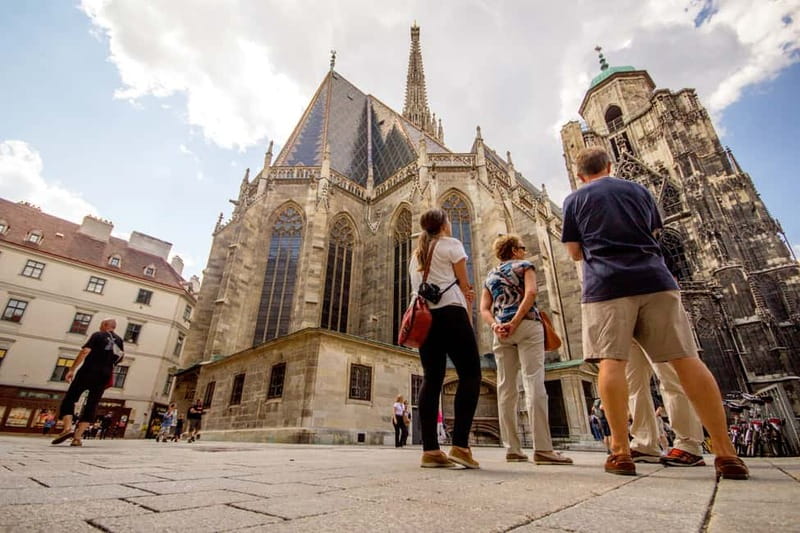
Vienna’s historic center is easy to admire but not always easy to understand. The grand streets, imperial buildings, churches, and cafés can leave you with a polished picture of the city, yet many of the most memorable details sit in narrow passages and quiet courtyards.
This tour is designed to connect those pieces. You will see famous landmarks, then step into less obvious corners where legends, odd architectural details, and everyday Viennese customs come into play. That balance matters. You get enough orientation to recognize the center, but the guide also gives you reasons to look up, turn around, and notice what you might otherwise pass without a thought.
The format is conversational rather than purely academic. The guides speak German or English, and the tour includes a certified guide and native speaker. That is useful when a story depends on a Viennese expression, a local joke, or a correction to a popular but inaccurate tale.
The experience lasts two hours, which is long enough for a useful first look without taking over your day. I would place it early in a Vienna visit. It can help you understand the center before you return on your own for museums, cafés, shopping, or a more focused cathedral visit.
More Walking Tours in Vienna
- Vienna: Guided Walking Tour of City Center Highlights
★ 4.7 · 4,989 reviews - Vienna: Vienna Central Cemetery Guided Walking Tour
★ 4.8 · 3,307 reviews - Vienna: Guided Walking Tour of City Highlights & Hidden Gems
★ 4.9 · 2,180 reviews
Starting near Bankomat and finding your bearings
The listed starting location is Bankomat, though the precise meeting point may vary with the option you select. Do not assume every departure uses an identical corner or entrance. Check the booking details on the day before, then allow a little extra time to locate the guide.
The end point is back at the meeting point area, with Dr.-Karl-Lueger-Platz 3 listed as the drop-off location. Since the exact start can vary, confirm both ends when you book. This matters if you have a restaurant reservation, museum entry, or train connection soon afterward.
You should arrive ready to walk rather than carrying your main luggage. Large bags and luggage are not allowed. Audio recording is also not permitted, so plan to listen and make a few written notes later if a particular story catches your attention.
St. Stephen’s Cathedral and the shape of Vienna
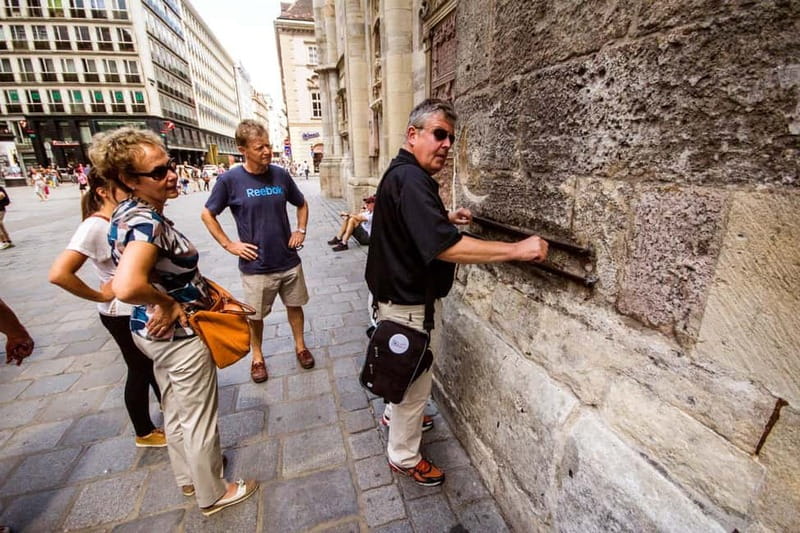
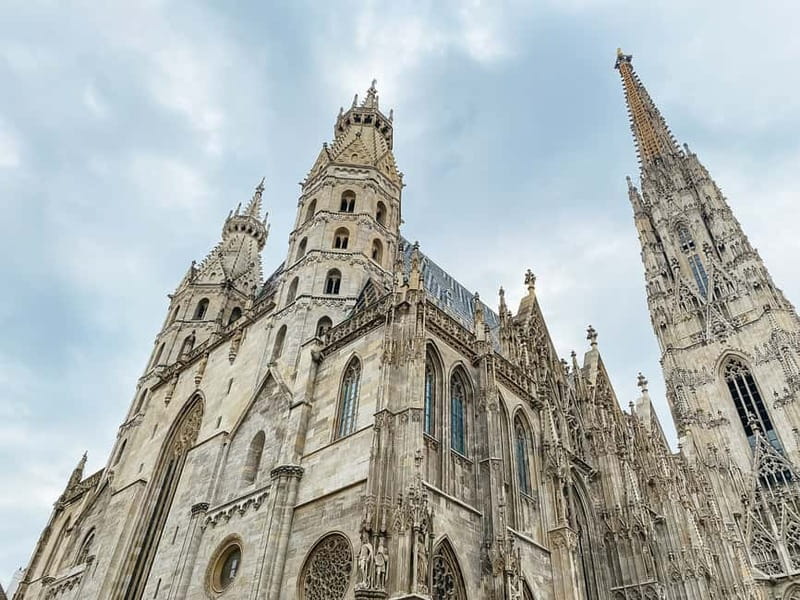
The tour includes St. Stephen’s Cathedral, Vienna’s most recognizable church and the focal point of Stephansplatz. You will learn about the cathedral as part of the city’s story, rather than simply stopping for a photograph.
That distinction is useful. A guide can point out why the cathedral matters to Vienna’s identity and how it relates to the surrounding old center. You also get a clear landmark at the beginning of the route, which helps you understand the compact central district that follows.
Do not expect this to replace a dedicated cathedral visit. The experience is a walking tour with several stops, not an extended examination of the building’s interior, art, or towers. If you want a detailed church tour, you will need separate time. If you want context before exploring on your own, this stop does the job.
Stephansplatz also gives the tour a practical beginning. From here, the route can move into smaller lanes where the scale changes quickly. One minute you are surrounded by a major city square, and soon afterward you are considering an alley, courtyard, or old building detail that most people would miss.
Mozart’s final residence and the truth behind the legend
Mozart’s final residence is one of the tour’s strongest stops. The address is connected to a famous chapter in Vienna’s musical past, but the guide’s role is not simply to repeat the standard story. You will hear an effort to separate accepted facts from the romantic, fictional, or exaggerated versions that have gathered around Mozart.
That approach makes the stop more useful. Mozart is so strongly marketed in Vienna that it can be hard to tell what is documented and what has been polished for tourists. A guide who corrects mistaken information gives you a firmer base for understanding the composer’s last years in the city.
The tour does not promise a full museum visit or extended time inside the residence. Think of this as a concise, story-driven stop within a wider walk. If you are a serious Mozart fan, you may want to return separately. If you know only the broad outline, this gives you a more grounded version of his Vienna life.
The nearby Domgasse and Ballgasse also help place the residence in the fabric of the old center. Instead of treating Mozart as an isolated celebrity, the route connects him with the streets and buildings around him.
More walking tours:
- Vienna: Viennese Underworld Guided Walking Tour
★ 4.7 · 1,865 reviews - Vienna: World War II Historical Walking Tour
★ 4.8 · 1,772 reviews - Vienna Historic Center Small Group Walking Tour
★ 5.0 · 1,746 reviews - Vienna: Private Walking Tour with a Local Guide
★ 4.6 · 1,420 reviews
Ballgasse, Blutgasse, and Vienna’s narrow lanes
Ballgasse and Blutgasse bring the tour into the kind of streets that are easy to overlook when you are focused on major sights. Their names alone invite a story, and the route uses these lanes to show how Vienna’s past survives in street patterns, names, buildings, and local tales.
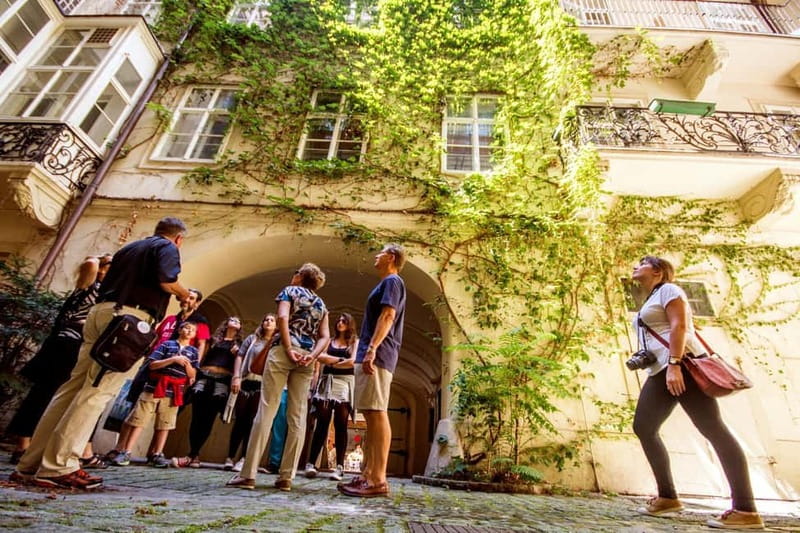
You will hear stories about courtyards and legends as you stroll through the center. Some are amusing, some fictional, and some based in fact. The point is not to treat every tale as a formal historical source. It is to show how a city remembers itself through gossip, wordplay, rumor, and repeated storytelling.
That mix will suit you if you enjoy a guide who can say, in effect, here is what people believe, and here is what the evidence supports. It may not suit you if you want only dates, names, and carefully separated academic facts. The tour clearly makes room for entertainment.
The smaller streets also create a more personal rhythm. A small group of around 10 people, as one reported group size indicates, makes it easier to hear in tight spaces and ask questions without shouting. Herbert is praised for quizzing participants, which can keep your attention active instead of letting the walk become background commentary.
Palais Neupauer-Breuner and the Deutsches Haus
Palais Neupauer-Breuner is another reminder that Vienna’s center is filled with more than its best-known palaces. The stop gives the guide a chance to discuss urban architecture and the people or institutions connected with these buildings.
You should think of this as an exterior-focused sightseeing stop unless your guide says otherwise. The supplied details do not promise entry into the palace, so the value comes from the explanation and the way the building fits into the surrounding district.
The Deutsches Haus adds another layer to the route. Together, these stops make the walk feel less like a checklist of famous attractions and more like a reading of the city’s streets. You are being shown how to notice names, facades, entrances, and odd details that do not appear in every standard Vienna introduction.
This is where a local guide can make a real difference. Without context, a grand building is simply another elegant facade. With a short explanation, it can become a clue to the city’s changing social, religious, and civic life.
Franciscan Church, monastery, and Viennese food
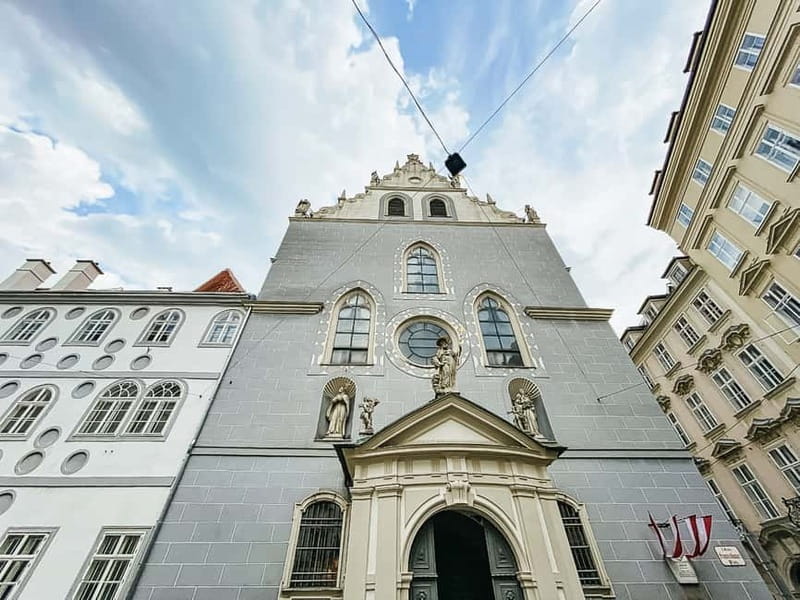
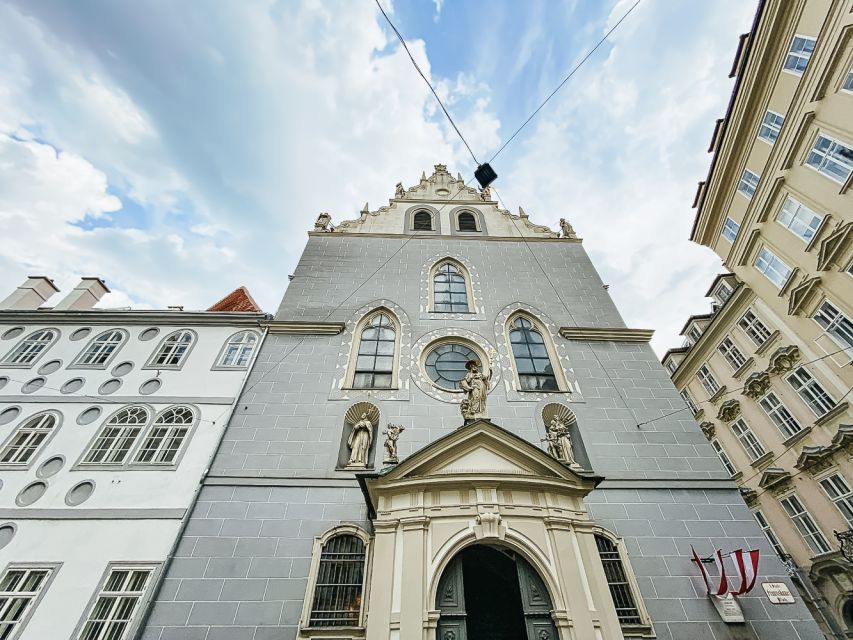
The Franciscan Church and Monastery provide one of the tour’s major religious and architectural stops. You will learn about the church as part of the old center, alongside the surrounding streets and courtyards.
The route also touches on traditional Viennese cuisine. That is a welcome addition because food in Vienna is tied closely to daily life, local habits, and the city’s public spaces. The information provided does not specify a tasting, so do not book this expecting food samples. You will receive cultural context rather than a meal.
One of the tour’s more unusual details is the house known as Where the cow plays on the board. Odd names and strange visual references like this are exactly what can make a city walk stick in your memory. They give you a small story to carry into the rest of your time in Vienna.
The Franciscan Church and the food discussion also broaden the tour beyond imperial grandeur. Vienna is not only palaces and classical music. It is also monasteries, old businesses, local expressions, and the everyday customs that shape how people use the center.
The old university district and Jesuit Church
The route continues into the old university district, including the Jesuit Church and the old city wall. These stops help explain how Vienna developed as a place of learning, religion, defense, and government.
The Jesuit Church is especially useful as a contrast to the better-known cathedral. You get another example of Vienna’s religious architecture and a chance to see how different churches contribute to the character of the center.
The old city wall adds a layer of physical history to the walk. You may find it easier to understand Vienna’s earlier boundaries when a guide connects the surviving traces to the streets you are standing on. The tour data does not promise a full archaeological presentation, but it does include an explanation of the old wall as part of the route.
This final stretch also gives the tour a sense of progression. You begin with the city’s central landmark, move through stories of residents and buildings, then reach districts shaped by education, religion, and defense. For a two-hour experience, that is a thoughtful range.
The guide makes or breaks the experience
The strongest praise centers on the guides’ character as much as their information. Herbert is repeatedly singled out for being funny, engaging, easy to chat with, and interested in Vienna’s past. His habit of quizzing the group gives the walk a bit of energy and encourages you to stay involved.
Wolfgang is also praised for being entertaining and well informed, with the smaller group allowing more personal interaction. These comments point to an important strength: the quality of the experience depends heavily on who leads your departure.
That is not a reason to avoid the tour. It is a reason to choose it for the guide-led format rather than expecting a fixed audio product. You are paying for interpretation, conversation, and local recommendations. The included insider advice from a Viennese guide may be particularly useful at the start of your stay.
The tour is offered in German and English. If you have a question, ask it. The small-group format should give you a better chance to discuss a building, a story, or a food custom than a large coach tour would.
Weather, walking comfort, and who should book
The tour runs in all weather. Vienna rain can turn a pleasant city walk into a damp one, so wear shoes you can walk in comfortably and bring weather protection. This is especially important because there is no suggestion of regular indoor shelter throughout the route.
The tour is not suitable for children under 12. That restriction fits the style of the experience, which relies on stories, historical corrections, and a steady walk through the old center rather than child-focused activities.
It is also not suitable for people with mobility impairments or wheelchair users. The route includes narrow streets and historic areas, and no accessibility adaptation is promised. If you need a step-free route or frequent seating, choose another way to see central Vienna.
I would recommend this tour to:
- First-time visitors who want orientation with personality
- Adults and older teenagers interested in city legends and local stories
- People who have already seen the major squares and want more unusual corners
- Visitors who enjoy asking questions and talking with a guide
- Anyone who wants a short activity that leaves most of the day free
I would be more cautious if you want extensive indoor sightseeing, a formal art history lecture, food tastings, or a fully accessible route.
Is $33 a fair price?
At $33, the value is strongest when you use the tour as a city introduction. You receive two hours with a certified, native-speaking guide, a small-group setting, major landmarks, lesser-known streets, local stories, and recommendations for the rest of your stay.
The price is less attractive if you only want photographs of St. Stephen’s Cathedral. You can see the cathedral and walk through the center without paying for a tour. The fee makes sense because the guide supplies the connections: why a lane matters, how a legend developed, what is true about Mozart, and which details deserve a second look.
The free cancellation window of 24 hours and the reserve-now-pay-later option reduce the risk if your schedule is still changing. Since starting times and the meeting point depend on availability and the option chosen, check those details before committing.
The high rating of 4.8 from 221 submitted ratings also fits the tour’s apparent strengths: humor, useful information, personal attention, and a route that reaches beyond the usual sights. No tour suits everyone, but the pattern here is clear enough to make the price reasonable for the right audience.
Should you book this Vienna walking tour?
Book it if you want a lively introduction to central Vienna with side streets, courtyards, local legends, and a guide who can correct popular myths without making the walk feel like a classroom. Herbert and Wolfgang both receive strong praise for humor and personal attention, which is exactly what this small-group format needs.
Skip it if your priority is a wheelchair-accessible route, a child-friendly activity, extensive interior visits, or food included in the price. For everyone else, this is a smart two-hour choice early in a Vienna stay. You will see the essential center, but you will also leave with a better eye for the lanes and odd details that make the city more than a collection of grand buildings.
FAQ
How long does the tour last?
The walking tour lasts two hours. Starting times depend on availability.
What languages are available?
The live tour guide speaks German or English.
Where does the tour start?
The meeting point may vary depending on the option booked. Bankomat is listed as a starting location, so check your selected booking details carefully.
Where does the tour end?
The activity ends back at the meeting point. Dr.-Karl-Lueger-Platz 3, 1010 Vienna, is listed as a drop-off location.
Is the tour suitable for children?
The tour is not suitable for children under 12.
Can wheelchair users join?
No. The experience is not suitable for wheelchair users or people with mobility impairments.
What happens if it rains?
The tour operates in all weather conditions. Dress appropriately and remember that luggage and large bags are not allowed.
Just added around Vienna
- Mobile puzzle rally tour at the Vienna Central Cemetery★ 4.5 · 3 reviews
- 8 days European Highlights PRIVATE TOUR from Budapest including Budapest Vienna Prague and Bratislava★ 5.0 · 3 reviews
- RAXI (E-Rickschaw) big private Vienna tour★ 4.5 · 3 reviews
- Private Transfer from Vienna to Prague with 1 hour Stop in Kutna Hora★ 4.5 · 3 reviews
- Palais Lobkowitz Audio Guide Tour★ 4.0 · 3 reviews
- Private Tour from Vienna to Melk and Dürnstein★ 4.5 · 3 reviews
- Vienna: Designer Fashion Time Capsule Experience★ 5.0 · 3 reviews
- Vienna Sight & Gourmet Tour – individual private tour★ 4.5 · 3 reviews
Walking Tours, compared.

Guided Walking Tour of City Center Highlights
Read our review →

Guided Walking Tour of City Highlights & Hidden Gems
Read our review →


Vienna Historic Center Small Group Walking Tour
Read our review →
Browse the lists this tour appears in