
Reviewed · WALKING TOURS
Vienna Highlight Tour – yue walk
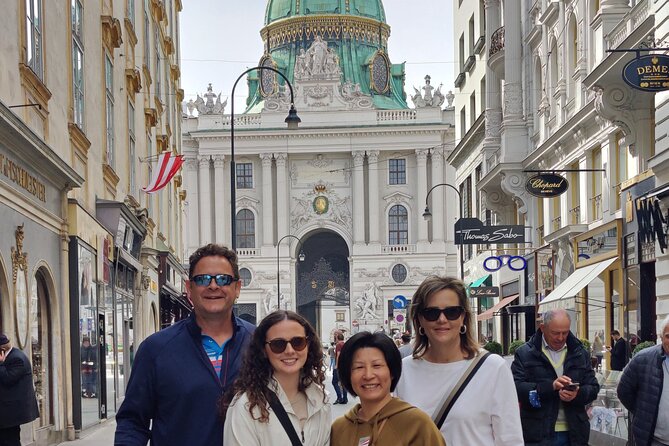
Vienna reveals itself quickly on foot. This two-hour walk with licensed guide Yue Mayr links the city’s grandest squares, palaces, churches, museums, and shopping streets into one clear first look. I like the small maximum of six people, which keeps the walk personal, and I especially like the way the route connects buildings to the people and events behind them.
I also like the useful orientation. You move from the State Opera toward the Hofburg, Heldenplatz, Maria Theresien Square, and St. Stephen’s Cathedral, so you get a practical sense of how Vienna’s central sights fit together. The main drawback is the pace: fourteen stops in roughly two hours makes this a brisk overview, not a slow architectural study or a series of museum visits.
In This Review
- Key points to know before you book
- Starting beside the Vienna State Opera
- Memorials that add weight to the grand boulevards
- Lobkowitzplatz and the layers of central Vienna
- Josefsplatz, the Habsburg court, and Augustinian Church
- Stallburg and the Lipizzaner tradition
- Court music, imperial treasure, and the Hofburg complex
- Heldenplatz and Vienna’s public stage
- Maria Theresien Square and the power of one empress
- The Sisi Museum and the personal side of monarchy
- Michaelerplatz, where old and new Vienna meet
- Kohlmarkt, Demel, and elegant city-center streets
- The plague column and Graben’s grand facades
- Finishing at St. Stephen’s Cathedral
- What Yue Mayr adds to the walk
- Is $106.20 a fair price?
- Who should book this Vienna walk?
- Should you book the Vienna Highlight Tour?
- FAQ
- How long is the Vienna Highlight Tour?
- Where does the tour start?
- Where does the tour end?
- What time does the tour begin?
- Is admission to the attractions included?
- What language is the tour offered in?
- What is the cancellation policy?
Key points to know before you book
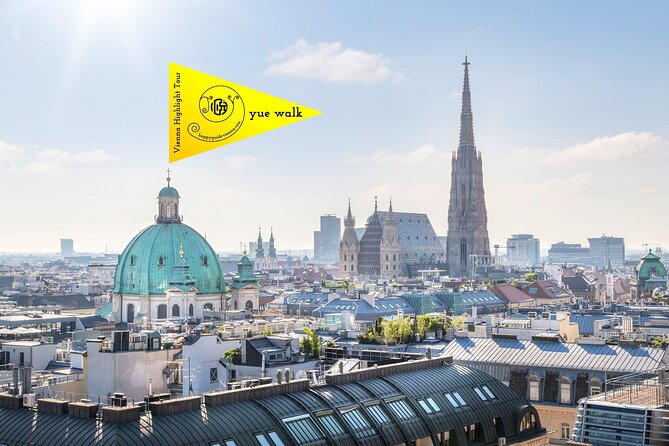
- A six-person maximum makes it easier to hear Yue, ask questions, and keep the walk flexible.
- The route covers Vienna’s imperial core, from the State Opera and Hofburg to Maria Theresien Square and St. Stephen’s Cathedral.
- Yue Mayr’s style is lively and personal, with humor, historical context, photo help, and suggestions for food, shopping, and further sights.
- Most stops are exterior visits, so museum admissions and other paid entries are generally not part of the $106.20 price.
- The tour is best early in your Vienna stay, since it helps you understand the city center before exploring on your own.
- English is the offered language, and a language mismatch may be a problem for last-minute bookings.
Starting beside the Vienna State Opera
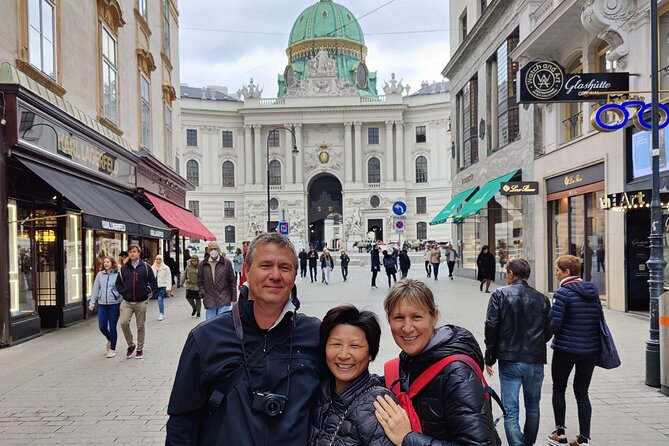
The meeting point is on Herbert-von-Karajan-Platz, in front of the Vienna State Opera, with a 10:00 am start. This is a sensible place to begin. The opera house is one of Vienna’s great Neo-Renaissance buildings, completed in 1869, and the surrounding streets quickly introduce you to the city’s imperial scale.
Yue also points out Palais Todesco, linked to the story of Johann Strauss and his first wife. Nearby, the Hotel Sacher gives you a tasty bit of Viennese culture through its famous Sacher Torte. You will not be stopping for a full dessert break during this short walk, but the reference helps connect the polished buildings with Vienna’s café and music traditions.
The State Opera stop lasts about five minutes, so expect an exterior explanation rather than an interior visit. Admission is not included. If opera matters to you, save a separate visit for another time.
More Walking Tours in Vienna
- Vienna: Guided Walking Tour of City Center Highlights
★ 4.7 · 4,989 reviews - Vienna: Vienna Central Cemetery Guided Walking Tour
★ 4.8 · 3,307 reviews - Vienna: Guided Walking Tour of City Highlights & Hidden Gems
★ 4.9 · 2,180 reviews
Memorials that add weight to the grand boulevards
The next stop is the Memorial Against War and Fascism. It includes a Jewish statue, the Gate of Hell, and the Independence Declaration Stone. This is an important change of mood after the elegance of the opera district.
Vienna can sometimes feel like one long procession of palaces and ceremonial facades. This memorial reminds you that the city’s past also includes persecution, war, dictatorship, and painful public memory. The stop is brief, around five minutes, but it gives the walk some moral balance.
The memorial is free to view. I would pay attention here rather than treating it as a quick photo stop. The historical center is not only about emperors, composers, and grand architecture.
Lobkowitzplatz and the layers of central Vienna
At Lobkowitzplatz, the tour gathers several different parts of Vienna into one compact setting. You see the Albertina Palace and Museum, the Baroque Lobkowitz Palace, the tower of Augustinian Church, and an Art Deco building by Otto Wagner.
This is one of the better places to understand how Vienna changed over time. Baroque power, imperial religion, fine art, and modern design all sit close together. You are not simply looking at one famous building. You are learning to read the city as a mixture of periods.
The stop takes about five minutes and is free. The trade-off is detail. You will hear the main points, but anyone fascinated by Otto Wagner or the Albertina will need a longer visit later.
Josefsplatz, the Habsburg court, and Augustinian Church
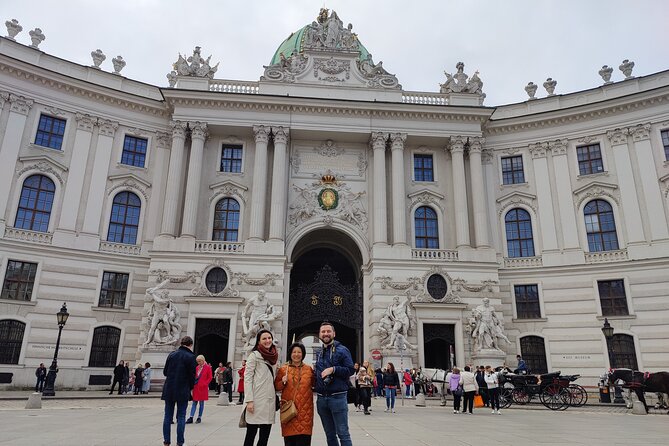
Josefsplatz is one of the tour’s strongest stops because so many imperial institutions cluster around it. The route includes Augustinian Church, where you can visit inside, along with the statue of Emperor Joseph II, the Court Library, Pallavicini Palace, and the Spanish Riding School.
This square helps explain how the Habsburg court functioned. Religion, scholarship, ceremony, aristocratic residences, and court entertainment were all tied together. The Spanish Riding School is especially useful for understanding why Lipizzaner horses are such a familiar part of Vienna’s image.
You have about fifteen minutes here, the longest stop on the walk. That extra time matters. It gives Yue room to explain the buildings and answer questions without making the entire tour feel like a race.
More walking tours:
- Vienna: Viennese Underworld Guided Walking Tour
★ 4.7 · 1,865 reviews - Vienna: World War II Historical Walking Tour
★ 4.8 · 1,772 reviews - Vienna Historic Center Small Group Walking Tour
★ 5.0 · 1,746 reviews - Vienna: Private Walking Tour with a Local Guide
★ 4.6 · 1,420 reviews
Stallburg and the Lipizzaner tradition
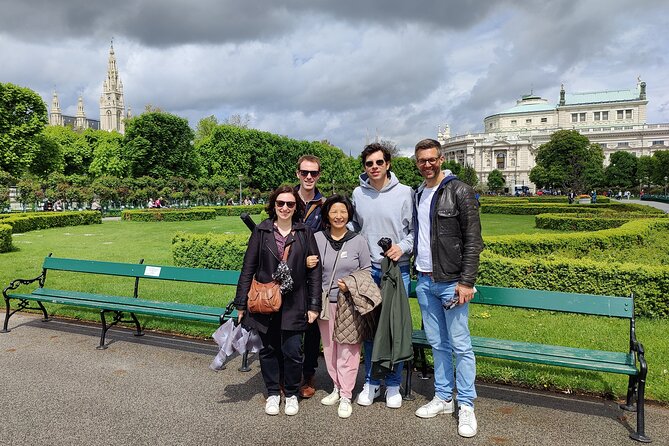
The short stop at Stallburg continues the Spanish Riding School story. The focus is on the Lipizzaner horses. Admission is not included, so you should think of this as an exterior orientation unless you arrange a separate paid visit.
The tour may let you see the horses at a distance, depending on what is visible at the time. That limitation is worth noting. If seeing a performance or getting close to the horses is a major goal, this walk alone will not replace a dedicated Spanish Riding School booking.
Still, the stop is useful because it puts the horses within the larger court setting rather than presenting them as an isolated attraction.
Court music, imperial treasure, and the Hofburg complex
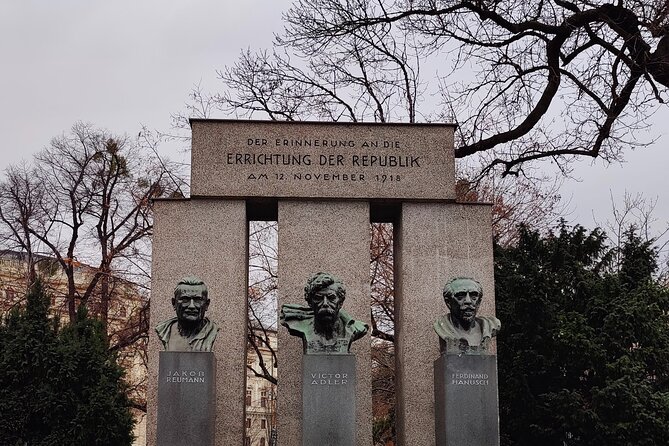
The Wiener Hofmusikkapelle stop brings together the Imperial Treasury Museum, Court Music Chapel, and Renaissance Gate. These sights show how music, ceremony, dynastic objects, and religious life supported the Habsburg monarchy.
Again, the visit is short, about five minutes, and paid admission is not included. You get the location and the story, which can help you decide if the Treasury or Court Music Chapel deserves space in your own schedule.
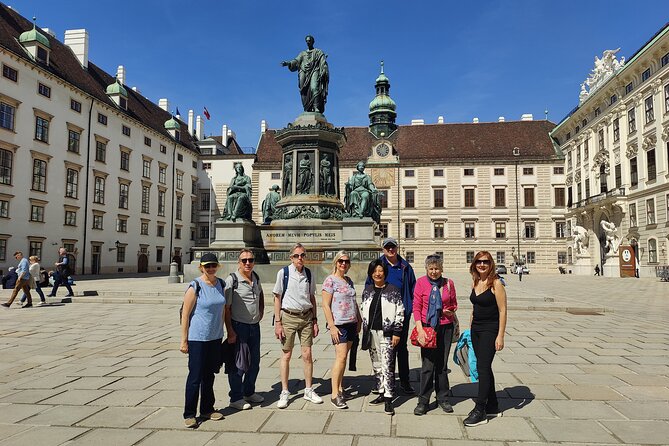
The route then moves into the Hofburg’s Inner Court. Here you see the statue of Franz II and I, the Amalien Wing, Leopoldinischer Wing, and Reichskanzlei Wing. The names can sound like a blur if you are not familiar with the complex, so Yue’s role is useful. She gives the enormous palace a human and political shape.
The Hofburg was not built all at once. Its wings reflect different rulers, needs, and periods of imperial expansion. A guide can help you see that the complex is less a single palace than a long record of the monarchy’s growth.
Heldenplatz and Vienna’s public stage
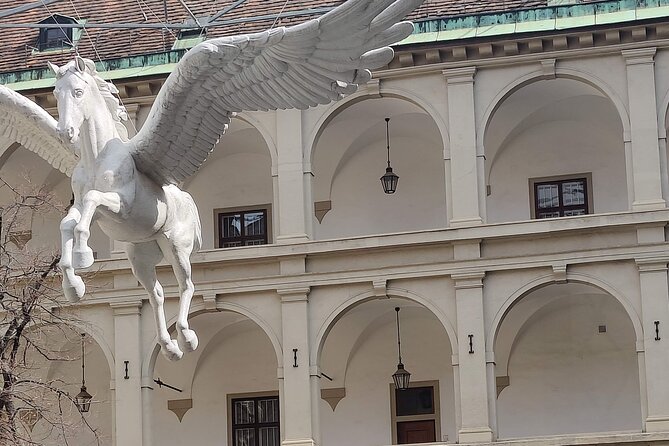
Heldenplatz opens the Hofburg story into a broad ceremonial square. The tour points out the statues of Archduke Charles and Prince Eugene, the National Library, OSCE, Burgtor, City Hall, and Parliament.
The stop lasts about ten minutes. That gives you time to take in the scale of the square and hear why it mattered as a setting for public power. The architecture here was designed to impress, but it also reflects changing political ideas and the shifting use of Vienna’s institutions.
You should expect a guide’s overview, not a full political lecture. The strength is the big picture. You see the relationship between the palace, monuments, government buildings, and open civic space.
Maria Theresien Square and the power of one empress
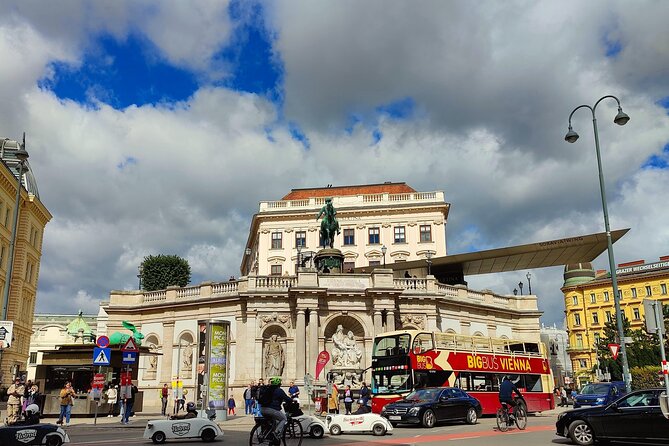
Across from the Hofburg, Maria Theresien Square is framed by the Museum of Art History and the Natural History Museum. At its center is the imposing monument to Maria Theresa, one of the most powerful women in Habsburg history.
This is a good place for Yue to explain how Maria Theresa changed the course of the monarchy. Her role is more complicated than a simple royal portrait. She ruled during a period of military pressure, administrative change, and dynastic politics, and the square presents her as a figure of authority surrounded by the institutions of knowledge and art.
The buildings are impressive from outside, but admission to the museums is not included. If you want to enter, plan a separate visit. The tour gives you context that can make those museums easier to appreciate later.
The Sisi Museum and the personal side of monarchy
The walk continues to the Sisi Museum, devoted to Empress Elisabeth, widely known as Sisi. She became an Austrian icon after her death, and her life offers a more personal counterpoint to the formal image of Habsburg power.
Yue focuses on Elisabeth’s personality, her stories, and the way her character shaped her fate. This part of the walk is especially helpful if you know Sisi mainly from romantic films or decorative souvenirs. The real person is more interesting than the simplified legend.
The stop takes around ten minutes, but admission is not included. You will receive an introduction from outside or around the entrance rather than a full museum visit. If Elisabeth’s story interests you, schedule time to go inside after the tour.
Michaelerplatz, where old and new Vienna meet
Michaelerplatz is one of the most visually varied points along the route. It includes Michaelerkirche, the Michaeler Gate, Adolf Loos’s controversial Loos House, and archaeological excavations.
The contrast is the point. Imperial Baroque, modern architecture, and remains from earlier periods share the same space. The excavations remind you that Vienna’s story reaches far beyond the Habsburg court.
This is also a good stop for architecture lovers. The Loos House caused a stir because of its restrained facade, which looks very different from the ornamented imperial buildings around it. You get only about five minutes here, so listen for the comparison between decoration and modern simplicity.
Kohlmarkt, Demel, and elegant city-center streets
Kohlmarkt shifts the mood again. This is one of Vienna’s luxury shopping streets, lined with polished buildings and high-end storefronts. Café Demel is the obvious food reference, with its long connection to Viennese pastry culture.
You may not have time to sit down for coffee during the walk, but you can mark the café for a later stop. The same advice applies to the surrounding shopping streets. They are pleasant to stroll after the tour, when you are not trying to keep up with a group.
This section is also practical. It helps you identify the central zone where major sights, cafés, shops, and grand facades sit within easy walking distance of one another.
The plague column and Graben’s grand facades
At the Colonna della Peste, also called the Pestsäule, the focus turns to Vienna’s plague monument. The nearby Grabenhof and Ankerhaus add more architectural detail to the walk.
The plague column is one of the city center’s most recognizable Baroque monuments. It reflects the religious and political response to epidemic disease, while the surrounding buildings show how Graben became one of Vienna’s leading urban spaces.
The stop lasts about five minutes and is free. This is a place where a guide adds real value because the monument’s crowded sculpture can be difficult to understand at a glance. Yue helps turn an elaborate object into a readable story.
Finishing at St. Stephen’s Cathedral
The tour ends at St. Stephen’s Cathedral, near the Wien Museum Virgilkapelle and the Stephansplatz U-Bahn station, overlooking the highest southern tower. The cathedral dates from the twelfth through sixteenth centuries and has the tallest tower in Vienna’s city center.
The final stop is listed at about five minutes. That means you should not expect a full interior tour, tower climb, or long examination of the roof and chapels. You get a final landmark and a useful end point in the heart of Vienna.
This location is convenient for continuing your day. You can explore Stephansplatz, return by public transport, or use the central location as a base for lunch and further sightseeing.
What Yue Mayr adds to the walk
The strongest reason to choose this tour is Yue’s presentation. Her style comes across as warm, funny, energetic, and willing to answer questions. She has also been praised for connecting individual buildings to the wider story of European and Austrian politics.
That matters on a short walk. Vienna’s center can feel like a parade of similar palaces if you only collect names. Yue’s explanations give the sites relationships: the court and its library, the church and the monarchy, the riding school and imperial ceremony, the museums and Maria Theresa.
She also offers practical help beyond the historical commentary. You may receive suggestions for restaurants, shopping, and other sights to see. She has taken photos for groups and has an eye for useful angles, which is a small but welcome touch when you are trying to capture a memory without handing your phone to a stranger.
Families may also appreciate her approach. One review specifically describes her as good with children, while other comments praise her humor and ability to keep the walk enjoyable. The overall rating is 4.9 from 58 reviews, with 98 percent recommending the experience. That is a strong record, though it should not make you ignore the format’s limits.
There is one clear warning about language. The tour is offered in English. A last-minute request for German created a poor match when Yue was already guiding English-speaking participants. If you need German or another language, confirm before booking rather than assuming a private language change is possible.
Is $106.20 a fair price?
At $106.20 per person, this is not the cheapest way to see Vienna’s center. Its value depends heavily on group size and your priorities.
For a group of up to six, the price buys more than a standard mass-market walk. You get a licensed guide, a carefully connected route, and a better chance to ask questions. The small group also avoids the frustrating experience of being lost behind a large crowd while trying to hear a guide.
The price does not include entry to the State Opera, Stallburg, Imperial Treasury, Court Music Chapel, Sisi Museum, or the museums around Maria Theresien Square. Most of the walk is therefore an exterior introduction. I would consider the cost reasonable if you want orientation, stories, and personal guidance on your first morning in Vienna.
I would think twice if you mainly want museum access or a slow, detailed study of architecture. You will need separate tickets and more time for that.
Who should book this Vienna walk?
I would recommend it most strongly for a first visit, a short stay, or anyone who wants to understand the central district before exploring alone. It is also a good fit if you enjoy history delivered through stories rather than a long academic lecture.
The route suits people who like to cover plenty of ground. You will see many major sights, but you will not linger at each one. Wear comfortable shoes, arrive ready to walk, and treat the tour as a guided framework for the rest of your day.
It can work well for families, couples, and small groups who want an easy chance to ask questions. The six-person limit makes it more intimate than a large city walk.
I would choose another format if you need a relaxed pace, extensive indoor access, or a tour delivered in German. The single negative experience points to the importance of confirming the language and expectations before you pay.
Cancellation is free up to 24 hours before the 10:00 am start for a full refund. Changes made inside that period are not accepted, and poor weather can lead to a different date or a full refund. The tour is near public transportation, service animals are allowed, and most people can participate.
Should you book the Vienna Highlight Tour?
Book it if you want a lively two-hour orientation with a very small group and a guide who can connect Vienna’s buildings to its rulers, artists, institutions, and difficult past. Yue Mayr’s humor, energy, photo help, and practical recommendations add value beyond a list of monuments.
Do not book it expecting a museum tour or an unhurried architectural seminar. The route is a fast sweep through the imperial center, with paid attractions viewed from outside unless you return on your own.
For many visitors, the smartest timing is the first day in Vienna. You will leave knowing where the Hofburg, museums, Graben, and cathedral sit, plus which places deserve a longer visit. That makes the $106.20 easier to justify, especially if you value a personal introduction over simply following a map.
FAQ
How long is the Vienna Highlight Tour?
The tour lasts approximately two hours, although one experience took about two and a half hours.
Where does the tour start?
It starts at Herbert-von-Karajan-Platz by the Vienna State Opera, at 1010 Vienna.
Where does the tour end?
It ends near the Wien Museum Virgilkapelle and Stephansplatz U-Bahn station, overlooking the highest southern tower of St. Stephen’s Cathedral.
What time does the tour begin?
The stated start time is 10:00 am.
Is admission to the attractions included?
The licensed guide is included. Several stops are free, but admission is not included for the Vienna State Opera, Stallburg, Wiener Hofmusikkapelle, and Sisi Museum. Museum entry at Maria Theresien Square is also not part of the tour price.
What language is the tour offered in?
The tour is offered in English. If you need another language, confirm availability before booking.
What is the cancellation policy?
You can cancel at least 24 hours before the start time for a full refund. Cancellations or changes made less than 24 hours before the start time are not refunded or accepted. If poor weather causes the tour to be canceled, you will be offered another date or a full refund.
Just added around Vienna
- Mobile puzzle rally tour at the Vienna Central Cemetery★ 4.5 · 3 reviews
- RAXI (E-Rickschaw) big private Vienna tour★ 4.5 · 3 reviews
- 8 days European Highlights PRIVATE TOUR from Budapest including Budapest Vienna Prague and Bratislava★ 5.0 · 3 reviews
- Private Transfer from Vienna to Prague with 1 hour Stop in Kutna Hora★ 4.5 · 3 reviews
- Palais Lobkowitz Audio Guide Tour★ 4.0 · 3 reviews
- Private Tour from Vienna to Melk and Dürnstein★ 4.5 · 3 reviews
- Vienna: Designer Fashion Time Capsule Experience★ 5.0 · 3 reviews
- Private day trip from Munich to Eagle’s Nest & Hallstatt★ 4.7 · 3 reviews
Walking Tours, compared.

Guided Walking Tour of City Center Highlights
Read our review →

Guided Walking Tour of City Highlights & Hidden Gems
Read our review →


Vienna Historic Center Small Group Walking Tour
Read our review →
Browse the lists this tour appears in