
Reviewed · HORSE CARRIAGE RIDES
Vienna Horse-drawn Carriage Guided Tour
Hooves, harnesses, and a very different Vienna. This morning experience begins at the stables of the city’s famous Fiakers, where you learn how the horses are cared for, how carriages are prepared, and what daily life is like for coachmen. You then ride into central Vienna, passing districts, churches, monuments, Belvedere Palace, the Ringstrasse, and the Hofburg.
I like the behind-the-scenes stable visit most. You get close to the horses and hear practical details about their care, training, harnesses, and working routines. I also like the convenient finish in central Vienna, either at Michaelerplatz or Stephansplatz, where you can continue sightseeing on foot.
The main thing to understand is that this is not primarily a classic sightseeing loop through Vienna’s historic center. The carriage ride begins in the 11th district and serves partly as transportation into town. Some riders enjoyed the hour-long journey, while others found the outer-city route too ordinary and expected more commentary from the coachman.
In This Review
- Key points before you book
- The morning begins in a real Fiaker stable
- Leaving the 11th district by carriage
- Belvedere gives the ride a grander setting
- The Ringstrasse brings on the famous facades
- Hofburg Square is the strongest finish
- What the $39.16 price really covers
- Families, strollers, and practical comfort
- The horse-care question matters
- The main weakness: not enough sightseeing commentary
- Who should book this Fiaker experience?
- Should you book it?
- FAQ
- Where does the Vienna horse-drawn carriage tour start?
- Where does the tour finish?
- How long does the experience last?
- Is the tour offered in English?
- Does the price include food or snacks?
- Can children join the tour?
- Can I cancel for a full refund?
Key points before you book
- Stable visit first: Spend about 30 minutes learning how Fiaker horses and carriages are prepared.
- Start well outside the center: Meet at Rappachgasse 34A in Vienna’s 11th district at 8:45 am.
- A long ride into town: The carriage journey takes about an hour and passes suburban streets before reaching central sights.
- Best for horse lovers and families: Children can enjoy meeting the horses, and a small stroller has been accommodated.
- English is offered: The experience is offered in English, though some stable explanations may also be given in German.
- Finish near major sights: The ride ends at Michaelerplatz or Stephansplatz, both useful bases for exploring central Vienna.
The morning begins in a real Fiaker stable
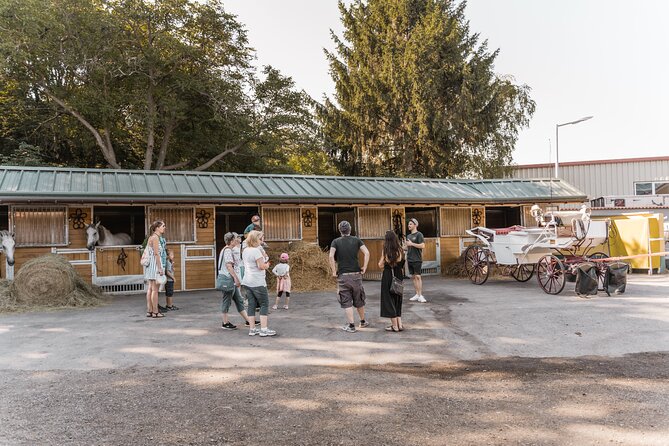
You start at Rappachgasse 34A, 1110 Vienna, at 8:45 am. This is not a central meeting point, so allow time to reach the 11th district by public transportation. The location is near public transit, but you should check your route carefully before setting out because arriving late could be stressful.
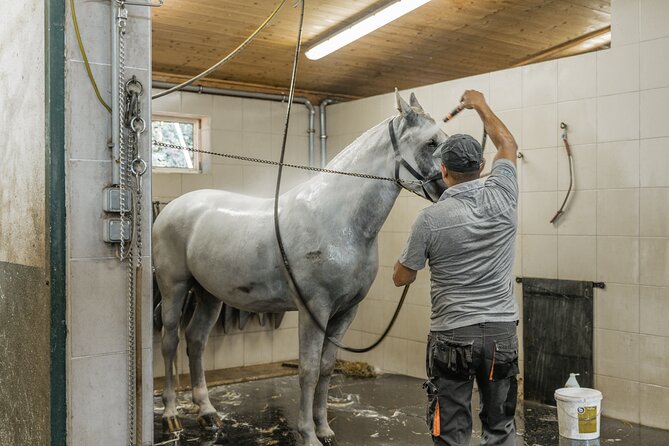
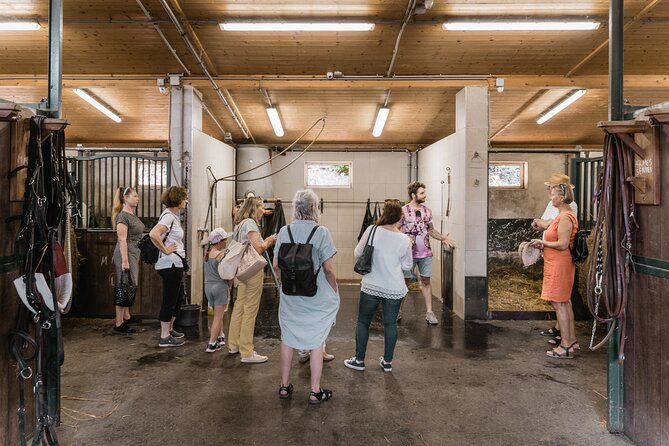
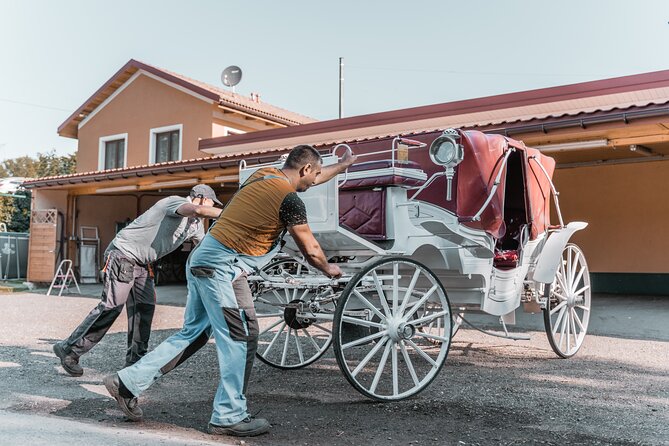
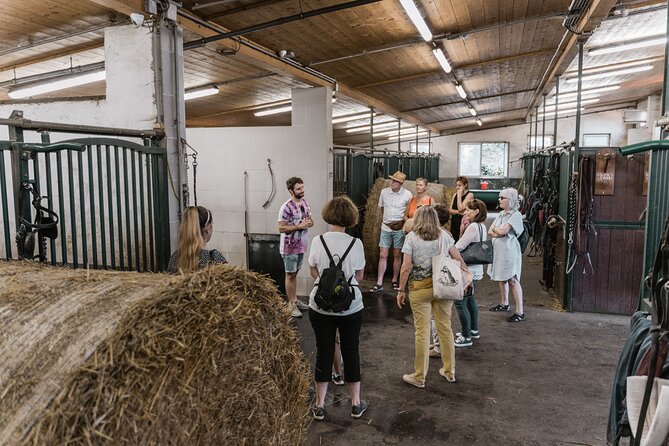
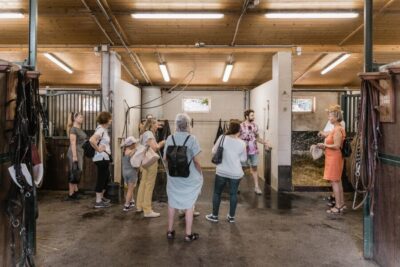
The first portion lasts about 30 minutes. A guide takes you through the stables and explains the daily work behind Vienna’s horse-drawn carriage tradition. You may see how the carriages are assembled, how horses are fitted with harnesses, and how the animals and staff prepare for the day.
This is the part that gives the experience its character. A standard carriage ride can show you Vienna from the street. This visit helps you understand the people, equipment, and animals that make that ride possible.
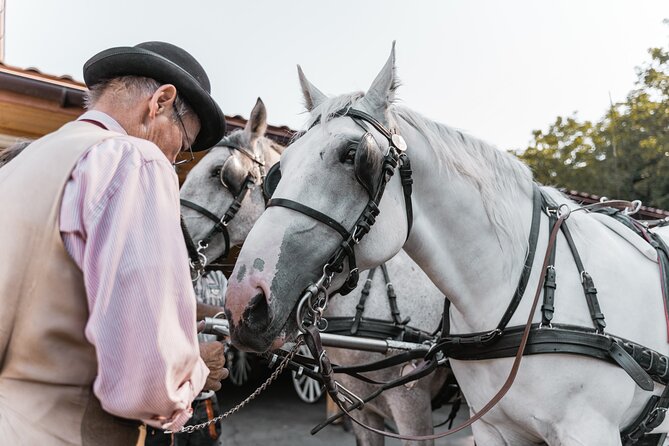
The explanations cover the history of the Fiakers, the construction of the carriages, the number of horses involved, and the jobs carried out by the staff. You also hear about the horses’ routines, training, and care. Horse lovers will appreciate the chance to ask questions and spend time near the animals rather than simply seeing them pass by in the city.
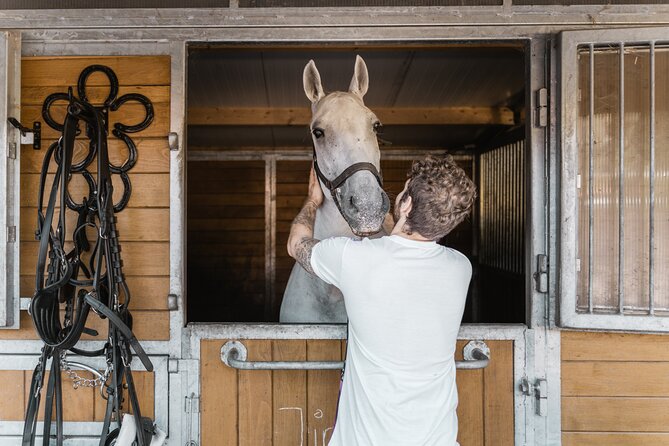
The stable has been described as well kept, and the horses as clean, calm, and well cared for. That matters here. A horse-drawn tour is more pleasant when you can see that the animals’ condition and welfare receive serious attention. Some visitors were able to gently cuddle the horses and take photographs, making this a more personal encounter than a quick carriage pickup in the center.
The talk may be presented in both German and English. That can make the introduction last a little longer, but English speakers have found the translation clear. If you are traveling with children, this opening gives them something concrete to watch and understand before the carriage ride begins.
More carriage rides:
- Vienna: 30-Minute Fiaker Ride in the Old Town
★ 4.5 · 1,092 reviews - Vienna: Secrets of the Fiaker & Horse-Drawn Carriage Ride
★ 4.8 · 743 reviews - Vienna: Imperial Carriage Museum in Schönbrunn Palace Ticket
★ 4.7 · 339 reviews
Leaving the 11th district by carriage
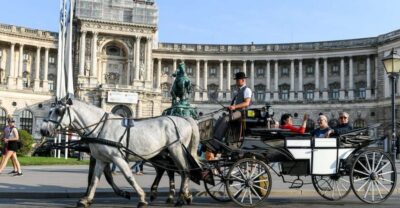
Once the horses and carriage are ready, you settle in for the ride toward central Vienna. The carriage accommodates up to 20 people on the activity, although the exact arrangement of seats can vary. A small stroller has fit easily in the carriage, which is useful for families with young children.
The first part of the route passes through Vienna’s 11th district, Simmering. The area was once associated with industry and now contains a mix of residential streets, modern buildings, older structures, and shops connected with many cultures. It is not the postcard version of Vienna, and that is both its strength and its limitation.
I like this section if you want to see how the city works beyond the grand center. You get a look at ordinary streets and a district that many short city tours skip. The carriage also gives you time to settle into the rhythm of the ride, with the sound of the horses’ hooves providing the main soundtrack.
You should not expect a parade of famous monuments from the moment you leave the stables. Several riders found the outer route less scenic than they had imagined. The provider itself explains that the ride from the stables to the center is an added part of the experience, not the same as a traditional sightseeing loop in the old town.
That distinction is important. The price is relatively modest for a private transportation experience with a stable visit, but the tradeoff is that you begin far from the historic center. If your only goal is to see Vienna’s most ornate buildings from a carriage, a central city ride may suit you better, though it normally costs more.
Belvedere gives the ride a grander setting
As the carriage continues, the route reaches the Belvedere area in Vienna’s 3rd district. The Belvedere complex consists of two palaces that were once outside the city and are now surrounded by Vienna’s urban fabric.
The route does not describe a palace admission or an extended stop at the grounds. You see the Belvedere from the carriage route, so consider this a useful orientation rather than a museum visit. If you plan to visit the palace interiors or gardens, schedule that separately.
This transition helps you see Vienna change. The outer district feels more mixed and practical. Around Belvedere, the buildings become more formal and polished, and the route begins to connect with the grand imperial city most people picture before arriving in Vienna.
I find that contrast more interesting than a ride that shows only decorated facades. You see the city move from working neighborhoods toward ceremonial avenues. Still, keep your expectations measured. The carriage does not stop at every major sight, and the amount of spoken explanation during the ride can depend on the coachman and the day.
The Ringstrasse brings on the famous facades
The carriage eventually reaches the Ringstrasse, Vienna’s grand boulevard. This broad avenue circles the historic center and is lined with major public buildings, palaces, and elegant 19th-century architecture.
Among the landmarks along this part of the journey is the Vienna State Opera, the setting for the annual Opera Ball. You may also see various Palais and monumental buildings along the route. These are the facades that make Vienna especially rewarding to view from a carriage, since you can sit back and take in the architecture without constantly stopping to consult a map.
The Ringstrasse portion is likely to be the visual high point of the ride. It is also where some riders expect the coachman to identify each building and explain its background. That does not always happen. One important practical warning is that the coachman may be driving rather than acting as a formal city guide.
If you want detailed commentary about the Ringstrasse, State Opera, or individual palaces, ask at the stable visit or confirm before booking exactly how much narration is included during the ride. The stable guide is the strongest source of information on this experience. The carriage journey itself can be more about watching the city roll by.
A few more trips of this kind worth comparing:
- Vienna: Culinary Horse-Drawn Carriage Experience
★ 4.7 · 291 reviews - Vienna Horse-Drawn Carriage Ride with Sparkling Wine and Food
★ 5.0 · 44 reviews - From Salzburg: 8-hour Horse-Drawn Tour w/ 2-hour Sleigh Ride
★ 4.5 · 73 reviews - Private Horse-Drawn Sleigh Ride from Salzburg
★ 4.5 · 46 reviews
Hofburg Square is the strongest finish
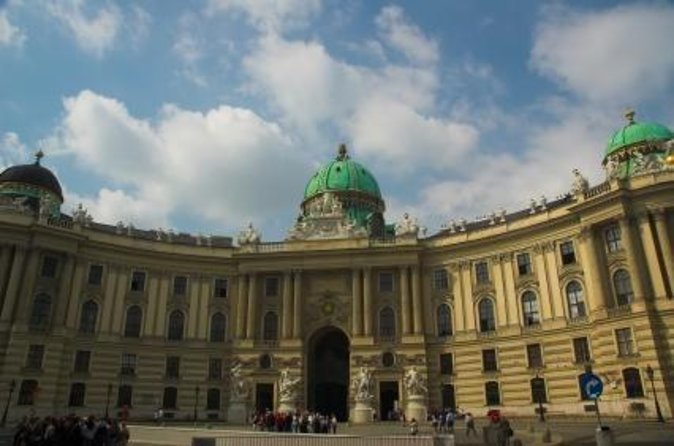
The final major setting is the Hofburg, Vienna’s former royal palace. The carriage passes through Hofburg Square, one of the city’s most impressive spaces and a natural climax to a ride that began in a working district.
The Hofburg is not one single building but a large collection of palace wings and institutions. From the carriage, you get a sense of its scale and position at the heart of Vienna. You do not receive admission to the palace, so plan another visit if you want museums, imperial rooms, or the Spanish Riding School.
The tour ends in the inner city at Michaelerplatz or Stephansplatz. This is a useful feature. You are not dropped at an isolated stable or returned to the starting point. Instead, you can walk directly into central sightseeing after the ride.
Michaelerplatz puts you near the Hofburg, the historic center, and several major walking routes. Stephansplatz places you beside St. Stephen’s Cathedral and the pedestrian streets around it. The exact end point matters, so check it on the morning of the tour and plan your next stop accordingly.
What the $39.16 price really covers
At $39.16 per person, the experience offers reasonable value if you care about the stable visit. You receive private transportation, the horse-and-carriage journey, and access to a guided introduction to the Fiaker operation. Snacks are not included, so eat before you go or bring something suitable for later.
The value is less clear if you judge the tour only as a city sightseeing ride. You are paying for an experience that starts in the 11th district and spends much of its ride traveling toward the center. Some of that route is suburban and lacks the grand architecture associated with Vienna.
Think of the carriage ride as both transport and an enjoyable extra after the stable tour. You learn how the Fiakers operate, then travel into the center in one of their carriages. That combination explains the moderate price.
A classic ride that starts and ends in central Vienna may be a better choice if your time is short or if you want maximum architectural scenery. This stable-focused option is better value for anyone who wants to meet the horses and understand the work behind the tradition.
Families, strollers, and practical comfort
The experience suits families well. Young children can watch the horses being prepared, ask questions, and then enjoy the carriage ride. The stable visit gives them a clear focus, which is helpful for children who might find a long architecture tour dull.
A small stroller has fit inside the carriage without difficulty. Still, the information does not promise space for large or bulky strollers, so use a compact model if you have one. Service animals are allowed, and most people can participate.
The tour lasts about 1 hour and 30 minutes in total. About 30 minutes is devoted to the stable visit, followed by roughly an hour in the carriage, though the exact timing can vary.
The experience is offered in English. Some sessions may include German and English explanations, so the stable portion could take longer than a talk delivered in only one language. English-speaking visitors have found the guide’s speech clear, and questions are welcomed.
The activity can accommodate a maximum of 20 people. That keeps it smaller than a large coach tour, but it is not necessarily an intimate private ride for just one family. If you want a very quiet carriage experience, confirm the group arrangement before paying.
The horse-care question matters
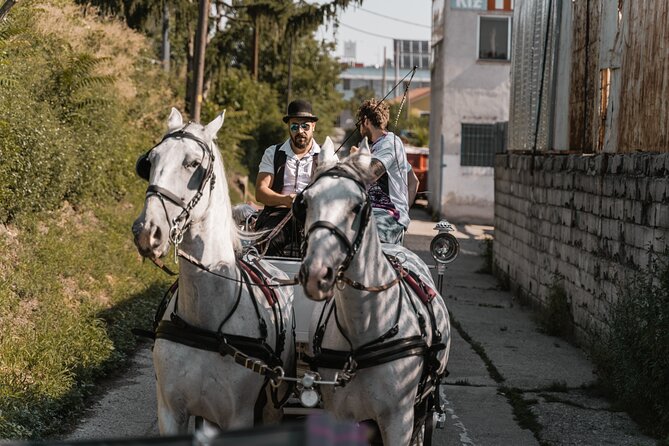
The strongest part of the experience is the attention given to the horses. The stable visit lets you see where they live and learn how they are harnessed, trained, and managed. The horses have been described as immaculate, well kept, and not overworked.
That personal contact can change the way you view the ride. Instead of treating the carriage as a decorative prop, you see the daily routines behind it. For many people, that is the reason to choose this tour.
I would still encourage you to pay attention during the stable talk and ask direct questions about the animals’ working day. The value of the experience comes from this honest look at the operation. If you skip the explanations and focus only on the carriage, you miss the part that makes this tour different from a standard ride.
The main weakness: not enough sightseeing commentary
The biggest issue is the gap between what some people expect and what the ride delivers. The route eventually reaches Belvedere, the Ringstrasse, the State Opera, and the Hofburg, but the coachman may not provide detailed explanations of each sight.
Some passengers expected a guided tour of Vienna from the carriage and were disappointed when the ride was mostly quiet. The provider explains that the coachman is not necessarily the guide and that the central city sightseeing ride is a separate type of experience.
I consider this a fair warning, not a reason to reject the tour. If you want the stable visit, the ride remains a pleasant way to reach the center. If you want a narrated tour of imperial Vienna, choose an experience specifically advertised as a guided city-center route.
You can also prepare by learning a little about the main sights before you go. Then the carriage becomes a moving view of the city rather than your only source of historical information.
Who should book this Fiaker experience?
I would recommend it to horse lovers, families, and anyone curious about how Vienna’s traditional carriages operate. It also suits repeat visitors who have already seen the main center and want a more unusual morning outside the standard sightseeing circuit.
It is a good pick if you value authentic working details more than a perfect postcard route. The stable, the harnesses, the horses, and the coachmen’s routines give you something you cannot get from a quick carriage loop around the old town.
I would be more cautious if you have only one morning in Vienna and want to cover famous monuments efficiently. The early start and outlying meeting point take time, and the ride through the suburbs is not consistently scenic.
Cancellation is free if you cancel at least 24 hours before the 8:45 am start. Changes or cancellations inside that window are not accepted for a refund. Confirmation arrives at booking, and the activity is generally suitable for most participants.
Should you book it?
Book this tour if the stable visit and horse care are central to your interest. You will learn how Fiakers work, spend time near the animals, and enjoy a long ride that finishes in the heart of Vienna.
Skip it if your priority is a fully narrated carriage tour through the historic center. For the best match, think of this as a guided stable experience with carriage transportation into town, not as a classic sightseeing circuit. That expectation makes the $39.16 price easier to appreciate and the morning much more enjoyable.
FAQ
Where does the Vienna horse-drawn carriage tour start?
It starts at Rappachgasse 34A, 1110 Vienna, Austria. The meeting time is 8:45 am.
Where does the tour finish?
The carriage ride ends in central Vienna at either Michaelerplatz or Stephansplatz.
How long does the experience last?
The total duration is approximately 1 hour and 30 minutes. The stable visit takes about 30 minutes, followed by the carriage ride into central Vienna.
Is the tour offered in English?
Yes. The experience is offered in English. Some stable presentations may also be given in German and then English.
Does the price include food or snacks?
No. Snacks are not included. Private transportation is included.
Can children join the tour?
Yes. The experience is described as suitable for the entire family, and most participants can take part. A small stroller has also been accommodated in the carriage.
Can I cancel for a full refund?
Yes, if you cancel at least 24 hours before the experience start time. Cancellations or changes made less than 24 hours in advance are not refunded or accepted.
Just added around Vienna
- Mobile puzzle rally tour at the Vienna Central Cemetery★ 4.5 · 3 reviews
- RAXI (E-Rickschaw) big private Vienna tour★ 4.5 · 3 reviews
- 8 days European Highlights PRIVATE TOUR from Budapest including Budapest Vienna Prague and Bratislava★ 5.0 · 3 reviews
- Private Transfer from Vienna to Prague with 1 hour Stop in Kutna Hora★ 4.5 · 3 reviews
- Palais Lobkowitz Audio Guide Tour★ 4.0 · 3 reviews
- Private Tour from Vienna to Melk and Dürnstein★ 4.5 · 3 reviews
- Vienna: Designer Fashion Time Capsule Experience★ 5.0 · 3 reviews
- Private day trip from Munich to Eagle’s Nest & Hallstatt★ 4.7 · 3 reviews
Horse Carriage Rides, compared.
Secrets of the Fiaker & Horse-Drawn Carriage Ride
Read our review →
Imperial Carriage Museum in Schönbrunn Palace Ticket
Read our review →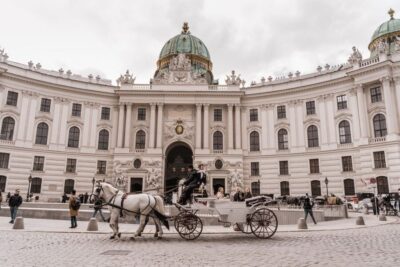
Carriage Ride Through Schönbrunn Palace Gardens
Read our review →
Skip the Line:Imperial Carriage Museum by Schönbrunn Kaiserliche Wagenburg Wien
Read our review →
Browse the lists this tour appears in