
Reviewed · SPANISH RIDING SCHOOL TICKETS
Vienna: Spanish Riding School Training
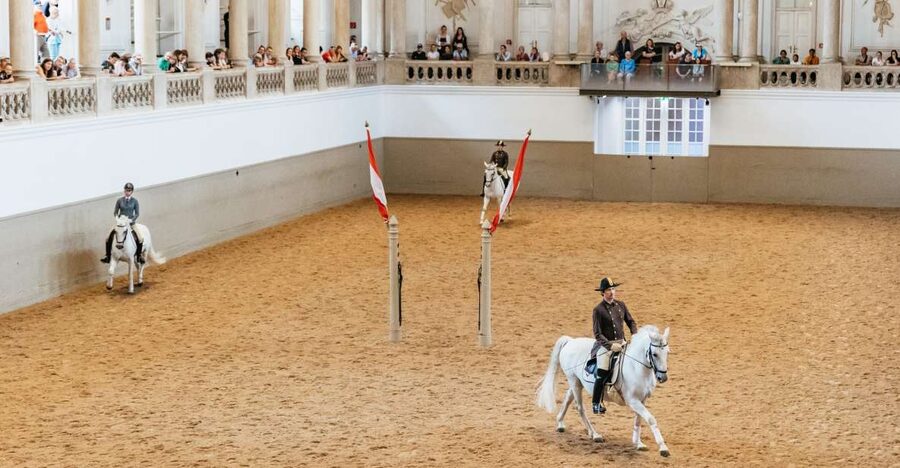
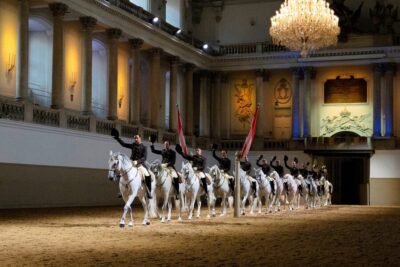
Vienna’s white stallions have a morning routine. For $20, you can watch Lipizzaner horses and their riders work through daily exercises inside the magnificent Baroque Winter Riding Academy. Classical Viennese music accompanies the hour, while riders focus on balance, strength, relaxation, and precise movement.
I like the chance to see the Spanish Riding School’s working side without paying performance prices. I also like the setting: chandeliers, pale walls, and centuries of equestrian tradition give even a simple trot a sense of occasion. The main drawback is that this is training, not a full show. You may see elegant dressage, but the famous levade, courbette, and capriole are only performed occasionally.
In This Review
- Key points before you book
- Inside Vienna’s Winter Riding Academy
- What happens during the one-hour training
- The difference between training and a formal show
- Why the Lipizzaners make the hour special
- Choosing seats, standing areas, and the best view
- Music, commentary, and the no-camera rule
- Arriving with your voucher
- Is $20 good value?
- Who should book this experience?
- Final verdict: book it for the training, not the spectacle
- FAQ
- How long does the Spanish Riding School training last?
- How much does the training cost?
- Where does the training take place?
- Are the famous levade, courbette, and capriole included?
- Can I take photographs or record video inside?
- How do I use my voucher?
- Are children and wheelchair users allowed?
Key points before you book
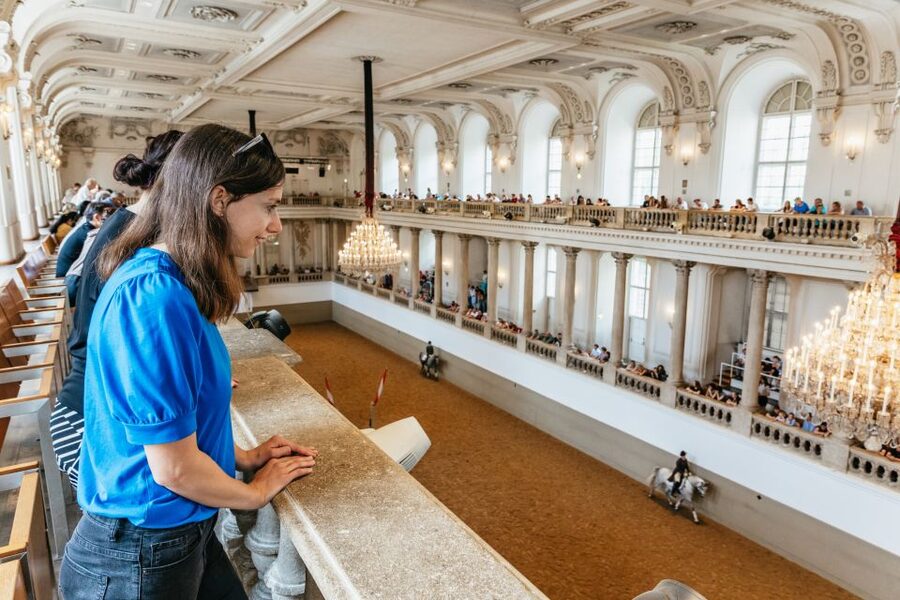
- The setting is part of the experience: Training takes place in Vienna’s Baroque Winter Riding Academy, with chandeliers above the riding arena.
- You watch real daily work: Exercises include relaxation, muscle building, lead changes, sidestepping, walking, lunging, and other dressage practice.
- The famous jumps are not guaranteed: Levade, courbette, and capriole are not practiced every day.
- Music accompanies the session: Classical Viennese music plays while the horses work.
- Standing tickets can be good value: They cost less, but standing for an hour may be tiring and some upper-level positions have a limited view.
- Bring patience, not a camera: Photography and video are forbidden inside, and ticket vouchers must be exchanged for paper tickets at the entrance.
Inside Vienna’s Winter Riding Academy
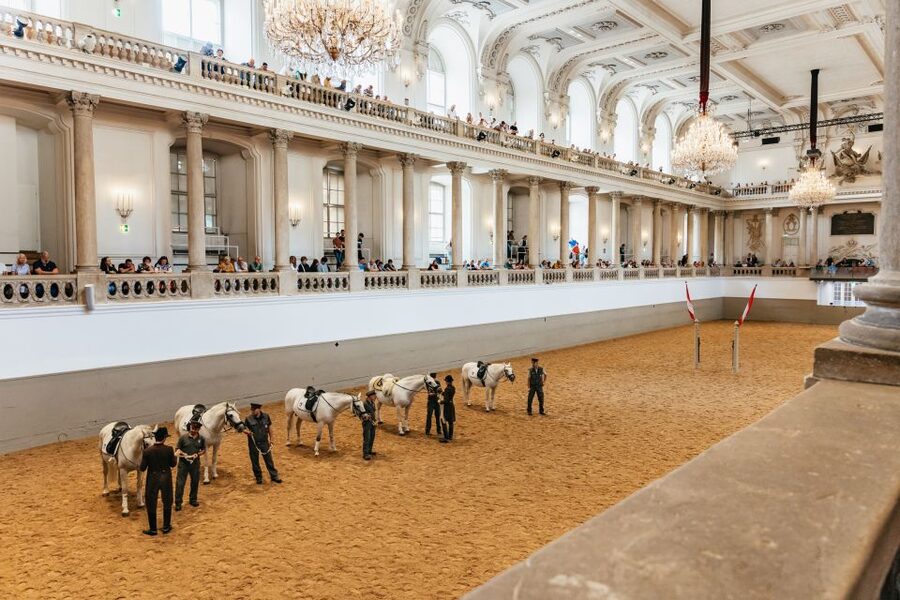
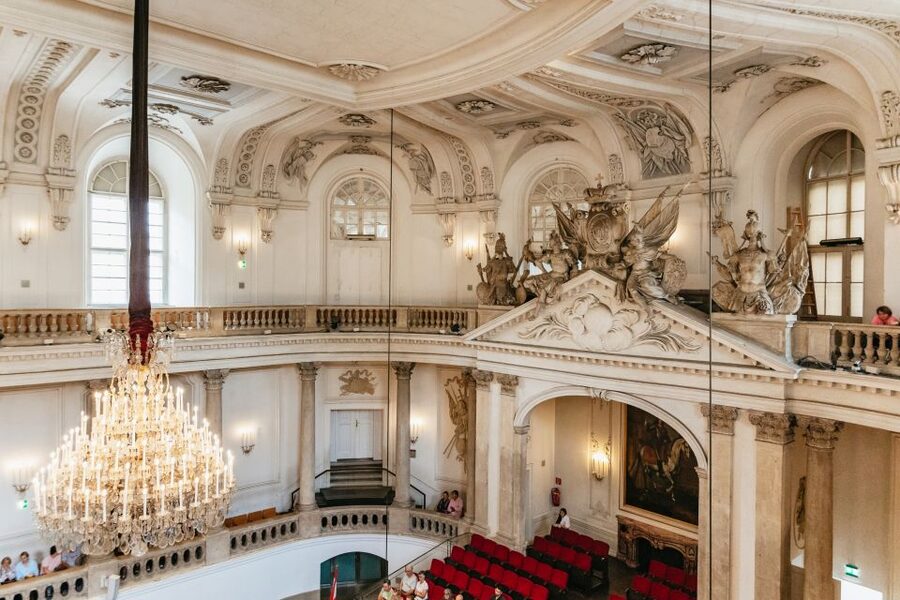
The first sight is the building. The Spanish Riding School training takes place in the Winter Riding Academy, a grand Baroque hall in central Vienna. Chandeliers hang above the sand-covered arena, creating a striking contrast between formal palace decoration and the practical business of horse training.
This is not a modern sports venue designed only for clear sightlines. The building is protected as a historic monument, so there is no elevator, and some seating areas require a climb. That old-fashioned arrangement is part of the charm, but it also affects comfort.
If you care about the architecture, arrive with time to look around before the horses begin. The room itself helps explain why this attraction has such a strong hold on visitors. You are not watching a riding demonstration in an ordinary arena. You are sitting inside one of Vienna’s most recognizable ceremonial spaces.
The school’s tradition reaches back centuries, and the morning exercise shows how that tradition continues in ordinary work. Riders are not simply showing off trained horses. They are maintaining the stallions’ health and building the strength needed for the demanding movements of the haute école, or high school of classical riding.
More Spanish Riding School tickets:
- Vienna Spanish Riding School Guided Tour
★ 4.7 · 6,765 reviews - Performance Of The Lipizzans At Spanish Riding School
4,190 reviews - Vienna: Spanish Riding School 45-Minute Performance Show
★ 3.9 · 731 reviews
What happens during the one-hour training
The session lasts about one hour. The exact starting time varies, so you need to check availability when booking. The program can also change, which matters because the horses’ work is not a fixed stage show with the same sequence every morning.
You may see more than one group during the hour. One session included two groups of horses, while other visitors saw around five horse and rider teams working in the arena. This gives you a useful look at different levels of training.
Some horses may be experienced stallions working through familiar movements. Others may be younger or less advanced, with the rider concentrating on a particular part of their education. A rider in training may wear a different uniform and a riding hat, making it possible to distinguish the developing rider from the more senior school staff.
The work can look simple at first. A horse walks, trots, changes direction, or repeats a movement across the arena. But repetition is the point. The morning exercise helps strengthen particular muscle groups, maintain athletic ability, and keep the horses healthy.
You may see relaxation exercises, work designed to refine movement, and exercises that improve balance and control. Some sessions include groundwork as well as ridden work. You might see walking, sidestepping, lunging, changes of lead, and early work toward more advanced movements.
The rider and horse are learning together. That is one of the most interesting parts of the hour. Instead of seeing only a finished routine, you can watch an instructor guide a less experienced rider or horse through a task. The contrast between a polished team and a developing one makes the training easier to understand.
The difference between training and a formal show
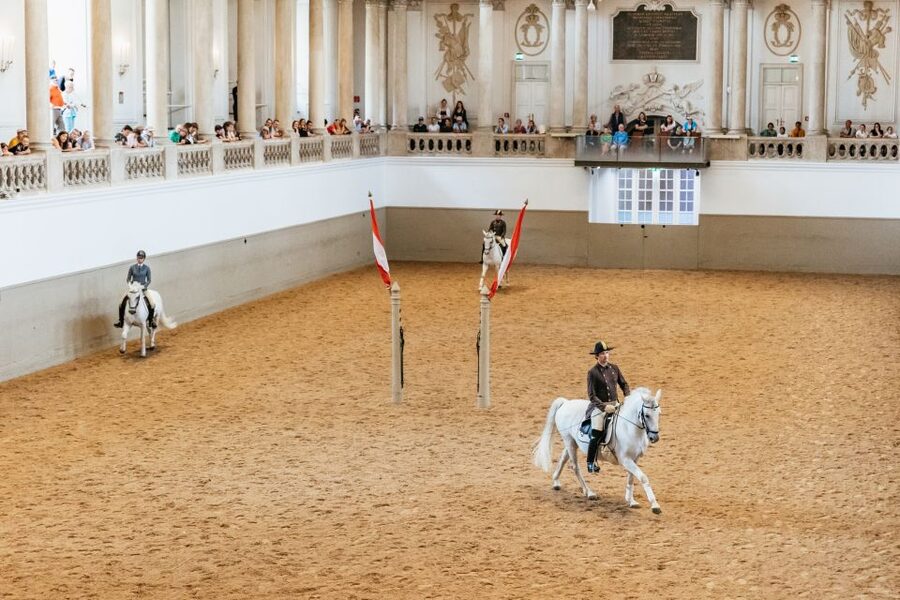
It is important to set your expectations correctly. The morning exercise is not a shortened version of the Spanish Riding School’s main performance. It is a working session, and the horses’ primary job is to train and stay fit.
You may see impressive dressage, but you may also see plenty of trotting around the arena. Some people find that fascinating because it shows how much careful, repetitive practice supports the spectacular movements seen in a formal show. Others may feel disappointed if they expect constant leaps and dramatic displays.
The levade, courbette, and capriole are the school’s best-known jumps and movements. They are not practiced every day, so you can only see them occasionally during morning exercise. A session may include no rearing or jumping at all.
I see this as the fair trade for the lower price. You pay to observe the horses’ normal training, not to receive a guaranteed highlight reel. If you want a polished program built around famous movements, the full performance is the better choice. If those tickets are unavailable or outside your budget, the morning training is a sensible alternative.
Why the Lipizzaners make the hour special
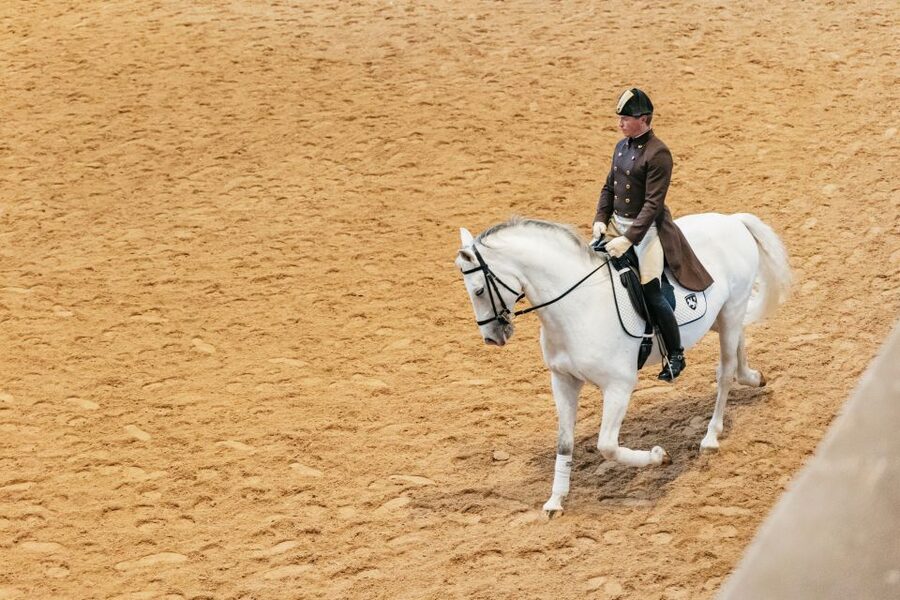
The white Lipizzaner stallions are the main attraction, but the horses are more interesting when you pay attention to their different stages of education. You may see an older, experienced horse moving with calm precision beside a younger horse still learning the basics.
The training also reveals the relationship between horse and rider. The rider gives small signals, corrects position, and repeats a movement until the horse responds properly. You do not need to be an equestrian to appreciate the concentration involved.
Horse lovers will get the most from this visit, especially people who ride or understand dressage. Several parts of the session may look understated if you are unfamiliar with equestrian training. A controlled transition or repeated movement can carry more meaning to an experienced rider than to someone expecting theatrical action.
Still, you do not need horse knowledge to enjoy the setting and the animals. One person who knew very little about horses found the riders’ skill and the stallions’ ability impressive. The music, architecture, and formal atmosphere help make the experience accessible to a wider audience.
The morning exercise also gives you a chance to think about athletic training in a different way. The horses are not simply rehearsing tricks. They are developing strength and coordination over years, while the riders are undergoing their own long training process.
A few more trips of this kind worth comparing:
- Vienna: Vivaldi’s Four Seasons Concert in Karlskirche
★ 4.7 · 14,951 reviews - Vienna: Skip-the-cashier-desk-line Giant Ferris Wheel Ride
★ 4.5 · 7,859 reviews - Vienna: Schönbrunn Palace & Gardens Skip-the-Line Tour
★ 4.7 · 7,739 reviews - Vienna: Light of Creation Votive Church Immersive Light Show
★ 4.8 · 6,779 reviews
Choosing seats, standing areas, and the best view
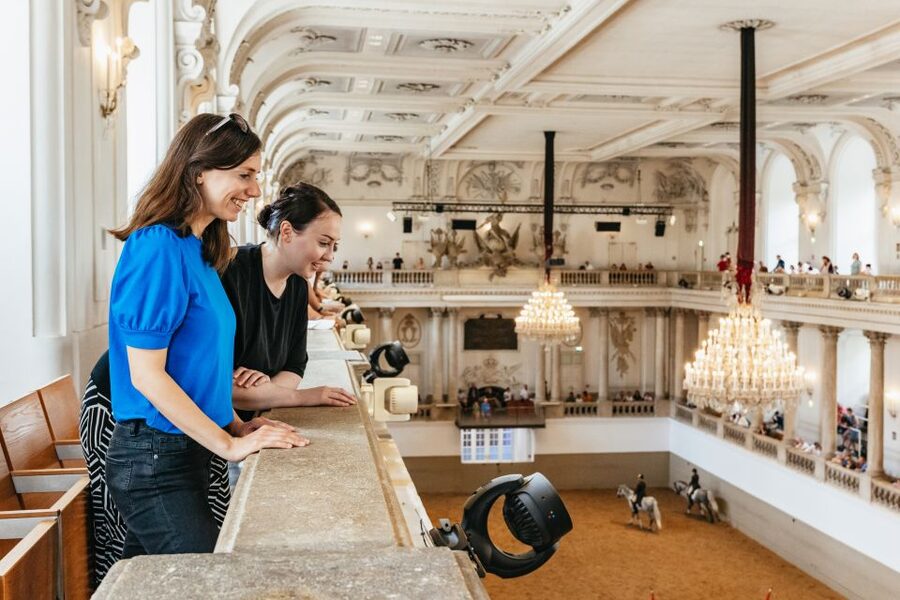
Your ticket type matters. Standing tickets are the lower-cost choice and can offer a good view from one side of the arena. They are a smart option if you mainly want to see the horses and the building without spending more.
The drawback is obvious: you must stand for the full hour. Leaning forward to see over a barrier can also become tiring, particularly for anyone with mobility problems. Some people with standing tickets found spare seats and were able to sit, but you should not count on that.
Seated tickets cost more, and the seating arrangement is not equally comfortable everywhere. Upper-tier seats can provide a broad view of the school, but a high wall or balcony edge may force you to lean forward or stand to see the arena clearly. One person seated on an upper level found the view restricted on one side.
A useful tactic is to arrive early and assess your position before the session begins. A side position may show one part of the arena well while hiding another. A more central section can be better if you want to hear the commentary and follow the whole floor.
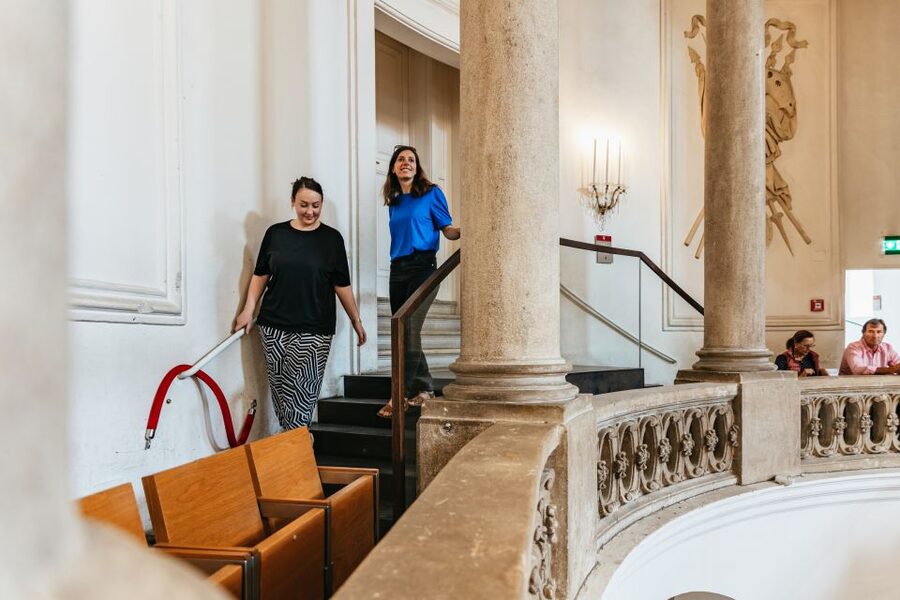
The lower seating area may be preferable if you value comfort and a fuller view. The upper level can still work well, but ask yourself if you are comfortable standing or leaning for an hour. The school does not offer an elevator because of monument protection, and there are many stairs in some parts of the building.
If you use a wheelchair or have difficulty walking, send a request in advance. Do not assume that a general accessibility request will automatically result in convenient seating. Specific arrangements need to be confirmed before you arrive.
Music, commentary, and the no-camera rule
Classical Viennese music accompanies the morning exercise. It gives the session a graceful rhythm, though it can also make the hour feel more like a formal presentation than an informal stable visit.
Commentary provides information about the school, the horses, and the training methods. Its usefulness depends on where you sit. From the upper levels, the narration may sound muffled or be difficult to follow. If learning about the horses and techniques is important to you, choose a middle section when possible.
The commentary can also be delivered quickly, so listening closely helps. The music and the size of the hall may make individual explanations hard to catch.
Photography and video recording are not allowed inside. This rule is repeated before and during the session, yet some people still use their phones. I recommend following the rule. It keeps the atmosphere quieter and avoids distracting the horses and riders.
If you want a photograph, take one outside or in an area where photography is permitted. You will need to enjoy the hour without collecting phone footage. For many people, that is a welcome reason to pay attention to what is happening in front of them.
Arriving with your voucher
Your digital voucher is not the final entry ticket. You must present it at the Spanish Riding School entrance and exchange it for a ticket. Ticket pickup is available at the earliest one hour before the activity.
Do not leave this exchange until the last minute. One person arrived early but had to run around the building to find the correct queue, nearly making the start. I would arrive with enough time to locate the entrance, exchange the voucher, and climb to the seating or standing area without rushing.
Hotel pickup and drop-off are not included. You make your own way to the school in Vienna, then present the voucher at the entrance.
The attraction is suitable for many families, but children under three are not admitted. Children aged three to five enter free but must sit on an adult’s lap, while children aged six to eighteen receive discounted admission. An hour of training may suit younger children better than a long formal performance, though standing tickets and stairs can still be difficult for little ones.
Pets are not allowed.
Is $20 good value?
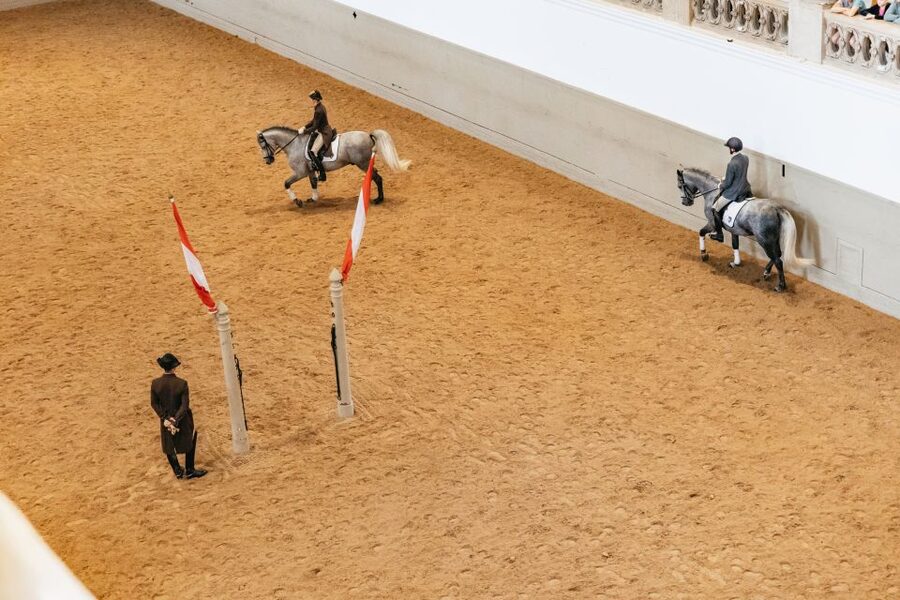
At $20 per person, the training offers strong value if you want to see the Spanish Riding School but do not need a full performance. You receive an hour inside the historic academy, with Lipizzaner stallions, trained riders, classical music, and commentary.
The value is especially clear for a horse lover. You see the less polished but more revealing part of the work: the repetition, corrections, and gradual progress behind the famous movements.
For a first-time visitor who knows little about dressage, the value depends on expectations. The room and horses are impressive, but the action may be quiet. You could spend much of the hour watching controlled walking and trotting rather than dramatic jumps.
The price also makes this a useful backup when formal performance tickets are sold out. It gives you a genuine look at the school rather than asking you to settle for a photograph outside. It is not a consolation prize in the sense of being fake or staged. It is simply a different kind of visit.
Free cancellation is available up to 24 hours before the activity, and you can reserve now and pay later. Those options help if your Vienna schedule is still changing, though you should still check the exact start time before booking.
Who should book this experience?
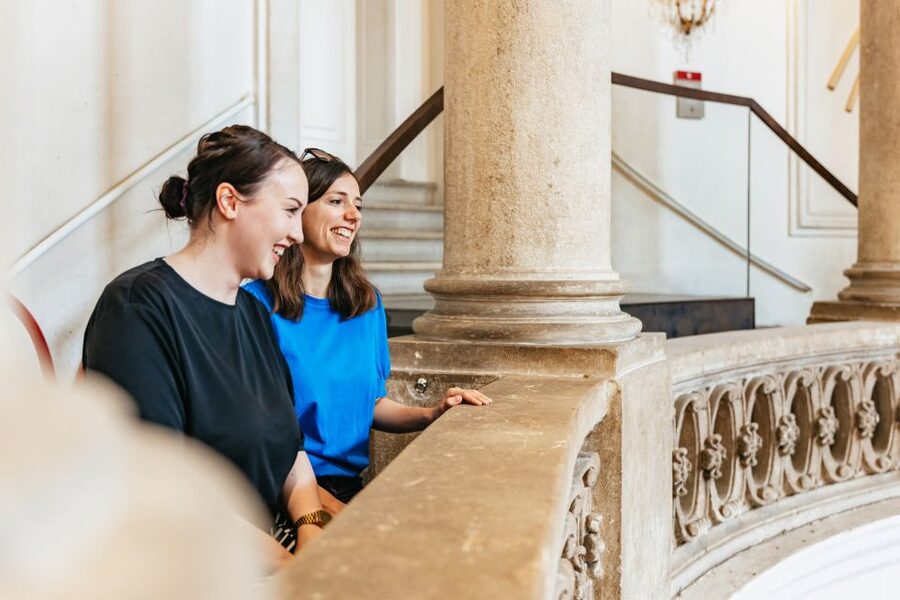
I would recommend the morning training to:
- Horse and dressage enthusiasts who want to observe technique, rider development, and horse training.
- Architecture lovers who want to see the Winter Riding Academy and its Baroque interior.
- Budget-conscious visitors who want an affordable Spanish Riding School experience.
- Families with children aged three and older who prefer a one-hour activity.
- Visitors unable to secure formal performance tickets who still want to see the Lipizzaner stallions.
- Curious first-time visitors who enjoy watching skilled work rather than only polished results.
I would think twice if you need step-free access, cannot stand for an hour, or expect guaranteed jumping and rearing. You should also reconsider if taking photographs is central to your enjoyment.
Final verdict: book it for the training, not the spectacle
Book this experience if you want an affordable, authentic look at how the Spanish Riding School keeps its horses and riders in form. The magnificent hall, gentle music, beautiful stallions, and varied levels of training make the hour worthwhile.
Go in expecting daily practice, not a full theatrical performance. You may see groundwork, careful instruction, and refined dressage. You may not see the famous school jumps. Arrive early for the ticket exchange, choose your position with care, and sit as centrally as possible if the commentary matters to you.
For $20, this is one of Vienna’s better-value cultural activities, especially for anyone who has ever wanted to see the Lipizzaners up close in their historic home.
FAQ
How long does the Spanish Riding School training last?
The training lasts one hour.
How much does the training cost?
The listed price is $20 per person.
Where does the training take place?
It takes place in the Baroque Winter Riding Academy at the Spanish Riding School in Vienna.
Are the famous levade, courbette, and capriole included?
They are not guaranteed. These movements are not practiced every day and may only occasionally be seen during the morning exercise.
Can I take photographs or record video inside?
No. Photography and video recording are not allowed inside.
How do I use my voucher?
Present your voucher at the Spanish Riding School entrance and exchange it for a ticket. Tickets can be picked up no earlier than one hour before the activity.
Are children and wheelchair users allowed?
Children under three are not admitted. Children aged three to five enter free but must sit on an adult’s lap, and children aged six to eighteen receive discounted admission. There is no elevator because of monument protection, so wheelchair users and people with walking difficulties should send a request in advance.
Just added around Vienna
- Mobile puzzle rally tour at the Vienna Central Cemetery★ 4.5 · 3 reviews
- 8 days European Highlights PRIVATE TOUR from Budapest including Budapest Vienna Prague and Bratislava★ 5.0 · 3 reviews
- RAXI (E-Rickschaw) big private Vienna tour★ 4.5 · 3 reviews
- Private Transfer from Vienna to Prague with 1 hour Stop in Kutna Hora★ 4.5 · 3 reviews
- Palais Lobkowitz Audio Guide Tour★ 4.0 · 3 reviews
- Private Tour from Vienna to Melk and Dürnstein★ 4.5 · 3 reviews
- Vienna: Designer Fashion Time Capsule Experience★ 5.0 · 3 reviews
- Private day trip from Munich to Eagle’s Nest & Hallstatt★ 4.7 · 3 reviews
Spanish Riding School Tickets, compared.
Spanish Riding School 45-Minute Performance Show
Read our review →
Spanish Riding School Guided Architectural Tour
Read our review →Browse the lists this tour appears in