
Reviewed · WALKING TOURS
Walking Tour Vienna
Vienna can surprise you quickly. This experience mixes a central walking introduction with a much wilder outing on downhill scooters, giving you two useful ways to see the city. I like the strong first-day orientation, especially the stops at the Hofburg and Heldenplatz, and I like the panoramic views from Kahlenberg and Klosterneuburg. The main drawback is a serious one: the tour description combines a walking tour with a scooter adventure, so you should confirm exactly which version you are booking.
I also like the guides’ story-based approach. Michael helped visitors understand Vienna and the Habsburgs, while Katharina earned praise for making two hours pass quickly. But if you want detailed explanations of Vienna’s buildings, churches, and art, this may feel too focused on broad history and local regions.
In This Review
- Key points to know before booking
- First, sort out which Vienna tour you are buying
- Helmut-Zilk-Platz gives you a central start
- The Hofburg: a quick introduction to imperial Vienna
- Heldenplatz adds history, but not much building detail
- The Prater and the first scooter practice
- Kahlenberg delivers the biggest views
- Three downhill runs, including Exelberg
- How much history will you get?
- Is $22.83 good value?
- Who will enjoy this most?
- Practical planning tips for this Vienna experience
- Should you book Walking Tour Vienna?
- FAQ
- Where does the walking tour start?
- Where does the walking tour end?
- How long does the experience last?
- What sights are included on the walking route?
- Is admission to the Hofburg included?
- Does the experience include downhill scooters?
- Where does the scooter portion go?
- How fast can the scooters go?
- Is safety equipment provided?
- Can children participate?
- Does the experience operate in bad weather?
- How many people can join the tour?
- Are service animals allowed?
- Is cancellation free?
Key points to know before booking
- The experience appears to combine two different formats: a central Vienna walking tour with the Hofburg and Heldenplatz, plus a minivan trip and downhill scooter rides.
- Kahlenberg supplies the big payoff: you get city views, a look toward Klosterneuburg Monastery, and steep roads through wooded hills.
- The scooters are serious equipment: they are non-motorized, two-wheeled machines that can reach up to 39 miles per hour, or 64 kilometers per hour.
- The guides are a major strength: Michael and Katharina are praised for storytelling, clear information, and useful ideas for the rest of a Vienna stay.
- The central walking route is short: the Hofburg and Heldenplatz each receive about 15 minutes, so this is an overview rather than a detailed palace tour.
- The price is low at $22.83 per person: that is good value for a city orientation, but clarify the format and tip expectations before you pay.
First, sort out which Vienna tour you are buying
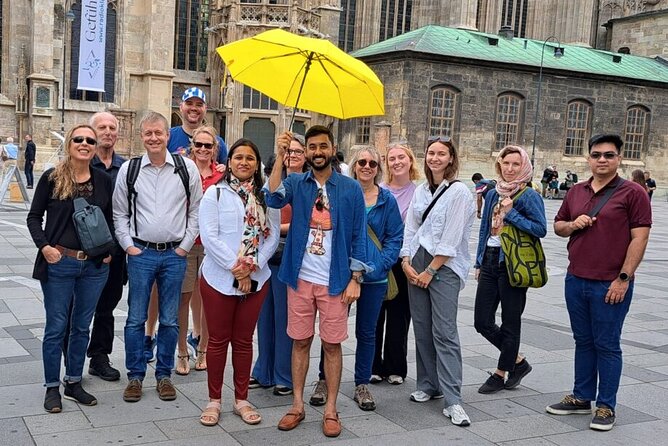
The name suggests a standard walking tour, and the stated meeting points support that idea. You meet at Helmut-Zilk-Platz beside the Albertina, at Albertinaplatz 2-3, then finish near St. Stephen’s Cathedral in Stephansplatz.
The short city route passes the Hofburg and Heldenplatz. A guide explains the sights and tells stories about Vienna, the Habsburgs, and the city’s past. This part lasts roughly two hours in total, with about 15 minutes at each named stop.
Yet the main activity description tells a different story. It says you meet an expert guide in central Vienna, ride in an air-conditioned minivan to the Prater amusement park, collect downhill cross scooters, practice in the park and at the Vienna University of Economics and Business, then head toward Kahlenberg for several downhill runs.
Those are not minor variations. One is a relaxed historic city walk. The other includes transport, helmets, practice riding, wooded hills, sharp bends, and speeds of up to 64 kilometers per hour. I would check the exact departure details with Prime Tours Vienna before booking, especially if you are choosing this experience because of the scooters.
More Walking Tours in Vienna
- Vienna: Guided Walking Tour of City Center Highlights
★ 4.7 · 4,989 reviews - Vienna: Vienna Central Cemetery Guided Walking Tour
★ 4.8 · 3,307 reviews - Vienna: Guided Walking Tour of City Highlights & Hidden Gems
★ 4.9 · 2,180 reviews
Helmut-Zilk-Platz gives you a central start
The meeting point at Helmut-Zilk-Platz is easy to place in central Vienna. It is beside the Albertina, close to the city’s major sights and public transport. The tour ends at or very near St. Stephen’s Cathedral, so you can continue sightseeing in the old center without arranging a separate ride back.
That start and finish work well for a first day. You begin near the Hofburg area and end at Vienna’s great Gothic cathedral, with plenty of central streets between them. The route also gives you a useful mental map: the kind that helps you decide which palace, church, museum, or square deserves a longer visit later.
The walking section does not include admission to a paid attraction. You see the Hofburg and Heldenplatz from outside, and the included access is best understood as guided sightseeing rather than an indoor palace visit.
The Hofburg: a quick introduction to imperial Vienna
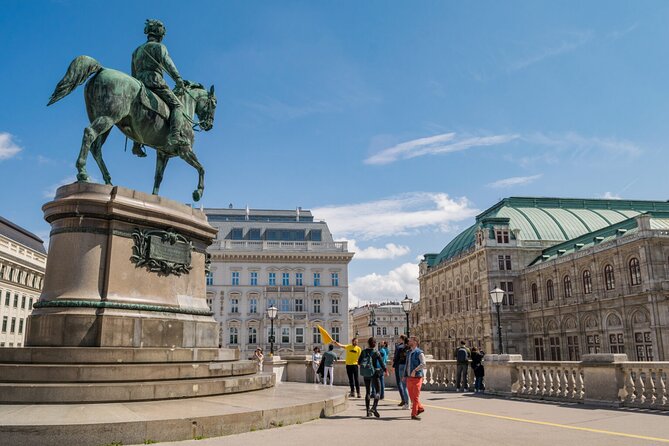
The Hofburg is the natural anchor for a Vienna orientation. For centuries, it served as the center of Habsburg power, and its courtyards, wings, and ceremonial spaces now spread across the heart of the city.
Your guide passes by the complex and explains its role in Vienna. The short stop is useful because it gives context before you visit other imperial sites, but 15 minutes is not enough for a detailed look at the palace buildings or their collections.
I would treat this as a preview. If the Hofburg interests you, return later with more time for its museums and interiors. The walking tour helps you see how central the complex is, but it does not replace a dedicated palace visit.
The guide’s style matters here. Michael received particular praise for telling the story of the Habsburgs in a way that made the city easier to understand. That kind of narration can be more useful than a long list of dates, especially when Vienna is your first stop in Austria.
Heldenplatz adds history, but not much building detail
Heldenplatz sits beside the Hofburg and is one of Vienna’s most important public squares. Monumental statues and the surrounding imperial buildings give the square a grand appearance, but its past is more complicated than the open space first suggests.
The guide stops for about 15 minutes, points out the monuments, and explains the square’s history. This is a good place to hear about the political forces that shaped Vienna, yet the amount of time is brief.
The experience seems strongest when it explains events and people. It is less strong if you want close attention to architecture. One person found the guide well informed but wished for more information about the buildings and churches. That is a useful warning: ask questions if architecture is your main interest, because the guide may naturally focus on history instead.
More walking tours:
- Vienna: Viennese Underworld Guided Walking Tour
★ 4.7 · 1,865 reviews - Vienna: World War II Historical Walking Tour
★ 4.8 · 1,772 reviews - Vienna Historic Center Small Group Walking Tour
★ 5.0 · 1,746 reviews - Vienna: Private Walking Tour with a Local Guide
★ 4.6 · 1,420 reviews
The Prater and the first scooter practice
If your booking includes the scooter portion, the group travels by air-conditioned minivan to the Prater amusement park. The park is home to Vienna’s famous giant Ferris wheel, one of the city’s best-known symbols.
You begin with a short stroll before collecting a downhill cross scooter. This is a non-motorized two-wheeler, not an electric scooter. A supplied helmet is included, and you get time to practice riding in the park and around the Vienna University of Economics and Business.
That practice matters. A downhill scooter demands balance, braking, and confidence. The university campus provides a striking setting, with colorful and modern buildings that contrast sharply with Vienna’s imperial center.
The sequence is sensible: learn the equipment on easier ground before tackling mountain roads. I would still avoid treating the practice ride as a formality. You should use it to see how the scooter responds, how quickly it gains speed, and how comfortably you can handle turns.
Kahlenberg delivers the biggest views
Kahlenberg is a wooded hill north of Vienna, and it gives this outing its strongest sightseeing moment. From above the city, you can take in a broad view over Vienna and the surrounding area.
The route also offers a chance to see Klosterneuburg Monastery. The description does not promise an interior visit, so think of this as a viewpoint stop rather than a monastery tour.
For me, this is where the experience offers something a normal city walk cannot. You move beyond the central squares and see how Vienna spreads toward its wooded hills and vineyard areas. The view gives useful geographic context, especially after hearing about the old center.
Then the calm sightseeing ends. The scooter ride down Kahlenberg uses roads that coil around the slopes, with sharp bends that require you to slow down and stay alert. Speeds can reach 39 miles per hour, or 64 kilometers per hour. That is fast enough to make this a serious thrill, not a gentle sightseeing glide.
Three downhill runs, including Exelberg
The outing includes a second and third downhill ride, with one taking place around Exelberg. The hillsides there are covered with leafy urban vineyards, creating a very different view from the stone facades and grand squares in central Vienna.
The scenery sounds appealing, but the ride itself remains the focus. You zoom down steep, winding roads and manage the bends as the scooter gathers speed. The supplied helmet is important, and the experience clearly suits people who are comfortable with active outdoor recreation.
You should also consider the weather. The activity operates in all weather, so dress appropriately. A cold day could make the fast rides uncomfortable, while rain could change the feel of the roads and the views. The walking version has its own weather concern: one person found the tour very cold. Bring an extra layer rather than trusting a mild forecast from your hotel window.
How much history will you get?
The guides seem to be at their best as storytellers. Michael received praise for a clear introduction to Vienna, Habsburg history, and practical suggestions for the rest of a stay. Katharina was described as interesting and engaging, with two hours passing quickly.
That is a real benefit on a first day. A good guide can give you a framework for Vienna, so later visits to palaces, churches, and museums make more sense. You also have a chance to ask questions and collect ideas for the rest of your trip.
The balance is not perfect for every interest. The walking tour may emphasize regional history and major events more than the details of individual buildings. If you want a close study of churches, facades, and art, choose a specialist architecture or museum tour instead.
The guide’s nationality or accent may vary. One participant mentioned a Portuguese guide and found the explanations interesting, but the cold weather made the outing less comfortable. The practical lesson is simple: focus on the guide’s clarity and content, not on expecting one fixed personality or presentation style.
Is $22.83 good value?
At $22.83 per person, the price is attractive for a two-hour introduction, especially if your goal is to get oriented quickly. You receive a guide, central sightseeing, and a route that ends beside St. Stephen’s Cathedral.
If the booking includes the minivan, scooter, helmet, practice session, and several downhill runs, the price looks especially low for the amount of equipment and transport involved. But that very difference makes it important to confirm the exact product before paying.
There is also a tip issue. The tour may be presented as free or tip-based in some settings, while visitors have paid through Viator. One person paid about $25, then heard the guide describe the tour as free and dependent on tips. That created understandable confusion.
I would budget a voluntary tip if the guide gives you a strong experience, but I would not assume the base price disappears. At this price, consider the advertised charge your actual cost, with any tip left to your judgment.
The maximum group size is 40 people. That is not necessarily a small group in the intimate sense, even though the experience is described as offering personal service through a small-group format. A group of 40 can work well with a strong guide, but it may feel less personal than a group of 10 or 12.
Who will enjoy this most?
The central walking version suits you if you want a quick first look at Vienna, a little Habsburg context, and a convenient finish near St. Stephen’s Cathedral. It is also useful if you like asking a guide for suggestions during the first day of a stay.
The scooter version suits you if you want movement, speed, and views rather than a slow museum-focused outing. You need to be comfortable on a two-wheeled vehicle and willing to ride steep roads with sharp bends.
Families can consider it, but children must be accompanied by an adult. The information says most people can participate, and service animals are allowed. It does not provide a minimum age, weight limit, or detailed physical requirements, so ask the provider if those points matter for your group.
This is not the best choice if you want a quiet, highly detailed architectural tour. The history may be broad, and the scooter route may dominate the experience if that portion is included.
Practical planning tips for this Vienna experience
- Confirm if your departure is the walking route or the Prater and Kahlenberg scooter route.
- Arrive at Helmut-Zilk-Platz beside the Albertina if that is the meeting point shown on your confirmation.
- Wear suitable clothing for the forecast. The activity runs in all weather, and cold can affect both walking and riding.
- Treat the practice ride seriously. Learn the brakes and turning before starting the downhill runs.
- Ask questions about architecture during the Hofburg and Heldenplatz stops if that is your main interest.
- Keep the finish in mind. The walking route ends one or two minutes from St. Stephen’s Cathedral, while the scooter experience returns to central Vienna and may finish at the start point or a nearby subway station.
- If your plans change, free cancellation is available up to 24 hours before the start time. Inside that window, the payment is not refunded, and changes are not accepted.
- The experience needs a minimum number of participants. If the operator cancels for that reason, you are offered another date or experience, or a full refund.
Should you book Walking Tour Vienna?
Book it if you want an affordable Vienna orientation led by a strong storyteller, especially on your first day. The Hofburg, Heldenplatz, and central finish near St. Stephen’s Cathedral make the walking route convenient, while the Kahlenberg portion adds views and a memorable change of pace.
Book the scooter version only if you are genuinely comfortable with speed and sharp downhill turns. Reaching 64 kilometers per hour is far beyond a casual city ride.
I would not book without clarifying the format. The central walking itinerary and the minivan-and-scooter itinerary describe very different days. Once that point is settled, the choice is straightforward: pick the tour for history and orientation if that is what you need, or choose it for the scooters and hill views if you want an active Vienna outing.
FAQ
Where does the walking tour start?
It starts at Helmut-Zilk-Platz, at Albertinaplatz 2-3, 1010 Vienna, Austria.
Where does the walking tour end?
It ends at St. Stephen’s Cathedral in Stephansplatz, about a one to two minute walk from the cathedral.
How long does the experience last?
The experience lasts approximately two hours.
What sights are included on the walking route?
The route passes the Hofburg and Heldenplatz. The guide explains their history, monuments, and importance.
Is admission to the Hofburg included?
The Hofburg stop is an outside visit with no admission ticket listed. The information does not include entry to the palace interiors.
Does the experience include downhill scooters?
The activity description includes downhill cross scooters, but the central walking itinerary describes the Hofburg and Heldenplatz. Confirm which format applies to your booking.
Where does the scooter portion go?
It goes to Prater amusement park for practice, then toward Kahlenberg and the Exelberg area for downhill rides.
How fast can the scooters go?
The scooters can reach speeds of up to 39 miles per hour, or 64 kilometers per hour.
Is safety equipment provided?
A helmet is supplied for the downhill scooter portion.
Can children participate?
Children must be accompanied by an adult. The information also says most people can participate, but it does not give a specific minimum age.
Does the experience operate in bad weather?
Yes. It operates in all weather conditions, so you should dress appropriately.
How many people can join the tour?
The maximum group size is 40 people.
Are service animals allowed?
Yes, service animals are allowed.
Is cancellation free?
You can cancel for a full refund up to 24 hours before the experience starts. Cancellations or changes made less than 24 hours before the start time are not refunded or accepted.
Just added around Vienna
- Mobile puzzle rally tour at the Vienna Central Cemetery★ 4.5 · 3 reviews
- RAXI (E-Rickschaw) big private Vienna tour★ 4.5 · 3 reviews
- 8 days European Highlights PRIVATE TOUR from Budapest including Budapest Vienna Prague and Bratislava★ 5.0 · 3 reviews
- Private Transfer from Vienna to Prague with 1 hour Stop in Kutna Hora★ 4.5 · 3 reviews
- Palais Lobkowitz Audio Guide Tour★ 4.0 · 3 reviews
- Private Tour from Vienna to Melk and Dürnstein★ 4.5 · 3 reviews
- Vienna: Designer Fashion Time Capsule Experience★ 5.0 · 3 reviews
- Private day trip from Munich to Eagle’s Nest & Hallstatt★ 4.7 · 3 reviews
Walking Tours, compared.

Guided Walking Tour of City Center Highlights
Read our review →

Guided Walking Tour of City Highlights & Hidden Gems
Read our review →


Vienna Historic Center Small Group Walking Tour
Read our review →
Browse the lists this tour appears in