
Reviewed · VIENNA TOURS
Italian VIENNA
Vienna has an Italian accent. This two-and-a-half-hour walk reveals how Italian artists, architects, musicians, preachers, and military figures helped shape the city you see today. I especially like the fresh perspective on familiar sights and the way guide Mario Casalone mixes art, history, daily life, and amusing stories. The main drawback is that it is entirely outdoors, so poor weather can lead to a cancellation or a less comfortable walk.
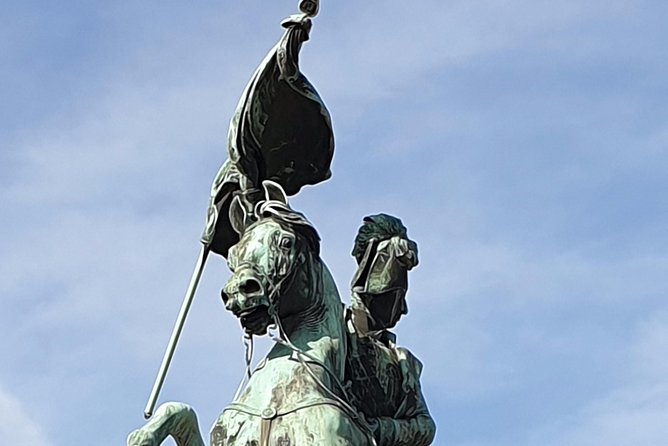
The tour begins at Minoritenkirche, Vienna’s church for the Italian community, and finishes in Stephansplatz beside St. Stephen’s Cathedral. You visit the Hofburg along the way, but the real subject is not a list of grand buildings. It is the Italian influence running through central Vienna, often in places you might otherwise pass without a second thought.
At $33.20 per person, the price is fair if you enjoy guided city walks and want more than postcard views. It is less useful if you prefer museum interiors, a tightly packed sightseeing checklist, or a tour delivered without much storytelling. The group can reach up to 30 people, so the quality of the experience will depend partly on how well you can hear and engage with the guide.
In This Review
- Key Points About Italian Vienna
- Why Vienna’s Italian Side Is Worth Your Time
- Starting at Minoritenkirche in Minoritenplatz
- The Hofburg Through Italian Eyes
- From Imperial Vienna to Stephansplatz
- Mario Casalone’s Guiding Style
- What the $33.20 Price Gets You
- Who Will Enjoy This Walk Most
- Weather, Group Size, and Practical Planning
- How to Fit It Into a Vienna Day
- My Final Take: Is Italian Vienna Worth Booking?
- FAQ
- Where does the Italian Vienna tour begin?
- Where does the tour finish?
- How long does the tour last?
- What is the price?
- Is admission included at the stops?
- Can I cancel for a full refund?
Key Points About Italian Vienna
- Italian artists behind Vienna’s Baroque image: See the city through the work of painters, architects, artists, and master builders connected with Italy.
- Minoritenkirche starting point: Begin at the church serving Vienna’s Italian community, a fitting place for this particular theme.
- The Hofburg with a different lens: Learn about the imperial palace and the Italian links that sit behind its grand appearance.
- Mario Casalone’s lively guiding: His style combines facts, anecdotes, humor, and personal experience rather than offering a dry lecture.
- A two-and-a-half-hour central walk: The route begins at Minoritenplatz and ends at Stephansplatz, keeping you in Vienna’s central district.
- Small financial risk when plans change: Free cancellation is available up to 24 hours before departure, with special rules for bad weather or too few bookings.
Why Vienna’s Italian Side Is Worth Your Time
Vienna is often introduced through the Habsburg court, imperial ceremony, classical music, and ornate Baroque streets. Those themes are important, but they can make the city feel sealed inside its Austrian identity. This tour adds another layer: Italian talent and taste helped give Vienna much of its visual character.
That influence came through more than one channel. Italian architects and builders worked on important structures. Italian artists contributed to the city’s decoration. Composers brought music into court and public life. Preachers, adventurers, and military leaders also formed part of the connection between Vienna and the Italian peninsula.
I like this approach because it changes the way you look at buildings you may already have seen. A second visit to the Hofburg or central streets can feel new when you are asking who designed, decorated, commissioned, or influenced what is in front of you.
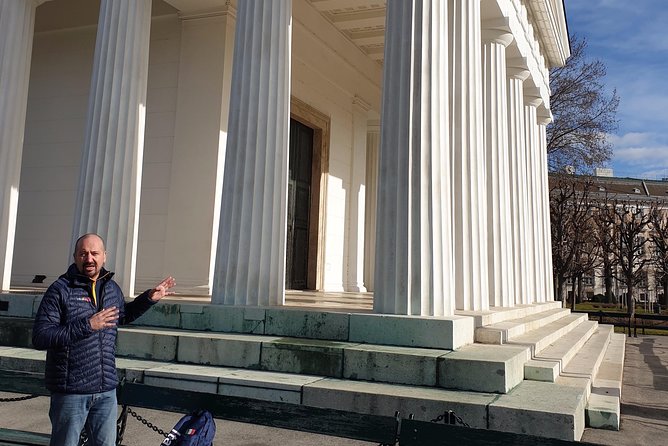
The tour also seems suited to people who enjoy connections more than isolated facts. Mario Casalone is described as warm, patient, and expressive, with a knack for explaining difficult subjects in a relaxed way. His strongest skill appears to be linking major events with small human details, so the past does not feel like a parade of dates.
A few more trips of this kind worth comparing:
- Vienna: Vivaldi’s Four Seasons Concert in Karlskirche
★ 4.7 · 14,951 reviews - Vienna: Spanish Riding School Training
★ 3.9 · 9,281 reviews - Vienna: Skip-the-cashier-desk-line Giant Ferris Wheel Ride
★ 4.5 · 7,859 reviews
Starting at Minoritenkirche in Minoritenplatz
The meeting point is Wiener Minoritenkirche at Minoritenplatz 2A in Vienna’s first district. This is not a random starting point. Minoritenkirche is known as the church of Vienna’s Italian community, making it an especially logical place to begin a walk about Italian Vienna.
You receive a free admission ticket for this stop, though the available information does not specify how much time you spend inside. The stated stop lasts about 15 minutes. That means you should expect an introduction to the church and its Italian connection rather than a long church visit.
This opening also gives the theme a human setting. Instead of beginning with an imperial palace and a grand political story, you start with a community and its place in the city. That helps explain why the Italian presence in Vienna is not limited to famous foreign artists hired by rulers. It also involves people who lived, worshiped, worked, and built relationships in the city.
I would arrive a little early and use the extra minutes to get oriented in Minoritenplatz. The tour uses a mobile ticket, so keep your booking confirmation easy to reach on your phone. Since the group may include as many as 30 people, standing close enough to hear the opening explanation is sensible.
The Hofburg Through Italian Eyes
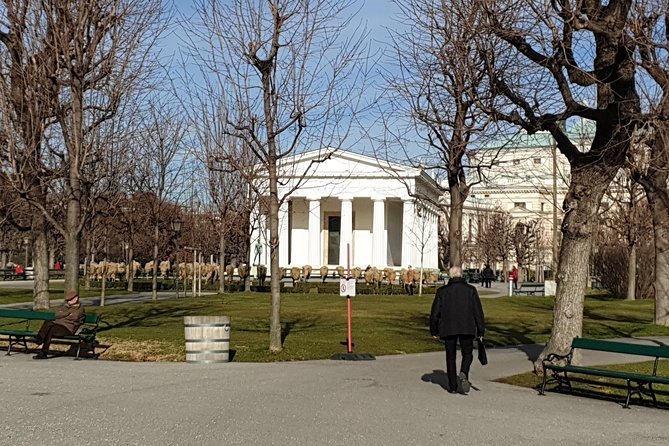
The Hofburg is the second named stop. This vast imperial palace was home to the Habsburg family, and the tour points out the apartments associated with Emperor Franz Joseph and Elisabeth, better known as Sissi.
Many city walks treat the Hofburg as a quick photo stop. Here, it functions as evidence of how international the imperial capital really was. The palace may look unmistakably Viennese, but its artistic and architectural identity was shaped by people and ideas moving across borders.
The stop is listed at roughly 15 minutes, with admission free as part of the walk. You should not expect a full tour of the palace apartments or an interior museum visit. Instead, this is a guided explanation from outside or around the site, focused on the Italian thread in the building’s story.
That distinction matters. If you want to see Sissi’s rooms, imperial silver, or the palace collections in detail, you will need a separate Hofburg visit. If you want context before exploring those attractions on your own, this stop can make the complex easier to understand.
I appreciate the choice to include the Hofburg without allowing it to take over the entire walk. Vienna offers plenty of imperial tours. The Italian Vienna route uses the palace as part of a wider story, showing how Italian culture helped shape the courtly world rather than repeating the usual Habsburg summary.
From Imperial Vienna to Stephansplatz
The walk ends at Stephansplatz, the cathedral square beside St. Stephen’s Cathedral. This is one of the most useful finishing points in central Vienna because you can continue sightseeing from there without needing another transfer.
The end point also gives the route a satisfying shift in mood. You begin at an Italian community church, pass through the imperial world of the Hofburg, and finish in one of Vienna’s best-known public squares. The route connects religious life, royal power, art, and the everyday movement of the city center.
The supplied details do not provide a full list of every stop between Minoritenkirche and Stephansplatz. That means you should book this experience for its theme and guide rather than for a guaranteed checklist of named monuments. The description promises a journey through the most significant places of Italian Vienna, while the detailed itinerary identifies Minoritenkirche and the Hofburg as the main stops.
That may actually suit you if you prefer a flowing walk. Mario’s strength is said to be storytelling, and a route built around links between places leaves room for anecdotes and explanation. It is not designed as a rapid march from one attraction to the next.
A completely different kind of day out in Vienna:
- Vienna: Schönbrunn Palace & Gardens Skip-the-Line Tour
★ 4.7 · 7,739 reviews - Vienna: Light of Creation Votive Church Immersive Light Show
★ 4.8 · 6,779 reviews - Vienna Spanish Riding School Guided Tour
★ 4.7 · 6,765 reviews - Vienna: Classical Concert in the World-Famous Musikverein
★ 4.6 · 6,673 reviews
Mario Casalone’s Guiding Style
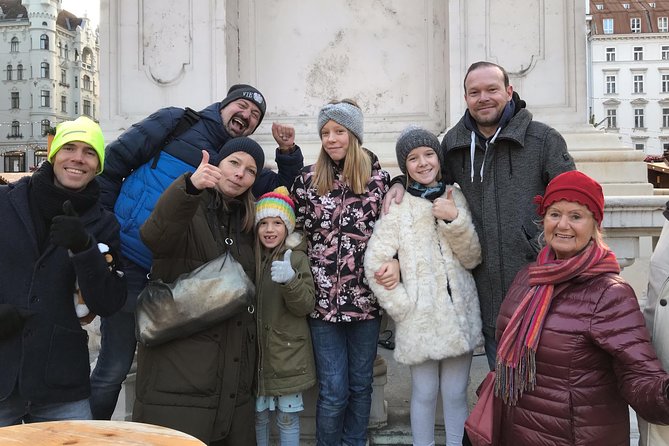
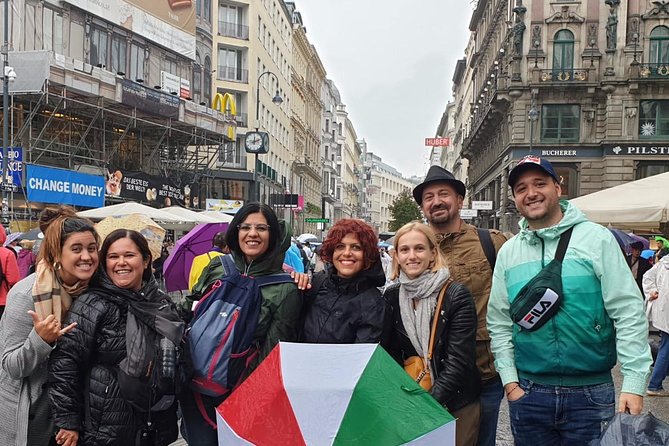
The guide can make or break a walking tour, and Mario Casalone receives unusually strong praise for his personal style. He is described as friendly, welcoming, eloquent, funny, and well prepared. Those qualities matter most on a subject that could easily become academic.
I like the reported balance of history and everyday experience. Mario does not seem to rely only on architectural labels or famous names. He uses anecdotes, cultural references, and bits of daily life to make the Italian influence easier to picture.
His patience with questions is another plus. If you enjoy stopping to clarify a point or ask how an Italian connection fits into Austrian history, you should feel comfortable doing so. Keep in mind, though, that a group of up to 30 people limits how long any one discussion can continue.
The tone also appears flexible enough for different backgrounds. The comments associated with the tour are written in Italian and German, and they consistently describe Mario as clear and engaging. I would still confirm the language of your particular departure before booking if that detail is important to you, since the supplied tour information does not formally specify a language.
Some of the strongest praise concerns his ability to make two and a half hours pass quickly. That is a useful sign for anyone who worries about a long walking tour becoming tiring. The route is not short, but an entertaining guide can make the time feel well spent.
What the $33.20 Price Gets You
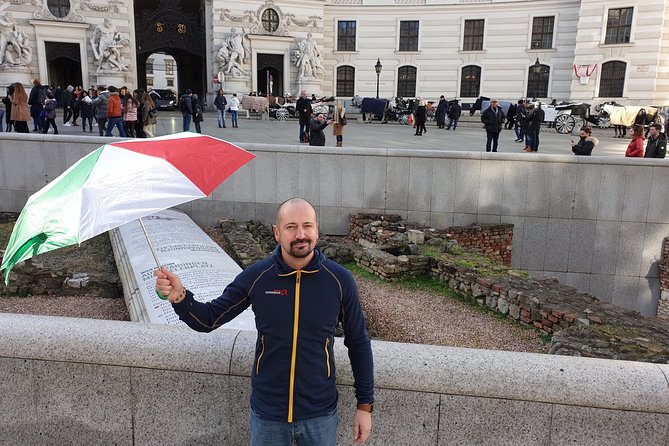
The cost is $33.20 per person. For a 2-hour-30-minute guided walk in central Vienna, that works out to a reasonable hourly rate, especially if you value interpretation rather than simply being led from one landmark to another.
The price includes the guided experience and mobile ticketing, with free admission listed for the named stops. It does not appear to include entry to the Hofburg apartments or other paid attractions, so do not treat this as a replacement for a museum ticket.
The best value comes from the angle of the tour. You are paying to understand relationships between Italian culture and Vienna, not just to enter a building. If you already know Vienna’s basic sights, this perspective can add more value than another general introduction to the city.
For a first-time visitor, the walk can also serve as an orientation. You finish at Stephansplatz, close to major central sights, and you gain a clearer sense of how art and power shaped the city. Still, if your schedule is very tight, you might prefer a general overview that covers more landmarks.
The rating information gives the tour a five-star score, with 100 percent recommending it, based on 14 reviews. That is a small sample, so I would not treat it as a guarantee. It does, however, point to a clear pattern: people respond most strongly to Mario’s delivery, his command of the subject, and the unusual Italian focus.
Who Will Enjoy This Walk Most
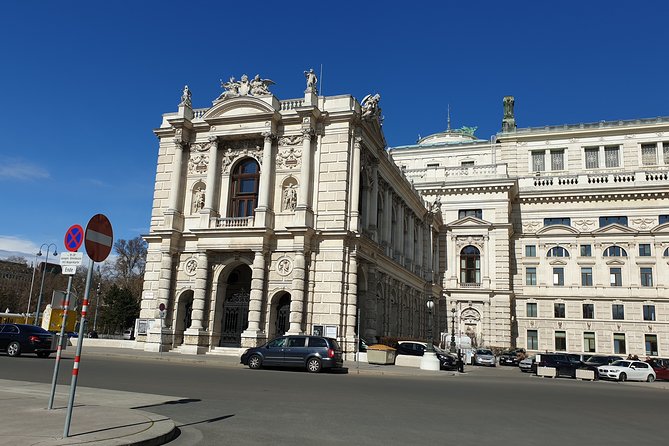
I would choose Italian Vienna if you have already seen the main central sights and want a new way to read them. It is particularly good for anyone interested in art, architecture, music, church history, or the cultural links between Austria and Italy.
It also suits couples, solo visitors, and families with older children who can manage a two-and-a-half-hour city walk. The information says most people can participate, but it does not give a detailed accessibility statement. If you have specific mobility needs, ask the provider about walking surfaces, standing time, and any stairs before booking.
Italian speakers may find the subject especially appealing, but you do not need to be Italian to follow the theme. The point is not to celebrate one culture at the expense of another. It is to show how Vienna grew through exchange, patronage, migration, and artistic cooperation.
You might not enjoy it as much if you want a quiet, self-guided stroll. Mario’s approach is energetic and conversational. Nor is it ideal if rain, wind, or cold weather would spoil your day, since the experience requires good weather and can be canceled when conditions are poor.
Weather, Group Size, and Practical Planning
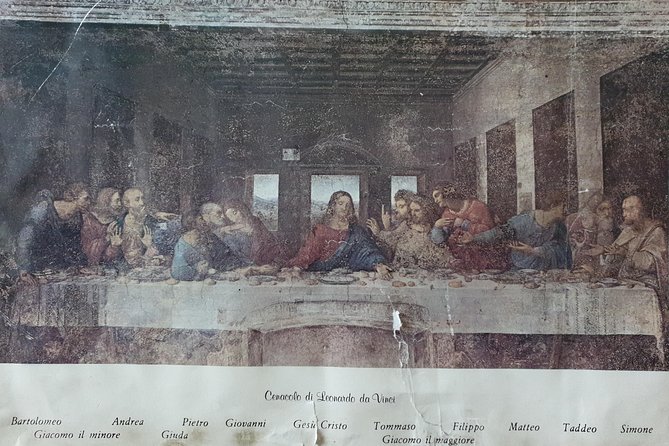
The tour operates near public transportation, which makes the start at Minoritenplatz fairly practical for a central Vienna itinerary. The meeting point is Wiener Minoritenkirche, and the tour finishes at Stephansplatz. Plan your onward route from the cathedral square rather than expecting to return to the starting point.
The experience uses a mobile ticket. Charge your phone before leaving, and keep the confirmation available in case the guide needs to check it.
A maximum of 30 people is not tiny. In a crowded central setting, you may need to stay near Mario to hear every detail. This is one reason to arrive early and avoid drifting to the back of the group. A smaller group would be more intimate, but the listed capacity is still manageable for a city walk if everyone stays together.
The cancellation terms are fairly clear. You can cancel at least 24 hours before the local start time for a full refund. Changes or cancellations inside that 24-hour window are not accepted for a refund.
Bad weather receives separate treatment. If the provider cancels because conditions are poor, you can choose another date or receive a full refund. The same applies if the minimum number of participants is not reached. That policy reduces the financial risk, but you should keep a little flexibility in your Vienna schedule.
How to Fit It Into a Vienna Day
Because the route ends at Stephansplatz, I would pair it with nearby sightseeing after the walk. You could use the afternoon to explore St. Stephen’s Cathedral or continue through central Vienna, depending on opening hours and your energy.
Another sensible plan is to visit the Hofburg interiors separately before or after the tour. The walk gives you a short introduction to the palace and its Italian links, while a separate admission lets you spend more time with the imperial rooms and collections.
I would avoid booking the walk immediately before a timed attraction unless you leave a generous buffer. A two-and-a-half-hour estimate can stretch when questions, crowds, or weather slow the group. The route is designed as a guided experience, not a race.
Bring comfortable shoes and clothing suited to the forecast. That is basic advice for any walking tour, but it matters here because the experience is outdoors and weather can affect whether it operates at all.
My Final Take: Is Italian Vienna Worth Booking?
I would book Italian Vienna if you want a thoughtful central walk led by a personable guide, especially if you are curious about art and architecture beyond the standard Habsburg story. The combination of Minoritenkirche, the Hofburg, and Stephansplatz gives you a useful route, while Mario Casalone’s lively explanations appear to be the main reason the tour works so well.
I would skip it if your priority is entering several attractions, seeing a long list of landmarks, or avoiding outdoor sightseeing in uncertain weather. You should also confirm the tour language if you need a specific one.
At $33.20, it is a sensible buy for a focused cultural walk with a clear point of view. The strongest reason to choose it is simple: after two and a half hours, familiar Vienna sights may carry a new Italian connection.
FAQ
Where does the Italian Vienna tour begin?
The tour begins at Wiener Minoritenkirche, Minoritenplatz 2A, 1010 Vienna, Austria.
Where does the tour finish?
The tour ends at Stephansplatz, the square beside St. Stephen’s Cathedral in central Vienna.
How long does the tour last?
The experience lasts approximately 2 hours and 30 minutes.
What is the price?
The listed price is $33.20 per person.
Is admission included at the stops?
Admission is listed as free for the Minoritenkirche and Hofburg stops. The information does not state that separate interior admission to the Hofburg apartments or other attractions is included.
Can I cancel for a full refund?
Yes. You can cancel at least 24 hours before the experience start time for a full refund. Cancellations or changes made less than 24 hours in advance are not accepted for a refund. If bad weather or too few participants causes the provider to cancel, you will be offered another date or a full refund.
Just added around Vienna
- Mobile puzzle rally tour at the Vienna Central Cemetery★ 4.5 · 3 reviews
- RAXI (E-Rickschaw) big private Vienna tour★ 4.5 · 3 reviews
- 8 days European Highlights PRIVATE TOUR from Budapest including Budapest Vienna Prague and Bratislava★ 5.0 · 3 reviews
- Private Transfer from Vienna to Prague with 1 hour Stop in Kutna Hora★ 4.5 · 3 reviews
- Palais Lobkowitz Audio Guide Tour★ 4.0 · 3 reviews
- Private Tour from Vienna to Melk and Dürnstein★ 4.5 · 3 reviews
- Vienna: Designer Fashion Time Capsule Experience★ 5.0 · 3 reviews
- Private day trip from Munich to Eagle’s Nest & Hallstatt★ 4.7 · 3 reviews
Vienna Tours, compared.
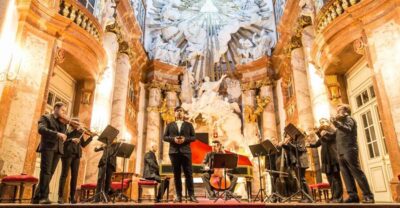
Vivaldi’s Four Seasons Concert in Karlskirche
Read our review →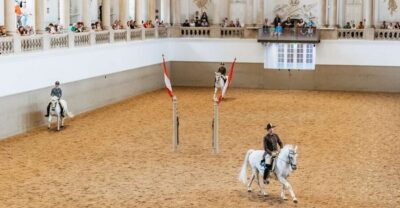
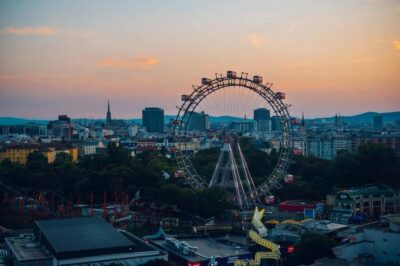
Skip-the-cashier-desk-line Giant Ferris Wheel Ride
Read our review →
Schönbrunn Palace & Gardens Skip-the-Line Tour
Read our review →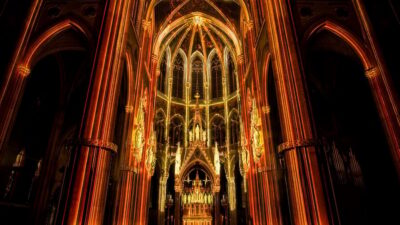
Light of Creation Votive Church Immersive Light Show
Read our review →
Classical Concert in the World-Famous Musikverein
Read our review →