
Reviewed · VIENNA TOURS
Konzerte der Wiener Royal Orchester
Vienna gets serious about music. The Vienna Royal Orchestra offers a lively two-hour introduction to Mozart, Strauss, Vivaldi, opera, and ballet in an ornate Ringstrasse setting. I like the convenient evening timing and the mix of familiar music with light audience participation. The main caution is practical: ticket pickup and venue directions have caused real confusion.
This is not a hushed, formal symphony concert designed only for seasoned classical listeners. It is a friendly evening show, often featuring a small ensemble, soprano, dancers, and a conductor who enjoys working the room. Seat location matters, especially because some seating areas are level with one another and the stage may be difficult to see from the back.
In This Review
- Key points to know before booking
- What kind of classical concert is this?
- Entering Haus der Industrie on Schwarzenbergplatz
- The music: familiar, friendly, and theatrical
- Why this works for first-time concertgoers
- Choosing between Bronze, Gold, and VIP seats
- VIP extras and the small additional costs
- Timing, tickets, and avoiding a missed performance
- Value at $71.38 per person
- Who will enjoy this most?
- Should you book the Vienna Royal Orchestra?
- FAQ
- Where does the Vienna Royal Orchestra concert take place?
- How long does the concert last?
- What time does the concert begin?
- What music can I expect?
- Are singers and dancers part of the performance?
- Are different seating categories available?
- Is VIP seating worth the extra cost?
- Is there a coat-check fee?
- Can I cancel for a full refund?
Key points to know before booking
- Expect a lively two-hour music show: The program can include Mozart, Vivaldi, Strauss, waltzes, polkas, opera arias, ballet, and an audience-friendly encore.
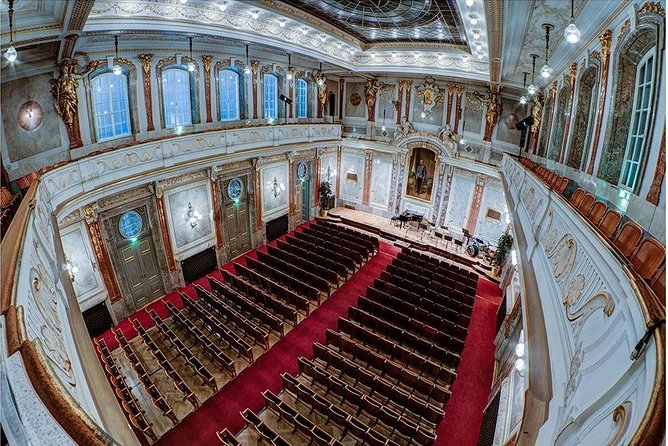
- The venue is part of the appeal: Haus der Industrie on Schwarzenbergplatz offers an ornate, grand setting near Vienna’s Ringstrasse.
- Bronze seats can be good value: Several performances have been enjoyable from less expensive sections, but rear seats may have poor sightlines.
- VIP and Gold seats are not automatically a bargain: Front seating can help you see the soprano and dancers, yet promised extras such as drinks or CDs have not always been supplied.
- Allow time to find the entrance: The stated redemption point is House of Industry, Schwarzenbergpl. 4, but some concert arrangements have used a church across the street.
- Check the timing carefully: The show is promoted as an after-dinner event, with an evening start listed around 8:00 or 8:30 p.m.
What kind of classical concert is this?
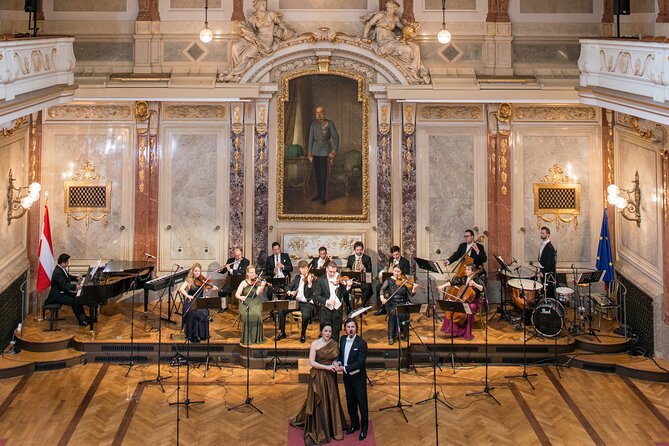
The Vienna Royal Orchestra is built from members and substitutes connected with major Viennese orchestras. The organization describes a pool of more than 150 artists, though the musicians onstage for a given performance may form a much smaller ensemble. One performance included 10 musicians, and it still filled the room with sound.
That distinction matters. If you want a large symphony orchestra performing a demanding Beethoven program, this may not be the right night for you. If you want a polished introduction to Vienna’s musical traditions, with recognizable tunes and visual variety, the format makes good sense.
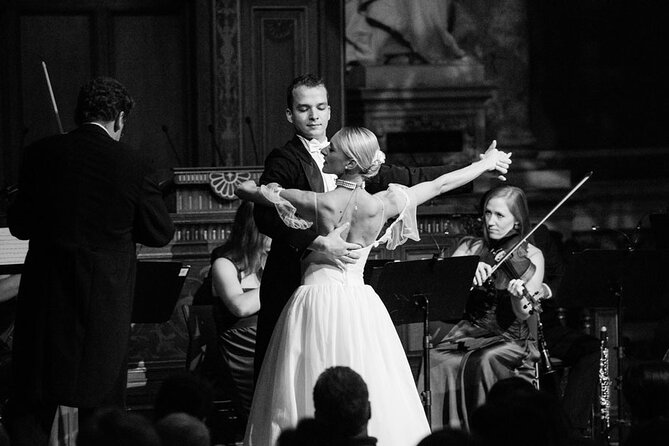
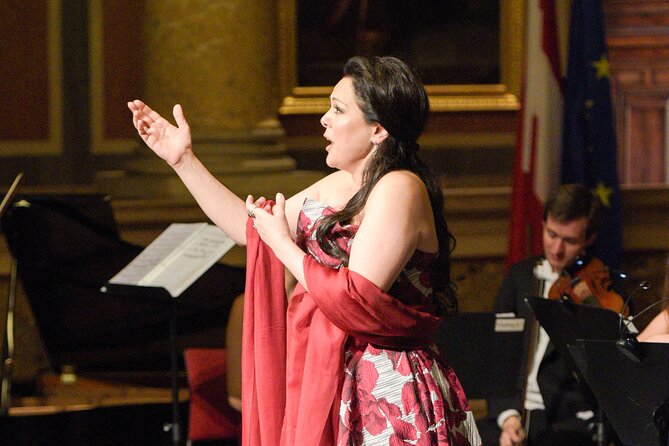
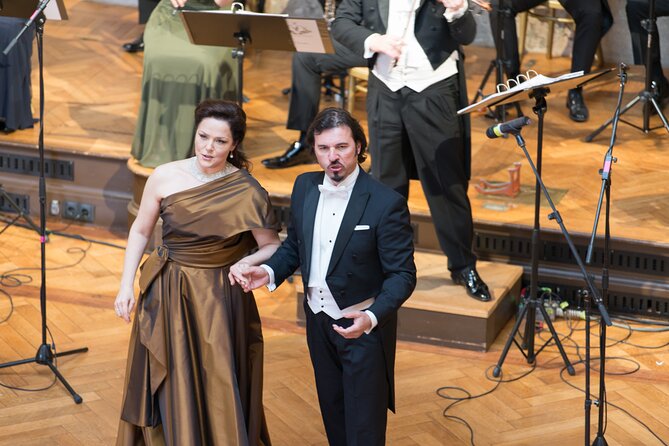
The music is generally chosen for broad appeal. You might hear Vivaldi beside Mozart, then a Strauss waltz or polka. Opera and ballet add color without asking you to understand a full opera plot or a long dance production. A soprano may perform two pieces, while a pair of dancers appears during selections such as the Hungarian Dance or The Blue Danube.
The conductor may invite clapping or other audience participation. The Radetzky March is a natural finale, and the familiar rhythm gives the evening a cheerful finish. This is classical music presented as a social night out, not as a solemn examination.
A few more trips of this kind worth comparing:
- Vienna: Vivaldi’s Four Seasons Concert in Karlskirche
★ 4.7 · 14,951 reviews - Vienna: Spanish Riding School Training
★ 3.9 · 9,281 reviews - Vienna: Skip-the-cashier-desk-line Giant Ferris Wheel Ride
★ 4.5 · 7,859 reviews
Entering Haus der Industrie on Schwarzenbergplatz
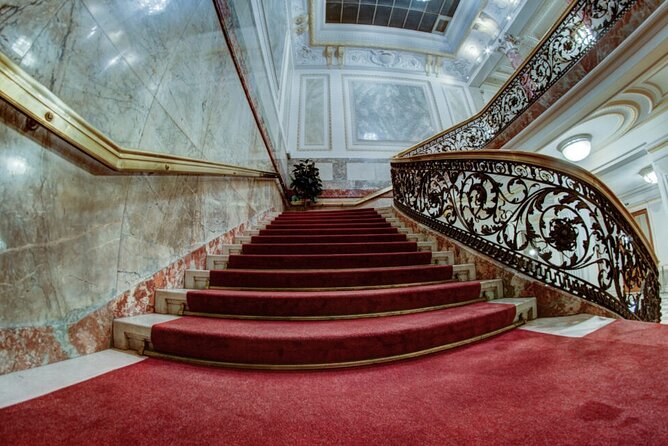
The venue is Haus der Industrie, at Schwarzenbergpl. 4 in Vienna’s 1030 district. Its grand rooms and ornate decoration help create the sense of occasion. You are not simply walking into a plain modern hall, and the building gives you something to look at before and after the music.
The location is near public transportation, and one practical estimate puts the walk from a metro station at about 10 minutes. Since the show begins in the evening, I would arrive with enough time to orient yourself before the doors become busy. The building can be easy to miss if you are following only a voucher on your phone.
Here is the most important warning: the advertised ticket redemption point has not always matched the actual entrance used for a particular performance. Some ticket holders have found the concert and pickup point in a church across the street rather than inside Haus der Industrie. Others have spent 20 to 30 minutes searching outside in cold or windy weather.
Check the exact venue name and redemption instructions on the day of the concert. If the address seems vague, ask staff at nearby theaters or buildings rather than wandering around the entire square. This is the single biggest practical weakness of the experience.
The music: familiar, friendly, and theatrical
The strongest part of the evening is usually the performance itself. The concertmaster can become a real focal point, particularly during violin pieces. A memorable solo violin performance and an expressive concertmaster have been singled out as highlights, giving the music a personal spark beyond simply playing through a program.
The soprano and dancers make the event feel more like a small variety concert than a standard orchestral recital. The balance is not always perfect. One assessment found that the orchestra sometimes overpowered the singer, but other performances praised the soprano highly. Sound can depend on the room, the placement of the ensemble, and your seat.
The dancers are an extra touch rather than the main event. Their appearances during The Blue Danube and Hungarian Dance add movement and help younger audience members stay engaged. You should not book this expecting a full ballet production, but the short dance sections fit the relaxed format.
The program may also include seasonal material. A Christmas performance featured waltzes, polkas, and a pop song alongside classical selections. That kind of programming suits families and first-time concertgoers, though it may feel too light if you are seeking a serious specialist performance.
Why this works for first-time concertgoers
I would especially recommend this format if classical music is not normally part of your travel plans. The pieces are recognizable, the evening is not excessively long, and the opera and dance sections provide a change of pace. You do not need to know the names of every composer to follow the mood.
Families can also find it approachable. A family attending with children aged 12 and 15 enjoyed the combination of music, dancing, soprano performances, and audience interaction. Teenagers who might resist a long formal recital have more visual and theatrical variety here.
The concert also works well on your first night in Vienna. The 8:00 or 8:30 p.m. start leaves room for dinner first, and the program introduces several sounds strongly associated with the city. You hear Strauss waltzes, see dancers, and take part in a familiar encore. It is a pleasant way to begin a visit without committing to a full opera or a lengthy symphonic program.
For experienced classical listeners, expectations should be set more carefully. The musicians can be very good and energetic, but the appeal is the complete evening package rather than a rare, once-in-a-lifetime interpretation of a difficult work.
A completely different kind of day out in Vienna:
- Vienna: Schönbrunn Palace & Gardens Skip-the-Line Tour
★ 4.7 · 7,739 reviews - Vienna: Light of Creation Votive Church Immersive Light Show
★ 4.8 · 6,779 reviews - Vienna Spanish Riding School Guided Tour
★ 4.7 · 6,765 reviews - Vienna: Classical Concert in the World-Famous Musikverein
★ 4.6 · 6,673 reviews
Choosing between Bronze, Gold, and VIP seats
The seating decision deserves more attention than the price chart might suggest. The available categories range from moderate Bronze seats to Gold and VIP sections. At about $71.38 per person, the basic ticket can represent fair value for a two-hour performance in a handsome central venue, particularly if you enjoy the full program.
Front seating has a clear advantage: you can see the soprano, dancers, conductor, and musicians without as many heads in front of you. Gold ticket holders have described second-row seats as excellent, especially for watching the stage action.
But paying more does not solve every problem. The stage has been described as very low, and some sections are not raised above those in front. From the rear, performers can become hard to see, especially when someone tall sits directly ahead. One person found that anything beyond roughly the fifth or sixth row could make the stage difficult to watch, while others felt their seats offered a good view.
The mixed experience suggests a simple rule:
- Choose Gold or VIP if seeing the performers clearly is important to you.
- Choose Bronze if you mainly care about hearing the music and want to keep costs down.
- Do not pay extra solely for advertised refreshments or a CD unless you have confirmed that they are included and available that night.
- If you book a cheaper section, try to avoid the very back and arrive early enough to understand the layout.
Seat allocation has also caused frustration. One Gold booking reportedly placed people in seats assigned to someone else, resulting in seating farther back than expected. That does not appear to be the normal outcome, but it is another reason to keep your confirmation details available and address any problem before the performance begins.
VIP extras and the small additional costs
The VIP description may include a drink and CD, but these extras have not always been provided. At least one couple paid for VIP service and received neither a refreshment nor a CD. Another paid for VIP seats and found the front-row placement worthwhile, while still noting the missing extras.
There is also a compulsory coat-check charge of €1. Some people will consider that minor, especially in winter, but it can feel irritating when a premium ticket does not include it. Bring a euro and expect to check your jacket if the venue requires it.
The best way to judge VIP value is to treat it mainly as a seat-location purchase. If the front rows give you a better view of the soloist and dancers, the upgrade may be worthwhile. If the extras are your main reason for paying more, the value is less certain.
Timing, tickets, and avoiding a missed performance
The performance lasts about two hours. The experience is described as an 8:00 p.m. after-dinner event, while the meeting information gives an 8:30 p.m. start. Because those details do not fully match, use the start time printed on your current confirmation rather than relying on a general description.
The ticket redemption process should be simple in theory, but this is where the evening can go wrong. Some people arrived at Haus der Industrie with a mobile voucher that staff there would not accept. Others had the wrong address and missed the concert entirely. A few found the proper location only after asking nearby theater staff.
I would take these precautions:
- Save the complete confirmation on your phone, including the venue name and address.
- Check the exact entrance before leaving dinner.
- Arrive well before the stated start time, especially in winter.
- Keep the phone charged so you can display the voucher or contact the provider.
- Do not assume that the grandest building on Schwarzenbergplatz is automatically the ticket desk.
Confirmation is normally issued at booking. Most people can participate, and the venue is near public transportation, but clear directions matter more here than they would for a standard museum entrance.
Value at $71.38 per person
At roughly $71.38 per person, this is not the cheapest way to hear classical music in Vienna. You are paying for a performance, an atmospheric central venue, a convenient evening slot, and the addition of opera and dance. For a first taste of Vienna’s musical culture, that package can be worthwhile.
The value drops if your main goal is a large orchestra, perfect sightlines from every seat, or a formal concert by a major internationally known ensemble. The actual group onstage may be small, and the low stage can make distant seating frustrating. The program is also designed for broad entertainment, so serious classical listeners may want something more demanding.
For many people, the price makes sense as a special evening rather than as a pure music purchase. Dinner followed by Strauss, Mozart, a soprano, dancers, and a familiar Viennese march creates a complete night out. I would be more comfortable paying the standard rate than stretching for VIP based on uncertain extras.
Who will enjoy this most?
I would point this experience toward:
- First-time visitors who want an easy introduction to Viennese classical music
- Families with older children or teenagers
- Couples looking for a polished evening activity after dinner
- People who enjoy familiar melodies more than experimental or highly demanding programs
- Anyone who likes music with a little theater and audience participation
I would hesitate if you are sensitive to blocked views, expect a large symphony orchestra, or want a strictly serious concert environment. I would also hesitate if you cannot arrive early enough to sort out an unclear entrance.
The performances themselves have earned strong praise for enthusiasm, sound, the solo violin work, and the joyful atmosphere. The weakest points are not usually the musical idea. They are seat allocation, sightlines, coat-check charges, and confusing pickup directions.
Should you book the Vienna Royal Orchestra?
Yes, with sensible expectations. Book it for a friendly and entertaining Viennese music evening in an ornate setting, not for a grand symphony concert or guaranteed luxury treatment. I would choose a regular or Gold seat according to your budget, confirm the exact entrance, and arrive early.
If you want the safest value, Bronze can work when hearing the music matters most, but avoid assuming that every seat has the same view. If you care about the dancers and soprano, pay for a better section only when the price difference is reasonable and the seating arrangement is clear.
The music, familiar program, and cheerful atmosphere make this a good choice for first-time concertgoers. Just keep your expectations grounded, your directions handy, and one euro ready for the coat check.
FAQ
Where does the Vienna Royal Orchestra concert take place?
The stated venue is Haus der Industrie at Schwarzenbergpl. 4, 1030 Wien, Austria. Some performances have used a church across the street for ticket pickup and the concert, so check the exact venue details on your confirmation.
How long does the concert last?
The experience lasts approximately two hours.
What time does the concert begin?
The experience is promoted as an evening show around 8:00 p.m., while the meeting information lists 8:30 p.m. Check your booking confirmation for the correct start time.
What music can I expect?
The program may include works by Mozart, Vivaldi, and Strauss, along with waltzes, polkas, opera arias, ballet selections, seasonal pieces, and an audience-friendly encore.
Are singers and dancers part of the performance?
They can be. Performances have included a soprano and a pair of ballet dancers alongside the orchestra.
Are different seating categories available?
Yes. You can choose among categories such as Bronze, Gold, and VIP, depending on availability.
Is VIP seating worth the extra cost?
VIP or Gold seats can provide a better view, especially of the soprano and dancers. However, refreshments and CDs described as VIP benefits have not always been provided, so the upgrade is best judged mainly by seat location.
Is there a coat-check fee?
A compulsory coat check has been reported at €1.
Can I cancel for a full refund?
You can cancel at least 24 hours before the experience start time for a full refund. Cancellations or changes made less than 24 hours before the start are not accepted for a refund.
Just added around Vienna
- Mobile puzzle rally tour at the Vienna Central Cemetery★ 4.5 · 3 reviews
- 8 days European Highlights PRIVATE TOUR from Budapest including Budapest Vienna Prague and Bratislava★ 5.0 · 3 reviews
- RAXI (E-Rickschaw) big private Vienna tour★ 4.5 · 3 reviews
- Private Transfer from Vienna to Prague with 1 hour Stop in Kutna Hora★ 4.5 · 3 reviews
- Palais Lobkowitz Audio Guide Tour★ 4.0 · 3 reviews
- Private Tour from Vienna to Melk and Dürnstein★ 4.5 · 3 reviews
- Vienna: Designer Fashion Time Capsule Experience★ 5.0 · 3 reviews
- Vienna Sight & Gourmet Tour – individual private tour★ 4.5 · 3 reviews
Vienna Tours, compared.
Vivaldi’s Four Seasons Concert in Karlskirche
Read our review →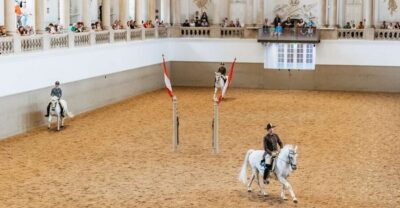
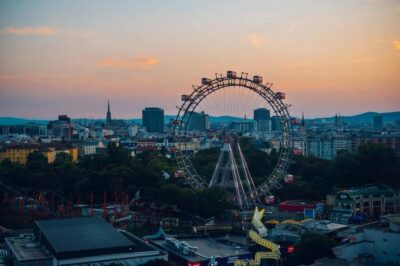
Skip-the-cashier-desk-line Giant Ferris Wheel Ride
Read our review →
Schönbrunn Palace & Gardens Skip-the-Line Tour
Read our review →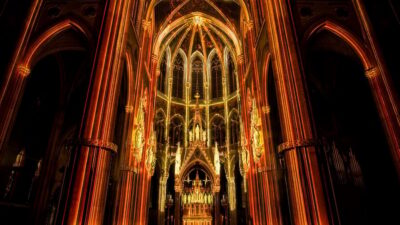
Light of Creation Votive Church Immersive Light Show
Read our review →
Classical Concert in the World-Famous Musikverein
Read our review →