
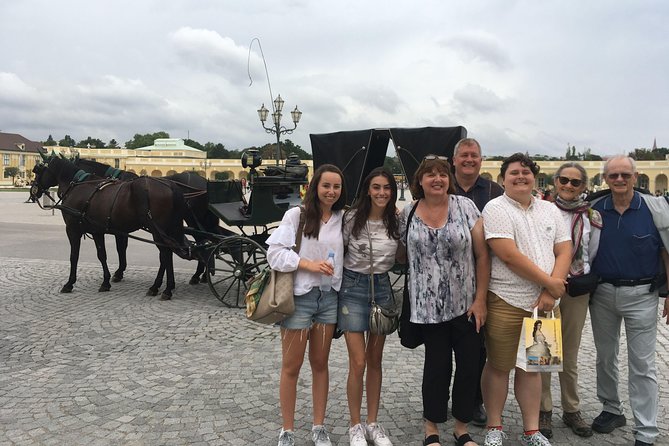
Reviewed · SCHöNBRUNN PALACE TOURS
Schönbrunn Palace and Gardens Tour
Imperial Vienna comes alive at Schönbrunn. This historian-led visit pairs the palace’s Rococo rooms with its formal gardens, the Gloriette viewpoint, and memorable stories about Maria Theresa, Franz Joseph, Sisi, and young Mozart. I especially like the small group of up to six people and the guides’ personal storytelling. I also like that guides such as Katarina, Biljana, Elisabeth, and Annelie adjust their pace and explanations to the group.
The main catch is price. At $181.41 per person, this is a serious splurge, and palace and park admission are not included. You are paying for expert attention and a carefully explained visit, not simply entry to Schönbrunn. Also, the advertised duration varies between about two and a half and three hours, so leave room in your schedule.
In This Review
- Key points at a glance
- Why Schönbrunn deserves a half-day
- Meeting at the palace and handling admission
- Walking the formal gardens to the Gloriette
- Entering the Rococo state rooms
- Maria Theresa’s rooms and the Millions Room
- The music room and the Mozart connection
- What the small group changes
- Is $181.41 a fair price?
- Choosing 10 a.m. or 2 p.m.
- Who should book this experience?
- Final recommendation: book it or skip it?
- FAQ
- How long does the Schönbrunn Palace and Gardens Tour last?
- What time does the tour begin?
- Is palace admission included in the tour price?
- Where does the tour start?
- Where does the tour end?
- How many people are in the group?
- Is the tour offered in English?
- Does the tour include the Schönbrunn gardens?
- Will I see the room where Mozart performed?
- Can I cancel for a full refund?
Key points at a glance
- Mozart’s six-year-old performance: Visit Maria Theresa’s music room, linked to the famous child prodigy’s performance before the imperial family.
- A very small group: The tour is described as limited to six people, with a maximum of eight in the additional information.
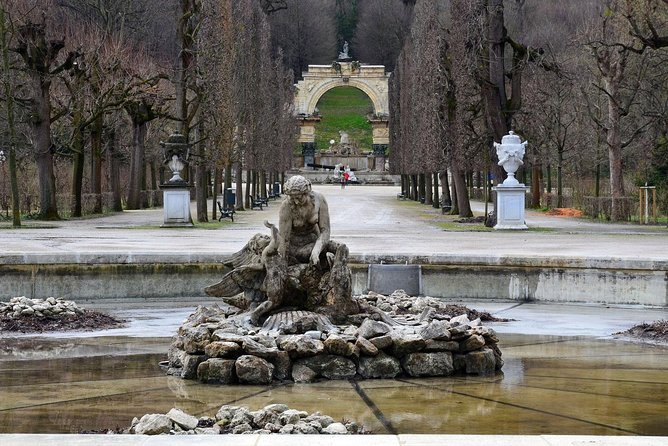
- Gardens and Gloriette views: Spend time outside among Baroque paths, formal plantings, and the hilltop triumphal arch overlooking Vienna’s woods.
- A historian guide: The strongest part of the experience is the human story behind the rooms, from Maria Theresa’s huge family to Sisi’s dislike of court life.
- Two departure options: Choose a 10 a.m. or 2 p.m. start, useful when fitting Schönbrunn around a day in Vienna.
- Ticket help, but not ticket cost: Your guide assists with buying palace and park admission, but you pay that charge separately.
Why Schönbrunn deserves a half-day
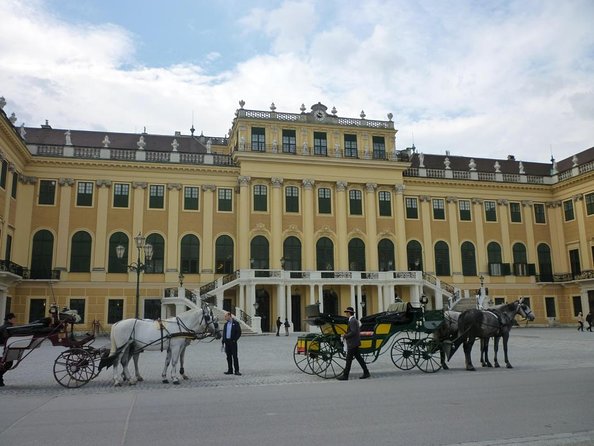
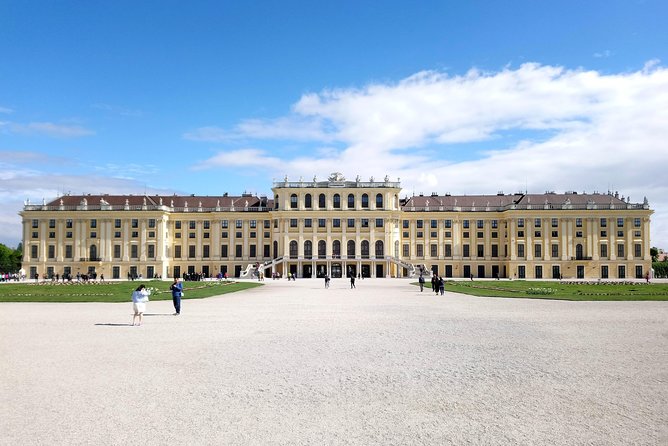
Schönbrunn was the Habsburg family’s summer residence and grew into one of the main centers of imperial court life. It was built on a scale meant to rival Versailles, though its appeal is not only size or decoration. The palace gives you a close look at how Austria’s rulers lived, worked, entertained, and managed family life.
I find Schönbrunn more revealing than a palace that presents only grand halls. Here you move between state rooms, private apartments, offices, children’s rooms, and spaces tied to music and ceremony. Each room has a job in the larger story.
The gardens add another layer. Maria Theresa opened the park to the public in 1779, an unusually shrewd gesture that made the imperial residence feel less sealed off from ordinary life. The grounds were also a family setting, where the emperor’s many children spent summers, faced illness, and experienced the losses that were common in royal families of the period.
The tour is a good fit if you want context instead of a quick walk through decorated rooms. An audio guide can identify objects and dates, but a good historian can explain why a room mattered and connect it to the people who used it.
More ways to see Schonbrunn:
- Vienna: Schönbrunn Palace & Gardens Skip-the-Line Tour
★ 4.7 · 7,739 reviews - Vienna: Skip-the-Line Schönbrunn Palace & Gardens Tour
★ 4.8 · 5,411 reviews - Vienna: Bus & Schönbrunn Palace Skip-the-Line Guided Tour
★ 4.3 · 2,802 reviews
Meeting at the palace and handling admission
You meet your guide and small group at the Group Center Schönbrunn, at Schloss, 1130 Wien, shortly before your selected start time. The meeting point is near public transportation, but one practical detail deserves attention: the brown building can be hard to identify from across the street.
Do not assume you need to walk straight to the main ticket office. The guide will help the group purchase the Schönbrunn Palace and Park tickets. Admission is not included in the tour price, so budget for it separately.
One especially important tip: follow the guide’s instructions before buying tickets on your own. A Vienna Card or separately purchased admission can create timing problems because the guide’s reservation may require the group to enter together. One person nearly missed the first hour after receiving a later entry time through a separate ticket purchase.
The tour is offered in English. Confirmation arrives at booking, and the activity is near public transportation. Most people can participate, but you should be ready for outdoor walking in the gardens and standing or walking through the palace at a measured pace.
Walking the formal gardens to the Gloriette
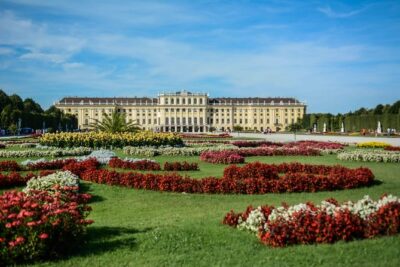
The garden portion begins with about 30 minutes among Schönbrunn’s formal Baroque grounds. This is not simply a stroll past flowers. The guide explains how the gardens use straight paths, ordered plantings, and views toward architecture to create a sense of control and ceremony.
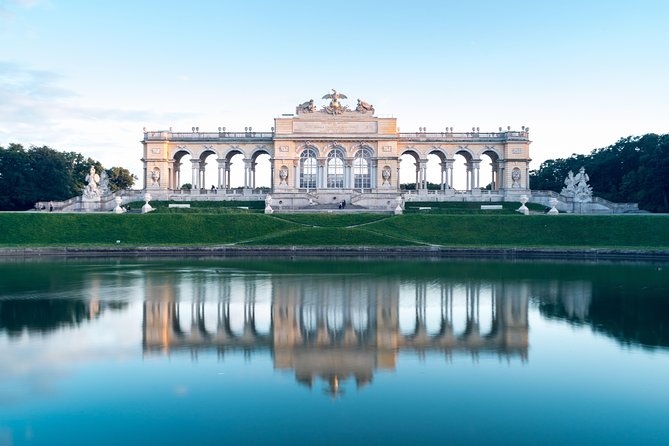
The Gloriette is the visual goal. This large triumphal arch sits on a hill above the palace and looks toward Vienna’s woods. Its position gives you the classic Schönbrunn view, with the palace below and the park arranged as part of one grand composition.
The guide connects the Gloriette to Maria Theresa’s military victories and to the period when her reign made the Habsburg court a major political and cultural force in Europe. That connection helps the garden feel less decorative and more political. The palace and its grounds were designed to show power.
The gardens are particularly enjoyable in good weather and remain attractive in autumn, when the formal structure matters as much as the flowers. Winter is a different proposition. One participant skipped the gardens because of the cold and lack of flowers, while another still found the grounds impressive. If you visit in winter, set your expectations around views, paths, and architecture rather than seasonal color.
There is one potential weakness here. The garden explanation may feel brief compared with the palace portion. Make sure you know where the guide wants you to go and what you are meant to see. If gardens are a major reason for booking, ask for clear direction at the beginning.
Entering the Rococo state rooms
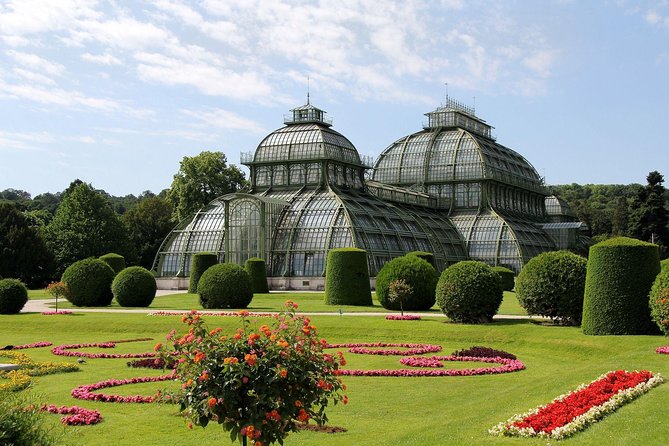
The interior visit takes you through the lavish rooms associated with several generations of Habsburg rulers. The Franz Joseph and Elisabeth apartments offer a more personal story than the formal state rooms alone.
Franz Joseph married Bavarian princess Elizabeth in 1854. She became known as Sisi and disliked the strict rituals of court life and the ornate surroundings of Schönbrunn. The rooms help you understand the strain between a ruler tied to duty and a wife who resisted the demands of the imperial household.
The dining room recalls formal state dinners, with precious tableware and the famous imperial napkins folded in a fleur-de-lis design. The Hall of Ceremonies shows the public side of court life, including grand celebrations and the wedding of Crown Prince Joseph, recorded in paintings by court artist Martin van Meytens.
The Yellow Salon and Franz Joseph’s private suite bring you closer to daily routine, though the palace never fully leaves ceremony behind. Even private rooms existed within a demanding system of rank, etiquette, and service.
The guide’s role matters greatly in these rooms. The best explanations do not stop at this is beautiful. They tell you who used the room, what happened there, and how the decoration reflected status. Guides such as Biljana and Katarina received especially strong praise for making the palace’s timelines and personalities easy to follow.
A few more trips of this kind worth comparing:
- Vienna: Vivaldi’s Four Seasons Concert in Karlskirche
★ 4.7 · 14,951 reviews - Vienna: Spanish Riding School Training
★ 3.9 · 9,281 reviews - Vienna: Skip-the-cashier-desk-line Giant Ferris Wheel Ride
★ 4.5 · 7,859 reviews - Vienna: Light of Creation Votive Church Immersive Light Show
★ 4.8 · 6,779 reviews
Maria Theresa’s rooms and the Millions Room
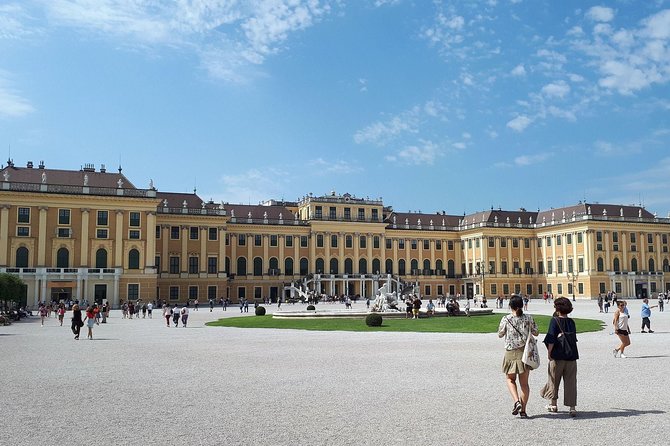
Maria Theresa is the central figure for understanding Schönbrunn. She ruled from 1740 to 1780 and helped turn the palace into the family and political center it became.
Her household included 16 children, though not all reached adulthood. That fact changes how you read the palace. Behind the gold, mirrors, and ceremony was a crowded family world of births, childhood illnesses, summer activities, marriages, and early deaths.
The Hall of Ceremonies and Gobelin Salon show the formal side of her court. The Feketin Room and the so-called Porcelain Room offer more intimate details. The Porcelain Room served as Maria Theresa’s office and was decorated to imitate precious china, with drawings made by her children. It is a useful reminder that the imperial family did not only live among official portraits and stiff ceremonies. They also filled their surroundings with personal projects and family amusements.
The Millions Room is one of the most visually striking spaces. Its name refers to the extraordinary sum paid for its decoration in gold ducats. Indo-Persian miniatures, Rococo frames, and carved rosewood from the Antilles combine European and Oriental design in a room meant to signal wealth and global reach.
You will see many rooms in a short period, reportedly around 40. That is a strength if you want a broad picture of the palace, but it can also feel like a lot to absorb. A guide who controls the pace makes the difference. Biljana was praised for slowing down appropriately for older visitors, while other guides brought photos, maps, drawings, and extra material to clarify the story.
The music room and the Mozart connection
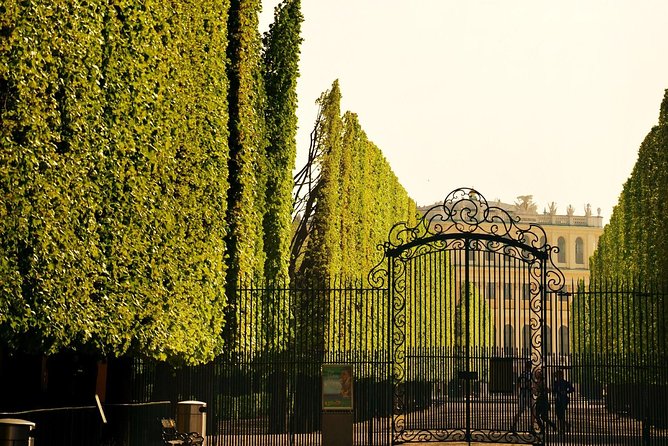
The music room is the emotional high point for many people. This is where six-year-old Wolfgang Amadeus Mozart performed before royalty.
The room itself is part of a much larger story about how the Habsburg court used music. Mozart’s appearance links the palace to Vienna’s musical identity, but it also shows how royal households displayed talent and cultivated prestige.
Do not expect a concert. The value is the setting and the explanation. A guide can point out why the performance mattered, who was present, and how a child prodigy fit into the court culture of the time.
This is also where a personal guide is more useful than a recorded narration. You can ask questions, linger over the connection, or move on if your group is more interested in architecture. The tour’s strength is not only the room itself, but the way the guide turns a familiar name into a moment in the palace’s life.
What the small group changes
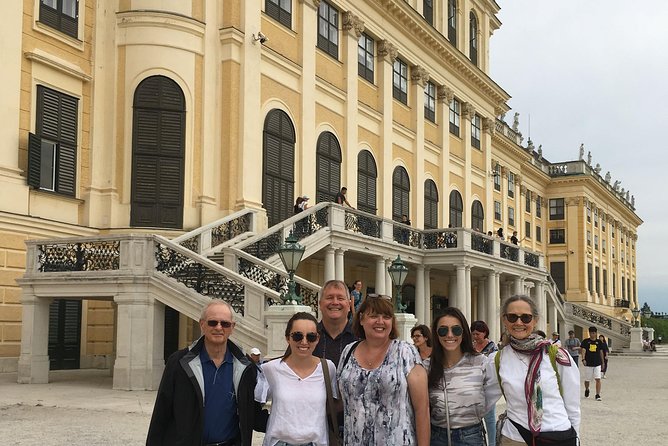
The tour’s small-group format is one of its best features. The stated limit is six people, though the additional information gives a maximum of eight. Either way, this is far more intimate than a large sightseeing group.
A small group lets you hear the guide more easily, ask questions, and move at a pace that suits the people present. Several guides were praised for being friendly, patient, and attentive to individual interests. Annelie reportedly asked about interests at the start and adjusted the emphasis accordingly.
Some departures may feel nearly private. One booking had only two participants, turning the experience into something close to a private tour without the usual private-tour format.
There is one hearing-related caution. One person found the guide difficult to hear inside the busy palace and felt an audio tour would have been more useful. The experience is built around spoken explanation, so tell the guide early if you need a louder voice or a position closer to the front.
Is $181.41 a fair price?
The price is high for a two-and-a-half to three-hour experience, especially since palace and park admission cost extra. If you mainly want to enter Schönbrunn, take photos, and walk through the rooms at your own speed, this tour may not offer enough value.
I see the price differently if Schönbrunn is a major reason for your visit. You are paying for a tiny group, a historian guide, help with ticket timing, and a story that links architecture, family life, court politics, art, and music.
The value is strongest for first-time visitors who want to understand what they are seeing. It is also a reasonable choice for older visitors or families who benefit from a flexible pace and direct answers. Some guides add practical Vienna advice, including restaurant suggestions, local dishes, cafés, and other places to visit.
The price is harder to justify for repeat visitors who already know Habsburg history or prefer independent exploration. You should also remember that the tour ends inside the palace, leaving you free to spend the rest of the day elsewhere. That makes the paid guide time easy to combine with another Vienna plan.
Choosing 10 a.m. or 2 p.m.
The 10 a.m. departure gives you a full afternoon after Schönbrunn. That works well if you want to return to central Vienna, visit another museum, or enjoy a long meal.
The 2 p.m. departure leaves your morning open and places the palace visit later in the day. It may suit you if you prefer a slower start or have another central Vienna activity planned first.
Because the duration is described both as approximately two hours and 30 minutes and as three hours, do not schedule a tight connection immediately afterward. The garden walk, ticket purchase, palace entry, and questions can affect the finish time.
Who should book this experience?
I would recommend it most strongly to:
- First-time visitors to Vienna who want the Habsburg story explained clearly
- People who prefer personal guidance to an audio tour
- Families with older children or young adults who need stories, not just room names
- Older visitors who appreciate a guide willing to adjust the pace
- Visitors especially interested in Maria Theresa, Sisi, Franz Joseph, or Mozart
- Anyone who wants both palace interiors and the main garden viewpoint
I would be more cautious if you dislike guided visits, have already studied Schönbrunn in detail, or mainly want unstructured time in the park. The garden portion is shorter than the palace portion, and winter visitors may find the outdoor section less rewarding.
Final recommendation: book it or skip it?
Book this tour if you want Schönbrunn to make sense, not merely look impressive. The palace is beautiful on its own, but the experience becomes much more memorable when someone explains Maria Theresa’s family life, Franz Joseph’s routine, Sisi’s resistance to court, the purpose of each room, and Mozart’s appearance.
I would skip it if the $181.41 price feels uncomfortable once admission is added, or if you are happy with a self-guided visit. For everyone else, the small group and consistently strong guide performance make this one of Vienna’s better choices for learning the story behind the decoration.
Pay attention to the meeting point, do not buy separate palace tickets before speaking with the guide, and leave extra time around the tour. Those small steps help protect the value of an expensive but unusually personal Schönbrunn visit.
FAQ
How long does the Schönbrunn Palace and Gardens Tour last?
The experience lasts approximately two hours and 30 minutes, though it is also described as a three-hour tour. Plan for roughly half a day rather than scheduling something immediately afterward.
What time does the tour begin?
You can choose between a 10 a.m. and a 2 p.m. departure.
Is palace admission included in the tour price?
No. Schönbrunn Palace and Park admission are separate. The guide assists you with purchasing the required entrance tickets.
Where does the tour start?
The meeting point is the Group Center Schönbrunn at Schloss, 1130 Wien, Austria.
Where does the tour end?
The activity ends inside the palace, back at the meeting point area, leaving you free to continue your day.
How many people are in the group?
The tour is described as limited to six people, while the additional information gives a maximum of eight travelers.
Is the tour offered in English?
Yes. The tour is offered in English.
Does the tour include the Schönbrunn gardens?
Yes. The visit begins with a walk through the formal gardens and includes views toward the Gloriette. Garden admission is not included in the tour price.
Will I see the room where Mozart performed?
Yes. The tour visits Maria Theresa’s music room, where six-year-old Mozart performed before royalty.
Can I cancel for a full refund?
Yes, if you cancel at least 24 hours before the experience begins. Cancellations made less than 24 hours in advance are not refunded, and changes within that period are not accepted.
Just added around Vienna
- Mobile puzzle rally tour at the Vienna Central Cemetery★ 4.5 · 3 reviews
- 8 days European Highlights PRIVATE TOUR from Budapest including Budapest Vienna Prague and Bratislava★ 5.0 · 3 reviews
- RAXI (E-Rickschaw) big private Vienna tour★ 4.5 · 3 reviews
- Private Transfer from Vienna to Prague with 1 hour Stop in Kutna Hora★ 4.5 · 3 reviews
- Palais Lobkowitz Audio Guide Tour★ 4.0 · 3 reviews
- Private Tour from Vienna to Melk and Dürnstein★ 4.5 · 3 reviews
- Vienna: Designer Fashion Time Capsule Experience★ 5.0 · 3 reviews
- Vienna Sight & Gourmet Tour – individual private tour★ 4.5 · 3 reviews
Schönbrunn Palace Tours, compared.

Schönbrunn Palace & Gardens Skip-the-Line Tour
Read our review →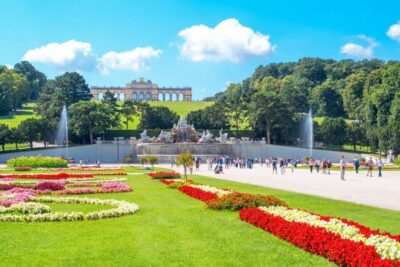
Skip-the-Line Schönbrunn Palace & Gardens Tour
Read our review →
Bus & Schönbrunn Palace Skip-the-Line Guided Tour
Read our review →
Skip the Line Schönbrunn Palace and Gardens Guided Tour
Read our review →
Schönbrunn Palace & Garden Skip-the-Line Guided Tour
Read our review →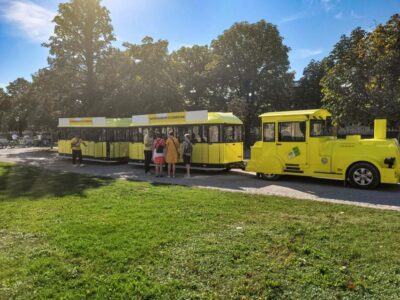
Panorama Train Tickets to explore Schönbrunn Palace
Read our review →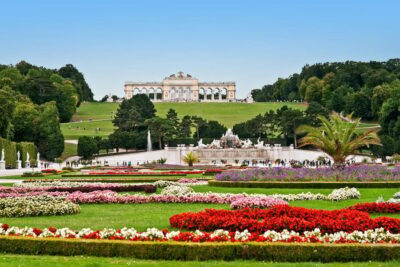
Skip-the-Line Schönbrunn Palace and Gardens Tour
Read our review →Browse the lists this tour appears in