
Reviewed · SCHöNBRUNN PALACE TOURS
Schönbrunn Palace & Gardens Tour
The palace is only half the story. This 150-minute tour pairs Schönbrunn’s formal gardens with the rooms where Maria Theresa shaped Habsburg court life, giving you both grand views and useful historical context. I especially like the walk toward the Gloriette and the chance to see the unusual Millions Room, a Rococo showpiece filled with Indo-Persian miniatures. The main drawback is price: at $176 per person, palace and park admission costs extra, so this makes the most sense if you value a private or small-group guide.
I also like the guide’s academic background and the way the tour handles crowded rooms. Katarina, praised in several bookings, met one group in central Vienna, rode the metro with them, and kept finding quiet corners for explanations. You should also clarify the Jewish Quarter portion when booking, since the detailed route focuses on Schönbrunn and does not clearly place that stop.
In This Review
- Key points to know before booking
- Why Schönbrunn needs more than a quick photo stop
- The 30-minute walk through Schönbrunn Gardens
- Maria Theresa’s Schönbrunn and a family of 16 children
- The Millions Room and its unusual decoration
- Franz Joseph, Sisi, and the palace’s private tensions
- The Jewish Quarter connection needs a clear question
- Price, tickets, and what the $176 buys you
- Meeting point, pickup, and group choices
- Who should book this Schönbrunn tour?
- Should you book it?
- FAQ
- How long does the Schönbrunn Palace and Gardens Tour last?
- What does the tour include?
- Does the guide help with palace tickets?
- Where does the tour meet?
- Is hotel pickup available?
- What language is the tour offered in?
- Are private tours available?
- Can I cancel for a refund?
- Can I reserve the tour without paying immediately?
Key points to know before booking
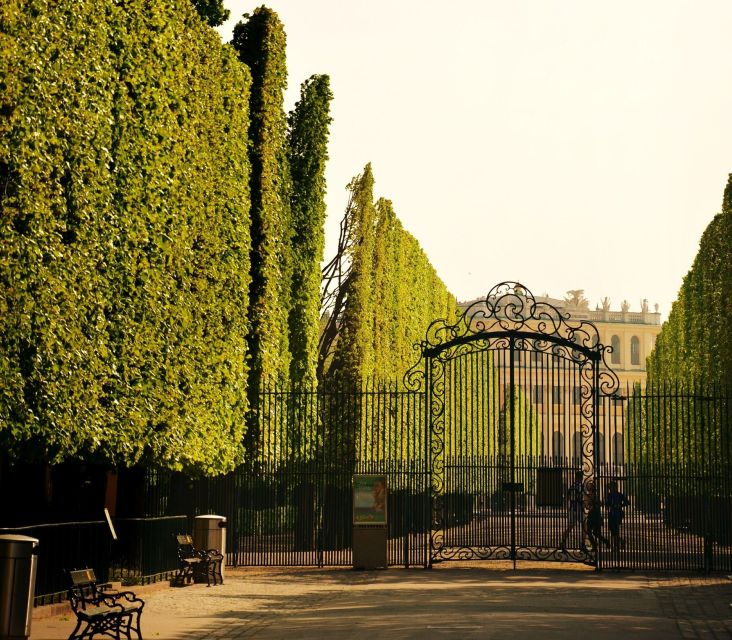
- The tour begins with 30 minutes in the formal gardens, including the walk toward the hilltop Gloriette and its Vienna views.
- Two hours inside the palace cover Maria Theresa’s Porcelain Room, the Franz Joseph and Elisabeth Apartments, and the Rococo Millions Room.
- The guide helps you purchase the entrance tickets, but admission is not included in the $176 price.
- Private and small-group options are available, with optional hotel pickup for private tours.
- The guides come from academic and cultural fields, including professors, doctoral students, historians, journalists, art critics, and published authors.
- The Jewish Quarter stories need clarification, since they are advertised among the highlights but are not fully explained in the stated Schönbrunn route.
Why Schönbrunn needs more than a quick photo stop
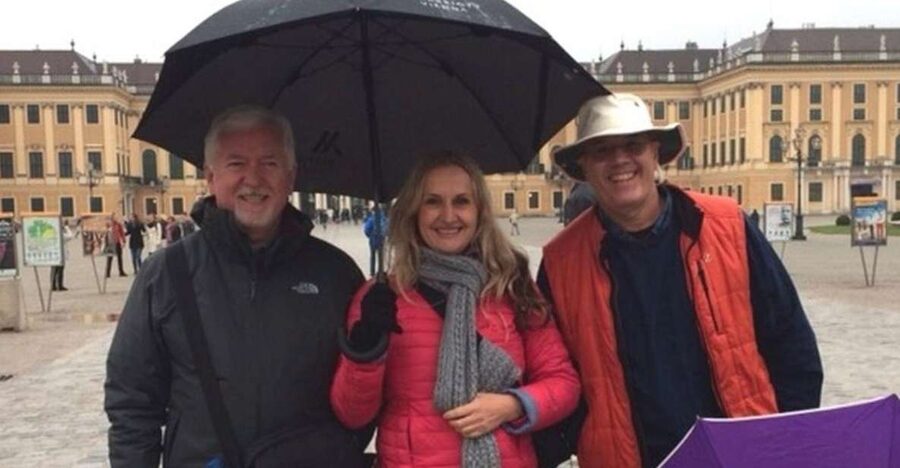
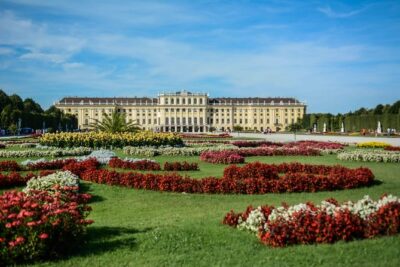
Schönbrunn can look simple from the outside: a long yellow palace, a broad forecourt, and a steady flow of people heading toward the entrance. Yet the place works best when you understand how the gardens, palace, and imperial family fit together.
The palace was built in the High Baroque style to rival Versailles. That comparison helps explain the scale. Schönbrunn was not simply a summer house for a wealthy family. Under Empress Maria Theresa, it became a center of court life and a key setting for Austria’s political and cultural power.
Your guide’s job is to connect the grand rooms to the people who used them. That matters here because the decoration can easily blur into a parade of gold trim, portraits, chandeliers, and polished floors. With a good explanation, the palace becomes less about luxury alone and more about duty, marriage, family, image, and power.
The tour also gives you a useful contrast between two imperial generations. Maria Theresa used Schönbrunn as a stage for dynastic strength. Emperor Franz Joseph and his wife Elisabeth, known as Sisi, reveal a more private side of court life, including the strain caused by endless official ritual.
More ways to see Schonbrunn:
- Vienna: Schönbrunn Palace & Gardens Skip-the-Line Tour
★ 4.7 · 7,739 reviews - Vienna: Skip-the-Line Schönbrunn Palace & Gardens Tour
★ 4.8 · 5,411 reviews - Vienna: Bus & Schönbrunn Palace Skip-the-Line Guided Tour
★ 4.3 · 2,802 reviews
The 30-minute walk through Schönbrunn Gardens
The outdoor portion begins in the formal gardens and takes about 30 minutes. You are introduced to the Baroque idea that nature and architecture should work together rather than appear as separate features.
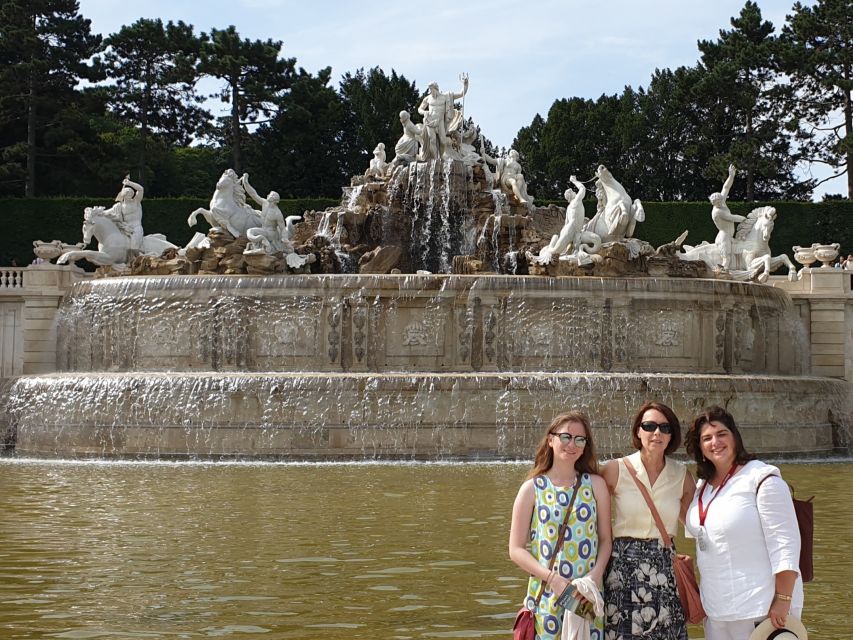
That approach is easy to see at Schönbrunn. Long paths, clipped plantings, fountains, sculptural details, and the palace axis guide your eye through the grounds. The gardens are not just a pleasant prelude to the palace. They were designed to present imperial order in visual form.
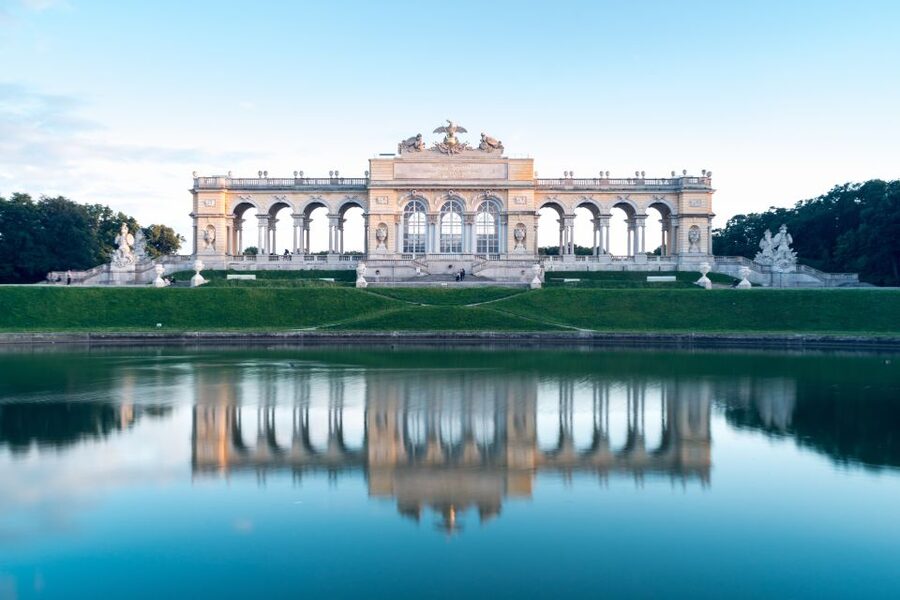
The walk toward the Gloriette is the key moment. This enormous triumphal arch sits on a hill above the palace, and the route gives you a broader view of Vienna’s woods. The setting helps you understand the palace as a carefully planned statement of authority. From the palace, the garden stretches outward. From the Gloriette, the entire arrangement comes into view.
Your guide also explains the military victories associated with Maria Theresa’s reign. This adds useful context to the architecture. The imperial family wanted visitors to see success, stability, and control, not merely a comfortable country residence.
One especially telling detail is that Maria Theresa opened the park to the public in 1779. That gesture made the imperial setting more accessible and also helped present the ruler as connected to ordinary people. It was a smart public-relations move, and it gives the gardens a political meaning beyond their beauty.
The main practical issue is time. Thirty minutes is enough for an introduction and the important view toward the Gloriette, but not enough for every path, fountain, and corner of the park. If gardens are your main interest, plan separate time at Schönbrunn after the guided tour.
Maria Theresa’s Schönbrunn and a family of 16 children
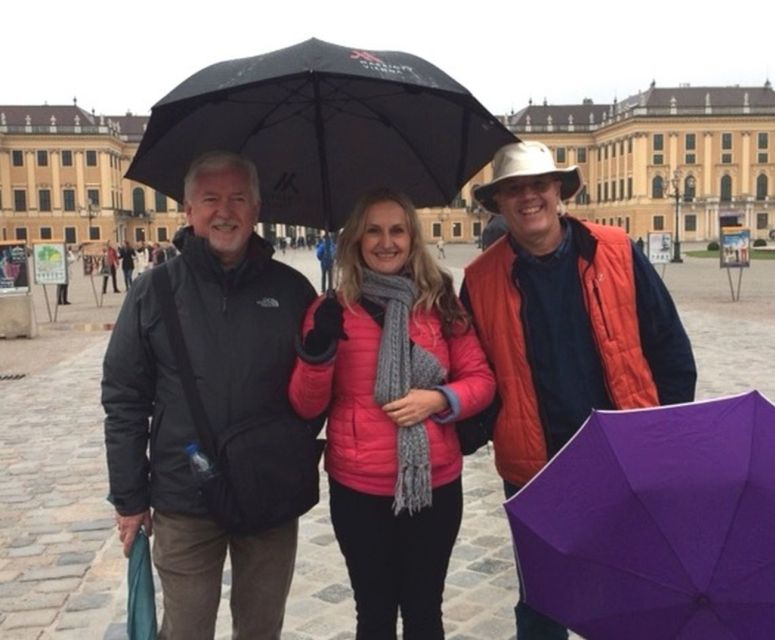
Inside, the tour focuses on the palace’s role during Maria Theresa’s reign. She and her husband had 16 children, and Schönbrunn became the summer base for a large ruling family as well as a working court.
That family scale changes how you read the rooms. The palace was not a quiet retreat. It was a place of ceremonies, meetings, family negotiations, education, and political planning. Maria Theresa’s personal direction helped make Schönbrunn a center of Habsburg policy.
The Porcelain Room is one of the most personal stops. It served as Maria Theresa’s office, which makes it more interesting than a room viewed only for decoration. Its purpose reminds you that administration took place amid elaborate surroundings. The empress was not simply passing through these rooms as a ceremonial figure. She worked here.
I find this kind of detail more useful than a long list of room names. It tells you how power operated inside the palace. A ruler could move from private work to formal representation without leaving the imperial setting.
The guide’s historical framing is particularly valuable in these rooms. Several bookings praise Katarina for connecting the palace to wider Vienna and Habsburg history, not just repeating facts about furniture. One group also appreciated that she kept moving them through the crowds and found small spaces where the guide could speak without being drowned out by palace traffic.
That approach matters because Schönbrunn is a popular sight. Even a well-planned visit can include people gathering around doorways and listening to several guides at once. A private or small group gives the guide more control over the pace and makes it easier to ask questions.
The Millions Room and its unusual decoration
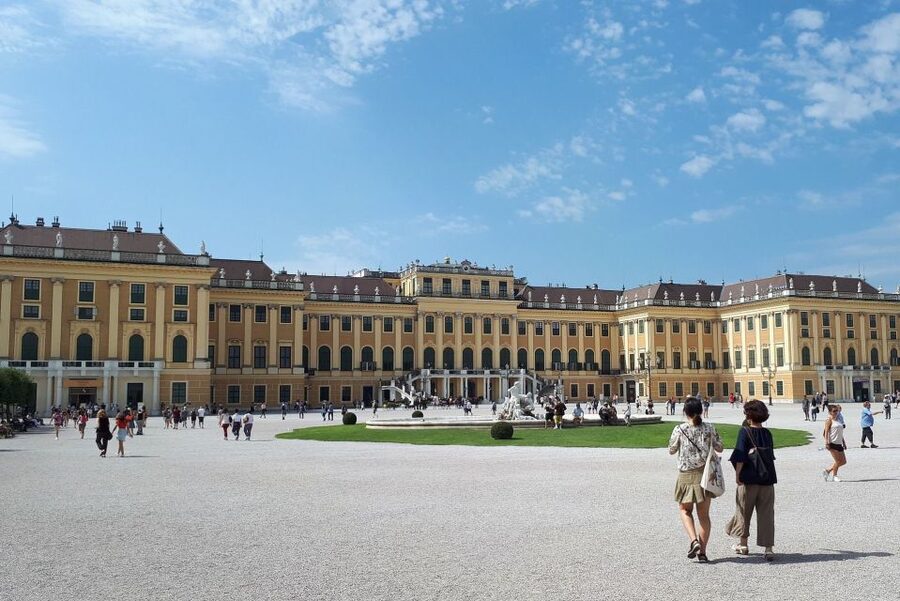
The Millions Room is the palace’s most distinctive interior on this route. Its name comes from its enormous cost, and the room earns attention through an unusual mix of European Rococo design and Asian decorative art.
Look for the antique Indo-Persian miniatures set into Rococo frames. The carved rosewood wall coverings came from the Antilles. These elements were brought together to create an interior that reflects the collecting habits, trade networks, and taste of the imperial court.
The room is valuable because it does not fit a simple European palace template. You are not looking at one uniform style. Instead, the room combines objects and materials from far beyond Vienna with fashionable Rococo forms.
A guide can make this stop much more rewarding by explaining what you are seeing before you get close to the details. Without context, the room may register as another lavish interior. With context, the materials and design choices tell you something about wealth, global exchange, and the way the court displayed status.
This is also a good example of why the guide’s credentials matter. The tour is designed around historians, professors, doctoral students, journalists, art critics, and published authors. That does not guarantee that every guide will suit every listener, but it suggests a stronger focus on interpretation than on simple room-by-room commentary.
A few more trips of this kind worth comparing:
- Vienna: Vivaldi’s Four Seasons Concert in Karlskirche
★ 4.7 · 14,951 reviews - Vienna: Spanish Riding School Training
★ 3.9 · 9,281 reviews - Vienna: Skip-the-cashier-desk-line Giant Ferris Wheel Ride
★ 4.5 · 7,859 reviews - Vienna: Light of Creation Votive Church Immersive Light Show
★ 4.8 · 6,779 reviews
Franz Joseph, Sisi, and the palace’s private tensions
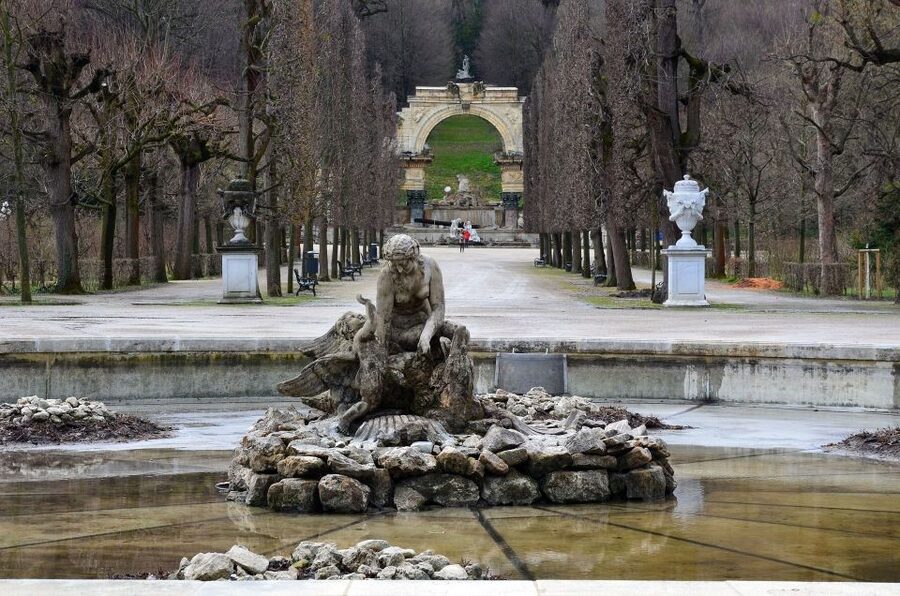
The Franz Joseph and Elisabeth Apartments shift the mood. Emperor Franz Joseph married the Bavarian princess Elisabeth in 1854. She became widely known as Sisi, and her relationship with court life gives these rooms a more human edge.
Sisi disliked the strict rituals and formal environment of the summer palace. The story becomes especially vivid through the spiral staircase she commissioned. It led from her official rooms toward a private entrance, allowing her to escape the palace and reach the gardens.
That detail does more than provide a memorable anecdote. It shows the difference between the public image of an empress and the private needs of the woman living inside that image. You see ornate rooms designed for ceremony, then hear how Sisi tried to get away from them.
The palace interiors can feel repetitive if you approach them as a sequence of decorated rooms. The family stories prevent that. Maria Theresa’s rooms suggest work and dynastic purpose. Sisi’s staircase suggests resistance and personal space. Franz Joseph’s apartments point to the heavy demands of governing.
Katarina received especially warm praise for bringing these subjects to life with anecdotes and for welcoming questions. That personal style is one of the stronger reasons to choose a guided visit instead of simply walking through with your own audio material.
Still, you should know what this tour is not. It is not a leisurely, private wander through empty rooms. The palace remains a major Vienna attraction, and the tour must work around other groups and the flow of people inside. The advantage of a guide is not solitude. It is having someone help you focus.
The Jewish Quarter connection needs a clear question
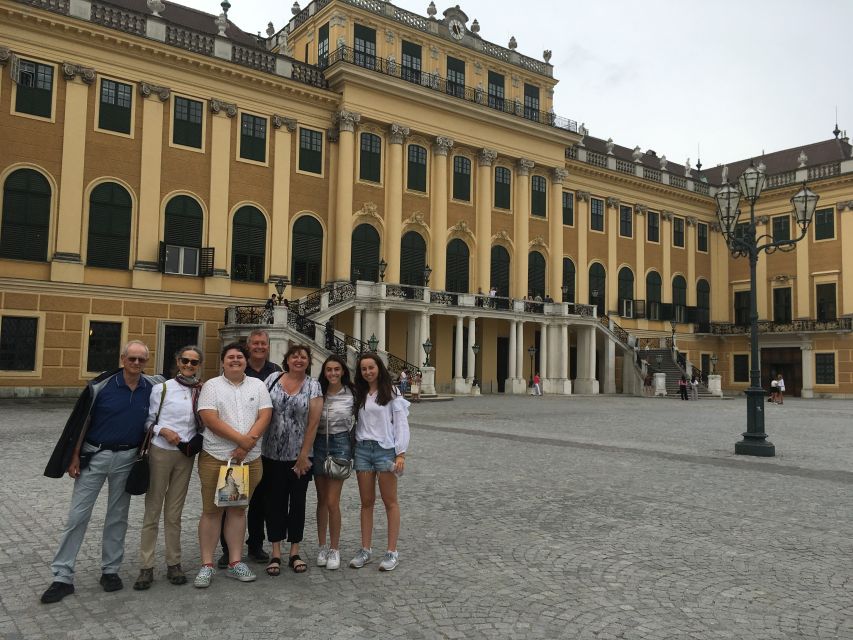
The experience includes stories about Vienna’s Jewish Quarter and the period of the Jewish ghetto among its stated highlights. That subject could add an important layer to a visit focused mainly on imperial power, because Vienna’s court life existed alongside communities whose lives were shaped by different rules and restrictions.
However, the detailed route provided for this experience lists the Schönbrunn Gardens and Schönbrunn Palace only. It does not identify a separate Jewish Quarter stop or explain how that material fits into the 150 minutes.
I would ask about this before paying. If the Jewish Quarter is an actual walking segment, you need to know when it takes place and how it connects with the palace visit. If it is historical commentary included during the Schönbrunn tour, you may want to understand how much time is devoted to it.
This is not a reason to reject the tour. It is simply a point that deserves a direct answer, especially if Jewish Vienna is one of your main interests.
Price, tickets, and what the $176 buys you
The listed cost is $176 per person, and the entrance fee for Schönbrunn Palace and Park is not included. Your guide helps you purchase the tickets, and the tour offers skip-the-ticket-line access, but you should still budget for admission on top of the advertised rate.
That makes this an expensive palace visit. You are paying mainly for the guide, the route planning, and the private or small-group format rather than for entry alone.
The value is strongest for you if:
- You want detailed explanations instead of a quick look at the rooms.
- You prefer asking questions as you go.
- You want help handling the crowds and keeping the visit moving.
- You are interested in Maria Theresa, Sisi, imperial politics, or decorative arts.
- You choose a private tour and make use of the optional pickup.
The value is weaker if you only want to see the palace interiors and gardens at the lowest possible cost. In that case, buying admission directly and exploring at your own pace may suit you better.
The 2.5-hour length is well chosen for a first visit. The 30-minute garden walk gives you the main outdoor context, while the two-hour palace tour leaves enough time for the major rooms and family stories. You should not expect a full exploration of every part of the grounds.
Meeting point, pickup, and group choices
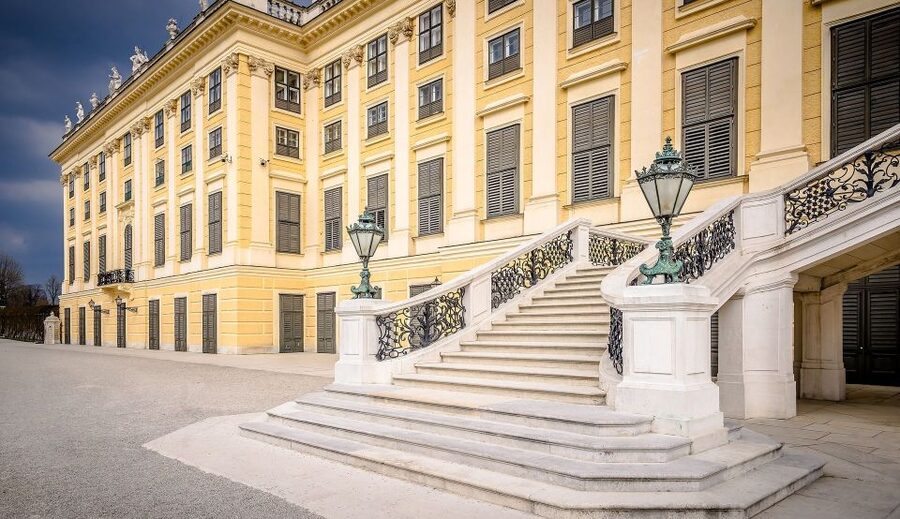
The standard meeting point is the Schönbrunn Arrival Centre at Schönbrunner Schloßstrasse 50. Your guide waits in front of the Group Centre Building, directly across from the palace’s main entrance.
That location is worth noting because the building is across the street, not inside the palace entrance itself. Give yourself enough time to identify the Group Centre before the start.
Private tours can include pickup from a central hotel, holiday flat, or another agreed meeting place. You then travel with your guide to Schönbrunn on Vienna’s metro. This is a practical option if you want to avoid finding the meeting point, though it is offered with the private tour rather than as a general feature for every booking.
Small groups offer a middle ground. You get a more personal setting without the full cost of a one-to-one guide. Group size can affect how easily you hear explanations and how often you can ask questions, so check the selected option carefully.
The tour is offered in English, with a live guide. The cancellation policy allows a full refund when you cancel at least 24 hours in advance, and you can reserve now and pay later, which helps if your Vienna schedule is still changing.
Who should book this Schönbrunn tour?
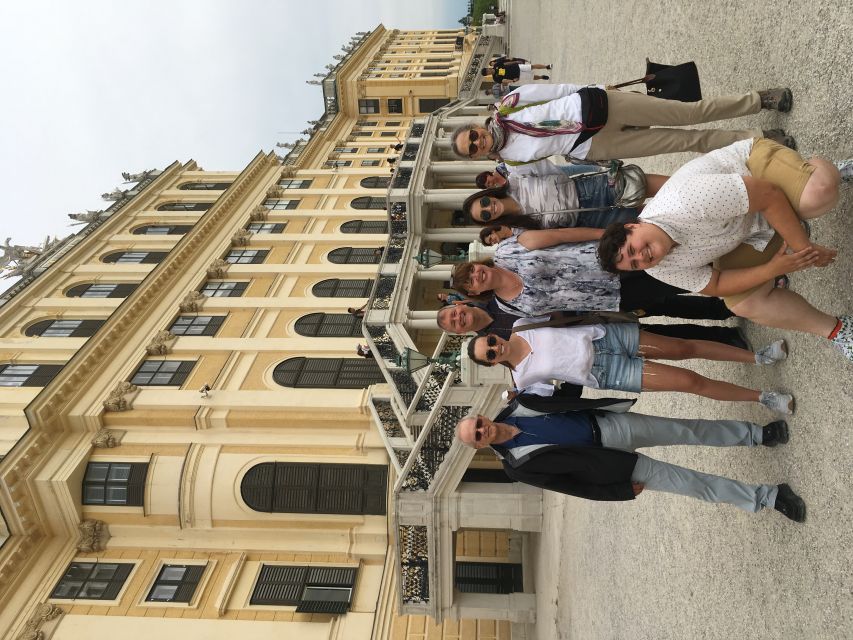
I would choose this experience if you want Schönbrunn to make sense as more than a pretty palace. The guide’s strongest role is to connect architecture, politics, family life, and decoration.
It is a good fit for first-time visitors to Vienna who want a structured introduction. It also suits anyone curious about Maria Theresa, Sisi, or the Habsburg court, since the route gives each figure a clear place in the story.
Families and mixed-interest groups may also benefit. The gardens provide open space and views, while the palace rooms offer visual detail and memorable personal stories. A small group or private guide makes it easier to adjust explanations and answer questions.
I would be more cautious if you want an unhurried garden visit, a low-cost admission-only experience, or a clearly defined Jewish Quarter walk. You should also confirm the Jewish Quarter content before booking if that highlight is central to your plans.
Should you book it?
Book this tour if expert interpretation and a personal pace matter more to you than saving money. The combination of the Gloriette view, Maria Theresa’s Porcelain Room, the striking Millions Room, and the Franz Joseph and Sisi Apartments gives you a strong overview of Schönbrunn in two and a half hours.
The price is high once admission is added, but the guide can help you get more from a crowded and very large palace. Before booking, confirm the exact group option, the added ticket cost, and how the Jewish Quarter stories fit into the route. If those details suit your interests, this is a thoughtful way to visit one of Vienna’s grandest sights.
FAQ
How long does the Schönbrunn Palace and Gardens Tour last?
The tour lasts 150 minutes, or two and a half hours. The stated schedule includes about 30 minutes in the gardens and two hours inside the palace.
What does the tour include?
It includes a guided tour with a historian guide. Palace and park entrance fees are not included.
Does the guide help with palace tickets?
Yes. The guide helps you purchase the required tickets.
Where does the tour meet?
Meet at the Schönbrunn Arrival Centre, Schönbrunner Schloßstrasse 50. The guide waits in front of the Group Centre Building across from the palace’s main entrance.
Is hotel pickup available?
Optional pickup is available with a private tour. The guide can meet you at a central hotel, holiday flat, or another meeting point, then travel with you to Schönbrunn by metro.
What language is the tour offered in?
The live guided tour is offered in English.
Are private tours available?
Yes. You can choose between private and small-group options, depending on availability.
Can I cancel for a refund?
Yes. You can cancel up to 24 hours before the tour for a full refund.
Can I reserve the tour without paying immediately?
Yes. The reserve-now, pay-later option lets you hold a place without paying at the time of booking.
Just added around Vienna
- Mobile puzzle rally tour at the Vienna Central Cemetery★ 4.5 · 3 reviews
- 8 days European Highlights PRIVATE TOUR from Budapest including Budapest Vienna Prague and Bratislava★ 5.0 · 3 reviews
- RAXI (E-Rickschaw) big private Vienna tour★ 4.5 · 3 reviews
- Private Transfer from Vienna to Prague with 1 hour Stop in Kutna Hora★ 4.5 · 3 reviews
- Palais Lobkowitz Audio Guide Tour★ 4.0 · 3 reviews
- Private Tour from Vienna to Melk and Dürnstein★ 4.5 · 3 reviews
- Vienna: Designer Fashion Time Capsule Experience★ 5.0 · 3 reviews
- Vienna Sight & Gourmet Tour – individual private tour★ 4.5 · 3 reviews
Schönbrunn Palace Tours, compared.

Schönbrunn Palace & Gardens Skip-the-Line Tour
Read our review →
Skip-the-Line Schönbrunn Palace & Gardens Tour
Read our review →
Bus & Schönbrunn Palace Skip-the-Line Guided Tour
Read our review →
Skip the Line Schönbrunn Palace and Gardens Guided Tour
Read our review →
Schönbrunn Palace & Garden Skip-the-Line Guided Tour
Read our review →
Panorama Train Tickets to explore Schönbrunn Palace
Read our review →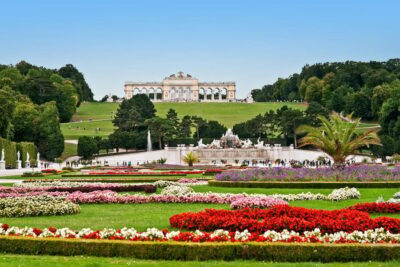
Skip-the-Line Schönbrunn Palace and Gardens Tour
Read our review →Browse the lists this tour appears in