
Reviewed · PRIVATE TOURS IN VIENNA
Semi-Private Tour: Central Europe &Balkans from Vienna to Athens
Ten countries, one long road, plenty of surprises. This 21-day journey links Vienna with Athens through Austria, Slovakia, Hungary, Serbia, Bosnia and Herzegovina, Montenegro, Kosovo, Albania, North Macedonia, and Greece. I like the small maximum group of 10 and the private transport, which make a complicated route far easier than arranging border crossings, hotels, and long drives yourself. I also like the food and wine focus, from Rust vineyards and Serbian cellars to Albanian raki and cooking in Kruja Castle.
The main drawback is the pace. You cover a huge part of southeastern Europe in three weeks, with many one-night stays and several long driving days. The $7,315.17 price is also a serious commitment, although it includes private transport, a tour leader, 20 breakfasts, entry fees, fuel, road taxes, insurance, and three-star accommodation based on shared rooms.
In This Review
- Key points before you book
- What this 21-day route really offers
- Vienna, Rust, and Bratislava begin the journey
- Bratislava and Győr bring an Austro-Hungarian flavor
- Budapest deserves more than a passing glance
- Northern Serbia: Subotica, Novi Sad, and wine country
- Belgrade, Zvornik, Sarajevo, and Mostar
- Montenegro’s stone towns and Adriatic views
- Kosovo and Albania provide the strongest local flavor
- Kruja and Tirana turn food into a central theme
- Ohrid, Berat, Gjirokaster, and Meteora
- Price, hotels, meals, and practical value
- Who should book this Balkan road trip?
- Final verdict: a big route with real local rewards
- FAQ
- Where does the tour begin?
- Where does the tour end?
- How long does the tour last?
- What is the maximum group size?
- Is hotel pickup included?
- Are hotels included?
- Is breakfast included?
- Are lunch and dinner included?
- Is transportation included?
- Are entrance tickets included?
- What fitness level is needed?
- Can the booking be canceled for a refund?
Key points before you book
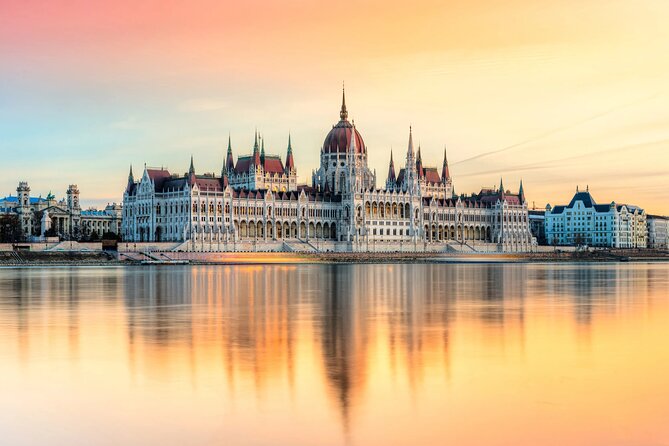
- Nine border crossings across Central Europe and the Balkans: This is a big route that connects Vienna, Bratislava, Budapest, Sarajevo, Kotor, Tirana, Ohrid, Meteora, and Athens.
- Private transport for a maximum of 10 people: You avoid public transport changes and keep the group small enough for easier conversation and quicker stops.
- Strong food and wine thread: Expect wine in Rust, Sremski Karlovci, and Rahovec, plus olive oil, farm produce, byrek, qofte, gjize, coffee, and raki.
- Several UNESCO-listed places: The route includes Budapest, Mostar, Kotor, Ohrid, Berat, Gjirokaster, and Meteora.
- Three-star hotels and shared-room pricing: The advertised rate assumes double, twin, triple, or quadruple occupancy, so confirm the supplement for a private room.
- Athens or Corfu finish: You can be dropped at your Athens hotel, or at Igoumenitsa Port with ferry tickets to Corfu included.
What this 21-day route really offers
This is not a relaxed stay-put holiday. It is a moving tour built for people who want to see how Central Europe changes as you head south. Austro-Hungarian architecture gives way to Ottoman bazaars, Orthodox monasteries, Adriatic fortresses, Albanian farm kitchens, and Greek mountain scenery.
The private vehicle matters here. Several places are linked by road rather than by simple rail connections, and border crossings can make independent planning awkward. With a tour leader handling the route, you can watch the scenery and arrive in towns with a basic orientation already in place.
You should still expect some independent time. Many stops are guided walks followed by an hour or more to eat, shop, take photographs, or sit in a café. That balance is useful, but the short visits mean you will often get an introduction rather than a full study of each city.
The experience is described as semi-private, with no more than 10 people. That is a strong size for a long road trip. It is easier to hear the guide, load into the vehicle, and make small adjustments than it would be with a large coach.
More Private Tours in Vienna
- Vienna: Private Walking Tour with a Local Guide
★ 4.6 · 1,420 reviews - Vienna: Private Walking Tour with a Guide
★ 4.7 · 962 reviews - Vienna: Wine Tasting Experience in a Private Wine Cellar
★ 4.8 · 413 reviews
Vienna, Rust, and Bratislava begin the journey
Pickup begins at your Vienna hotel at 11:00 a.m. This gives you time to arrive in Vienna independently and explore the Austrian capital before joining the group. The first drive heads toward Rust in Burgenland, a wine area near Lake Neusiedl.
Rust is a pleasing first stop because it is compact and easy to explore on foot. Expect colorful houses, flower boxes, small shops, and traditional Austrian buildings. The nearby vineyards overlook the lake, creating a fine setting for a meal and regional wine.
The Lake Neusiedl area has UNESCO recognition, and the road through the hilly vineyards gives you a scenic start rather than a plain motorway transfer. The stop lasts about three hours, though your free time can be shaped by the group and the day’s driving.
You then continue to Bratislava for the night. This first day combines an Austrian wine town with Slovakia’s capital, but it also shows the tour’s basic rhythm: a morning or midday pickup, a town visit, and a new hotel by evening.
Bratislava and Győr bring an Austro-Hungarian flavor
The second day focuses on Bratislava’s Old Town, Michael’s Gate, and Bratislava Castle. The Old Town includes the medieval Old Town Hall, churches, cultural buildings, embassies, and Slovak institutions. Michael’s Gate is especially worthwhile because it is the only preserved gate from the city’s medieval fortifications.
Bratislava Castle sits above the Danube and gives you one of the clearest city views on the route. Admission is included for the castle, while some other listed sites may have separate entry arrangements. You also get free time for the city’s café culture, a nice chance to slow down after the walking tour.
On day three, you cross into Hungary and stop in Győr, known as the City of Rivers. Its Baroque center includes colorful homes, churches, the 59-meter Town Hall tower, and the Roman-style Cathedral of the Virgin Mary. The Győr Synagogue, with its large gray dome, adds another layer to the city’s Central European story.
The pedestrian Baross Gabor Street is the practical place to use your free time. Cafés, restaurants, shops, and bars line the route, and the program specifically points you toward Hungarian food and blueberry beer. After roughly three hours in Győr, you continue to Budapest.
Budapest deserves more than a passing glance
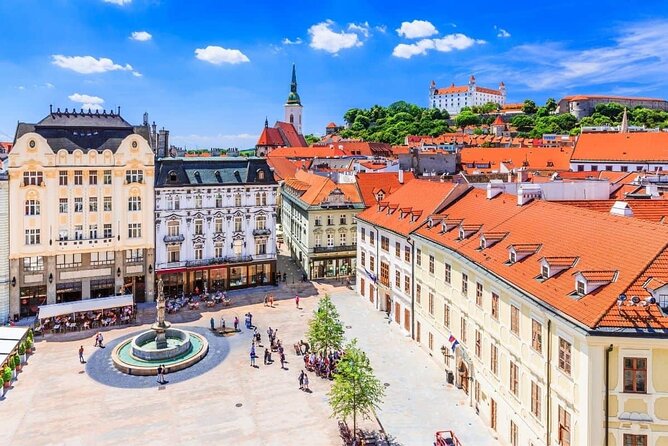
Budapest receives a full touring day, which is welcome after the shorter stops. The program takes you through the city’s major sights, including St. Stephen’s Basilica, the Opera, Parliament, Heroes’ Square, Fisherman’s Bastion, Buda Castle, the Danube bridges, and a Baroque street.
The city’s character comes from the contrast between Buda and Pest. Buda rises toward the castle district, while Pest brings broad boulevards and a more urban feel. The route gives you views from the historic side and time to experience Budapest after dark on your own.
St. Stephen’s Basilica admission is included. Other sights may be viewed from outside or visited according to the day’s timing, so you should not assume that every major building includes an interior tour.
Budapest is one of the places where the schedule may feel short. Two hours of organized sightseeing cannot cover the city in depth. Still, the guided overview gives you a useful first map, and the free evening lets you choose your own meal or nighttime walk.
A few more trips of this kind worth comparing:
- Vienna: Vivaldi’s Four Seasons Concert in Karlskirche
★ 4.7 · 14,951 reviews - Vienna: Spanish Riding School Training
★ 3.9 · 9,281 reviews - Vienna: Skip-the-cashier-desk-line Giant Ferris Wheel Ride
★ 4.5 · 7,859 reviews - Vienna: Schönbrunn Palace & Gardens Skip-the-Line Tour
★ 4.7 · 7,739 reviews
Northern Serbia: Subotica, Novi Sad, and wine country
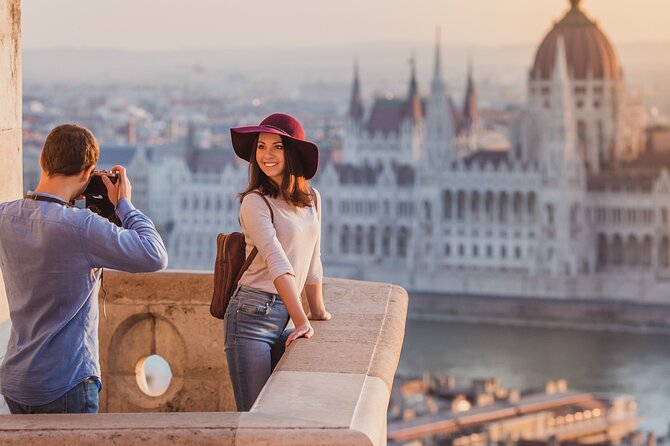
Subotica is a colorful stop with an Austro-Hungarian look and a strong multicultural feel. The City Hall dominates the central square, surrounded by a park, fountains, and open space. The Cathedral of St. Teresa of Avila and the synagogue add important religious and architectural detail.
You get time to try local food, wine, or coffee, but admission to some sites is not included. Subotica works best as a compact walking visit, especially for people who enjoy decorated facades and smaller city centers over famous headline attractions.
Novi Sad receives a longer three-hour visit the next day. The city has Austro-Hungarian and Ottoman influences, pedestrian streets such as Zmaj Jovina and Dunavska, and the Petrovaradin Fortress, often called Gibraltar on the Danube. That fortress is one of the route’s stronger viewing points.
The following day takes you to Sremski Karlovci, a small Baroque town closely linked with Serbian culture and wine production. The Four Lions fountain carries a local legend: drink from it and you will return to Karlovci and marry there. You can also taste wines from the surrounding cellars and vineyards.
This is where the food and drink theme begins to feel purposeful rather than decorative. The stops connect regional products with local places, rather than treating meals as fuel between monuments.
Belgrade, Zvornik, Sarajevo, and Mostar
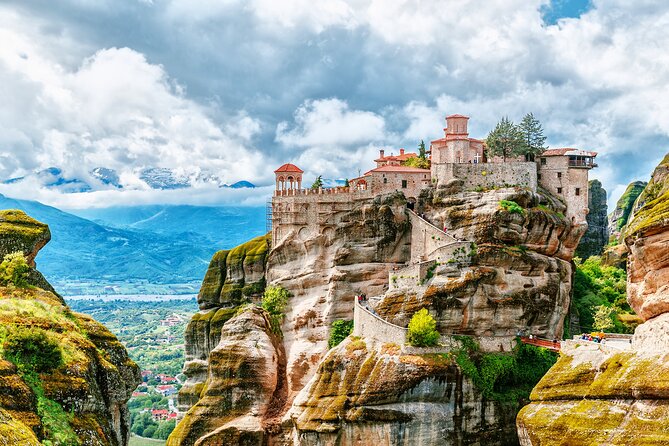
Belgrade begins with the fortress and Kalemegdan Park, set above the meeting point of the Sava and Danube rivers. The Pobednik monument dates from 1913, and the park gives you a broad view over the city and waterways.
The walk continues along Knez Mihailova to Republic Square. This is a useful introduction to Belgrade, though one hour is not enough for the city’s museums or many neighborhoods. You then drive toward Bosnia and Herzegovina, stopping in Zvornik for lunch and a short walk along the Drina River.
Sarajevo is one of the most important cultural stops. The tour covers Ottoman and Austro-Hungarian quarters, markets, bazaars, mosques, churches, synagogues, and reminders of the Yugoslav War. Some walking takes place on uneven ground, and you should be ready for a serious historical discussion rather than a purely scenic city tour.
At the Latin Bridge, the guide explains the event that helped trigger the First World War. Sarajevo also gives you a chance to try local meat dishes and desserts, making it another point where food and history meet.
Mostar follows on the same day, so this will be a demanding stretch. The Old Bridge, or Stari Most, is the central sight, with its Ottoman design, stone lanes, bazaars, mosques, and shops. The program allows some independent time, but you should wear supportive shoes for the cobbled streets.
Montenegro’s stone towns and Adriatic views
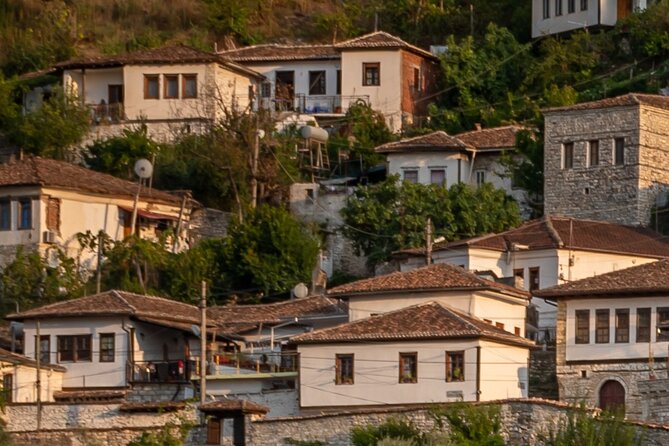
Kotor is a UNESCO-listed stop with narrow cobbled lanes, old churches, and a deliberately confusing street plan. The maze was designed to make life harder for attackers, but today it makes wandering enjoyable, provided you keep track of your group meeting point.
Saint Luke’s Church is included in the walking visit, and you get an afternoon to explore independently. Kotor rewards slow wandering, but the schedule does not promise a climb or a full bay excursion, so do not book this expecting a more extensive Montenegro program.
Budva offers a contrast between modern development and its older walled center. The tour focuses on the historic area, including Saint Ivan’s Church and Saint Mary’s Church. A viewpoint near Sveti Stefan follows, with time for photographs of the island resort. The island itself is not open for ordinary visits, so this is a viewpoint stop, not an island tour.
The route then crosses into Albania and reaches Shkoder. Rozafa Castle provides views toward the lake and the rivers flowing toward the Adriatic. Shkoder’s Venetian influence and long settlement history give it a different feel from the Montenegrin coastal towns.
Kosovo and Albania provide the strongest local flavor
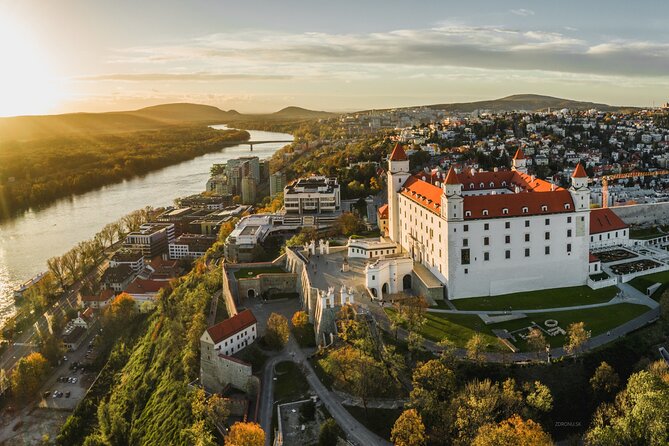
Mrizi i Zanave is one of the tour’s best food-focused stops. This agro-tourism farm works with regional organic products, preserves local foods, and has adapted former communist buildings for storage. You can tour the farm, eat a traditional lunch, or buy fresh produce.
The farm’s job creation story also gives the visit social value. It is not simply a tasting room. It shows how rural businesses can connect agriculture, food traditions, and employment.
Prizren follows, with the river, Ottoman-era streets, bridges, Sinan Pasha Mosque, and Kalaja Fortress. The mosque admission and fortress admission are included. The hilltop view is worth the walk, but the old streets and stone surfaces call for sensible shoes.
Gjakova brings Kosovo’s largest old bazaar, rebuilt after repeated wartime damage. It is a good place for handmade crafts and a meal. At Dečani Monastery, Orthodox monks still live and produce food such as cheese, while the frescoes explain why the site has UNESCO recognition.
Rahovec adds another wine stop. Grapes have been cultivated here for about 2,000 years, and the vineyards sit on gentle hills between 350 and 520 meters. If your timing reaches September, the annual wine festival may add extra activity, though festival attendance is not promised.
Kruja and Tirana turn food into a central theme
Kruja is tied to Albanian resistance against Ottoman expansion. Its bazaar has narrow lanes, wooden buildings, carpets, jewelry, and handmade souvenirs. The castle sits on a rocky hill, and the tour leader points out hidden paths once used to leave the fortress unnoticed.
This is the place to look for practical souvenirs, but bargain politely and keep room in your luggage. The included castle visit is followed by free time for lunch and shopping.
Tirana’s food walk is more intimate. With a local companion, you visit a small place for byrek, a filled pastry commonly made with cheese, meat, or spinach. You also visit the Çam Bazaar, taste a traditional dessert, drink Albanian coffee, and walk through local markets and neighborhoods.
At the New Bazaar, you try qofte with bread, or bread with gjize for a vegetarian option, followed by Albanian raki. The program also emphasizes olive oil, local liquor, and farm products elsewhere in Albania. If food is your reason for booking, these are among the most convincing days.
Bunk’Art 2 gives the capital a serious final note. The former nuclear bunker now holds a museum about Albania’s communist army and everyday life under the regime. Admission is included, and the museum adds context that a simple food walk would miss.
Ohrid, Berat, Gjirokaster, and Meteora
North Macedonia begins at Struga, where you stop for a drink near the source of the Drini River. Ohrid then brings a UNESCO-listed lake and town, Orthodox churches, Saint John’s viewpoint, Saint Nicholas Church, and the Halveti Hayati Tekke mosque.
Saint Naum Monastery follows the next day beside the source of the Crni Drim. Its clear spring water, mountain setting, and protected national park location make it one of the calmer stops. You then cross into Albania for Tushemisht and Drilon National Park, known for its small lake, willows, and quiet waters.
Berat is called the town of 1,001 windows. Its steep streets, old houses, castle, churches, mosques, stone bridge, museums, and surviving homes inside the castle make it a full three-hour stop. This is one of the days when the schedule gives a place enough time to breathe.
Gjirokaster is known as the Stone City, with fortress-like houses, a medieval bazaar, and a well-preserved historic center. The Skenduli House visit is included and offers an authentic look at one traditional home.
Near the end, Ioannina provides Byzantine and Ottoman walls, old-town lanes, and a castle district with cafés. Meteora then supplies the grand finale before Athens: monasteries built on tall rock formations, best viewed during sunset. The program does not list monastery entry, so treat this as a scenic visit unless your guide confirms otherwise.
Price, hotels, meals, and practical value
At $7,315.17 per person, this is expensive, but the comparison should be with the cost and effort of arranging 21 days across 10 countries. Private transport, a professional tour leader, hotel pickup, hotel drop-off, fuel, international car insurance, road taxes, tourist taxes, and listed entry tickets are included.
You also receive 20 breakfasts. Lunches, dinners, drinks, snacks, souvenirs, and personal spending are extra. The food stops make it tempting to spend more, especially at wineries, farms, bazaars, and restaurants.
The price assumes three-star accommodation in double, twin, triple, or quadruple rooms. Ask about single-room pricing before paying. The small group helps the value, but the hotels are not presented as luxury properties.
The cancellation rule is strict: the experience is non-refundable and cannot be amended for any reason. I would only book once your dates, room arrangement, and border-crossing plans are firm.
The strongest praise centers on smooth organization, good accommodation, plentiful tasty food, and wine. Sokol is singled out by name for doing an excellent job as guide, so if he is assigned to your departure, that is a welcome sign. Tips are not required in the Balkans, but tipping the guide and driver for good service is recommended.
Who should book this Balkan road trip?
You should consider it if you want maximum geographic variety, prefer a small group, and do not want to manage a complicated multi-country route. It is particularly suitable for people who enjoy food, wine, architecture, religious sites, twentieth-century history, and scenic drives.
You may want another style of holiday if you prefer several nights in each city, independent museum time, or a slow beach break. The route is broad and rewarding, but it asks you to pack, unpack, cross borders, and keep moving.
Final verdict: a big route with real local rewards
I would book this tour for the access and logistics, not for a restful pace. The combination of private transport, a group capped at 10, local food experiences, wine regions, and major historic towns gives you a practical way to see a difficult route.
The best moments are likely to come from Mrizi i Zanave, Kruja’s bazaar and castle, Sarajevo, Mostar, Ohrid, Berat, and sunset at Meteora. Before committing, confirm the exact hotel standard, room supplement, guide assignment, and which interior admissions are included on your departure.
FAQ
Where does the tour begin?
The tour begins in Vienna, Austria, with hotel pickup at 11:00 a.m.
Where does the tour end?
You can be dropped at your hotel in Athens, or at Igoumenitsa Port for a ferry to Corfu. Ferry tickets to Corfu are included.
How long does the tour last?
The journey lasts approximately 21 days.
What is the maximum group size?
The tour has a maximum of 10 travelers.
Is hotel pickup included?
Yes. Pickup from your hotel in Vienna is offered at the start, and drop-off is provided in Athens or at Igoumenitsa Port.
Are hotels included?
Yes. Accommodation is based on three-star hotels and the price is calculated for double, twin, triple, or quadruple room occupancy.
Is breakfast included?
Yes. Twenty breakfasts are included.
Are lunch and dinner included?
No. Lunches, dinners, drinks, and snacks are not included.
Is transportation included?
Yes. Private transport, petrol, road taxes, international car insurance, and tourist taxes are included.
Are entrance tickets included?
Entry tickets for the sites designated for visits are included. The program specifically lists included admission at places such as Bratislava Castle, St. Stephen’s Basilica, Kruja Castle, Bunk’Art 2, Sinan Pasha Mosque, Kalaja Fortress, and Saint Naum Monastery.
What fitness level is needed?
A moderate level of physical fitness is recommended. Some walking takes place on uneven terrain, especially during the Sarajevo visit, and several old towns have cobbled or narrow streets.
Can the booking be canceled for a refund?
No. The experience is non-refundable and cannot be changed after booking for any reason.
Just added around Vienna
- Mobile puzzle rally tour at the Vienna Central Cemetery★ 4.5 · 3 reviews
- 8 days European Highlights PRIVATE TOUR from Budapest including Budapest Vienna Prague and Bratislava★ 5.0 · 3 reviews
- RAXI (E-Rickschaw) big private Vienna tour★ 4.5 · 3 reviews
- Private Transfer from Vienna to Prague with 1 hour Stop in Kutna Hora★ 4.5 · 3 reviews
- Palais Lobkowitz Audio Guide Tour★ 4.0 · 3 reviews
- Private Tour from Vienna to Melk and Dürnstein★ 4.5 · 3 reviews
- Vienna: Designer Fashion Time Capsule Experience★ 5.0 · 3 reviews
- Vienna Sight & Gourmet Tour – individual private tour★ 4.5 · 3 reviews
Private Tours in Vienna, compared.
Wine Tasting Experience in a Private Wine Cellar
Read our review →
Private Day Tour Trip Salzburg Hallstatt and Melk from Vienna
Read our review →
Private Day Tour of Hallstatt and Salzburg from Vienna
Read our review →
Private Hidden Vienna Walk — Stories Behind Quiet Corners
Read our review →
Vienna at First Glance a Private Walking Tour for First Timers
Read our review →Browse the lists this tour appears in