
Reviewed · ATTRACTION TICKETS IN VIENNA
STATE OPERA – PRIVATE guided tour (tickets included)
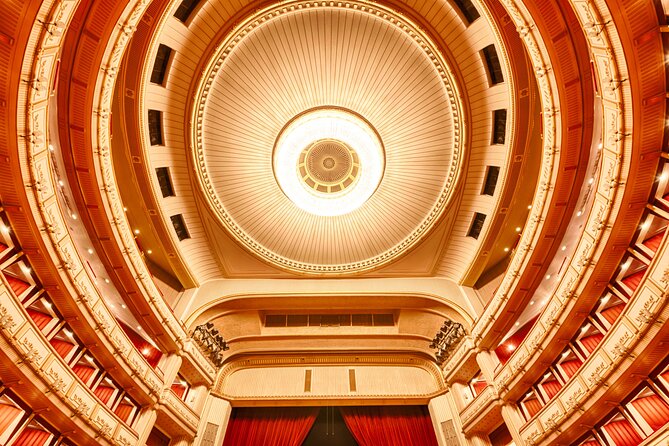
Vienna’s grandest curtain rises before the music starts. This private tour gives you 90 minutes inside the Wiener Staatsoper, with access to public areas and a guide who connects the building to opera stars, stagecraft, politics, and the famous Opera Ball. I especially like the private format, since your group can ask questions without keeping pace with strangers, and the guide’s focus on both the ornate old rooms and the postwar modern sections.
I also like the human stories: the scandal surrounding the opera house’s construction, the careers of Placido Domingo, Montserrat Caballé, José Carreras, Gustav Mahler, Herbert von Karajan, Rudolf Nureyev, and Margot Fonteyn, plus the daily work behind changing productions. The main consideration is price. At $267, this makes the most sense for a family or group that values personal attention, rather than for a solo sightseer seeking the cheapest way inside.
The guide, Giselle, earns especially warm praise for her friendly manner, clear explanations, humor, and ability to adjust the conversation to her group. She has guided musicians, doctors, families, and opera newcomers, so you can expect the tour to work well for different levels of musical interest.
In This Review
- Key points at a glance
- Why the Vienna State Opera deserves your time
- Start at Opernring 2 in central Vienna
- The ornate old opera house and its difficult beginning
- The postwar sections reveal another Vienna
- Meet the artists who shaped the stage
- See how a performance operates behind the scenes
- The Opera Ball and Vienna’s public ritual
- What makes Giselle’s guiding style appealing
- Is $267 good value for a private opera tour?
- Who should book this experience?
- Practical details before you go
- Should you book the Vienna State Opera tour?
- FAQ
- Where does the Vienna State Opera private tour begin?
- Where does the tour end?
- How long does the tour last?
- Is admission included?
- Is this a private activity?
- Is a mobile ticket available?
- What parts of the opera house does the tour cover?
- What subjects does the guide discuss?
- Can I cancel for a full refund?
Key points at a glance
- A private 90-minute visit: Only your own group takes part, giving you room to ask questions and shape the conversation.
- Two eras of architecture: See the ornate 19th-century interiors alongside areas rebuilt after the Second World War.
- Opera beyond the stage: Learn how sets change each day, where scenery is stored, and how many people keep the institution running.
- Stories of famous artists: The tour covers major singers, conductors, dancers, and directors linked with Vienna’s opera tradition.
- A guide with a personal touch: Giselle is praised for warmth, humor, preparation, and strong knowledge of music, Vienna, and local history.
- Simple central meeting point: Begin and end at Opernring 2, beside the Vienna State Opera, with public transportation nearby.
Why the Vienna State Opera deserves your time
Vienna is often called the city of music, and the State Opera is one of the clearest places to understand why. This is not only a theater where you buy a ticket, take a seat, and wait for the lights to dim. It is a working institution tied to the city’s public life, political class, artistic traditions, and long memory.
The building is also useful for understanding Vienna itself. Its original design reflects the confidence and ceremony of the 19th century. Later changes show how war, damage, rebuilding, and modern theater needs shaped the house. You are not simply looking at decorative rooms. You are tracing how a major cultural building changed while remaining central to Vienna’s identity.
That wider context is what makes a guided visit more useful than a quick look at the entrance hall. The architecture gives you the first layer. The stories about performers, stage machinery, and the Opera Ball give you the second.
More Attraction Tickets in Vienna
- Vienna: Classic Ensemble Vienna in St. Peter’s Church Ticket
★ 4.7 · 4,819 reviews - Vienna Kunsthistorisches Museum Day Admission Ticket
★ 4.6 · 3,690 reviews - Vienna: Tickets for Mozarthaus Vienna with Audio Guide
★ 4.2 · 2,344 reviews
Start at Opernring 2 in central Vienna
The meeting point is the Vienna State Opera at Opernring 2, 1010 Vienna. The tour begins and ends here, which keeps the plan simple. Since the opera is near public transportation, you can fit the visit into a day exploring central Vienna without arranging a separate transfer.
A mobile ticket is included, so you should have your booking available on your phone. Confirmation is normally issued at booking. If you reserve within one hour of the start time, confirmation comes as soon as possible and depends on availability, so last-minute planners should not assume the booking is instant.
The central location also makes the timing practical. You can schedule the tour before another central attraction, after a meal, or as part of a day focused on Vienna’s music institutions. The stated duration is about one hour and 30 minutes, long enough for a proper introduction without taking up an entire afternoon.
The ornate old opera house and its difficult beginning
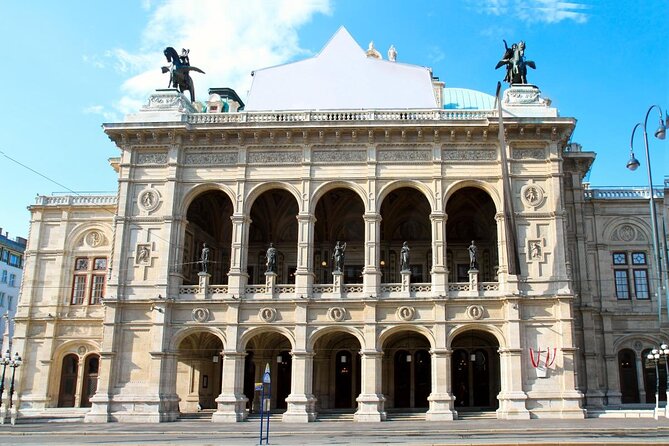
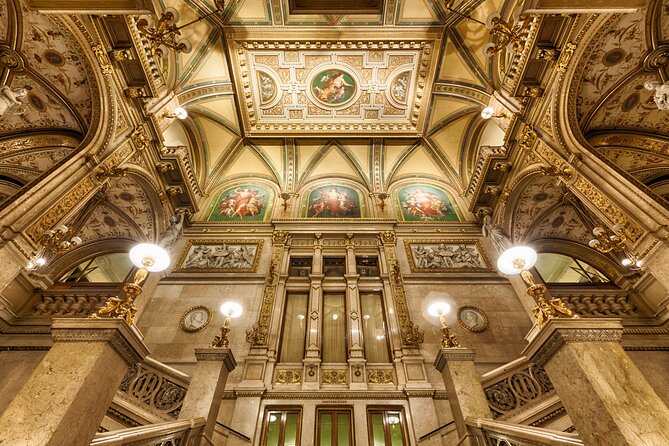
One of the most interesting parts of the visit is the building’s early story. The State Opera was built about 150 years ago, but its creation was not greeted with universal admiration. The design caused a major scandal, and the dispute became so painful that it contributed to the deaths of one of the architects.
That detail gives the building an edge. The grand staircases, formal decoration, and imposing public rooms can look inevitable today, as if everyone must have admired them from the start. The story reminds you that public buildings often become symbols only after people have argued over them.
Your guide can help you read the old section as more than decoration. Look for the sense of ceremony built into the visitor experience. The architecture was designed to make an evening at the opera feel like a social event, not just a performance. That remains important in Vienna, where seeing and being seen have long been part of the theater tradition.
The postwar sections reveal another Vienna
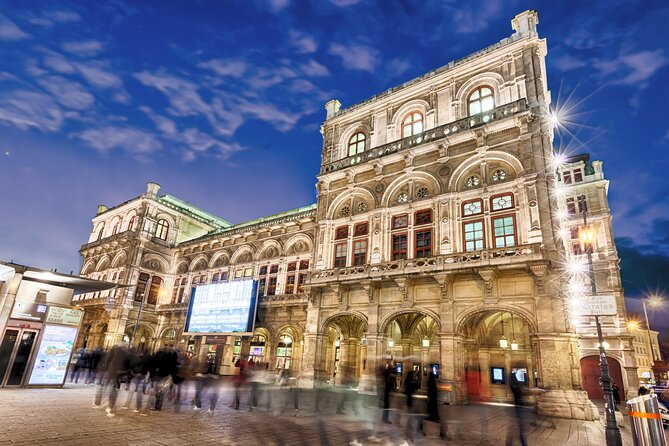
The tour also includes the modern areas rebuilt after the Second World War. This contrast is one of the strongest reasons to choose a guided visit. The old rooms show imperial ceremony and 19th-century taste. The newer sections speak to repair, changing theater technology, and the need to make a damaged institution work again.
You can expect the guide to point out how different the mood and design are from one part of the building to another. The contrast keeps the tour from becoming a parade of gilded rooms. It also helps you understand that the opera house is not frozen in the past. It has had to adapt to war, reconstruction, new productions, and modern working demands.
For anyone interested in architecture, this mixture of old and rebuilt spaces may be more rewarding than a tour focused only on famous rooms. You see continuity, but you also see interruption.
More Private Tours in Vienna
- Vienna: Private Walking Tour with a Local Guide
★ 4.6 · 1,420 reviews - Vienna: Private Walking Tour with a Guide
★ 4.7 · 962 reviews - Vienna: Wine Tasting Experience in a Private Wine Cellar
★ 4.8 · 413 reviews - Private Day Tour Trip Salzburg Hallstatt and Melk from Vienna
★ 5.0 · 388 reviews
Meet the artists who shaped the stage
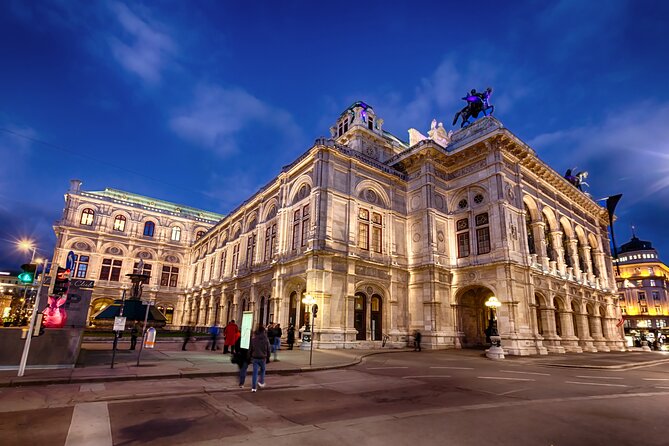
The tour places strong emphasis on the artists associated with the opera house. Names discussed include Placido Domingo, Montserrat Caballé, José Carreras, Gustav Mahler, Herbert von Karajan, Rudolf Nureyev, and Margot Fonteyn.
That list covers more than one type of performer. You have major singers, celebrated conductors, and leading dancers. Gustav Mahler and Herbert von Karajan connect the building to its musical leadership. Domingo, Caballé, and Carreras recall the star power of opera’s modern age. Nureyev and Fonteyn broaden the story into ballet and stage performance.
You do not need to arrive as an opera expert. The guide’s role is to explain why these names mattered and how artists helped shape the institution’s reputation. If you already know the music, you can ask more specific questions. One especially nice feature of Giselle’s approach is her ability to adjust the discussion to the group. She has guided a musician and discussed Beethoven, while also making the tour accessible to people with less musical background.
That flexibility matters on a private tour. You are not locked into a fixed lecture. Your own interests can help determine how much time goes to composers, singers, conductors, dancers, or Vienna’s cultural life.
See how a performance operates behind the scenes
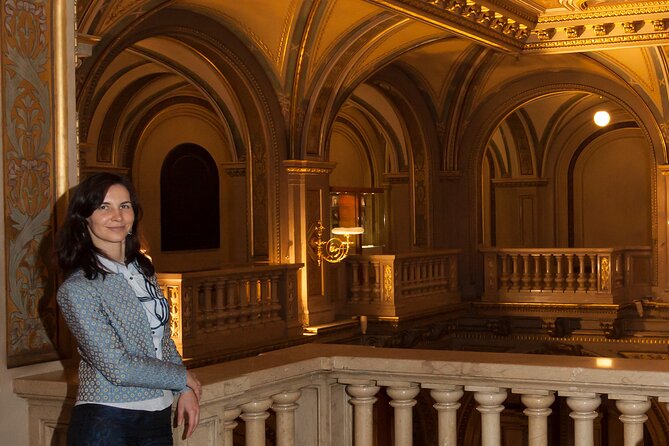
The most practical part of the tour may be its explanation of how the opera functions day by day. Productions change, and the stage sets must change with them. The visit explains how scenery is handled, where sets are stored, and how the stage can support a constantly changing repertoire.
This is the point where the opera house becomes a workplace rather than a ceremonial monument. The audience sees the finished spectacle, but an opera requires carpenters, technicians, stage managers, costume workers, musicians, singers, administrators, and many other staff members. The guide also explains how many people work for the institution in total.
You may not see every working area, since the tour covers the parts open to the public. Still, learning how scenery is stored and changed gives you a better sense of the labor behind an evening performance. It is a useful corrective to the idea that opera consists only of famous voices and beautiful costumes.
If you are considering attending a performance later, this background can change the way you watch it. A scene change that once seemed effortless may now remind you of the large operation taking place out of sight.
The Opera Ball and Vienna’s public ritual
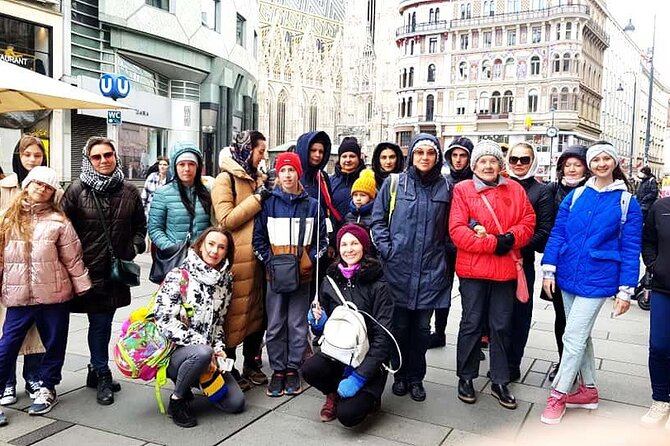
The Vienna Opera Ball is another subject covered on the tour. It is one of the city’s most famous annual social events, with millionaires and local politicians among those taking part.
The ball helps explain the opera’s place in public life. This is not merely an arts venue tucked away from the city. It is also a stage for ceremony, status, tradition, and civic display. The event has a glamorous reputation, but the tour can place that glamour in a broader setting by explaining how it fits the institution and Vienna’s social customs.
You do not need to attend the ball to appreciate this part of the visit. In fact, hearing about it inside the opera house may give you a clearer sense of why the building carries such symbolic weight. The room, the rituals, and the people associated with the event all connect performance with public identity.
What makes Giselle’s guiding style appealing
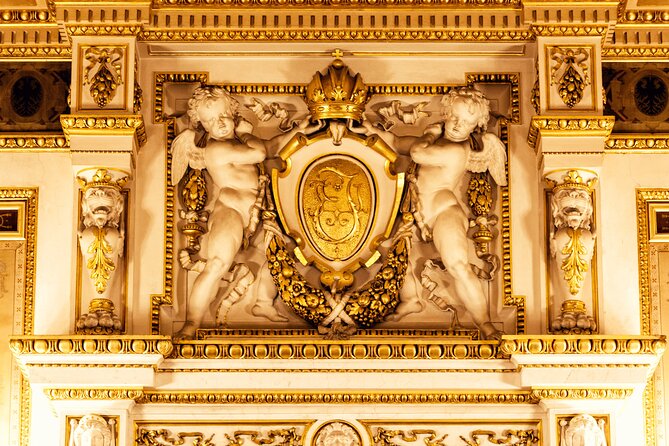
The strongest praise for this experience centers on Giselle herself. She is described as pleasant, professional, funny, kind, and able to explain music and Vienna in a complete but entertaining way. That combination is important. A guide can know a great deal and still make a tour feel stiff. Here, the repeated emphasis is on warmth as well as information.
Her communication before the meeting is another useful point. You can expect a guide who stays in touch and can adjust the conversation to your interests. That is particularly helpful for a private group with mixed backgrounds. One person may care about architecture, another about opera singers, and someone else may simply want a lively introduction to Vienna.
The personal tone also comes through in her replies to visitors. She responds warmly to musicians, medical professionals, and international visitors, and she treats the group as honored company. That may sound like a small detail, but it helps explain why the experience receives a perfect five-star rating from the 14 ratings shown, with 100 percent recommending it.
Of course, a private tour is still shaped by the guide. If you prefer to walk silently and read signs at your own speed, this may feel more social than necessary. If you enjoy conversation and questions, Giselle’s style is likely to be a major part of the value.
Is $267 good value for a private opera tour?
The price is $267 for the experience, with admission included. The important question is not simply whether $267 is cheap or expensive. It is what you receive for the money.
For one or two people, the cost can feel high for 90 minutes. You are paying for a private guide, not just entry to the building, and the short duration limits how much time you have for a long discussion. If you want a quick look at the opera and little explanation, a private booking may not be the best fit.
For a family or a small group of friends, the calculation changes. The fee covers a private activity for your group, so the cost can make more sense when shared. You also receive a guide who can respond to your interests rather than delivering a one-size-fits-all talk.
The strongest value comes from the range of subjects included: architecture, reconstruction, artists, the Opera Ball, repertoire, set changes, storage, and staffing. You are paying for access to context and conversation, not just a walk through ornate rooms.
I would consider this a special-occasion choice for people who want a more personal look at Vienna’s opera tradition. If your budget is tight, compare the price with your interest level. The tour is worthwhile when you will ask questions and use the guide’s experience. It is less compelling if you only want photographs of the interior.
Who should book this experience?
This tour suits you best if you enjoy one or more of the following:
- You want a private outing with family or friends.
- You like architecture as much as music.
- You want to understand how opera productions are made.
- You have a strong interest in famous singers, conductors, or dancers.
- You prefer a guide who can adapt to your questions.
- You are visiting Vienna for a special occasion and want an experience with local character.
It also works for mixed groups. One person can ask about Mahler or Karajan, while another asks about the building, the Opera Ball, or stage sets. Giselle’s ability to shift between music, history, and personal questions is a real advantage here.
You may want to skip it if you dislike guided visits, have no interest in opera or architecture, or are looking for the lowest-cost activity in Vienna. The tour is focused, and 90 minutes passes quickly.
Practical details before you go
The tour starts and finishes at the Vienna State Opera, Opernring 2, in Vienna’s first district. Public transportation is nearby, and most people can participate according to the supplied activity information.
Admission is included, and the ticket is mobile, so keep the booking accessible on your phone. The tour is private, meaning only your group takes part. That gives you more control over questions and pacing, though the advertised duration remains approximately 90 minutes.
Free cancellation is available up to 24 hours before the start time for a full refund. Cancellation within 24 hours is not refundable, and changes made during that period are not accepted. The cut-off follows local Vienna time, so check the time carefully if your plans are changing.
Should you book the Vienna State Opera tour?
I would book this if you want more than a quick look at an elegant theater. The combination of old and postwar architecture, famous artists, Opera Ball traditions, stage-set logistics, and Giselle’s warm personal style gives the visit real substance.
The price is the main hurdle, especially for a solo visitor. For a private group that enjoys conversation and wants a tailored introduction to Vienna’s musical life, it is easier to justify. Book it when the opera house is a priority, not as a casual filler between other sights.
FAQ
Where does the Vienna State Opera private tour begin?
It begins at the Vienna State Opera, Opernring 2, 1010 Vienna, Austria.
Where does the tour end?
The activity ends back at the meeting point at the Vienna State Opera.
How long does the tour last?
The tour lasts approximately one hour and 30 minutes.
Is admission included?
Yes. The admission ticket is included in the tour price.
Is this a private activity?
Yes. Only your own group participates in the tour.
Is a mobile ticket available?
Yes. The experience includes a mobile ticket.
What parts of the opera house does the tour cover?
The tour visits all areas open to the public. It includes the ornate older sections and the modern areas rebuilt after the Second World War.
What subjects does the guide discuss?
The guide discusses the opera house’s architecture, its construction scandal, famous artists, the Opera Ball, changing stage sets, storage areas, the repertoire, performers, and the number of people working for the institution.
Can I cancel for a full refund?
Yes, if you cancel at least 24 hours before the experience start time. Cancellations made less than 24 hours before the start are not refunded, and changes during that period are not accepted.
Just added around Vienna
- Mobile puzzle rally tour at the Vienna Central Cemetery★ 4.5 · 3 reviews
- RAXI (E-Rickschaw) big private Vienna tour★ 4.5 · 3 reviews
- 8 days European Highlights PRIVATE TOUR from Budapest including Budapest Vienna Prague and Bratislava★ 5.0 · 3 reviews
- Private Transfer from Vienna to Prague with 1 hour Stop in Kutna Hora★ 4.5 · 3 reviews
- Palais Lobkowitz Audio Guide Tour★ 4.0 · 3 reviews
- Private Tour from Vienna to Melk and Dürnstein★ 4.5 · 3 reviews
- Vienna: Designer Fashion Time Capsule Experience★ 5.0 · 3 reviews
- Private day trip from Munich to Eagle’s Nest & Hallstatt★ 4.7 · 3 reviews
Attraction Tickets in Vienna, compared.
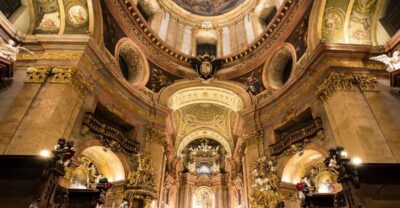
Classic Ensemble Vienna in St. Peter’s Church Ticket
Read our review →
Vienna Kunsthistorisches Museum Day Admission Ticket
Read our review →
Tickets for Mozarthaus Vienna with Audio Guide
Read our review →
Skip-the-Line Entrance Ticket to the Danube Tower
Read our review →


St. Stephen’s Cathedral & Dom Museum Wien Tickets
Read our review →
Browse the lists this tour appears in