
Reviewed · CITY TOURS
Vienna: City Center Guided Walking Tour
Vienna reveals itself one grand square at a time. This 150-minute small-group walk gives you a clear first look at the imperial center, from Hofburg Palace and Heroes Square to the Spanish Riding School, elegant coffee houses, and St. Stephen’s Cathedral. A local Austrian guide leads the way in English, with headsets that make the commentary easy to follow.
I like the group limit of 15 people, which keeps the walk personal without making it private-tour expensive. I also like the range of subjects: Habsburg rulers, Lipizzaner horses, imperial weddings, Beethoven, and Sachertorte all fit into one route. The main consideration is pace. You cover a lot of ground and history in two and a half hours, and some people may find the final stretch a little rushed.
In This Review
- Key Things To Know Before You Book
- Starting Beside Maria Theresa’s Monument
- Along the Ring Road and Through the Volksgarten
- Heroes Square and the Habsburg Seat at Hofburg
- Burggarten, the Emperor’s Garden, and a Former Butterfly House
- Augustinerkirche and an Imperial Wedding
- The Spanish Riding School and Lipizzaner Tradition
- Vienna State Opera and Beethoven at Lobkowitz Palace
- Hotel Sacher, Coffee Houses, and Vienna’s Sweet Side
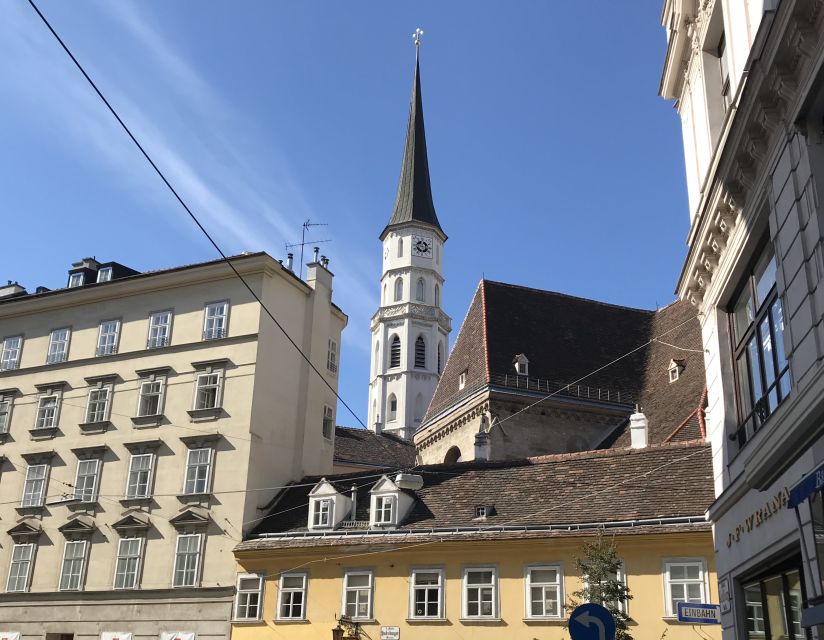
- Graben and the Final View of St. Stephen’s Cathedral
- Group Size, Pace, and Weather
- Is the $74 Price Worth It?
- Who Should Take This Vienna Walk?
- My Verdict: Book It If You Want the Big Picture
- FAQ
- How long does the Vienna City Center Guided Walking Tour last?
- What language is the tour conducted in?
- Where does the tour begin?
- How can I identify the guide?
- What public transport is closest to the meeting point?
- How large is the tour group?
- Are entrance fees included?
- Are headsets provided?
- Does the tour operate in bad weather?
- Is the tour suitable for people with mobility impairments?
Key Things To Know Before You Book
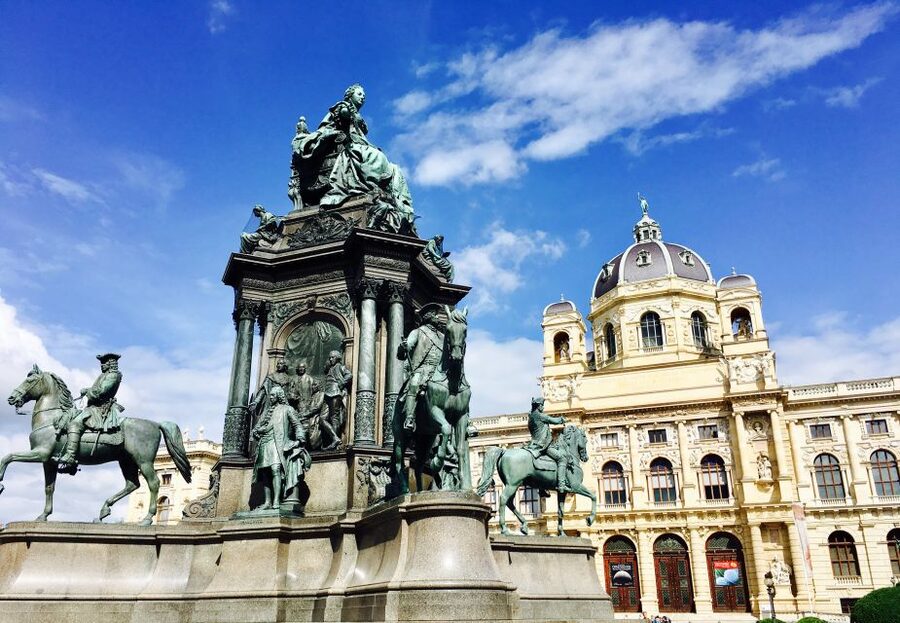
- The tour begins at Maria-Theresien-Platz: Meet beside the statue of Empress Maria Theresa, between the Kunsthistorisches Museum and Naturhistorisches Museum.
- You see Vienna’s major center sights from outside: Entrance fees are not included, so plan separate visits to palaces, museums, churches, or performances.
- Headsets make a real difference: You can hear the guide clearly while walking through busy streets and open squares.
- The route suits first-time visitors: It connects the main sights in a sensible order and helps you decide where to return later.
- Expect moderate walking in all weather: Wear comfortable shoes and prepare for heat, rain, or winter cold.
- The strongest praise goes to the guides: Dace, Alex, and other local guides are credited with clear explanations, humor, personal suggestions, and good care of the group.
Starting Beside Maria Theresa’s Monument
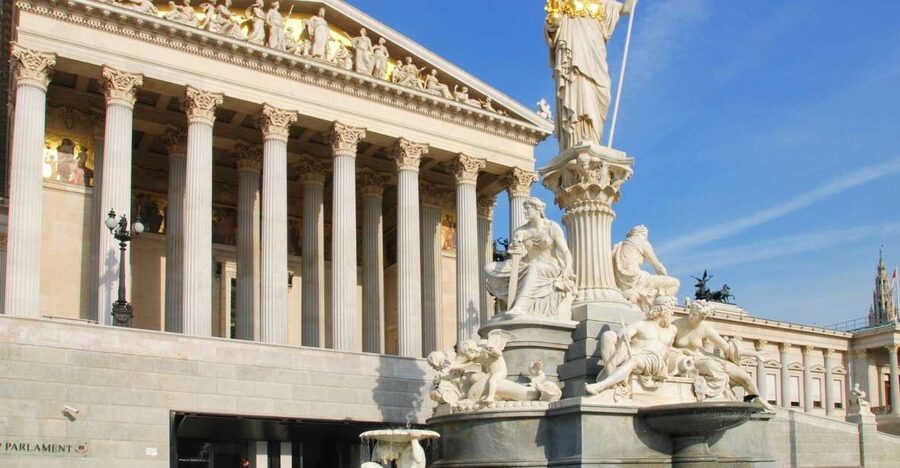
The meeting point is easy to identify once you know what to look for. Your guide meets you on Maria-Theresien-Platz, beside the statue of Empress Maria Theresa on the side the statue faces. The meeting place sits between Vienna’s two grand museum buildings, the Kunsthistorisches Museum and the Naturhistorisches Museum.
Look for the green Vienna City Walking Tour sign. Public transport is straightforward: Volkstheater on the U3 metro line is the closest station, while the Burgring tram stop is served by routes D, 1, 2, and 71.
This opening square is more than a practical meeting point. It immediately puts you among monumental buildings, broad open space, and the imperial scale that defines central Vienna. I like beginning here because you do not waste the first part of the tour finding the city center. You are already looking at the former Habsburg capital.
The guide speaks English and uses a headset system. That small detail matters. You can look at a building, walk at a comfortable distance, or move through a crowded pavement without losing every other sentence. Several people especially appreciated the audio equipment, and it is a useful feature on a walking tour with up to 15 participants.
More City Tours in Vienna
- Vienna: Guided Walking Tour of City Center Highlights
★ 4.7 · 4,989 reviews - Vienna: City Cruise with Optional Lunch
★ 3.4 · 3,982 reviews - Vienna: City Cruise
★ 3.3 · 2,978 reviews
Along the Ring Road and Through the Volksgarten
The route follows Vienna’s famous Ring Road, the broad boulevard that circles the historic center. Along the way, your guide places the buildings and public spaces in their imperial setting rather than treating each sight as an isolated photo stop.
You then enter the Volksgarten, a formal garden known for its rose displays. This gives the walk a welcome change of mood. Vienna’s center can feel grand and stone-heavy, so a green pause helps break up the long sequence of palaces, churches, and official buildings.
The guide’s job here is not simply to point at flowers or façades. The value is in showing how the city’s open spaces fit into its former imperial design. You get architecture, public life, and a little breathing room before the next major sight.
The garden portion also helps keep the route from becoming a march down one long street. A past tour group particularly enjoyed the mix of buildings and green spaces, along with a few less obvious spots that were easy to miss when walking alone. You should still expect a city walk, not a leisurely garden visit. The tour keeps moving.
Heroes Square and the Habsburg Seat at Hofburg
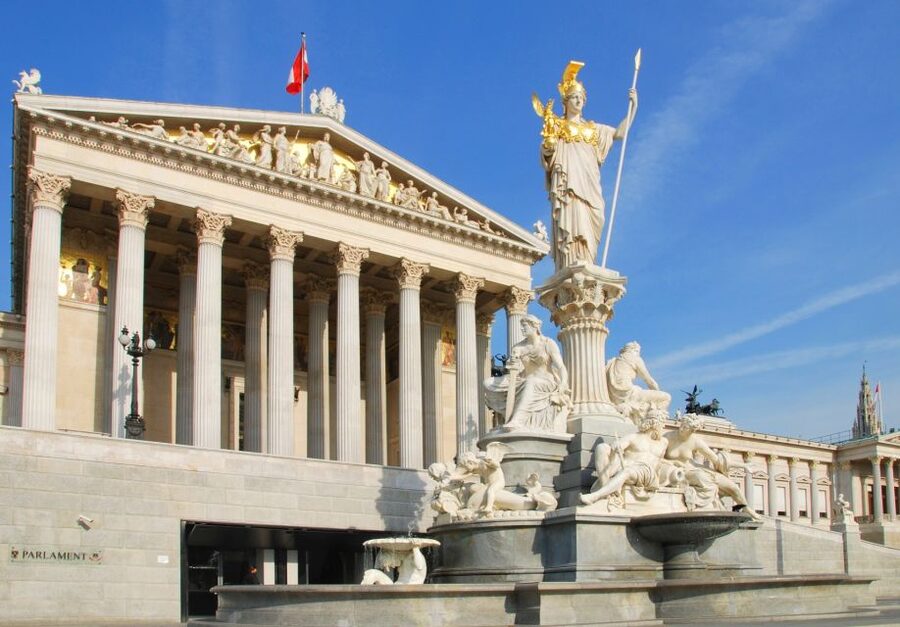
From the Volksgarten, you continue to Heroes Square, or Heldenplatz, one of Vienna’s most recognizable open spaces. The Hofburg Palace forms the heart of this part of the tour.
For centuries, the Hofburg was the center of Habsburg power. Your guide explains the imperial family and the role the palace played in governing a vast European realm. This is where the tour’s historical storytelling becomes especially useful. Vienna can present a confusing succession of rulers, titles, marriages, and political changes. A good guide gives you the basic structure so the buildings begin to make sense.
Do not expect a full palace visit during this walk. The tour is designed as an outdoor introduction, and entrance fees are not included. That is not a flaw if you want an overview first. In fact, I think it helps you choose later between the palace apartments, imperial collections, museums, or another nearby attraction.
The exterior alone gives you plenty to absorb. You see the scale of the imperial residence and learn about the family that ruled from it. The explanations also bring the palace down to human size by focusing on famous residents and the habits of court life.
At this point, you may notice the tour’s central tradeoff. There is a great deal to cover, and the guide has to keep the group moving. If you enjoy stopping for long architectural study, you may want to return to Hofburg on your own.
Burggarten, the Emperor’s Garden, and a Former Butterfly House
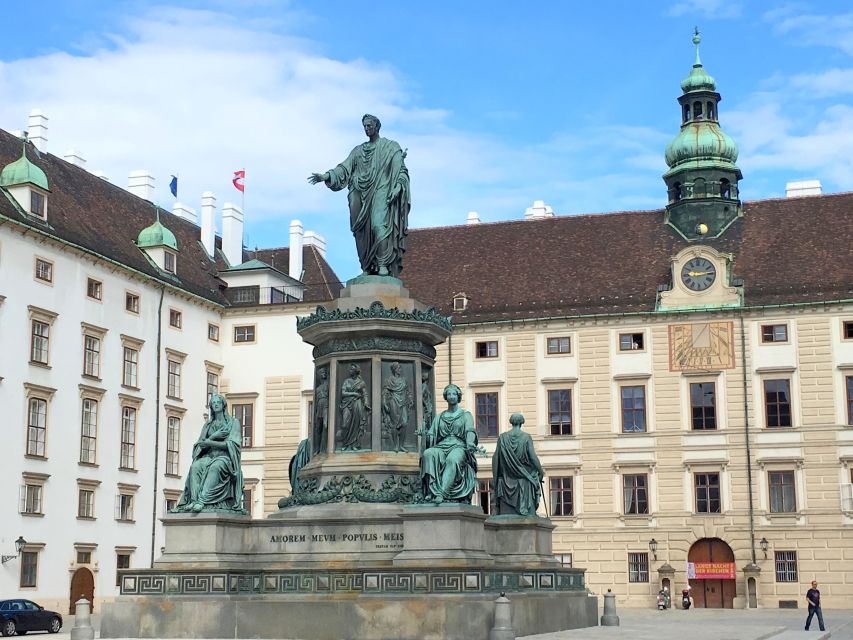
The next section leads to Burggarten, the former private garden of the emperor. This detail gives the route a more personal angle. You are no longer seeing only grand public monuments. You are hearing about the spaces connected with imperial daily life.
The old butterfly house adds an unusual touch. It is not the sort of detail most people discover by simply following a map between Hofburg and the opera. The guide points out this former imperial feature while explaining the garden’s connection to the palace.
I like this part because it adds texture to the Habsburg story. Palaces can seem remote and ceremonial. A private garden and a former butterfly house suggest how the imperial household used its surroundings when it was not performing official duties.
This is also one reason a local guide adds value over a self-guided walk. You can see Burggarten without help, but you may not understand why it matters or how it connects to the Hofburg complex.
More Walking Tours in Vienna
- Vienna: Vienna Central Cemetery Guided Walking Tour
★ 4.8 · 3,307 reviews - Vienna: Guided Walking Tour of City Highlights & Hidden Gems
★ 4.9 · 2,180 reviews - Vienna: Viennese Underworld Guided Walking Tour
★ 4.7 · 1,865 reviews - Vienna: World War II Historical Walking Tour
★ 4.8 · 1,772 reviews
Augustinerkirche and an Imperial Wedding
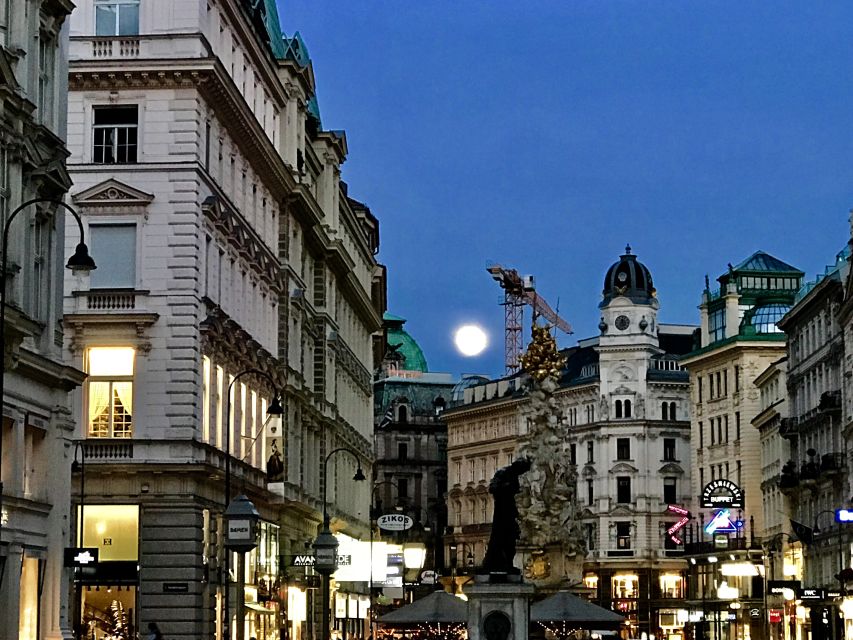
The tour continues to Augustinerkirche, a church linked with imperial weddings. One of the most striking stories concerns Napoleon’s marriage to Princess Marie Louise.
This stop gives you a different view of European power. Instead of hearing about rulers only through wars and palaces, you see how marriages linked royal families and shaped political relationships. The church becomes a doorway into that wider story.
The route does not list entrance fees as included, so you should treat this as an exterior stop unless your guide says otherwise. The focus is the setting and its historical connections, not an extended church visit.
If you are interested in dynasties, this part will likely reward you. If your main interest is art or religious interiors, you may wish to schedule a separate visit. The walk gives you context, then moves on.
The Spanish Riding School and Lipizzaner Tradition
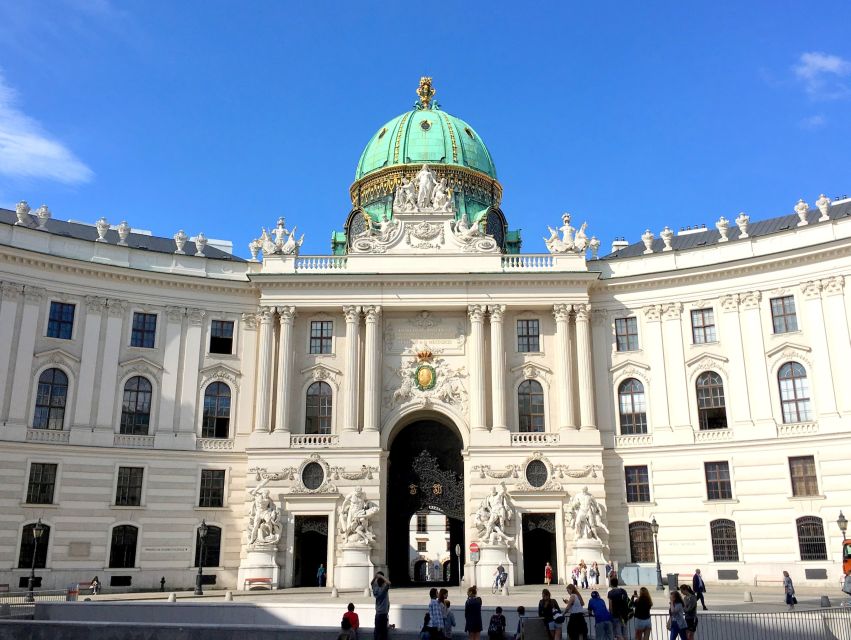
The Spanish Riding School is one of Vienna’s signature institutions, and the tour introduces you to its home in the Hofburg area. This is where you learn about the famous Lipizzaner horses and the long tradition associated with them.
The tour does not include a riding performance or an entrance ticket. That distinction matters. You are seeing the setting and learning why the school is important, not attending a show.
Still, the stop works well in a city-center overview because it connects living tradition with imperial architecture. The horses are not just another attraction. They are part of Vienna’s public identity, and the guide gives you a useful starting point if you want to book a performance or visit later.
For many first-time visitors, this is one of the route’s most memorable names. You get the story without having to commit your whole morning or afternoon to a separate ticketed event.
Vienna State Opera and Beethoven at Lobkowitz Palace
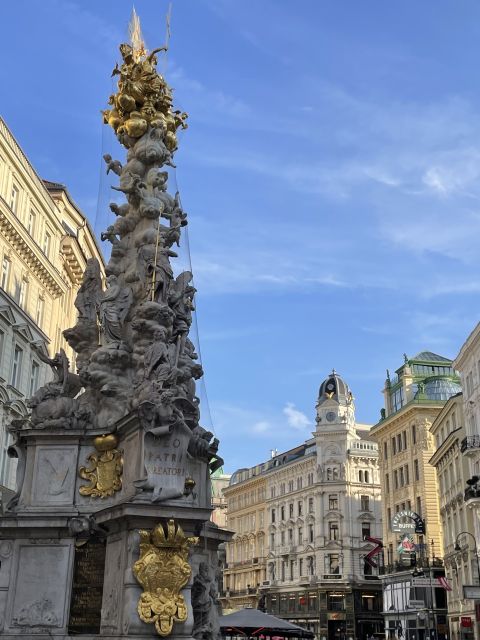
The Vienna State Opera House brings the walk into the city’s musical world. Vienna’s reputation as a music capital can feel abstract until you connect it with actual buildings and people. Your guide helps make that connection.
You also pass Lobkowitz Palace, where Beethoven first conducted his Eroica symphony. That is a particularly good detail for music lovers. It turns a palace façade into a place tied to a major moment in Beethoven’s career.
The route does not attempt to cover every composer, concert hall, or musical story in Vienna. Instead, it uses a few strong examples to show how music fits into the city’s past. I prefer this approach on a short tour. You get memorable anchors rather than a long list of names that blur together.
The opera house and Lobkowitz Palace also show the variety of Vienna’s center. In a short distance, you move from imperial rule to court ceremony, then into the world of opera and Beethoven.
Hotel Sacher, Coffee Houses, and Vienna’s Sweet Side
Vienna’s history is not only about emperors and composers. The tour also passes some of the city’s famous coffee houses, including Hotel Sacher, home of the celebrated Sachertorte.
You do not receive cake or a café stop as part of the tour, and the price does not include food. Think of this section as a guide to Vienna’s café culture and a prompt for later exploration.
That is still valuable. Coffee houses are central to the city’s character, and knowing the names and locations helps you plan your free time. Hotel Sacher is especially useful to identify if you want to try the famous chocolate cake for yourself.
A practical note: do not assume you will have time to sit down during the walk. The route continues through the center, so save your appetite and schedule a separate café break. The guide may also offer suggestions for other cafés and restaurants. Alex was praised for giving useful ideas for the rest of the trip, and another guide, Dace, was appreciated for sharing local café advice.
Graben and the Final View of St. Stephen’s Cathedral
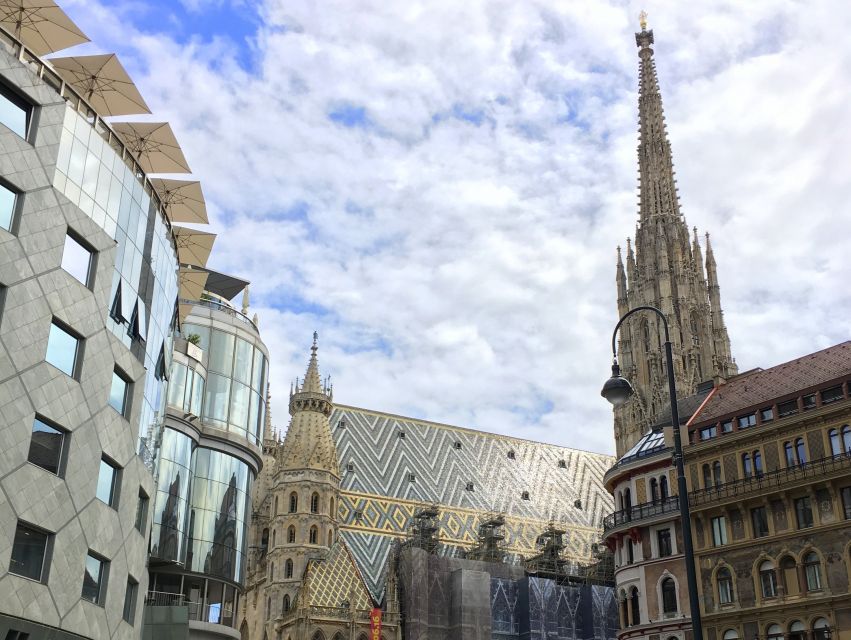
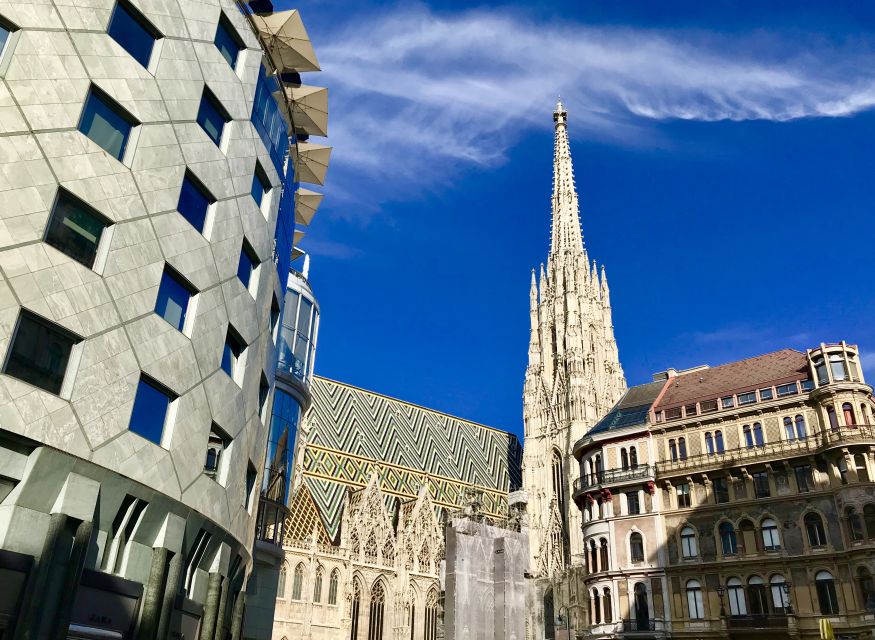
The final stretch leads along Graben, Vienna’s elegant shopping street, before ending beside St. Stephen’s Cathedral. Graben gives you a sense of the city’s polished commercial center, with grand façades and high-end shops set among historic streets.
Ending near St. Stephen’s Cathedral is convenient. You finish in one of the city’s most useful central areas, with an obvious landmark to orient yourself. From here, you can continue exploring the inner city, return to a museum, find lunch, or visit the cathedral separately.
The cathedral is an impressive endpoint, but remember that the guided portion is a walking tour of the center rather than an interior admission tour. Entrance fees are not included. If you want to go inside, climb a tower, or explore another site along the route, plan extra time and budget.
The final section may feel fast for anyone who wants to linger. One person found the amount of history impressive but occasionally rushed, while another felt the two-and-a-half-hour length was just right. Both reactions make sense. The tour covers a lot, and its value depends on whether you prefer a broad first look or a slow examination of fewer sights.
Group Size, Pace, and Weather
The group is limited to 15 people. That is a useful middle ground. You get the energy and price of a shared tour, but you are not lost in a large crowd. A small group also makes it easier to ask questions and stay close to the guide.
The headset system helps keep the experience personal. You do not need to press toward the guide every time the group stops, and you can hear while standing at the edge of a square.
A moderate amount of walking is involved. The route moves through streets, gardens, squares, and palace areas, so comfortable shoes are important. Large bags and luggage are not allowed, and children must be accompanied by an adult. Unaccompanied minors cannot join.
The tour runs in every weather condition. In summer, one guide made a point of using shade and allowing water refills during a hot day. In winter, cold can feel sharper between tall city buildings than expected, so bring proper layers, gloves, and weather protection. A rainy forecast should not automatically stop you, but you need to dress for an outdoor walk.
The experience is not suitable for people with mobility impairments. If walking for 150 minutes over city streets would be difficult, choose a different way to see the center.
Is the $74 Price Worth It?
At $74 per person, this is not the cheapest way to see Vienna’s center. You are paying for a licensed local guide, a small group capped at 15, and clear audio equipment. There are no included admissions, food, drinks, or performances.
The price makes the most sense if you are visiting Vienna for the first time, have limited time, or want a reliable introduction before exploring independently. The route covers the city’s main imperial, musical, and café landmarks without requiring you to plan the connections yourself.
I would be less quick to recommend it to someone who already knows central Vienna well or who wants detailed interior visits. You could spend the same time inside one major museum or palace and get more depth there.
The strongest value comes from the guide. Dace received repeated praise for mixing humor, history, local suggestions, and less obvious stops. Alex was appreciated for adjusting to hot weather, using shade, and helping with plans for the rest of the visit. Those details suggest that the human part of the tour is more important than simply following the route.
Free cancellation up to 24 hours before the start and a reserve-now, pay-later option also reduce the risk of booking early. Check the available start times when you book, since the schedule can vary.
Who Should Take This Vienna Walk?
I would choose this tour for a first visit, especially if you arrive with only a few days or want help getting your bearings quickly. The route gives you a useful mental map of the inner city and shows you which places deserve a longer return visit.
It also suits solo visitors. The walk provides a simple way to begin exploring, and the small group can make the first day in an unfamiliar city feel less scattered.
History and music fans will get plenty from the Habsburg stories, Augustinerkirche, Spanish Riding School, Vienna State Opera, and Beethoven connection. Food lovers get a short introduction to coffee houses and Sachertorte, though you should set aside separate time for tasting.
Families can join if children are accompanied by an adult and are comfortable with the walking. People with mobility limitations, anyone carrying large luggage, and visitors who dislike outdoor sightseeing in poor weather should think twice.
My Verdict: Book It If You Want the Big Picture
Book this tour if you want a guided introduction to Vienna that links its best-known sights into one readable story. The small group, headsets, central route, and strong local guides make it more useful than simply walking past the monuments with a map.
Skip it if you want long interior visits, a concert, a riding performance, or a slow café afternoon. At $74, the tour earns its price through orientation and interpretation, not included attractions.
For most first-time visitors, I would take it early in the trip. Use the final stop near St. Stephen’s Cathedral as your launch point, then return to the places that caught your interest. That is the smart way to use a short city walk: let it show you Vienna, then choose where to spend your deeper time.
FAQ
How long does the Vienna City Center Guided Walking Tour last?
The tour lasts 150 minutes, or two and a half hours.
What language is the tour conducted in?
The live tour guide speaks English.
Where does the tour begin?
The meeting point is beside the statue of Empress Maria Theresa on Maria-Theresien-Platz, between the Kunsthistorisches Museum and Naturhistorisches Museum.
How can I identify the guide?
The guide holds a green Vienna City Walking Tour sign.
What public transport is closest to the meeting point?
The nearest metro station is Volkstheater on line U3. The nearest tram stop is Burgring, served by routes D, 1, 2, and 71.
How large is the tour group?
The tour is limited to no more than 15 people.
Are entrance fees included?
No. Entrance fees are not included in the tour price.
Are headsets provided?
Yes. Headsets are included so you can hear the guide clearly.
Does the tour operate in bad weather?
Yes. The tour takes place in every weather condition, so dress appropriately for the forecast.
Is the tour suitable for people with mobility impairments?
No. The tour involves a moderate amount of walking and is not suitable for people with mobility impairments. Large bags and luggage are also not allowed.
More Walking Tours
- Vienna Historic Center Small Group Walking Tour
★ 5.0 · 1,746 reviews - Vienna: Private Walking Tour with a Local Guide
★ 4.6 · 1,420 reviews - Vienna: 1.5-Hour Underground Walking Tour
★ 4.9 · 1,146 reviews - Vienna: Ghosts and Legends Guided Nighttime Walking Tour
★ 4.4 · 1,088 reviews
Just added around Vienna
- Mobile puzzle rally tour at the Vienna Central Cemetery★ 4.5 · 3 reviews
- RAXI (E-Rickschaw) big private Vienna tour★ 4.5 · 3 reviews
- 8 days European Highlights PRIVATE TOUR from Budapest including Budapest Vienna Prague and Bratislava★ 5.0 · 3 reviews
- Private Transfer from Vienna to Prague with 1 hour Stop in Kutna Hora★ 4.5 · 3 reviews
- Palais Lobkowitz Audio Guide Tour★ 4.0 · 3 reviews
- Private Tour from Vienna to Melk and Dürnstein★ 4.5 · 3 reviews
- Vienna: Designer Fashion Time Capsule Experience★ 5.0 · 3 reviews
- Private day trip from Munich to Eagle’s Nest & Hallstatt★ 4.7 · 3 reviews
City Tours, compared.

Guided Walking Tour of City Center Highlights
Read our review →

Guided Walking Tour of City Highlights & Hidden Gems
Read our review →
City Sightseeing Tour in an Electro Vintage Car
Read our review →
Skip-the-Line Schonbrunn Palace Guided Tour and Vienna Historical City Tour
Read our review →

Browse the lists this tour appears in