

Reviewed · CITY TOURS
Vienna Hop On Hop Off City Tour
Vienna rewards a little strategy. This bus tour gives you a simple way to connect the city center with Schönbrunn, Belvedere, the Prater, and the Danube, while letting you set your own pace. I especially like the choice of 24-, 48-, or 72-hour passes and the wide spread of routes. The recorded commentary, available in 19 languages, is another useful touch, particularly when you want background while riding between sights.
The main catch is service frequency. Some buses may arrive every 40 to 60 minutes, and one reported wait reached a full hour. That matters if you have only one day in Vienna. I would use this as a sightseeing framework, not as a taxi that happens to look like a double-decker bus.
In This Review
- Key points at a glance
- How the Vienna bus system works
- Route One: the historic center in about two hours
- Route Two: Schönbrunn and the Belvedere palaces
- Route Three: the Prater, Danube, and modern Vienna
- Route Four: Cobenzl and Vienna’s northern hills
- What the audio commentary adds
- The music walking tour is a useful bonus
- Is $42.13 a fair price?
- Practical advice before you board
- Who should book this Vienna tour?
- Should you book it?
- FAQ
- How long does one complete bus circuit take?
- What sights does the tour visit?
- Is the Green Line included?
- How many languages are available for the audio commentary?
- Does the ticket include a guided music tour?
- Can I cancel for a refund?
Key points at a glance
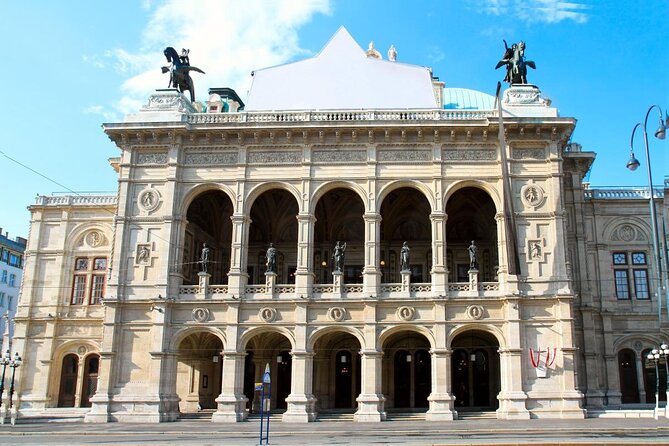
- Three route networks cover very different Viennas: the central red route, the palace and Belvedere route, and longer routes toward the Prater, Danube Tower, and Vienna’s northern hills.
- The 24-hour ticket includes the Green Line: this adds the Cobenzl and Vienna Woods area to the regular city sightseeing routes.
- The bus reaches the big-ticket sights: Schönbrunn Palace, Belvedere Palace, the Vienna State Opera, the Giant Ferris Wheel, and the Danube Tower are all on the route map.
- Audio commentary comes in 19 languages: Korean, Polish, and Serbian are listed among the newer choices.
- A music-themed walking tour is included: the self-guided audio tour points you toward places connected with Mozart, Beethoven, Schubert, and Strauss.
- Allow time for ticket redemption and waiting: the voucher exchange can be confusing, and not every stop may handle the first exchange.
How the Vienna bus system works
You can board at any listed stop, but your pass begins when you first climb aboard. The ticket lasts for 24, 48, or 72 hours, depending on your selection. A single circuit takes about two hours, although that is the riding time rather than a realistic estimate for seeing Vienna.
The central route is the most useful starting point. It loops through the historic center, passing the Vienna State Opera, the Kunsthistorisches Museum, Mariahilfer Straße, City Hall, the Liebenberg Monument, the Sigmund Freud Museum, the Votive Church, Morzinplatz, Schwedenplatz, the Museum of Applied Arts, and Stadtpark.
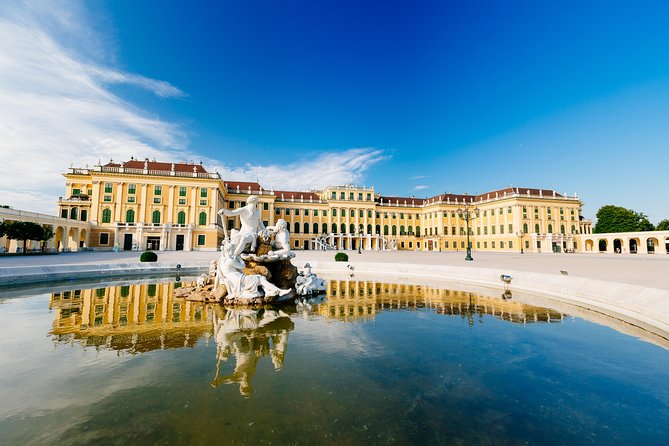
The other routes spread outward. One heads west and south to Westbahnhof, Schönbrunn, Vienna Central Station, Belvedere 21, Belvedere Palace, and Schwarzenbergplatz. Another reaches the Prater, the Giant Ferris Wheel, the Danube Tower, the Vienna International Centre, Alte Donau, and the Reichsbrücke.
The Green Line is the scenic option toward the city’s northern hills. It links the Votive Church with Gartenpalais Liechtenstein, Sandgasse, Cobenzlgasse, Cobenzl Aussicht, Himmelstraße, and Spittelau. If you want this route, check that your chosen ticket includes it. The listed inclusions say it is available with the 24-, 48-, and 72-hour passes.
More City Tours in Vienna
- Vienna: Guided Walking Tour of City Center Highlights
★ 4.7 · 4,989 reviews - Vienna: City Cruise with Optional Lunch
★ 3.4 · 3,982 reviews - Vienna: City Cruise
★ 3.3 · 2,978 reviews
Route One: the historic center in about two hours
Start at the Vienna State Opera, a strong place to begin because it sits at the edge of the old center and is easy to connect with on foot. The building is also a useful orientation point for the Hofburg, Kärntner Straße, and the Ringstrasse.
The next stop is the Kunsthistorisches Museum Wien. This is one of Vienna’s major art museums, and its position on the Ring makes it easy to combine with the nearby Natural History Museum and MuseumsQuartier. You may want to get off here if you prefer museums to a quick outside view.
Mariahilfer Straße is Vienna’s well-known shopping street. It is less about grand imperial buildings and more about everyday city life, shops, cafés, and a useful connection toward Westbahnhof. This stop can help if you are staying near the western part of the city.
City Hall and the Liebenberg Monument bring you back to the grand Ringstrasse. City Hall is an especially good stop for architecture and open public space. The Liebenberg Monument is less of a destination by itself, but it places you near the university, the Burgtheater, and the Votive Church.
The Sigmund Freud Museum is a worthwhile stop for anyone interested in psychology, Freud’s Vienna, or the intellectual life of the city. The Votive Church is close by and gives the route a striking Gothic landmark. It is one of the more photogenic church exteriors on this circuit.
Morzinplatz and Schwedenplatz place you near the Danube Canal and the central waterfront. Schwedenplatz is also a useful transport area, with food, pedestrian routes, and access toward the Prater side of town.
The Museum of Applied Arts and Stadtpark finish the loop. Stadtpark is home to the famous Johann Strauss monument, which also appears as a stop on the longer central route. I like this section because it connects major sights with smaller city experiences, rather than showing only palace façades.
Route Two: Schönbrunn and the Belvedere palaces
The second route is the one I would prioritize if you want to connect Vienna’s major palaces in a single outing. It begins at the Vienna State Opera and runs to Wien Westbahnhof before reaching Schönbrunn Palace.
Schönbrunn is not a quick hop-off stop. The palace grounds are extensive, and the site deserves real time. If you plan to visit the interiors, walk through the gardens, or see more than the entrance area, a 48-hour ticket gives you a much calmer schedule than a one-day pass.
The route then continues to Vienna Central Station. This is practical rather than scenic, but it can help you connect the bus with trains and the southern part of the city.
Belvedere 21 and Belvedere Palace are separate stops, and that distinction matters. Belvedere 21 is a modern art museum, while Belvedere Palace is the grand historic complex associated with major art collections and formal gardens. Do not assume one stop covers both experiences equally well.
Schwarzenbergplatz leads back toward the Opera. It is a convenient place to get off for the monument, the Ringstrasse, and a walk toward the Belvedere area. The route is especially useful for first-time visitors who want to understand how Schönbrunn, the central museums, and the Belvedere relate geographically.
A warning from the route pattern: this bus is most useful when you plan your stops before boarding. If you simply ride until something looks interesting, you may spend a large share of the pass waiting for the next vehicle or circling back.
Route Three: the Prater, Danube, and modern Vienna
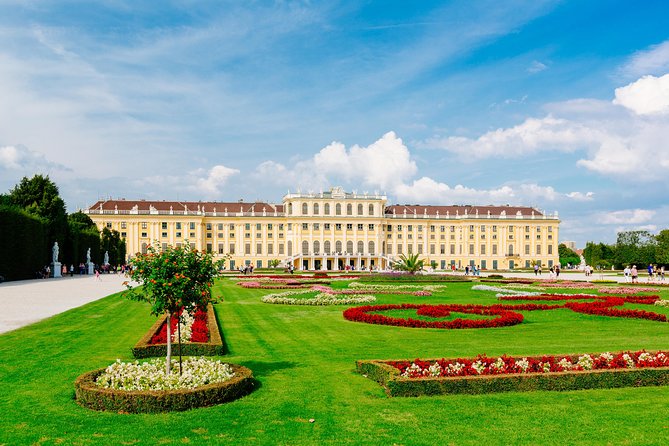
The third route offers the broadest change of scenery. It starts at the Museum of Applied Arts and passes Stadtpark, the Johann Strauss monument, the Opera, the Kunsthistorisches Museum, MuseumsQuartier, City Hall, and the Votive Church before heading east.
MuseumsQuartier is a good hop-off point if you want galleries, museums, courtyards, and cafés in one compact area. City Hall and the central stops are better for architecture and old Vienna, while the eastern section shows a different side of the capital.
Kunst Haus Wien, the Hundertwasser museum, is one of the more distinctive stops. Its playful design and unusual surfaces make it a good choice if you have already seen the imperial center and want something less formal.
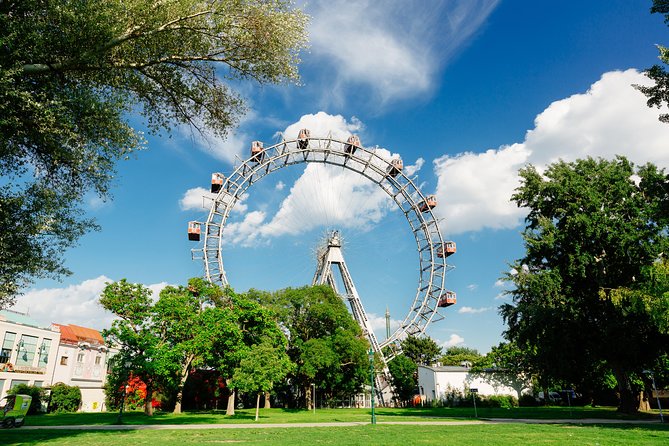
The Viennese Giant Ferris Wheel is the major Prater stop. The wheel is an iconic Vienna experience, and the surrounding park gives you a break from museums and palaces. DDSG Blue Danube Schiffahrt is also listed on this route, connecting the bus network with the city’s river sightseeing options, though a boat ride is not stated as part of this ticket.
The Danube Tower is farther out and rewards the extra riding time with a different view of Vienna. One particularly useful feature of this route is that it lets you reach a sight you might otherwise skip. The Vienna International Centre, Alte Donau, Reichsbrücke, and Praterstern continue the circuit through modern districts and transport corridors.
Taborstraße, Schwedenbrücke, and the Museum of Applied Arts bring you back toward the center. This is a long route, so check the service interval before getting off. A pleasant stop can become an awkward wait if the next bus is not due for 40 minutes.
A few more trips of this kind worth comparing:
- Vienna: Vivaldi’s Four Seasons Concert in Karlskirche
★ 4.7 · 14,951 reviews - Vienna: Spanish Riding School Training
★ 3.9 · 9,281 reviews - Vienna: Skip-the-cashier-desk-line Giant Ferris Wheel Ride
★ 4.5 · 7,859 reviews - Vienna: Schönbrunn Palace & Gardens Skip-the-Line Tour
★ 4.7 · 7,739 reviews
Route Four: Cobenzl and Vienna’s northern hills
The Green Line begins at the Votive Church and heads toward Gartenpalais Liechtenstein. From there, it continues through Sandgasse, Cobenzlgasse, Cobenzl Aussicht, Himmelstraße, Spittelau, and back to the Votive Church.
This route is the best choice for a change from monuments and museums. Cobenzl Aussicht gives you a hilltop view, while the stops around Cobenzlgasse and Himmelstraße reach Vienna’s northern wine-country area. The route is also the one that produced some of the strongest praise for the overall experience, since it offers scenery that a standard city circuit cannot provide.
Do not treat it as a quick add-on. The Green Line is a separate outing, and you should allow enough time for the ride and any stop you want to explore. If you have only a few hours, use the central and palace routes first.
What the audio commentary adds
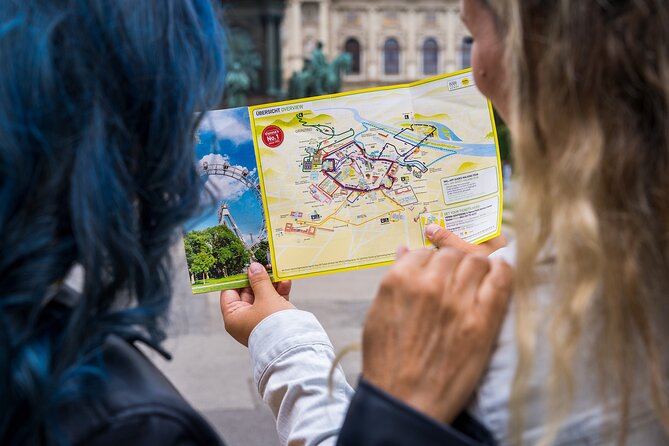
The recorded narration is available in 19 languages, with Korean, Polish, and Serbian listed as newer options. That is a real advantage for visitors who want context without joining a fixed walking group.
The commentary is generally sufficient for identifying the sights and explaining what you are passing. I like the freedom of listening while looking out at the city, then getting off when something catches your attention.
The tradeoff is that a recording cannot answer a question or adjust to traffic. Some passengers found the narration difficult to hear, out of sync, or too quiet when nearby conversations became loud. Headphone ports also reportedly failed on some seats, so it is sensible to test the audio early and change seats if needed.
There is no live guide built into this experience. That keeps the price reasonable, but it also means the bus driver may not be able to offer detailed sightseeing help. Ground staff have been described as helpful, while individual driver interactions have varied.
The music walking tour is a useful bonus
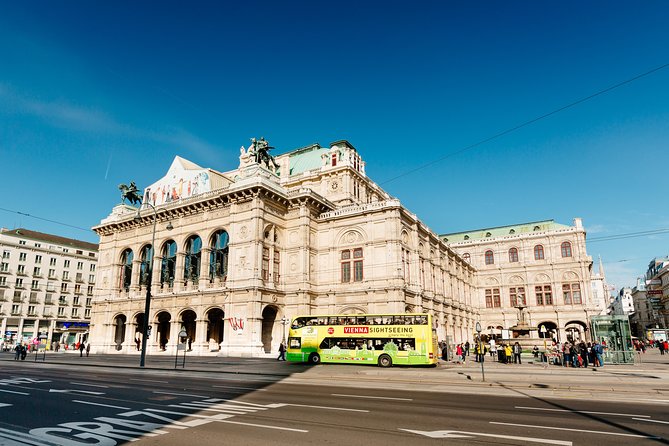
The ticket includes audio files for a self-guided music history tour. This connects places in Vienna with Mozart, Beethoven, Schubert, and Strauss.
Think of it as a walking supplement, not a guided concert or scheduled tour. It is most useful after you have gained a basic sense of the center from the bus. You can then walk with a purpose, following Vienna’s musical connections at your own speed.
The Johann Strauss monument at Stadtpark fits naturally with this theme. The central route also passes areas associated with the city’s composers and concert culture. For a music lover, this bonus helps the ticket feel less like simple transportation.
Is $42.13 a fair price?
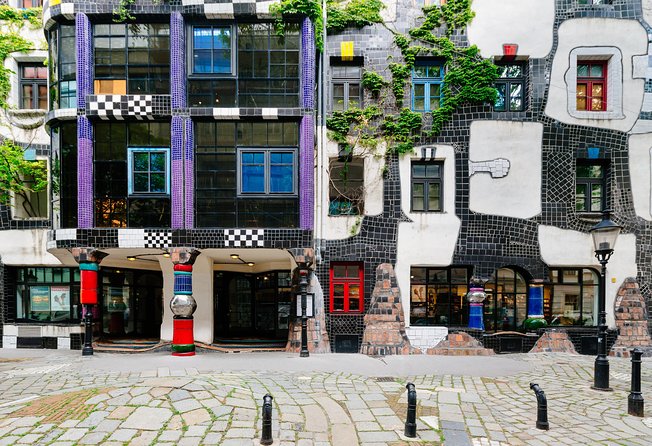
At $42.13 per person, the 24-hour pass makes the most sense when you plan to ride several routes and use the bus to reach distant sights. A single two-hour circuit is unlikely to justify the price by itself.
The value improves with the 48- or 72-hour options if you want to visit Schönbrunn, Belvedere, the Prater, the Danube Tower, and the northern hills without rushing. You are paying for flexibility and connections, not just a narrated ride.
I would not buy it automatically for a short stay in central Vienna. Much of the old center is walkable, and waiting for a bus can cost more time than walking between nearby stops. The ticket earns its keep when you combine far-apart sights or want an easy overview before choosing where to spend your time.
Practical advice before you board
Confirmation is provided at booking, and free cancellation is available up to 24 hours before the start time. Changes or cancellations inside that 24-hour window are not accepted for a refund.
The voucher exchange has caused confusion. Only two locations may handle redemption, and the exact exchange point is not always clear. Check the instructions carefully before setting out, especially if you are beginning somewhere other than the Opera.
Once aboard, note the route color and direction. The number of stops can make it hard to tell where you are, particularly on the longer eastern route. Keep the map open and check the next landmark rather than relying only on the audio.
Do not count on every bus arriving quickly. Reports include waits of 30 minutes, 40 to 60 minutes, and, in one case, an hour. Build your day around the timetable you actually see at the stop, not an ideal schedule.
The buses have been praised for cleanliness, careful driving, and good overall organization on some departures. Air conditioning, seat comfort, Wi-Fi, headphone ports, and staff service have been less consistent. Service animals are allowed, and the tour is near public transportation. Most people can participate.
Who should book this Vienna tour?
I would recommend it to first-time visitors who want a broad look at Vienna, families who prefer not to walk between distant sights, and anyone planning several stops outside the center. It is also useful if you want a hill route, a palace route, and a Danube or Prater route under one pass.
It suits independent sightseers better than visitors seeking a polished live tour. You control the day, but you also need to monitor stops, routes, waits, and ticket redemption.
Should you book it?
Book this tour if you will use at least two routes and want Schönbrunn, Belvedere, the Prater, or the Danube Tower in the same sightseeing plan. The audio commentary, music walking tour, and choice of pass length add useful flexibility.
Skip it if your Vienna plans focus almost entirely on the compact historic center or if you have only a few hours and cannot tolerate waiting. My best advice is to choose the 24-hour pass for a focused overview, and consider 48 hours when you want to get off often and explore without racing the clock.
FAQ
How long does one complete bus circuit take?
A complete ride takes approximately two hours. Your ticket is valid for 24, 48, or 72 hours from your first boarding, depending on the option selected.
What sights does the tour visit?
The routes include the Vienna State Opera, Kunsthistorisches Museum, Schönbrunn Palace, Belvedere Palace, Belvedere 21, City Hall, the Sigmund Freud Museum, the Prater, the Giant Ferris Wheel, the Danube Tower, and the Vienna International Centre.
Is the Green Line included?
Yes. The Green Line is listed as included with the 24-hour, 48-hour, and 72-hour tickets. It runs toward Cobenzl, Cobenzl Aussicht, Himmelstraße, and Spittelau.
How many languages are available for the audio commentary?
The onboard audio commentary is available in 19 languages. Korean, Polish, and Serbian are listed among the newer language options.
Does the ticket include a guided music tour?
It includes audio files for a self-guided music history walking tour. The tour focuses on Vienna locations connected with Mozart, Beethoven, Schubert, and Strauss.
Can I cancel for a refund?
You can cancel up to 24 hours before the experience start time for a full refund. Cancellations or changes made less than 24 hours before the start time are not accepted for a refund.
Just added around Vienna
- Mobile puzzle rally tour at the Vienna Central Cemetery★ 4.5 · 3 reviews
- 8 days European Highlights PRIVATE TOUR from Budapest including Budapest Vienna Prague and Bratislava★ 5.0 · 3 reviews
- RAXI (E-Rickschaw) big private Vienna tour★ 4.5 · 3 reviews
- Private Transfer from Vienna to Prague with 1 hour Stop in Kutna Hora★ 4.5 · 3 reviews
- Vienna: Designer Fashion Time Capsule Experience★ 5.0 · 3 reviews
- Palais Lobkowitz Audio Guide Tour★ 4.0 · 3 reviews
- Private Tour from Vienna to Melk and Dürnstein★ 4.5 · 3 reviews
- Vienna Sight & Gourmet Tour – individual private tour★ 4.5 · 3 reviews
City Tours, compared.

Guided Walking Tour of City Center Highlights
Read our review →

Guided Walking Tour of City Highlights & Hidden Gems
Read our review →
City Sightseeing Tour in an Electro Vintage Car
Read our review →
Skip-the-Line Schonbrunn Palace Guided Tour and Vienna Historical City Tour
Read our review →
Browse the lists this tour appears in