
Reviewed · CITY TOURS
Vienna: City Highlights Guided Walking Tour & Old Town
Vienna’s center rewards slow walking. This two-hour tour links Roman and medieval history with the Hofburg, palace gardens, Jewish quarter, and St. Stephen’s Cathedral, giving you a useful first look at the city without taking up half your day. I especially like the mix of famous sights and quieter courtyards, plus the chance to hear the story behind Sacher cake and other Viennese desserts.
I also like the clear route through Vienna’s past and present. You move from Roman foundations to medieval streets, then into the former Habsburg residence and along the Ring Street area. The main consideration is depth: at $25, this is a well-priced orientation walk, but a two-hour overview may feel brief if you want detailed museum history or long stops at each monument.
In This Review
- Key points to know before you book
- Why this two-hour Vienna walk works well as an introduction
- Starting near Vienna’s Roman or art-filled center
- Roman foundations and medieval Vienna
- Crossing the area of Vienna’s former Jewish quarter
- The Hofburg and the former Habsburg residence
- A quieter pause among 3,000 roses
- Ring Street buildings and the story of Sacher cake
- The Capuchin Crypt and the final approach to St. Stephen’s
- What $25 gets you
- Who should choose this walk
- Should you book the Vienna City Highlights walk?
- FAQ
- How long does the Vienna walking tour last?
- How much does the tour cost?
- What languages are available?
- Is the tour led by a local guide?
- Where does the tour start?
- Where does the tour finish?
- Does the tour visit St. Stephen’s Cathedral?
- Does the tour include entry to the Hofburg?
- What should I bring?
- Is the tour wheelchair accessible?
- Can I cancel for a full refund?
- Do I need to pay when I reserve?
Key points to know before you book
- The route ends near St. Stephen’s Cathedral: You finish at Vienna’s most famous landmark, in the center of the Old Town.
- Medieval Jewish history is part of the walk: The route crosses the area of Vienna’s former Jewish quarter, adding an important layer often missed on a standard city stroll.
- The Hofburg is seen from the outside: You explore its surroundings, former palace gardens, and stories of Habsburg residents, but the tour is not presented as an indoor palace visit.
- Expect lesser-seen corners: Passageways and courtyards add variety between the major sights.
- The gardens feature 3,000 rose bushes: This is one of the gentler parts of the route and a welcome break from stone streets.
- English and Italian tours are available: The walk is led by a licensed local guide and costs $25 per person.
Why this two-hour Vienna walk works well as an introduction
Vienna can feel grand and sprawling at first. Imperial buildings, churches, museums, cafés, and layers of Roman and medieval history all crowd into the center. A guided walk helps you connect those pieces before you spend time exploring on your own.
This experience focuses on Vienna’s historical center rather than trying to cover the whole city. That is the right call for a two-hour tour. You stay on foot, move through several important districts and landmarks, and get a set of ideas for the rest of your visit.
I see this as a get your bearings fast kind of tour. It is especially useful near the beginning of a Vienna stay, when you want to understand where the Old Town ends, where the Hofburg area begins, and how St. Stephen’s Cathedral fits into the city center.
The guide is a licensed local, and the tour is offered in English or Italian. That matters here because the route depends on stories, not just buildings. A palace façade can look impressive on its own, but its meaning becomes clearer when you know who lived there, how the city changed, and why Vienna’s streets developed as they did.
More City Tours in Vienna
- Vienna: Guided Walking Tour of City Center Highlights
★ 4.7 · 4,989 reviews - Vienna: City Cruise with Optional Lunch
★ 3.4 · 3,982 reviews - Vienna: City Cruise
★ 3.3 · 2,978 reviews
Starting near Vienna’s Roman or art-filled center
There are two possible starting points: the Art Gallery Carré d’artistes Wien or the Wien Museum Römermuseum. Your exact meeting point depends on the option you book, so check the confirmation carefully before setting out.
The Römermuseum connection is fitting. The tour introduces Vienna’s Roman past before moving into the medieval city and later imperial periods. That gives the route a useful timeline rather than presenting the Old Town as a collection of unrelated pretty buildings.
If your start is at the art gallery, you begin from a more modern cultural setting. Either way, the walk soon turns toward the historic center, where the guide can point out how earlier periods remain part of present-day Vienna.
Do not arrive expecting a coach or transfer between sights. This is a walking tour from start to finish. Comfortable shoes are not a minor suggestion. Vienna’s central streets are ideal for walking, but two hours on hard pavement can be tiring in thin footwear.
Roman foundations and medieval Vienna
One of the strongest parts of the route is its timeline. You hear about Ancient Roman Vienna, then move into the Middle Ages and the growth of the city around its historic center.
That approach gives you something more useful than a list of dates. It helps explain why Vienna has such a layered appearance. Ancient foundations, medieval lanes, imperial buildings, and modern city life sit close together.
The medieval section also gives the walk its sense of place. You pass through picturesque passageways and stop at one or more courtyards that are easy to miss when you are walking alone. These spots are not necessarily grand monuments. Their value is that they show the smaller scale of old Vienna, away from the large ceremonial buildings.
I like this balance. St. Stephen’s Cathedral and the Hofburg are essential sights, but Vienna’s character is also found in the narrow routes between them. A guide can make those connections visible and explain why a simple passage or courtyard matters.
The limitation is time. You receive an overview, not a specialist lecture on Roman archaeology or medieval urban planning. If those subjects are your main reason for visiting Vienna, you may want a museum visit or a longer history-focused tour afterward.
Crossing the area of Vienna’s former Jewish quarter
The tour includes the area of the medieval Jewish quarter, a valuable part of Vienna’s story. This section keeps the walk from becoming only an imperial sightseeing circuit.
Jewish history in Vienna is complex, and even a short introduction can change how you read the Old Town. Streets that look purely picturesque may also carry memories of a community that helped shape the city and endured severe persecution.
The supplied details do not promise an indoor museum visit or a dedicated memorial program, so you should think of this as a guided introduction while walking through the district. The quality of this portion will depend heavily on how much context your guide provides within the two-hour schedule.
That is also where your expectations matter. The route offers a broad view of Vienna’s history, including Jewish history, rather than a full specialist tour of Jewish Vienna. Still, its inclusion makes the experience more thoughtful than a simple parade of palaces and churches.
More Walking Tours in Vienna
- Vienna: Vienna Central Cemetery Guided Walking Tour
★ 4.8 · 3,307 reviews - Vienna: Guided Walking Tour of City Highlights & Hidden Gems
★ 4.9 · 2,180 reviews - Vienna: Viennese Underworld Guided Walking Tour
★ 4.7 · 1,865 reviews - Vienna: World War II Historical Walking Tour
★ 4.8 · 1,772 reviews
The Hofburg and the former Habsburg residence
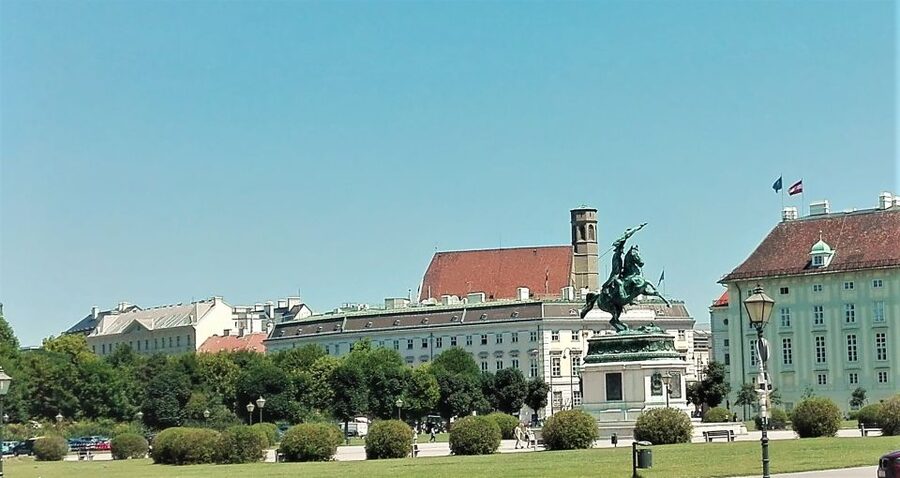
The Hofburg section shifts the focus from medieval streets to imperial Vienna. The palace complex was the residence of the Habsburgs and is now home to several museums and other present-day institutions.
You walk through the surrounding area and hear about former residents as well as the site’s current use. This is a practical way to approach the Hofburg because the complex can feel confusing when you first see it. It is not one tidy palace with one obvious entrance. It is a collection of buildings and spaces shaped over many periods.
The guide’s commentary should help you read the architecture as part of a working city rather than as a frozen royal backdrop. You learn about the people connected to the complex, then see how the area functions today.
Keep in mind that the tour description focuses on the surroundings. It does not include entry to the Hofburg museums, so budget extra time and admission costs if you want to go inside after the walk.
That outside perspective is still useful. You can get the basic story first, then choose the museum that interests you most instead of wandering into the complex without a plan.
A quieter pause among 3,000 roses
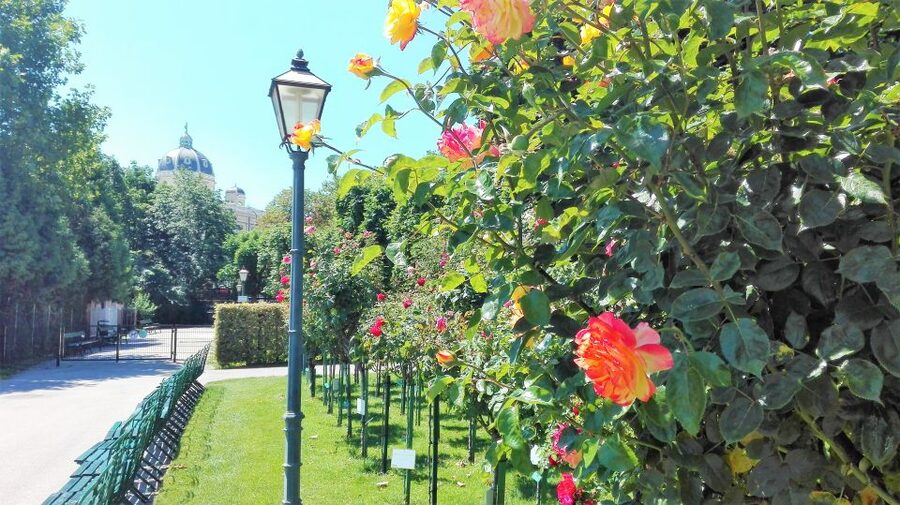
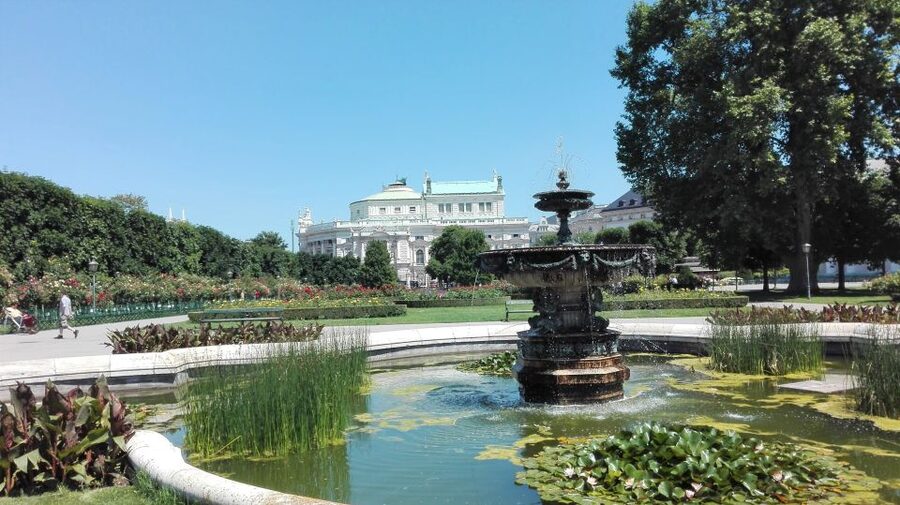
The former palace gardens offer a change of pace. The route takes you through the gardens, where you can enjoy the scent of about 3,000 rose bushes.
This sounds like a small detail, but it improves the rhythm of the walk. Vienna’s center is filled with stone, grand façades, and busy sightseeing routes. A garden stop gives you room to breathe and a chance to take photographs without constantly looking up at buildings.
The gardens also help show the contrast between imperial ceremony and private pleasure. The palace grounds were not only about formal power. They included spaces designed for beauty, leisure, and display.
The garden visit may be seasonal in feel, since roses are not equally impressive all year, but the route still provides an open-air break. If flowers and gardens are a major priority for you, do not treat this as a substitute for a full garden visit. It is one stop within a compact city walk.
Ring Street buildings and the story of Sacher cake
The walk also covers the famous Ring Street and its notable buildings. This part expands your view beyond the medieval center and shows how Vienna presented itself as a grand imperial capital.
The Ring Street story is useful because the architecture here can seem almost too polished and grand. Hearing why the street was created and how its buildings fit Vienna’s development gives the views more meaning.
Food gets its turn as well. You learn the story of Sacher cake and receive suggestions for other Viennese cakes to try during your stay. That is exactly the kind of advice I want from a local walking guide. A dessert is not just a snack in Vienna. It is part of the city’s café culture and a pleasant way to continue the day after the tour.
The experience does not include cake or café time, so plan to sample one on your own. The value is in the background and recommendations, not in a tasting.
The Capuchin Crypt and the final approach to St. Stephen’s
On the way through the city, you pass the Capuchin Crypt, the family crypt of the Habsburgs. The stop adds a darker, more intimate note to the imperial story.
The crypt is a reminder that the Habsburg story was not only about palaces, ceremonies, and grand public buildings. Dynasties also built places for burial, memory, and family tradition. The tour description does not indicate that entry is included, so consider the exterior pass-by as an introduction rather than a crypt visit.
The walk ends at St. Stephen’s Cathedral, usually referred to as Stephansdom, in the heart of Vienna’s Old Town. This is a satisfying finish because the cathedral is both a major landmark and a useful point for continuing your day.
The listed ending locations include Stephansplatz and Schulerstraße in the 1010 district. These are central locations, so you can continue sightseeing, find a café, or make your way to another part of Vienna after the guide says goodbye.
There is a slight logistical wrinkle: the meeting point can vary by the option booked, while the activity information also describes the experience as ending back at the meeting point. Check your booking details for the exact start and finish arrangement. The named drop-off points are in the central Stephansplatz area.
What $25 gets you
At $25 per person, the tour offers solid value if you want a guided introduction rather than a full-day historical program. You receive two hours with a licensed local guide, a route through several major areas, historical context, and suggestions for what to do next.
The value is strongest for first-time visitors and for people who prefer a clear story as they walk. You see the Hofburg area, palace gardens, Ring Street, the Capuchin Crypt, the medieval Jewish quarter, and St. Stephen’s Cathedral without paying for separate entries to multiple attractions.
It is less valuable if you already know Vienna’s center well or plan to spend your time inside museums. Since the tour is an overview, you may want more detail at individual sites.
One written assessment gave the experience three out of five and said the guide was kind and helpful but that the amount of information felt limited for a city as important as Vienna. I think that is a fair warning. The price is modest, and the route is broad, so you should expect useful orientation rather than exhaustive commentary.
The free cancellation policy allows you to cancel up to 24 hours in advance for a full refund. You can also reserve now and pay later, which helps if your Vienna schedule is still changing.
Who should choose this walk
I would recommend this tour to you if:
- You are visiting Vienna for the first time.
- You want a short introduction before choosing museums and palaces to visit.
- You enjoy history told through streets, courtyards, and buildings.
- You want both famous landmarks and less obvious corners.
- You prefer walking to sightseeing from a vehicle.
- You would like English or Italian commentary.
- You want ideas for Viennese cakes and places to explore after the tour.
I would be more cautious if you want long interior visits, detailed art history, or a specialist tour focused only on Jewish Vienna, Roman Vienna, or the Habsburgs. None of those subjects receives a full dedicated visit within two hours.
The tour is listed as wheelchair accessible, but the route is still described as a walking experience, so it is sensible to confirm the exact route and meeting arrangement if you have mobility concerns.
Should you book the Vienna City Highlights walk?
Book it if you want a reasonably priced, two-hour introduction to Vienna’s historic center. I like its range: Roman origins, medieval streets, Jewish history, Habsburg power, palace gardens, Ring Street architecture, café culture, and St. Stephen’s Cathedral all appear in one compact route.
Do not book it expecting deep detail at every stop. The main tradeoff is breadth over time. For $25, that is a reasonable deal, especially early in your stay when you need a map in your head and a short list of places to revisit.
The best plan is to take the walk near the start of your Vienna visit, wear comfortable shoes, listen for the guide’s recommendations, and use the final stop at Stephansplatz as the beginning of your next adventure.
FAQ
How long does the Vienna walking tour last?
The tour lasts two hours.
How much does the tour cost?
The price is $25 per person.
What languages are available?
The tour is available in English and Italian.
Is the tour led by a local guide?
Yes. The tour includes a licensed local tour guide.
Where does the tour start?
There are two possible starting locations: Art Gallery Carré d’artistes Wien and Wien Museum Römermuseum. The exact meeting point depends on the option booked.
Where does the tour finish?
The listed ending locations are Stephansplatz and Schulerstraße, 1010 Wien, Austria. The booking details should confirm the exact arrangement.
Does the tour visit St. Stephen’s Cathedral?
The walking route ends at St. Stephen’s Cathedral, also called Stephansdom, in Vienna’s Old Town.
Does the tour include entry to the Hofburg?
The tour explores the surroundings of the Hofburg and discusses its former residents and present use. Entry to the palace museums is not listed as included.
What should I bring?
Bring comfortable shoes because the experience involves walking.
Is the tour wheelchair accessible?
Yes, the activity is listed as wheelchair accessible.
Can I cancel for a full refund?
Yes. You can cancel up to 24 hours in advance for a full refund.
Do I need to pay when I reserve?
No. The reserve now and pay later option lets you book without paying immediately.
More Walking Tours
- Vienna Historic Center Small Group Walking Tour
★ 5.0 · 1,746 reviews - Vienna: Private Walking Tour with a Local Guide
★ 4.6 · 1,420 reviews - Vienna: 1.5-Hour Underground Walking Tour
★ 4.9 · 1,146 reviews - Vienna: Ghosts and Legends Guided Nighttime Walking Tour
★ 4.4 · 1,088 reviews
Just added around Vienna
- Mobile puzzle rally tour at the Vienna Central Cemetery★ 4.5 · 3 reviews
- 8 days European Highlights PRIVATE TOUR from Budapest including Budapest Vienna Prague and Bratislava★ 5.0 · 3 reviews
- RAXI (E-Rickschaw) big private Vienna tour★ 4.5 · 3 reviews
- Private Transfer from Vienna to Prague with 1 hour Stop in Kutna Hora★ 4.5 · 3 reviews
- Palais Lobkowitz Audio Guide Tour★ 4.0 · 3 reviews
- Private Tour from Vienna to Melk and Dürnstein★ 4.5 · 3 reviews
- Vienna: Designer Fashion Time Capsule Experience★ 5.0 · 3 reviews
- Vienna Sight & Gourmet Tour – individual private tour★ 4.5 · 3 reviews
City Tours, compared.

Guided Walking Tour of City Center Highlights
Read our review →
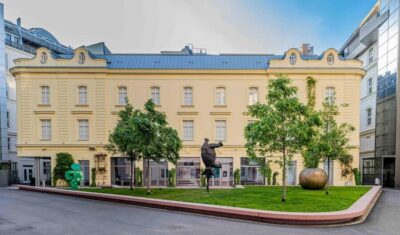

Guided Walking Tour of City Highlights & Hidden Gems
Read our review →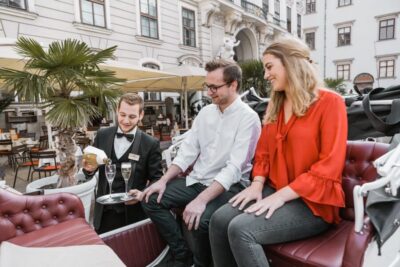
City Sightseeing Tour in an Electro Vintage Car
Read our review →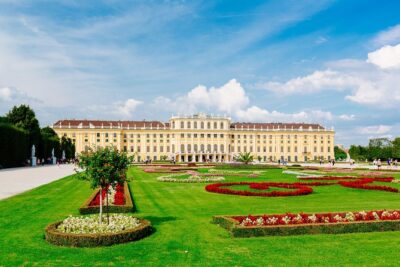
Skip-the-Line Schonbrunn Palace Guided Tour and Vienna Historical City Tour
Read our review →

Browse the lists this tour appears in