
Reviewed · CONCERTS
Vienna: Classical Concerts in the Minorite Church Ticket
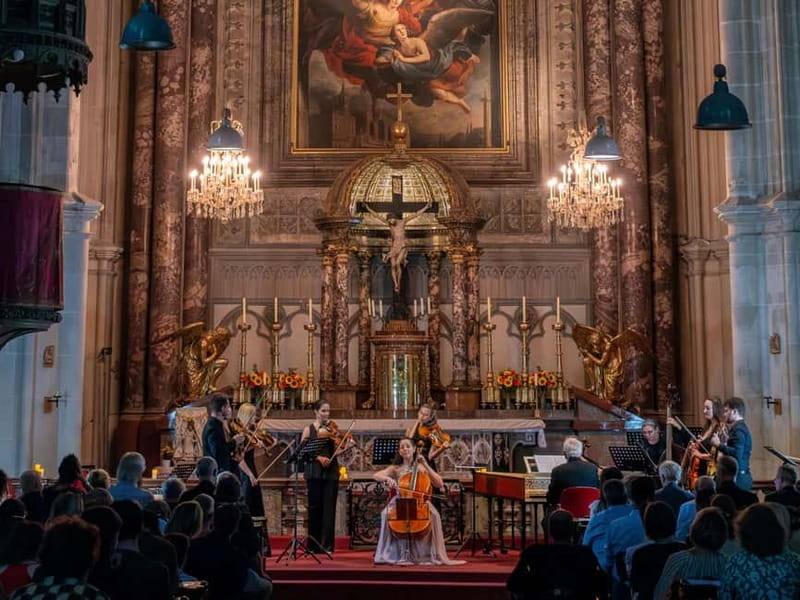
Church concerts have their own weather. The Minoritenkirche setting gives this 70-minute concert an atmosphere no plain concert hall can match, while the clear acoustics let you follow every violin line and solo passage. I especially like the central location and the chance to hear respected musicians, including members of the Vienna Philharmonic on selected dates. At $22, it is also an easy cultural add-on to a day in Vienna.
The main caution is comfort. Church seating can feel firm, and the building may become chilly during a long performance, especially without an interval. Seating position also matters: front sections give you a close view of the musicians, while cheaper or more distant sections may offer less visual contact even though the sound remains strong.
In This Review
- Key points at a glance
- Why the Minoritenkirche changes the concert
- What your 70 minutes looks like
- The music: from Vivaldi to Bach
- Seating: sound versus sight
- The practical matter of temperature
- How it compares with Vienna’s grand concert halls
- Is $22 a good value?
- Who will enjoy this most?
- Booking and evening tips
- Should you book the Minoritenkirche concert?
- FAQ
- Where does the concert take place?
- How long is the concert?
- How much does the ticket cost?
- What music might be performed?
- Are members of the Vienna Philharmonic involved?
- Is a program sheet included?
- Is the church wheelchair accessible?
- Are young children allowed?
- Can I cancel my booking?
Key points at a glance
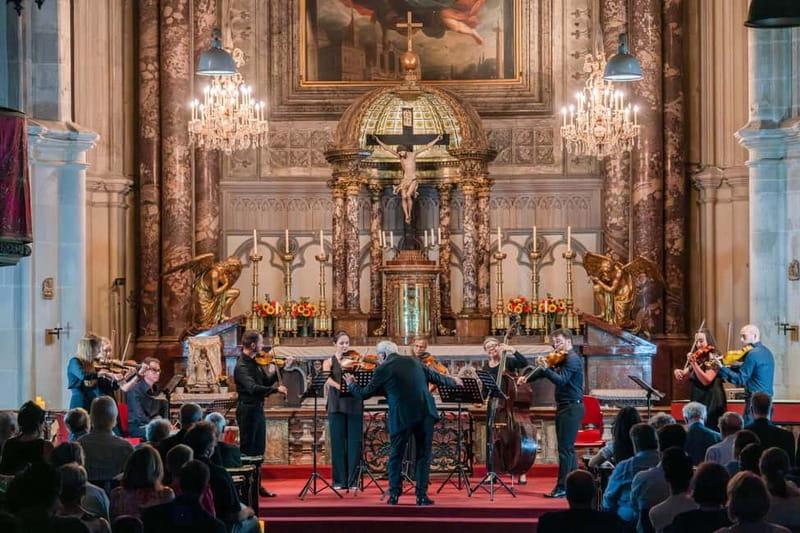
- Gothic church venue: Hear classical music inside the historic Minoritenkirche, one of Vienna’s most distinctive concert settings.
- A 70-minute program: The length fits neatly into an evening, with enough music to feel substantial without taking over your night.
- Programs change: You might hear Vivaldi’s Four Seasons, Mozart and Haydn chamber music, seasonal concerts, or Bach’s Mass in B Minor.
- Strong performers: Selected concerts feature members of the Vienna Philharmonic, while other programs bring skilled soloists, ensembles, choirs, and orchestras.
- Good central-city value: At $22 per person, this is a relatively modest way to add live classical music to a Vienna itinerary.
- Plan for church conditions: No food, drinks, smoking, flash photography, video, or interior photography are allowed, and some seats may be hard.
Why the Minoritenkirche changes the concert
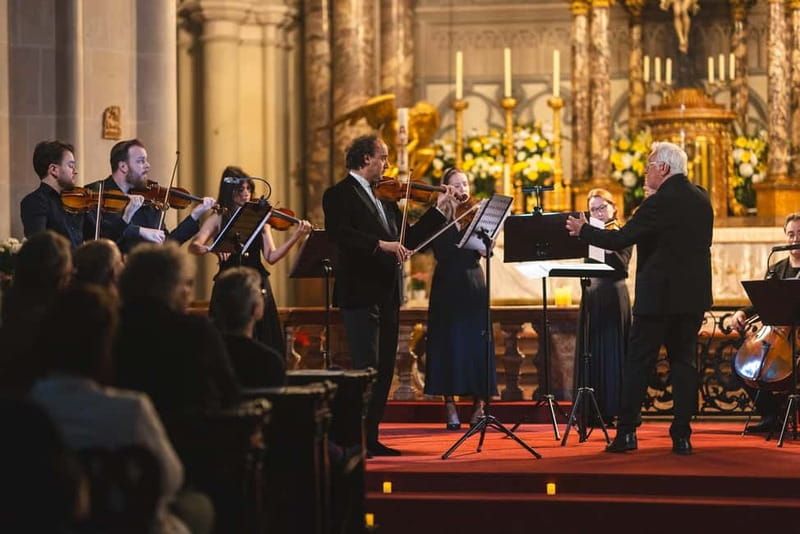
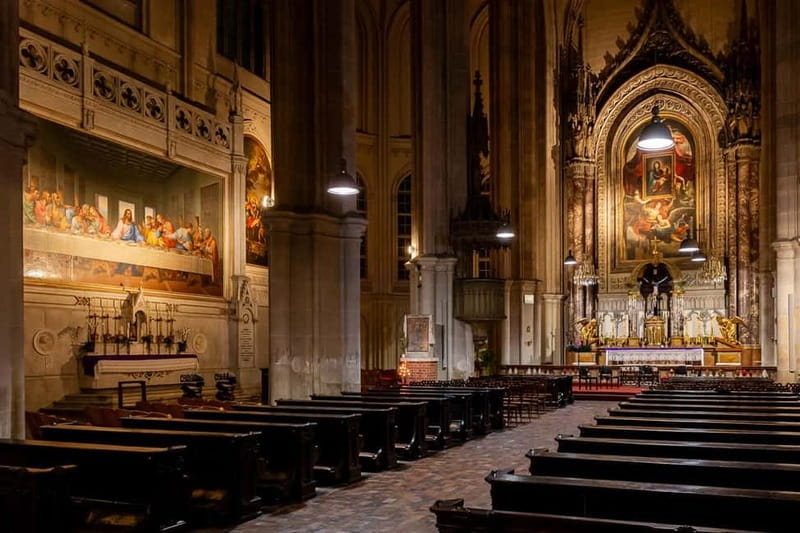
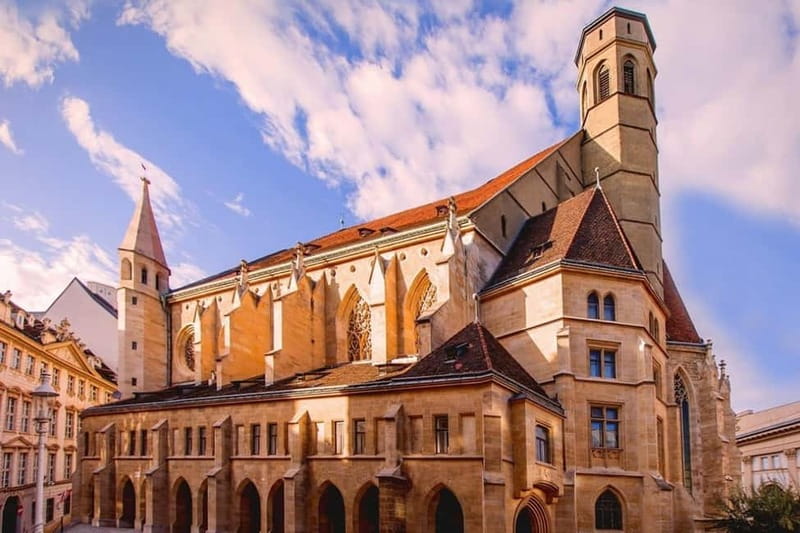
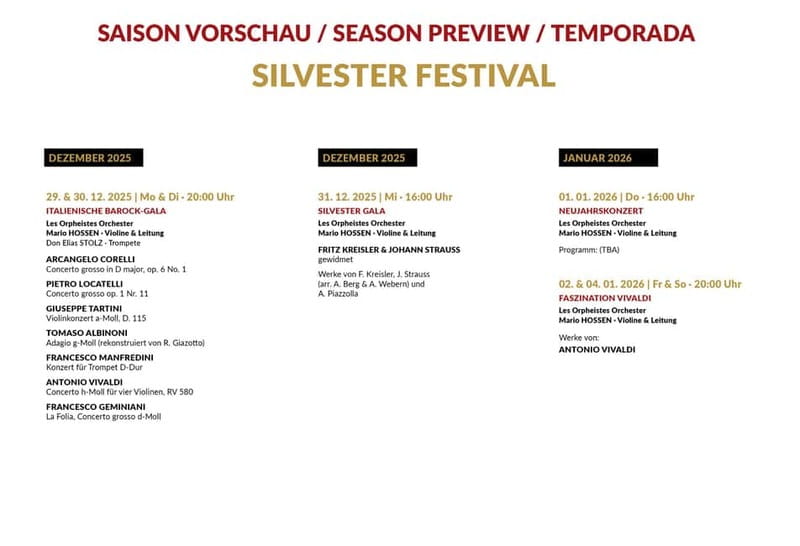
Vienna has no shortage of formal concert halls. The Minoritenkirche offers something different: music surrounded by Gothic architecture, stone surfaces, high vaulted spaces, and the quiet sense that this building was made for ceremony long before it hosted tourist concert programs.
That setting affects the experience from the moment you enter. You are not simply taking a seat in front of a stage. You are listening inside a working historic church, where the architecture becomes part of the performance.
The sound is a major reason to choose this venue. The church’s acoustics give string instruments a lingering, rounded quality. A violin can carry clearly through the room, while softer passages gain a sense of space. That resonance is especially effective for Vivaldi, Bach, and sacred choral music.
There is a tradeoff. Reverberation can soften the edges of very fast musical passages. If you want a dry, highly controlled concert-hall sound, this may not be your ideal venue. If you like music with a sense of air around it, the church is a fine match.
More Attraction Tickets in Vienna
- Vienna: Classic Ensemble Vienna in St. Peter’s Church Ticket
★ 4.7 · 4,819 reviews - Vienna Kunsthistorisches Museum Day Admission Ticket
★ 4.6 · 3,690 reviews - Vienna: Tickets for Mozarthaus Vienna with Audio Guide
★ 4.2 · 2,344 reviews
What your 70 minutes looks like
This is a compact concert rather than an entire night at the opera. You arrive at the specified meeting point, where the exact location can vary by the option you book. A host or greeter may assist in English, German, Spanish, or Italian, and the activity ends back at the meeting point after the performance.
Once inside, you receive an entrance ticket and a program sheet or booklet. That printed program matters more than you might expect. It helps you identify the pieces, follow the order of the evening, and understand whether you are hearing a chamber ensemble, orchestra, choir, or soloist.
The concert itself lasts about 70 minutes. Programs can differ widely, so check the date before booking. One evening may focus on a familiar work such as Vivaldi’s Four Seasons. Another may offer a less common chamber arrangement or a seasonal program for Easter, Advent, Christmas, or New Year’s.
There is no stated interval, and one audience member specifically wished for a short break. For most people, 70 minutes is a comfortable length. Still, if you find church seating uncomfortable or tend to feel cold, the uninterrupted format is worth considering.
The music: from Vivaldi to Bach
The programming is the strongest reason not to assume every date is the same. The concert series reaches across the familiar core of Viennese classical music, but it is not limited to one standard greatest-hits program.
Vivaldi’s Four Seasons is a natural fit for the church. The work’s storms, birdsong, pastoral passages, and energetic rhythms give the musicians plenty of room to show their character. A strong performance can feel almost theatrical, especially from a close seat where you can watch bow movements and the exchange between players.
Mozart and Beethoven also feature regularly. Mozart works well in chamber settings because of the conversation between instruments. Beethoven brings more force and contrast, even when played by a small ensemble. You may find that the church’s lingering sound makes slower movements particularly memorable.
Selected dates feature chamber music by members of the Vienna Philharmonic. On May 30 and 31, the program is scheduled to include Mozart’s String Quartet in B-flat major, KV 458, known as The Hunt, and Haydn’s String Quartet in D major, Op. 64 No. 5, known as The Lark. That is an appealing choice if you prefer close, detailed music over a large orchestral spectacle.
The June 7 and 8 program turns to flute chamber music. It includes Mozart’s flute quartets in D major and C major, selections from The Magic Flute arranged by Johann Wendt, Marin Marais’ Les Folies d’Espagne for solo flute, and Debussy’s Syrinx. This program offers a wider range of color than a standard string concert, moving from Classical-era balance to French impressionism and baroque variations.
On June 14, the program is Bach’s Mass in B Minor, one of the largest and most serious works listed for the church. Martin Sieghart leads the Les Orpheistes Orchestra and Concert Choir Interpunkt, with soloists Cornelia Horak, Hermine Haselböck, Jan Petryka, and Rafael Fingerlos.
That Bach performance is a very different proposition from a 70-minute string concert. The mass combines large choruses, solo arias, and demanding instrumental writing. If you want a major sacred work in a sacred building, this is likely the most substantial date in the schedule. Check the exact program carefully, because not every concert will have this scale or instrumentation.
Seating: sound versus sight
Several seating categories may be offered, and the most useful choice depends on what you value. A front section costs more when available, but the extra view can be worthwhile. From close by, you can watch the musicians’ hand movements, facial expressions, and coordination.
That visual connection can make chamber music especially engaging. A string trio or quartet is built on small gestures and close musical communication, so seeing the players adds something beyond sound.
You do not need the best category to enjoy the music. The church’s acoustics help the sound travel, and an audience member seated in Section 3 found the performance satisfying but would choose a closer place next time for a better view. That is a fair way to think about the categories: the difference is often more about sightlines than basic audibility.
Front-row or superior seating has received strong praise for value, particularly when the musicians are soloists of unusual ability. One account singled out violinist Mario Hossen, whose playing made the close seat feel worthwhile. Upgrades may sometimes be offered at the door, but do not book a cheaper section assuming an upgrade will happen.
The seating itself is the weak point for some people. Church chairs are not always plush, and one audience member found them uncomfortable. If you have back trouble or dislike firm seating, choose the shortest and most suitable program, and arrive prepared for a straightforward rather than luxurious arrangement.
More Concerts in Vienna
- Vienna: Vivaldi’s Four Seasons Concert in Karlskirche
★ 4.7 · 14,951 reviews - Vienna: Classical Concert in the World-Famous Musikverein
★ 4.6 · 6,673 reviews - Vienna: Classical Concert at St. Stephen’s Cathedral
★ 4.1 · 4,177 reviews - Vienna: Mozart Concert at the Golden Hall
★ 4.6 · 3,986 reviews
The practical matter of temperature
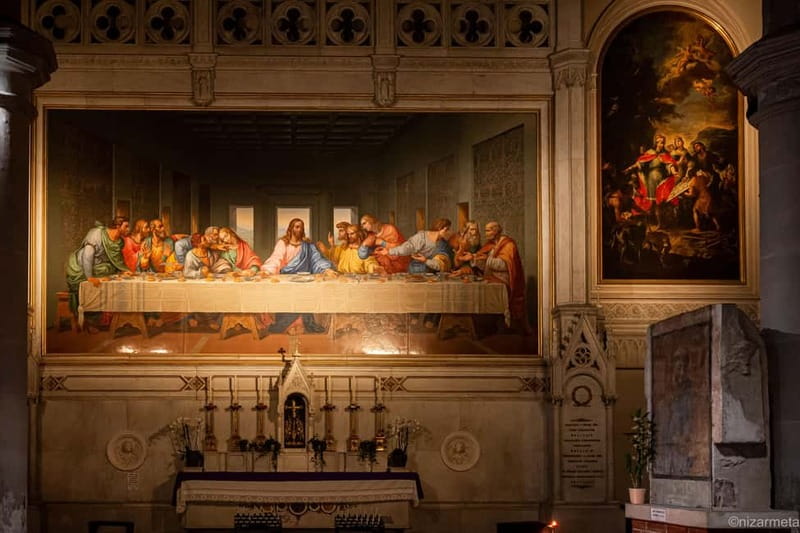
Historic churches are beautiful, but they are not always as climate-controlled as modern halls. One audience member found the church cold and wished for an interval. Another said the organizers used a large heater before the concert and found the temperature comfortable during the performance.
The sensible approach is to bring an extra layer, particularly in cooler weather or for evening concerts. A light jacket or scarf takes little space and protects you from guessing wrong. You do not need to let this concern keep you away, but it is a real part of the venue experience.
The church’s size can also make the room feel different from a packed concert hall. Feedback described the atmosphere as personal and intimate, with seating close enough to see the performers clearly. That closeness suits chamber music especially well.
How it compares with Vienna’s grand concert halls
This concert is not meant to replace a performance in the Golden Hall or another grand Viennese venue. The experience is more modest in scale and more focused on the relationship between music and architecture.
In a major concert hall, you may get a larger orchestra, more formal staging, and a grander sense of occasion. At the Minoritenkirche, you get Gothic surroundings, direct sound, and a closer look at the musicians. One audience member attended both types of concert and found the church performance different rather than inferior.
That distinction helps you choose. Book this if you want a compact evening, an atmospheric venue, and music close at hand. Choose a grand hall if your main goal is the spectacle of a large orchestra in a famous formal interior.
The Minoritenkirche concert also suits a busy sightseeing schedule. A 70-minute program can fit after a museum visit, before dinner, or between other central Vienna plans. The central location makes it easier to build into an evening than a performance requiring a long ride across the city.
Is $22 a good value?
At $22 per person, this is a strong value for live classical music in a historic central venue. The ticket includes admission and a program sheet, and the performance lasts about 70 minutes. You are paying for the music, the setting, and the convenience of a ready-made evening activity.
The value becomes even better if you already enjoy Mozart, Bach, Beethoven, or Vivaldi. You are not taking a chance on an unfamiliar genre, and the changing programs let you choose a date that fits your taste.
A more expensive seat can still make sense if you care about seeing the performers. The difference is less important if you mainly want to hear the music and admire the church. I would spend extra for chamber music, especially a quartet or flute program, because the musicians’ interaction is part of the appeal.
Seasonal concerts can also be a good use of the ticket. Christmas Day performances, for example, offer a distinct atmosphere when many other activities may be limited. Just confirm the advertised program, since a holiday setting does not automatically mean a Christmas-specific concert.
Who will enjoy this most?
I would recommend the Minoritenkirche concert to:
- First-time visitors who want a classic Vienna evening without spending a great deal.
- Classical music fans who want to hear familiar composers in a less formal setting.
- Couples looking for a calm cultural activity after sightseeing.
- Solo visitors who appreciate music that does not require a tour group or lengthy explanation.
- Visitors who enjoy architecture as much as performance.
- Adults and older children who can sit quietly through a 70-minute concert.
Children under six are not permitted. Older children may enjoy the program, but the church setting and classical repertoire are better suited to those who can remain attentive and follow concert etiquette.
This is less suitable if you need soft seating, dislike reverberant acoustics, or want a large-scale orchestral show every time. It may also disappoint you if you book based on one composer and fail to check the date. The schedule changes, and the difference between a Mozart quartet, Vivaldi’s Four Seasons, and Bach’s mass is substantial.
Booking and evening tips
Check the exact start time when you choose your date. The stated duration is 70 minutes, but starting times can vary by availability.
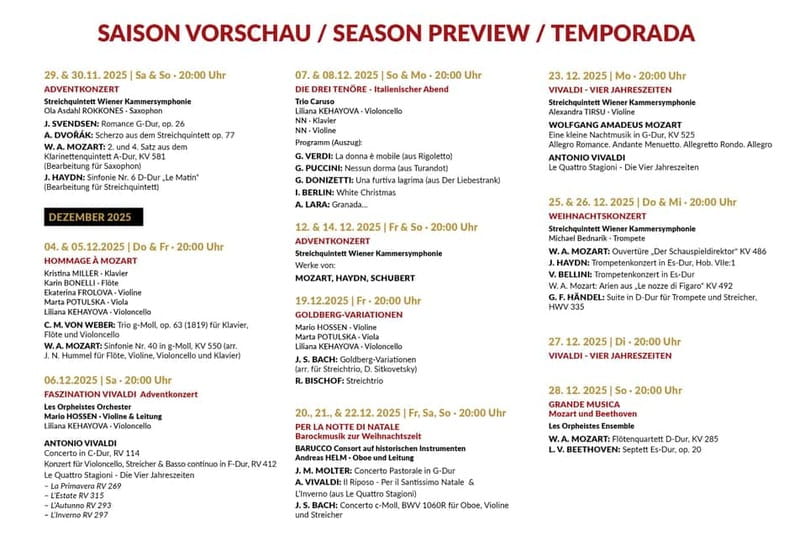
Look closely at the program before paying. The advertised examples include Mozart, Haydn, Marais, Debussy, Vivaldi, Beethoven, and Bach, along with festive seasonal selections. The photos and date-specific information are useful for confirming the exact repertoire.
Keep your ticket details easy to find, since the meeting point may vary according to the option booked. A host or greeter may speak English, German, Spanish, or Italian, but the essential details should still be clear before you set out.
Arrive ready for a quiet concert environment. Smoking, food, drinks, flash photography, video recording, and photography inside are not allowed. These rules protect both the music and the church, so expect to put your phone away once you take your seat.
The venue is wheelchair accessible. The experience also offers free cancellation up to 24 hours in advance, and you can reserve now and pay later, useful if your Vienna schedule is still moving around.
Should you book the Minoritenkirche concert?
Yes, if you want an affordable and atmospheric taste of Vienna’s classical music tradition. The strongest reasons are the church itself, the excellent acoustics, the skilled performers, and the manageable 70-minute format. At $22, it is an easy recommendation for a first visit or a spare evening.
Choose your date with care. A chamber program may give you the closest connection to the musicians, while Bach’s Mass in B Minor offers a much larger sacred performance. Pay extra for a front section if watching the performers matters to you, but do not assume distant seats will sound poor.
Bring a layer, expect firm chairs, and treat the church as part of the performance rather than a simple room. If those small compromises suit you, this is one of the better-value ways to hear live classical music in central Vienna.
FAQ
Where does the concert take place?
The concert takes place in Vienna’s historic Minoritenkirche, a Gothic church in the city center.
How long is the concert?
The concert lasts approximately 70 minutes. Starting times vary, so check availability for your chosen date.
How much does the ticket cost?
The listed price is $22 per person.
What music might be performed?
Programs may include works by Mozart, Bach, Beethoven, Vivaldi, Haydn, Marin Marais, and Debussy. Seasonal Easter, Advent, Christmas, and New Year’s programs are also offered.
Are members of the Vienna Philharmonic involved?
Selected programs feature members of the Vienna Philharmonic. The May 30 and 31 chamber concerts, for example, are scheduled to feature Philharmonic Ensemble musicians.
Is a program sheet included?
Yes. The entrance ticket and a program sheet or booklet are included.
Is the church wheelchair accessible?
Yes, the activity is listed as wheelchair accessible.
Are young children allowed?
Children under six are not permitted to attend.
Can I cancel my booking?
You can cancel up to 24 hours in advance for a full refund. A reserve-now, pay-later option is also available.
More Concerts
- Vienna: Classical Concert in St. Anne’s Church (Annakirche)
★ 4.6 · 3,414 reviews - Vienna: Classical Concert at Mozart’s First House
2,423 reviews - Vienna: Mozart and Strauss Concert at Schönbrunn
★ 4.5 · 2,364 reviews - Vienna Classical Concert at St. Peter’s Church
★ 4.5 · 2,039 reviews
Just added around Vienna
- Mobile puzzle rally tour at the Vienna Central Cemetery★ 4.5 · 3 reviews
- RAXI (E-Rickschaw) big private Vienna tour★ 4.5 · 3 reviews
- 8 days European Highlights PRIVATE TOUR from Budapest including Budapest Vienna Prague and Bratislava★ 5.0 · 3 reviews
- Private Transfer from Vienna to Prague with 1 hour Stop in Kutna Hora★ 4.5 · 3 reviews
- Palais Lobkowitz Audio Guide Tour★ 4.0 · 3 reviews
- Private Tour from Vienna to Melk and Dürnstein★ 4.5 · 3 reviews
- Vienna: Designer Fashion Time Capsule Experience★ 5.0 · 3 reviews
- Private day trip from Munich to Eagle’s Nest & Hallstatt★ 4.7 · 3 reviews
Concerts, compared.
Vivaldi’s Four Seasons Concert in Karlskirche
Read our review →
Classical Concert in the World-Famous Musikverein
Read our review →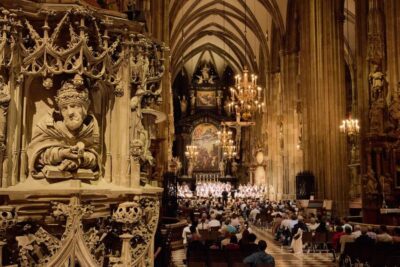
Classical Concert in St. Anne’s Church (Annakirche)
Read our review →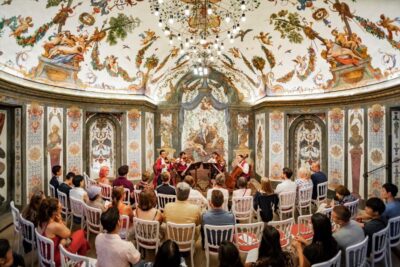
Browse the lists this tour appears in