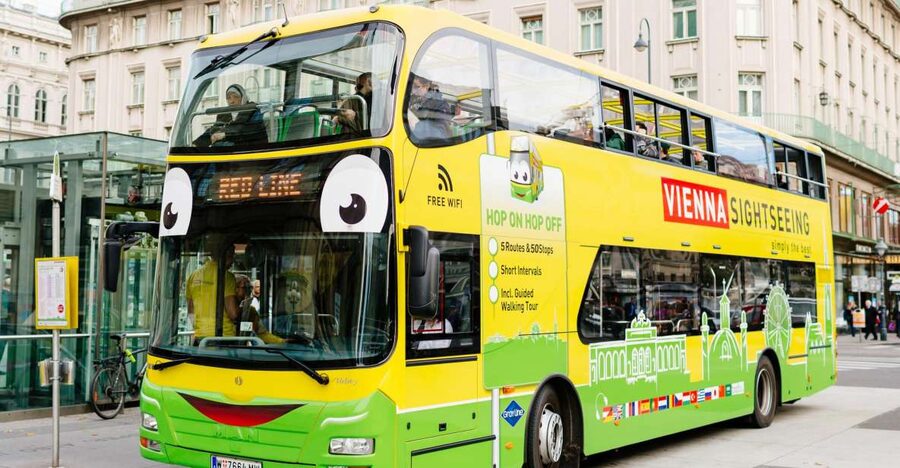
Reviewed · TOURS
Vienna: Hop-On Hop-Off Sightseeing Bus Tour in 19 Languages
Vienna rewards a good first look. This bus tour makes that easy, linking the grand Ring Road, Schönbrunn, Belvedere, the Prater, and Danube sights across up to four routes. I especially like the clear audio commentary in 19 languages and the freedom to choose your own stops. The main drawback is timing: some routes finish by late afternoon, and the Green Line runs only once an hour in summer.
You can use the ticket for 24, 48, or 72 hours, not just for one circuit. That makes it useful for a first day of orientation, a short visit, or a slower plan built around palaces and museums. At about $41 per person, it is best value when you ride several routes and use the buses to reach far-flung sights rather than treating it as a single sightseeing loop.
In This Review
- Key points to know before boarding
- Why this bus works well for a first day in Vienna
- Red Line: Vienna’s Ring Road in 60 minutes
- Yellow Line: Schönbrunn and Belvedere
- Blue Line: Prater, Hundertwasser, and the Danube
- Green Line: Grinzing and Cobenzl views
- The walking app adds the streets the bus cannot show
- Timing, comfort, and changing buses
- Is $41 good value?
- Who should book this experience?
- FAQ
- How long can I use the Vienna hop-on hop-off ticket?
- How many bus routes are included?
- Is the Green Line included in the ticket?
- What languages are available for the audio guide?
- Is there commentary for children?
- Does the ticket include entrance to Schönbrunn Palace or museums?
- Where can I board the bus?
- Can I cancel the booking?
- Should you book the Vienna bus tour?
Key points to know before boarding
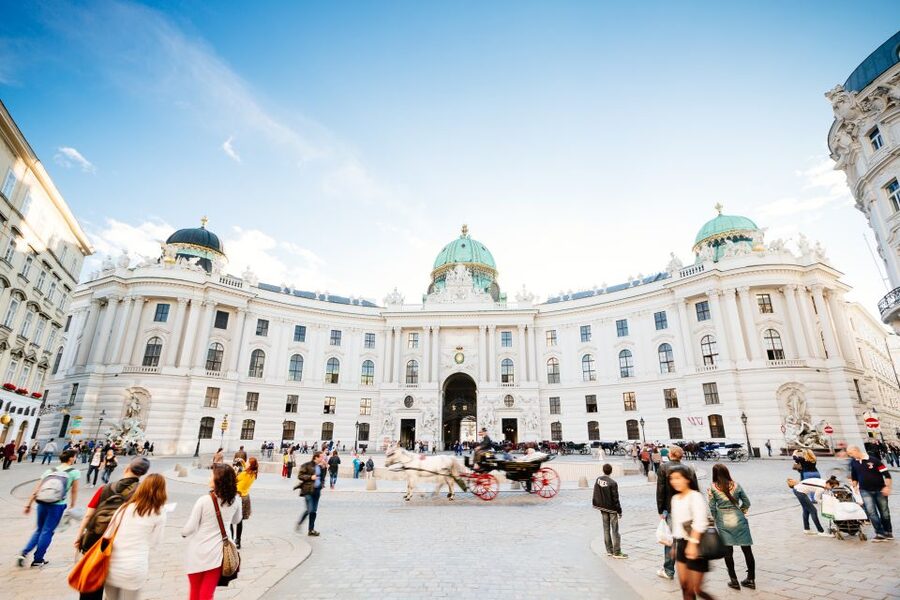
- Four routes cover different Viennese moods: the Red Line handles the historic center, the Yellow Line reaches Schönbrunn and Belvedere, the Blue Line heads toward the Prater and Danube, and the summer Green Line climbs toward Grinzing and Cobenzl.
- The State Opera is the main connection point: Red, Yellow, and Blue buses meet here, making it the easiest place to change lines.
- Schönbrunn is about 35 minutes from the State Opera: allow extra time if you plan to visit the palace or gardens.
- The Blue Line is the longest ride: its full circuit takes about two hours and reaches the Giant Ferris Wheel, UNO City, Danube Island, and the Old Danube.
- The Green Line is seasonal and less frequent: it runs every 60 minutes from 10:45 AM to 4 PM and is included with 24, 48, and 72-hour tickets when operating.
- A walking app adds a useful ground-level layer: collect headphones and a map at the partner service center, then follow the QuietVox app around central Vienna.
Why this bus works well for a first day in Vienna

Vienna is compact in its central districts, but the headline sights are spread out. The Hofburg, State Opera, Belvedere, Schönbrunn, Prater, and Danube area do not form one tidy walking route. This is where the hop-on hop-off format earns its keep.
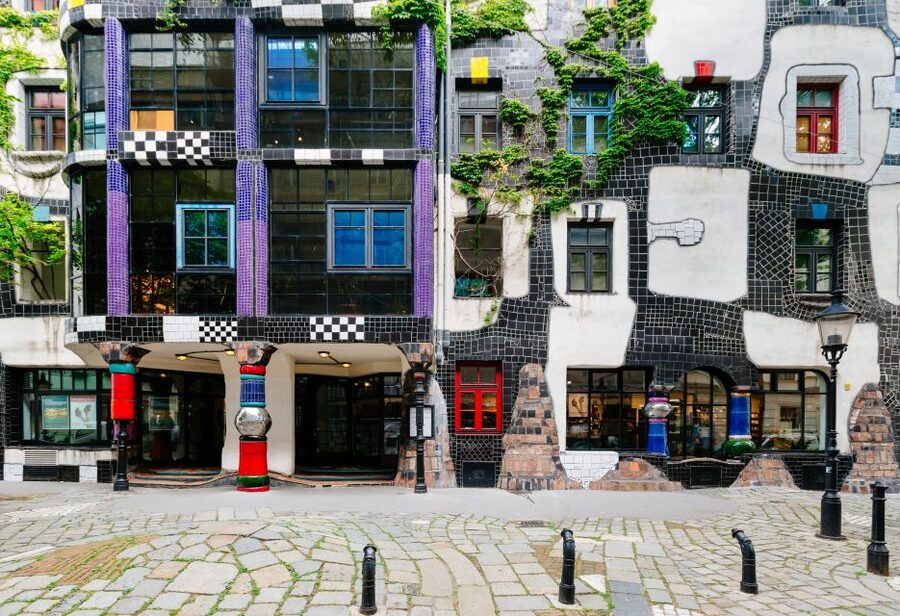
I like starting with one full circuit before getting off. From the bus, you can see the city’s grand scale, note the museums that deserve more time, and spot places such as the Sigmund Freud Museum, KunstHausWien, or the Beethoven Museum for later visits. It is a practical way to get your bearings fast without spending the first morning decoding public transport.
The audio commentary is a major part of the experience. It is available in German, English, Italian, French, Spanish, Portuguese, Dutch, Romanian, Czech, Hungarian, Turkish, Greek, Russian, Japanese, Chinese, Serbian, Korean, Polish, and Arabic. A children’s channel is available in German and English.
The narration covers buildings, people, and local history as the bus moves through the city. One useful detail is that the stops are announced clearly, so you are less likely to miss your chosen exit. Classical music between sections adds a fitting Viennese touch, though one passenger found the audio occasionally out of tune.
All buses have free Wi-Fi, and GPS live tracking is available through the website. That helps you judge if it is worth waiting at a stop or walking to another line.
A few more trips of this kind worth comparing:
- Vienna: Vivaldi’s Four Seasons Concert in Karlskirche
★ 4.7 · 14,951 reviews - Vienna: Spanish Riding School Training
★ 3.9 · 9,281 reviews - Vienna: Skip-the-cashier-desk-line Giant Ferris Wheel Ride
★ 4.5 · 7,859 reviews
Red Line: Vienna’s Ring Road in 60 minutes
The Red Line is the best introduction to central Vienna. Its full circuit takes about 60 minutes, with buses arriving every 30 minutes from 9:30 AM to 5:30 PM.
The route begins at the State Opera, a useful central meeting point for several lines. From there, it passes the Hofburg area, the Museum of Art History, Heldenplatz, Mariahilfer Straße, Parliament, the Burgtheater, City Hall, the University, Votiv Church, and the Sigmund Freud Museum area.
This is Vienna’s formal face: imperial buildings, museums, ceremonial squares, and the famous Ring Road. You see the State Opera and Hofburg before reaching Museum of Art History and Heroes’ Square, where the city’s grand architecture is at its most concentrated.
The Mariahilfer Straße stop works well if you want shopping or a change of pace. The Burgtheater and City Hall stops are better for architecture and central sightseeing. The University and Votiv Church area gives you a quieter look at the Ring beyond the main palace district.
The Red Line also reaches the MAK, the Museum of Applied Arts, City Park, the Strauss Monument, and DDSG City Cruises. City Park is a pleasant place to get off for the famous Johann Strauss monument and a short walk.
The main limitation is frequency. A 30-minute wait is not terrible, but it can eat into a one-day plan, especially if you get off for only one sight. I would use the Red Line for a full orientation ride first, then make one or two deliberate stops rather than hopping off at every point.
Yellow Line: Schönbrunn and Belvedere
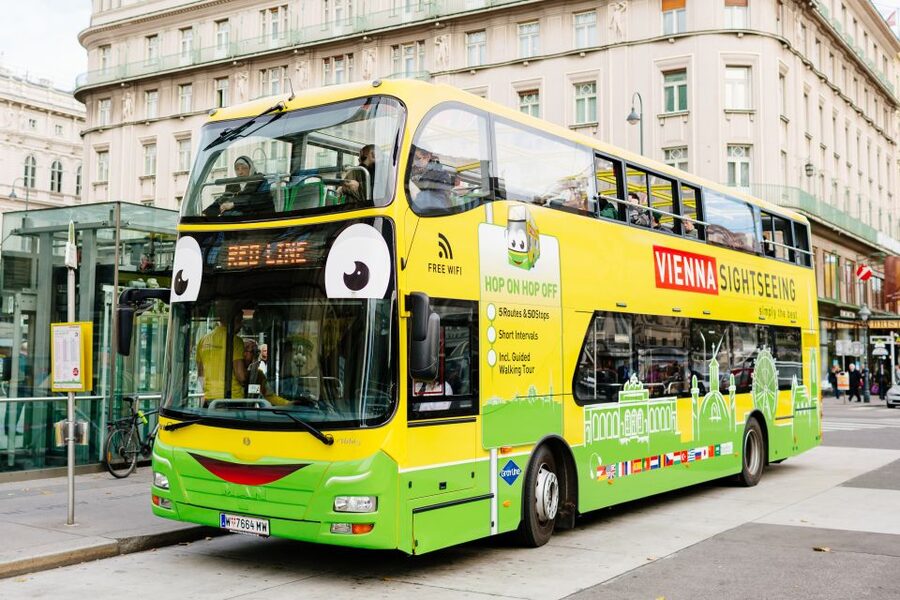
The Yellow Line is the essential palace route. It runs every 20 to 25 minutes, with a full circuit of about 90 minutes. Service is listed from 9:15 AM to 5:15 PM, and the ride from the State Opera to Schönbrunn takes around 35 minutes.
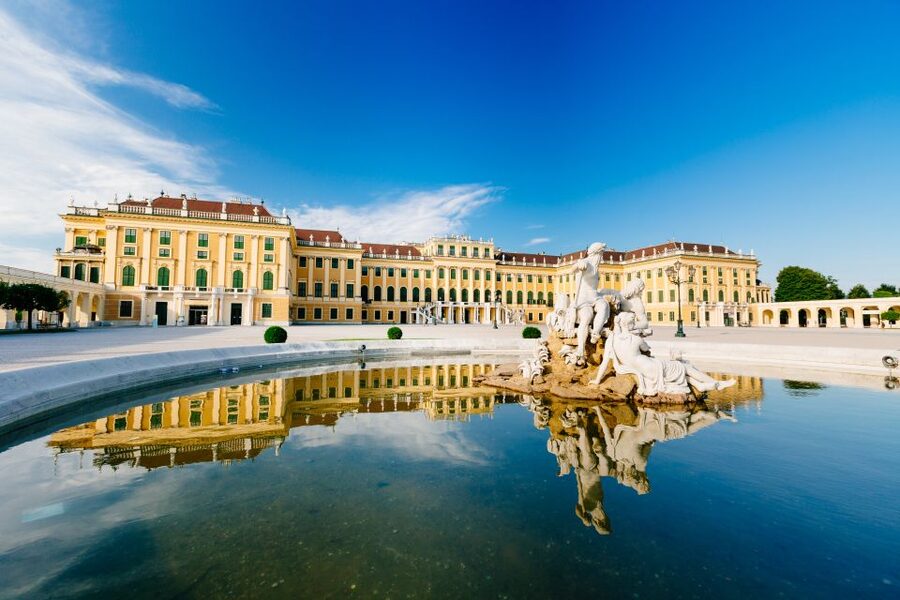
The route passes Westbahnhof, Schönbrunn Palace, Vienna’s Main Station, the Museum of Contemporary Art, Belvedere Palace, Lower Belvedere, and the State Opera. It gives you access to two of Vienna’s most important palace complexes without arranging separate transport.
Schönbrunn deserves serious time. The bus gets you there, but your ticket does not include entry to the palace or other attractions. If you plan an interior visit, garden time, or both, avoid squeezing Schönbrunn into the final hour of the bus schedule.
Belvedere offers a different setting and a different visual experience. The route includes both Belvedere Palace and Lower Belvedere, so check which stop suits your plan before getting off. The connection with the Main Station is useful if you arrive by train or want to begin the tour there.
One practical point: the Yellow Line can become your longest stop-and-visit day. A 35-minute ride each way to Schönbrunn, plus time at the palace, can take up much of a 24-hour ticket. That is not a fault, but you need to choose your priorities.
Several passengers found the route convenient for reaching the palace, and one described a small tram used to tour the Schönbrunn gardens. That tram detail may depend on the specific arrangement operating at the time, so treat it as an added possibility rather than the core promise of this ticket.
Blue Line: Prater, Hundertwasser, and the Danube
The Blue Line is the broadest route and takes about two hours for the full circuit. Buses arrive every 20 minutes from 9:30 AM to 5 PM.
It begins around the MAK, City Park, the Strauss Monument, the State Opera, Museum of Art History, Mariahilfer Straße, Burgtheater, City Hall, the University, Votiv Church, and the DDSG City Cruises area. In other words, the first part overlaps much of the central sightseeing zone before heading east.
The route becomes more distinctive at KunstHausWien, the Hundertwasser Museum, and the Giant Ferris Wheel. KunstHausWien is a good choice if you enjoy unusual architecture and modern art. The Prater area gives you a very different side of Vienna, with leisure spaces replacing imperial ceremony.
After the Giant Ferris Wheel, the Blue Line continues toward the Imperial Bridge, Danube Tower, Old Danube, UNO City, Danube Island, Praterstern, Taborstraße, and the Museum of Crime. It then returns toward the DDSG and MAK.
This is the route to choose if you want more than palace facades and central museums. UNO City and the Danube show modern Vienna, while the Prater brings a lighter, more playful mood. You can also combine the ride with a cruise connection in the DDSG area, although the cruise itself is not included in the bus ticket.
The Blue Line rewards a full day or a 48-hour ticket. On a one-day plan, a complete circuit is possible, but getting off several times will be difficult because the route covers so much ground.
A completely different kind of day out in Vienna:
- Vienna: Schönbrunn Palace & Gardens Skip-the-Line Tour
★ 4.7 · 7,739 reviews - Vienna: Light of Creation Votive Church Immersive Light Show
★ 4.8 · 6,779 reviews - Vienna Spanish Riding School Guided Tour
★ 4.7 · 6,765 reviews - Vienna: Classical Concert in the World-Famous Musikverein
★ 4.6 · 6,673 reviews
Green Line: Grinzing and Cobenzl views
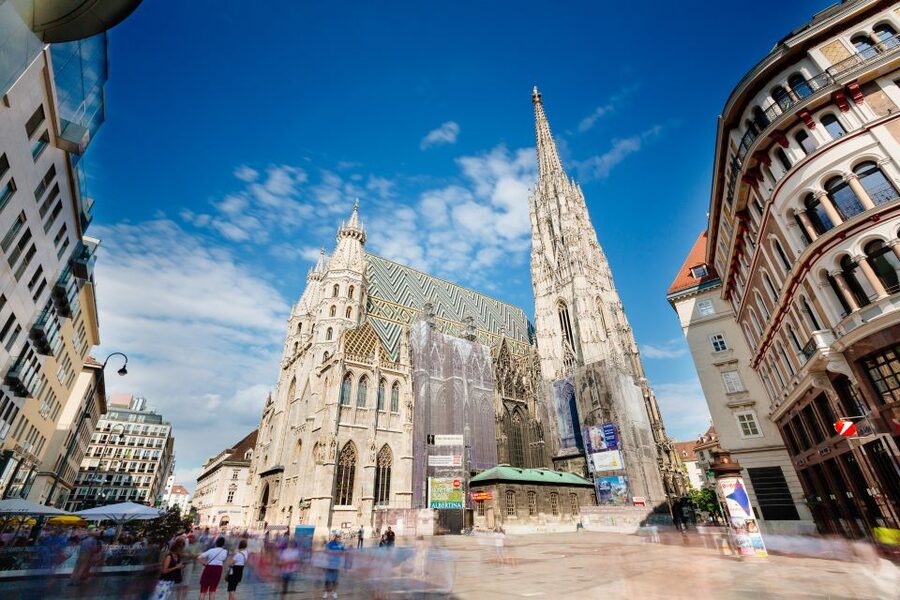
The Green Line operates in summer and is included with the 24, 48, and 72-hour tickets when running. It takes about 60 minutes and operates from 10:45 AM to 4 PM, with buses every 60 minutes.
This route heads toward Grinzing and Cobenzl, known for broad views over Vienna. It is the least frequent line, so planning matters. Miss one bus and you may wait an hour.
I would not build a tightly timed sightseeing day around the Green Line. Use it when the weather is good and you want a slower ride away from the central monuments. The panoramic view is the point, not quick transport.
One useful warning comes from the route’s own schedule: service ends earlier than the Red, Yellow, and Blue lines. One passenger had to use public transport from Cobenzl because the Green Line was not frequent enough. Keep that in mind if you get off high above the city.
The walking app adds the streets the bus cannot show
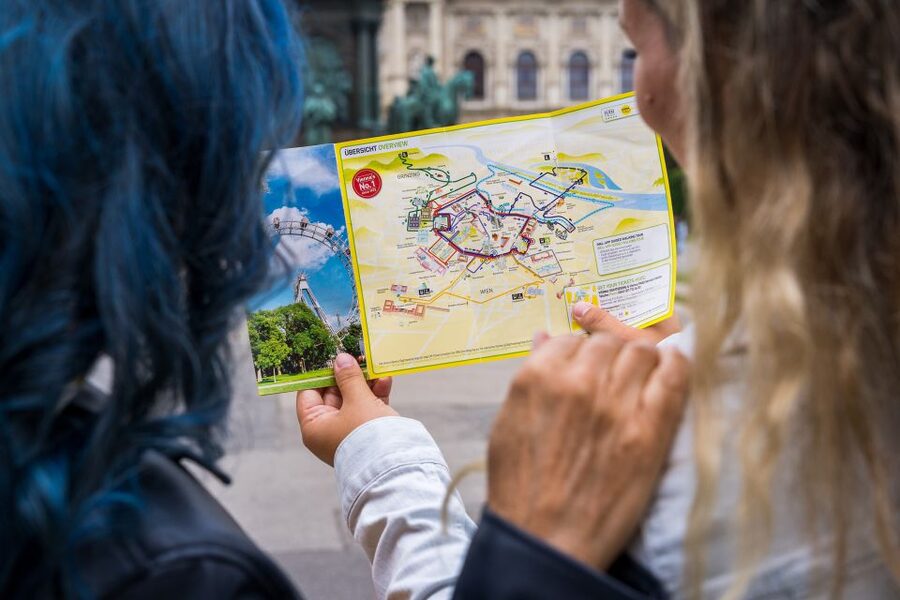
The included self-guided walking tour focuses on the State Opera, Beethoven Statue, Vienna Concert House, House of Music, and Beethoven Museum. You collect headphones and a map from the local partner’s service center, then use the QuietVox Guiding App to follow the route.
This is a good companion to the bus because Vienna’s details are often at street level. From the upper deck, you see the grand sweep of the Ring. On foot, you can pause at a statue, enter a museum, or study a concert hall facade at your own speed.
I would use the app on a day when you are already near the State Opera. It gives the central route more structure and helps you avoid spending the entire ticket period seated on a bus.
The app is self-guided, not a live walking tour. That means you control the pace, but you also need to follow the instructions yourself.
Timing, comfort, and changing buses
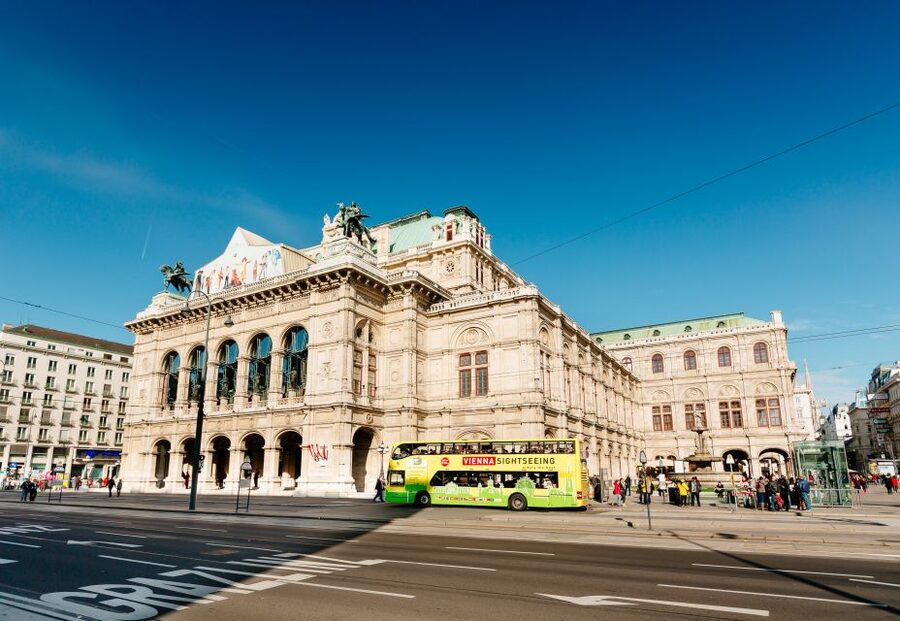
Look for the yellow buses and Vienna Sightseeing Tours signs. You can show your voucher to a representative to receive your ticket, then board or leave at any stop on the Red, Yellow, Green, or Blue routes.
The State Opera is the most useful interchange because the Red, Yellow, and Blue lines meet there. Vienna Main Station and Westbahnhof also appear on the route network, though Westbahnhof service can change by season. In winter, the buses may not operate there, so the State Opera is the safer place to begin if you are unsure.
The buses are described as clean and comfortable, with clear stop announcements and friendly drivers. A useful weather detail is that the windows can be adjusted for changing conditions, while the roof can be covered in poor weather. Even so, bring a light layer. You may find the upper deck windy, and Vienna weather does not always follow the timetable.
The published operating hours matter. Most lines finish between 5 PM and 5:30 PM, and the Green Line ends at 4 PM. This is sightseeing transport, not an evening bus service. After dinner, you will need another way around the city.
Some passengers praised the punctual service and predictable arrival times. Others wanted shorter waits or later departures. Both points can be true: buses may run reliably, but a 20 to 30-minute interval still feels long when you are standing at a stop with a museum closing time ahead.
Is $41 good value?
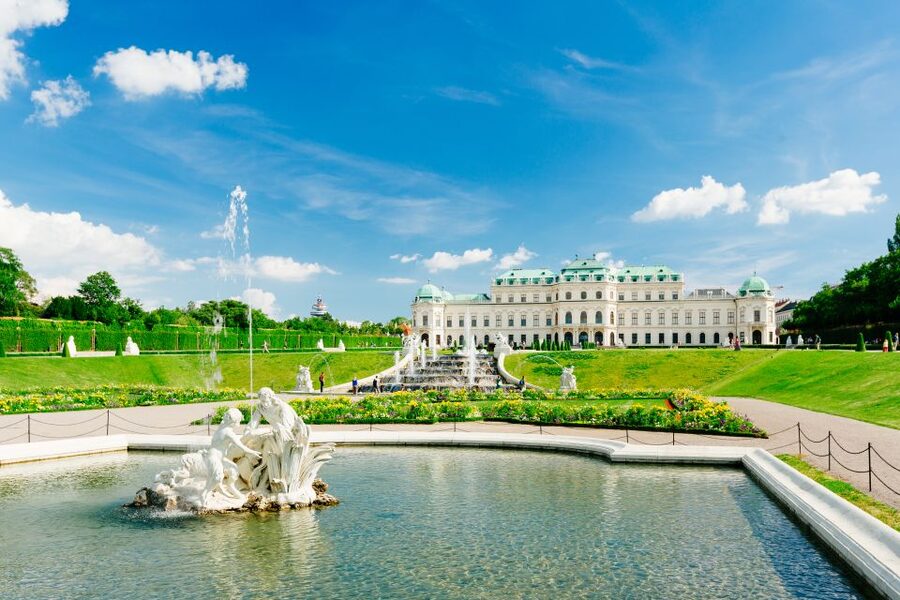
At about $41 per person, the ticket is not automatically a bargain if you ride one loop and leave it at that. Its value improves when you use it as transport between distant areas and combine several routes.
A 24-hour ticket can work well for a compact plan. You might take the Red Line for central Vienna, the Yellow Line to Schönbrunn and Belvedere, then use the Blue Line for the Prater and Danube. That is a full day, and it leaves little room for long museum visits.
A 48-hour ticket gives you a more comfortable pace. You can dedicate one day to the Ring Road and palace route, then use another day for the Blue and Green lines, with time to walk between stops.
The 72-hour option suits you if Vienna is more than a quick stop. You can take one route each day, repeat a section for transport, and use the walking app without rushing. The ticket does not include entry fees, so budget separately for Schönbrunn, Belvedere, museums, the Giant Ferris Wheel, and other paid attractions.
I would choose the longer ticket if you enjoy sightseeing from the bus but also want to get off often. If you plan to walk almost everywhere and visit only one or two central sights, public transport or individual tickets may make more sense.
Who should book this experience?
I recommend it most for first-time visitors, short-stay visitors, families, solo visitors who want simple orientation, and anyone who wants palace access without planning several transport connections.
It is also useful if you arrive at Vienna Main Station, since that stop connects with the Yellow Line. The audio options make it practical for international groups, and the children’s channel helps families keep younger passengers interested.
You may want another plan if you prefer late-night sightseeing, dislike waiting between buses, or want a tour led by a live guide throughout. The service is largely audio-based, though a guide named Karen received special praise for making the tour interesting on one operating day.
Book only if you will use the network. The best plan is not to stay on the bus all day, but to use it as a moving map of Vienna, then get off for the places that catch your attention.
FAQ
How long can I use the Vienna hop-on hop-off ticket?
You can choose a 24-hour, 48-hour, or 72-hour ticket, depending on the option booked.
How many bus routes are included?
The ticket gives access to up to four routes: Red, Yellow, Blue, and the Green Line when it operates in summer.
Is the Green Line included in the ticket?
Yes. The Green Line is included with 24-hour, 48-hour, and 72-hour tickets when the seasonal route is operating.
What languages are available for the audio guide?
Audio commentary is available in 19 languages: German, English, Italian, French, Spanish, Portuguese, Dutch, Romanian, Czech, Hungarian, Turkish, Greek, Russian, Japanese, Chinese, Serbian, Korean, Polish, and Arabic.
Is there commentary for children?
Yes. A children’s commentary channel is available in German and English.
Does the ticket include entrance to Schönbrunn Palace or museums?
No. Entrance fees to sights and attractions are not included.
Where can I board the bus?
You can board at any stop on the Red, Yellow, Green, or Blue routes. Look for the yellow buses and Vienna Sightseeing Tours signs, with the State Opera serving as the main connection point for several lines.
Can I cancel the booking?
You can cancel up to 24 hours in advance for a full refund. A reserve-now, pay-later option is also available.
Should you book the Vienna bus tour?
Book it if you want a practical first look at Vienna, plan to visit Schönbrunn or Belvedere, or have only one to three days in the city. The strong route coverage, many language choices, clean buses, Wi-Fi, and clear stop announcements make it easy to use.
I would choose 48 or 72 hours if you want time for museums and walking. Choose 24 hours only if you are ready to plan closely and accept that the buses stop running in the late afternoon. Used that way, this is a useful sightseeing tool, not just a ride around town.
Just added around Vienna
- Mobile puzzle rally tour at the Vienna Central Cemetery★ 4.5 · 3 reviews
- RAXI (E-Rickschaw) big private Vienna tour★ 4.5 · 3 reviews
- 8 days European Highlights PRIVATE TOUR from Budapest including Budapest Vienna Prague and Bratislava★ 5.0 · 3 reviews
- Private Transfer from Vienna to Prague with 1 hour Stop in Kutna Hora★ 4.5 · 3 reviews
- Palais Lobkowitz Audio Guide Tour★ 4.0 · 3 reviews
- Private Tour from Vienna to Melk and Dürnstein★ 4.5 · 3 reviews
- Vienna: Designer Fashion Time Capsule Experience★ 5.0 · 3 reviews
- Private day trip from Munich to Eagle’s Nest & Hallstatt★ 4.7 · 3 reviews
Tours, compared.

Schönbrunn Palace & Gardens Skip-the-Line Tour
Read our review →


Skip-the-Line Sisi Museum, Hofburg and Gardens Tour
Read our review →
Skip-the-Line Schönbrunn Palace & Gardens Tour
Read our review →

Guided Walking Tour of City Center Highlights
Read our review →