
Reviewed · 2-HOUR EXPERIENCES
Vienna: Romantic Old Town 2-Hour Discovery Tour
Vienna rewards a slower, closer look. This private two-hour walk takes you beyond the usual palace-and-cathedral circuit, into the Greek Quarter, old university district, narrow lanes, and courtyards that are easy to miss on your own. I like the way the tour connects six clear themes, and I like that a guide can point out small details such as the Anchor Clock, animal figures, and architectural changes from Gothic to Art Nouveau.
The main consideration is the price: $352 for a group of up to seven is sensible for a full party, but expensive for one or two people. Two hours also goes quickly, so you should expect a focused introduction rather than a complete survey of Vienna. Still, guides such as Wolfgang Auinger and Max have been praised for their charm, detail, and strong presentation.
In This Review
- Key points at a glance
- Why this two-hour walk is worth your time
- Meeting the past at Hoher Markt
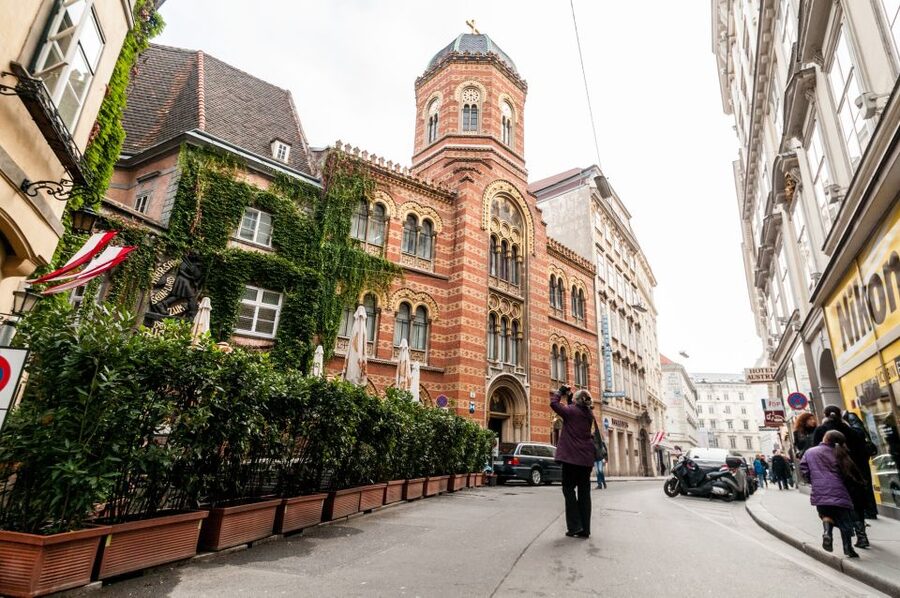
- Finding Vienna’s Greek Quarter
- Reading Vienna through its buildings
- Animals, legends, and the stories behind the stone
- A look inside the old university quarter
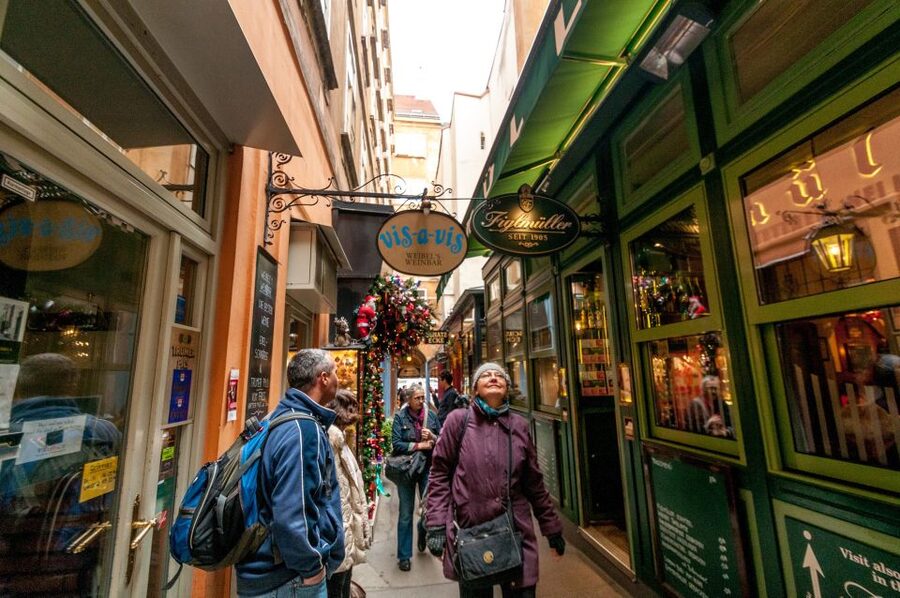
- Narrow lanes and courtyards behind the grand facades
- What the guide can add
- Is $352 good value for two hours?
- Who should book this Vienna walk?
- Practical details before you reserve
- Should you book it?
- FAQ
- Where does the tour begin?
- How early should I arrive?
- How long does the tour last?
- What languages are available?
- Is the tour private?
- Are food and drinks included?
Key points at a glance
- Six subjects in two hours: Romans, Jewish life, trade, Greek history, architecture, legends, the university quarter, and old lanes all fit into one compact walk.
- Starts at the Anchor Clock: Meet at Hoher Markt, one of Vienna’s most historic squares, 10 minutes before departure.
- Private group value: The $352 rate covers up to seven people, making the cost more reasonable when shared by a family or small group.
- Strong guide element: Wolfgang Auinger and Max have received particular praise for clear, engaging tours.
- A different side of central Vienna: Expect details behind the cathedral area, especially in the northeastern part of the old town, rather than only famous postcard sights.
- Flexible booking: You can reserve now and pay later, with full cancellation available up to 24 hours before the tour.
Why this two-hour walk is worth your time
Vienna’s center can feel almost too polished at first. Grand buildings, formal squares, and famous churches tend to dominate the first impression. This tour is useful because it asks you to look at the city in layers. A medieval street may lead to a Baroque palace, which sits beside a Rococo row of houses and an elegant Art Nouveau facade.
I like this approach for a first or second day in Vienna. You get a quick sense of how the center fits together, while the guide supplies the context that a map cannot. The tour does not rely only on major monuments. It uses streets, fountains, building fronts, and small corners to show how commerce, religion, politics, and daily life shaped the city.
The walk is private, and the advertised price covers up to seven people. That matters. A couple pays a premium, but a family or group of friends can split the cost and gain a more personal experience than a large public walk. You can ask questions and request more attention to subjects that interest your group, though the fixed two-hour length means the guide will need to keep things moving.
The 4.7 rating from 816 bookings suggests a consistently strong experience. The feedback also gives you a useful warning: one person found the guide a little too talkative and wanted more historical substance. That is a fair possibility on a story-led city walk. The best guides bring Vienna to life, but a lively style is not the same thing as a tightly academic lecture.
A few more trips of this kind worth comparing:
- Vienna: 2 Hours Sightseeing Walking Tour
★ 4.8 · 332 reviews - Vienna: 2-Hour Historical Crimes Guided Walking Tour
★ 4.8 · 130 reviews - Vienna: Jewish Life in Leopoldstadt 2-Hour Walking Tour
★ 4.9 · 109 reviews
Meeting the past at Hoher Markt
The tour begins at the Anchor Clock on Hoher Markt. Arrive 10 minutes early, since the square is the starting point and not a place where you want to be searching at the last second.
Hoher Markt gives the guide a strong opening scene. Romans, Jewish residents, merchants, architects, and political figures all connect to this part of central Vienna. The square has attracted people who wanted influence, trade, or a visible place in city life.
The Anchor Clock is one of the first major details. It is not simply a clock to photograph. The guide can explain its surprises and its place in the square’s story. The oldest building in Vienna and the city’s first public waterworks are also included in this opening theme.
This is a good example of the tour’s method. Instead of stopping at one celebrated sight and moving on, you look at several layers in one small area. You may begin with the clock, shift to water and public services, then hear how the square changed as different groups used it.
The drawback is that the tour does not appear to include an interior visit at this point. If you want long periods inside museums or churches, this walk may feel too exterior-focused. Its value comes from seeing how the streets connect and understanding what you are looking at.
Finding Vienna’s Greek Quarter
The Greek Quarter occupies the innermost arm of the Danube River and carries a strong trading tradition. This section gives the tour a welcome change of mood. Vienna was not shaped only by imperial court life. Merchants and immigrant communities also helped form the center.
The area connects to the Turks who fought here and to Greeks who prepared their struggle for independence in Vienna. That makes the quarter more than a collection of attractive streets. It offers a reminder that the city was tied to wider political and commercial networks.
I especially like this part for visitors who want a broader picture of Vienna. The city’s historic center can sometimes be reduced to Habsburg ceremony, grand churches, and music. The Greek Quarter adds movement, commerce, and international links to the story.
You should listen for small traces in the streets and buildings. The tour description promises historical signs in every corner, but the exact route and stops can vary with the guide. Do not expect a single blockbuster sight here. The reward is seeing how a neighborhood carries the marks of trade and conflict.
Reading Vienna through its buildings
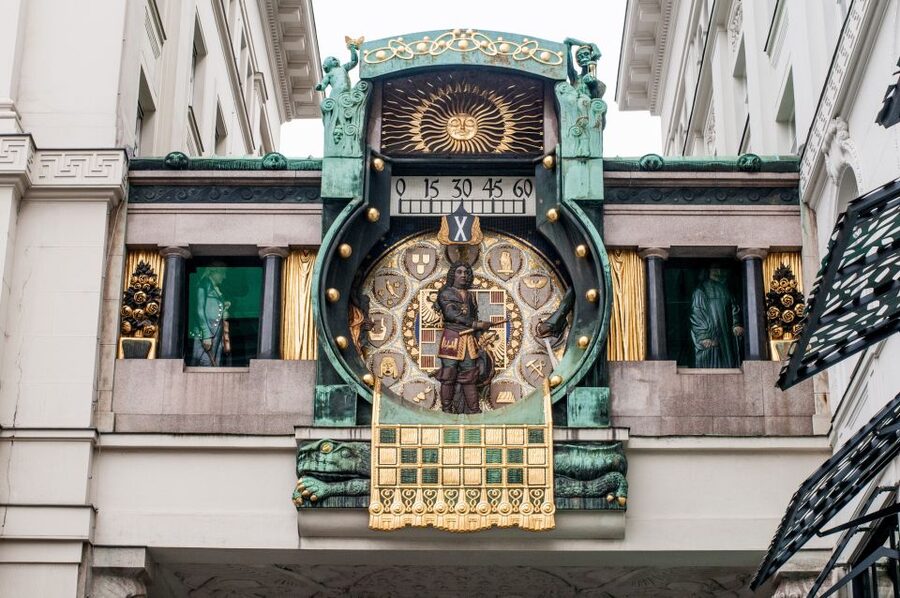
The architectural section is likely to be the most visually satisfying part of the walk. Vienna’s old town gathers several styles within a short distance, and a good guide can help you tell them apart.
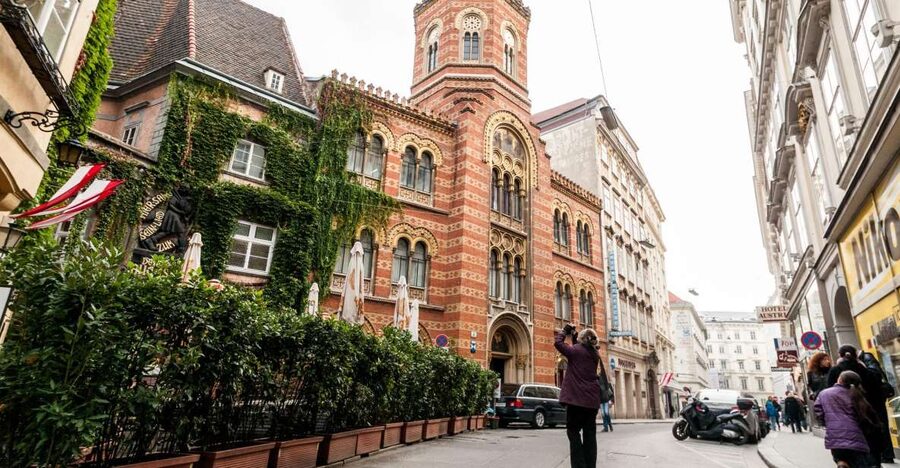
You may encounter Gothic residential towers, medieval paving, Renaissance back courtyards, Baroque city palaces, Rococo rows of houses, Gründerzeit buildings, and Art Nouveau designs. That list can sound like a formal art lesson, but the streets make it practical. You can compare one facade with the next instead of trying to memorize styles from a guidebook.
The value here is learning how to keep looking after the tour ends. Once you understand what a Baroque palace or an Art Nouveau house tends to look like, your later walks through Vienna become more rewarding. You begin to notice decoration, proportions, entrances, and the way buildings fill a street.
The tour also helps explain why Vienna’s center does not feel like one perfectly preserved period. It is a city built and rebuilt over centuries. A medieval layout can carry later facades, and an old courtyard can sit behind a polished street front.
This is where guide quality matters most. Max was praised for a well-presented, informative tour that showed many details in the old town, particularly to the northeast and behind the cathedral. That description fits the kind of sightseeing this experience offers: not just the obvious front view, but the surrounding streets and less noticed details.
A completely different kind of day out in Vienna:
- Vienna: Vivaldi’s Four Seasons Concert in Karlskirche
★ 4.7 · 14,951 reviews - Vienna: Spanish Riding School Training
★ 3.9 · 9,281 reviews - Vienna: Skip-the-cashier-desk-line Giant Ferris Wheel Ride
★ 4.5 · 7,859 reviews - Vienna: Schönbrunn Palace & Gardens Skip-the-Line Tour
★ 4.7 · 7,739 reviews
Animals, legends, and the stories behind the stone
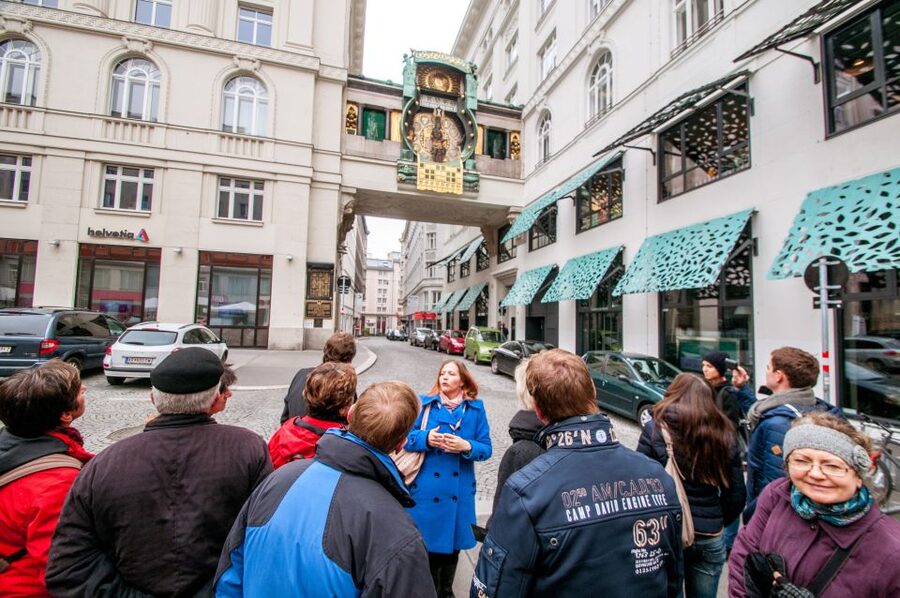
Vienna’s old streets are full of figures, carvings, fountains, and creatures. The myths and legends section uses these details to explain how people once made sense of the city around them.
Animals are important in this local mythology, and you will see them used as ornaments on facades and fountains. A guide can point out these figures and explain how legend and fact sometimes part ways. That makes the city easier to read, especially if you enjoy the human stories behind public art.
This section should suit you if you like a little humor and storytelling mixed with history. It also gives the walk some variety after the architecture discussion. Instead of looking only at dates and styles, you consider why a strange creature appears on a building or why a fountain carries a certain image.
There is a balance to keep in mind. Legends are not always verified history, and the tour itself acknowledges that difference. If you prefer precise political and architectural facts, ask your guide to separate documented events from popular tales. If you enjoy folklore, these stories may be among the most memorable parts of the afternoon.
A look inside the old university quarter
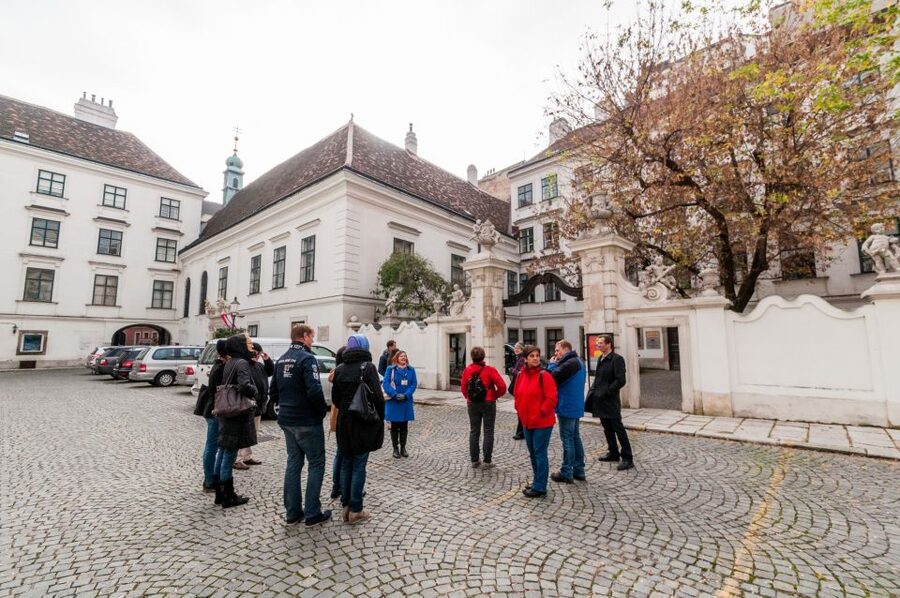
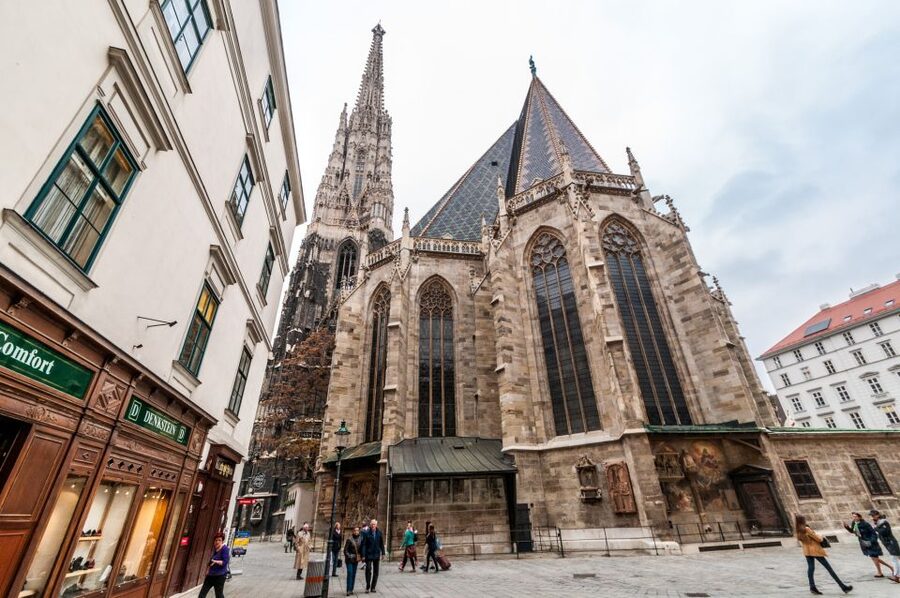
The old university district is sealed off from traffic and centered on the Jesuit quarter. This calmer pocket in the middle of the old town offers a change from the more crowded streets.
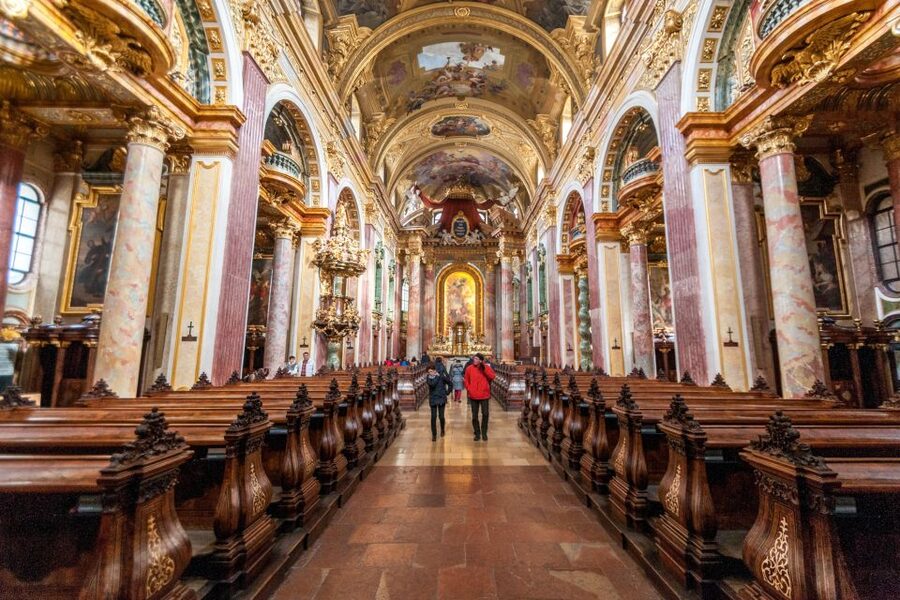
The fountain in the square provides a view into the Jesuit Church, whose interior is described as a display of Baroque excess. You can use the exterior vantage point to appreciate the interior decoration without treating the church as just another stop on a checklist.
The church also illustrates the power of religious institutions and the rivalry between painters and architects in Vienna. That is a useful detail because it turns decoration into an argument. The church was not only meant to shelter worship. Its design also expressed authority and showed what artists could do with space, color, and illusion.
I would pay close attention here if you enjoy churches but do not want to spend an entire day touring them. The stop gives you a reason to look inside and a bit of context for what you see. The information provided does not promise a full church interior tour, so you should think of this as an informed exterior visit with a view into the building, not a lengthy religious-art tour.
Narrow lanes and courtyards behind the grand facades
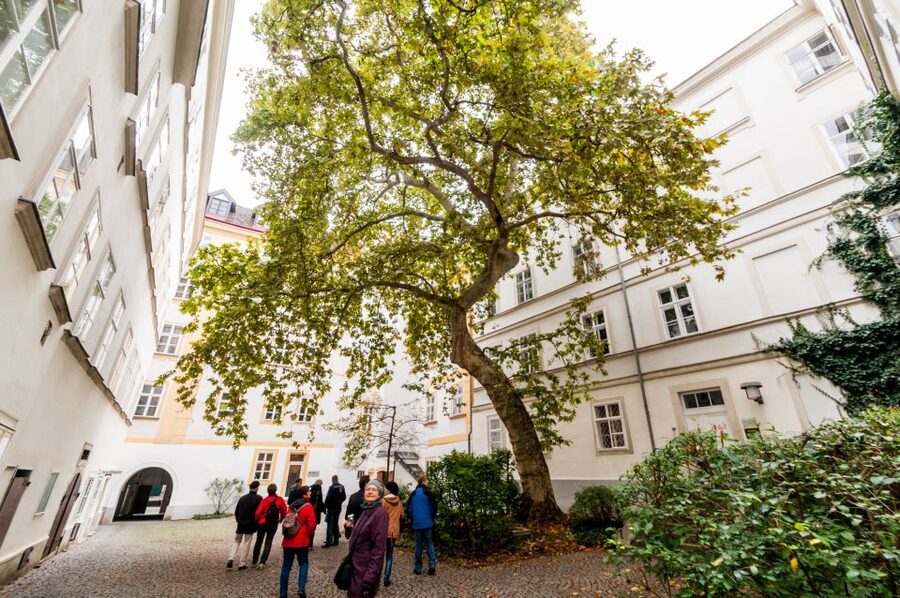
The final theme turns toward Vienna’s winding streets and back courtyards. Many lanes in the old town are narrow, irregular, and far from straight. That layout can make the center feel more intimate, but it also reveals how different modern city life is from the Middle Ages.
The guide connects these lanes with medieval hygiene and everyday living conditions. Even opening a window could have exposed residents to unpleasant sights and smells. The point is not simply to make you laugh at the past. It helps you imagine how people used the same tight streets, shared limited space, and lived close to trades and waste.
Back courtyards are especially valuable because they are easy to overlook. From the main street, you may see a neat facade and assume the building is simple. A passage can reveal another layer behind it, including the scale and shape of older residential spaces.
This part of the walk may be the most atmospheric, but it is also the least predictable. The tour can show you streets and courtyards, yet the exact access and route depend on local conditions and the guide. Treat it as a chance to notice urban details rather than a guaranteed list of specific interiors.
What the guide can add
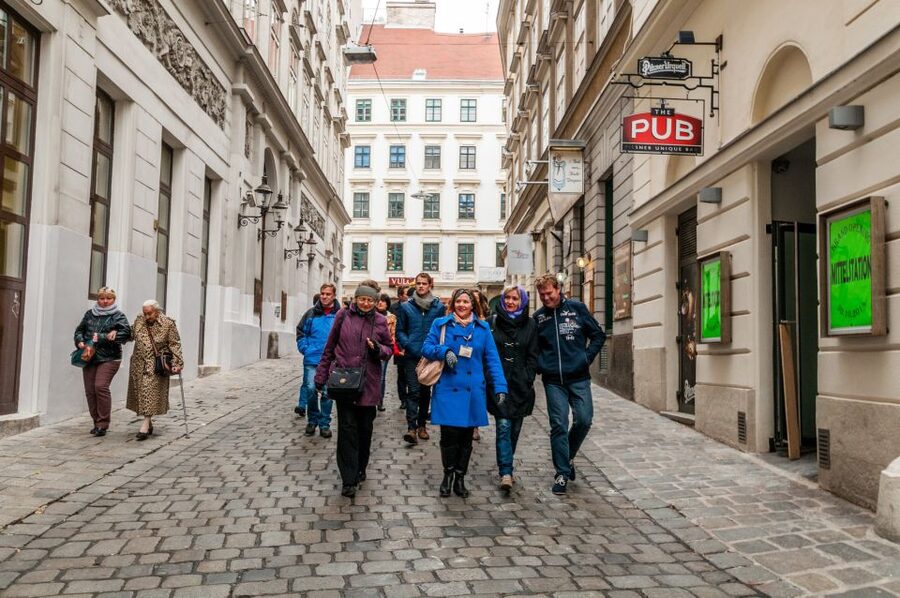
A private walking tour rises or falls on the person leading it. The strongest praise here centers on guides who combine historical detail with a warm manner.
Wolfgang Auinger was singled out as an engaging and charming guide who made the city interesting and left a strong impression. Max was praised for being competent, friendly, motivated, and rhetorically strong, with a gift for showing details that many people would pass without noticing.
Those comments point to the experience’s main strength: personal interpretation. You are not just following a route between attractions. You are hearing why a place matters, what changed there, and how one part of the old town connects to another.
The feedback is not uniformly perfect. One lower rating described a pleasant walk led by a friendly guide who talked too much and offered more Viennese charm than solid historical information. That is helpful to know. If you want a tightly structured history lesson, say so early. If you prefer stories and local character, a talkative guide may suit you well.
The tour is available in German, English, French, Spanish, Italian, Portuguese, Russian, Dutch, Chinese, Japanese, Arabic, and Korean for group tours. If you need a language other than the standard booking options, contact the operator before reserving.
Is $352 good value for two hours?
At $352 for up to seven people, the price is easiest to justify with a full group. Seven people sharing the fee pay about $50 each. A smaller group pays much more per person, so couples should compare the cost with public walking tours before booking.
The private format adds value in ways that do not show up in the headline price. You have one guide for your party, the chance to ask direct questions, and a better setting for family or friends who want to move at their own pace within a fixed schedule.
The tour does not include food or refreshments. That is not a serious problem for a two-hour city walk, since Vienna offers many places to stop before or after, but you should plan your own coffee or snack. The short duration also makes this easy to fit between other plans.
I see the best value for a group that wants orientation on its first day. You can use the tour to learn which streets and districts deserve a longer return visit. For a couple seeking a full day of private guiding, however, the cost may feel high for the limited duration.
Who should book this Vienna walk?
I would recommend it to first-time visitors who want more than a parade of famous sights. It is also a good fit for repeat visitors who have already seen the main cathedral and palace attractions and now want the old town’s side streets, courtyards, legends, and minority communities.
Families and small groups gain the most from the private setup, especially if several people can share the fee. Architecture fans, history enthusiasts, and anyone who likes local stories should find plenty to discuss.
You may want another kind of tour if you need extensive interior access, a slow photography walk, or a detailed study of just one subject. Two hours is enough to connect six themes, but not enough to examine each one at length.
The walk also suits people who value a lively guide. Wolfgang Auinger and Max received especially warm praise, but the guide’s style can vary. Tell the operator your language preference and, if possible, what you most want from the tour.
Practical details before you reserve
The meeting point is the Anchor Clock at Hoher Markt, 1010 Vienna. Arrive 10 minutes before the start. The tour lasts two hours, and starting times depend on availability.
You can reserve now and pay later, which helps if your Vienna plans are still changing. Cancellation is free up to 24 hours before the start for a full refund.
The experience is offered as a private group, with space for up to seven people at the listed price. Food and refreshments are not included, so plan those separately.
Should you book it?
Book this tour if you want a compact, personal introduction to Vienna’s old town, especially the Greek Quarter, university district, narrow lanes, and architectural details behind the major sights. The strong rating, along with specific praise for Wolfgang Auinger and Max, suggests that the guide can make the difference between a routine walk and a memorable one.
Skip it if $352 feels too high for your party size or if you want long visits inside museums and churches. For a full group that values a private guide, however, this is a well-focused way to see Vienna’s less obvious side in just two hours.
FAQ
Where does the tour begin?
The meeting point is the Anchor Clock at Hoher Markt, 1010 Vienna.
How early should I arrive?
You should arrive at the meeting point 10 minutes before the tour begins.
How long does the tour last?
The tour lasts two hours.
What languages are available?
The listed guide languages include German, Spanish, Chinese, Dutch, English, French, Italian, Japanese, Portuguese, and Russian. Group tours can also be arranged in Arabic and Korean. Contact the tour operator if you want to book another language.
Is the tour private?
A private group is available, and the listed price covers a group of up to seven people.
Are food and drinks included?
No. Food and refreshments are not included in the tour price.
Just added around Vienna
- Mobile puzzle rally tour at the Vienna Central Cemetery★ 4.5 · 3 reviews
- RAXI (E-Rickschaw) big private Vienna tour★ 4.5 · 3 reviews
- 8 days European Highlights PRIVATE TOUR from Budapest including Budapest Vienna Prague and Bratislava★ 5.0 · 3 reviews
- Private Transfer from Vienna to Prague with 1 hour Stop in Kutna Hora★ 4.5 · 3 reviews
- Palais Lobkowitz Audio Guide Tour★ 4.0 · 3 reviews
- Private Tour from Vienna to Melk and Dürnstein★ 4.5 · 3 reviews
- Vienna: Designer Fashion Time Capsule Experience★ 5.0 · 3 reviews
- Private day trip from Munich to Eagle’s Nest & Hallstatt★ 4.7 · 3 reviews
2-Hour Experiences, compared.

Jewish Life in Leopoldstadt 2-Hour Walking Tour
Read our review →
Private transfer in a Sanitized Car Prague to Vienna with 2h stop Cesky Krumlov
Read our review →Browse the lists this tour appears in