Reviewed · GUIDED
Vienna – the making of a Weltstadt – guided Citytour
Vienna makes more sense when you read its streets. This two-hour walk links Roman Vienna, imperial power, music, architecture, and modern city life with a certified local guide. I like the way it connects grand buildings to the people and periods behind them, and I like that it visits famous sights while also slipping into less obvious corners. The main limitation is clear: the tour is in German, and the walking route is not suitable for people with mobility impairments.
The route gives you a useful first look at central Vienna, from the Schottenkirche and Freyung to the Hofburg, Capuchin Crypt, and St. Stephen’s Cathedral. Guide Christian Grausam has received especially warm praise for making complicated history lively and for offering practical ideas about what to do next in the city.
In This Review
- Key points at a glance
- Vienna’s story begins with more than imperial palaces
- Schottenkirche and Freyung set the historical tone
- Am Hof and Kohlmarkt show the city changing around power
- Michaelerplatz opens the door to the Hofburg
- Heldenplatz and Burggarten connect empire with public memory
- Josefsplatz and the Albertina add culture to the imperial route
- The Capuchin Crypt brings the rulers down to earth
- Franziskanerplatz and Domgasse make Vienna more intimate
- St. Stephen’s Cathedral completes the city-center picture
- What Christian Grausam adds to the experience
- Is $35 a fair price for two hours?
- Practical details before you go
- Who should book this Vienna walk?
- Should you book this tour?
- FAQ
- Where does the Vienna city tour meet?
- How long does the tour last?
- What language is the tour in?
- Who leads the experience?
- What places are included on the route?
- Does the tour cover Vienna’s music history?
- Is St. Stephen’s Cathedral part of the tour?
- Is the Hofburg included?
- Can I bring luggage or a large bag?
- What happens if it rains?
Key points at a glance
- Two millennia in two hours: Follow Vienna from a small Roman fort to a major Central European capital.
- A local view of the Hofburg: Learn why Vienna grew as a residential city shaped by rulers, court life, and imperial ambition.
- St. Stephen’s Cathedral as the city’s center: Finish near Vienna’s geographical and emotional heart.
- Music belongs to the story: Mozart, Beethoven, and Haydn are part of the city’s cultural path.
- Christian Grausam’s teaching style: His approach links dates, buildings, and personalities instead of treating each sight as an isolated stop.
- A practical walking tour: Bring only what you need, arrive 10 minutes early, and prepare for rain or shine.
Vienna’s story begins with more than imperial palaces
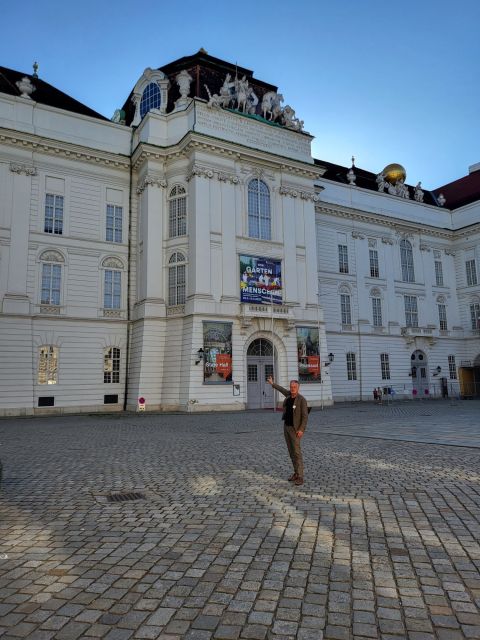
A useful Vienna tour should do more than point at a handsome building and name its architect. This walk aims to show how the city changed over roughly 2,000 years, from a Roman military settlement to one of Central Europe’s major capitals in the 19th century.
That broad time span is the reason to book it early in your stay. You will see the city center again on your own, but after this walk, the streets should have a clearer order. Medieval traces, imperial spaces, churches, music, and modern Vienna fit into one story instead of becoming a pile of disconnected facts.
The experience is also a lesson in scale. Vienna can feel like a grand imperial stage around the Hofburg, then suddenly become intimate in a narrow lane or small square. The route uses both kinds of places. You get the grand view, but you also get a sense of how ordinary urban spaces fit into the city’s long development.
The tour lasts two hours. That is enough time for a strong introduction without taking over your day. It is not enough time for extended interior visits, museum collections, or slow architectural study. Think of it as a guided orientation walk, not a full tour of every attraction on the route.
A few more trips of this kind worth comparing:
- Vienna: Vivaldi’s Four Seasons Concert in Karlskirche
★ 4.7 · 14,951 reviews - Vienna: Spanish Riding School Training
★ 3.9 · 9,281 reviews - Vienna: Skip-the-cashier-desk-line Giant Ferris Wheel Ride
★ 4.5 · 7,859 reviews
Schottenkirche and Freyung set the historical tone
Depending on the option you book, the meeting point may differ. If your meeting point is Freyung, the route includes the Schottenkirche and the square itself. Check the exact starting place before you set out, and arrive 10 minutes early.
Freyung is a good place to begin a discussion about Vienna’s changing identity. The area helps introduce religious institutions, urban growth, and the layers of architecture that give the center its particular look. The Schottenkirche adds a church setting to the opening section, while the surrounding square gives the guide room to explain how the city developed beyond its original Roman footprint.
I like this beginning because it avoids rushing straight to the Hofburg. The imperial center is impressive, but starting with an older urban area gives you a better sense that Vienna was already established long before the Habsburg court made it a seat of power.
You should expect outdoor explanations rather than a long indoor church visit. The attraction here is the connection between the place and the wider story. If you want detailed art-historical analysis of the church itself, this tour may move too quickly for that purpose.
Am Hof and Kohlmarkt show the city changing around power
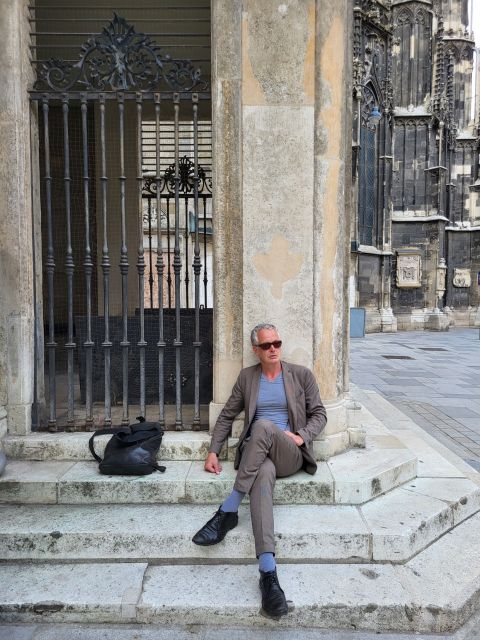
From Freyung, the walk continues through Am Hof and Kohlmarkt. These names are familiar to anyone studying a map of central Vienna, but their value becomes clearer when a guide explains how streets relate to the court, commerce, and the expanding city.
Am Hof helps shift the story from church and early settlement toward public and political life. Kohlmarkt then brings you closer to the imperial core and the ceremonial routes around the Hofburg. The movement between these places matters. You are not just ticking off squares. You are watching Vienna draw its main institutions closer together.
This part of the walk should appeal to you if architecture is easier to understand when it is tied to use. The guide addresses the styles that shape Vienna and asks you to notice which traces belong to the Middle Ages and which reflect later periods. That kind of comparison is more useful than memorizing labels without knowing why they appear where they do.
The route stays in busy central areas at times, so you should be ready for city noise and foot traffic. The reward is that you remain in the heart of Vienna, where the buildings still perform their original urban roles rather than sitting apart as museum pieces.
Michaelerplatz opens the door to the Hofburg
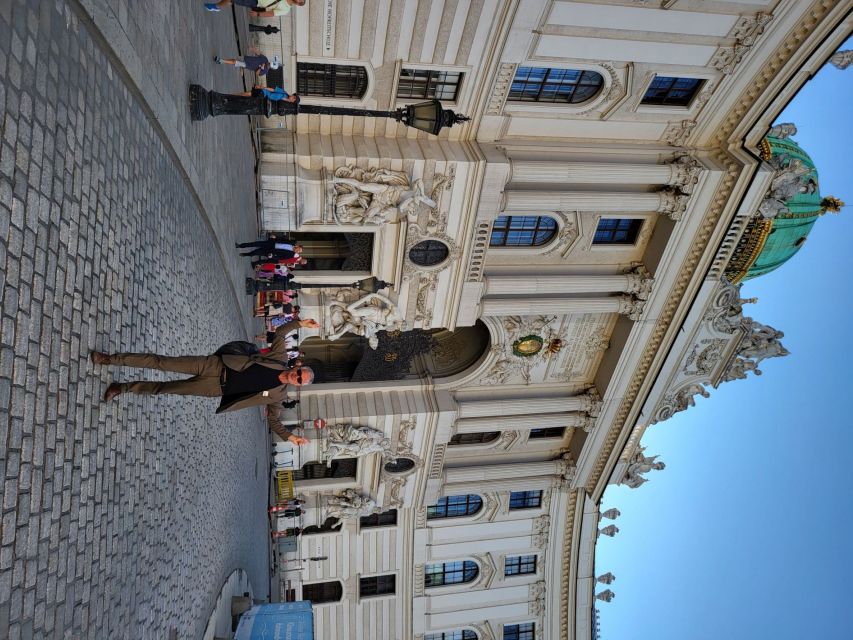
Michaelerplatz is the natural approach to the Hofburg. Here, Vienna’s imperial story becomes impossible to miss. The space brings together monumental architecture, major entrances, and the sense of arrival that once mattered to anyone approaching the residence of the ruling court.
The key idea is Vienna as a residential city. The Hofburg was not simply a grand government building or a palace to admire from outside. It was part of the machinery of court life, where rulers, officials, servants, artists, and visitors gathered over generations.
The tour follows the footsteps of major rulers, including Charles V and Emperor Franz Joseph, with Elisabeth also part of the story. You should come away with a better sense of how individuals shaped the city, but also how the city shaped their public image. Vienna’s grandeur was built for living, governing, receiving, and displaying authority.
I especially like this section for first-time visitors because it gives the Hofburg a clear purpose. Without context, the complex can feel like a collection of wings and courtyards. With context, its size and position become evidence of Vienna’s political importance.
The drawback is that a two-hour walk cannot cover every Hofburg museum or explain every building in detail. If you want the Imperial Apartments, the Sisi Museum, or the full history of the complex, you will need separate time and admission. This tour helps you decide which parts deserve that extra visit.
A completely different kind of day out in Vienna:
- Vienna: Schönbrunn Palace & Gardens Skip-the-Line Tour
★ 4.7 · 7,739 reviews - Vienna: Light of Creation Votive Church Immersive Light Show
★ 4.8 · 6,779 reviews - Vienna Spanish Riding School Guided Tour
★ 4.7 · 6,765 reviews - Vienna: Classical Concert in the World-Famous Musikverein
★ 4.6 · 6,673 reviews
Heldenplatz and Burggarten connect empire with public memory
The route continues to Heldenplatz and Burggarten. These open spaces provide a welcome change after the tighter streets and give the guide room to discuss how imperial Vienna presented itself.
Heldenplatz is closely tied to the public face of the monarchy. Its broad scale makes more sense when you consider ceremonies, monuments, military power, and the image of the ruler. Burggarten offers a different mood, but it remains linked to the former court complex and the city’s transition from private imperial grounds to public urban space.
This is where the tour’s central method becomes useful. You are encouraged to read Vienna through architecture. Large spaces suggest power. Formal approaches suggest ceremony. A garden beside a palace hints at changing ideas about access and public life.
The walk also brings art and music into the city’s political story. Vienna was not only a place of rulers and administration. It was a center where composers and artists worked, performed, and found patrons. Mozart and Beethoven lived and worked here, and Josef Haydn composed a melody that is important to Germany today. Those facts are more memorable when you hear them while moving through the city that supported their careers.
Josefsplatz and the Albertina add culture to the imperial route
Josefsplatz and the Albertina continue the movement through the former court district. This part of the route is useful because it shows that imperial Vienna was also a place of books, art, performance, and learning.
Josefsplatz carries the formal character of the Hofburg area. The Albertina brings the cultural side closer to the surface. Even if you do not enter the museum during the tour, its presence helps explain why central Vienna still works as an art center as well as a historic core.
You may find this section especially helpful if you plan to visit museums later. A guide can provide the context needed to choose between another palace interior, an art collection, or a music-related stop. The tour does not replace those visits, but it can make your choices more focused.
The pace is worth considering. You will be walking and listening, often in public spaces. If you prefer long pauses for photographs or detailed examination of individual façades, two hours may feel brisk. If you want a strong overview before spending time inside museums, the pace is sensible.
The Capuchin Crypt brings the rulers down to earth
The Capuchin Crypt adds a more personal and solemn note. It is associated with the burial of members of the Habsburg family, and its place on this route reinforces the connection between Vienna’s public grandeur and the private fate of its rulers.
This is an important contrast with Heldenplatz and the Hofburg. There, power is displayed through space and ceremony. At the Capuchin Crypt, the story becomes more human and final. The imperial family is no longer represented by balconies, courtyards, and formal entrances, but by a place of burial.
The tour’s mention of Franz Joseph and Elisabeth fits naturally here. Their names are often reduced to familiar images, but the city’s streets allow a broader view of their time and role. You get a sense of how personal stories sit inside the larger history of the monarchy.
Do not assume this two-hour experience includes a full interior visit to every attraction named along the way. The provided details describe a guided city walk, so you should treat the crypt as a stop in the route and confirm any admission arrangements if entering it is important to you.
Franziskanerplatz and Domgasse make Vienna more intimate
Franziskanerplatz and Domgasse move the tour away from the widest imperial spaces and toward a more intimate part of the old center. This change in atmosphere is one of the walk’s strongest features.
Franziskanerplatz gives you another small urban setting in which to consider Vienna’s religious and civic development. Domgasse adds a direct link to Mozart and the musical life of the city. Mozart lived and worked in Vienna, and this area helps place his name within a real street network instead of leaving him as a portrait on a souvenir.
This is also where the contrast between famous Vienna and everyday Vienna can become clearer. The Hofburg and cathedral dominate most first visits, but smaller lanes and squares help explain how people moved between those major landmarks.
You should listen for connections rather than expect a concert-history lecture. The tour treats music as part of Vienna’s identity, alongside rulers, churches, and architecture. That balance is useful because no single theme explains the city on its own.
St. Stephen’s Cathedral completes the city-center picture
St. Stephen’s Cathedral is the final major landmark named on the route, and it is a fitting endpoint. The cathedral is more than a beautiful church. It is a central reference point for Vienna’s geography, memory, and civic identity.
The tour presents it as the geographical and emotional center of the city. That description captures why the cathedral works so well as a conclusion. After walking through former court districts, old squares, cultural sites, and narrow streets, you arrive at a building that helps orient the entire center.
The cathedral also brings the architectural discussion into focus. Its medieval presence gives you a direct counterpoint to the Baroque and imperial buildings seen earlier. If you have been asking where the Middle Ages remain in Vienna, this is one of the clearest answers.
I like ending here because you can continue exploring in several directions afterward. The exact next step depends on your plans, but the central location makes it easy to carry on with your own sightseeing. The guide may also offer suggestions for later activities, a useful extra if this is your first day in town.
Again, this is primarily an exterior city walk unless your booked option says otherwise. Allow separate time if you want a full cathedral visit, tower experience, or detailed look inside.
What Christian Grausam adds to the experience
The guide matters greatly on a history walk, and Christian Grausam’s strongest quality appears to be his ability to connect periods, buildings, and people. The most praised feature of his approach is not simply the number of facts, but the way he makes Vienna’s history easier to follow.
That distinction matters. A guide can list Roman beginnings, medieval traces, Habsburg rulers, composers, and modern Vienna without giving you a usable picture. This tour aims to connect them. Christian has been praised for keeping the presentation lively, pleasant, and easy to follow, while still giving enough background to explain why each stop matters.
You can also ask for practical ideas about what to do next. That makes the tour more useful than a fixed speech, especially if you book it near the start of your stay. The available comments specifically praise the tips offered for later activities.
The tour language is German only. You should be comfortable following spoken German for two hours, including historical names, dates, and architectural terms. No other language is listed.
Is $35 a fair price for two hours?
At $35 per person, this tour is reasonably priced if you want a guided introduction to central Vienna rather than a private custom itinerary. The value comes from the structure: you cover many of the city’s key areas, but the guide gives them a common historical thread.
You are paying for a certified local guide, not entry to museums or a series of lengthy indoor visits. That matters when comparing it with palace tours or museum tickets. If your goal is to see interiors, this is not the right price comparison. If your goal is to understand what you are looking at while walking through the old center, the cost is easier to justify.
The two-hour length also protects your schedule. You still have most of the day for the Hofburg, cathedral, museums, cafés, or music-related visits. I would place it early in a Vienna visit so the rest of your sightseeing has a clearer frame.
The experience has a perfect rating from 313 reviews, and the written praise consistently focuses on information, historical connections, lively delivery, and useful suggestions. That does not guarantee a perfect fit for every person, but it points to the tour’s strongest purpose: helping you understand Vienna rather than merely photograph it.
Practical details before you go
The walk operates rain or shine. Wear suitable shoes and bring weather protection, since the route is outdoors and no weather exception is listed.
Large bags and luggage are not allowed. This is especially important if you are going directly from a hotel changeover or train arrival. Arrange storage before you reach the meeting point.
The exact meeting point depends on the option booked. If your booking specifies Freyung, make sure you know where in the square to meet, and arrive 10 minutes early.
The tour is not suitable for people with mobility impairments. You will be walking through central streets and public spaces, so check the route details carefully if stairs, uneven paving, or extended standing are concerns.
Free cancellation is available up to 24 hours before the start for a full refund. You can also reserve and pay later, which helps if your Vienna schedule is still taking shape.
Who should book this Vienna walk?
I would recommend it to first-time visitors who want a clear city-center orientation, especially those interested in imperial history, architecture, music, and the way Vienna developed over time.
It also suits anyone who finds dates and rulers hard to remember without buildings in front of them. The route gives those facts a physical setting, from the Hofburg’s courtly scale to the medieval presence of St. Stephen’s Cathedral.
It is less suitable if you need an English-language tour, dislike outdoor walking, want extensive interior access, or prefer to explore at your own pace. It may also feel too quick for serious architectural study, since the route covers many places in only two hours.
Should you book this tour?
Book it if you want Vienna to become easier to read. The strongest reason is the way it joins Roman beginnings, medieval traces, imperial power, music, and modern city life in one walk.
For the best value, schedule it near the start of your visit, travel light, arrive early, and use the guide’s suggestions to plan the rest of your day. If German is comfortable for you and you can manage a rain-or-shine walk, $35 is a fair price for a thoughtful introduction led by Christian Grausam.
FAQ
Where does the Vienna city tour meet?
The meeting point varies according to the option booked. Freyung is one listed meeting point, so check your selected option carefully.
How long does the tour last?
The guided city tour lasts two hours.
What language is the tour in?
The tour is conducted in German.
Who leads the experience?
The experience provider is Christian Grausam. A local certified tourist guide leads the walk.
What places are included on the route?
The route can include Schottenkirche, Freyung, Am Hof, Kohlmarkt, Michaelerplatz, the Hofburg, Heldenplatz, Burggarten, Josefsplatz, the Albertina, the Capuchin Crypt, Franziskanerplatz, Domgasse, and St. Stephen’s Cathedral.
Does the tour cover Vienna’s music history?
Yes. The tour discusses Vienna as a center of art and music, including Mozart, Beethoven, and Josef Haydn.
Is St. Stephen’s Cathedral part of the tour?
Yes. St. Stephen’s Cathedral is included as a major stop and is presented as the geographical and emotional center of Vienna.
Is the Hofburg included?
Yes. The walk includes the Hofburg and explains Vienna’s importance as a residential city shaped by rulers and court life.
Can I bring luggage or a large bag?
No. Luggage and large bags are not allowed on the tour.
What happens if it rains?
The tour takes place rain or shine. Arrive prepared for the weather and reach the meeting point 10 minutes before the scheduled start.
Just added around Vienna
- Mobile puzzle rally tour at the Vienna Central Cemetery★ 4.5 · 3 reviews
- RAXI (E-Rickschaw) big private Vienna tour★ 4.5 · 3 reviews
- 8 days European Highlights PRIVATE TOUR from Budapest including Budapest Vienna Prague and Bratislava★ 5.0 · 3 reviews
- Private Transfer from Vienna to Prague with 1 hour Stop in Kutna Hora★ 4.5 · 3 reviews
- Palais Lobkowitz Audio Guide Tour★ 4.0 · 3 reviews
- Private Tour from Vienna to Melk and Dürnstein★ 4.5 · 3 reviews
- Vienna: Designer Fashion Time Capsule Experience★ 5.0 · 3 reviews
- Private day trip from Munich to Eagle’s Nest & Hallstatt★ 4.7 · 3 reviews
Guided, compared.

Guided Walking Tour of City Center Highlights
Read our review →
Bus & Schönbrunn Palace Skip-the-Line Guided Tour
Read our review →
Tickets for Mozarthaus Vienna with Audio Guide
Read our review →
Guided Walking Tour of City Highlights & Hidden Gems
Read our review →