Reviewed · TOURS
Alternative Tour in Vienna Off the tourist track
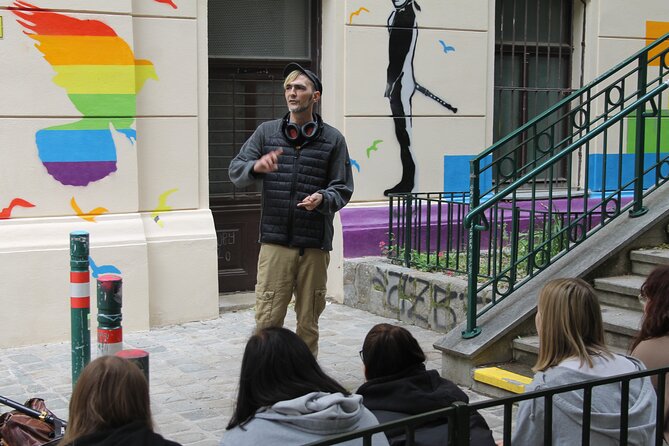
Vienna has stories beyond its grand palaces. This two-hour walking tour with Martin, who once lived on Vienna’s streets, offers an unusually personal look at homelessness, addiction, squatting, punk culture, and survival in the city. I like the firsthand storytelling and the way the route connects real places to Martin’s past rather than simply pointing out famous buildings.
I also like the tour’s modest size, with no more than 20 people, and its short length, which makes it easy to fit into a day of sightseeing. The main consideration is its subject matter. Stories about drug addiction, rough sleeping, and eviction can be painful and intense, so this is not a light city stroll. You should come ready to listen with respect.
In This Review
- Key points to know before booking
- Why this Vienna tour feels different
- Starting at Karlsplatz and crossing central Vienna
- Alfred-Grünwald-Park and the reality of sleeping outside
- From the Secession to Ilse-Pisk-Stiege
- A personal account of homelessness and addiction
- Why the two-hour length works
- Price, group value, and what you receive
- Who should book this experience
- Finishing at Esterhazypark by Haus des Meeres
- Practical details for your visit
- Should you book the Alternative Tour in Vienna?
- FAQ
- Where does the tour start?
- Where does the tour end?
- How long does the tour last?
- What subjects does Martin discuss?
- How many people can join the tour?
- Are dogs and service animals allowed?
- What is the cancellation policy?
Key points to know before booking
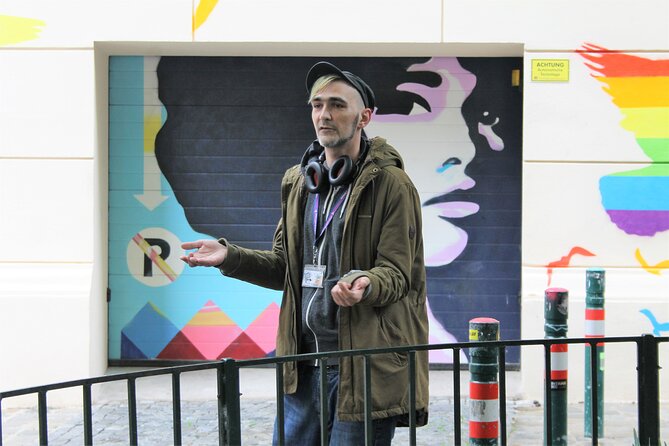
- Martin leads from personal experience: He speaks openly about his former life on the streets and past drug addiction.
- The route uses ordinary city places: Alfred-Grünwald-Park and Ilse-Pisk-Stiege become settings for stories most visitors would miss.
- The tour links personal experience with local politics: You hear about squats, punks, and the notorious eviction of Pizzeria Anarchia.
- It lasts about two hours: That is enough time for serious discussion without taking up your entire day.
- The group is capped at 20 people: A smaller group should make it easier to hear Martin and ask questions.
- It ends near Haus des Meeres: The finish at Esterhazypark gives you an easy way to continue exploring Mariahilf.
Why this Vienna tour feels different
Most Vienna tours guide you through imperial power: the Hofburg, Schönbrunn, grand churches, and elegant streets. This one looks at people who lived outside that polished picture. You walk through central Vienna, but the focus is on places where people slept, gathered, protested, or tried to build a life beyond the usual social rules.
Martin is the reason the experience carries weight. He does not present homelessness as an abstract social problem. He explains what it meant in his own life, including where he slept and how everyday decisions changed when you had no secure home. The personal angle gives the tour a directness that a standard lecture cannot match.
The tone is not gloomy every minute. Martin is described as warm, open, and funny, and several parts of his storytelling bring humor to a serious subject. That balance matters. A tour about addiction and homelessness could easily become stiff or preachy. Instead, Martin seems to make room for laughter, questions, discomfort, and reflection.
I would not book this as a substitute for Vienna’s major sights. Book it because it shows you a side of the city those sights cannot explain.
A few more trips of this kind worth comparing:
- Vienna: Vivaldi’s Four Seasons Concert in Karlskirche
★ 4.7 · 14,951 reviews - Vienna: Spanish Riding School Training
★ 3.9 · 9,281 reviews - Vienna: Skip-the-cashier-desk-line Giant Ferris Wheel Ride
★ 4.5 · 7,859 reviews
Starting at Karlsplatz and crossing central Vienna
The meeting point is at the Police Inspectorate Vienna, Kärntnertorpassage at Karlsplatz in the first district. This is a practical starting place because Karlsplatz is close to public transportation and familiar landmarks. Make sure you identify the Kärntnertorpassage rather than simply waiting somewhere in the broad Karlsplatz area.
The route then goes through the subway passage at Karlsplatz. You leave at the exit beside the Secession, the famous white exhibition building with its distinctive dome. From there, you pass the Secession on the way to the next stop.
That short opening section helps set the tone. You begin in a part of Vienna associated with art, transit, and central-city sightseeing, then move toward stories about people who experienced the same city from a very different position. The contrast is useful, but the route is not presented as a parade of attractions. The Secession is a reference point, not the main event.
This is a walking experience, so wear comfortable shoes. The supplied details do not give an exact distance or list every stop, but the route includes a subway passage, city streets, a park, and stairs. If you have mobility concerns, ask the provider for more information before booking.
Alfred-Grünwald-Park and the reality of sleeping outside
The first major stop is Alfred-Grünwald-Park. The park has seating for everyone, and the tour spends about 20 minutes here. That makes it the most comfortable point to settle in and listen.
Martin explains why the park became one of his sleeping places and why simply lying down on the meadow was not always a sensible choice. This detail is one of the tour’s strengths. It moves the subject away from vague ideas about homelessness and toward the practical risks of finding a place to sleep in a city.
A public park may look open, safe, and inviting to someone passing through during the day. At night, the same space can work very differently. Martin’s account helps you consider questions that most city tours never raise: where a person can rest, what makes a location safer or less safe, and how little privacy or control someone without housing may have.
The free admission here is obvious, but the value comes from the conversation. You are not paying to enter a landmark. You are paying for access to a personal account and an opportunity to ask questions directly.
This stop also gives the group a natural pause. Twenty minutes is long enough for a substantial story, but not so long that the tour becomes a stationary talk. If you prefer constant sightseeing and quick photo opportunities, you may find this section slow. If you want context that changes how you see ordinary urban spaces, it is likely to be one of the most memorable parts.
From the Secession to Ilse-Pisk-Stiege
The next part of the route leads toward Ilse-Pisk-Stiege, also called the Capistran Ascent. The stairs serve as the penultimate stop and offer a place for one last breather. The setting is more functional than scenic, which fits the tour’s purpose. You are not being brought to a famous viewpoint. You are being taken to a place connected with stories about squats and punk life.
Martin discusses the world of squats and punks from direct experience. That section widens the subject beyond sleeping rough. It looks at alternative communities, occupied buildings, people living outside conventional systems, and the conflicts that can arise when those communities meet the authorities.
The story of the Pizzeria Anarchia eviction is the dramatic centerpiece here. A building occupied by 19 people was eventually cleared by 1,700 police officers. The scale of that operation gives you a striking example of how tense housing disputes and political confrontations can become.
The story also adds a local anarchist thread to the tour. Several comments about the experience describe this part as intriguing, sometimes funny, and surprising. That mix is important because it prevents the discussion from becoming a simple good-versus-bad story. You get a human account of people making difficult choices, along with the absurd and sometimes comic details that can appear in a tense situation.
The stairs may be a drawback for some people. The information provided does not promise step-free access, and this is not a fully seated tour. If stairs are difficult for you, contact Wiener Nimmerland before you reserve a place.
A completely different kind of day out in Vienna:
- Vienna: Schönbrunn Palace & Gardens Skip-the-Line Tour
★ 4.7 · 7,739 reviews - Vienna: Light of Creation Votive Church Immersive Light Show
★ 4.8 · 6,779 reviews - Vienna Spanish Riding School Guided Tour
★ 4.7 · 6,765 reviews - Vienna: Classical Concert in the World-Famous Musikverein
★ 4.6 · 6,673 reviews
A personal account of homelessness and addiction
Martin’s past is central to the experience. He lived on the streets and formerly struggled with drug addiction. He talks about how he entered that situation and what daily life was like, giving you a view that is both personal and preventative.
The best reason to choose this tour is the chance to hear someone explain his own experience without reducing it to a cautionary slogan. Martin is described as open, warm, and willing to answer questions. He also appears comfortable using humor when it helps the group listen to a difficult story.
That does not mean every part will be easy. You may hear about addiction, poverty, fear, unstable housing, and choices made under pressure. Some people may find the material emotionally heavy. Parents and teachers should decide in advance whether the subject is suitable for their group, even though several school groups found the tour educational and appropriate for teenagers.
The format encourages questions. That is especially valuable here because many people carry assumptions about homelessness without ever having a chance to ask respectful, direct questions. Martin’s approach appears to challenge quick judgment rather than lecture you about what to think.
I appreciate that the tour seems to leave room for tolerance without turning the guide’s life into a spectacle. You are not visiting homelessness as an attraction. You are listening to a person explain part of his life and the city around it.
Why the two-hour length works
At about two hours, this is a compact experience. You can place it between other plans without surrendering half a day, yet there is enough time for Martin to tell a connected story rather than offer a few rushed anecdotes.
The route includes at least two substantial stops of about 20 minutes each, along with the walking sections between them. The remaining time allows for Martin’s explanations, questions, and the final walk to Esterhazypark. The exact pace may depend on the group and the discussion.
A shorter tour also makes the subject easier to absorb. You get a clear introduction to Martin’s story, the practical realities of sleeping outdoors, the world of squats and punks, and the Pizzeria Anarchia eviction. You should not expect a full survey of Vienna’s social services or a detailed academic study of addiction. This is a personal city walk, not a policy seminar.
The group limit of 20 is helpful. A large crowd would make personal questions awkward and could turn an intimate story into a public performance. With a smaller group, you have a better chance of hearing the details and taking part in the conversation.
Price, group value, and what you receive
The listed price is $46 for about two hours. That is not the cheapest way to spend two hours in Vienna, especially since the parks, street route, and stairs do not charge admission. The value depends almost entirely on how much you want a guide-led conversation and a perspective you could not easily gain from a standard sightseeing walk.
I consider the price reasonable for a small-group experience led by someone with direct personal knowledge of the subject. You are paying for Martin’s time, preparation, storytelling, and willingness to answer questions, not for entry tickets or elaborate transport.
Group discounts are available, making the tour especially worth considering for schools, youth groups, cultural organizations, and other organized parties. The experience has already worked well for students because it is short, discussion-based, and connected to real places.
A mobile ticket is available, which keeps the booking simple. The maximum group size is 20, so booking ahead makes sense if your schedule is fixed.
Who should book this experience
I would recommend this tour to adults and mature teenagers who want more than Vienna’s familiar postcard image. It should suit you if you enjoy social history, personal storytelling, urban issues, or tours that ask you to reconsider your assumptions.
It is also a strong choice for teachers and school groups. The experience can open discussion about addiction, poverty, tolerance, social judgment, and the choices people make when normal support systems fail. Teachers should prepare students for serious subject matter rather than presenting it as a casual sightseeing outing.
You may want to skip it if you only have one short day in Vienna and have not yet seen the city’s essential sights. You may also prefer another activity if you want architecture, art, food, or a relaxed walk with little discussion.
Bring patience and respect. Martin’s story is not a staged performance, and the value of the tour depends on the group listening carefully and asking thoughtful questions.
Finishing at Esterhazypark by Haus des Meeres
The tour ends at Esterhazypark G in the sixth district, beside Haus des Meeres. This is a useful finish because you can continue with another attraction nearby or make your way onward using Vienna’s public transportation.
Ending away from Karlsplatz also gives the experience a clear sense of movement. You begin beside a major central transit hub and finish in a different part of the city, having crossed from the usual sightseeing core toward Mariahilf.
The tour does not end at one of Vienna’s grand monuments, and that is intentional. The final location keeps the focus on the city as a lived place rather than a collection of postcard scenes.
Practical details for your visit
Confirmation is provided when you book. The tour is near public transportation, and most people can participate. Service animals and dogs are allowed.
Because the route includes a subway passage and a stair stop, ask about your specific mobility needs before booking. Seating is available at Alfred-Grünwald-Park, but the full experience is not described as seated.
Free cancellation is available if you cancel at least 24 hours before the local start time. Cancellations within 24 hours are not refunded, and changes inside that period are not accepted. The tour also requires a minimum number of participants. If the provider cancels because that minimum is not reached, you can choose another date or experience, or receive a full refund.
Should you book the Alternative Tour in Vienna?
Book it if you want a serious, personal look at Vienna that goes far beyond palaces and coffeehouse streets. Martin’s experience with homelessness and addiction, his stories about squats and punk communities, and the account of the Pizzeria Anarchia eviction give the tour a clear purpose.
At $46, it offers good value for a small group and two hours of direct conversation, though it is not a bargain in the usual free-walking-tour sense. Choose it for the insight, not the sights.
I would especially recommend it for mature teenagers, school groups, and adults who want to question easy ideas about homelessness and social exclusion. If that sounds like the kind of Vienna you want to understand, this unusual walk deserves a place in your plans.
FAQ
Where does the tour start?
It starts at the Police Inspectorate Vienna in the Kärntnertorpassage at Karlsplatz, 1010 Vienna, Austria.
Where does the tour end?
It ends at Esterhazypark G in the sixth district, next to Haus des Meeres.
How long does the tour last?
The experience lasts approximately two hours.
What subjects does Martin discuss?
Martin discusses his former life on Vienna’s streets, homelessness, drug addiction, sleeping in Alfred-Grünwald-Park, squats, punk communities, and the eviction of Pizzeria Anarchia.
How many people can join the tour?
The tour has a maximum of 20 participants.
Are dogs and service animals allowed?
Yes. Dogs and service animals are allowed.
What is the cancellation policy?
You can receive a full refund if you cancel at least 24 hours before the experience starts. Cancellations or changes made within 24 hours are not refunded or accepted.
Just added around Vienna
- Mobile puzzle rally tour at the Vienna Central Cemetery★ 4.5 · 3 reviews
- 8 days European Highlights PRIVATE TOUR from Budapest including Budapest Vienna Prague and Bratislava★ 5.0 · 3 reviews
- RAXI (E-Rickschaw) big private Vienna tour★ 4.5 · 3 reviews
- Private Transfer from Vienna to Prague with 1 hour Stop in Kutna Hora★ 4.5 · 3 reviews
- Palais Lobkowitz Audio Guide Tour★ 4.0 · 3 reviews
- Private Tour from Vienna to Melk and Dürnstein★ 4.5 · 3 reviews
- Vienna: Designer Fashion Time Capsule Experience★ 5.0 · 3 reviews
- Vienna Sight & Gourmet Tour – individual private tour★ 4.5 · 3 reviews
Tours, compared.

Schönbrunn Palace & Gardens Skip-the-Line Tour
Read our review →

Skip-the-Line Sisi Museum, Hofburg and Gardens Tour
Read our review →
Skip-the-Line Schönbrunn Palace & Gardens Tour
Read our review →

Guided Walking Tour of City Center Highlights
Read our review →