Reviewed · TOURS
Fall in Love with Vienna Tour- the best of Vienna on foot!
Vienna rewards a good first walk. This three-hour tour links the city’s biggest sights with stories about Mozart, the Habsburgs, coffee houses, music, and daily life, making it a strong starting point for anyone new to the Austrian capital. I especially like the dense route through the historic center and the useful advice about museums, restaurants, concerts, and cafés.
I also like the small to medium group format, with no more than 18 people, and the chance to choose a morning or afternoon departure. Guides such as Nicoletta, Moritz, and Reka are praised for their warmth, flexibility, and clear English. The main drawback is simple: you cover a lot of ground, often stopping for only five or ten minutes, so this is an overview rather than a slow, detailed tour of each monument.
In This Review
- Key points to know before booking
- Starting beside Mozart’s Vienna residence
- St. Stephen’s Cathedral and Vienna’s baroque heart
- Hofburg, Sisi, and the Habsburg story
- Roses, Greek columns, and Vienna’s civic buildings
- Coffee houses from Freud to palace pastry
- Riding school, royal hearts, and the final mile
- What the three-hour pace feels like
- What you get for $72.59
- Who should book this Vienna walk?
- Should you book Fall in Love with Vienna?
- FAQ
- How long does the Fall in Love with Vienna Tour last?
- Where does the tour begin?
- Where does the tour end?
- Is the tour offered in English?
- Are museum entrance fees included?
- How large is the group?
Key points to know before booking
- About 5 kilometers on foot: Expect plenty of walking across central Vienna, with some uneven cobblestones.
- A smart first-day introduction: The route gives you a useful map of the old center so you can choose what to revisit later.
- Morning departures can beat the crowds: An early start may feel calmer before central Vienna fills up.
- A coffee break is included from January through November: You get an extra 30 minutes in a traditional Viennese coffee house.
- Nearly every sight is viewed from outside: Museum and concert admission costs extra.
- The tour ends beside the State Opera: You finish near public transport, the Ringstrasse, and several major city sights.
Starting beside Mozart’s Vienna residence
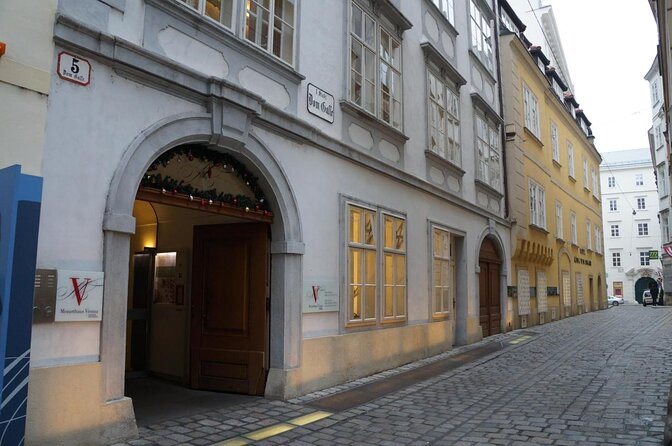
The walk begins at Mozarthaus Vienna on Domgasse, close to St. Stephen’s Cathedral. The guide introduces Mozart here, in front of one of his long-term Vienna residences, and uses the setting to explain his life in the city.
This is a useful opening because it puts Vienna’s musical identity on the table right away. You are not simply looking at an old building. You are getting an early sense of how composers, imperial power, churches, cafés, and public performance all fit together in Vienna.
The stop itself is brief, about five minutes, and the museum entrance is not included. If Mozart interests you, you can return later for a proper visit. Concert tickets in Vienna’s major concert halls may also be arranged on request, but you should ask about that before relying on it as part of your plans.
From here, the route moves through the center to a popular wafer and candy shop near St. Stephen’s. This is a small but entertaining food stop. You can look over a broad selection of wafers and sweets, including the familiar Neapolitan-style wafer, and note a classic Viennese habit: taking food seriously, even when it comes in a bright wrapper.
A few more trips of this kind worth comparing:
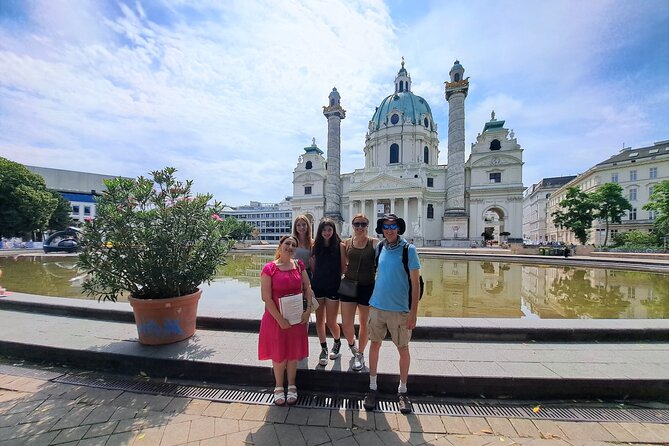
- Vienna: Vivaldi’s Four Seasons Concert in Karlskirche
★ 4.7 · 14,951 reviews - Vienna: Spanish Riding School Training
★ 3.9 · 9,281 reviews - Vienna: Skip-the-cashier-desk-line Giant Ferris Wheel Ride
★ 4.5 · 7,859 reviews
St. Stephen’s Cathedral and Vienna’s baroque heart
St. Stephen’s Cathedral is one of the essential sights in Vienna. Its origins reach back to the 11th century, and it remains the visual and spiritual center of the old city.
The tour pauses for about five minutes. That gives you time to take in the scale and setting, but not enough for a full interior visit or a detailed look at every architectural feature. I would treat this as your orientation stop, then return on your own if the cathedral catches your interest.
Next comes the Pestsäule, or Plague Column, a high baroque memorial on the Graben. It was commissioned as an expression of gratitude after Vienna survived a plague epidemic. The column is packed with figures and movement, so a short explanation helps you read what could otherwise look like an elaborate swirl of stone.
Nearby, Peterskirche offers another quick look at baroque Vienna. The present Roman Catholic church was built after the earlier structure was destroyed in the 16th century. Inside, it feels closer to an art gallery than a plain parish church, with ornament and decoration covering nearly every surface.
The route then touches on Viennese coffee culture at Julius Meinl on Kohlmarkt. The guide explains how coffee became part of Vienna’s social life and points out this central café and shop on one of the city’s most expensive shopping streets.
That context matters. Vienna’s cafés are not just places to grab a drink between sights. They are tied to conversation, newspapers, music, politics, and long afternoons at the table. The tour helps you see cafés as part of the city’s character rather than as decoration for a postcard.
Hofburg, Sisi, and the Habsburg story
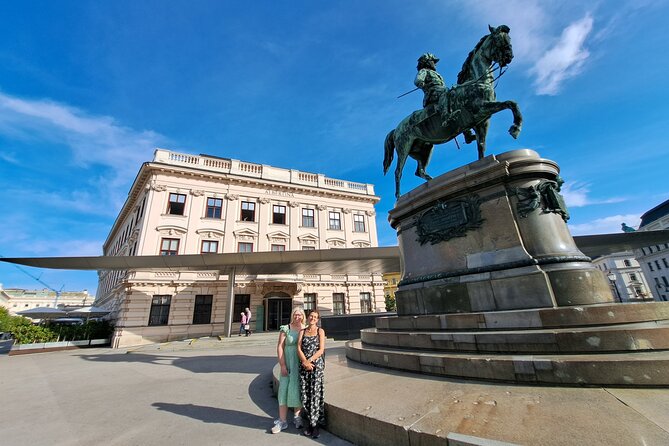
The Hofburg is the historical center of imperial Vienna, and this section gives the tour its largest dose of dynastic storytelling. You hear where figures such as Elisabeth, Franz, and Maria Theresa lived, along with stories about palace workers, imperial routines, personal tastes, and the odd habits of the ruling family.
The guide also points out St. Michael’s Church, which dates back to the 12th century. This is another short exterior or passing stop, so do not expect a full church tour. Instead, you get a sense of how older religious buildings sit among the later palace buildings and grand shopping streets.
The Sisi Museum is connected with the Imperial Apartments and focuses on Empress Elisabeth. The tour spends around ten minutes here, but the museum admission is not included. The guide’s role is to give you the story and help you decide if the museum deserves a longer visit later.
I like this approach for a first day. Sisi is one of Vienna’s most marketable historical figures, and it is easy to leave the city with a polished legend but little context. A good guide can separate the public image from the more complicated person behind it. Since the tour does not include entry, you remain free to choose a museum visit based on your own interest.
Heldenplatz follows. The Square of Heroes forms a grand entrance to the Hofburg’s winter palace and sits beside several museums and the palace’s large ceremonial rooms. This is one of the places where Vienna’s imperial ambition is easiest to read. The open space was designed for display, ceremony, and power.
Roses, Greek columns, and Vienna’s civic buildings
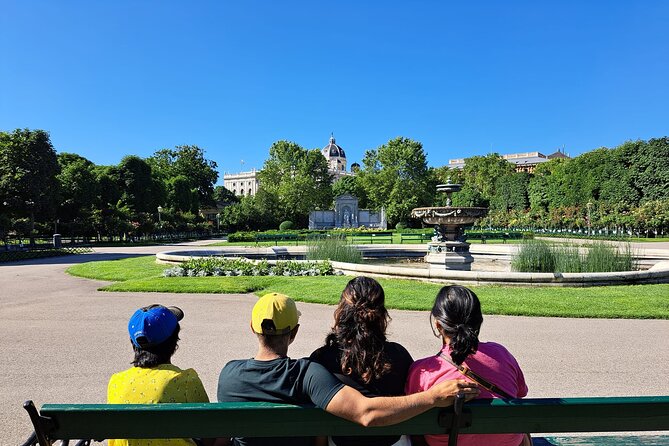
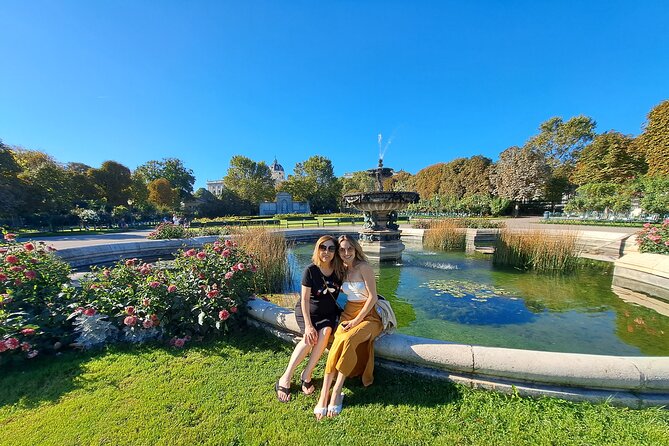
Volksgarten provides a welcome change from palace walls and paved streets. Created in 1821, this central park is known as the Garden of 1,000 Roses. The guide points out the garden’s design and explains why it remains one of the best-preserved parks in central Vienna.
A Greek-style temple sits inside the park, offering a curious reminder of the Habsburgs’ interest in Greece and classical culture. It is a small detail, but it gives the walk variety. Vienna is not only imperial and baroque. Its public spaces also borrow from ancient Greece and Rome.
The route continues toward the Pallas-Athene-Brunnen in front of the Austrian Parliament. The fountain depicts the goddess Athena and invites a closer look at the objects in her hands and what they represent. This is a quick stop, but it rewards anyone who enjoys the symbolism built into Vienna’s public art.
You then see Vienna City Hall, a striking example of neo-Gothic architecture. The building is also one of the city’s main event spaces, hosting festivals throughout the year and Vienna’s large Christmas market. If you visit during the holiday season, this area becomes especially useful for planning an evening visit.
The Burgtheater is nearby. Built in the 18th century under Maria Theresa, it remains one of Vienna’s major theater landmarks. Again, the tour gives you a short introduction rather than an inside look. That is enough to add another piece to the city’s cultural picture, especially if you plan to attend a performance later.
A completely different kind of day out in Vienna:
- Vienna: Schönbrunn Palace & Gardens Skip-the-Line Tour
★ 4.7 · 7,739 reviews - Vienna: Light of Creation Votive Church Immersive Light Show
★ 4.8 · 6,779 reviews - Vienna Spanish Riding School Guided Tour
★ 4.7 · 6,765 reviews - Vienna: Classical Concert in the World-Famous Musikverein
★ 4.6 · 6,673 reviews
Coffee houses from Freud to palace pastry
Café Landtmann is included as a stop because of its connection with Sigmund Freud and Vienna’s famous café tradition. You may not have time to sit down here during the main walk, but the guide can help you understand why historic coffee houses remain central to the city’s identity.
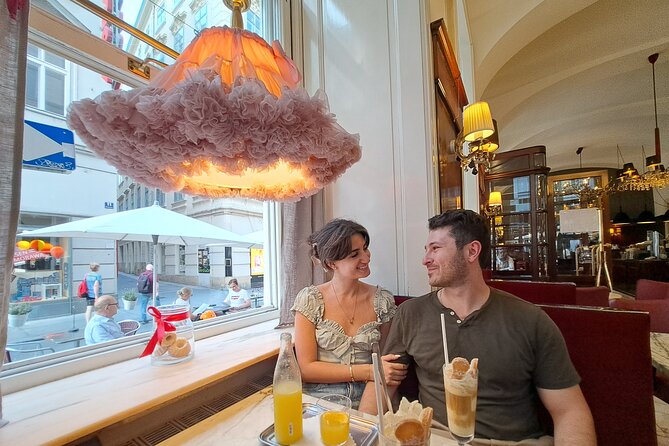
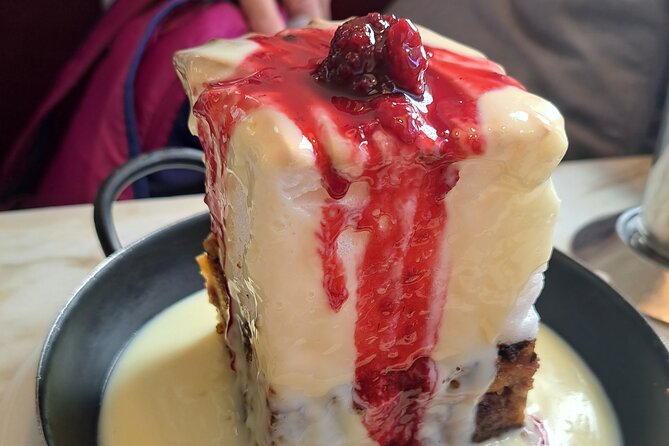
The tour includes an extra 30-minute break at a traditional Viennese coffee house from January through November. This is one of the most useful parts of the experience. You get a chance to rest your feet, ask questions, and try a classic café treat such as coffee or apple strudel, depending on your choice.
That break also improves the pace. Three hours of walking can sound easy on paper, but a route of about 5 kilometers is a real outing. On a hot day, the pause becomes more than a pleasant extra. It gives you shade, a seat, and time to absorb the information before the final stretch.
The walk passes Beethoven Pasqualatihaus, one of Beethoven’s former residences and now a museum. It is another music-themed landmark, though entrance is not included. Vienna has many Beethoven addresses, so this stop is helpful if you want to return later to one of the composer’s museums.
Schottenkirche follows, with its 13th-century church, monastery, and museum. The guide uses it to discuss the early churches of Vienna and their distinctive appearance. You get a good sense of how the city’s religious history predates the grand imperial buildings that often receive the most attention.
At Palais Ferstel, the focus shifts to architecture and urban life. The passage contains cafés, restaurants, shops, and a fountain, making it a pleasant place to stroll through rather than simply photograph from the street.
Café Central is perhaps the most famous café on the route. It occupies a historic palais and is one of Vienna’s best-known coffee-house addresses. Demel, just outside the winter palace, adds a pastry stop with an imperial connection. It was a favorite cake shop of Empress Elisabeth and is known for chocolates, pancakes, and cakes.
These stops come with a practical warning. The tour shows you where the famous cafés are, but five or ten minutes is not enough for the full café experience. If you want a proper coffee and cake visit, return independently and allow time for it.
Riding school, royal hearts, and the final mile
The Spanish Riding School is one of Vienna’s signature institutions. The guide explains its origins under Emperor Maximilian, its military purpose, and the long training tradition behind the famous white horses.
The tour does not include a riding performance or a museum admission. Still, the explanation adds meaning to the ornate building. You learn why the school was created and why its training system became so important to Vienna’s image.
Augustinerkirche brings a stranger and more intimate imperial detail. A small chapel holds the hearts of 50 Austrian emperors and empresses, preserved there since the 17th century. This is the sort of fact that makes a walking tour memorable because it is easy to pass the church without knowing what is inside.
At Albertinaplatz, you see the final section of the winter palace, the Albertina museum, a memorial to Vienna’s Jewish community, and the city’s central tourist information office. This is a useful planning point. If you want art, city maps, or more help organizing your time, you are already near the right resources.
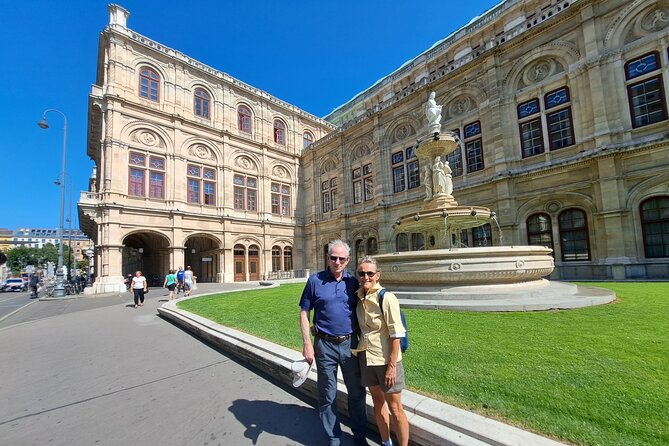
The final stops include Hotel Sacher and the State Opera. Hotel Sacher is associated with the original Sacher cake, so the guide explains the cake’s story and points out where you can try it. The Viennese State Opera, built in 1869 on the Ringstrasse, is the natural finale for a tour built around music, imperial culture, and public spectacle.
You finish at Herbert-von-Karajan-Platz, in front of the opera house. That location is practical. It puts you near the Ringstrasse and public transport, with plenty of options for lunch, a museum visit, or a return to one of the earlier sights.
What the three-hour pace feels like
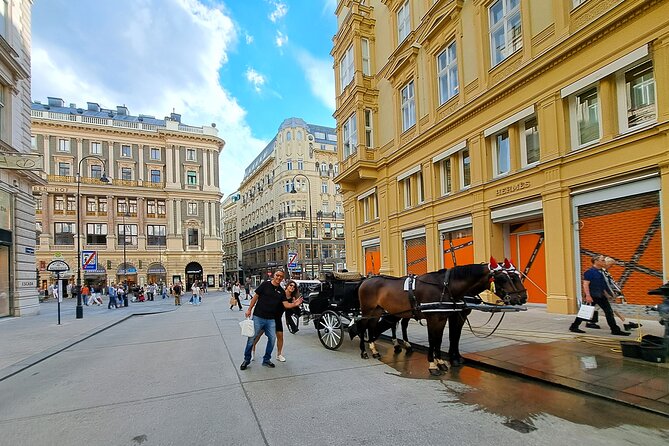
This is not a stop-and-stand tour. Most sights receive five or ten minutes, and the guide keeps you moving through the center. That makes the tour efficient, but it also means you should not expect long explanations at every building.
The route is generally easy walking with no major hills, though cobblestones and uneven surfaces call for comfortable shoes. Moderate fitness is enough, but you should be ready to stay on your feet for much of the morning or afternoon.
Group size is capped at 18 people. That is small enough for questions in good conditions, but it may feel less personal when streets are crowded or traffic is noisy. One account noted that a group of 17 made it harder to hear the guide. If you want the best chance of a quieter walk, choose an early morning departure when available.
Guide quality matters here. The strongest part of the experience is the human element. Nicoletta, also spelled Nikoleta in some material, is praised for tailoring the route to a group’s interests, answering many questions, taking photos, and sharing useful suggestions. Moritz is praised for adjusting the pace and allowing extra time for an older participant. These details suggest a tour culture that values flexibility, although your exact guide will shape the experience.
What you get for $72.59
At $72.59 per person, this is not the cheapest way to see central Vienna. You are paying for a guided route, local explanations, recommendations, a printed Vienna information package, and a city map rather than for museum admissions.
The value is strongest if you are visiting Vienna for the first time or have only a short stay. In three hours, you see major imperial buildings, churches, cafés, music landmarks, parks, public monuments, and the opera. You also learn what deserves a longer visit later.
The tour is less attractive if you already know the center well, prefer to enter every major sight, or want a slow architectural study. Since museum fees are extra, budget separately for Mozarthaus, the Sisi Museum, the Albertina, Beethoven Pasqualatihaus, or any other interior you decide to visit.
Tips are not included. If your guide keeps the group together, answers questions, adapts the pace, and gives useful help for the rest of your stay, tipping is appropriate.
Who should book this Vienna walk?
I would choose this tour for a first morning in Vienna, especially if you want to get your bearings before deciding how to spend the next few days. It is also a good fit for couples, families with older children, and anyone who likes history delivered through stories rather than long museum lectures.
It works well for people who want practical advice. Guides can suggest museums, concert venues, restaurants, coffee houses, and other stops, and the printed information package gives you something useful to consult afterward.
I would think twice if you dislike group walking, struggle to hear in crowded streets, or need frequent sitting breaks beyond the included coffee stop. A private tour may suit you better if you want a highly tailored pace, but this group experience can feel nearly private when bookings are light.
Free cancellation is available up to 24 hours before the start time. The tour depends on good weather and a minimum number of participants, so a cancellation for either reason can lead to another date, another experience, or a full refund.
Should you book Fall in Love with Vienna?
For most first-time visitors, yes. The route is broad, the price is reasonable for a three-hour guided introduction, and the practical recommendations can save you time later. I especially like that the walk ends at the State Opera, after covering the city’s main imperial and musical themes.
Book it early in your stay, choose the morning if you prefer cooler streets and lighter crowds, and wear shoes suited to cobblestones. Just remember what you are buying: a lively orientation with many short stops, not admission to Vienna’s museums or a detailed tour inside every landmark.
FAQ
How long does the Fall in Love with Vienna Tour last?
The tour lasts approximately three hours. From January through November, it also includes an extra 30-minute break in a traditional Viennese coffee house.
Where does the tour begin?
It begins at Mozarthaus Vienna, Mozart’s former residence at Domgasse 5, 1010 Vienna.
Where does the tour end?
The tour ends at Herbert-von-Karajan-Platz, in front of the Vienna State Opera on the Ringstrasse.
Is the tour offered in English?
Yes. The tour is offered in English and includes a mobile ticket.
Are museum entrance fees included?
No. Entrance fees to museums are not included. The tour visits or passes places such as Mozarthaus Vienna, the Sisi Museum, Beethoven Pasqualatihaus, and the Albertina, but you would pay separately to enter them.
How large is the group?
The maximum group size is 18 people. The tour requires a moderate level of physical fitness, and you should expect substantial walking over some uneven cobblestones.
Just added around Vienna
- Mobile puzzle rally tour at the Vienna Central Cemetery★ 4.5 · 3 reviews
- 8 days European Highlights PRIVATE TOUR from Budapest including Budapest Vienna Prague and Bratislava★ 5.0 · 3 reviews
- RAXI (E-Rickschaw) big private Vienna tour★ 4.5 · 3 reviews
- Private Transfer from Vienna to Prague with 1 hour Stop in Kutna Hora★ 4.5 · 3 reviews
- Palais Lobkowitz Audio Guide Tour★ 4.0 · 3 reviews
- Private Tour from Vienna to Melk and Dürnstein★ 4.5 · 3 reviews
- Vienna: Designer Fashion Time Capsule Experience★ 5.0 · 3 reviews
- Vienna Sight & Gourmet Tour – individual private tour★ 4.5 · 3 reviews
Tours, compared.

Schönbrunn Palace & Gardens Skip-the-Line Tour
Read our review →

Skip-the-Line Sisi Museum, Hofburg and Gardens Tour
Read our review →
Skip-the-Line Schönbrunn Palace & Gardens Tour
Read our review →

Guided Walking Tour of City Center Highlights
Read our review →