
Reviewed · HISTORICAL TOURS
Historical Hitler Walking Tour of Vienna
Vienna’s grand center carries some very dark memories. This walking tour connects Hitler’s early years in Vienna with the rise of Nazism, wartime destruction, Austria’s Jewish history, and the city’s uneasy relationship with its past. I like the way it uses familiar sights, including the State Opera and Heldenplatz, to explain events that are easy to miss when sightseeing on your own. I also like the guides’ careful storytelling, with past guides such as Dieter, Wolfgang, Stephan, Charles, and Siggy praised for clear explanations and thoughtful answers. The main drawback is the title: this is not a tour focused only on Hitler, and much of the time is devoted to Vienna, antisemitism, the Holocaust, and World War II.
You walk for about two and a half hours, beginning outside the Albertina Museum at 2:30 p.m. and finishing near Schwedenplatz. The route is generally easy, but you will be outdoors for much of it, so good shoes, water, sun protection, and rain gear matter. Winter can be especially cold, though guides have sometimes added indoor pauses to help the group warm up.
In This Review
- Key points to know before booking
- Why Hitler’s Vienna needs more than a single name
- Starting at the State Opera after 1938
- Facing war at Albertinaplatz
- The art school that rejected Hitler
- Heldenplatz and the March 1938 speech
- Judenplatz and the Austrian Jewish victims
- Morzinplatz and the former Metropole Hotel
- The synagogue hidden behind apartment buildings
- What the two-and-a-half-hour format feels like
- Is $32.65 a fair price?
- Practical advice for a serious history walk
- Who should book this Vienna walking tour?
- Should you book it?
- FAQ
- Where does the Historical Hitler Walking Tour of Vienna begin?
- What time does the tour start?
- How long does the walking tour last?
- Where does the tour finish?
- Is the tour offered in English?
- What should I bring?
- Can I cancel for a refund?
Key points to know before booking
- The tour is about context, not celebrity worship: Hitler’s Vienna is examined alongside Austria’s political, cultural, and Jewish history.
- Seven major stops shape the route: You see the State Opera, Heldenplatz, several memorials, the former Gestapo headquarters site, and the hidden Stadttempel Synagogue.
- Expect a serious, classroom-style walk: The focus is historical explanation and discussion, not theatrical performance or museum entry.
- The route ends near dinner and public transport: Schwedenplatz has U1 and U4 connections and many places to eat.
- Guides add real value: Past guides including Dieter and Wolfgang were praised for clear English, depth, pacing, and care with difficult subjects.
- Plan for changing weather: The tour requires suitable weather, and a cancellation for poor conditions can lead to another date or a full refund.
Why Hitler’s Vienna needs more than a single name
The title points to Hitler’s years in Vienna and the ideas that shaped his later political life. But the useful part of the tour is the wider frame. You learn how Vienna’s institutions, public spaces, antisemitism, art world, Jewish community, and political culture changed before, during, and after the Nazi period.
That distinction matters. If you want a quick tour of places directly occupied by Hitler, this may feel too broad. If you want to understand how a city became tied to the rise of National Socialism, the wider approach is far more useful.
The tour also avoids treating the subject as a simple story of one man. Stops at the Holocaust memorials and former Gestapo site make clear that the consequences reached far beyond Hitler’s biography. You are asked to think about public approval, persecution, silence, and the way Austria remembered or avoided its own role.
The guides have different personalities, but the strongest descriptions point to the same qualities: strong command of the subject, good English, clear organization, and a willingness to answer questions. Stephan has used maps and photographs on an iPad, while Dieter has been praised for combining facts with a more reflective, philosophical tone.
More Walking Tours in Vienna
- Vienna: Guided Walking Tour of City Center Highlights
★ 4.7 · 4,989 reviews - Vienna: Vienna Central Cemetery Guided Walking Tour
★ 4.8 · 3,307 reviews - Vienna: Guided Walking Tour of City Highlights & Hidden Gems
★ 4.9 · 2,180 reviews
Starting at the State Opera after 1938
Meet your guide outside the Albertina Museum at Albertinaplatz. This is a busy central location, so arrive early and look carefully for the group. One poor experience came from a participant being left behind at the meeting point, so it is sensible to confirm your guide before the walk begins and stay close during the first transfer.
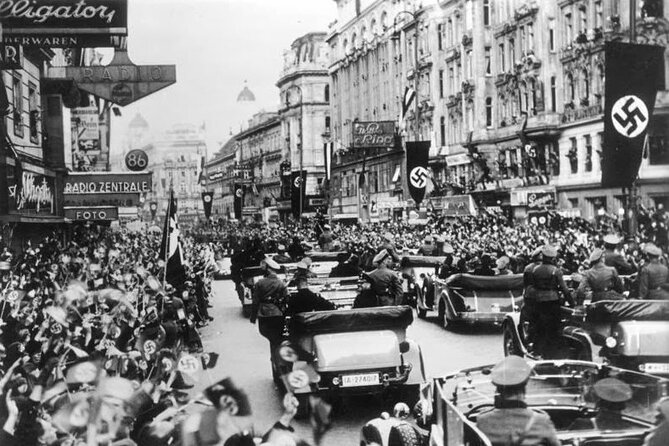
The first stop is the Vienna State Opera, one of the city’s great cultural landmarks. Its opening took place on May 25, 1869, with Mozart’s Don Juan performed in the presence of Emperor Franz Joseph and Empress Elisabeth. That elegant beginning provides a sharp contrast to what followed after Austria’s annexation by Nazi Germany in 1938.
The guide explains how political change reached into Vienna’s arts scene. Hitler visited the opera in June and October 1938, while artists and employees were forced to leave, persecuted, or murdered. Some works were banned from performance.
This is a short stop, about ten minutes, but it gives the tour an effective opening. You are not simply looking at an opera house. You are considering what happens when a government takes control of culture, employment, and public life.
Facing war at Albertinaplatz
From the opera, you continue to the Memorial Against War and Fascism on Albertinaplatz. Austrian sculptor Alfred Hrdlicka created the memorial, which has been in place since 1988. It is dedicated to victims of war and fascism and addresses one of Austria’s darkest periods without softening the subject.
The memorial is useful because it brings the discussion into the present. Vienna is not presenting only imperial buildings and polished streets here. The sculptures and inscriptions force a pause and show how public memory can be difficult, physical, and uncomfortable.
Your guide may also point out less familiar reminders of the period along the route. This is one reason the walk works better with a guide than with a map. The places themselves often look ordinary. Their meaning comes from knowing what happened there.
The art school that rejected Hitler
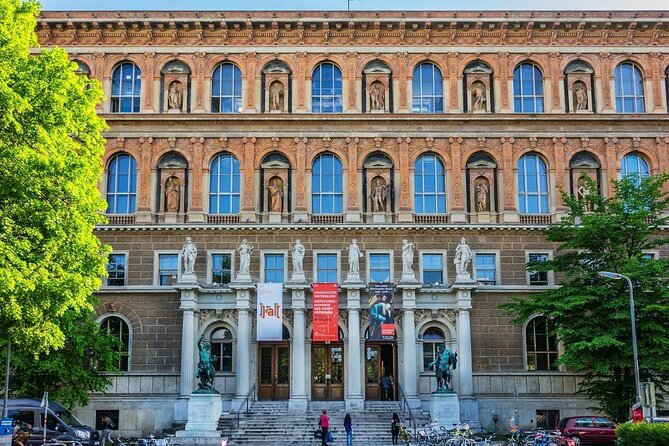
The Akademie der bildenden Künste, or Academy of Fine Arts, is linked to Hitler’s early years. He applied to the art school and was not accepted. The stop does not turn that rejection into a neat explanation for everything that followed, and it should not. History rarely offers such tidy cause and effect.
Still, the location helps you picture Hitler before he became a political figure. The tour looks at his early life in Vienna and uses the city as a setting for discussing the social and political ideas he encountered there.
This section is likely to appeal most to readers who have already read about Hitler’s rise and want a stronger connection to Vienna. If your main interest is wartime military history, the art school stop may feel less central. The tour is concerned with formation, ideology, and society as much as with battles or dates.
More historical tours:
- Vienna: Time Travel and Magic Vienna History Tour
★ 4.6 · 3,879 reviews - Vienna: World War II Historical Walking Tour
★ 4.8 · 1,772 reviews - Vienna Historic Center Small Group Walking Tour
★ 5.0 · 1,746 reviews - Time Travel-Magic Vienna History Tour Ticket
★ 4.5 · 1,099 reviews
Heldenplatz and the March 1938 speech
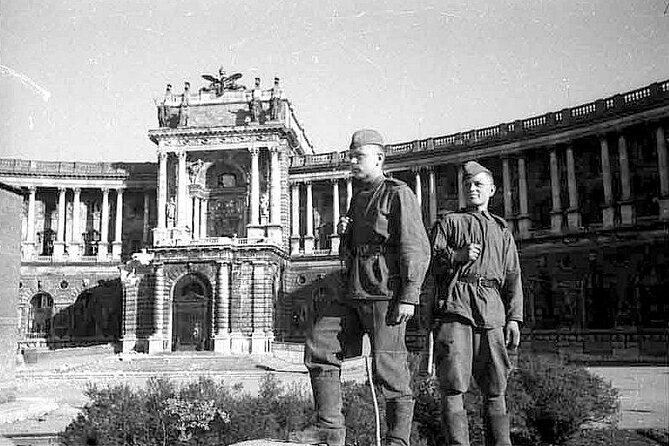
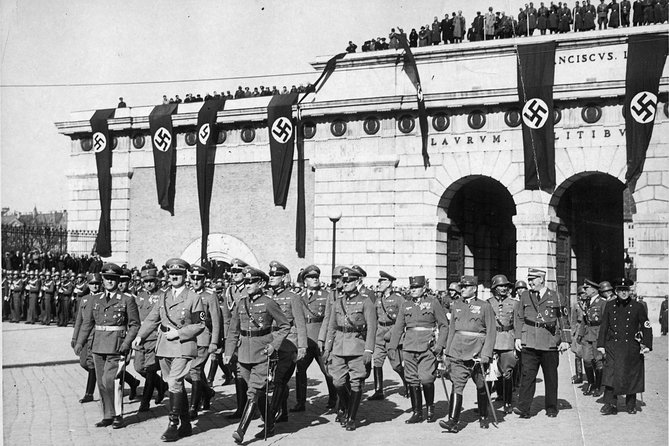
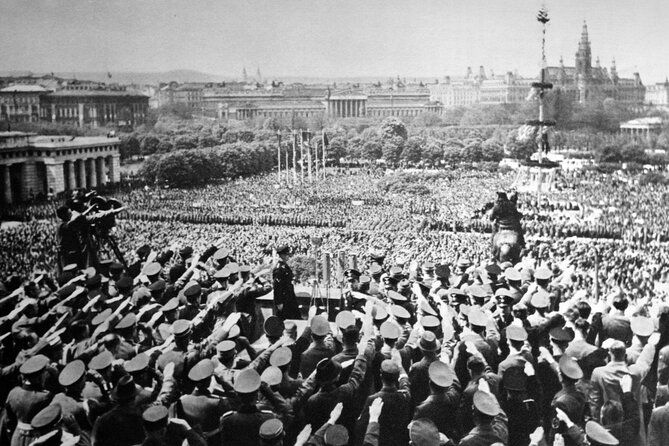
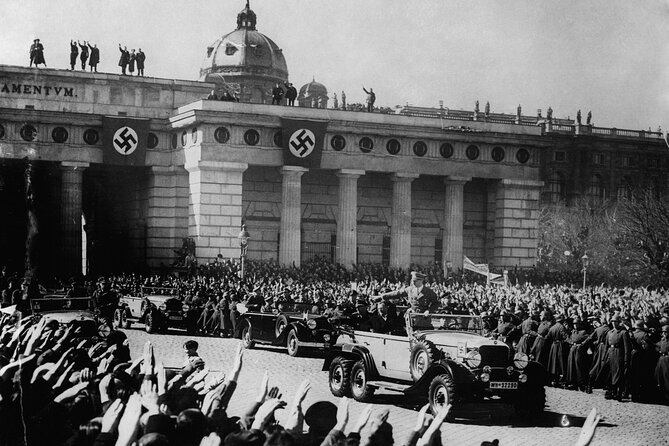
Heldenplatz is one of Vienna’s most important public spaces, and it carries a heavy political memory. On March 15, 1938, Hitler spoke from the balcony of the Neue Hofburg after the Anschluss. The speech and the large public response became a lasting symbol of the Nazi seizure of power and a source of trauma for Austria’s postwar republic.
The guide explains why this event mattered beyond the words delivered from the balcony. Heldenplatz shows how architecture and open space can be used for political theater. A place associated with imperial ceremony became a stage for mass politics and propaganda.
This is one of the strongest stops for visual learners. You can see the setting while the guide explains the event, rather than trying to picture it from a book. It is also a good place to ask questions, since the discussion moves from Hitler himself to Austrian public support and later efforts to reckon with the past.
Judenplatz and the Austrian Jewish victims
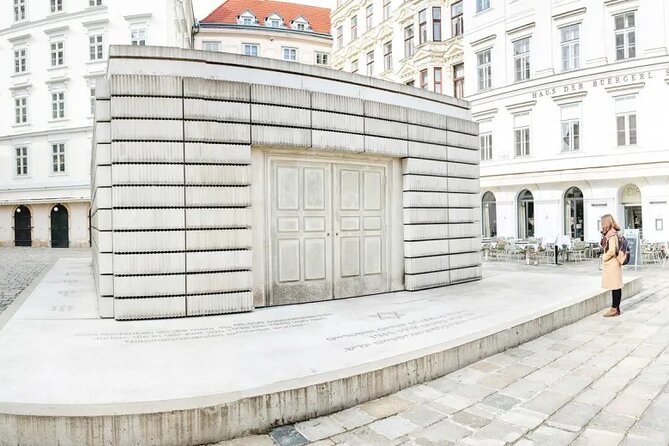
The Judenplatz Holocaust Memorial is among the most affecting parts of the walk. It commemorates more than 65,000 Austrian Jews murdered by the National Socialists between 1938 and 1945.
The memorial is designed as a sealed library, with rows of books turned outward and their titles unreadable. The effect is stark. It does not invite casual sightseeing, and a respectful pause here is appropriate.
The tour also places Vienna’s Jewish population within the larger story. You learn about the community that lived in the city, the persecution that followed the Anschluss, and the human cost behind statistics. One especially painful subject raised along this part of the route is the number of Jewish people who took their own lives rather than face deportation.
This stop changes the emotional weight of the tour. Earlier sections explain political change and Hitler’s background. Here, the consequences are personal and concrete. I would not book this walk expecting a light afternoon activity. Even though the route passes through beautiful central Vienna, the subject matter remains grave.
Morzinplatz and the former Metropole Hotel
At Morzinplatz, the tour reaches the site of the former Hotel Metropole. Before the Nazi period, it was a luxury hotel. Under National Socialism, it became one of the Gestapo’s most brutal headquarters in the Third Reich.
A memorial now marks the site. The contrast between a fashionable hotel and a place of interrogation, terror, and imprisonment is a grim reminder that repression often takes over existing city buildings. The location also makes the history feel close to daily life. This was not an isolated camp far from the city center. It was part of Vienna’s streetscape.
The stop is brief, around ten minutes, but it helps connect the Holocaust memorial at Judenplatz with the machinery of persecution. The tour does not leave the subject at public speeches and political ideas. It shows where state violence was organized.
The synagogue hidden behind apartment buildings
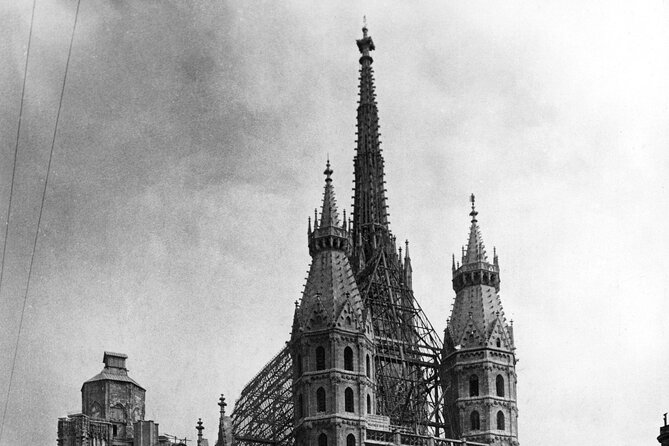
Near the end of the route, you learn why Vienna’s main synagogue, the Stadttempel, is not visible from the street. The synagogue is located at Seitenstettengasse 4, behind a five-story apartment building.
The arrangement comes from regulations that required non-Catholic places of worship to be concealed from public view. The synagogue’s entrance is reached through the street building, whose gate carries the inscription: Come to his gates with thanksgiving, to his courts with praise.
This is a small architectural detail with a large lesson. It shows how religious discrimination can shape a city for generations. The building’s hidden position is not a quirky design feature. It reflects laws that restricted Jewish religious life.
The tour does not present the synagogue as a regular interior visit, and admission to attractions is not included. You should think of this as an outdoor explanation and a chance to understand Jewish Vienna through the city’s buildings and memorials.
What the two-and-a-half-hour format feels like
The tour lasts approximately 2 hours and 30 minutes, with about ten minutes listed for each major stop. In practice, the value lies between the stops, when the guide connects one place to the next and explains how the story develops.
The pace has been praised as relaxed and manageable. Guides have also been careful to keep the group together, provide pauses, and help with safety along the route. Still, this is a walking tour, not a bus ride. You need a moderate level of fitness and should be comfortable standing outdoors for extended periods.
The group can include up to 25 people. That is small enough for questions, though audibility can depend on where you are standing. One participant found it difficult to hear through the listening device, so stay near the guide when possible and speak up if you lose the thread.
The 2:30 p.m. start has practical advantages. You can spend the morning at a museum or palace, then use the tour to see central Vienna from a different angle. The finish near Schwedenplatz is handy for dinner, with U1 and U4 service nearby.
Is $32.65 a fair price?
At $32.65 per person, the tour is fairly priced if you want a structured history lesson with a local guide. You are paying for about two and a half hours of explanation, route planning, and access to a subject that is not always easy to understand from plaques alone.
The tour does not include food, drinks, hotel pickup, or entry tickets. That keeps the price down, since the main attractions are viewed from public areas and the experience is built around walking and interpretation.
The value depends on your expectations. For a first-time visitor who wants only Vienna’s imperial highlights, another city walk may offer more immediate sightseeing pleasure. For a history buff, the combination of Hitler’s early years, the Nazi seizure of power, Jewish Vienna, memorials, and wartime destruction gives you a useful framework for the rest of your stay.
The tour is offered in English and uses a mobile ticket. It is generally booked well ahead, with an average booking lead time of about 25 days, so I would not leave it until the last moment during a busy visit.
Practical advice for a serious history walk
Wear shoes you can walk in for several hours. Bring water, sunblock, and a raincoat or umbrella because Vienna’s weather can change quickly.
Winter deserves special attention. Several guides, including Dieter and Siggy, have adjusted the experience with indoor pauses during very cold weather, but you should still dress for a long afternoon outside. A cold, windy day can make the final hour feel longer than expected.
The tour requires good weather and a minimum number of participants. If poor weather or low enrollment causes cancellation, you can choose another date or receive a full refund. You can also cancel for a full refund if you do so at least 24 hours before the start time. Changes or cancellations inside that window are not accepted.
Service animals are allowed, and the route is near public transportation. Hotel pickup and drop-off are not provided, so plan your own way to Albertinaplatz and from Schwedenplatz.
Who should book this Vienna walking tour?
I would choose this tour if you enjoy political history, biographies, memorials, and the way public spaces reveal a city’s past. It is especially useful if you want more than a list of dates and prefer a guide who can explain how events connect.
You do not need to be an expert. Several guides have been praised for making difficult material understandable, and the relaxed pace leaves room for questions. But you should be ready for serious subjects, including persecution, murder, suicide, torture, and the Holocaust.
I would skip it if you want a purely architectural tour, a quick introduction to Vienna, or a tour centered only on Hitler’s personal movements. The title may suggest a narrow biography. The actual experience is a broad, sober walk through Austria’s political and social history, with Hitler as the thread running through it.
Should you book it?
Book it if you want to understand why Vienna’s landmarks carry such complicated memories. The strongest parts are the clear historical storytelling, the stops at Judenplatz and Morzinplatz, and the chance to connect Heldenplatz and the State Opera with events that changed Austria.
The best guide can make a major difference, and past guides such as Dieter, Wolfgang, Stephan, Charles, and Siggy have brought strong subject knowledge and personal care to the route. Confirm the meeting point, stay with the group, dress for the weather, and expect a thoughtful history lesson rather than entertainment.
At $32.65, it offers good value for a well-organized afternoon of serious sightseeing. For a history-minded visit to Vienna, I would book it.
FAQ
Where does the Historical Hitler Walking Tour of Vienna begin?
The tour begins at Albertinaplatz, outside the Albertina Museum in central Vienna.
What time does the tour start?
The scheduled start time is 2:30 p.m.
How long does the walking tour last?
The experience lasts approximately 2 hours and 30 minutes.
Where does the tour finish?
The tour ends near Schwedenplatz, a short walk from U1 and U4 stations and several restaurants.
Is the tour offered in English?
Yes. The tour is offered in English and uses a mobile ticket.
What should I bring?
Wear comfortable shoes and clothes. Bring water, sunblock, and a raincoat or umbrella because the weather can change.
Can I cancel for a refund?
Yes. You can cancel at least 24 hours before the start time for a full refund. Cancellations or changes made less than 24 hours before the experience are not accepted.
More Walking Tours
- Vienna: Viennese Underworld Guided Walking Tour
★ 4.7 · 1,865 reviews - Vienna: Private Walking Tour with a Local Guide
★ 4.6 · 1,420 reviews - Vienna: 1.5-Hour Underground Walking Tour
★ 4.9 · 1,146 reviews - Vienna: Ghosts and Legends Guided Nighttime Walking Tour
★ 4.4 · 1,088 reviews
Just added around Vienna
- Mobile puzzle rally tour at the Vienna Central Cemetery★ 4.5 · 3 reviews
- RAXI (E-Rickschaw) big private Vienna tour★ 4.5 · 3 reviews
- 8 days European Highlights PRIVATE TOUR from Budapest including Budapest Vienna Prague and Bratislava★ 5.0 · 3 reviews
- Private Transfer from Vienna to Prague with 1 hour Stop in Kutna Hora★ 4.5 · 3 reviews
- Palais Lobkowitz Audio Guide Tour★ 4.0 · 3 reviews
- Private Tour from Vienna to Melk and Dürnstein★ 4.5 · 3 reviews
- Vienna: Designer Fashion Time Capsule Experience★ 5.0 · 3 reviews
- Private day trip from Munich to Eagle’s Nest & Hallstatt★ 4.7 · 3 reviews
Historical Tours, compared.



Vienna Historic Center Small Group Walking Tour
Read our review →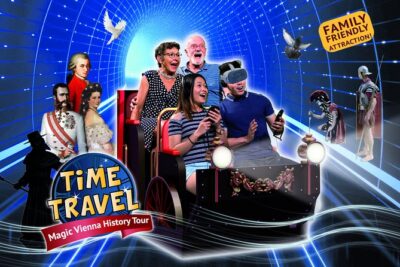
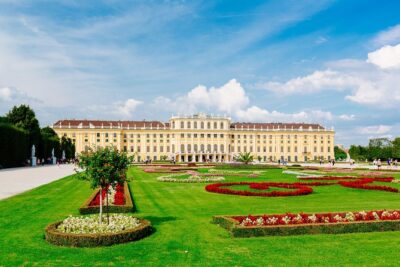
Skip-the-Line Schonbrunn Palace Guided Tour and Vienna Historical City Tour
Read our review →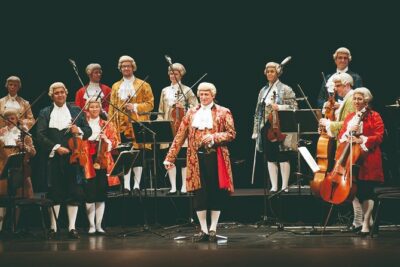
Vienna Mozart Concert in Historical Costumes at the Musikverein
Read our review →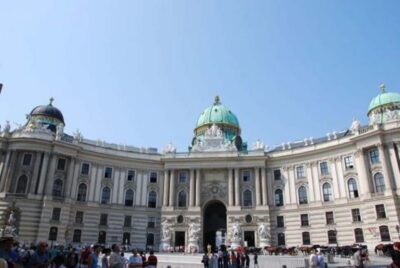
Browse the lists this tour appears in