
Reviewed · HISTORICAL TOURS
Vienna: History Highlight Walking Tour
Vienna’s grand center hides plenty of surprises. This two-hour small-group walk links Roman ruins, Habsburg palaces, churches, war memorials, and famous cafés through stories that give the city’s stone facades some human meaning. I like the tight route and the way it moves from ancient Vienna to the Second World War without wasting time. I also like the guides’ mix of facts, humor, and practical advice for the rest of your visit. The main drawback is that the pace can feel brisk, and entrance fees are not included.
This is a strong first-day activity, especially if you want help deciding which museums and sights deserve your limited time. Guides including Herbert and Wolfgang have earned praise for clear explanations, entertaining anecdotes, and useful tips. The tour is not designed for children under 12 or people with mobility impairments, and you will be outdoors in all weather.
In This Review
- Key points to know before you book
- Michaelerplatz: Vienna before the Habsburgs
- St. Michael’s Church and the road to the Hofburg
- Heroes’ Square and the imperial show of power
- Imperial Treasury advice without the admission ticket
- Austrian National Library and Joseph II’s square
- Habsburg weddings and the church of royal ceremony
- The Albertina and Vienna’s darker twentieth century
- State Opera, Hotel Sacher, and a vanished theatre
- Neuer Markt and the Imperial Crypt
- St. Stephen’s Cathedral: a strong finish
- What the two-hour format really gives you
- How the $33 price compares with the value
- Who should book this Vienna walk
- Should you book the History Highlight Walking Tour?
- FAQ
- How long is the Vienna History Highlight Walking Tour?
- Where does the tour begin?
- Which languages are available?
- Are entrance fees included?
- Is the tour suitable for children or people with mobility impairments?
- What happens if it rains?
Key points to know before you book
- Roman ruins begin the story: The tour starts at Michaelerplatz, where excavations provide an early glimpse of Vienna before the imperial age.
- Imperial Vienna gets proper context: Hofburg Palace, Heroes’ Square, the Imperial Treasury, and the National Library are explained as parts of one enormous royal complex.
- Small groups improve the experience: The format allows guides such as Herbert to answer questions and adjust stories to the group.
- The darker chapters are included: The route covers the Monument Against War and Fascism and the damage Vienna suffered during the Second World War.
- You see major landmarks without paying admission: The walk passes the Albertina, Imperial Crypt, State Opera, and St. Stephen’s Cathedral, but interior entrance fees are extra.
- Book it early in your stay: The guide’s museum suggestions and local tips can help shape the rest of your Vienna schedule.
Michaelerplatz: Vienna before the Habsburgs
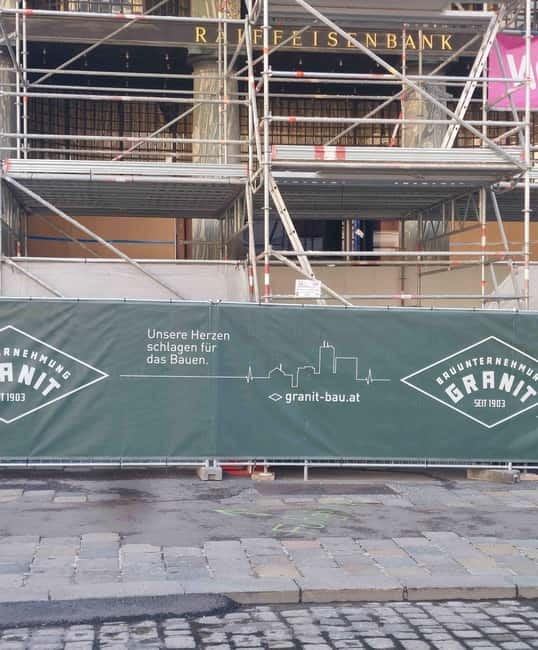
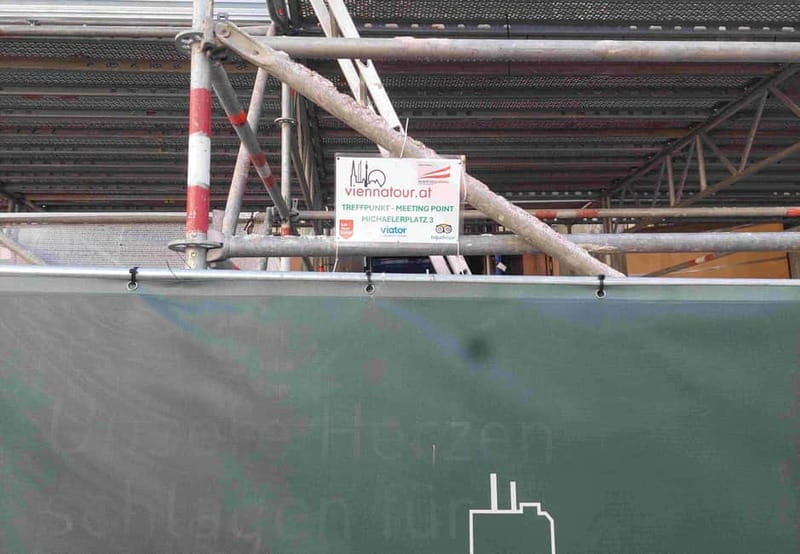
The meeting point is in front of the Loos Haus at Michaelerplatz 3, 1010 Vienna. Look for the building with Raiffeisenbank on its facade, between Kohlmarkt and Herrengasse. It is about a three-minute walk from the Herrengasse station on the U3 metro line.
This is a smart place to begin because the square offers several layers of Vienna at once. The Michaelerplatz excavations bring Roman Vienna into the picture before the group turns toward the palace complex. The opening question, why a castle was built here, gives the rest of the tour a useful thread.
You are not simply looking at old stones. You are learning why this location mattered and how Vienna grew around power, trade, and defense. If you enjoy seeing how a city developed over time, this opening gives you a clear frame for everything that follows.
More Walking Tours in Vienna
- Vienna: Guided Walking Tour of City Center Highlights
★ 4.7 · 4,989 reviews - Vienna: Vienna Central Cemetery Guided Walking Tour
★ 4.8 · 3,307 reviews - Vienna: Guided Walking Tour of City Highlights & Hidden Gems
★ 4.9 · 2,180 reviews
St. Michael’s Church and the road to the Hofburg
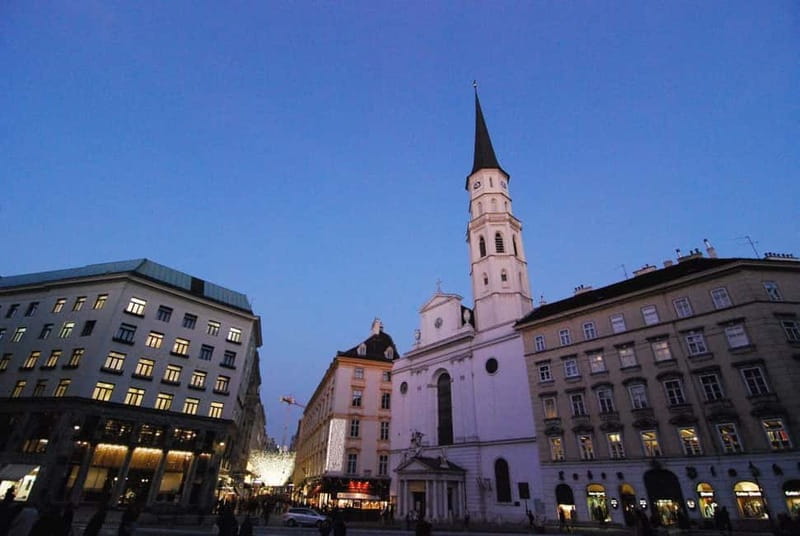
The walk continues to St. Michael’s Church, described as Vienna’s third-oldest church. Its facade combines three architectural styles, which makes it a practical lesson in how European buildings change over centuries.
I like this stop because it helps you read Vienna’s architecture instead of treating every grand building as one large imperial blur. Your guide points out the different periods and explains what you are seeing. The church is also connected to the royal district, so it leads naturally into the story of the Habsburgs.
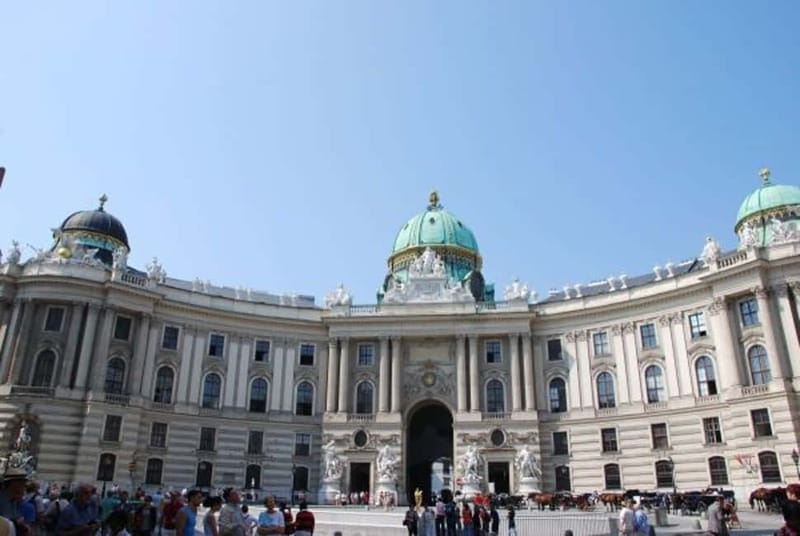
The route then reaches Hofburg Palace, the former center of Habsburg power. The palace is not one tidy building. It is a vast group of structures and courtyards covering about 555,000 square meters. That scale can be hard to grasp from a map, but it becomes obvious when you walk through the area.
Your guide explains the rulers linked to the complex and the role the Hofburg played in governing the Austrian lands. The value here is context. On your own, you might admire the facades and move on. With a guide, the palace becomes a record of dynastic ambition, ceremony, administration, and changing architectural taste.
Heroes’ Square and the imperial show of power
Heroes’ Square, or Heldenplatz, is one of the tour’s most impressive outdoor stops. Its size makes a statement before you know the details. The open space and surrounding facades were designed to present imperial power on a grand scale.
The guide also explains what lies behind those facades. That is useful because the public face of Vienna can feel polished and formal, while the institutions and private lives connected to it were far more complicated.
This is one of the places where a good guide makes the difference. The buildings do not explain themselves. You need someone to connect the square with the rulers, ceremonies, and political events that shaped Austria. Herbert has been praised for keeping those details interesting without letting the talk become a lecture.
Imperial Treasury advice without the admission ticket
The Imperial Treasury is included in the historical discussion, but not as an interior visit. Entrance fees are separate, so you should treat this part of the walk as an orientation for a possible return visit.
That arrangement can be good value. The guide explains why the treasury matters and what you can see there, helping you decide if it fits your interests and budget. If you are drawn to royal objects, religious relics, and symbols of power, you may want to return after the tour with enough time for a proper visit.
This is a recurring strength of the experience. The guide does not try to cram every major attraction into two hours. Instead, you get the story and practical direction, then choose which interiors deserve more of your day.
More historical tours:
- Vienna: Time Travel and Magic Vienna History Tour
★ 4.6 · 3,879 reviews - Vienna: World War II Historical Walking Tour
★ 4.8 · 1,772 reviews - Vienna Historic Center Small Group Walking Tour
★ 5.0 · 1,746 reviews - Time Travel-Magic Vienna History Tour Ticket
★ 4.5 · 1,099 reviews
Austrian National Library and Joseph II’s square
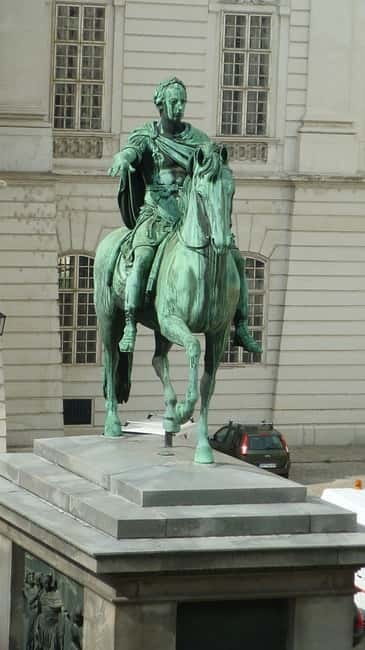
The walk passes the Austrian National Library and its famous state room. You learn about the symbol on the roof and why the square is named after Emperor Joseph II.
These details may sound small, but they are exactly the sort of information that changes how you look at a city. A roof symbol, a statue, or a square name becomes a clue rather than decoration. I like this part for that reason. It gives you simple tools for noticing Vienna after the tour ends.
The library itself is an important optional stop, but the activity does not include entry. If you want to see the state room inside, plan a separate visit and budget for admission. The guide’s explanation can help you decide if the interior belongs on your list.
Habsburg weddings and the church of royal ceremony
The route includes the church where Habsburg weddings were held. The guide explains why the groom was absent from some ceremonies, an unusual detail that turns a formal royal ritual into a story about dynastic marriage.
This is where the tour’s human side comes through. Vienna’s imperial history can easily become a parade of rulers and dates. Stories about weddings, political arrangements, and royal customs make the past easier to understand and remember.
The church is closed on Sundays and public holidays. The walking tour still includes the surrounding explanation, but you should not expect an interior visit on those days. Since the tour is primarily a street-level experience, that closure does not cancel the main value of the stop.
The Albertina and Vienna’s darker twentieth century
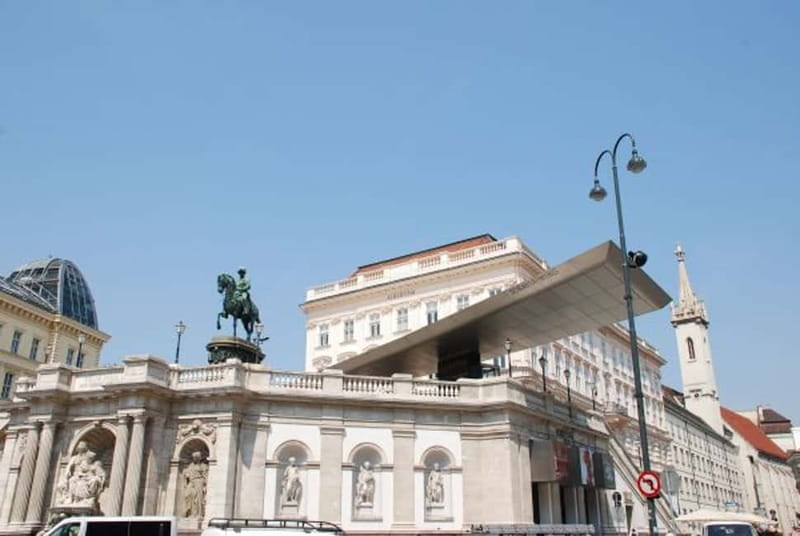
The Albertina is another major landmark on the route. It is home to the world’s largest graphical collection, but the tour does not include museum admission. You will learn about the building and its place in Vienna’s cultural center before moving to the Monument Against War and Fascism.
The shift is deliberate. Vienna is often sold through palaces, music, and elegant streets, but the city also carries the marks of the Second World War. At the monument, the guide addresses the horrors of war and fascism rather than polishing the past into a comfortable story.
This is one of the most valuable parts of the walk. You get a fuller picture of Vienna, including the damage and moral weight behind its beautiful center. Guides have also used images on an iPad to show how historic buildings looked after the war. That kind of visual comparison can make destruction and reconstruction easier to understand.
State Opera, Hotel Sacher, and a vanished theatre
The route continues to the State Opera, another symbol of Vienna’s musical identity. Here you hear why Hotel Sacher now occupies the site of the Carinthian Gate Theatre.
This is a good example of the tour’s method. You are not simply told that a famous building is nearby. You learn what used to occupy the site and how the modern city replaced parts of the old one. Vienna can feel like a perfectly preserved imperial stage, but this stop reminds you that its streets have been repeatedly altered.
The opera area is also useful for planning. The guide can point out places and attractions to consider later, and several people have valued the practical suggestions for museums, performances, and local sights. If you are at the beginning of your stay, listen closely and take notes.
Neuer Markt and the Imperial Crypt
At Neuer Markt, the Providentia Fountain becomes the setting for more anecdotes. The tour then turns to the Imperial Crypt and the Habsburg burial ritual.
The crypt is not an included interior visit, but the explanation gives you a reason to consider going inside. The Habsburgs used a distinctive burial tradition, and the guide explains the ritual in a way that connects ceremony with the dynasty’s view of itself.
This section adds a more intimate feel to the imperial story. You move from public squares and palaces to questions of death, remembrance, and royal identity. It is another reason the tour works better than a simple photo walk.
St. Stephen’s Cathedral: a strong finish
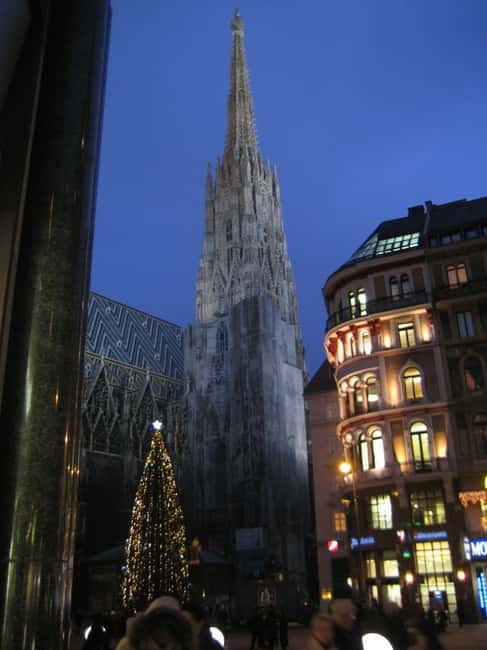
The walk ends near St. Stephen’s Cathedral, Vienna’s best-known landmark. The cathedral’s partial destruction during the Second World War is part of the closing story, along with a correction to something commonly taught about its past.
Ending here makes sense. St. Stephen’s is both a medieval landmark and a living symbol of the city, so it brings together the older and newer chapters discussed along the route. After two hours of imperial courtyards, churches, libraries, and war memorials, you have a much clearer idea of how the center fits together.
The supplied details give two end-point descriptions: the activity is also described as ending back at the meeting point, while the route lists Stephansplatz 8A as the drop-off location. Confirm the exact finish when you book, particularly if you have a timed reservation afterward.
What the two-hour format really gives you
Two hours is long enough to cover a lot of central Vienna, but not long enough for extended interior visits. You should expect a guided overview with stops for explanation, not a museum tour or a slow architectural study.
That is a strength if you want orientation. You can see where the Hofburg, National Library, Albertina, Imperial Crypt, opera, and cathedral fit together in one walk. It also leaves the rest of your day open.
The tradeoff is pace. You will be walking and listening for most of the two hours, so comfortable shoes matter. There is no indication of a planned meal stop or long break. Large bags and luggage are not allowed, and the tour runs in all weather, so dress for the forecast.
The activity is offered in English and German. Small groups are a major plus. A group of around seven has been described as especially friendly and manageable, and some departures have felt almost private. That size lets you ask questions and makes it easier for the guide to tailor examples to your interests.
How the $33 price compares with the value
At $33 per person, the tour is priced above a basic self-guided walk but below the cost of several individual museum admissions and specialized private tours. The price covers the local guide, not entrance fees.
I think the value depends on how you use it. If you only want photographs of the main buildings, you can walk much of this area for free. If you want to understand why the buildings matter, how the Habsburg sites connect, and which museums deserve your time, the guide adds real value.
The strongest return comes when you take the tour near the start of your stay. Several people have used the advice afterward to visit the treasury, museums, and other sights with a better sense of purpose. Taking it on your final day would still be worthwhile, but you would lose much of that planning benefit.
The high rating of 4.9 from 602 ratings fits the experience described here. The praise centers on guides who are funny, personable, and able to explain complex history without becoming dull. Herbert receives repeated approval for his warmth, historical detail, visual aids, and practical recommendations. Wolfgang is also described as energetic and easy to understand.
Who should book this Vienna walk
I would choose this for a first visit to Vienna, especially if you have two or three days and need to sort out the city center quickly. It suits adults who enjoy political history, architecture, royal customs, and stories about how cities change.
It is also a good choice if you like an informal guide. The best feedback points to humor, questions, personal conversation, and stories rather than a rigid recital of dates.
You should think twice if you dislike walking in poor weather, need step-free access, or want to spend time inside every major building. The tour is not suitable for people with mobility impairments or children under 12. Video and audio recording are not allowed, so plan to listen rather than document the tour.
Free cancellation is available up to 24 hours before departure, and you can reserve now and pay later. Check the available starting times before committing, since the schedule is not fixed in the details provided.
Should you book the History Highlight Walking Tour?
Book it if you want a fast, story-led introduction to central Vienna and plan to visit more sights afterward. The combination of Roman remains, Habsburg power, royal ceremony, wartime damage, and St. Stephen’s Cathedral gives you a useful base without taking a full day.
Skip it if you want included admissions, a relaxed pace, or a tour built around children. For most first-time visitors who value clear history and practical advice, $33 is a fair price, particularly with a small group and a guide such as Herbert or Wolfgang. Schedule it early, wear good shoes, and keep the rest of the day flexible for the places that catch your interest.
FAQ
How long is the Vienna History Highlight Walking Tour?
The tour lasts two hours. Starting times depend on availability, so check the schedule before booking.
Where does the tour begin?
It begins in front of Loos Haus at Michaelerplatz 3, 1010 Vienna. The building is between Kohlmarkt and Herrengasse and has Raiffeisenbank on its facade. Herrengasse station on the U3 line is about a three-minute walk away.
Which languages are available?
The live guide conducts the tour in English or German.
Are entrance fees included?
No. The price includes the local guide only. Entrance fees for places such as the Imperial Treasury, Austrian National Library, Albertina, or Imperial Crypt are not included.
Is the tour suitable for children or people with mobility impairments?
It is not suitable for children under 12 or people with mobility impairments.
What happens if it rains?
The tour operates in all weather conditions. Wear suitable clothing and shoes, and note that luggage and large bags are not allowed.
More Walking Tours
- Vienna: Viennese Underworld Guided Walking Tour
★ 4.7 · 1,865 reviews - Vienna: Private Walking Tour with a Local Guide
★ 4.6 · 1,420 reviews - Vienna: 1.5-Hour Underground Walking Tour
★ 4.9 · 1,146 reviews - Vienna: Ghosts and Legends Guided Nighttime Walking Tour
★ 4.4 · 1,088 reviews
Just added around Vienna
- Mobile puzzle rally tour at the Vienna Central Cemetery★ 4.5 · 3 reviews
- RAXI (E-Rickschaw) big private Vienna tour★ 4.5 · 3 reviews
- 8 days European Highlights PRIVATE TOUR from Budapest including Budapest Vienna Prague and Bratislava★ 5.0 · 3 reviews
- Private Transfer from Vienna to Prague with 1 hour Stop in Kutna Hora★ 4.5 · 3 reviews
- Palais Lobkowitz Audio Guide Tour★ 4.0 · 3 reviews
- Private Tour from Vienna to Melk and Dürnstein★ 4.5 · 3 reviews
- Vienna: Designer Fashion Time Capsule Experience★ 5.0 · 3 reviews
- Private day trip from Munich to Eagle’s Nest & Hallstatt★ 4.7 · 3 reviews
Historical Tours, compared.



Vienna Historic Center Small Group Walking Tour
Read our review →
Skip-the-Line Schonbrunn Palace Guided Tour and Vienna Historical City Tour
Read our review →
Vienna Mozart Concert in Historical Costumes at the Musikverein
Read our review →
Browse the lists this tour appears in