
Reviewed · MUSEUMS
Leopold Museum Vienna Entrance Ticket
Vienna’s modern side begins here. The Leopold Museum gives you a strong look at Austrian art from the late 19th and early 20th centuries, with the freedom to set your own pace. I like the large Egon Schiele collection and the easy, self-guided format. I also like the high-quality mix of painting, design, furniture, and everyday objects.
The main caution is scale. You can see the museum in about two hours, and visitors expecting room after room of Klimt may feel let down. The ticket costs $22.98 per person, which is fair if Schiele and Viennese Modernism are high on your list, but less convincing if you want a broad survey of European art.
In This Review
- Key points to know before you go
- Why the Leopold Museum matters in Vienna
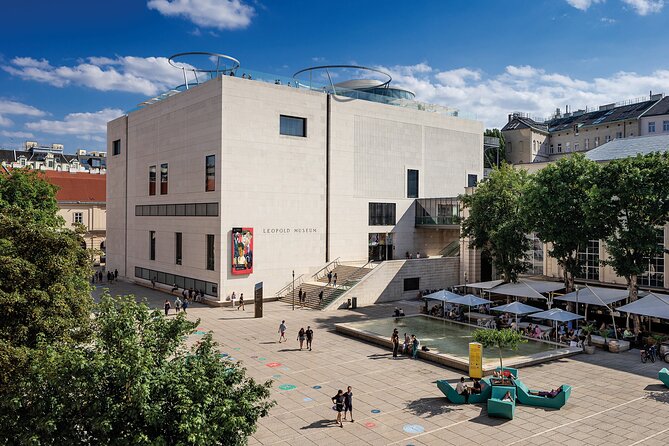
- Entering the MuseumsQuartier and the bright modern building
- The Egon Schiele collection deserves first priority
- Gustav Klimt, Vienna Secession, and the famous Death and Life
- Beyond Schiele: Kokoschka, Gerstl, Boeckl, and earlier art
- Two hours or three, depending on how you look
- Café Leopold and the view toward the Hofburg
- Is the $22.98 ticket good value?
- Who should book the Leopold Museum?
- Should you book this Vienna museum ticket?
- FAQ
- How long does a visit to the Leopold Museum take?
- What is included with the admission ticket?
- Is a guide included?
- Does the museum have a major Egon Schiele collection?
- Is Gustav Klimt’s Death and Life displayed at the museum?
- Can children visit the museum?
- How do I use the ticket at the museum?
Key points to know before you go
- Egon Schiele is the main event: The museum holds the largest Schiele collection in the world, with paintings and drawings.
- Klimt is represented selectively: Gustav Klimt’s Death and Life is a major highlight, but this is not a Klimt-only museum.
- Plan on two to three hours: The galleries are focused rather than enormous, so you can take your time without giving up a whole day.
- The visit is self-guided: No guide is included, and an audio guide costs EUR 4 in German, English, French, or Italian.
- The building offers city views: Look toward Maria Theresa Square and the Hofburg Palace from the museum windows.
- Bring the right ticket proof: The booking information describes a mobile ticket, but also instructs you to present and preferably print the voucher at the cashier desk to exchange it for the current ticket.
Why the Leopold Museum matters in Vienna
The Leopold Museum sits in Vienna’s MuseumsQuartier, one of the city’s best areas for art. Its modern building is bright inside, though its exterior can feel cool and severe. That contrast is useful: the building does not try to imitate an old palace, and the light-filled interior lets the paintings do most of the talking.
The collection was assembled over five decades by Rudolf and Elisabeth Leopold. It now includes more than 5,000 art objects, though not all are displayed at once. The focus is Austrian art, especially the period when Vienna shifted from formal historicism toward modern painting, design, and sculpture.
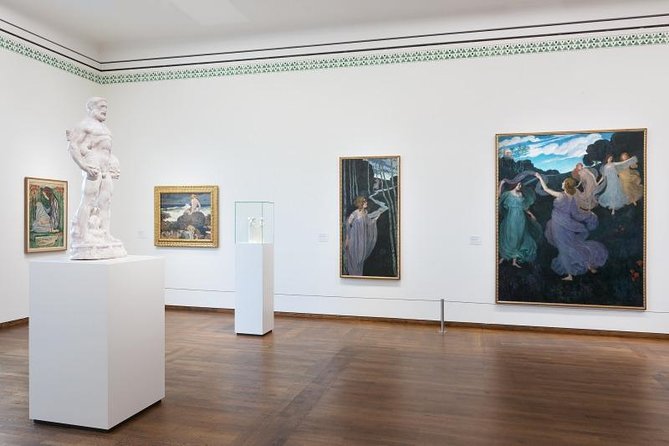
I find this focus more rewarding than a museum that throws every possible period together. You get a clear sense of how Vienna changed in a short span of time. Traditional portraiture and mood-filled landscapes give way to the decorative style of the Vienna Secession, the design ideals of the Wiener Werkstätte, and the raw emotional force of Expressionism.
This is also a useful museum for anyone visiting Vienna’s other art institutions. The Leopold helps explain the artistic world around Gustav Klimt, Egon Schiele, Oskar Kokoschka, and their fellow modernists. You do not need to know the names in advance. The displays give you enough context to see that these artists were not simply painting pretty pictures. They were breaking old rules about the body, identity, color, and social life.
More Attraction Tickets in Vienna
- Vienna: Classic Ensemble Vienna in St. Peter’s Church Ticket
★ 4.7 · 4,819 reviews - Vienna Kunsthistorisches Museum Day Admission Ticket
★ 4.6 · 3,690 reviews - Vienna: Tickets for Mozarthaus Vienna with Audio Guide
★ 4.2 · 2,344 reviews
Entering the MuseumsQuartier and the bright modern building
You make your own way to the Leopold Museum in the MuseumsQuartier. There is no group meeting point, no set route, and no guide waiting to lead you from room to room. That makes this a good choice if you want to arrive when it suits your day.
The prepaid admission is meant to protect you from finding the museum sold out or having to arrange entry after arriving. The supplied information says confirmation is sent at booking, and the ticket is described as mobile. At the same time, the entry instructions say to show the Viator voucher at the cashier desk and exchange it for the current ticket, with a note to print the voucher.
That is worth handling carefully. Keep the voucher available on your phone, and if possible bring a printed copy. The conflicting mobile and print instructions are the one practical wrinkle in an otherwise simple visit. A ticket that is not accepted can turn a good-value museum stop into an unexpected second purchase.
Once inside, you can move through the collection without a timed group schedule. Pause in front of a Schiele drawing, skip a room that does not interest you, or take a break at Café Leopold. That freedom is worth something in an art museum, especially one where certain works may demand more time than others.
The Egon Schiele collection deserves first priority
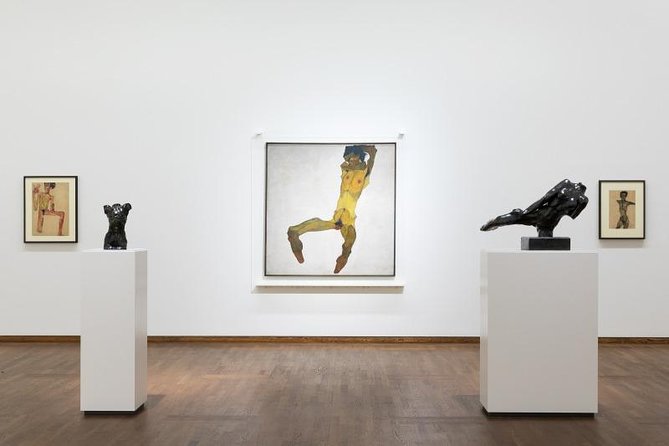
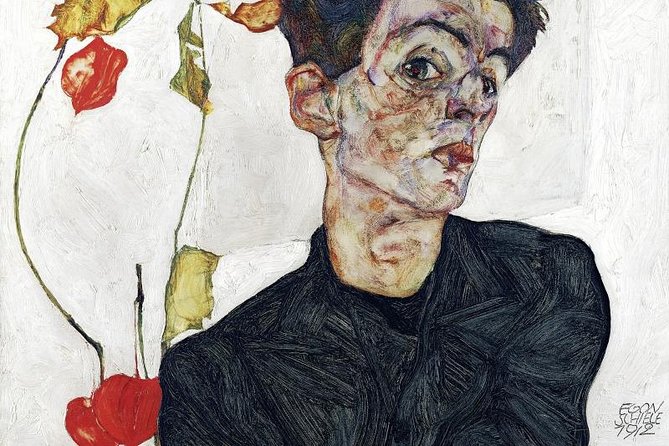
If Schiele is your reason for coming, begin with his rooms. The museum’s collection is described as the largest of its kind in the world, and it includes a wide range of paintings and drawings. This gives you more than a quick look at one famous style. You can follow the artist’s changing interests and see how line, posture, and empty space carry much of the emotional weight.
Schiele’s figures can be difficult viewing. They are often angular, exposed, and uneasy rather than conventionally beautiful. That is part of the point. His art asks you to look at the human body without the softening polish used by many earlier painters.
I like the way a dedicated Schiele collection gives you time to adjust. One work can seem shocking in isolation. Several works together reveal a deliberate visual language. You begin to notice the crooked limbs, tense hands, sharp outlines, and bare backgrounds as connected choices rather than random oddities.
The museum is especially useful for comparing Schiele with other Austrian artists. His work becomes clearer when placed beside the decorative elegance of Klimt, the restless portraits of Kokoschka, and the more troubled style of Richard Gerstl. This is where the museum earns its place in a Vienna art itinerary.
If you are visiting with children, remember that some works include nude figures and emotionally intense subjects. Children must be accompanied by an adult, and adults should decide whether the collection suits their family. The museum is not presented as a children’s attraction, but older children and teenagers interested in drawing or modern art may find plenty to discuss.
Gustav Klimt, Vienna Secession, and the famous Death and Life
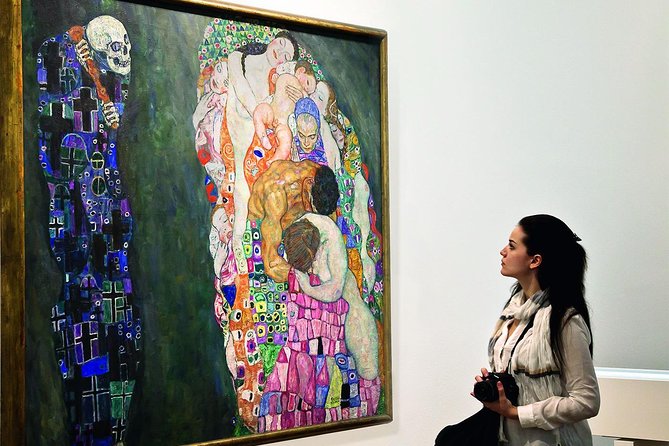
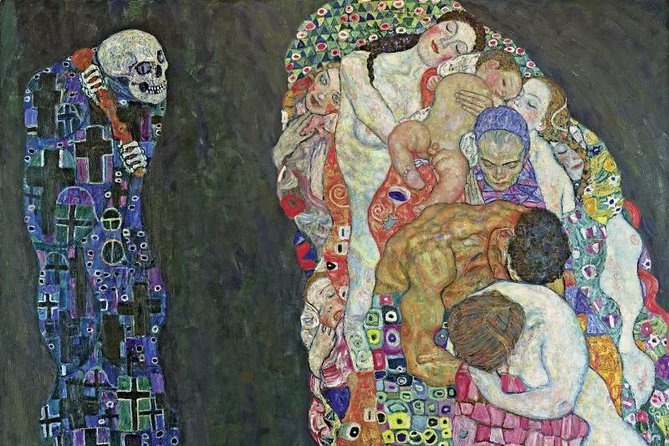
Klimt is present, but the museum is not a substitute for every Klimt collection in Vienna. Its key Klimt painting is Death and Life, a major figurative work and one of the most important pieces in the museum.
Give it time. The painting brings together themes that appear across Viennese modern art: mortality, intimacy, decoration, and the tension between human life and death. It is easy to spend several minutes simply working out how the figures, patterns, and contrasting moods fit together.
The practical warning is simple: do not arrive expecting a large Klimt display. The collection is stronger as a portrait of Austrian modernism than as a single-artist museum. If you want only Klimt, the $22.98 ticket may not feel like the best use of your money. If you want Klimt in conversation with Schiele, Kokoschka, Moser, and the wider Vienna Secession world, the visit makes more sense.
The museum also covers the Wiener Werkstätte, a design movement linked with artists and designers such as Josef Hoffmann and Koloman Moser. Everyday objects from the Fin de Siècle period add an important practical layer. You are not just looking at paintings. You are seeing how modern design entered furniture, decorative objects, and daily life.
Otto Wagner, Adolf Loos, Dagobert Peche, Hoffmann, and Moser are among the names connected with this design side of the collection. These works help explain why Viennese modernism cannot be reduced to painting alone. The same artistic ideas moved through interiors, objects, architecture, and public life.
More museums:
- Vienna: Skip-the-Line Sisi Museum, Hofburg and Gardens Tour
★ 4.8 · 5,918 reviews - Tickets for the Albertina Exhibitions
★ 4.7 · 2,126 reviews - Vienna: Chocolate Workshop in Chocolate Museum w/ Tasting
★ 4.5 · 1,802 reviews - Sigmund Freud Museum Ticket
★ 4.6 · 1,668 reviews
Beyond Schiele: Kokoschka, Gerstl, Boeckl, and earlier art
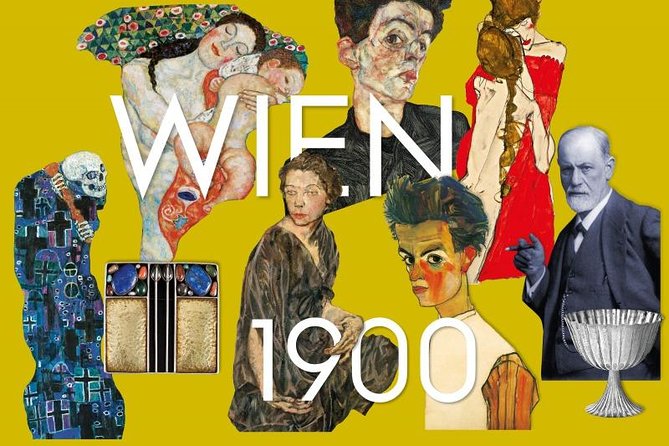
The museum’s Austrian focus continues into the interwar period. Artists such as Albin Egger-Lienz, Anton Kolig, and Herbert Boeckl show how Austrian art developed after the First World War. These rooms may be less familiar to many visitors, but they add useful depth to the story.
You will also find selected 19th-century works by Ferdinand Georg Waldmüller, Friedrich Gauermann, August von Pettenkofen, Anton Romako, Emil Jakob Schindler, and Carl Schuch. They show what came before the Vienna of Klimt and Schiele. That earlier material makes the later break with tradition easier to understand.
The collection is not limited to one neat artistic style. Some pieces may feel austere or emotionally heavy. One published assessment called the paintings depressing and found the atmosphere uncomfortable, while another felt the museum needed more variety. That reaction is understandable. Schiele and Expressionism are not designed to provide easy cheer.
On the other hand, the museum’s breadth is one of its strongest points. A visit made only for a single famous painting will feel short. A visit made to understand Austrian art from historicism through modernism can fill two or three hours quite comfortably.
Two hours or three, depending on how you look
The usual visit lasts about two to three hours. You can cover the principal art floors in around two hours if you keep moving, or stretch the visit by reading labels, returning to favorite works, and taking in the design objects.
The museum is not huge. Several floors are devoted to photographs and the museum shop rather than a dense run of paintings, so your art time may be shorter than the total building time suggests. That is not necessarily a fault. A compact collection can be easier to remember than an enormous museum where your attention fades halfway through.
I would allow two hours for a focused visit and closer to three if you plan to use the café or study the collection carefully. Add more time only if a special exhibition is included during your visit. The ticket provides unlimited access to the permanent collection and exhibitions listed for the visit, but the supplied information does not specify which temporary exhibition will be showing on a particular date.
Because you are not tied to a guide, you can match the museum to your energy level. On a busy Vienna day, a focused Schiele and Klimt visit works well. On a slower day, you can spend time with the lesser-known Austrian artists and the design collection.
Café Leopold and the view toward the Hofburg
Café Leopold gives the museum a natural pause. Food and drinks are not included in the ticket, but you can stop there at your own expense to sit down and review what you have seen.
The café was praised for its food, so it is more than a decorative afterthought. Still, treat it as an optional break rather than part of the admission value. You are paying for the museum ticket, not a meal.
Before leaving, look out from the museum toward Maria Theresa Square and the Hofburg Palace. These views provide a welcome change after several rooms of intense figures and serious themes. They also place the museum in its Viennese setting, with imperial architecture visible beyond a modern cultural building.
That visual contrast sums up the visit nicely. The Leopold Museum connects old Vienna with the city’s modern artistic revolt. You can look at the Hofburg in one direction and Schiele’s restless figures in the other.
Is the $22.98 ticket good value?
At $22.98 per person, the ticket is reasonable for a major specialist museum, especially if you value convenience and want to avoid disappointment at the door. The freedom to arrive when you choose and explore without a group adds practical value.
The price feels strongest for visitors who already know they want Schiele, Austrian modernism, or the Vienna Secession. The collection has enough quality to support a serious two-hour visit, and the permanent collection is the main reason to come.
Value is less clear if you are looking for a giant museum or a broad selection of famous European masterpieces. One assessment found the museum small and wished for more Klimt. That is a fair warning. You should not compare the Leopold with a huge national museum and expect the same number of rooms.
The 4.6 rating from 440 reviews and the 92 percent recommendation rate point to a consistently positive experience, but the lower scores reveal where expectations go wrong. Some visitors disliked the austere mood, found the price high for the amount on display, or had an unpleasant exchange over bringing a bottle of water in a handbag. Museum rules can feel strict, so keep bags and refreshments handled according to staff instructions.
The ticket also includes no guide or audio guide. If you want interpretation, add EUR 4 for the audio guide, available in German, English, French, and Italian. That extra cost may be worthwhile if the names and movements are new to you.
Who should book the Leopold Museum?
I would choose this ticket for an art-focused visit to Vienna, especially if you want to understand the city’s modern period rather than simply tick off famous names. It suits independent visitors who dislike following a guide and families or couples who want to move at different speeds.
It is also a good rainy-day stop. The museum offers a contained, focused experience, and you can combine it with other MuseumsQuartier sights without committing the whole day.
I would be more cautious if your main goal is Klimt. Death and Life is important, but the Klimt selection is limited compared with the museum’s wider Austrian collection. I would also hesitate if you prefer cheerful, traditional art. Much of the collection is serious, tense, and sometimes unsettling.
Free cancellation is available if you cancel at least 24 hours before the experience start time. Cancellations or changes inside that window are not refunded, and cut-off times follow Vienna local time. Child tickets require the relevant identification card, and children must be accompanied by an adult.
Should you book this Vienna museum ticket?
Book it if Schiele, Klimt, Jugendstil, Wiener Werkstätte design, and Austrian Expressionism sound appealing. The collection is well focused, the self-guided format is flexible, and the views toward Maria Theresa Square and the Hofburg add a pleasant finish.
Skip it if you want a large museum packed with Klimt paintings or a lighter, more varied art experience. For most art lovers, though, the Leopold Museum offers a solid two-hour look at the artistic upheaval that made modern Vienna famous. Just bring the correct voucher, set realistic expectations about size, and give Schiele the time he deserves.
FAQ
How long does a visit to the Leopold Museum take?
The visit takes approximately two to three hours. You can see the main art collection in about two hours, or stay longer if you take your time, visit Café Leopold, or study the displays closely.
What is included with the admission ticket?
The ticket includes admission to the Leopold Museum, including unlimited access to the permanent collection and exhibitions available during the visit.
Is a guide included?
No. A guide is not included. An audio guide is available for an additional EUR 4 in German, English, French, and Italian.
Does the museum have a major Egon Schiele collection?
Yes. The Leopold Museum has the largest Egon Schiele collection in the world, including paintings and drawings.
Is Gustav Klimt’s Death and Life displayed at the museum?
Yes. Gustav Klimt’s Death and Life is one of the museum’s major works. The museum has a strong Austrian modern art collection, but it does not contain a large selection of Klimt paintings.
Can children visit the museum?
Yes. Children must be accompanied by an adult. Reduced child-price tickets are available only with the relevant identification card.
How do I use the ticket at the museum?
The booking information describes a mobile ticket, but the entry instructions say to present the voucher at the cashier desk and exchange it for the current ticket. Printing the voucher is recommended, so bring a printed copy if possible.
Just added around Vienna
- Mobile puzzle rally tour at the Vienna Central Cemetery★ 4.5 · 3 reviews
- 8 days European Highlights PRIVATE TOUR from Budapest including Budapest Vienna Prague and Bratislava★ 5.0 · 3 reviews
- RAXI (E-Rickschaw) big private Vienna tour★ 4.5 · 3 reviews
- Private Transfer from Vienna to Prague with 1 hour Stop in Kutna Hora★ 4.5 · 3 reviews
- Vienna: Designer Fashion Time Capsule Experience★ 5.0 · 3 reviews
- Palais Lobkowitz Audio Guide Tour★ 4.0 · 3 reviews
- Private Tour from Vienna to Melk and Dürnstein★ 4.5 · 3 reviews
- Vienna Sight & Gourmet Tour – individual private tour★ 4.5 · 3 reviews
Museums, compared.

Skip-the-Line Sisi Museum, Hofburg and Gardens Tour
Read our review →
Vienna Kunsthistorisches Museum Day Admission Ticket
Read our review →

Chocolate Workshop in Chocolate Museum w/ Tasting
Read our review →

St. Stephen’s Cathedral & Dom Museum Wien Tickets
Read our review →
Browse the lists this tour appears in