
Reviewed · MUSEUMS
Private Tour of the Kunsthistorisches Museum: Secrets of Masterpieces | Tickets included
Art rewards close attention. This private Kunsthistorisches Museum tour turns a huge collection into a focused three-hour visit, guided in English by an art historian. I especially like the private format, since your questions can shape the route, and the way the guide connects paintings with Austrian history, politics, religion, and daily life. The admission ticket is included, too.
The main consideration is price: at $283.12 per person, this is a serious museum splurge. It makes the most sense if you care about art, want useful context, or are visiting with family or friends who would benefit from a guide rather than wandering through hundreds of rooms alone.
In This Review
- Key points to know before booking
- Why the Kunsthistorisches Museum needs a guide
- The three-hour route through Vienna’s art treasures
- The famous paintings are only part of the story
- Cabinets of curiosities and the turquoise hippo
- A guide who responds to your questions
- Is $283.12 per person good value?
- Meeting point, timing, and small practical details
- Who will enjoy this museum experience most?
- Should you book the private Kunsthistorisches Museum tour?
- FAQ
- Where does the tour begin?
- Where does the tour end?
- How long does the tour last?
- Is museum admission included?
- Is this a private experience?
- What language is offered?
- Can I cancel for a full refund?
Key points to know before booking
- A three-hour private route through major masterpieces: The tour follows a short list of about 35 essential works, helping you avoid museum fatigue.
- Julia is the guide to request when available: She has been praised for clear storytelling, humor, art history, biographies, and Austrian context.
- The collection reaches far beyond paintings: You may encounter Egyptian, Greek, and Roman objects, church treasures, scientific instruments, sculpture, and numismatic displays.
- Your interests can shape the visit: Questions are welcome, and the guide may use a museum map, an iPad, and extra props to connect works across galleries.
- The meeting point is simple but needs attention: Meet in front of the main entrance on Maria-Theresien-Platz, where the central of three doors is closed.
- Free cancellation gives you some flexibility: Cancel at least 24 hours before the start time for a full refund.
Why the Kunsthistorisches Museum needs a guide
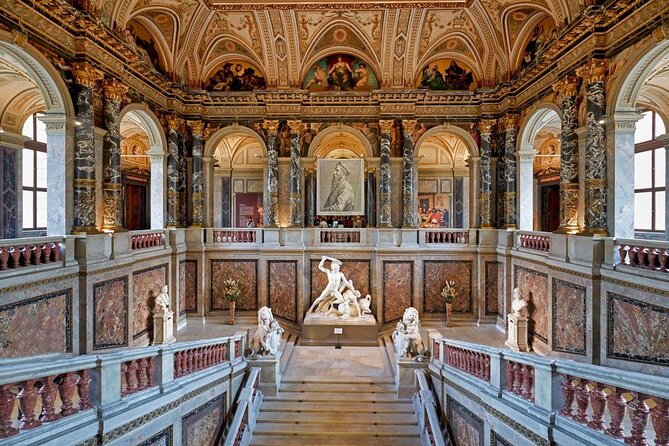
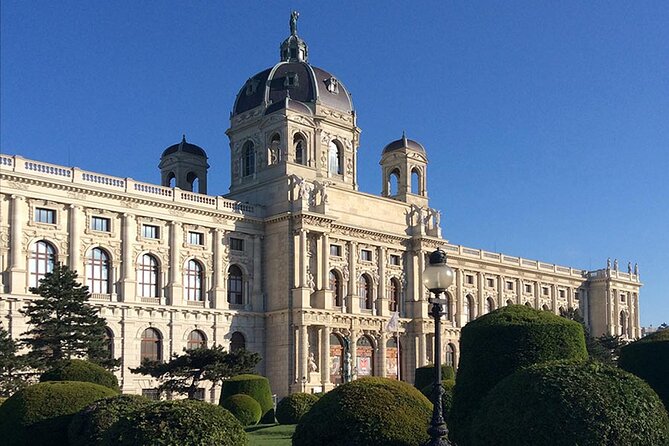
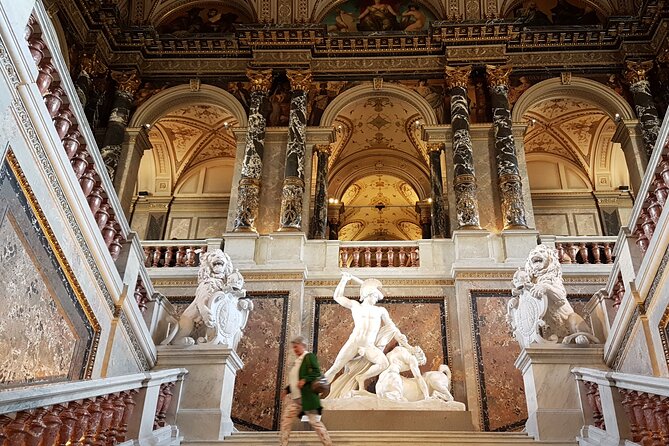
Vienna’s Kunsthistorisches Museum can feel like several museums in one. The building itself is grand, formal, and deliberately theatrical. Its historicist design draws on temple traditions from three major Western cultures, so you begin encountering art before reaching the galleries.
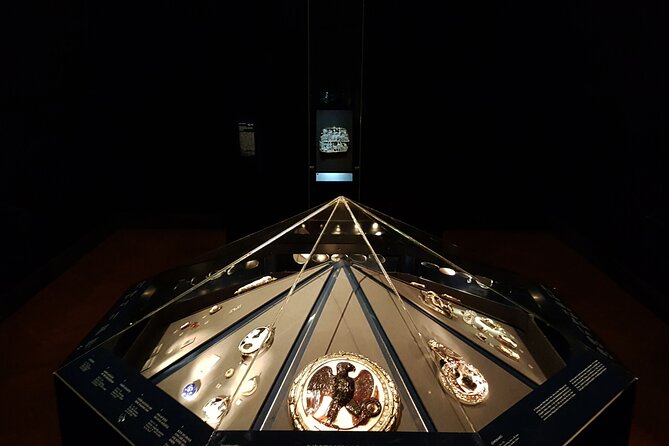
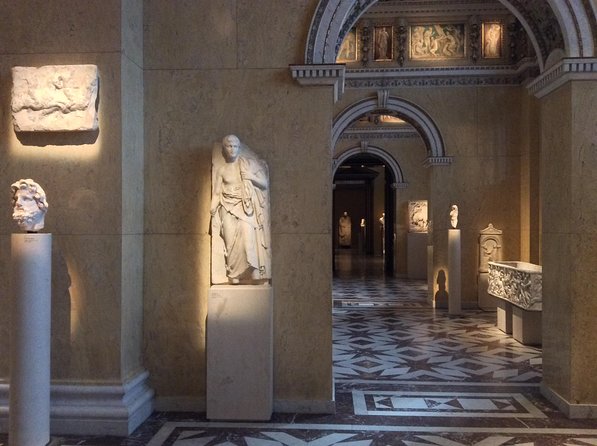
Inside, the collection covers European painting, Egyptian antiquities, Greek and Roman art, decorative objects, sculpture, church plate, scientific instruments, and coins. A quarter of the display space is devoted to cabinets of curiosities, where objects from different fields sit together because they were rare, beautiful, strange, or technically remarkable.
That scale is exciting, but it creates a practical problem. You can spend hours walking from room to room and still miss the point of what you are seeing. A private guide gives the visit a clear spine.
The museum’s own viewing lists suggest 700 works for local art lovers, 100 for repeat visits, and 35 for first-time visitors. This tour uses that shortest list as its basic plan. That is a sensible choice for a three-hour visit. You get a strong introduction without trying to conquer the whole institution in one afternoon.
I like this approach because it treats the museum as a place for looking, not just collecting names. You are not simply told that a painting is famous. You are encouraged to consider what makes it effective, what its original audience might have understood, and how it fits into Vienna’s political and cultural story.
More Attraction Tickets in Vienna
- Vienna: Classic Ensemble Vienna in St. Peter’s Church Ticket
★ 4.7 · 4,819 reviews - Vienna Kunsthistorisches Museum Day Admission Ticket
★ 4.6 · 3,690 reviews - Vienna: Tickets for Mozarthaus Vienna with Audio Guide
★ 4.2 · 2,344 reviews
The three-hour route through Vienna’s art treasures
The experience takes place at the Kunsthistorisches Museum, with the visit beginning and ending at the meeting point. The route focuses on the museum’s main masterpieces, but its private nature allows room for questions and personal interests.
You may encounter works connected with Arcimboldo, Brueghel, Velázquez, Holbein, Dürer, Giorgione, Cranach, Raphael, Rembrandt, Rubens, Titian, and other major European artists. The exact order and selection can vary, but the central idea remains the same: look closely at important works and understand why they matter.
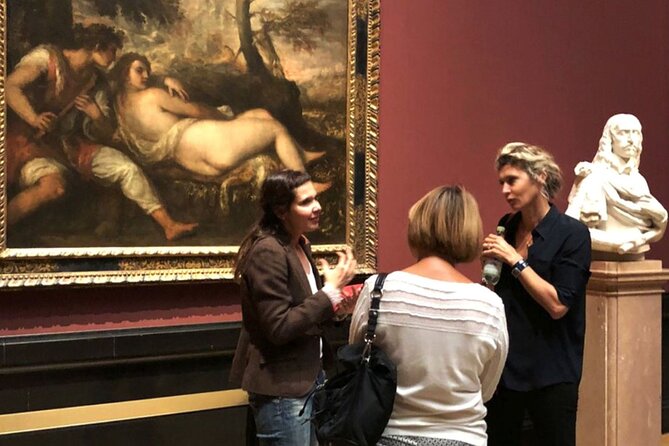
This is particularly helpful with artists whose names you may recognize but whose work you do not yet feel confident reading. A guide can point out composition, symbolism, patronage, technique, and historical setting without turning the visit into a dry classroom lecture.
One guide, Julia, has been praised for making the material lively and easy to follow. Her explanations have included artists’ biographies, the economic and social forces of the sixteenth through nineteenth centuries, and small anecdotes that make a painting easier to remember. She has also used humor, which matters when you are concentrating for three hours.
The tour can also move between categories. A discussion of a Renaissance painting might lead to a question about religious objects, classical sculpture, or the role of collecting in imperial Vienna. That variety fits the museum well, since its contents were gathered across many fields rather than arranged as one narrow survey of painting.
The famous paintings are only part of the story
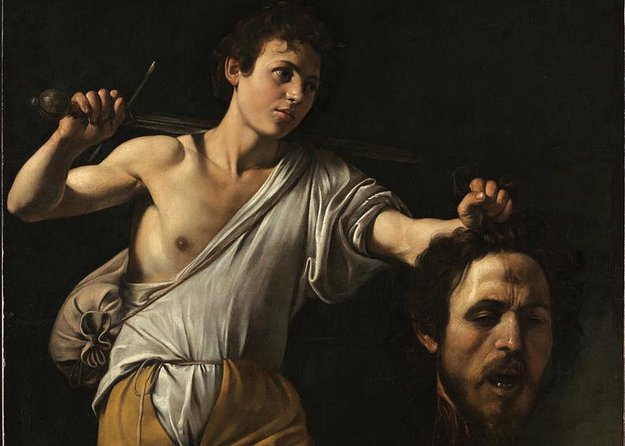
The museum’s European paintings are likely to be the main reason you book this experience. Names such as Bruegel, Dürer, Velázquez, Rubens, Titian, and Raphael promise plenty of familiar territory, but the value of the visit comes from seeing how these works operate up close.
You might discuss how an artist directs your eye, how a patron’s priorities shaped the finished work, or how a painting reflects the religious and political climate of its time. Those points help you move past the simple question of whether you like a picture.
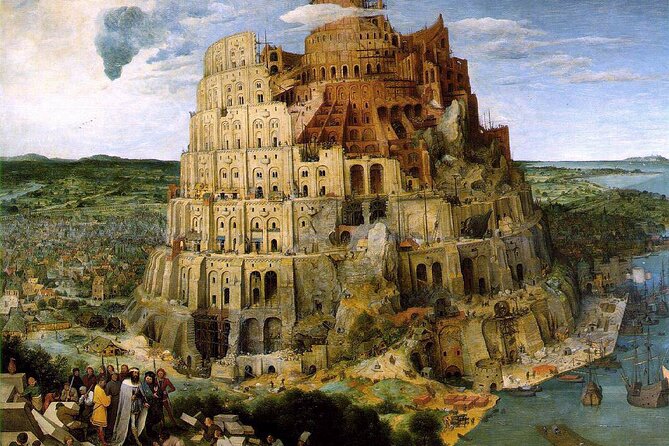
The guide’s role is especially useful with works that seem strange or difficult at first glance. Arcimboldo’s imaginative portraits, for example, invite questions about nature, visual jokes, and court culture. Bruegel can open a conversation about ordinary life and social observation. Velázquez can lead to questions about status, space, and the relationship between painter, subject, and viewer.
The aim is not to rush past one masterpiece after another. The route gives you a manageable number of works and asks you to spend real time with them. I would consider that a major advantage for anyone who wants to remember what they saw after leaving Vienna.
Props and digital images can add another layer. Julia has brought instructional objects and used a small iPad to show related examples, cross-reference artists, and clarify points that are hard to explain from one painting alone. This is a useful touch, especially when comparing styles or showing how a particular subject changed over time.
Cabinets of curiosities and the turquoise hippo
A highlight for many first-time visitors may be the material outside the familiar painting galleries. The cabinets of curiosities contain a mix of sculpture, church objects, decorative elements, scientific instruments, and other unusual items.
This mixed display reflects an older way of thinking about collections. Objects were gathered not only because they belonged to a recognized artistic category, but because they were rare, ingenious, precious, or capable of provoking wonder. That makes these rooms feel different from a standard painting gallery.
One especially memorable detail is a turquoise hippo. It is the sort of object that can wake you up if your attention starts to fade after several solemn portraits and religious scenes. The guide can use such pieces to explain how collectors classified the world before modern museums separated art, science, archaeology, and natural history into distinct departments.
The collection also includes Egyptian, Greek, and Roman art. The tour may use these objects to broaden the discussion beyond Western European painting and show how imperial collecting shaped the museum’s holdings. If you have a particular interest in antiquity, say so at the start. The private format makes that request more practical than it would be on a fixed group route.
One family visit included a guest studying classical subjects, and the Egyptian collection became a particularly useful part of the conversation. That suggests this tour can work well when different people in your group have different interests. You are not locked into a one-size-fits-all lecture.
More Private Tours in Vienna
- Vienna: Private Walking Tour with a Local Guide
★ 4.6 · 1,420 reviews - Vienna: Private Walking Tour with a Guide
★ 4.7 · 962 reviews - Vienna: Wine Tasting Experience in a Private Wine Cellar
★ 4.8 · 413 reviews - Private Day Tour Trip Salzburg Hallstatt and Melk from Vienna
★ 5.0 · 388 reviews
A guide who responds to your questions
The strongest reason to choose this experience is the guide. The tour is not simply an audio guide with a person walking beside you. It is designed around conversation.
Julia has received especially warm praise for her command of art history and her ability to explain difficult material in an engaging way. Her strengths include biographies, social context, humor, and a clear speaking style. She has also set academic goals for a visit, then made the discussion interactive rather than formal.
That balance is important. A specialist can sometimes bury you under names and dates. Here, the best moments seem to come when the guide starts with a question, listens to your response, and adjusts the explanation. You might begin by asking why a particular painting is considered important and end up discussing patronage, religion, gender, economics, and Vienna’s place in European culture.
The private arrangement also means your interests are not an interruption. If you want to spend more time on Bronzino, Gothic boxwood miniatures, Klimt, Schiele, Marcus Aurelius, or Julius Caesar, you can raise the subject. The tour is still built around the museum’s main works, but there is room for a personal dessert course, as one playful participant put it.
That flexibility makes this a better choice than a basic highlights walk for people who already know some art history. It also helps beginners, because you can ask simple questions without worrying about holding up a large group.
Is $283.12 per person good value?
At $283.12 per person, this is not a budget museum visit. The admission ticket is included, but the real product is the guide’s time, preparation, and ability to shape the experience around your group.
For one person or a couple on a tight budget, the price may be hard to justify. You can enter a great museum without booking a private specialist. But for a family, a small group of friends, or people who place a high value on art, the calculation changes. Group discounts are available, and a private tour lets everyone share one conversation instead of each person wandering off with a different audio guide.
The three-hour length also matters. You get enough time to see major works without committing to an entire day indoors. If you have only a short stay in Vienna, a focused visit can be more useful than trying to cover every room and remembering very little.
I would book this if you want to understand what you are seeing, not just check famous artists off a list. I would skip it if you prefer silent, independent viewing or if the cost would prevent you from enjoying the rest of your trip.
Meeting point, timing, and small practical details
Meet at Maria-Theresien-Platz, 1010 Vienna, in front of the museum’s main entrance. There are three doors, and the central door is closed, so do not wait inside or assume the middle entrance is usable.
Come punctually. Your guide will be waiting in front of the closed central entrance. You can show a paper voucher or an electronic one on your phone, and confirmation is provided when you book.
The museum is near public transportation, which makes the meeting point easy to reach within Vienna. The activity lasts about three hours and ends back at the meeting point.
You should be comfortable with a moderate level of physical activity. The information provided does not give a detailed accessibility plan, so if you have specific mobility needs, ask the provider before booking.
English is the offered language. The tour is private, meaning only your group takes part. That privacy is one of its biggest advantages, particularly if you want to ask questions or adjust the focus without worrying about strangers.
Free cancellation is available if you cancel at least 24 hours before the start time. Cancellations or changes made within 24 hours are not accepted for a refund, and the cut-off follows Vienna local time.
Who will enjoy this museum experience most?
I would recommend this tour to several kinds of visitors:
- First-time museum visitors who want a clear introduction instead of an enormous list of names.
- Art lovers who want to compare painters, periods, and techniques through discussion.
- Families and mixed-interest groups who need a flexible route that can hold everyone’s attention.
- Students and serious learners who appreciate links between art, politics, economics, religion, and classical culture.
- Repeat visitors to Vienna who want a more thoughtful look at works they may have passed quickly before.
It may be less suitable for you if you want to see every gallery, spend long quiet periods with each painting, or keep museum spending low. Three hours is enough for a strong introduction, not a complete survey of the entire Kunsthistorisches Museum.
Should you book the private Kunsthistorisches Museum tour?
Book it if you want the museum to make sense. The building is grand, the collection is enormous, and the famous paintings are only the beginning. A focused route through about 35 major works gives you structure, while a private guide lets your questions steer the conversation.
Julia’s clear explanations, humor, extra visual aids, and ability to connect art with Austrian and European history are strong reasons to choose this experience when she is available. The turquoise hippo, Gothic miniatures, Egyptian objects, and cabinets of curiosities also remind you that the museum is not only a parade of famous canvases.
At $283.12 per person, I see this as a special-occasion tour rather than a casual add-on. If art is central to your Vienna plans, the cost can be worthwhile. If you are only mildly interested, use the museum admission on its own and save your money for another experience.
FAQ
Where does the tour begin?
The tour begins at Maria-Theresien-Platz, 1010 Vienna, in front of the Kunsthistorisches Museum’s main entrance.
Where does the tour end?
The activity ends back at the meeting point.
How long does the tour last?
The tour lasts approximately three hours.
Is museum admission included?
Yes. Admission to the Kunsthistorisches Museum is included in the tour price.
Is this a private experience?
Yes. Only your group participates in the activity.
What language is offered?
The tour is offered in English.
Can I cancel for a full refund?
Yes, if you cancel at least 24 hours before the experience start time. Cancellations or changes made less than 24 hours in advance are not accepted for a refund.
More Museums
- Vienna: Skip-the-Line Sisi Museum, Hofburg and Gardens Tour
★ 4.8 · 5,918 reviews - Tickets for the Albertina Exhibitions
★ 4.7 · 2,126 reviews - Vienna: Chocolate Workshop in Chocolate Museum w/ Tasting
★ 4.5 · 1,802 reviews - Sigmund Freud Museum Ticket
★ 4.6 · 1,668 reviews
Just added around Vienna
- Mobile puzzle rally tour at the Vienna Central Cemetery★ 4.5 · 3 reviews
- 8 days European Highlights PRIVATE TOUR from Budapest including Budapest Vienna Prague and Bratislava★ 5.0 · 3 reviews
- RAXI (E-Rickschaw) big private Vienna tour★ 4.5 · 3 reviews
- Private Transfer from Vienna to Prague with 1 hour Stop in Kutna Hora★ 4.5 · 3 reviews
- Vienna: Designer Fashion Time Capsule Experience★ 5.0 · 3 reviews
- Palais Lobkowitz Audio Guide Tour★ 4.0 · 3 reviews
- Private Tour from Vienna to Melk and Dürnstein★ 4.5 · 3 reviews
- Vienna Sight & Gourmet Tour – individual private tour★ 4.5 · 3 reviews
Museums, compared.

Skip-the-Line Sisi Museum, Hofburg and Gardens Tour
Read our review →
Vienna Kunsthistorisches Museum Day Admission Ticket
Read our review →

Chocolate Workshop in Chocolate Museum w/ Tasting
Read our review →

St. Stephen’s Cathedral & Dom Museum Wien Tickets
Read our review →

Browse the lists this tour appears in