Reviewed · TOURS
Small Group Tour; Balkans & Central Europe – Dubrovnik to Vienna
A fast-moving journey across eight cities. This 10-day route links Croatia, Bosnia and Herzegovina, Serbia, Hungary, Slovakia, and Austria in one compact trip. I like the mix of major sights and smaller stops, especially Mostar’s Old Bridge and Belgrade Fortress. I also like the small maximum group size of 10, which should make border crossings and walking tours easier to manage.
There is one major point to check before you pay: the tour summary promises two days in the Albanian Alps around Komani Lake and Valbona Valley, but the detailed 10-day schedule runs from Dubrovnik through Bosnia, Serbia, Hungary, Slovakia, and Vienna without showing Albania at all. Because the booking is non-refundable, get written confirmation about the Albanian hiking section before booking.
In This Review
- Key points at a glance
- What kind of trip is this?
- Day 1: Dubrovnik to Mostar and the Buna spring
- Day 2: Sarajevo’s Ottoman, Austro-Hungarian, and wartime layers
- Day 3: Zvornik and Belgrade Fortress
- Day 4: Wine country and the Baroque town of Sremski Karlovci
- Day 5: Novi Sad and Petrovaradin Fortress
- Day 6: Subotica, then onward to Budapest
- Day 7: Budapest from the Danube and Buda Castle
- Day 8: Győr’s compact center and the road to Bratislava
- Day 9: Bratislava Old Town and the castle hill
- Day 10: Drop-off in Vienna
- How much value does $3,773.83 offer?
- Guides, group size, and the human side of the trip
- The Albania problem you should resolve first
- Who should book this route?
- FAQ
- How long is the Dubrovnik to Vienna tour?
- What countries does the detailed route visit?
- Is Albania included in the tour?
- What accommodation is included?
- Are meals included?
- What is the maximum group size?
Key points at a glance
- Mostar and Blagaj provide the strongest opening days: You see Stari Most, the Old Bazaar, Ottoman religious sites, and the spring at the Blagaj tekija.
- The route crosses several borders: You move from Dubrovnik to Bosnia and Herzegovina, Serbia, Hungary, Slovakia, and Austria, so this is a road trip as much as a sightseeing tour.
- The Albanian Alps need clarification: Komani Lake and Valbona Valley appear in the overview and much of the feedback, but not in the stated day-by-day route.
- The group is capped at 10 people: That is a useful size for a guided road trip and leaves more room for personal help.
- Breakfast and three-star hotels are included: Lunches, dinners, drinks, snacks, and personal spending are extra.
- The price is $3,773.83 per person: That works out to about $377 per day before optional meals and personal costs, with transport, hotels, admissions, taxes, fuel, and a tour leader included.
What kind of trip is this?
I would think of this as a guided cross-border road trip with city walks, not a leisurely holiday in one region. You change countries often, ride between historic centers, and get a taste of several cultures without having to arrange every hotel, border transfer, or admission yourself.
The small group format matters here. A maximum of 10 people is much more manageable than a large coach group, particularly when the day begins at 7:00 a.m. and includes international borders. You still need patience, since road conditions, border checks, weather, strikes, holidays, and temporary closures can affect the schedule.
The stated duration is about 10 days, beginning with pickup at your Dubrovnik hotel and ending with drop-off at your hotel in Vienna. That point-to-point design is useful if you already plan to visit both cities. It is less useful if you need to return to Dubrovnik or prefer to unpack once.
Other days out in Austria people book alongside this one:
- Vienna: Vivaldi’s Four Seasons Concert in Karlskirche
★ 4.7 · 14,951 reviews - Vienna: Spanish Riding School Training
★ 3.9 · 9,281 reviews - Vienna: Skip-the-cashier-desk-line Giant Ferris Wheel Ride
★ 4.5 · 7,859 reviews
Day 1: Dubrovnik to Mostar and the Buna spring
Your first morning begins early. At 7:00 a.m., a local driver collects you from your hotel in Dubrovnik and takes you to the border, where you meet the tour leader. That handoff is worth understanding in advance, since the Dubrovnik pickup and the main guided portion are handled by different people.
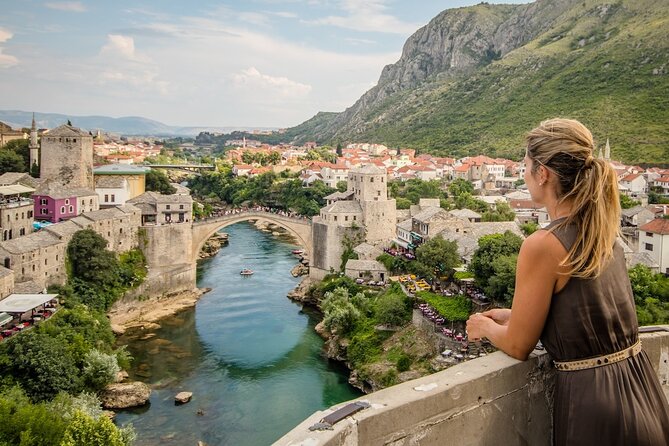
Mostar is the first major stop. The Old Bridge, or Stari Most, is the clear centerpiece. Its graceful arch and Ottoman design make it one of the Balkans’ most memorable sights, but the setting matters just as much as the bridge itself. The Neretva River cuts through the city, while stone buildings and steep lanes lead toward the old commercial quarter.
You get about an hour at the bridge and another hour around the Old Bazaar. The cobbled streets, mosques, small shops, and reminders of the city’s wartime past give Mostar more weight than a quick photo stop. Look for the repeated Don’t Forget message in the city, a reminder that Mostar’s beauty cannot be separated from its recent past.
The visit to Blagaj adds a different mood. The Blagaj tekija sits beneath a cliff beside the clear spring of the Buna River. One hour is enough to appreciate the setting and take photographs, though it is not enough for a slow visit or extended exploration.
You return to Mostar for free time in the afternoon. I like this breathing space, since the first day already includes a border crossing and several stops. Still, the itinerary gives only about an hour of open time, so do not expect a full independent afternoon.
Day 2: Sarajevo’s Ottoman, Austro-Hungarian, and wartime layers
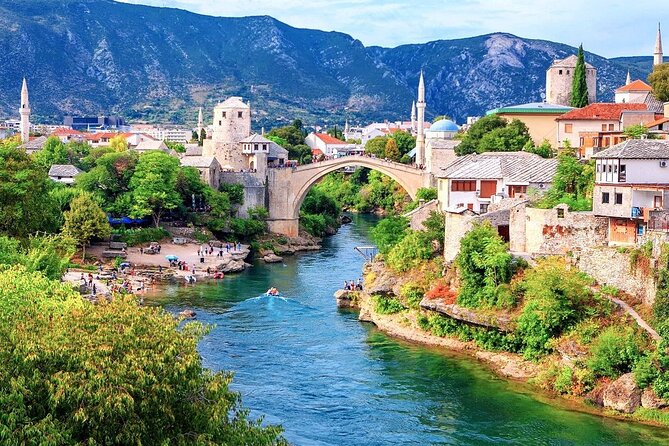
After breakfast, you drive to Sarajevo. The guided walk covers the city’s beginnings, the medieval Bosnian Kingdom, Ottoman rule, and the Austro-Hungarian period. This is one of the most rewarding historical days because the different eras sit close together in the city center.
You see markets, mosques, churches, and synagogues, which explain why Sarajevo is often described as a European Jerusalem. The city’s appeal comes from those contrasts. You can move from Ottoman-style streets to grand Austro-Hungarian buildings within a short walk.
The tour also points out bullet holes and cannon marks left by the Yugoslav War. These details are not polished attractions, and that is precisely why they matter. They give you a more honest sense of Sarajevo than a tour focused only on architecture and cafés.
The Latin Bridge is another important stop. Here you learn how the 1914 assassination of Archduke Franz Ferdinand helped trigger the First World War. The bridge itself is modest, but its place in European history gives the stop real significance.
You have free time for local food in the old town. Sarajevo is known for meat dishes and desserts, so I would use this hour to eat rather than squeeze in another monument. Be aware that the walking includes uneven ground, and a moderate level of fitness is required.
Day 3: Zvornik and Belgrade Fortress
The route continues toward Serbia, with a stop in Zvornik beside the Drina River. This is a quieter break from the large cities. You have time for lunch, local food, or a short walk through town.
The day’s main destination is Belgrade. The tour heads to Kalemegdan Park and Belgrade Fortress, set above the meeting point of the Sava and Danube rivers. The views are the highlight, particularly from the upper fortress near the Pobednik monument.
The fortress area gives you both open green space and a sense of Belgrade’s strategic importance. Afterward, the walk along Knez Mihailova leads toward Republic Square, the social center of the city. Two hours is enough for a useful introduction, but not enough to cover Belgrade’s many museums or neighborhoods.
This is also a good example of the tour’s rhythm: a smaller town in the morning, a major capital in the afternoon, and a guided overview rather than an exhaustive visit.
A completely different kind of day out in Austria:
- Vienna: Schönbrunn Palace & Gardens Skip-the-Line Tour
★ 4.7 · 7,739 reviews - Vienna: Light of Creation Votive Church Immersive Light Show
★ 4.8 · 6,779 reviews - Vienna Spanish Riding School Guided Tour
★ 4.7 · 6,765 reviews - Vienna: Classical Concert in the World-Famous Musikverein
★ 4.6 · 6,673 reviews
Day 4: Wine country and the Baroque town of Sremski Karlovci
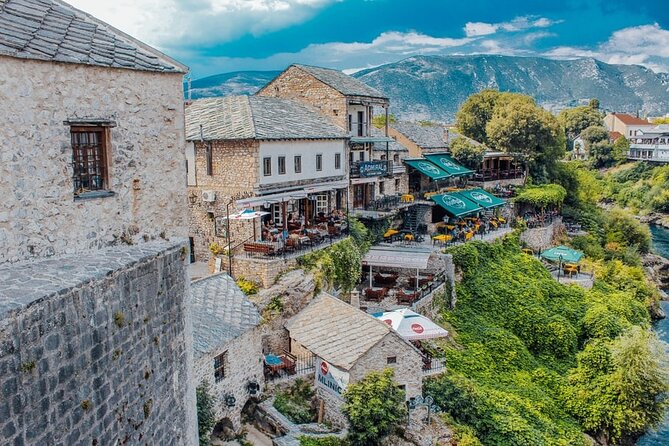
Sremski Karlovci is one of the more distinctive stops on the Serbian portion of the route. The town was a center of Serbian culture in the 18th century and is known for wine cellars, religious institutions, and a Baroque town center.
Three hours gives this visit more room than several of the city stops. You can learn about local wine production, see the Four Lions fountain, and spend time around the vineyards. The town’s legend says that anyone who drinks from the fountain will return and marry there. You can treat that as folklore, but it adds a bit of fun to the stop.
The schedule allows free time to taste regional wine specialties. This is one of the places where optional spending matters, since wine tasting is not clearly included in the package. Ask your tour leader what is covered before ordering.
I like the slower pace here. After several city walks and road sections, Sremski Karlovci gives you a chance to focus on one small place instead of collecting another capital.
Day 5: Novi Sad and Petrovaradin Fortress
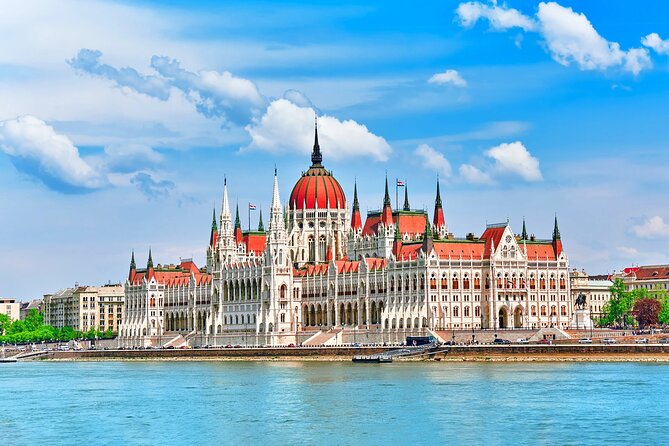
Novi Sad is considered the cultural capital of northern Serbia. Its position between former Ottoman and Austro-Hungarian spheres helps explain the mixture of architectural styles and customs you see around town.
The walking tour covers the pedestrian streets of Zmaj Jovina and Dunavska, along with the old center and Petrovaradin Fortress. The fortress is often called the Gibraltar on the Danube, and its position gives you broad views across the river and city.
You have about three hours for the city tour and personal exploration, followed by an overnight stay in Novi Sad. That overnight is a practical advantage. You are not forced to return to the road after seeing the city, and you can use your free time at a calmer pace.
Novi Sad is a good place to pause for coffee, a simple meal, or a second look at the streets after the guided portion ends. Lunch and dinner remain your responsibility, so budget for them separately.
Day 6: Subotica, then onward to Budapest
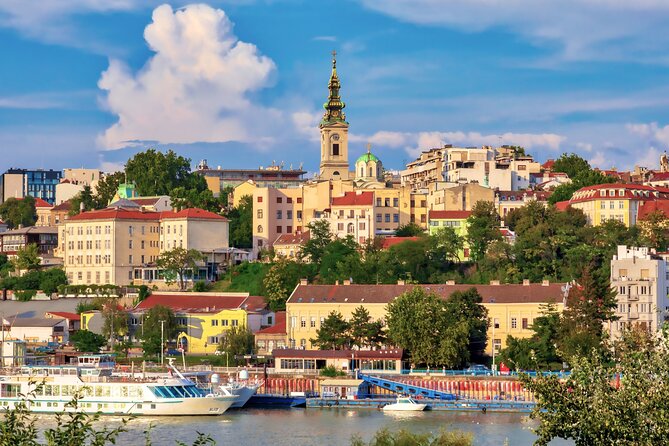
Subotica offers a change in tone. Its City Hall, public square, fountains, and colorful Austro-Hungarian buildings give the center a decorative feel. The city is also described as multicultural, with a relaxed café culture and local wine and food traditions.
The tour visits the Cathedral of St. Teresa of Avila and the synagogue. The City Hall is the central visual landmark, and the surrounding square is a natural place to pause. You also get free time for coffee and independent wandering.
Three hours is a reasonable amount of time for Subotica, though the stop may feel brief if you want to inspect the interiors of every major building. Later, you cross into Hungary and continue to Budapest, with roughly 30 minutes assigned to that transfer segment in the schedule.
The border crossing makes this a day when flexibility matters. Keep your passport accessible and avoid planning a fixed evening activity in Budapest.
Day 7: Budapest from the Danube and Buda Castle
Budapest receives a fuller visit. The guided city tour includes St. Stephen’s Basilica, the Opera, Parliament, Heroes’ Square, and Fisherman’s Bastion. These sights cover several periods and styles, from neoclassical grandeur to the elaborate look of the 19th century.
The Danube divides the city into Buda and Pest, and the tour uses that division to explain Budapest’s character. Pest is more urban and broad-boulevarded, while Buda rises toward the castle district. Fisherman’s Bastion is especially valuable for its views across the river.
Buda Castle is included, with an admission ticket listed as part of the package. You get a dedicated hour there after the main city walk. That inclusion helps the overall value, since major sights can add up quickly across a multi-country trip.
The evening is free. I would save energy for it. Budapest is particularly attractive after dark, when the bridges and riverfront take on a different character. The plan says you will cross bridges and explore a Baroque-style street, but your evening remains your own rather than another tightly guided block.
Day 8: Győr’s compact center and the road to Bratislava
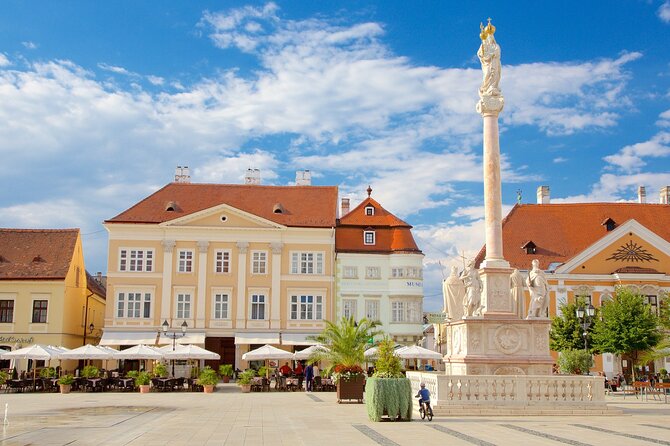
Győr, known as the City of Rivers, is a short but pleasant stop. The center has Baroque buildings, churches, colorful homes, and pedestrian streets lined with cafés and shops.
The tour includes the Town Hall, whose 59-meter tower has a green top, the Cathedral of the Virgin Mary, and the Győr Synagogue. The synagogue’s large gray dome is easy to spot, and its design influenced other synagogues in Central Europe.
Baross Gábor Way provides the main free-time stretch. You can stop for Hungarian food, coffee, or the locally noted blueberry beer. That drink is an unusual detail, but it is also a reminder to check the bill carefully, since food and drinks are not included.
After Győr, you continue to Bratislava. The drive is relatively short in the schedule, but the day still contains several stops, so the pace remains active.
Day 9: Bratislava Old Town and the castle hill
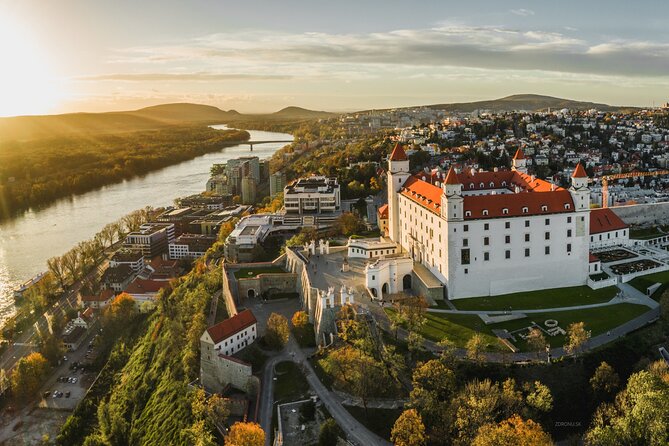
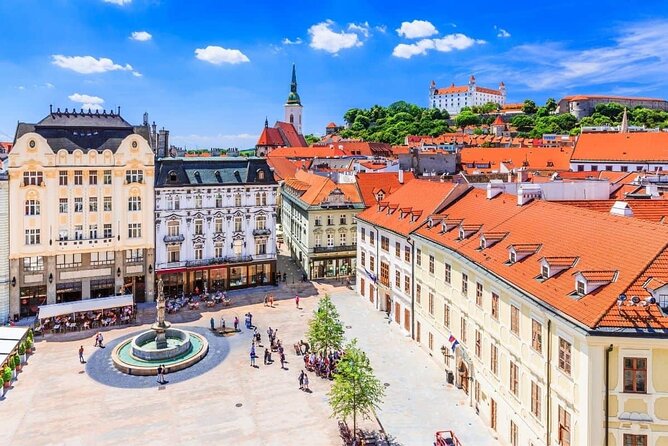
Bratislava’s Old Town is compact and easy to cover on foot. The route includes the Old Town Hall, historic churches, cultural institutions, and Michael’s Gate, the only surviving gate from the medieval fortifications.
The walk to Bratislava Castle adds a little physical effort. The castle sits above the Danube, and the hilltop provides one of the best city views on the trip. Admission to the castle is included.
You return to the center for free time in a traditional café. This is a fitting final sightseeing day because Bratislava is less sprawling than Budapest or Belgrade. You can get a clear sense of the old center without spending hours in transit.
The schedule leaves about an hour for coffee and independent time. If you have a particular museum or restaurant in mind, ask about opening times early, since the overall route can change due to outside conditions.
Day 10: Drop-off in Vienna
The final day is simple. Your tour leader drops you at your hotel in Vienna, Austria. No sightseeing is listed for the day, so you should treat Vienna as the end point rather than part of the guided touring.
That arrangement is useful if you already have Vienna lodging booked. It is less convenient if your hotel is outside the normal city area or if you have an early flight. Confirm the precise drop-off arrangements before departure.
How much value does $3,773.83 offer?
The price is high enough to deserve careful thought. At about $377 per person per day, you are paying for a 10-day multi-country service rather than a series of local tours.
The package includes:
- Three-star accommodation on a bed-and-breakfast basis
- A professional tour leader
- Dubrovnik hotel pickup
- Vienna hotel drop-off
- Listed entry tickets, including Buda Castle and Bratislava Castle
- International car insurance
- Tourist taxes, road taxes, and petrol
Those inclusions remove several costs that are easy to overlook on a self-planned road trip. You also avoid arranging hotels in multiple countries and working out border transport yourself.
The weak point is that lunch, dinner, drinks, snacks, souvenirs, and personal expenses are not included. You should also confirm the room arrangement. The price is calculated on double, twin, triple, or quadruple occupancy, so a solo traveler may not receive the same value unless a single-room supplement is explained.
The strongest value comes if you want convenience, guiding, and a broad introduction to the region. If you prefer longer stays, four-star hotels, or independent control over each day, the price may feel less attractive.
Guides, group size, and the human side of the trip
The most praised part of the experience is the guide service. Specific guides named in past departures include Bilbil, Mira, Sokol, Armando, and Ani. Descriptions of their work consistently emphasize kindness, helpfulness, local explanations, and a willingness to suggest activities during free time.
Bilbil was especially noted for pointing out extra sights and helping with transport to different places. Sokol was praised for taking the group to scenic spots and explaining what they were seeing. Armando was credited with explaining Albania’s past, while Ani was described as attentive and welcoming.
Your guide may be different, so do not treat any one name as guaranteed. Still, the pattern is encouraging: this company appears to place real weight on the person leading the vehicle and walks. In a route with so many borders and short visits, a responsive guide can make a big difference.
The Albania problem you should resolve first
The most important practical issue is the mismatch between the tour name and the supplied schedule. The overview describes a two-day hiking adventure around Komani Lake and Valbona Valley in the Albanian Alps, with local guiding, meals, and overnight accommodation.
The detailed route, however, begins in Dubrovnik and proceeds through Mostar, Sarajevo, Zvornik, Belgrade, Sremski Karlovci, Novi Sad, Subotica, Budapest, Győr, Bratislava, and Vienna. It does not show Komani Lake, Valbona Valley, Albania, hiking days, or the meals and overnight stays connected to that section.
The feedback also focuses heavily on the Albanian Alps. The boat ride on Komani Lake and the views in Valbona Valley are repeatedly described as the high points, and the two-day northern Albania trip receives strong praise for its guides and scenery. That suggests the material may combine two related products or contain an outdated itinerary.
I would not rely on a verbal promise. Ask for the exact current route, the number of nights in Albania, the hiking distance and difficulty, transport between the sections, and which meals are included. Since the booking cannot be refunded or amended, this check is essential.
Who should book this route?
I would recommend it to you if you want a guided introduction to several Balkan and Central European countries, value door-to-door transport, and enjoy active days with a moderate fitness requirement. It suits people who would rather follow a well-organized road route than handle six border crossings and many hotel bookings alone.
It is also a good fit if you enjoy cities with layered pasts, from Mostar and Sarajevo to Belgrade and Budapest. The route gives you enough time to see major landmarks, while smaller stops such as Blagaj, Sremski Karlovci, Győr, and Subotica keep the trip from becoming a parade of capitals.
I would hesitate if you need a slow pace, dislike early starts, or expect extensive free time in each city. Most stops are introductions, not full visits. I would also postpone booking until the Albania itinerary is confirmed in writing.
FAQ
How long is the Dubrovnik to Vienna tour?
The tour lasts approximately 10 days, beginning with a 7:00 a.m. pickup in Dubrovnik and ending with hotel drop-off in Vienna.
What countries does the detailed route visit?
The stated day-by-day route covers Croatia, Bosnia and Herzegovina, Serbia, Hungary, Slovakia, and Austria.
Is Albania included in the tour?
The overview describes two days around Komani Lake and Valbona Valley in Albania, but the detailed 10-day schedule does not show Albania. You should request clarification before booking.
What accommodation is included?
Accommodation is provided in three-star hotels on a bed-and-breakfast basis. Prices are calculated according to double, twin, triple, or quadruple occupancy.
Are meals included?
Breakfast is included for the overnight stays. Lunch, dinner, drinks, and snacks are not included.
What is the maximum group size?
The tour has a maximum of 10 participants.
Just added around Austria
- Mobile puzzle rally tour at the Vienna Central Cemetery★ 4.5 · 3 reviews
- 8 days European Highlights PRIVATE TOUR from Budapest including Budapest Vienna Prague and Bratislava★ 5.0 · 3 reviews
- RAXI (E-Rickschaw) big private Vienna tour★ 4.5 · 3 reviews
- Power of Trees Private Tasting Tour★ 5.0 · 3 reviews
- Salzburg & “The Sound of Music” Full Day Driver-Guided Tour★ 5.0 · 3 reviews
- Private Transfer from Vienna to Prague with 1 hour Stop in Kutna Hora★ 4.5 · 3 reviews
- Palais Lobkowitz Audio Guide Tour★ 4.0 · 3 reviews
- Private Tour from Vienna to Melk and Dürnstein★ 4.5 · 3 reviews
Tours, compared.

Schönbrunn Palace & Gardens Skip-the-Line Tour
Read our review →

Skip-the-Line Sisi Museum, Hofburg and Gardens Tour
Read our review →
Skip-the-Line Schönbrunn Palace & Gardens Tour
Read our review →

Guided Walking Tour of City Center Highlights
Read our review →