Reviewed · TOURS
Small Group Tour; Central Europe & the Balkans – Vienna to Tirana
Fourteen days, eight countries, one busy road trip. This Vienna to Tirana journey links grand capitals, wine towns, Ottoman bazaars, Orthodox monasteries, and Adriatic coastlines in one sweeping route. I especially like the small-group format and the mix of famous sights with less obvious stops such as Rust, Sremski Karlovci, Rahovec, and Mrizi i Zanave. I also like that breakfast, private transport, entry fees, road costs, and hotel transfers are covered.
The main caution is pace. You cover Austria, Slovakia, Hungary, Serbia, Bosnia and Herzegovina, Montenegro, Albania, and Kosovo in about two weeks. Some stops last only 30 minutes or an hour, so this suits you if you enjoy seeing a lot from one base on the road, not if you want long, unhurried stays in each city.
In This Review
- Key things to know before booking
- From Vienna to Rust and Bratislava
- Bratislava’s compact old center and castle views
- Győr and Budapest, from baroque streets to the Danube
- Subotica, Novi Sad, and Serbia’s wine country
- Belgrade and the road into Bosnia and Herzegovina
- Sarajevo and Mostar, two very different chapters
- Kotor, Budva, and Montenegro’s coast
- Shkoder, local food, and the road to Kosovo
- Gjakova, Decan, Rahovec, and Kruja
- What the $4,881.23 price buys you
- Who should book this Central Europe and Balkans route?
- FAQ
- How long is the tour?
- Where does the tour begin?
- Where does the tour end?
- How many people are in the group?
- Is accommodation included?
- Are meals included?
- Is private transportation provided?
- Are entrance tickets included?
- Can I cancel or change the booking?
Key things to know before booking
- Vienna pickup at 11:00 am: Your tour leader collects you from your Vienna hotel, then the route begins with Rust and Lake Neusiedl.
- Eight-country route: You move through Austria, Slovakia, Hungary, Serbia, Bosnia and Herzegovina, Montenegro, Albania, and Kosovo before reaching Tirana.
- A maximum of 8 or 10 people: The tour description gives both figures, so confirm the final group limit before paying.
- Two UNESCO monasteries and several major heritage sites: Buda Castle, Kotor, Mostar’s Old Bridge, Prizren’s monuments, and the Decan Monastery are central highlights.
- Breakfast and private transport included: Lunches, dinners, drinks, snacks, souvenirs, and personal expenses are extra.
- Three-star shared-room pricing: The $4,881.23 price is calculated around double, twin, triple, or quadruple occupancy.
From Vienna to Rust and Bratislava
The trip begins after you have spent time in Vienna independently. At 11:00 am, your tour leader picks you up at your hotel. That start gives you a chance to use Vienna as a separate city stay rather than trying to squeeze its museums, palaces, and cafés into the group itinerary.
Rust is a smart first stop. This small Burgenland town is known for its old center, colorful houses, flower boxes, and wine culture. The drive through the vineyards toward Lake Neusiedl adds a pleasant change from city sightseeing. Lake Neusiedl is part of a UNESCO World Heritage area, so the first day already brings scenery and cultural importance without requiring a long walk.
You get about two hours in Rust. I would use that time for a slow stroll, a local shop, and a wine-focused lunch if the schedule allows. The handmade decorations made from natural materials, including wood from wine barrels, offer more character than generic airport souvenirs.
The drawback is that the first day combines pickup, a scenic drive, Rust, and onward travel to Bratislava. You should expect an introduction to the region, not a full Burgenland visit.
A few more trips of this kind worth comparing:
- Vienna: Vivaldi’s Four Seasons Concert in Karlskirche
★ 4.7 · 14,951 reviews - Vienna: Spanish Riding School Training
★ 3.9 · 9,281 reviews - Vienna: Skip-the-cashier-desk-line Giant Ferris Wheel Ride
★ 4.5 · 7,859 reviews
Bratislava’s compact old center and castle views
Day two focuses on Bratislava, one of the easier capitals to explore on foot. The old town brings together churches, cultural buildings, embassies, and the medieval Old Town Hall. Michael’s Gate is especially useful for understanding the city’s former defenses because it is the only surviving medieval gate.
Bratislava Castle sits above the Danube and gives you the clearest city view of the day. Its origins reach back to the ninth century, and the included admission adds value to a tour that otherwise keeps many walking visits free.
You have about an hour for the old town, an hour around Michael’s Tower, an hour at the castle, and another hour for café time. That is a good balance. Bratislava is compact enough that a guided orientation leaves room for your own discoveries.
The café break matters. A traditional coffeehouse is not just a place to refuel. It gives you a little unscheduled time in a city where the best memories often come from watching local life rather than checking off another monument.
Győr and Budapest, from baroque streets to the Danube
Győr is a pleasant Hungarian stop with a strong architectural center. It is often called the City of Rivers, and its streets bring together baroque homes, churches, and public buildings. The 59-meter Town Hall tower is hard to miss, while the Cathedral of the Virgin Mary reflects the city’s older religious tradition.
The Győr Synagogue is another worthwhile stop. Its large gray dome can be seen from a distance, and its design influenced other synagogues in Central Europe. The schedule gives you time on Baross Gábor Way, a pedestrian street lined with cafés, shops, bars, and restaurants.
The mention of blueberry beer is a useful reminder that this route is not only about monuments. You have regular chances to try regional food and drinks, but those costs come from your own pocket.
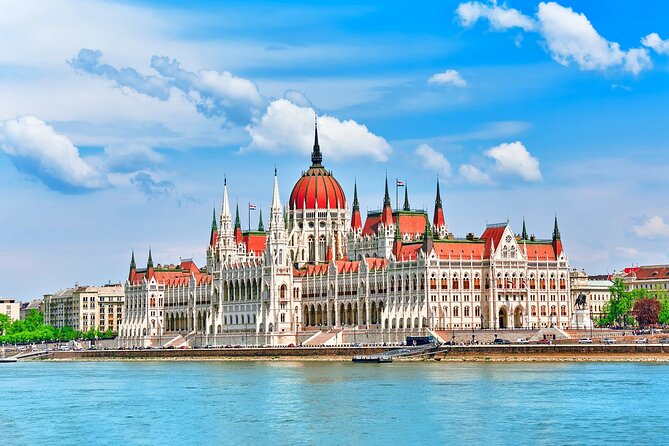
Budapest arrives on day four, but only in a compressed form. You pass Saint Stephen’s Basilica, the Opera, Parliament, Heroes’ Square, the boulevards, and Fisherman’s Bastion. Buda Castle is included, and its hilltop setting helps explain the historic divide between Buda and Pest.
The schedule leaves a free evening, which is one of the tour’s better choices. Budapest deserves several days, so you should treat this stop as an overview with a useful night on your own. If you arrive with a personal list of museums or baths, there may not be enough time for them.
Subotica, Novi Sad, and Serbia’s wine country
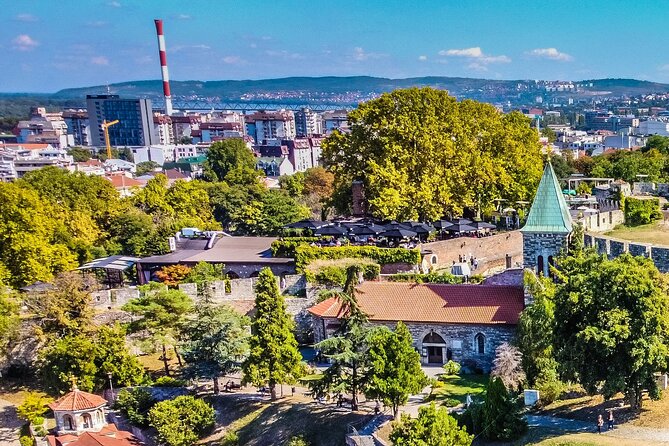
Subotica brings a different tone. Its public buildings reflect the wealth and style of the Austro-Hungarian period, with colorful façades and ornate details. The City Hall dominates the main square, while the Cathedral of St. Teresa of Avila and the synagogue add religious and cultural depth.
You get time to walk independently and have a coffee. That is welcome after several guided city visits. Subotica is a good place to slow down for an hour, sample local food, and notice how its multicultural past appears in the architecture.
Novi Sad receives a more generous three-hour visit. It was shaped by both the Austro-Hungarian and Ottoman worlds, and that mixture can be felt in the old town. The pedestrian streets of Zmaj Jovina and Dunavska are suited to wandering, while Petrovaradin Fortress offers the major historical and visual attraction across the Danube.
You overnight in Novi Sad, which helps break up the driving. Still, the itinerary gives little detail about the hotel beyond three-star accommodation and breakfast. If hotel standards matter greatly to you, ask for the property names before booking.
Sremski Karlovci is one of the route’s most appealing smaller stops. It feels like a museum town, with a baroque center and a long connection to Serbian culture, religion, and wine. The Four Lions Fountain carries a local legend: drinking from it is said to bring you back to Karlovci and lead to marriage there.
You have about three hours here, including free time for wine tasting. This is the sort of stop that makes a long overland route worthwhile. It connects scenery, food, history, and local custom without the scale or noise of a capital.
A completely different kind of day out in Vienna:
- Vienna: Schönbrunn Palace & Gardens Skip-the-Line Tour
★ 4.7 · 7,739 reviews - Vienna: Light of Creation Votive Church Immersive Light Show
★ 4.8 · 6,779 reviews - Vienna Spanish Riding School Guided Tour
★ 4.7 · 6,765 reviews - Vienna: Classical Concert in the World-Famous Musikverein
★ 4.6 · 6,673 reviews
Belgrade and the road into Bosnia and Herzegovina
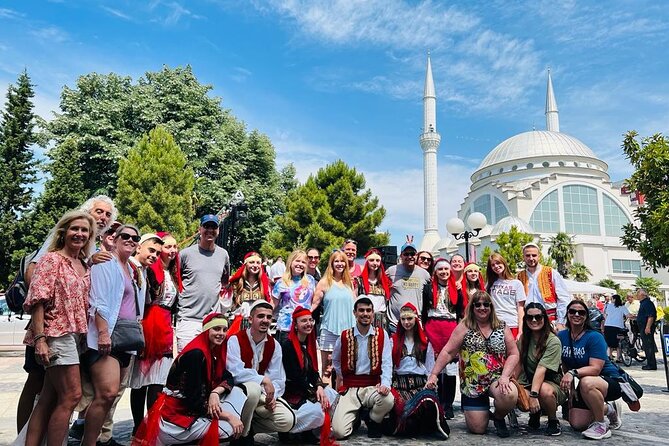
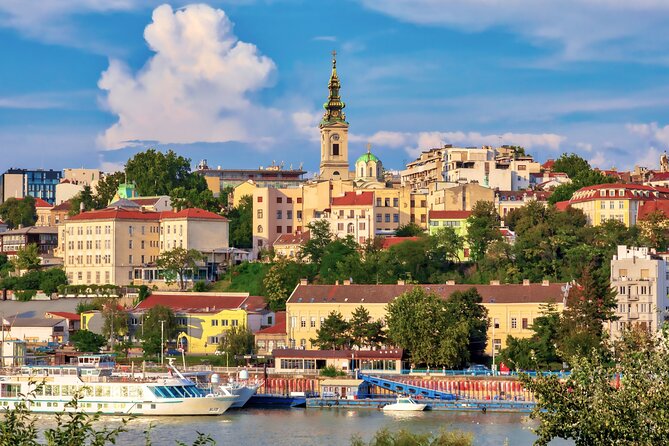
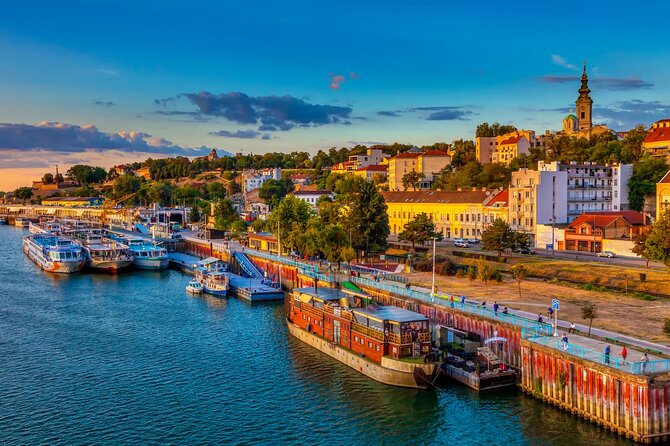
Day eight begins with Belgrade, although the stop heading is listed as Zvornik in the supplied schedule. The actual description takes you to Belgrade Fortress and Kalemegdan Park, at the meeting point of the Sava and Danube rivers.
The fortress area offers broad views and a useful introduction to Belgrade’s past. The Pobednik monument in the Upper Town dates to 1913, while the park adds shaded paths and open space. From there, you walk along Knez Mihailova toward Republic Square, the social center of the capital.
The Belgrade visit lasts about an hour in the schedule, so do not expect a full city tour. The route then continues toward Bosnia and Herzegovina, with time in Zvornik beside the Drina River. This is another day where the road itself forms much of the experience.
Sarajevo and Mostar, two very different chapters
Sarajevo is one of the most meaningful stops on the trip. You see Ottoman and Austro-Hungarian quarters close together, along with mosques, churches, synagogues, markets, and bazaars. That mixture explains why Sarajevo is often described as a European Jerusalem.
The tour also addresses the Yugoslav War. Bullet holes, cannon marks, and damaged buildings remain visible in parts of the city. This is not light sightseeing, and the schedule notes uneven ground around some ruins. Wear shoes with a firm sole and expect the guide to place modern Sarajevo within the story of the medieval Bosnian kingdom, imperial rule, and recent conflict.
Latin Bridge adds another layer. The bridge is linked to the assassination of Archduke Franz Ferdinand, an event that helped trigger the First World War. Sarajevo’s food traditions, especially meat dishes and desserts, give you a welcome chance to move from difficult history to everyday culture.
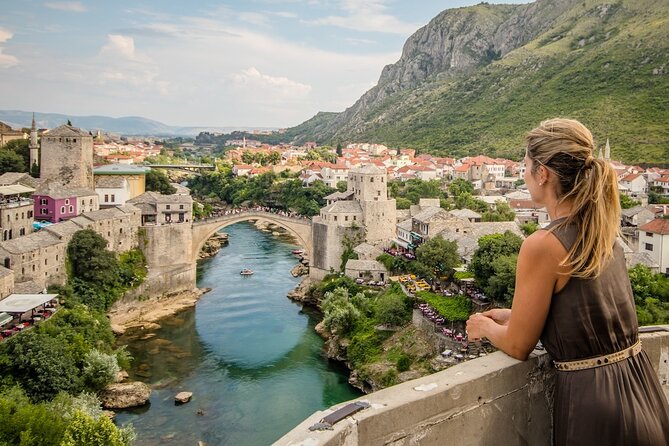
Mostar follows on the same day, with only about an hour listed for the visit. Stari Most, the famous Old Bridge, is the main sight. Its Islamic architectural style and UNESCO status make it a key stop, but the surrounding bazaar is just as important. Cobbled lanes, old mosques, Turkish-style shops, and stones marked with Don’t Forget connect the town’s beauty with its painful recent past.
The timing is tight. You will see the essential sights, but you will not have much room for museums, long meals, or a relaxed walk beside the river.
Kotor, Budva, and Montenegro’s coast
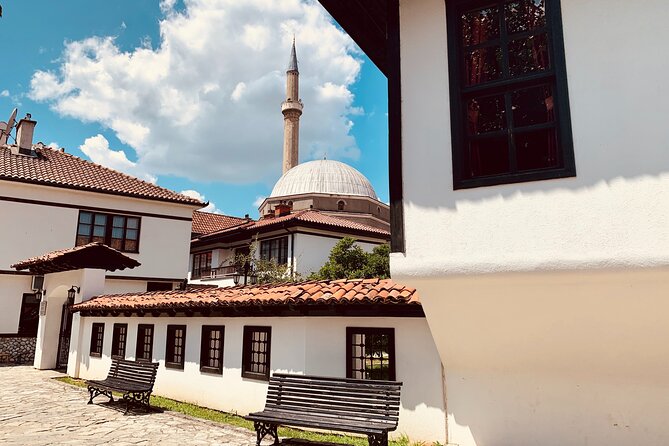
Kotor receives about three hours, making it one of the more satisfying city visits. Its old town is enclosed by mountains and fortifications, though the route description focuses on the maze of narrow streets and the Church of St. Luke.
The unusual street plan was designed to confuse attackers. Today, it simply makes wandering fun, although cobblestones require care. Small plaques on old buildings explain their former uses and dates, giving you details to notice as you walk.
You have a free afternoon in this UNESCO-listed town. I would save it for slow exploration rather than trying to add another formal attraction. The included entries and private transport are useful here because they reduce the need to organize your own visit.
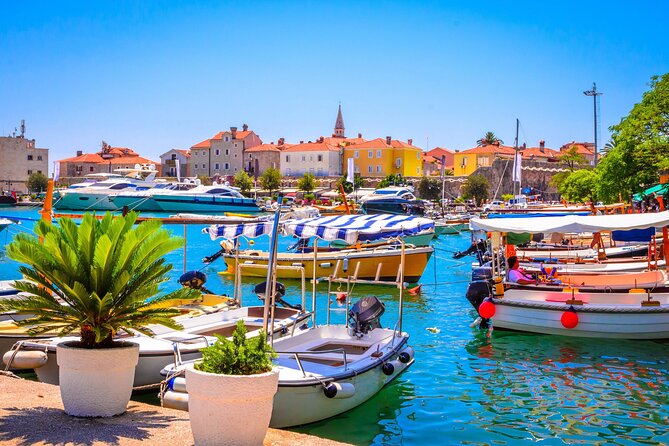
Budva the next day offers a contrast. The newer part has modern buildings, shops, restaurants, bars, and offices. The old town brings medieval churches and historic streets. You get about two hours, enough for an orientation and a little independent time, but not enough to treat Budva as a beach holiday.
A stop near Sveti Stefan lasts 30 minutes. The island now operates as an exclusive residential resort and cannot be visited, but the coastal viewpoint is worth a photograph. Be clear about this before you go: it is a picture stop, not an island tour.
Shkoder, local food, and the road to Kosovo
After crossing into Albania, Shkoder offers one of the strongest historical settings on the route. It is one of Albania’s oldest cities, and Rozafa Castle gives you views over the lake and the meeting point of three rivers before they reach the Adriatic Sea.
The city also carries Venetian influence. If your trip falls in February, the schedule notes a carnival festival, with handmade Venetian masks produced in Shkoder. That seasonal detail could make the visit especially distinctive, though the festival is not guaranteed outside that month.
Day twelve begins at Mrizi i Zanave, a slow-food agritourism farm. This is a valuable change from formal sightseeing. You tour the farm, learn how the family adapted old communist buildings for storage, and see how regional organic produce is collected and preserved.
The farm has created jobs for more than 400 people in the surrounding area. You can buy fresh products or pay for a traditional lunch, but lunch is not included. I would budget for this meal because it gives the stop its full meaning.
Prizren is one of the strongest cultural stops in Kosovo. The river runs through the old town, passing under several bridges, while Byzantine and Ottoman influences appear in the architecture. The Sinan Pasha Mosque is included, with its arabesque decoration and patterns.
Kalaja Fortress sits above the town and provides the best view. The schedule gives you free time afterward, which is useful in a city best experienced by walking, eating, and looking closely at the bridges and old streets. August brings Dokufest, a well-known short film festival, but festival dates and access are not included in the tour price.
Gjakova, Decan, Rahovec, and Kruja
Gjakova has Kosovo’s oldest and largest bazaar. It has been destroyed and rebuilt several times, including during the Balkan wars, the Second World War, and the Kosovo War. Today, its shops sell handmade crafts and local goods, and you have time for a meal or browsing.
The Decan Monastery is a major highlight. Its white exterior is memorable, but the frescoes are the main reason for its UNESCO status. Orthodox monks still live there and produce food such as cheese. The visit also gives you a direct look at the religious variety that shapes Kosovo.
Rahovec adds wine to the Kosovo portion. Grapes have been cultivated here since Illyrian times, and vineyards sit on hills between 350 and 520 meters above sea level. An annual wine festival takes place each September, though the tour does not promise festival attendance or a tasting.
The final full day reaches Kruja in Albania. The city is tied to Albanian resistance against Ottoman expansion in the fifteenth century. Its old bazaar is one of the biggest and oldest in the Balkans, with wooden houses and narrow lanes selling carpets, jewelry, and handmade souvenirs.
Kruja Castle sits on a rocky hill. The tour includes entry and follows paths once used by locals to leave the fortress unseen during attacks. You have free time for lunch and shopping before the final drive to Tirana.
What the $4,881.23 price buys you
At $4,881.23 per person, this is not a budget bus trip. The value comes from the number of countries, private transportation, hotel pickup and drop-off, 13 breakfasts, tourist taxes, fuel, road fees, international vehicle insurance, a professional tour leader, and entry tickets to the sites marked for visits.
The price is based on shared occupancy in three-star hotels. That means you should confirm whether the quoted amount changes for single occupancy. The provided group details also conflict slightly: one part says places are limited to eight people, while another gives a maximum of ten. Ask the operator to confirm the actual vehicle and group size.
Lunches, dinners, drinks, snacks, souvenirs, and personal spending are extra. The tour is non-refundable and cannot be amended after booking, so travel insurance is particularly important. Each participant is responsible for arranging health and travel insurance.
The route can also change because of weather, strikes, holidays, temporary closures, renovations, or other outside events. That is normal for a border-crossing road trip, but the pace means even a small delay could affect a later stop.
Who should book this Central Europe and Balkans route?
I would choose this tour if you want a broad first look at the region and prefer someone else to manage the long drives, hotels, border route, fuel, and road costs. It suits you if you like historic towns, religious buildings, food, wine, and changing cultures more than resort downtime.
It is also a good fit if you value small groups. A vehicle carrying fewer than ten people should make hotel pickups, short walks, and shared meals easier than a large coach tour.
I would hesitate if you need extensive free time, dislike frequent hotel changes, or want to explore Budapest, Sarajevo, Mostar, Kotor, or Tirana in depth. Several stops are limited to 30 minutes or one hour. Also note that the supplied overview describes a three-day Kosovo tour from Pristina, while the detailed schedule describes a 14-day Vienna to Tirana journey. Confirm that you are booking the full route you want.
FAQ
How long is the tour?
The tour lasts approximately 14 days and ends in Tirana.
Where does the tour begin?
The tour begins with pickup at your hotel in Vienna at 11:00 am.
Where does the tour end?
The tour ends in Tirana, Albania, with hotel drop-off included.
How many people are in the group?
The information gives two limits. One section says the group is limited to 8 people, while another says the maximum is 10. Confirm the final group size before booking.
Is accommodation included?
Yes. Accommodation and breakfast are included for all overnight stays in three-star hotels, based on double, twin, triple, or quadruple room occupancy.
Are meals included?
Thirteen breakfasts are included. Lunches, dinners, drinks, and snacks are not included.
Is private transportation provided?
Yes. Private transportation, petrol, road taxes, international car insurance, and tourist taxes are included.
Are entrance tickets included?
Entry tickets are included for the sites marked for visits, including Buda Castle, Sinan Pasha Mosque, Kalaja Fortress, and Kruja Castle.
Can I cancel or change the booking?
No. The experience is non-refundable and cannot be changed for any reason. Health and travel insurance are the responsibility of each participant.
Just added around Vienna
- Mobile puzzle rally tour at the Vienna Central Cemetery★ 4.5 · 3 reviews
- 8 days European Highlights PRIVATE TOUR from Budapest including Budapest Vienna Prague and Bratislava★ 5.0 · 3 reviews
- RAXI (E-Rickschaw) big private Vienna tour★ 4.5 · 3 reviews
- Private Transfer from Vienna to Prague with 1 hour Stop in Kutna Hora★ 4.5 · 3 reviews
- Palais Lobkowitz Audio Guide Tour★ 4.0 · 3 reviews
- Private Tour from Vienna to Melk and Dürnstein★ 4.5 · 3 reviews
- Vienna: Designer Fashion Time Capsule Experience★ 5.0 · 3 reviews
- Vienna Sight & Gourmet Tour – individual private tour★ 4.5 · 3 reviews
Tours, compared.

Schönbrunn Palace & Gardens Skip-the-Line Tour
Read our review →

Skip-the-Line Sisi Museum, Hofburg and Gardens Tour
Read our review →
Skip-the-Line Schönbrunn Palace & Gardens Tour
Read our review →

Guided Walking Tour of City Center Highlights
Read our review →