Reviewed · TOURS
Small Group Tour; The Balkans & Central Europe – Tirana to Vienna
Fourteen days, eight countries, countless border crossings. This ambitious journey links Albania, Kosovo, Montenegro, Bosnia and Herzegovina, Serbia, Hungary, Slovakia, and Austria in one carefully arranged route. I like the small maximum of 10 people, which should make border days, city walks, and shared meals easier to manage. I also like the mix of major sights and less expected stops, from Kruja’s old bazaar to Subotica’s Art Nouveau center. The main drawback is the pace: you cover a lot of ground, and several sightseeing stops last only about an hour.
The tour costs $4,876.33 per person, based on shared occupancy in three-star hotels. That is a serious price, but it includes private transport, breakfasts, entry tickets, road costs, tourist taxes, and a tour leader from hotel pickup in Tirana to hotel drop-off in Vienna. I would see this as a practical choice for anyone who wants to cross the Balkans without arranging eight countries, multiple border crossings, and a string of hotels alone.
In This Review
- The trip’s key points at a glance
- Why this route works for first-time Balkan explorers
- Kruja, Prizren, and Kosovo’s layered past
- Gjakova, Decan Monastery, and Rahovec wine country
- Northern Albania and the Adriatic coast
- Mostar, Blagaj, and Sarajevo’s difficult stories
- Serbia by river, fortress, and wine cellar
- Subotica, Budapest, and the final Central European stretch
- Bratislava to Vienna, with a practical value check
- Who should book this Tirana to Vienna route?
- FAQ
- How long is the tour?
- Which countries does the tour visit?
- What is included in the price?
- Are meals included?
- How large is the group?
- Where does the tour start and finish?
- Is the tour suitable for most people?
- Should you book it?
The trip’s key points at a glance
- Eight countries in 14 days: Albania, Kosovo, Montenegro, Bosnia and Herzegovina, Serbia, Hungary, Slovakia, and Austria are connected in one overland route.
- A group capped at 10 people: This is small enough for a more personal touring style and less fuss at busy sites.
- Major UNESCO sights: See the monasteries of Decan, Kotor, Mostar’s Old Bridge, Buda Castle, and other protected historic areas.
- Strong food and wine stops: Mrizi i Zanave, Rahovec, Sremski Karlovci, Sarajevo, and Hungarian towns add local flavor beyond sightseeing.
- Private transportation included: You avoid the strain of planning complicated bus and rail connections across changing borders.
- A one-way route with a useful finish: The tour begins with pickup in Tirana and ends with hotel drop-off in Vienna, ideal for combining it with a wider European trip.
Why this route works for first-time Balkan explorers
The route is designed for people who want the Balkans in broad strokes rather than one country in great depth. You get Ottoman mosques, Orthodox monasteries, Catholic churches, Austro-Hungarian boulevards, communist-era reminders, Adriatic views, river towns, and Central European capitals.
That variety is the tour’s greatest strength. In one morning you might be looking at Albanian resistance history in Kruja. A few days later, you are walking through Sarajevo’s Ottoman quarter, and by the final stretch you are sipping coffee in Bratislava or admiring Vienna-bound architecture in Győr.
The private vehicle matters here. Public transport across this route can be slow and awkward, especially when you add border crossings, smaller towns, and rural stops. The tour includes fuel, road taxes, and tourist taxes, so the price is not simply paying for a seat in a van. You are paying for a moving hotel network, route planning, local coordination, and someone else handling the driving.
Still, this is not a leisurely trip. Some days combine long drives with several short visits. You should be comfortable packing and unpacking, crossing borders, and getting back into the vehicle soon after arriving somewhere interesting.
Other days out in Austria people book alongside this one:
- Vienna: Vivaldi’s Four Seasons Concert in Karlskirche
★ 4.7 · 14,951 reviews - Vienna: Spanish Riding School Training
★ 3.9 · 9,281 reviews - Vienna: Skip-the-cashier-desk-line Giant Ferris Wheel Ride
★ 4.5 · 7,859 reviews
Kruja, Prizren, and Kosovo’s layered past
The first day begins in Kruja, a hill city tied to Albania’s resistance against Ottoman expansion in the fifteenth century. Its rocky setting and castle give the opening day a strong sense of place, though the visit is fairly brief.
Kruja’s Medieval Old Bazaar is the most appealing part for many people. Narrow lanes and wooden shops offer carpets, jewelry, and handmade Albanian goods. You get about an hour here, which is enough for a walk and some shopping, but not enough to browse every stall at a relaxed pace.
Kruja Castle adds historical weight. The tour leader takes you along lesser-known paths once used by locals to leave the fortress during attacks. That detail makes the visit more than a quick photo stop. Wear shoes with a good grip, since the hill and old paths may be uneven.
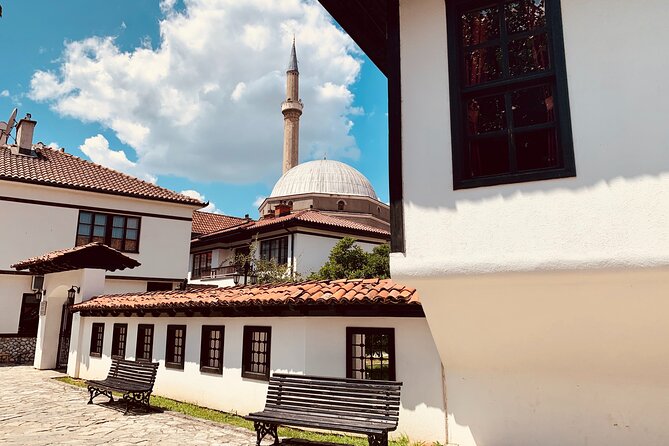
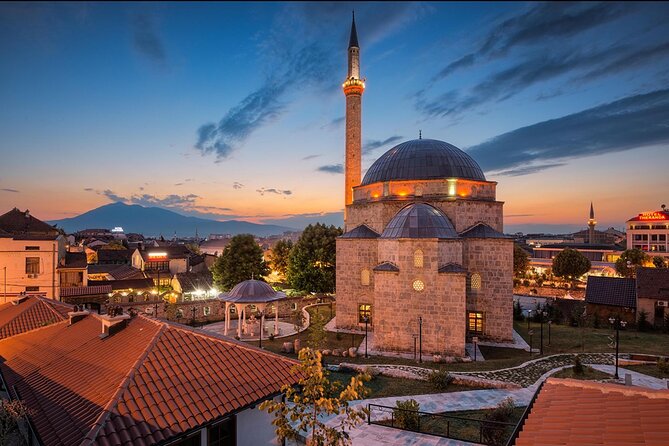
After crossing into Kosovo, you reach Prizren, one of the most attractive towns on the route. The river, stone bridges, elegant old houses, mosques, and Ottoman-era streets give it a welcoming scale. The Sinan Pasha Mosque is especially worth your time, with its patterned interior and strong color.
The climb to Prizren Fortress is short but worthwhile for the view over the town. You then have a free afternoon, an important pause after a busy first day. I would use it for a slow walk along the river, a look at local filigree metalwork, and a meal in the old center.
Gjakova, Decan Monastery, and Rahovec wine country
Day two takes you to Gjakova, home to Kosovo’s oldest and largest bazaar. The bazaar has been destroyed and rebuilt through several conflicts, so the present streets carry a difficult story beneath their traditional crafts and shops.
This is a good place to buy practical souvenirs, but you should also leave time for lunch. The itinerary gives you about an hour, so shopping and eating may require a choice rather than a relaxed afternoon.
The Decan Monastery brings a different mood. Its white exterior is memorable, but the real prize is the fourteenth-century fresco work inside. Orthodox monks still live there and produce food such as cheese. The monastery became a UNESCO site in 2004, and the paintings offer a rare look at religious art as well as everyday life in the medieval period.
The final stop is Rahovec Valley, a wine-growing area with cultivation dating back to ancient Illyrian times. The vineyards sit on gentle hills at elevations between 350 and 520 meters. If your trip falls near the annual September wine festival, the area may feel especially lively, but the tour does not promise festival access.
Northern Albania and the Adriatic coast
Mrizi i Zanave is one of the tour’s most distinctive stops. This farm-based restaurant and food project works with regional products and has adapted old communist buildings for storage. You get a farm visit, an explanation of the project’s development, and free time for a traditional lunch or local produce.
This stop adds useful social and economic context. You are not only looking at monuments. You see how a family business uses local food, agriculture, and old buildings to create work in the surrounding area. Lunch is not included, so budget separately if you want to eat here.
In Shkodra, you visit Rozafa Castle, with views toward Lake Shkodra and the rivers flowing toward the Adriatic. The city has ancient roots and strong Venetian influence. It is also known for handmade Venetian masks, and a February visit may coincide with its carnival.
The road then turns south along Montenegro’s coast. The viewpoint near Sveti Stefan is a quick stop, but it gives you the classic coastal photograph. You cannot visit the island itself because it now operates as an exclusive residential resort, so keep expectations realistic: this is a viewpoint, not an island tour.
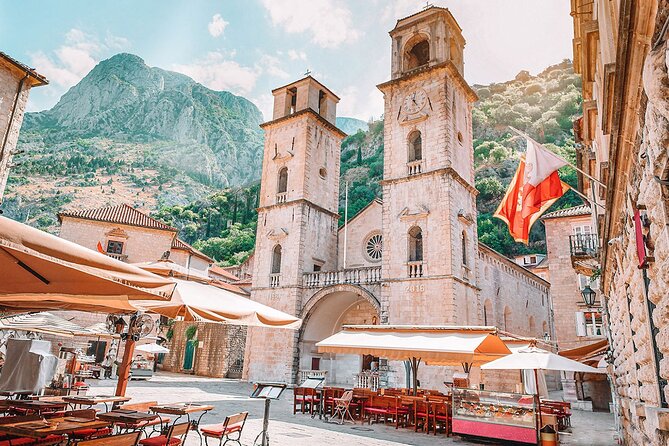
Budva offers both a modern resort area and a walled old town with churches and medieval streets. The visit is about an hour, enough for the historic center but not enough to explore the wider coast. Kotor receives the same compact treatment. Its maze of cobbled lanes, old churches, and fortified setting make it one of the route’s major highlights.
You visit St. Luke’s Church, a site important to local ideas of religious unity. Kotor deserves more time than the schedule allows, but the tour gives you a useful first look without requiring a separate coastal itinerary.
A completely different kind of day out in Austria:
- Vienna: Schönbrunn Palace & Gardens Skip-the-Line Tour
★ 4.7 · 7,739 reviews - Vienna: Light of Creation Votive Church Immersive Light Show
★ 4.8 · 6,779 reviews - Vienna Spanish Riding School Guided Tour
★ 4.7 · 6,765 reviews - Vienna: Classical Concert in the World-Famous Musikverein
★ 4.6 · 6,673 reviews
Mostar, Blagaj, and Sarajevo’s difficult stories
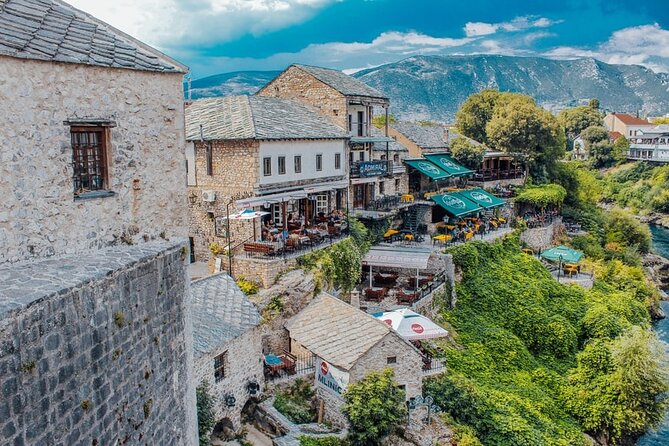
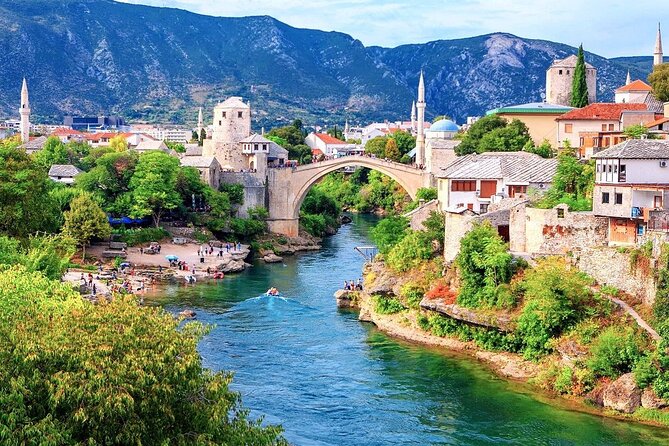
Crossing into Bosnia and Herzegovina, you arrive in Mostar and its famous Stari Most, or Old Bridge. The sixteenth-century bridge is one of the most recognizable sights in the region and a UNESCO site. The surrounding old city is equally important, with stone lanes, Ottoman-style shops, mosques, and the repeated reminder to not forget the city’s wartime destruction.
You have time to wander the bazaar and old bridge area, then visit Blagaj tekija outside Mostar. The monastery sits below a cliff beside the spring of the Buna River, where the setting is peaceful and striking. The contrast between Mostar’s busy old streets and Blagaj’s water and rock makes this one of the better pairings on the trip.
Mostar includes free time, which I would protect. The old city is best enjoyed without rushing from one landmark to another. Lunch and dinner are not included, so this is a good place to try local food at your own expense.
Sarajevo brings the trip’s most serious historical material. Bullet holes and cannon marks remain visible in parts of the city, and the walking route includes uneven ground and war-related ruins. You should be prepared for a thoughtful visit rather than a light sightseeing stop.
The city’s Ottoman and Austro-Hungarian districts sit close together, alongside mosques, churches, synagogues, markets, and cafés. That mix explains why Sarajevo is often described as a European Jerusalem. At the Latin Bridge, you hear how the assassination of Archduke Franz Ferdinand helped trigger the First World War.
Leave room for Sarajevo’s food. Traditional meat dishes and desserts are part of the experience, and the free time in the old town lets you choose your own meal instead of following a fixed group menu.
Serbia by river, fortress, and wine cellar
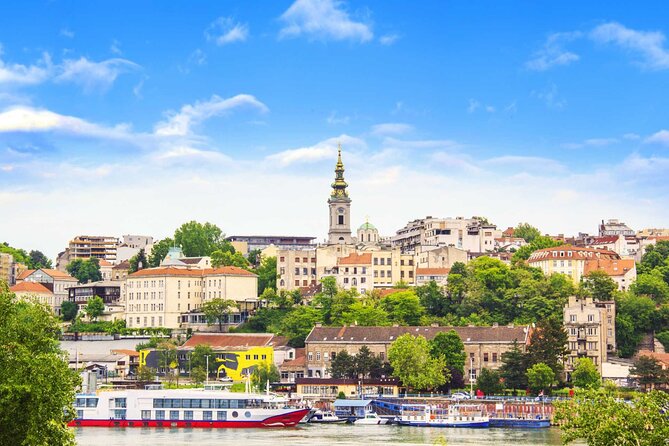
Day seven takes you through Zvornik, set beside the Drina River. It is mainly a lunch and walking stop, useful for breaking up the drive toward Belgrade.
Belgrade’s main visit centers on the fortress and Kalemegdan Park, where the Sava and Danube meet. The views are broad, and the park gives you a break from the vehicle. You then walk along Knez Mihailova, a central pedestrian street, toward Republic Square.
The following day moves to Sremski Karlovci, one of Serbia’s finest small-town stops. Its Baroque center feels compact and formal, with buildings connected to Serbian culture and eighteenth-century life. Wine cellars are a major part of the local identity.
The Four Lions fountain carries a local legend: drink from it and you will return to Karlovci and marry there. You do not need to take the story literally, but it is a fun excuse to pause in the square. The schedule allows two hours, giving you more breathing room than many earlier stops.
Novi Sad gets three hours, making it one of the more comfortable city visits. The old pedestrian streets, Baroque buildings, and Petrovaradin Fortress offer a good mix of urban life and history. The fortress is often called the Gibraltar on the Danube because of its commanding position.
You spend the night in Novi Sad, which improves the experience. An overnight stay means you are not forced to see the town only through a vehicle window.
Subotica, Budapest, and the final Central European stretch
Subotica is a fine choice for the last Serbian stop. Its City Hall anchors the main square, which is framed by fountains and a park rather than dominated by a cathedral. The city’s decorated buildings reflect its former importance within the Austro-Hungarian Empire.
You get three hours here, enough to walk, eat, and look closely at the architecture. Subotica is also known for local food and wine. After several days of fortresses and religious sites, this relaxed urban stop feels welcome.
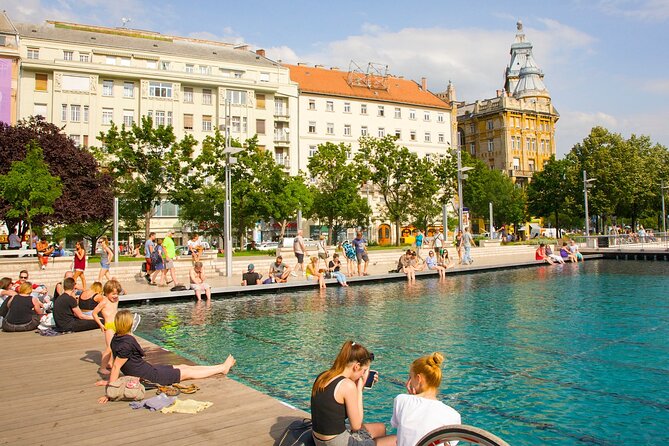
Later, you cross into Hungary and reach Budapest. The next day covers the city’s major sights: St. Stephen’s Basilica, the Opera, Parliament, Heroes’ Square, Fisherman’s Bastion, and the Danube views between Buda and Pest.
Buda Castle receives a separate visit and adds more historical context. The route includes bridges and a Baroque-style street, with time to see the castle area. Budapest is a city that rewards evening wandering, and the free night is one of the tour’s most useful pieces of independent time.
Győr offers another change of pace. Its colorful center, churches, Town Hall tower, Cathedral of the Virgin Mary, and synagogue give you a compact introduction to Hungarian architecture. Baross Gábor Way is pedestrian-only and lined with cafés, shops, bars, and restaurants.
The itinerary specifically points you toward Hungarian food and blueberry beer. Drinks and meals are not included, so plan to pay directly for these extras.
Bratislava to Vienna, with a practical value check
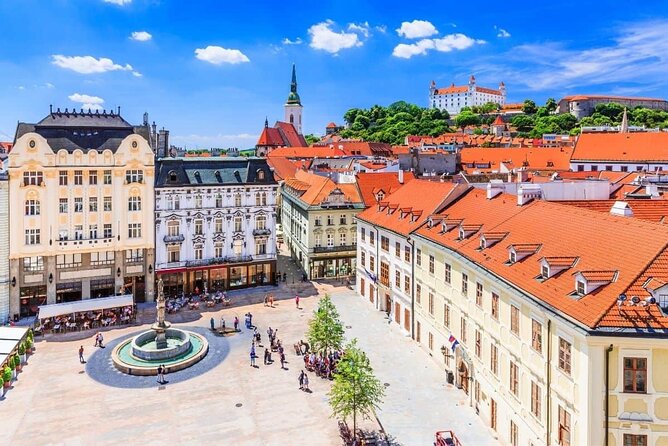
Bratislava is the final major sightseeing city before Vienna. The Old Town includes the medieval Old Town Hall, churches, cultural buildings, embassies, and Slovak institutions. Michael’s Gate is the only preserved medieval gate in the city’s old fortifications.
Bratislava Castle sits above the Danube and requires a walk uphill. The view over the city makes the effort worthwhile, but anyone uncomfortable with uneven ground should take the pace seriously. You then return to the center for free time in the city’s traditional cafés.
On day fourteen, the tour leader drops you at your Vienna hotel. This is a practical ending. You do not need to arrange a final transfer from Bratislava or find your own way across the border.
At $4,876.33, the price is best judged against what is included. You receive 14 nights of breakfast accommodation in three-star hotels, private transport, a professional tour leader, listed entry fees, hotel pickup, hotel drop-off, fuel, road charges, and tourist taxes. Lunches, dinners, drinks, snacks, souvenirs, and personal spending remain yours.
The value is strongest if you would otherwise need to book several transfers, rental cars, border arrangements, and hotels. It is weaker if you prefer slow travel, independent accommodation, or choosing your own pace in each city. Room pricing is based on double, twin, triple, or quadruple occupancy, so confirm the supplement for solo use before booking.
The operator’s past service also deserves some credit. Specific guides named in past feedback include Sokol and Mandi, both praised for making historical visits more engaging. The company has also helped arrange practical matters such as a preflight COVID test on another trip. That does not guarantee who will lead your departure, but it suggests useful support beyond simply driving between towns.
The displayed rating is 5 based on six published experiences, with praise focused on organization, historic sites, food, scenery, and guides. Treat that as encouraging rather than absolute proof. The route is ambitious, and your enjoyment will depend heavily on accepting its quick pace.
Who should book this Tirana to Vienna route?
I would recommend it to you if you want a broad first look at southeastern and Central Europe, prefer private transport, enjoy historic sites, and do not want to solve every border crossing yourself. It also suits couples and small groups who value a maximum of 10 people.
You should think twice if you want long stays in Kotor, Mostar, Sarajevo, Budapest, or Vienna. Vienna is only the endpoint, not a full sightseeing day, and several major cities receive just an hour or two.
The tour is non-refundable and cannot be changed after booking, so travel insurance is especially important. All participants are responsible for their own health and travel insurance. Weather, strikes, holidays, closures, renovations, or other outside events can also change the schedule.
FAQ
How long is the tour?
The tour lasts approximately 14 days, beginning in Tirana and ending with hotel drop-off in Vienna.
Which countries does the tour visit?
The route passes through Albania, Kosovo, Montenegro, Bosnia and Herzegovina, Serbia, Hungary, Slovakia, and Austria.
What is included in the price?
The price includes three-star accommodation with breakfast, private transportation, a professional tour leader, entry tickets for the listed sites, hotel pickup in Tirana, hotel drop-off in Vienna, tourist taxes, road taxes, and petrol.
Are meals included?
Breakfast is included for the overnight stays. Lunches, dinners, drinks, snacks, and personal purchases are not included.
How large is the group?
The tour has a maximum of 10 participants.
Where does the tour start and finish?
Pickup is offered from a hotel in Tirana. The tour finishes with hotel drop-off in Vienna.
Is the tour suitable for most people?
The tour states that most participants can take part, but some walks include uneven terrain, especially during the Sarajevo visit and the uphill walk to Bratislava Castle. You should also be comfortable with frequent road travel and border crossings.
Should you book it?
Book this tour if your priority is coverage and convenience. It connects places that are difficult to combine independently, includes strong historical and cultural stops, and keeps the group small.
Skip it if you want a slow, flexible holiday with several nights in each city. For the right person, this is an efficient and unusually varied route: Albania’s mountain castles, Kosovo’s religious sites, the Adriatic coast, Bosnia’s Ottoman towns, Serbia’s river cities, and the grand capitals of Central Europe, all linked in one overland journey.
Just added around Austria
- Mobile puzzle rally tour at the Vienna Central Cemetery★ 4.5 · 3 reviews
- Power of Trees Private Tasting Tour★ 5.0 · 3 reviews
- 8 days European Highlights PRIVATE TOUR from Budapest including Budapest Vienna Prague and Bratislava★ 5.0 · 3 reviews
- RAXI (E-Rickschaw) big private Vienna tour★ 4.5 · 3 reviews
- Salzburg & “The Sound of Music” Full Day Driver-Guided Tour★ 5.0 · 3 reviews
- Private Transfer from Vienna to Prague with 1 hour Stop in Kutna Hora★ 4.5 · 3 reviews
- Palais Lobkowitz Audio Guide Tour★ 4.0 · 3 reviews
- Private Tour from Vienna to Melk and Dürnstein★ 4.5 · 3 reviews
Tours, compared.

Schönbrunn Palace & Gardens Skip-the-Line Tour
Read our review →

Skip-the-Line Sisi Museum, Hofburg and Gardens Tour
Read our review →
Skip-the-Line Schönbrunn Palace & Gardens Tour
Read our review →

Guided Walking Tour of City Center Highlights
Read our review →