Reviewed · TOURS
Street Art Tour in Vienna
Street art changes before your eyes. This two-hour to two-and-a-half-hour walk takes you from Spittelau to the Danube Canal, showing you a side of Vienna far from the palace circuit. I like the local guide’s personal take and the chance to see working walls where pieces may disappear or be replaced. I also like the route’s mix of art, neighborhoods, and Vienna tips. The main drawback is that much of the canal art is tagging, which may not suit you if you prefer large murals and polished paintings.
This is a walking tour for curious adults, older children, and anyone who wants more than Vienna’s grand façades. Guides may adapt the route to their own favorite pieces. Tobi, who stepped in when another guide became ill, earned especially warm praise for making the walk enjoyable for a group ranging from age 18 to 80. Still, you should expect a street art lesson rather than a greatest-hits mural tour.
In This Review
- Key points at a glance
- Why this walk offers a different Vienna
- Spittelau and the famous heating plant chimney
- Das Werk, a key stop for local artists
- The Danube Canal, one hour of walls and tags
- Friedensbrücke and art that may vanish
- Schottenring, Flex, and the end of the route
- What the guide adds to the experience
- Food, transport, weather, and walking effort
- Is $46.96 a fair price?
- Who should book this street art walk?
- Should you book the Vienna Street Art Tour?
- FAQ
- Where does the street art tour start?
- Where does the tour end?
- How long does the tour last?
- What language is the tour offered in?
- How much does the tour cost?
- Are food and drinks included?
- Is transportation included?
- What are the main places visited?
- How many people can join the tour?
- Can I cancel for a full refund?
Key points at a glance
- Spittelau meeting point: Begin beside Vienna’s famous district heating plant and its eye-catching chimney.
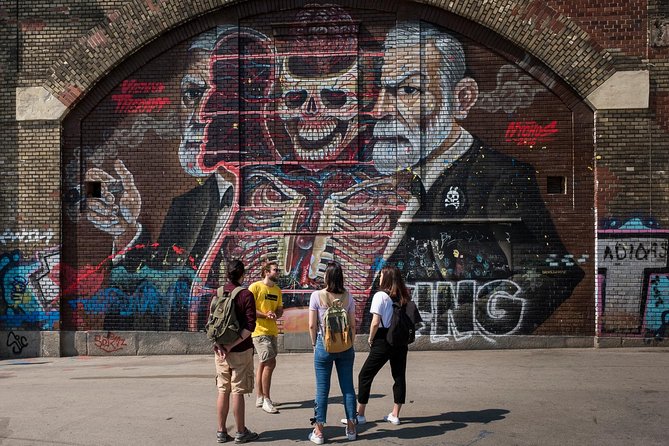
- Das Werk hall of fame: See work linked with names such as Roa, Nycos, Stratton, and Lugosi.
- One hour beside the canal: The Danube Canal offers a long run of legal and illegal walls, tags, and changing pieces.
- Art changes often: Friedensbrücke can look different from one visit to the next because walls are frequently painted over.
- Local advice included: Guides share tips about Vienna as well as explaining artists, styles, and signatures.
- Practical cost: The tour costs $46.96 per person, with public transport to and from the route costing about €2.20 each way.
Why this walk offers a different Vienna
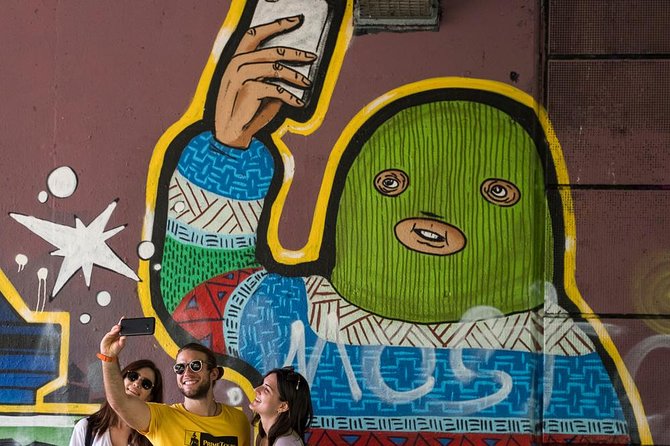
Vienna is famous for imperial buildings, concert halls, coffeehouses, and museums. This walk points your attention toward shutters, underpasses, concrete walls, industrial sites, and the long strip beside the Danube Canal. You get a less formal view of the city, one shaped by artists, crews, tags, and changing public space.
The tour is not simply a stroll while someone points at painted walls. The guide explains how street art fits into a wider international scene, introduces artists who have marked Vienna, and helps you recognize styles and signatures. That last skill is useful after the tour. You may begin noticing small details on your own as you continue around town.
The route is also social and informal. It ends near Flex and Schottenring, an area with restaurants and cafés, so you can continue your evening without making a special trip across town. The end point is near Schottenring U-Bahn station on the canal.
One important expectation matters here: street art is not fixed museum art. Pieces are removed, covered, damaged, or replaced. That can make the outing feel fresh, but it also means you cannot count on seeing every image shown in promotional material. The operator allows guides to adjust the route, and that flexibility can help when favorite works have vanished.
A few more trips of this kind worth comparing:
- Vienna: Vivaldi’s Four Seasons Concert in Karlskirche
★ 4.7 · 14,951 reviews - Vienna: Spanish Riding School Training
★ 3.9 · 9,281 reviews - Vienna: Skip-the-cashier-desk-line Giant Ferris Wheel Ride
★ 4.5 · 7,859 reviews
Spittelau and the famous heating plant chimney
The meeting point is at Spittelau, in Vienna’s 1090 district. The first 15 minutes introduce the area and the street art scene, with the district heating plant providing a memorable backdrop. Its chimney is one of the most recognizable industrial features in this part of the city.
You will see several illegal pieces here and hear how street art operates in Vienna and elsewhere. This opening is brief, but it sets up an important contrast. Vienna’s public art is not limited to approved galleries or official monuments. Some work appears in places where artists have permission, while other pieces occupy walls without it.
The suburban setting may appeal to you if you want to get away from the center quickly. It is not a grand first stop, and you should not expect a huge collection of finished murals. Instead, it gives you the context for understanding the rest of the walk.
The start is close to public transport, but transportation to and from the attractions is not included. The supplied information lists the fare as about €2.20 one way. Allow time to reach Spittelau before the meeting time, especially if you are unfamiliar with Vienna’s transport system.
Das Werk, a key stop for local artists
The next stop is Das Werk, where you spend about 30 minutes. It is described as a hall of fame for Vienna’s street art scene, with pieces connected to artists including Roa, Nycos, Stratton, and Lugosi.
This stop should appeal most if you want names and context rather than a quick photo stop. A guide can explain which artists are important, how different styles vary, and what separates a tag from a larger image or developed composition. The goal is not only to show you art, but to give you a way to read it.
Das Werk also helps anchor the tour in Vienna’s own creative community. You are not being shown generic public art selected only because it looks good in a photograph. The focus is on artists and crews who have left a mark on the city.
The exact selection may change. Since street art can be painted over, the pieces present on your visit may not match what you expect. That is part of the bargain. If you need a fixed collection with guaranteed works, a museum is the safer choice. If you enjoy seeing what is present now, this stop has more character.
The Danube Canal, one hour of walls and tags
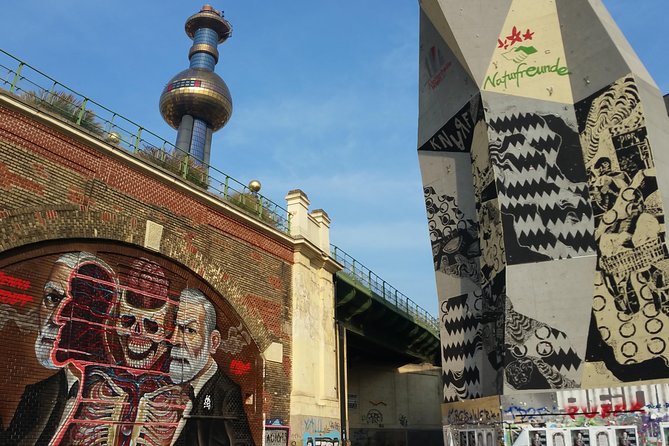
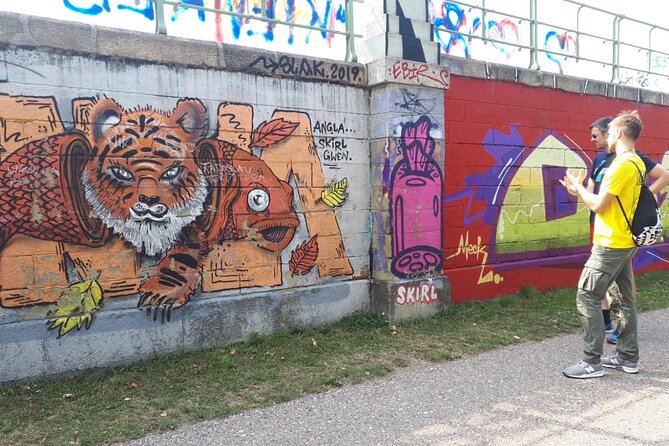
The longest section of the walk follows the Danube Canal. You spend about an hour passing legal and illegal walls, a hall of fame, and work by prominent Vienna street artists.
This is the heart of the experience, but it is also where expectations matter most. The canal contains a broad mix of styles. You might see carefully planned images beside quick tags, rough lettering, layered paint, and pieces that are partly covered. If your definition of street art means only large, colorful murals, some of this section may feel ordinary.
The positive side is that the canal shows street art as a living practice. Tags matter because they reveal how artists mark territory, build recognition, and develop a personal signature. A guide can help you understand why a piece that looks simple at first may still matter to the local scene.
The route’s open-air setting also makes the tour feel less formal. You are walking beside the water rather than moving from one enclosed attraction to another. The scenery is not the point, but the canal gives the art a long public corridor where legal and illegal work sit close together.
One past guest felt the route was too focused on tagging and described the canal portion as a poor match for their expectations. That criticism is worth taking seriously. The guide may be excellent, but a strong guide cannot turn every tag into a mural. If you already know you prefer monumental images, ask yourself how comfortable you are with the rougher side of the scene.
On the other hand, Tobi received strong praise for leading a two-hour walk that kept a mixed-age group engaged. He also offered advice about other things to do and see in Vienna. The route did not follow the canal exactly as advertised on that occasion because he favored different works. That tells you two things: a good guide can make the walk more personal, and the exact path may not be rigid.
A completely different kind of day out in Vienna:
- Vienna: Schönbrunn Palace & Gardens Skip-the-Line Tour
★ 4.7 · 7,739 reviews - Vienna: Light of Creation Votive Church Immersive Light Show
★ 4.8 · 6,779 reviews - Vienna Spanish Riding School Guided Tour
★ 4.7 · 6,765 reviews - Vienna: Classical Concert in the World-Famous Musikverein
★ 4.6 · 6,673 reviews
Friedensbrücke and art that may vanish
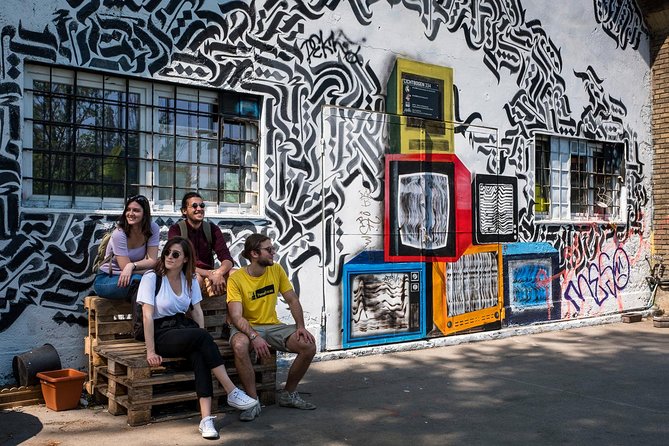
The walk continues to Friedensbrücke for about 30 minutes. This area includes work by the TS90 local crew, an octopus by Manuel Muriel, and other newer pieces along the way.
Friedensbrücke is a good example of why timing matters in street art. Pieces here are often overpainted, so a wall can look different on your next visit. You may see something bold and new, or you may find that a piece you hoped to photograph has gone.
That uncertainty is not a flaw for everyone. I like the idea that the tour records a moment in Vienna rather than presenting a permanent outdoor museum. The guide can explain what is new, what has disappeared, and how the scene keeps moving.
Still, you should bring a flexible attitude. The supplied information does not promise a fixed list of works, and no guide can guarantee that a particular octopus, crew piece, or favorite artist will still be visible. The value comes from learning how to look, not from checking off a list.
Schottenring, Flex, and the end of the route
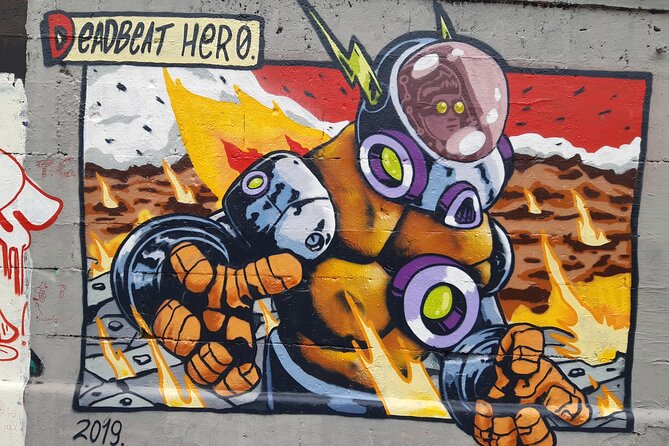
The walk finishes after about 15 minutes near Schottenring, close to the Flex nightclub and the Danube Canal. The area has restaurants and cozy cafés, making it a practical spot to pause after the tour.
The final section gives you one more chance to see different pieces and review what you have learned. By this point, you should be better prepared to spot recurring styles and artist signatures around Vienna. That is a useful payoff. You are not left with only a few photographs and a list of names.
The end point also makes the tour easy to combine with an evening plan. You can eat nearby, sit in a café, or continue using the U-Bahn. Since the walk does not return to Spittelau, plan your day around ending in the central area rather than leaving a car or other transport at the starting point.
What the guide adds to the experience
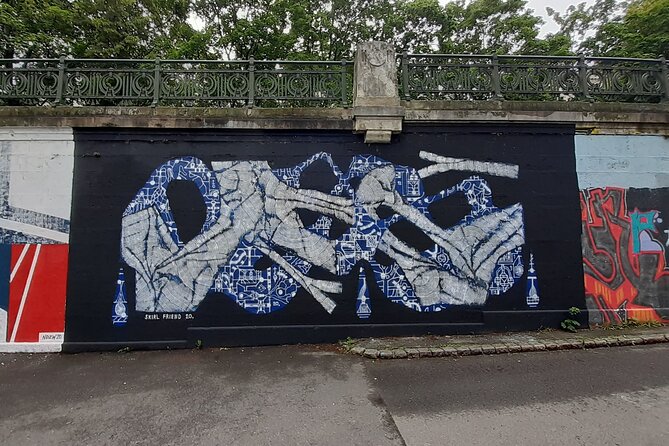
The guide is the most important part of this tour. The route itself is a public walk, and you could see some canal walls without paying for a tour. What you pay for is interpretation, access to local knowledge, and help making sense of work that can look confusing at first.
The best guide style here is personal rather than scripted. Tobi’s handling of the group is a good example. He stepped in unexpectedly, showed favorite pieces outside the advertised canal route, and gave useful Vienna suggestions along the way. A group with ages from 18 to 80 reportedly stayed engaged, which suggests the experience can work across generations when the guide communicates well.
There is some uncertainty because guides may have different interests and ways of explaining the city. One may focus on artists and technique, while another may spend more time on the history of tagging or on general Vienna advice. That can make repeat visits interesting, but it also means the experience may vary.
The group size can reach 20 people. That is small enough for a walking conversation, though a full group may make it harder to ask questions or hear every point beside a busy canal. If you want the most personal exchange, a smaller departure would be preferable, but the available information does not promise one.
Food, transport, weather, and walking effort
The highlights include Austrian sausage, beer, and wine as local on-the-go staples. However, food and drinks are listed as not included. Treat those items as possible local suggestions or opportunities rather than guaranteed tastings, and carry money if you want to stop for something during or after the walk.
You need to arrange your own transport to Spittelau and away from Schottenring. Both ends are near public transport, and the stated fare is about €2.20 per one-way trip. The mobile ticket is convenient, but it does not cover transit fares.
The walk operates in all weather conditions, so wear clothing suited to the forecast. At the same time, the cancellation terms state that poor weather can lead to a canceled outing, with a different date or full refund offered. That policy sounds conditional rather than absolute, so check the status if rain or severe weather threatens your plans.
A moderate level of physical fitness is recommended. The tour lasts up to two and a half hours and includes continuous walking between several stops. There is no suggestion of difficult hiking, but you should choose comfortable shoes and avoid scheduling it immediately after another demanding walking activity.
Is $46.96 a fair price?
At $46.96 per person, this is not the cheapest way to see walls beside the canal. You can walk along public sections independently, and the art itself has no admission charge. The price makes more sense if you want someone to identify artists, explain local habits, point out less obvious work, and connect the walls to Vienna’s wider art scene.
The value depends heavily on your interest. If you are happy taking photographs without context, the cost may feel high. If you want to understand why tags, crews, legal walls, and changing pieces matter, the guide provides the part you cannot easily get from a map.
The tour includes a local guide, professional guide, tour escort, and all tour activities. Food, drinks, hotel pickup, drop-off, and transportation are extra. Free cancellation is available if you cancel at least 24 hours before the start time. If the minimum number of participants is not reached, or if poor weather causes cancellation, you can receive another date, another experience, or a full refund.
Who should book this street art walk?
I would choose this tour if you enjoy contemporary art, urban neighborhoods, photography, or local scenes that do not fit neatly into a museum. It is also a good option if you want a Vienna activity that feels different from the Ringstrasse, Schönbrunn, and the Hofburg.
It suits you especially well if you are willing to accept rough tags alongside polished pieces. The tour is less suitable if you want guaranteed murals, a short route, or a tightly fixed script. Families with older children may like the informal subject, and the positive account of a group spanning ages 18 to 80 suggests broad appeal.
Bring comfortable shoes, weather-ready clothing, and an open mind about what counts as art. Ask questions, since the guide’s personal knowledge is a major part of the value.
Should you book the Vienna Street Art Tour?
Book it if you want help seeing Vienna through its walls, not just its monuments. The strongest reasons are the local guide’s personality, the chance to visit Das Werk and Friedensbrücke, and the changing Danube Canal scene.
Skip it if you mainly want large, finished murals and would be disappointed by tagging. At $46.96, the tour earns its price through explanation and local perspective, not admission tickets. For the right person, it is an enjoyable way to spot another side of Vienna. For a mural-only fan, a different art outing may be a better match.
FAQ
Where does the street art tour start?
It starts at Spittelau, 1090 Vienna, Austria, near the District Heating Plant Spittelau.
Where does the tour end?
It ends near Schottenring U-Bahn station at Franz-Josefs-Kai, close to the Danube Canal and Flex nightclub.
How long does the tour last?
The tour lasts approximately two to two-and-a-half hours.
What language is the tour offered in?
The tour is offered in English.
How much does the tour cost?
The listed price is $46.96 per person.
Are food and drinks included?
No. Food and drinks are not included, even though Austrian sausage, beer, and wine are mentioned as local staples connected with the experience.
Is transportation included?
No. Transportation to and from the attractions is not included. The stated cost is about €2.20 each way.
What are the main places visited?
The route includes the District Heating Plant Spittelau, Das Werk, the Danube Canal, Friedensbrücke, and Schottenring.
How many people can join the tour?
The tour can have a maximum of 20 participants.
Can I cancel for a full refund?
Yes. You can cancel at least 24 hours before the local start time for a full refund. Cancellations or changes made less than 24 hours before the start time are not refunded or accepted.
Just added around Vienna
- Mobile puzzle rally tour at the Vienna Central Cemetery★ 4.5 · 3 reviews
- RAXI (E-Rickschaw) big private Vienna tour★ 4.5 · 3 reviews
- 8 days European Highlights PRIVATE TOUR from Budapest including Budapest Vienna Prague and Bratislava★ 5.0 · 3 reviews
- Private Transfer from Vienna to Prague with 1 hour Stop in Kutna Hora★ 4.5 · 3 reviews
- Palais Lobkowitz Audio Guide Tour★ 4.0 · 3 reviews
- Private Tour from Vienna to Melk and Dürnstein★ 4.5 · 3 reviews
- Vienna: Designer Fashion Time Capsule Experience★ 5.0 · 3 reviews
- Private day trip from Munich to Eagle’s Nest & Hallstatt★ 4.7 · 3 reviews
Tours, compared.

Schönbrunn Palace & Gardens Skip-the-Line Tour
Read our review →

Skip-the-Line Sisi Museum, Hofburg and Gardens Tour
Read our review →
Skip-the-Line Schönbrunn Palace & Gardens Tour
Read our review →

Guided Walking Tour of City Center Highlights
Read our review →