Reviewed · TOURS
Taste and Tour Small Organic Wineries with a Winemaker
Austrian wine country gets personal here. This private three-hour outing from Krems takes you to small organic producers, including an amphora experiment, a family winery dating to 1365, and a hand-made sparkling wine cellar. I like the direct access to winemakers and the chance to taste wines at several stages of production. I also like the flexible meeting options for visitors arriving by train or boat from Vienna.
The main catch is the travel time from Vienna, since you must first reach Krems. You will also walk through vineyards, enter cellars, and spend time in small rooms, so this suits you best if you have moderate fitness and a real interest in wine rather than a casual tasting.
In This Review
- Key points to know before booking
- Why this small-winery tour feels different
- Reaching Krems from Vienna
- Kapitel Zwei and the abandoned vineyard revived
- Mantlerhof, a family winery with centuries of roots
- Weingut Feldtheorie and a newer generation
- WeinSchach and the search for better Pet Nat
- The final walk to the vineyard viewpoint
- How much wine will you taste?
- The guide and the private format
- Price, timing, and overall value
- Who should book this experience?
- Should you book the Krems wine tour?
- FAQ
- Where does the tour start?
- Can I join the tour from Vienna?
- Is pickup available?
- How long does the experience last?
- What wineries are included?
- Is the tour conducted in English?
- How much walking is involved?
- Is this a private tour?
Key points to know before booking
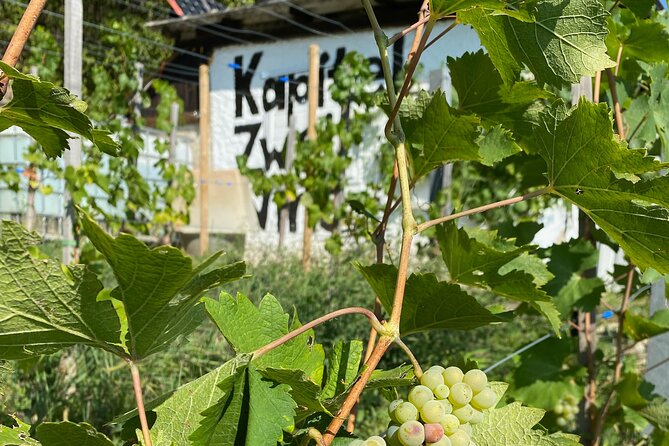
- Four small producers, not a large commercial estate: You visit Kapitel Zwei Wine, Mantlerhof, Weingut Feldtheorie, and WeinSchach.
- A winemaker-led experience: Guide Chris is an active vineyard owner and wine producer who can explain the work from young vines to bottling.
- Organic and experimental wines: Expect French grape varieties, amphora and steel aging, long-lasting Grüner Veltliner, Roter Veltliner, and hand-made Pet Nat.
- A private outing for your group: Only your party takes part, making it easier to ask questions and adjust the conversation around your interests.
- A fine ending above the vineyards: A seven to ten-minute walk leads to a viewpoint over the region.
- Easy to combine with a Vienna visit: Direct trains and boats connect Vienna with Krems, and the guide can meet you at the station or boat stop.
Why this small-winery tour feels different
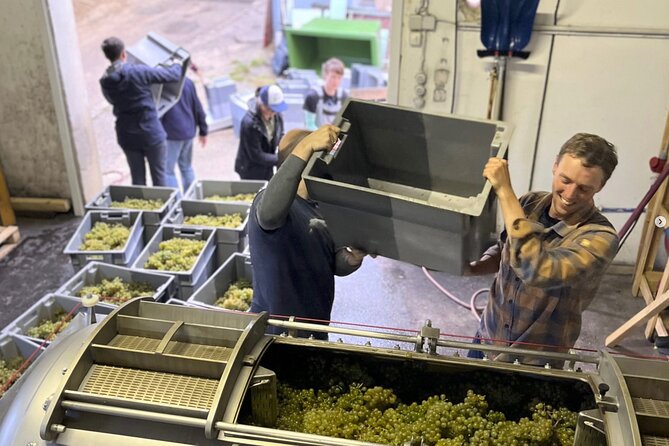
Large wine tours can give you polished tasting rooms and a neat lesson in local grapes. This experience aims for something less packaged. You move among tiny producers, family cellars, young vineyards, and winemakers who are still testing ideas.
That difference matters in Austria. Wine here is closely tied to soil, slope, harvest timing, and family land. A good host can help you taste those differences instead of simply pouring four glasses and naming the grapes.
Chris is the guide named throughout the experience. He owns or rents several small vineyards and is actively involved in making wine. That gives him a useful connection to the people you meet, and his role appears to be more than driving from one tasting to the next.
You can ask about selecting young vines, fermentation, barrel samples, single-vineyard wines, blending, bottling, and the future of sustainable production. The experience is especially strong for curious drinkers who want to understand why one producer chooses steel, another amphora, and another bottle fermentation.
The schedule allows about two and a half hours at the wine stops and about thirty minutes of driving. That is a sensible balance for a three-hour tour. You get several distinct visits without spending most of the outing in a vehicle.
A few more trips of this kind worth comparing:
- Vienna: Vivaldi’s Four Seasons Concert in Karlskirche
★ 4.7 · 14,951 reviews - Vienna: Spanish Riding School Training
★ 3.9 · 9,281 reviews - Vienna: Skip-the-cashier-desk-line Giant Ferris Wheel Ride
★ 4.5 · 7,859 reviews
Reaching Krems from Vienna
The meeting point is at Bahnhofplatz 2 in Krems an der Donau. If you stay in Vienna, a direct train is the simplest choice, and the ride along the Danube makes the journey part of the day rather than an annoying transfer.
You can also arrive by boat from Vienna. Chris can meet you at the train station or boat station, and he says he can be flexible about the meeting place and time. You should coordinate this in advance, especially if you are coming from a cruise or another fixed departure.
The practical point is that this is not a Vienna city tasting. It takes you into the Kremstal and Kamptal area, so allow time to reach Krems before the tour. One couple based in Vienna had to work out transport from a ship to the pickup area, but once they met the guide, the wine day itself was smooth and rewarding.
The experience is offered in English. It runs Monday through Saturday from noon to 7 p.m. between November 1, 2025 and October 31, 2026, subject to availability. Confirmation arrives within 48 hours of booking.
Kapitel Zwei and the abandoned vineyard revived
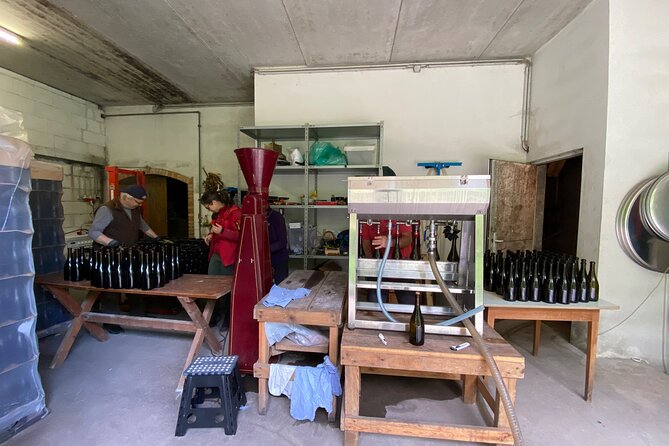
The first stop is Kremsleithen, where you visit Kapitel Zwei Wine, a micro-winery with an unusually experimental purpose. The name means Chapter Two, fitting for a project that gives an old vineyard a new life.
The Kremsleithen site was abandoned for decades and replanted in May 2022. Its name refers to a steep slope running down toward the Krems River. Records mention the site as far back as 1266, and the vineyard sits about 300 meters above sea level on loamy, sandy soil mixed with clay.
The project focuses on French grape varieties that are less familiar in Austria, including Chenin Blanc, Roussanne, and Sémillon. The wine is aged in amphora and steel tanks, so this stop gives you a look at both old and modern methods.
You may taste wine at different points in its development. One particularly useful part of the experience is tasting wine from the beginning of fermentation through to the finished product. That makes the process easier to grasp than a lecture alone. You can notice how texture, aroma, and balance change as the wine develops.
The stop lasts about 20 minutes, making it the shortest visit. Still, it sets the tone well: this is a tour about small-scale production, organic work, and choices made by individual winemakers.
Mantlerhof, a family winery with centuries of roots
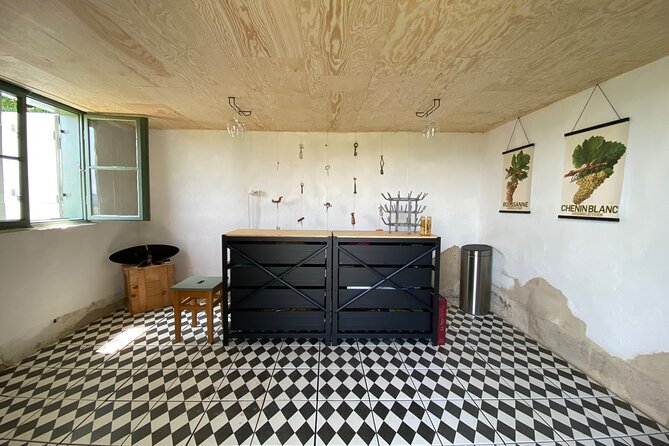
Mantlerhof sits in Gedersdorf near the Kamp River, close to where it joins the Danube. From the area, you may see Krems to the west and the towers of Grafenegg to the east.
The winery occupies an old manor in the village center of Brunn im Felde. Its early classicist facade and pond give the visit a strong sense of place before you taste anything. The Mantler family has worked the property for more than 200 years, with winemaking roots reaching back to 1365.
That long connection is useful context. You are not simply tasting a brand with an old date attached to it. You are visiting a family operation that has continued working the same broader area across generations.
Mantlerhof manages 15 hectares of vineyards and focuses on organic wines designed to last. Its main grapes are Grüner Veltliner and Roter Veltliner.
Grüner Veltliner is Austria’s best-known white grape, but this tour gives you a chance to compare it with Roter Veltliner, a less familiar variety. The stop lasts about 45 minutes, so you have more time to discuss the vineyards, the family operation, and the wines in the glass.
This is likely the most traditional stop of the day. If you want a clear connection between Austrian wine, village life, and family ownership, Mantlerhof should be one of the strongest parts of the route.
A completely different kind of day out in Vienna:
- Vienna: Schönbrunn Palace & Gardens Skip-the-Line Tour
★ 4.7 · 7,739 reviews - Vienna: Light of Creation Votive Church Immersive Light Show
★ 4.8 · 6,779 reviews - Vienna Spanish Riding School Guided Tour
★ 4.7 · 6,765 reviews - Vienna: Classical Concert in the World-Famous Musikverein
★ 4.6 · 6,673 reviews
Weingut Feldtheorie and a newer generation
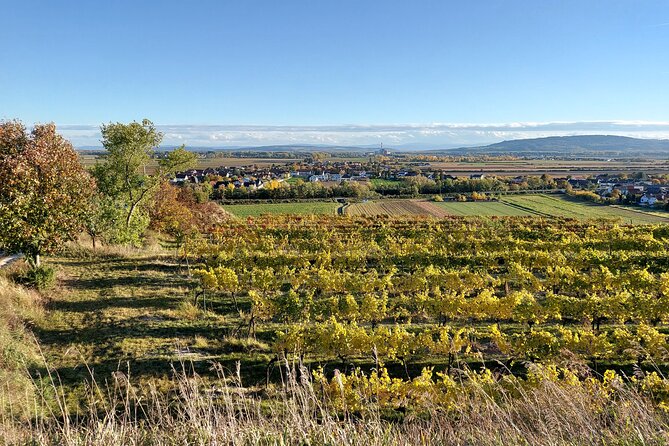
The next stop takes you to Schoenberg am Kamp and Weingut Feldtheorie. Ulrike Filp and Robert Bormuth run the operation with help from friends and family.
Their route into winemaking began during studies in natural sciences. A trip to New Zealand sparked their interest, followed by internships in Germany, Australia, and Austria. They later bought vineyard parcels in the Kamptal area and began building their own approach.
The story is interesting because it links scientific study, international experience, and local vineyard work. You get to see a younger type of Austrian producer, one that respects regional identity while bringing in ideas learned abroad.
Their stated goal is to express the Kamptal through wine. In practical terms, that means paying attention to the character of the region rather than making wine that could come from anywhere.
The visit lasts about 30 minutes. As with the other stops, the value is not just the number of pours. You can ask how the vineyard and cellar work together, and you can compare the approach here with the older family model at Mantlerhof.
WeinSchach and the search for better Pet Nat
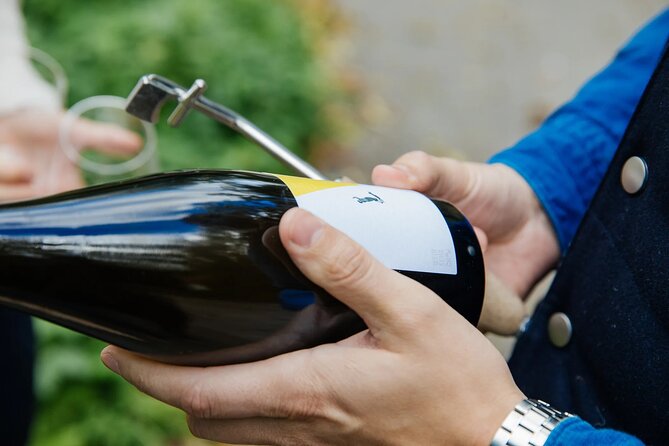
The final winery visit is in Langenlois at WeinSchach, a producer focused on sparkling wine. The winery works biologically, harvests by hand, and disgorges its bottles by hand.
Its aim is to make Pet Nat that can hold its own beside serious sparkling wines. Pet Nat, short for pétillant naturel, finishes fermentation in the bottle. The method can produce wines with freshness, texture, and a less polished feel than standard sparkling wine.
WeinSchach is not presenting a fixed formula. The team experiments, tests possibilities, and sometimes returns to the beginning. That makes this an excellent stop if you want to see how small producers solve problems instead of following a large winery’s established system.
The visit lasts about 40 minutes. You can expect the conversation to focus on bottle development, aroma, balance, and the practical work behind hand-made sparkling wine.
This may also be the most distinctive tasting for people who already know standard Austrian whites. You still get a regional wine experience, but the focus shifts to fermentation and bottle aging.
The final walk to the vineyard viewpoint
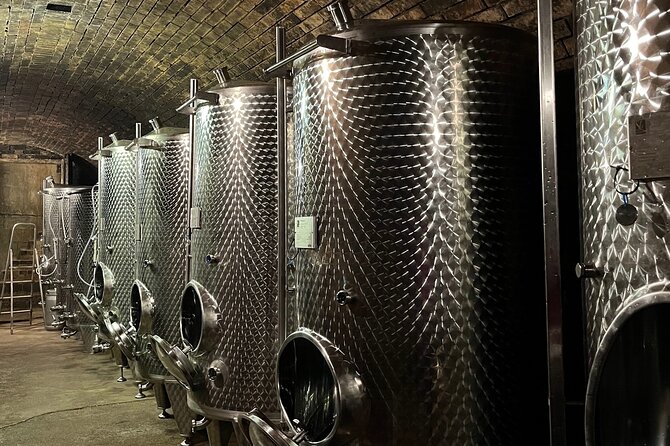
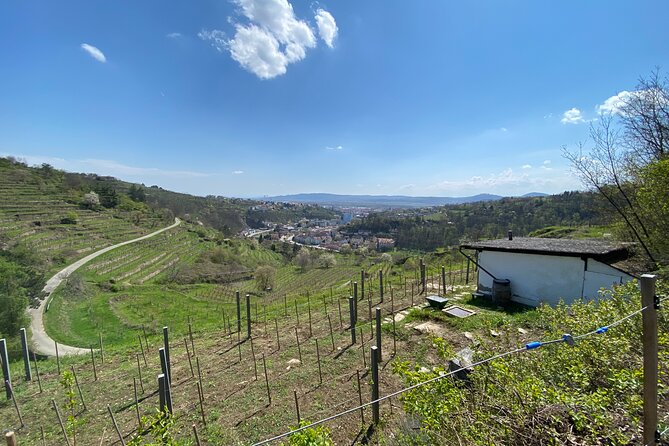
After the cellars and tastings, the tour ends with a short walk through vineyards to a viewpoint called Ausblick am Welterbesteig. The walk takes about seven to ten minutes, with roughly 20 minutes allowed for the stop.
It is a smart way to finish. After hearing about soils, slopes, river valleys, and vineyard parcels, you get to see the region from above. The view over the vineyards and nearby towns helps connect the wines to their setting.
This is not a major hike, but it is still walking on vineyard paths. Wear shoes you can use comfortably outdoors. The experience calls for moderate physical fitness and includes some hiking, along with walking down into cellars.
How much wine will you taste?
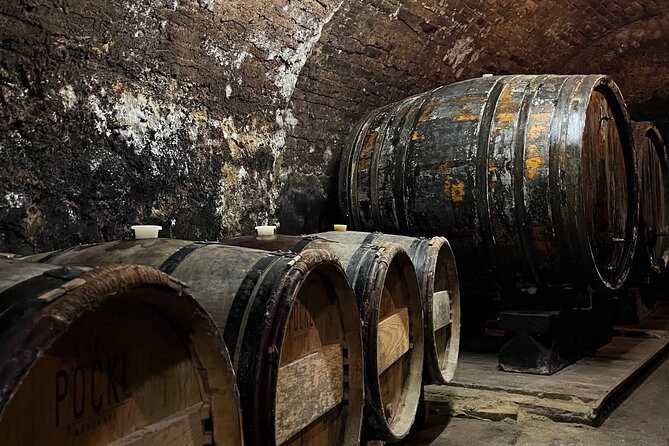
The exact wines can change, but you should expect a broad tasting rather than one narrow flight. Past visits have included Grüner Veltliner, Riesling, Zweigelt, Pinot, aged Grüner Veltliner, single-vineyard wines, and wines still developing in barrels or tanks.
You might taste a wine before fermentation is complete, then compare it with a finished bottle. You might also compare a single-vineyard wine with a blend from several fields. Those side-by-side differences are where this tour earns its value.
The winemakers explain grape varieties, harvest timing, soil, blending decisions, and production choices. They also take an interest in your response to each sample, so you are not expected to arrive with professional tasting vocabulary.
Some people have even sampled spirits made by one of the wineries, including gin at Weingut Förthof on an earlier route. That detail should not be treated as guaranteed on the current itinerary, but it shows the kind of personal conversation that can develop when you express a particular interest.
The guide and the private format
Chris receives the strongest praise in the supplied feedback. The consistent picture is of a friendly host who answers detailed questions without rushing the group.
That matters because wine tours can become passive. You stand in a cellar, listen to a rehearsed speech, taste, and move on. Here, the private format gives you room to ask why a producer works organically, how a wine changes during fermentation, or what makes one vineyard parcel different from another.
Only your group participates. This is best for solo visitors, couples, families, or small groups who want a conversation shaped around their own interests. It is less suitable if you prefer a large social outing with a fixed script and a busy tasting room.
The winemakers are part of the appeal. You meet the people behind the bottles, hear about their goals, and taste wines made on a very small scale. That personal contact is hard to replicate at a standard city tasting.
Price, timing, and overall value
At $114.02 per person, the price is fair if you use the experience as a full half-day outing from Vienna or as a focused wine afternoon after arriving in Krems. It includes private guiding, transport between the wine locations, several winery visits, tastings, and the vineyard viewpoint.
You still need to arrange your transport to Krems. If you are already in Vienna, the train or boat adds cost and planning, so include that in your total budget.
The value is strongest for wine enthusiasts and anyone who wants access to small producers. You are paying for the guide’s local relationships and practical knowledge, not just for a few glasses of wine.
The tour is not ideal for someone looking for a cheap tasting close to central Vienna. It also may feel too detailed if you only want a quick introduction to Austrian wine. Three hours goes fast, especially with four producers and driving between them.
You can cancel free of charge up to 24 hours before the start time for a full refund. Changes or cancellations inside that 24-hour window are not accepted for a refund.
Who should book this experience?
I would choose this tour if you enjoy asking questions and want to understand how wine is made. It suits people interested in organic farming, small production, Austrian grape varieties, fermentation, and the lives of working winemakers.
It is also a good choice for a Vienna visit that needs a countryside day. The Danube connection, train access, and views around Krems make the outing feel like more than a tasting appointment.
You should think twice if you dislike small cellars, enclosed rooms, or walking on vineyard paths. The tour is not recommended for people who cannot walk down into a cellar or who do not enjoy tight spaces.
Service animals are allowed, and the meeting area is near public transportation. Still, confirm the meeting details early if you need a specific pickup location.
Should you book the Krems wine tour?
Book it if you want personal contact with Austrian winemakers rather than a polished mass-market tasting. The mix is unusually strong: a revived vineyard, a family estate with roots reaching to 1365, a younger Kamptal producer, experimental Pet Nat, and a viewpoint above the vines.
The best reason to go is Chris’s personal connection to the region and the freedom to shape the conversation around your questions. The main reason to skip it is the extra effort of reaching Krems from Vienna, plus the walking and cellar access required.
For a wine-focused day outside Vienna, I think the price makes sense. Arrive in Krems by train or boat, meet at the agreed point, and let the small producers show you a more personal side of Austrian wine.
FAQ
Where does the tour start?
The standard meeting point is Bahnhofplatz 2 in Krems an der Donau, Austria.
Can I join the tour from Vienna?
Yes. You can take a direct train from Vienna to Krems, or arrive by boat, and Chris can meet you at the train station or boat station.
Is pickup available?
Pickup is offered, and the guide says the meeting time and place can be flexible. You should coordinate the details before the tour.
How long does the experience last?
The tour lasts about three hours. About two and a half hours are spent at the wine locations, with about 30 minutes of driving between them.
What wineries are included?
The planned stops are Kapitel Zwei Wine in Kremsleithen, Weingut Mantlerhof in Gedersdorf, Weingut Feldtheorie in Schoenberg am Kamp, and WeinSchach in Langenlois.
Is the tour conducted in English?
Yes. The experience is offered in English.
How much walking is involved?
Some hiking is required, including a seven to ten-minute walk through vineyards to a viewpoint. You also need to be able to walk down into a cellar.
Is this a private tour?
Yes. Only your group participates in the activity.
Just added around Vienna
- Mobile puzzle rally tour at the Vienna Central Cemetery★ 4.5 · 3 reviews
- RAXI (E-Rickschaw) big private Vienna tour★ 4.5 · 3 reviews
- 8 days European Highlights PRIVATE TOUR from Budapest including Budapest Vienna Prague and Bratislava★ 5.0 · 3 reviews
- Private Transfer from Vienna to Prague with 1 hour Stop in Kutna Hora★ 4.5 · 3 reviews
- Palais Lobkowitz Audio Guide Tour★ 4.0 · 3 reviews
- Private Tour from Vienna to Melk and Dürnstein★ 4.5 · 3 reviews
- Vienna: Designer Fashion Time Capsule Experience★ 5.0 · 3 reviews
- Private day trip from Munich to Eagle’s Nest & Hallstatt★ 4.7 · 3 reviews
Tours, compared.

Schönbrunn Palace & Gardens Skip-the-Line Tour
Read our review →

Skip-the-Line Sisi Museum, Hofburg and Gardens Tour
Read our review →
Skip-the-Line Schönbrunn Palace & Gardens Tour
Read our review →

Guided Walking Tour of City Center Highlights
Read our review →