
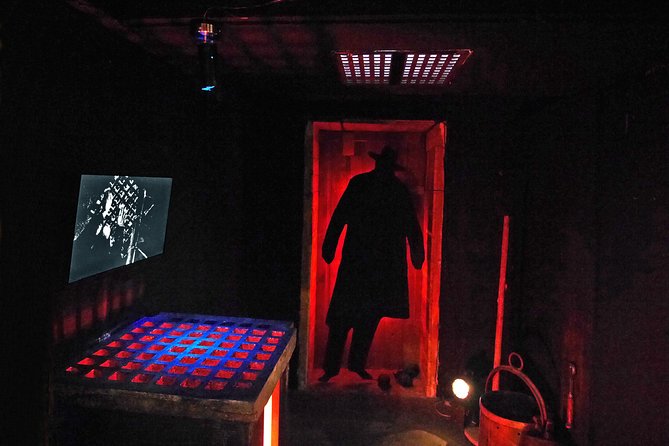
Reviewed · MUSEUMS
Third Man Museum Admission Ticket Vienna
Film noir comes alive in Vienna. The Third Man Museum offers a focused look at the classic film, from Anton Karas’s original zither to working cinema equipment, while also showing how occupied Vienna shaped the story. I like the huge collection of more than 3,000 original items, and I like the personal care evident in the display. The main drawback is the limited opening schedule: visits are available only on Saturdays from 2 to 6 p.m.
At about $20, this is a fair buy if you know the film or care about postwar Vienna. You can spend roughly one to two hours here, but the small window for entry means you must plan ahead. A mobile ticket keeps the admission simple, though food, drinks, and transportation are not included.
In This Review
- Key points to know before you go
- Why The Third Man Still Matters In Vienna
- Entering A Collection Of More Than 3,000 Originals
- The Original Zither And The Sound Of The Film
- Cameras, Projection, And The Work Behind The Picture
- Little Hansel And The Film’s Printed World
- Occupied Vienna From 1945 To 1955
- How Long To Spend Inside
- Is $20 A Fair Price?
- Who Will Enjoy This Most?
- Practical Planning For A Saturday Visit
- Should You Book The Third Man Museum?
- FAQ
- Where is the Third Man Museum?
- How much does admission cost?
- How long does a visit take?
- When is the museum open?
- Is the ticket mobile?
- What is included with admission?
- Are food, drinks, and transportation included?
- Can I cancel for a full refund?
Key points to know before you go
- See Anton Karas’s original zither: The instrument connects directly to the film’s famous music and its recording in London.
- Study original scripts: The collection follows the screenplay from its first draft through the final release script.
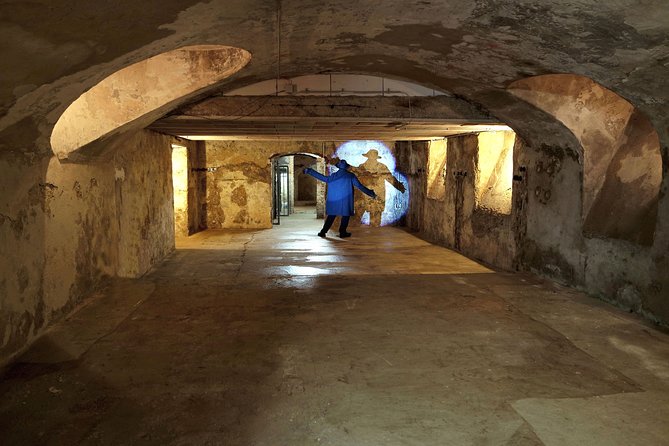
- Explore occupied Vienna from 1945 to 1955: The exhibits place the film beside the daily realities of a divided, damaged city.
- Expect a serious film collection: More than 3,000 original objects come from around the world.
- Allow one to two hours: The museum is compact enough for a focused visit, yet full enough to reward careful looking.
- Plan around Saturday hours: Admission is listed from 2 to 6 p.m. only, making timing the biggest practical issue.
Why The Third Man Still Matters In Vienna
The Third Man is not simply a spy story set in a picturesque European capital. Its Vienna is a city divided among occupying powers after the Second World War, with damaged streets, uncertain loyalties, and a sharp sense of moral grayness. The museum helps you see that setting as more than film decoration.
The exhibition connects the movie’s making with the city’s postwar life. You get material about the pre-war and post-war years, occupied Vienna from 1945 to 1955, and the international success of the film. That combination gives the visit more weight than a display of movie souvenirs alone.
I especially like this balance. You can come for Orson Welles, the zither music, and the famous sewer scenes, but you leave with a clearer sense of why Vienna worked so well as the film’s setting. The city’s political division and uncertain atmosphere were part of the story’s engine.
The museum’s collection is described as occupying thirteen rooms in one account and sixteen rooms in another. Either way, expect a multi-room exhibition rather than one cramped cabinet of memorabilia. The number matters less than the range: scripts, cameras, posters, programs, costumes or props, and documents all help build the picture.
More Attraction Tickets in Vienna
- Vienna: Classic Ensemble Vienna in St. Peter’s Church Ticket
★ 4.7 · 4,819 reviews - Vienna Kunsthistorisches Museum Day Admission Ticket
★ 4.6 · 3,690 reviews - Vienna: Tickets for Mozarthaus Vienna with Audio Guide
★ 4.2 · 2,344 reviews
Entering A Collection Of More Than 3,000 Originals
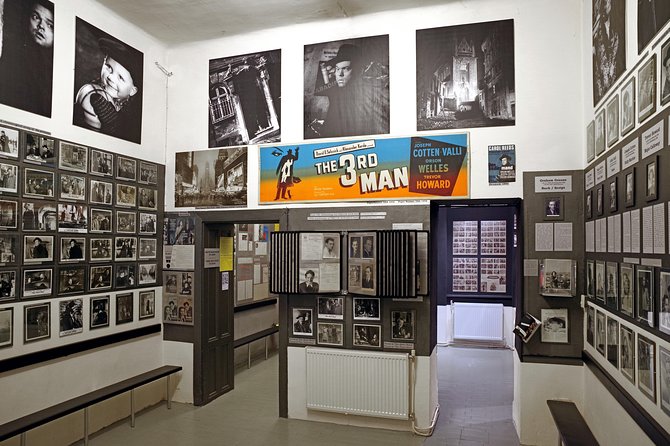
The main attraction is the sheer amount of material. More than 3,000 original objects from around the world show how widely The Third Man traveled after its release and how much care has gone into preserving its story.
This is not a quick photo stop. The collection includes items connected to production, promotion, music, and the film’s place in cinema history. Historic posters and lobby cards show how the film was presented to audiences. Cinema programs add another layer, revealing the printed world surrounding a movie before streaming, online advertising, or instant reviews.
For you, that means the museum works best at a slower pace. If you only want one famous prop, you may be finished quickly. If you enjoy comparing drafts, production tools, promotional material, and historical documents, the one to two hour estimate feels sensible.
The international scope also helps explain the film’s lasting reach. Material from different countries points to more than a local Vienna production. The museum presents The Third Man as a work that became part of international film culture.
The Original Zither And The Sound Of The Film
The original zither used by Anton Karas when recording the film music in London is one of the collection’s most appealing objects. The instrument gives a physical form to the sound that defines the movie for many people.
That detail is especially useful for anyone who thinks of film music as something abstract. Here, the zither becomes a direct link between the composer, the recording process, and the finished picture. It helps explain why the film feels so distinctive from its opening notes.
You do not need to be a music specialist to appreciate it. The instrument is valuable because it joins the film’s sound and production story in one object. For fans, it is likely to be one of the visit’s central moments.
The museum also includes original film scripts, from the first draft to the final release script. This is a strong feature for anyone interested in how a movie changes before reaching the screen. A final script can look fixed and official, but seeing earlier drafts reminds you that the story developed over time.
I would give these pages proper attention rather than treating them as background paperwork. They show the work behind the finished film and make the exhibition useful for writers, film students, and anyone curious about production choices.
Cameras, Projection, And The Work Behind The Picture
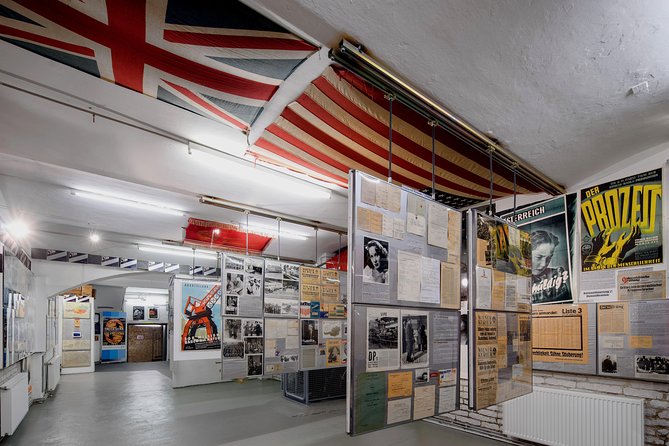
Two cameras rented by the Third Man film crew in Vienna for special effects are included in the display. Their presence shifts the focus from actors and plot to the practical work of making the film.
That is one reason this museum suits serious movie fans. You are not only looking at what appeared on screen. You are also seeing tools tied to the process that created the screen image.
The collection includes a fully functional Ernemann VIIb projector dating from 1936. This is a particularly good object for placing the film in its period. It is a piece of cinema technology from the era itself, not a modern replica designed to look old.
Because the projector is described as fully functional, it carries more interest than a silent machine behind glass. Still, you should treat the museum as an exhibition rather than assume there will be a scheduled screening or live demonstration. No screening program is specified.
The cameras and projector also help non-specialists. If you know little about film equipment, these displays offer a simple reminder that movies depend on physical machines, skilled crews, and repeated technical decisions.
More museums:
- Vienna: Skip-the-Line Sisi Museum, Hofburg and Gardens Tour
★ 4.8 · 5,918 reviews - Tickets for the Albertina Exhibitions
★ 4.7 · 2,126 reviews - Vienna: Chocolate Workshop in Chocolate Museum w/ Tasting
★ 4.5 · 1,802 reviews - Sigmund Freud Museum Ticket
★ 4.6 · 1,668 reviews
Little Hansel And The Film’s Printed World
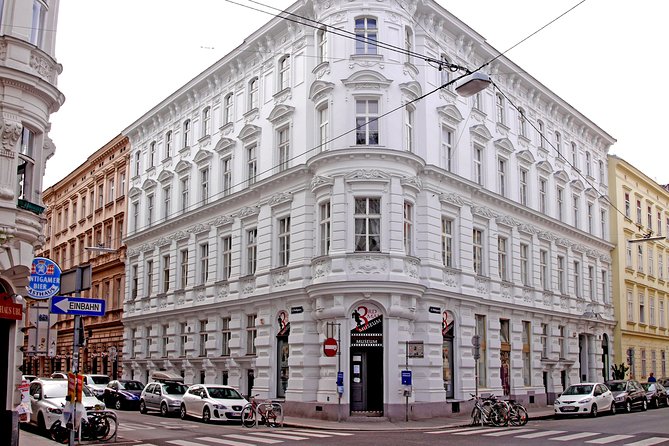
The original cap of Little Hansel adds a more character-focused touch to the collection. It is a small object, but that is part of its charm. Props and costume pieces can make a large production feel close and tangible.
Historic film posters, lobby cards, and cinema programs broaden the story beyond the objects used during filming. These materials show how the movie was marketed and presented to the public. They also give you a sense of the period’s cinema culture.
I find this part valuable because it avoids making the film seem frozen in one famous scene. A movie has several lives: it is written, filmed, promoted, screened, and remembered. The museum’s mix of objects covers those stages.
The display is also described as showing the film’s international success. That makes the posters and printed material more than decoration. They help explain how The Third Man reached audiences around the world and became more than a Vienna-set film.
Occupied Vienna From 1945 To 1955
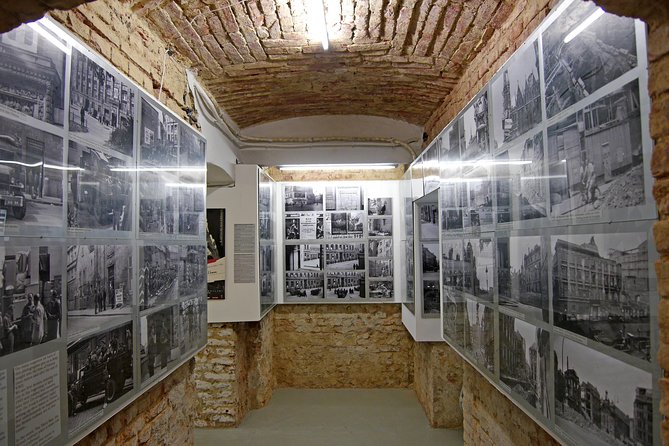
The museum’s wider subject is occupied Vienna. The exhibition gives an impression of daily life between 1945 and 1955, the period after the war when the city was divided among occupying powers and facing the difficult work of recovery.
You should not expect a full city museum devoted to every part of Vienna’s postwar story. This is a film museum first. Still, the historical material gives the movie a needed frame and helps you read its streets, tensions, and characters with greater care.
This is especially useful if you know the film only as a thriller. The setting was not interchangeable. Vienna’s political divisions and damaged urban environment helped give the movie its uneasy tone.
The pre-war background matters, too. The exhibition connects the film with both the years before the war and the years after it. That wider span can help you understand what had changed by the time the story takes place.
I would pair this visit with a walk through central Vienna, but transportation is not included in the admission. The museum is near public transportation, which makes reaching it practical, yet you will need to arrange your own route.
How Long To Spend Inside
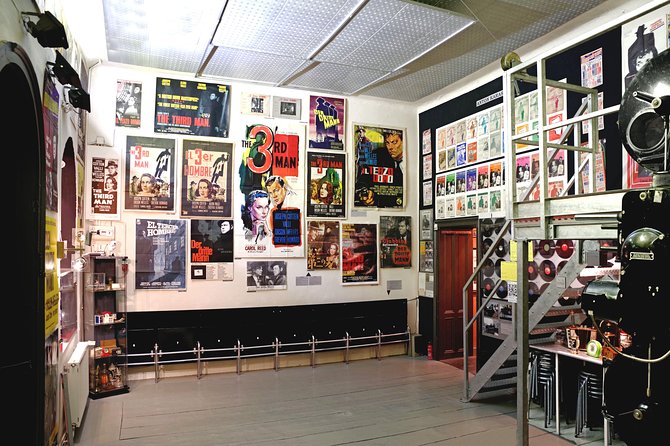
The suggested visit lasts about one to two hours. I would set aside the full two hours if you have already watched The Third Man or plan to read the documents carefully.
A shorter visit can work if you want the main highlights: the zither, scripts, cameras, projector, cap, posters, and programs. The number of objects means you can move quickly, but doing so will reduce the visit to a checklist.
The museum’s sixteen-room description suggests a layout with several sections to explore. Another description refers to thirteen rooms, so the exact room count should not guide your schedule. The practical point is that the museum is larger in content than the $20 price might suggest.
The Saturday opening period from 2 to 6 p.m. is the key limitation. You cannot casually fit this into any afternoon. Check the current hours when booking, especially because the supplied schedule covers March 29, 2025 through June 13, 2026 and also contains an older closure notice for January 5 through March 28, 2024.
That older closure information is not a reason to avoid the museum, but it is a reminder to confirm the date shown on your booking. A mobile ticket gives you the admission details, but it does not remove the need to plan around the narrow opening period.
Is $20 A Fair Price?
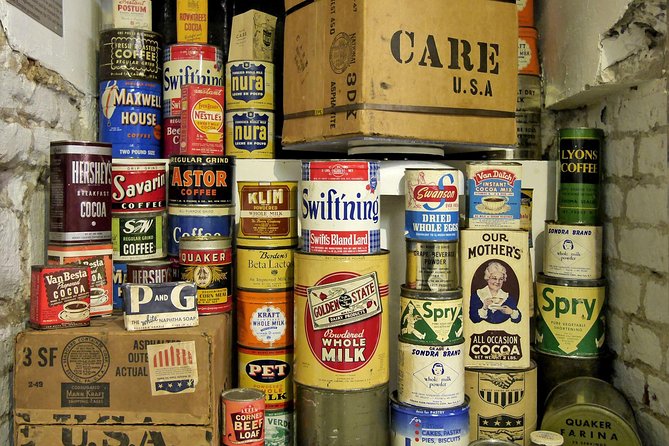
At $20, the ticket offers reasonable value for a dedicated film fan. You are paying for access to a large original collection, not just a room with reproductions and a few publicity stills.
The value is strongest if you have seen the film, know its music, or care about cinema technology. The zither, original scripts, rented cameras, period projector, Little Hansel’s cap, and printed material give the ticket several distinct points of interest.
For someone with little interest in The Third Man, the price may feel less attractive. The museum’s subject is focused, and the visit is not designed as a general introduction to every major sight in Vienna. You are buying a specialist collection.
The exhibition’s careful character is another part of the value. The work has been assembled with clear affection for the film and its setting. One visitor described it as an extensive, original contribution to film history, with a collection put together with great attention to detail. The museum leadership and staff were also praised as kind and accommodating.
That personal care matters in a small specialist museum. The material could easily feel dry or overly technical, but the evident heart behind the collection should make it more approachable. No individual staff names are provided, so I would not plan around a particular guide or expect a named tour leader.
Who Will Enjoy This Most?
I would recommend the museum most strongly to four kinds of visitors:
- The Third Man fans: You will recognize the importance of the zither, scripts, production tools, and character items.
- Film students and cinema enthusiasts: The draft scripts, cameras, projector, posters, and programs show the movie from several angles.
- World War II and postwar history buffs: The occupied Vienna material gives the film’s setting useful context.
- Visitors seeking a focused cultural stop: The one to two hour length fits well when you want something more specific than a major palace or art museum.
Families may also find the projector and film objects interesting, but the supplied information does not describe a children’s program or interactive activities. I would choose it for a family only if the children already have some interest in old movies or cinema equipment.
If you have not watched the film, you can still visit, but the objects may carry less meaning. Watching The Third Man before arriving would make the museum easier to appreciate, especially the music, scripts, and production artifacts.
Practical Planning For A Saturday Visit
The museum is listed as open Saturdays from 2 to 6 p.m. That gives you a four-hour entry window, not an all-day visit. I would avoid arriving near closing if you want the full one to two hours.
The mobile ticket is convenient, and confirmation is provided at booking. Since transportation to and from the attraction is not included, use the nearby public transportation access and make your own way there.
This is a private activity, with only your group participating. That description is useful, but it should not be read as a promise of a private guided tour. The product is an admission ticket, and no guide itinerary or named guide is specified.
Food and drinks are not included. For a visit of one to two hours, that is not a serious problem, but plan any café stop separately. The museum itself should be treated as the main event rather than a bundled half-day tour.
Free cancellation is available up to 24 hours before the local start time for a full refund. Inside that 24-hour period, the payment is not refunded and changes are not accepted. That rule is worth noting because the limited Saturday schedule can make a missed booking harder to replace.
Should You Book The Third Man Museum?
Book it if The Third Man means more to you than a famous title. The original zither, draft and final scripts, rented cameras, working 1936 projector, Little Hansel’s cap, and historic cinema material make this a serious collection with plenty to examine.
I also recommend it if you want a clearer view of Vienna between 1945 and 1955. The museum links the film to occupied Vienna and gives the story a stronger political and social setting.
Skip it if you want a broad survey of Vienna, a guided city walk, or a museum open at many times during the week. The Saturday-only schedule is the biggest hurdle, and the focused subject will not suit every itinerary.
For the right visitor, $20 is a sound price for one to two hours of original material and careful presentation. Watch the film first, reserve a Saturday slot that gives you enough time, and let the small details do their work.
FAQ
Where is the Third Man Museum?
The museum is in Vienna, Austria, and it is near public transportation.
How much does admission cost?
The listed price is $20.
How long does a visit take?
The expected visit lasts about one to two hours.
When is the museum open?
The listed opening hours are Saturdays from 2:00 p.m. to 6:00 p.m.
Is the ticket mobile?
Yes. The experience includes a mobile ticket.
What is included with admission?
The entrance fee is included.
Are food, drinks, and transportation included?
No. Food, drinks, and transportation to and from the attraction are not included.
Can I cancel for a full refund?
Yes. You can cancel at least 24 hours before the experience start time for a full refund. Cancellations or changes made within 24 hours are not refunded or accepted.
Just added around Vienna
- Mobile puzzle rally tour at the Vienna Central Cemetery★ 4.5 · 3 reviews
- RAXI (E-Rickschaw) big private Vienna tour★ 4.5 · 3 reviews
- 8 days European Highlights PRIVATE TOUR from Budapest including Budapest Vienna Prague and Bratislava★ 5.0 · 3 reviews
- Private Transfer from Vienna to Prague with 1 hour Stop in Kutna Hora★ 4.5 · 3 reviews
- Palais Lobkowitz Audio Guide Tour★ 4.0 · 3 reviews
- Private Tour from Vienna to Melk and Dürnstein★ 4.5 · 3 reviews
- Vienna: Designer Fashion Time Capsule Experience★ 5.0 · 3 reviews
- Private day trip from Munich to Eagle’s Nest & Hallstatt★ 4.7 · 3 reviews
Museums, compared.

Skip-the-Line Sisi Museum, Hofburg and Gardens Tour
Read our review →
Vienna Kunsthistorisches Museum Day Admission Ticket
Read our review →

Chocolate Workshop in Chocolate Museum w/ Tasting
Read our review →

St. Stephen’s Cathedral & Dom Museum Wien Tickets
Read our review →

Browse the lists this tour appears in