Reviewed · TOURS
Vienna: ‘Armenia In The Heart Of Austria’ Tour
Small Armenia hides in Vienna. This two-hour visit introduces you to the Mekhitarist Congregation, the ornate Maria Schutz Church, and a monastery collection that reaches far beyond what most city tours cover. I especially like the small group of no more than 10 people and the chance to see Armenian manuscripts, paintings, coins, and books with a guide who can explain their meaning.
I also like the final Mechitharine liqueur tasting, which gives the visit a friendly finish rather than ending with a quick look at display cases. The main consideration is focus: this is a church, museum, and library tour, not a broad survey of Vienna, so it suits curious history and art lovers more than anyone seeking a fast overview of the city.
In This Review
- Key Points About Vienna’s Armenian Heritage
- Why This Small Vienna Tour Feels Different
- Starting at the Mekhitarist Monastery
- Maria Schutz Church and Its 1874 Interior
- The Loretto Chapel and a Painting That Survived 1683
- The Refectory and The Feeding of the Five Thousand
- Inside a Library of 2,800 Armenian Manuscripts
- Armenian Art, Coins, Ceramics, and Carpets
- The Mechitharine Liqueur Tasting
- Is $84 a Fair Price for Two Hours?
- Who Should Book This Experience?
- Practical Things to Know Before You Go
- Should You Book the Armenia in the Heart of Austria Tour?
- FAQ
- Where does the Armenia in the Heart of Austria tour begin?
- How long does the tour last?
- What languages are available?
- How large is the group?
- What is included in the price?
- What can I see during the tour?
- Can I cancel the booking?
Key Points About Vienna’s Armenian Heritage
- The tour begins at the Mekhitarist Monastery, introducing the congregation’s long connection with Vienna.
- Maria Schutz Church dates from 1874, replacing an older Capuchin church.
- The art includes work by Camillo Sitte, Theophil von Hansen, Ludwig Ferdinand Schnorr von Carolsfeld, and Ivan Aivazovsky.
- The library holds more than 2,800 Armenian manuscripts and over 170,000 Armenian publications.
- The museum includes Armenian coins, ceramics, carpets, and paintings, along with a large numismatic collection from other countries.
- A Mechitharine liqueur tasting completes the visit, with an explanation of its history and production.
Why This Small Vienna Tour Feels Different
Vienna is full of grand palaces, imperial apartments, and famous concert halls. This experience takes you somewhere quieter and more specific: the Armenian religious and cultural center connected with the Mekhitarist Congregation.
I like that the tour does not treat Armenian heritage as a footnote. You spend time with a community that helped preserve language, religious texts, art, and scholarship far from Armenia. The result is a more personal slice of Vienna, one built around faith, books, and cultural memory rather than royal ceremony.
The tour lasts two hours and costs $84 per person. That is not a bargain basement price, but it includes the guide, admission fees, and liqueur tasting. For me, the value comes from access to places and objects that would be difficult to understand on your own, especially the library and the monastery’s Armenian collections.
The small group size matters here. With a maximum of 10 participants, you have a better chance to hear the guide clearly and ask questions. One particularly warm account describes Father Vahan welcoming the group openly and sharing a large amount of information about the church, art, literature, and history. If Father Vahan is leading your visit, expect a personal tone rather than a scripted walk-through.
The tour is offered in Armenian, English, or German. Check the available language and starting time when you book, since the experience depends heavily on following the guide’s explanations.
A few more trips of this kind worth comparing:
- Vienna: Vivaldi’s Four Seasons Concert in Karlskirche
★ 4.7 · 14,951 reviews - Vienna: Spanish Riding School Training
★ 3.9 · 9,281 reviews - Vienna: Skip-the-cashier-desk-line Giant Ferris Wheel Ride
★ 4.5 · 7,859 reviews
Starting at the Mekhitarist Monastery
You meet in front of the main entrance of the Mekhitarist Monastery. The opening section explains the history of the Mekhitarist Congregation and its place in Vienna.
This introduction matters because the building is more than a pretty church. The congregation’s work connects religious life with education, publishing, manuscript preservation, and Armenian cultural identity. Without that background, the later rooms could feel like a series of beautiful but unrelated objects.
I would pay close attention at the start, even if you are mainly interested in art. The guide’s explanation gives you the framework for understanding why an Armenian monastery in Austria has such an extensive library and museum.
The tone also appears to be one of the strengths of the visit. A German-Armenian couple described feeling immediately at home and learning about both Armenian history and Armenian culture in Vienna. That kind of welcome may be especially meaningful if you have Armenian family connections, but you do not need Armenian heritage to appreciate the experience.
Maria Schutz Church and Its 1874 Interior
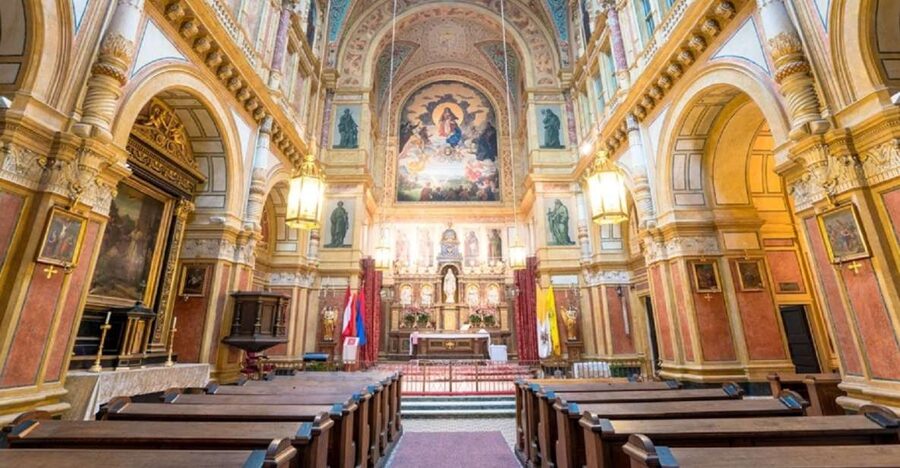
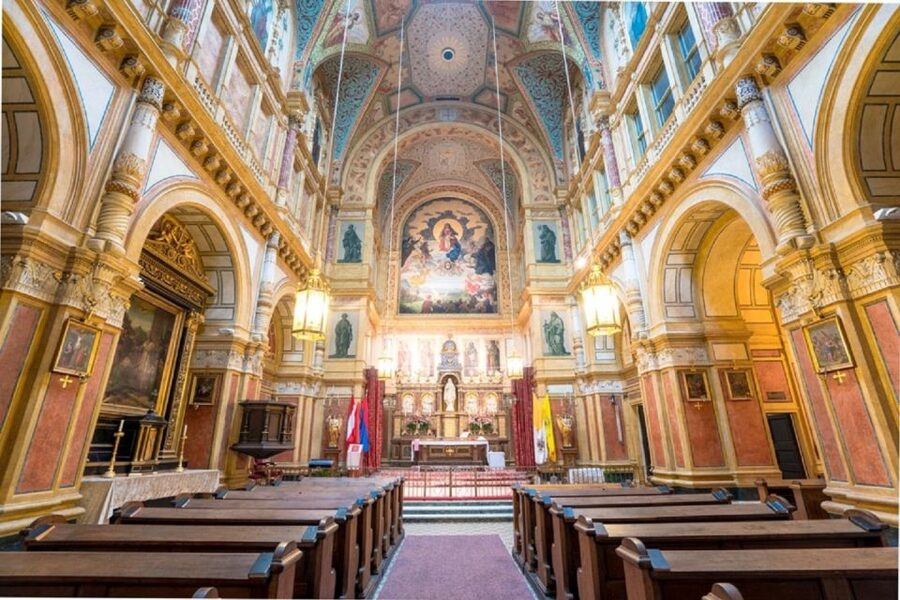
The next section takes you inside Maria Schutz Church. The present church was built in 1874, replacing an older Capuchin church.
The interior is the first major visual reward. This is not just a stop for a quick glance at the altar. Your guide points out works connected with Armenian devotion and Austrian artistic life, showing how the church’s decoration links two cultural settings.
One key painting shows Saint Mary protecting Armenia. Camillo Sitte created the altar painting, and its subject gives the church a clear Armenian focus. It is a useful reminder that the building is not simply an Austrian church with Armenian visitors. Its imagery expresses a particular Armenian religious identity.
Another notable altar piece is dedicated to Saint Gregory the Illuminator. Theophil von Hansen designed it, and he is also associated with the Austrian Houses of Parliament in Vienna. That connection adds an interesting local angle: an architect known for one of Vienna’s major public buildings also contributed to this more intimate religious setting.
I like this part of the tour because the guide helps you notice the people behind the artwork. You are not left trying to read a name or guess why a painting matters. The explanations turn the church into a meeting point between Armenian tradition and Vienna’s nineteenth-century art world.
The church may appeal most to visitors who enjoy looking closely at religious art. If you prefer a quick sightseeing stop, two hours inside a church and monastery collection may feel slow. That is the trade-off.
The Loretto Chapel and a Painting That Survived 1683
From the church, you continue to the Loretto Chapel. It holds the baroque miraculous image Mary with the Rose.
The picture has a dramatic connection to Vienna’s past. It survived intact during the Turkish siege of Vienna in 1683, a period that still shapes the city’s historical memory. Here, the story is not only about military events. It is also about how religious objects survive danger and continue to carry meaning for later generations.
This is the sort of detail I value in a guided visit. A small chapel can be easy to overlook when you walk through a larger complex. Once you know the story attached to the image, the room gains weight.
The chapel also helps break up the tour’s larger themes. You move from the congregation’s history to the church’s artwork, then to a single baroque image with a connection to one of Europe’s most famous sieges. The route keeps shifting scale, from broad history to close observation.
A completely different kind of day out in Vienna:
- Vienna: Schönbrunn Palace & Gardens Skip-the-Line Tour
★ 4.7 · 7,739 reviews - Vienna: Light of Creation Votive Church Immersive Light Show
★ 4.8 · 6,779 reviews - Vienna Spanish Riding School Guided Tour
★ 4.7 · 6,765 reviews - Vienna: Classical Concert in the World-Famous Musikverein
★ 4.6 · 6,673 reviews
The Refectory and The Feeding of the Five Thousand
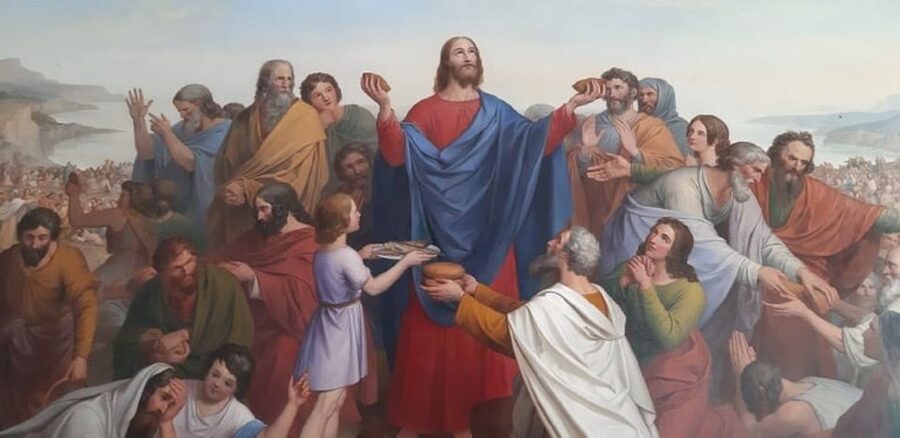
The tour then passes through the refectory, or dining room of the monastery. Its main artistic feature is a monumental painting of The Feeding of the Five Thousand by Ludwig Ferdinand Schnorr von Carolsfeld.
This is an ideal place for the guide to explain how art functioned within monastic life. A refectory was a working room, not a gallery designed solely for public viewing. A large religious painting here would have formed part of the setting for communal meals and reflection.
The painting gives you another chance to see how the monastery combines daily life, worship, and art. I would not expect a long art-history lecture on every work, but the guide points out the important pieces and explains why they belong in the story of the building.
For some people, this may be the quieter part of the experience. That is fine. The tour is not built around one blockbuster object. Its appeal comes from the way the rooms connect.
Inside a Library of 2,800 Armenian Manuscripts
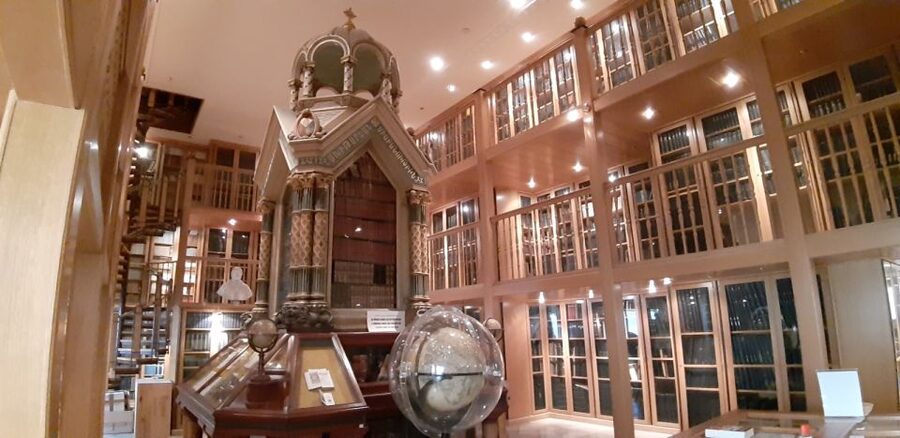
The library is the intellectual heart of the visit. It contains more than 2,800 Armenian manuscripts and over 170,000 volumes of ancient and modern Armenian publications.
Those numbers are impressive, but the real value is what they represent. Armenian books and manuscripts preserve language, religious thought, scholarship, and records of a culture spread across different countries and periods. The collection shows how a religious congregation became a center for safeguarding written heritage.
The library also holds the largest collection of Armenian newspapers and magazines in the Western world. That detail broadens the picture. You are not seeing only old sacred texts. You are also seeing a record of modern Armenian publishing and public life.
I would encourage you to ask questions here. The library is the kind of place where the guide’s explanation makes the difference between seeing shelves and understanding why the shelves matter.
The description does not promise that every manuscript will be opened for close inspection, so you should not book this expecting a hands-on archival session. Think of it as a guided introduction to an important collection within the monastery.
Armenian Art, Coins, Ceramics, and Carpets
The museum adds a wider range of objects. The collection includes Armenian ceramics, carpets, coins, and other items, mainly made in Armenia.
The numismatic collection is especially large. It includes about 10,000 Armenian coins and another 20,000 coins from other countries. For anyone interested in trade, rulers, symbols, or the way political borders appear on currency, this section can add useful context to the religious material.
Coins can be easy to dismiss as small objects in glass cases. I find them more interesting when a guide explains what they reveal about a place and its connections. Here, the size of the collection suggests that the museum is not limited to one narrow religious subject.
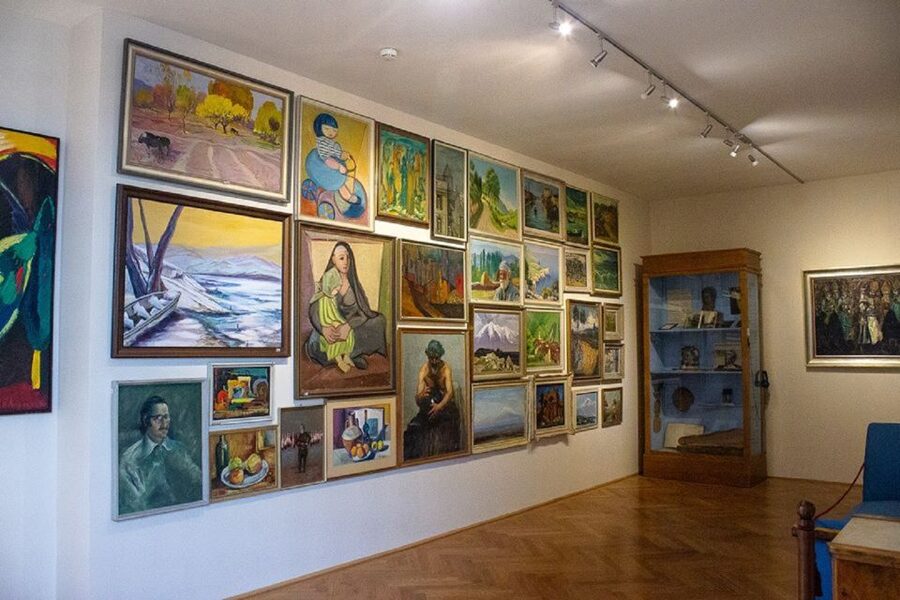
The museum’s painting gallery includes works by Armenian artists, including three paintings by Ivan Aivazovsky. Aivazovsky is best known for dramatic seascapes, so his presence gives the gallery a strong artistic draw even for people who are less familiar with Armenian art.
You will also encounter ceramics, carpets, and other objects. The information provided does not specify every item or display period, so expect a selection rather than a complete survey of Armenian art. Still, the range helps you see Armenian culture through several forms of expression, not just church decoration and manuscripts.
The Mechitharine Liqueur Tasting
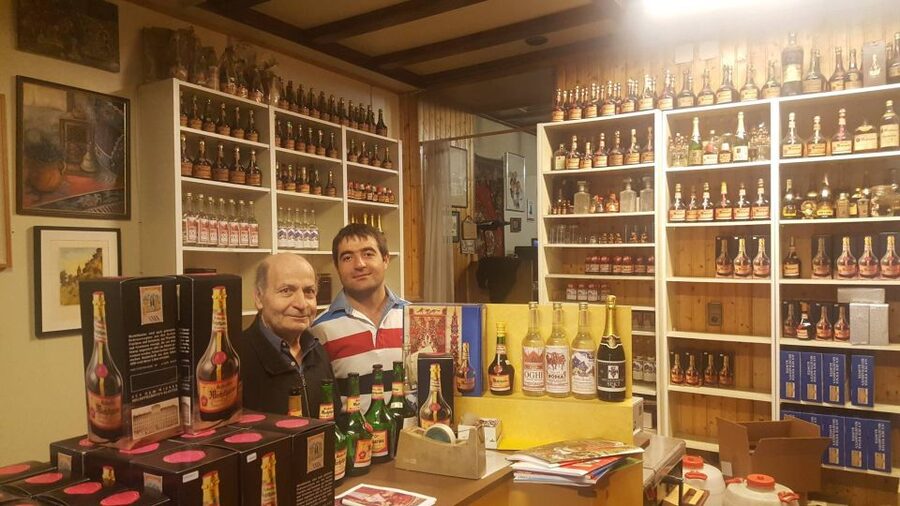
The experience ends with a taste of Mechitharine liqueur. This is a pleasant change of pace after the church, library, and museum.
The tasting includes more than a sample. You hear about the liqueur’s distinctive flavor, history, families, and business. That makes the final stop part of the cultural story rather than an unrelated drink added for fun.
I like this ending because it gives the tour a social note. Religious buildings and museum collections can sometimes leave you feeling that you should whisper and move along. A shared tasting creates space for conversation and questions.
The description does not state how much liqueur is served, so do not treat this as a full tasting event. It is one included taste at the end of a cultural tour. Anyone who does not drink should consider that this is part of the planned experience, even though the main focus remains the monastery and its collections.
Is $84 a Fair Price for Two Hours?
At $84 per person, the tour costs more than a basic self-guided church visit. The price includes entrance fees, a live guide, and liqueur tasting, which makes the comparison fairer.
The strongest value is the access and interpretation. You are not paying only to enter Maria Schutz Church. You are paying for a guided route through the church, chapel, refectory, museum, and library, plus explanations that connect the art and collections to Armenian history in Vienna.
The two-hour length is also useful. It is long enough to move beyond a quick introduction, but short enough to fit into a full day of sightseeing. You could place it between other Vienna activities without giving up an entire afternoon.
I would consider it good value if you enjoy museums, religious art, books, or cultural history. If your main goal is to see Vienna’s best-known imperial sights, you may find the price harder to justify. This tour serves a particular interest, and that is exactly why it can be rewarding.
Free cancellation up to 24 hours before the start and the reserve-now, pay-later option reduce the financial risk. Check the schedule before committing, since the available start times are not fixed in the information provided.
Who Should Book This Experience?
I would recommend this tour to you if you:
- Enjoy religious art and historic interiors
- Want a less familiar side of Vienna
- Have an interest in Armenian history or culture
- Like libraries, manuscripts, coins, and museum collections
- Prefer small groups and time for questions
- Appreciate a guide who adds personal warmth to historical information
It is also a strong choice for couples with Armenian and Austrian or German backgrounds. One couple described the visit as deeply moving, especially after Father Vahan told them that the Armenian people had gained an Armenian. That personal exchange shows how the experience can reach beyond facts and objects.
Families can consider it too, but the best fit depends on the children’s interest in churches, books, and museum displays. The tour is not presented as an entertainment activity for young children.
The experience is offered in Armenian, English, and German. If you want the fullest benefit, choose the language in which you can comfortably ask questions about art, religion, and history.
Practical Things to Know Before You Go
Meet in front of the main entrance of the Mekhitarist Monastery. The tour lasts two hours, and the group is limited to 10 people.
The tour is led live in Armenian, English, or German. Since the visit covers several rooms and many objects, I would arrive ready to listen rather than expecting a casual photo stop.
Admission fees, guide service, and the liqueur tasting are included. The meeting point is specifically the monastery entrance, so confirm the exact starting time and language when you reserve.
You can cancel up to 24 hours in advance for a full refund. You can also reserve now and pay later, which helps if your Vienna schedule is still taking shape.
Should You Book the Armenia in the Heart of Austria Tour?
Book it if you want Vienna to feel less predictable. The church is beautiful, but the larger reward is the connection between Armenian religious life, Austrian art, manuscript preservation, and the city’s long cultural history.
I especially recommend it for anyone who wants a guided experience rather than a quick look inside Maria Schutz Church. The small group, substantial library, artwork by Aivazovsky and other artists, and final Mechitharine tasting give the two hours a clear sense of place.
Skip it if you have little interest in churches, books, or museum collections, or if you need a broad introduction to Vienna. For the right audience, though, this is one of the city’s most distinctive cultural visits, with a human welcome that can stay with you long after the liqueur is finished.
FAQ
Where does the Armenia in the Heart of Austria tour begin?
The meeting point is in front of the main entrance of the Mekhitarist Monastery in Vienna.
How long does the tour last?
The tour lasts two hours.
What languages are available?
The live guide service is available in Armenian, English, and German.
How large is the group?
The tour is limited to 10 participants.
What is included in the price?
The price includes entrance fees, guide service, and a Mechitharine liqueur tasting.
What can I see during the tour?
You can visit Maria Schutz Church, the Loretto Chapel, the monastery refectory, the Mekhitharis Museum, and the library. The collections include Armenian manuscripts, books, newspapers, coins, ceramics, carpets, and paintings.
Can I cancel the booking?
Yes. You can cancel up to 24 hours in advance for a full refund. You can also reserve the tour and pay later.
Just added around Vienna
- Mobile puzzle rally tour at the Vienna Central Cemetery★ 4.5 · 3 reviews
- 8 days European Highlights PRIVATE TOUR from Budapest including Budapest Vienna Prague and Bratislava★ 5.0 · 3 reviews
- RAXI (E-Rickschaw) big private Vienna tour★ 4.5 · 3 reviews
- Private Transfer from Vienna to Prague with 1 hour Stop in Kutna Hora★ 4.5 · 3 reviews
- Palais Lobkowitz Audio Guide Tour★ 4.0 · 3 reviews
- Private Tour from Vienna to Melk and Dürnstein★ 4.5 · 3 reviews
- Vienna: Designer Fashion Time Capsule Experience★ 5.0 · 3 reviews
- Vienna Sight & Gourmet Tour – individual private tour★ 4.5 · 3 reviews
Tours, compared.

Schönbrunn Palace & Gardens Skip-the-Line Tour
Read our review →

Skip-the-Line Sisi Museum, Hofburg and Gardens Tour
Read our review →
Skip-the-Line Schönbrunn Palace & Gardens Tour
Read our review →

Guided Walking Tour of City Center Highlights
Read our review →