Reviewed · TOURS
Vienna: Bus Tour with Virtual Reality Experience
Vienna’s past takes a seat beside you. I like the way this one-hour minibus tour covers a generous stretch of central Vienna without asking you to march between sights, and the four virtual reality stops add a playful way to meet figures such as Maria Theresia and Archduke Charles. The air-conditioned bus, large windows, and many-language audio guide make this an easy first look at the city.
The main drawback is that this is a sightseeing introduction, not a slow architectural tour. You remain outside the buildings, the ride has a fixed pace, and the experience is not suitable for children under seven, people with mobility impairments, or people with visual impairments. At $32 per person, I see the best value for first-time visitors with only a short time in Vienna, families with older children, and anyone who prefers history with a modern twist.
In This Review
- Key points to know before booking
- Starting behind the Opera at Albertinaplatz
- First views: the Opera, Heroes Square, and Maria Theresia Square
- Four VR stops and the people behind Vienna’s monuments
- City hall and the Burgtheater: the second historical pause
- Schottentor and the Votive Church story
- A moving view of Museumsquartier, Naschmarkt, and Karlskirche
- The final VR stop and return along the Ringstraße
- Is $32 good value for one hour?
- Who will enjoy the Future Bus most?
- Should you book this Vienna VR bus tour?
- FAQ
- Where does the Vienna Future Bus tour start and finish?
- How long does the tour last?
- How many virtual reality stops are included?
- What languages are available for the audio guide?
- Is the tour suitable for young children?
- What should I bring to the meeting point?
Key points to know before booking
- Four VR stops tell different chapters of Vienna’s past: You use the glasses near Maria Theresia Square, the Burgtheater and city hall, the Votive Church, and again at the end near the Ringstraße.
- The route packs in major sights: You pass the State Opera, Heroes Square, the Austrian Parliament, Museumsquartier, Naschmarkt, Karlskirche, and the Secession building.
- The bus begins and ends behind the Opera: Meet at Albertinaplatz, where the purple minibus and purple-shirted driver make the departure point easier to spot.
- Audio commentary comes in nine languages: English, German, Spanish, French, Italian, Japanese, Chinese, Russian, Portuguese, and Arabic are available.
- The vehicle is comfortable but not a hop-on, hop-off bus: You make four planned VR stops, but the tour lasts about one hour and returns to the original meeting point.
- The format suits curious families and short-stay visitors: Several reviews praise the friendly staff, warm vehicle, and unusual presentation, though the tour offers little time for independent exploration.
Starting behind the Opera at Albertinaplatz
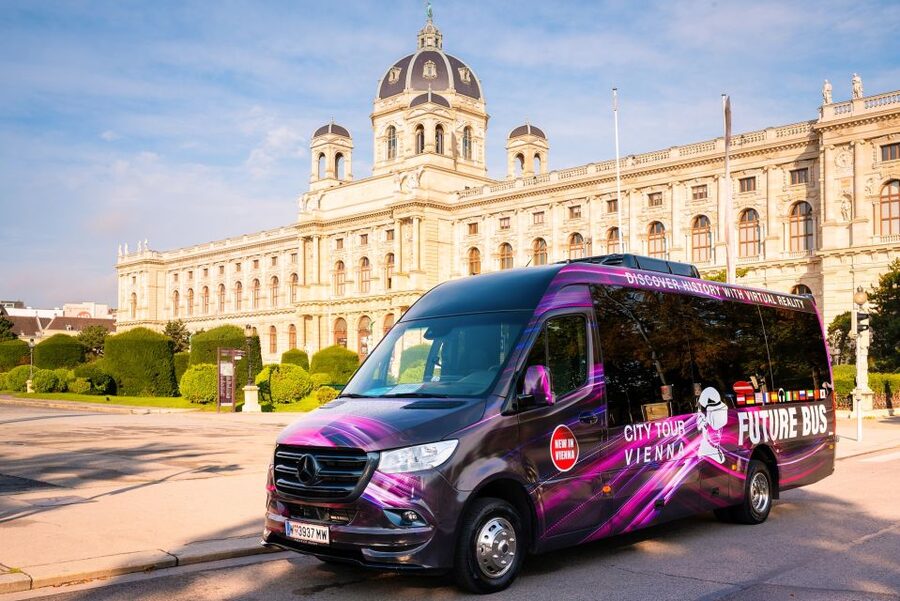
Your meeting point is at Albertinaplatz, directly behind Vienna’s famous State Opera. Arrive at least 10 minutes early with your voucher ready for the driver or representative. Look for a purple minibus and a driver wearing a purple shirt, a useful detail in a busy central area.
The tour begins with a quick welcome and briefing. You take a seat in the air-conditioned vehicle, receive earphones, and select your audio-guide language. The driver speaks English, German, or Russian, while the recorded commentary offers a much wider choice.
I like this arrangement because it gets you moving quickly. You do not spend the first part of the hour waiting for a large coach to fill up or standing in a street listening to a long introduction. The minibus is also a practical choice on a short tour, since it can take you through the central sights without turning the outing into a long walk.
Still, keep your expectations in check. The bus is a viewing platform, not a private vehicle for stopping wherever you wish. The route and timing are planned around the four VR presentations, so you will not have time to enter the Opera, stroll through Heroes Square, or pause at Karlskirche.
A few more trips of this kind worth comparing:
- Vienna: Vivaldi’s Four Seasons Concert in Karlskirche
★ 4.7 · 14,951 reviews - Vienna: Spanish Riding School Training
★ 3.9 · 9,281 reviews - Vienna: Skip-the-cashier-desk-line Giant Ferris Wheel Ride
★ 4.5 · 7,859 reviews
First views: the Opera, Heroes Square, and Maria Theresia Square
The opening drive gives you an immediate introduction to imperial Vienna. You pass the State Opera, the grand buildings around the Hofburg area, the Neuburg, Heroes Square, and Maria Theresia Square.
These sights work well at the start because they establish the scale of central Vienna. The architecture here is formal and ceremonial, with broad spaces and imposing facades built to project power. From the bus window, you get a quick sense of how the city’s major institutions gather around the former imperial center.
Maria Theresia Square also prepares you for the first historical presentation. The square is framed by major museums and large public buildings, so the VR section can connect the setting outside the window with people and events from Vienna’s past.
The large side windows are important. You are not walking up to each building, so your view depends on your seat and the traffic around the bus. If seeing the route matters more than the virtual presentation, try to sit where you have a clear view through the window. The exact seating arrangement is not specified, so I would not count on a particular side.
Four VR stops and the people behind Vienna’s monuments
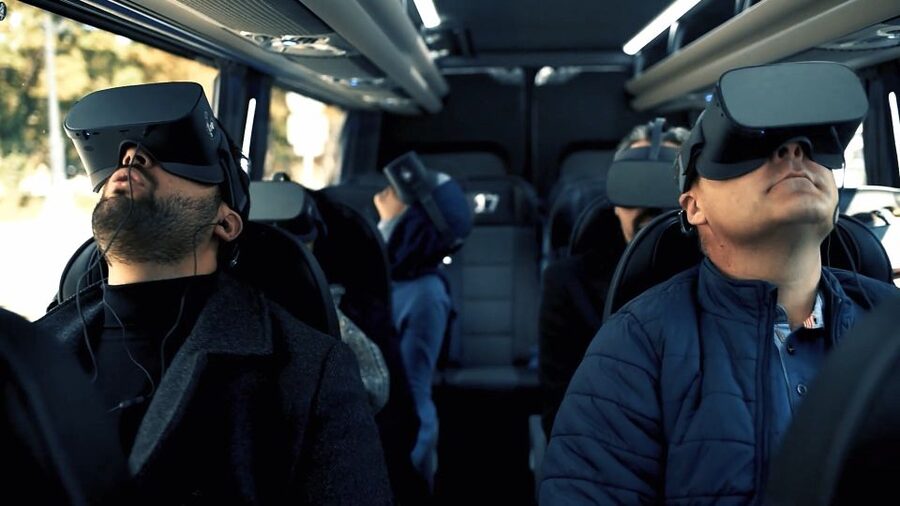
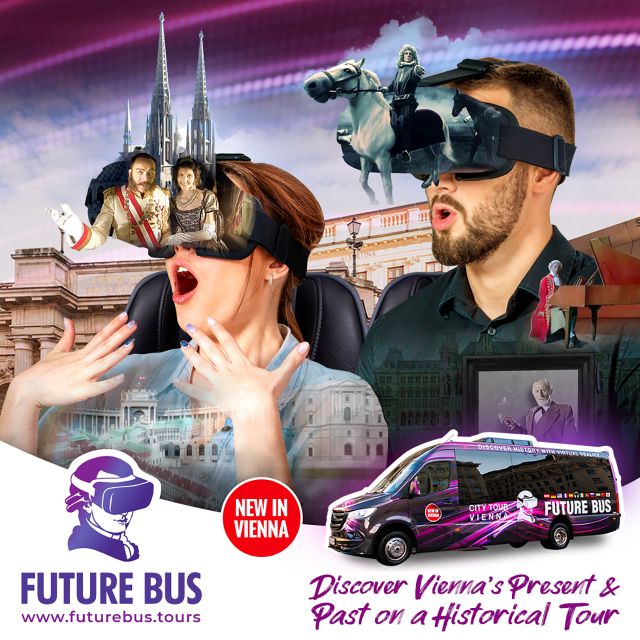
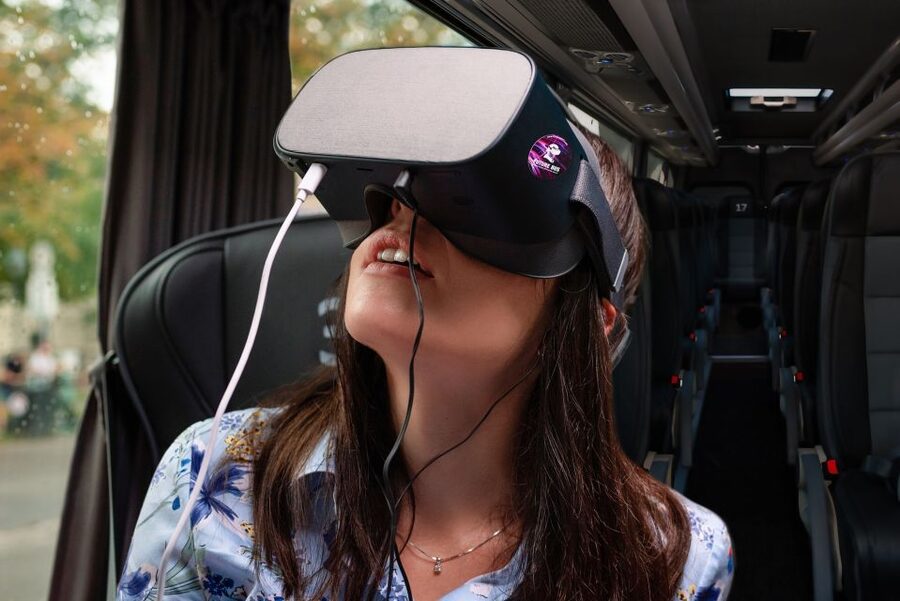
The most unusual feature is the use of high-quality VR glasses at four planned stops. You receive instructions from the audio guide, put on the glasses, and watch a historical scene linked to your location.
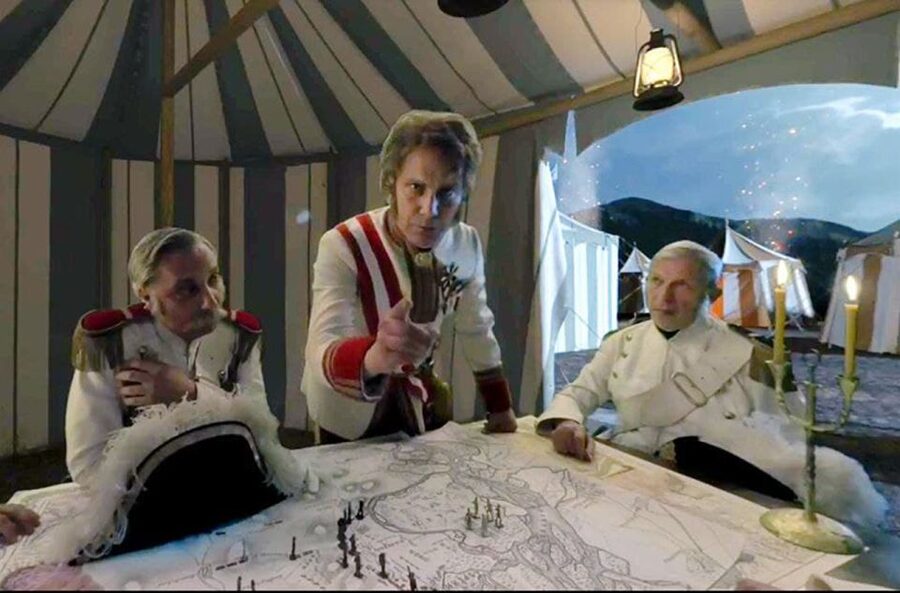
At the first stop, you meet major figures including Eugene of Savoy, Archduke Charles, and Maria Theresia. This is where the tour changes from looking at buildings to seeing history presented around you. The idea is not simply to point out a palace and give you a date. Instead, the virtual scenes place historical figures at the center of the story.
This format has clear appeal. If dates and dynasties usually blur together, a short visual presentation can give those names a face and a setting. Families may find it easier to stay engaged, and adults who have already seen Vienna’s grand facades may appreciate a fresh way to connect them with the city’s past.
The VR sections are also efficient. The tour covers a lot in a short time, and the virtual scenes provide extra context without requiring entrance tickets to several museums or palaces. One review praised the presentation as more useful than physically entering a building for a quick visit, largely because it allowed the participant to cover more ground.
There is a tradeoff. Virtual reality is a shared activity, but it is also a personal one. Once the glasses are on, you are not looking at the actual square around you. If you want to study the real architecture, take photographs, or listen to a live guide’s unscripted explanation, the audio-and-VR format may feel less satisfying than a walking tour.
City hall and the Burgtheater: the second historical pause
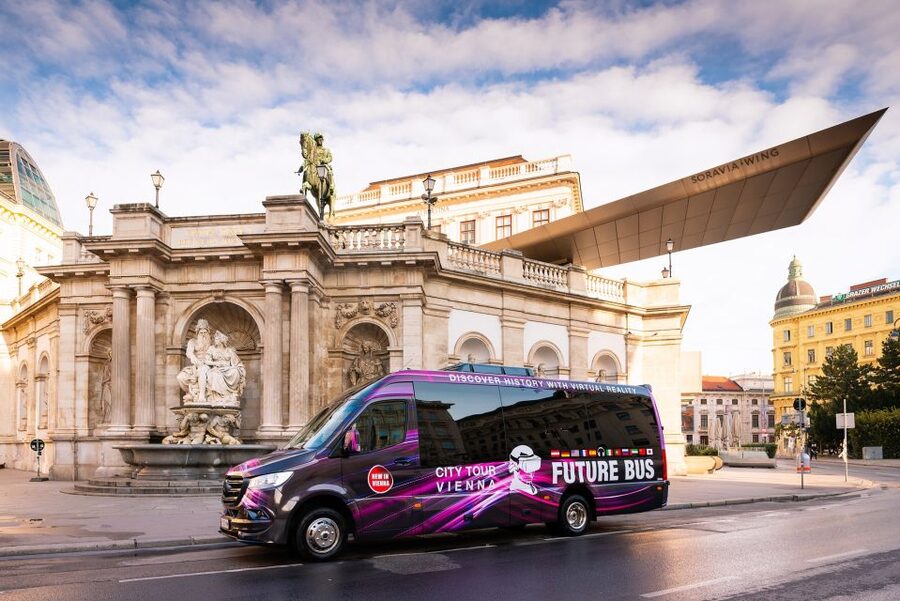
After the first VR presentation, the minibus continues past the Volksgarten and the Austrian Parliament. The next stop is in front of Vienna’s city hall, near the Burgtheater.
This part of the route shifts the focus from the old imperial center toward Vienna’s civic and cultural institutions. The Parliament represents government, the city hall represents local administration, and the Burgtheater points to the city’s long theatrical tradition. Even with only a short stop, the setting gives you a useful contrast with the palace-centered opening section.
The second VR presentation takes place here. The information supplied for this stop does not specify every historical figure or scene, so you should expect another location-based chapter rather than a full building visit. The value lies in seeing the actual surroundings first, then using the glasses to add a historical layer.
I would treat this stop as a learning moment, not free time. You are not being given an extended break to walk around city hall or enter the Burgtheater. The bus moves on after the presentation, which keeps the hour focused but limits your chance to explore.
A completely different kind of day out in Vienna:
- Vienna: Schönbrunn Palace & Gardens Skip-the-Line Tour
★ 4.7 · 7,739 reviews - Vienna: Light of Creation Votive Church Immersive Light Show
★ 4.8 · 6,779 reviews - Vienna Spanish Riding School Guided Tour
★ 4.7 · 6,765 reviews - Vienna: Classical Concert in the World-Famous Musikverein
★ 4.6 · 6,673 reviews
Schottentor and the Votive Church story
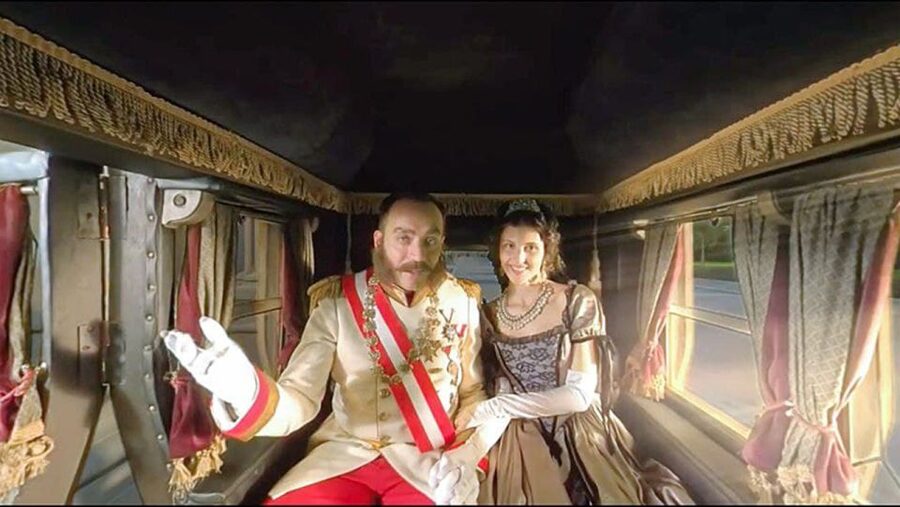
The bus then heads toward Schottentor and reaches the Neo-Gothic Votive Church, the setting for the third VR stop. Here, the presentation covers an assassination attempt involving Emperor Franz Joseph, along with the story of his brother Maximilian.
This is one of the more specific historical episodes on the route. It gives the VR format something dramatic to work with, and the Votive Church provides a real landmark tied to the story. The combination is useful because you are not watching an unrelated historical film. You are looking at a place in Vienna while hearing about events connected to the imperial family.
The Votive Church also adds architectural variety. After the formal buildings around the Hofburg, you see a Neo-Gothic church with a different style and mood. That variety helps the bus ride feel like a tour of several sides of central Vienna rather than one long view of palaces.
The practical limit remains time. A one-hour route cannot explain every detail of the assassination attempt, Franz Joseph, or Maximilian. If this subject catches your interest, note the names and return later with more time. The tour gives you a useful starting point, not a complete history lesson.
A moving view of Museumsquartier, Naschmarkt, and Karlskirche
Between the VR stops, the audio guide keeps the ride moving through a long list of landmarks. You pass the Volkstheatre, Museumsquartier, the Secession building, Naschmarkt, Karlskirche, and other central sights.
This stretch is especially useful for orientation. Museumsquartier signals Vienna’s major museum district, the Secession building introduces the city’s modernist architecture, and Naschmarkt gives you a glimpse of one of the best-known food and market areas in central Vienna. Karlskirche adds another major church to the route, with a very different character from the Votive Church.
You will not enter any of these places. Entrance fees are not included, and there is no food or drink included in the tour. That may sound obvious, but it matters when you plan your day. Use the bus ride to make a short list of places you want to revisit on foot.
The audio guide is doing a lot of work here. You can look through the large window while listening to commentary in your chosen language. The nine-language selection is a strong point for international visitors, especially if you would rather not depend on the driver’s live language. The driver’s available languages are English, German, and Russian.
The ride also gives your feet a break. Vienna’s center is easy to walk, but the distances between the Opera, city hall, the Votive Church, Naschmarkt, and Karlskirche can add up. This tour lets you see the connections among these areas before deciding which ones deserve a longer visit.
The final VR stop and return along the Ringstraße
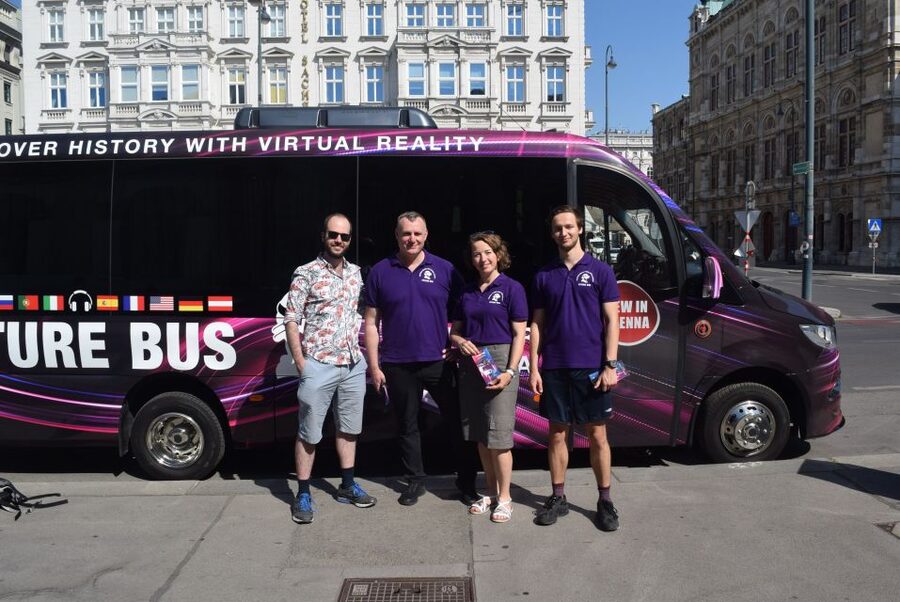
The route eventually returns toward the Ringstraße and the original Opera-area meeting point. Before the tour ends, you make the fourth and final VR stop near the starting area.
This last presentation gives the experience a tidy ending. You begin near the Opera, travel through several districts and historical subjects, then return to the same central location for one more virtual scene. That makes the tour easy to fit into a day of sightseeing because you are not left at an unfamiliar part of the city.
The return point is also useful for your next stop. From the Opera area, you can continue exploring central Vienna on foot, though the tour itself does not include admission to buildings or onward transport.
One practical detail from the feedback is worth noting: a participant who missed the booked time was kindly allowed to attend a later departure. I would not treat that as a guaranteed policy, but it suggests that asking the staff may help if plans go wrong. The formal rule is more straightforward: cancel at least 24 hours before the start for a full refund, and the reserve-now, pay-later option allows you to hold a place without paying immediately.
Is $32 good value for one hour?

At $32 per person, this is not the cheapest way to see Vienna’s center. You can walk past many of the same buildings for free, and a standard sightseeing bus may offer a longer route. The price makes more sense when you count the VR presentations, the audio guide, the air-conditioned minibus, and the convenience of covering several central areas in one hour.
I see the strongest value in three situations:
- You have only a short time in Vienna and want a quick orientation.
- You like technology and want more than standard commentary.
- You are traveling with older children who may lose interest during a traditional architecture tour.
The value is weaker if you want deep architectural detail, long photo stops, or entry into famous buildings. You are paying for a compact presentation that combines transport, commentary, and virtual scenes. You are not paying for museum admission, food, drinks, hotel pickup, or a long guided walk.
The high rating of 4.7 from 148 reviews fits the experience’s main strengths: it is unusual, efficient, comfortable, and friendly. The strongest praise centers on the VR history presentation, the warm and helpful staff, and the ability to see a great deal in a short period. One family found it more enjoyable than a large bus tour, while another participant wished for additional VR stops. That is a fair criticism: once you enjoy the format, four scenes can feel brief.
Who will enjoy the Future Bus most?
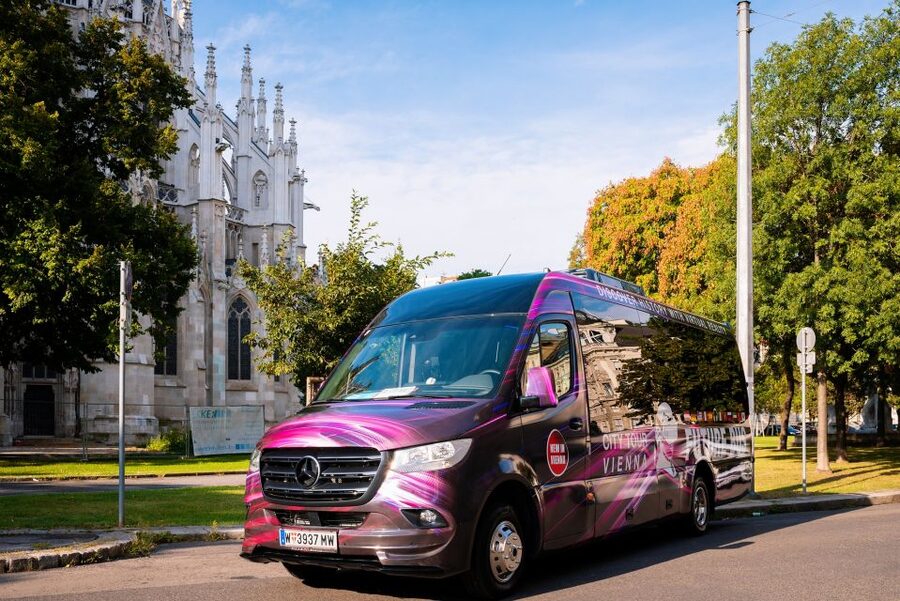
I would recommend this tour to first-time visitors who want a quick introduction before exploring Vienna in greater detail. It is also a good choice for families with children aged seven or older, provided everyone can use the VR equipment and manage the fixed pace.
It suits you if you like seeing a city through both real streets and digital reconstruction. The bus provides the physical route, the audio guide supplies the commentary, and the glasses turn selected moments into short historical scenes.
I would choose something else if you want a relaxed walking pace or close study of individual buildings. The same applies if you have mobility needs, visual impairment, or a child under seven, since the experience is specifically listed as unsuitable in those cases.
Bring a passport or ID card, arrive 10 minutes early, and leave food and drinks outside the vehicle. The activity begins and ends at the same spot, lasts about one hour, and operates at set starting times that you should check when booking.
Should you book this Vienna VR bus tour?
Book it if you want a fast, comfortable city overview with an original history presentation. The four VR stops are the reason to choose this over a basic bus ride, and the route includes enough major sights to help you plan the rest of your time in Vienna.
Skip it if your priority is entering palaces, spending time at museums, or taking photographs at your own pace. For the right visitor, $32 buys a useful first look, a break from walking, and a memorable way to connect Vienna’s monuments with its historical figures. Just think of it as an engaging orientation, not a full replacement for exploring the city on foot.
FAQ
Where does the Vienna Future Bus tour start and finish?
The tour starts at Albertinaplatz, behind the State Opera building, and ends at the same meeting point.
How long does the tour last?
The tour lasts approximately one hour. Starting times vary, so check availability when booking.
How many virtual reality stops are included?
The experience includes four virtual reality stops during the bus route.
What languages are available for the audio guide?
The audio guide is available in English, German, Spanish, French, Italian, Japanese, Chinese, Russian, Portuguese, and Arabic.
Is the tour suitable for young children?
No. The experience is not suitable for children under seven years old.
What should I bring to the meeting point?
Bring your voucher and a passport or ID card. You should arrive at least 10 minutes before departure. Food and drinks are not allowed inside the vehicle.
Just added around Vienna
- Mobile puzzle rally tour at the Vienna Central Cemetery★ 4.5 · 3 reviews
- 8 days European Highlights PRIVATE TOUR from Budapest including Budapest Vienna Prague and Bratislava★ 5.0 · 3 reviews
- RAXI (E-Rickschaw) big private Vienna tour★ 4.5 · 3 reviews
- Private Transfer from Vienna to Prague with 1 hour Stop in Kutna Hora★ 4.5 · 3 reviews
- Palais Lobkowitz Audio Guide Tour★ 4.0 · 3 reviews
- Private Tour from Vienna to Melk and Dürnstein★ 4.5 · 3 reviews
- Vienna: Designer Fashion Time Capsule Experience★ 5.0 · 3 reviews
- Vienna Sight & Gourmet Tour – individual private tour★ 4.5 · 3 reviews
Tours, compared.

Schönbrunn Palace & Gardens Skip-the-Line Tour
Read our review →

Skip-the-Line Sisi Museum, Hofburg and Gardens Tour
Read our review →
Skip-the-Line Schönbrunn Palace & Gardens Tour
Read our review →

Guided Walking Tour of City Center Highlights
Read our review →