
Reviewed · CITY TOURS
Vienna: City of Music Private Walking Tour
Music gives Vienna its voice. This three-hour private walk connects Mozart, Beethoven, Haydn, Salieri, and Vivaldi with the streets, churches, palaces, and concert halls tied to their lives. I especially like the music played on headphones as you walk and the chance to have a guide adjust the story for your group.
I also like the flat $564.72 group price for up to 10 people, which can be fair for a larger family or friend group. The main drawback is that several important sites are viewed from outside, and admission to Mozarthaus Vienna, the State Opera, and Pasqualati House is not included.
In This Review
- Key points to know before booking
- Why Vienna makes a good music walk
- Starting at St. Stephen’s Cathedral
- Mozart’s Vienna at Mozarthaus
- Beethoven’s monument and a restless life
- The State Opera and Vienna’s continuing stage
- Beethoven at Mölker Bastei
- The Hofburg and Beethoven’s royal patron
- Hearing the city through headphones
- What the $564.72 price really means
- Timing, pickup, and walking comfort
- Who will enjoy this tour most
- My booking advice
- FAQ
- How long does the Vienna music walking tour last?
- How much does the private tour cost?
- Is the tour offered in English?
- Can the guide pick me up at my hotel?
- Is this a private activity?
- Are museum and attraction tickets included?
- Does the tour include a concert or opera performance?
- Will I hear classical music during the walk?
- Do I need public transport tickets?
- What is the cancellation policy?
Key points to know before booking
- Mozart and Beethoven anchor the walk: You connect Mozart’s former home and Beethoven’s many Vienna apartments with the city’s major musical institutions.
- Music accompanies the sightseeing: Your guide pauses to play selections of classical works through headphones, adding sound to the streets and buildings.
- The private format changes the pace: Only your group takes part, so you can ask questions and focus more on music, architecture, biography, or Habsburg politics.
- The group price favors larger parties: Ten people would pay about $56.47 each, while a couple pays the full $564.72.
- Hotel or holiday-flat pickup is offered: You can meet your historian guide at your accommodation or at Café Mozart near Albertinaplatz.
- Expect a walking tour, not a concert or museum visit: The experience links sites and stories, but most stops last about 20 minutes and do not include admission.
Why Vienna makes a good music walk
Vienna’s musical story is unusually easy to follow on foot. A cathedral where major composers once performed, an apartment where Mozart wrote famous works, a monument to Beethoven, and the Hofburg residence of a royal patron all sit within the central city.
That setting gives this tour its value. You are not only hearing dates and names. You are seeing the places where musicians worked, performed, found patrons, argued with aristocrats, and moved from one apartment to another.
I would not book this as a substitute for a full concert. Instead, think of it as a guided introduction to Vienna’s musical character, with short listening moments built into a city walk. If you know little about classical music, the format should still work well. A guide can explain the personalities and rivalries without assuming that you can tell Mozart from Beethoven after two bars.
The private setup helps here. Your guide can slow down for questions or keep things moving if your group already knows the basics. The tour is offered in English, and the guide’s photo, phone number, and biography are sent after booking, which makes meeting up less uncertain.
More City Tours in Vienna
- Vienna: Guided Walking Tour of City Center Highlights
★ 4.7 · 4,989 reviews - Vienna: City Cruise with Optional Lunch
★ 3.4 · 3,982 reviews - Vienna: City Cruise
★ 3.3 · 2,978 reviews
Starting at St. Stephen’s Cathedral
The walk begins at St. Stephen’s Cathedral, Vienna’s famous Stephansdom. The stop lasts about 20 minutes, and admission is listed as free.
The cathedral matters musically as well as architecturally. Your guide explains how it served as a performance venue in earlier centuries for figures including Haydn, Mozart, Salieri, and Vivaldi. That is a useful opening because it places music inside the daily life of Vienna, rather than treating composers as isolated geniuses in old portraits.
You should expect a short exterior or cathedral-focused visit rather than a long architectural tour. The supplied details do not promise interior access beyond the free admission information, so I would not plan on a dedicated cathedral visit as part of the three hours.
This first stop also gives your guide room to explain how church music, court culture, and public performance overlapped. Those links return later at the Hofburg and the opera district.
Mozart’s Vienna at Mozarthaus
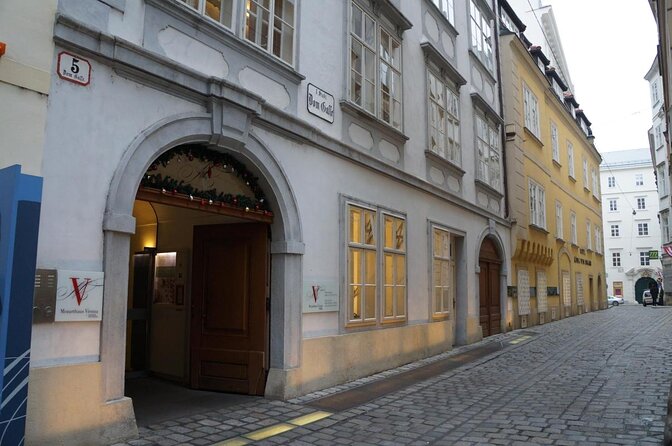
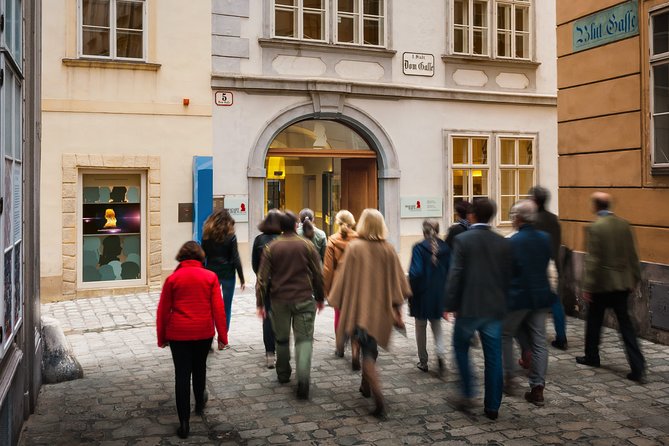
From the cathedral, the tour continues to Mozarthaus Vienna, also called Figaro House. Mozart lived here from 1784 to 1787, a productive period when he wrote many of his best-known operas and instrumental works.
The address is valuable because it makes Mozart’s career feel more concrete. Instead of hearing only that he lived in Vienna, you see one of the actual homes connected with his work. The name Figaro House also points to Mozart’s operatic world, especially the importance of The Marriage of Figaro in his Vienna years.
The stop lasts around 20 minutes. Admission to Mozarthaus is not included, and the tour description says you stroll by the building, so you should not assume that a museum visit is part of the outing. If you want to tour the interior, you will need to arrange that separately and allow extra time.
That limitation is not necessarily a flaw. A private walking tour has to cover several composers and institutions in one morning or afternoon. The guide gives you the address, the context, and the musical connection without turning the whole experience into a single museum stop.
Beethoven’s monument and a restless life
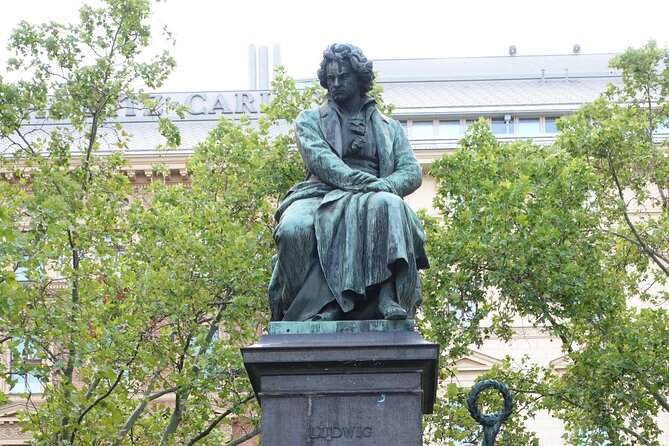
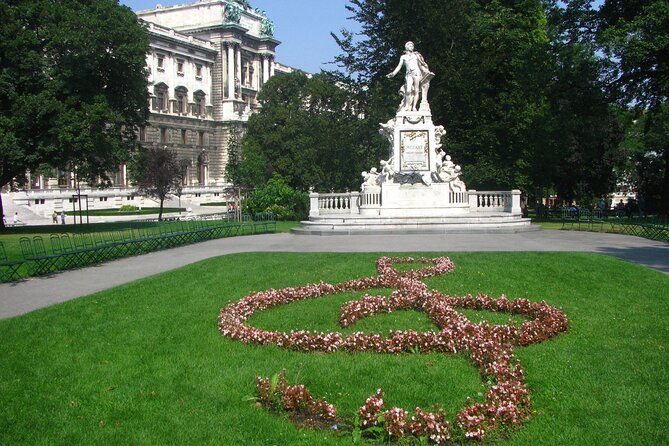
The Beethoven Statue provides a change of mood. Here the focus shifts from Mozart’s productive home to Beethoven’s difficult, unsettled life in Vienna.
The stop lasts about 20 minutes, with no admission charge. Your guide discusses Beethoven’s habit of changing apartments, sometimes described as nearly 60 moves around Vienna. That detail is memorable because it turns a famous composer into a person dealing with ordinary problems, unstable routines, and strained relationships.
Beethoven’s music also gives the guide a chance to explain the move from the Classical period toward Romantic music. You do not need formal training to follow that idea. The point is that Beethoven kept the structure and discipline of the Classical style while pushing music toward greater emotional force and experimentation.
The statue itself is a brief stop, so do not expect an extended museum presentation. Its strength is the story attached to it. The headphones and selected music should help you connect the monument with the sound of Beethoven’s work.
More Private Tours in Vienna
- Vienna: Private Walking Tour with a Local Guide
★ 4.6 · 1,420 reviews - Vienna: Private Walking Tour with a Guide
★ 4.7 · 962 reviews - Vienna: Wine Tasting Experience in a Private Wine Cellar
★ 4.8 · 413 reviews - Private Day Tour Trip Salzburg Hallstatt and Melk from Vienna
★ 5.0 · 388 reviews
The State Opera and Vienna’s continuing stage
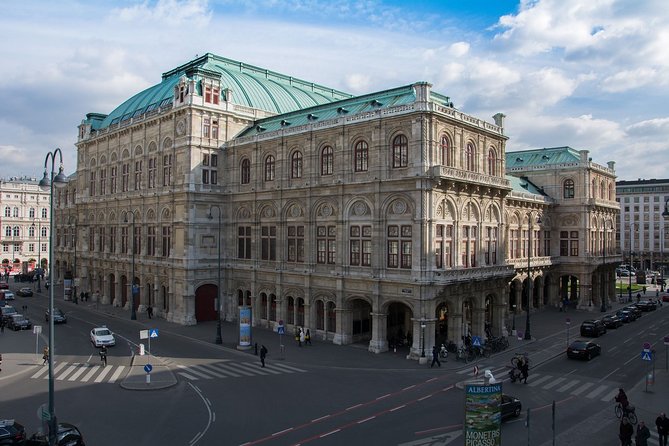
The Wiener Staatsoper, or Vienna State Opera, brings the story into the present. Your guide discusses Vienna’s continuing role as a major center for classical performance, with attention to the State Opera and the Musikverein concert hall, home of the Vienna Philharmonic.
This is one of the strongest parts of the route for first-time visitors because it shows that Vienna’s musical reputation is not only historical. The city still presents opera and orchestral music at the highest level.
The stop is scheduled for about 20 minutes. Admission is not included, and the tour does not promise an opera performance or an interior tour. You will likely be considering the building and its role from the outside while your guide explains the institutions connected with it.
That distinction matters when you set expectations. If your dream is to attend an opera, you need a separate ticket and a separate plan. This tour can help you understand why the State Opera matters, but it is not a performance package.
The same applies to the Musikverein. It is discussed as a major concert hall, but the walking experience does not include a concert. I like this approach for a sightseeing day because you can hear the explanation without committing your whole evening to a formal event.
Beethoven at Mölker Bastei
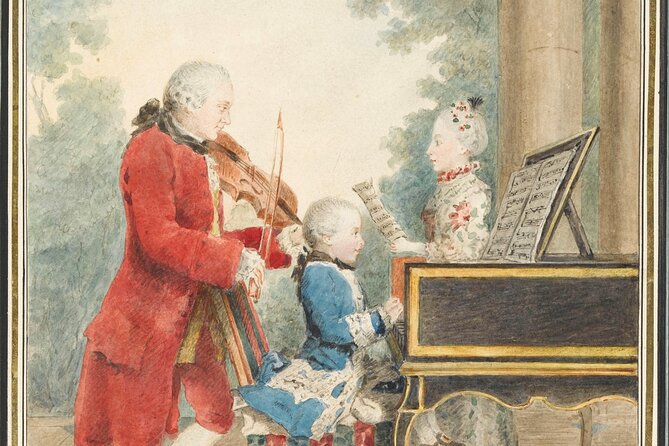
The route then passes by Beethoven’s former residences to Pasqualati House at the Mölker Bastei, directly opposite the University of Vienna. Beethoven spent much of his Vienna life changing apartments, and this stop returns to that theme with a specific address.
Pasqualati House is connected with Beethoven’s years in the city, though the information provided does not include admission. Treat it as a pass-by or exterior stop unless your guide confirms otherwise. The scheduled time is about 20 minutes.
The setting also helps place Beethoven among Vienna’s students, scholars, nobles, and working residents. He was not living in a museum display. He was moving through a real city, dealing with patrons and institutions while writing music that helped carry the Classical style into the Romantic era.
For me, the best part of this stop is the contrast with Mozart. Mozart’s former home points to a concentrated and productive period. Beethoven’s many addresses suggest friction and movement. The two stories make Vienna’s music past feel less tidy, and therefore more human.
The Hofburg and Beethoven’s royal patron
The final major site is the Hofburg, Vienna’s former imperial residence. Here the tour turns toward Beethoven’s relationship with the Habsburg court and Archduke Rudolph, the youngest son of Emperor Leopold II.
Beethoven’s connection with aristocracy was not always easy, but Rudolph became one of his close friends, supporters, and patrons. Rudolph took piano lessons with Beethoven, and Beethoven dedicated the Missa Solemnis to him.
The Hofburg stop lasts about 20 minutes. Admission information is listed as not included, and the tour description presents the residence as the place where Rudolph studied with Beethoven rather than promising entry into the palace rooms.
This is an important closing idea. Music in eighteenth and nineteenth-century Vienna depended on more than composers and audiences. Court members, church leaders, wealthy patrons, concert halls, and opera companies all shaped what musicians could write and where they could work.
The Hofburg gives your guide a natural way to tie those threads together. Mozart’s church and opera connections, Beethoven’s patrons, and Vienna’s imperial power all meet in the same central district.
Hearing the city through headphones
During the final 45-minute portion through Vienna’s Inner City, the group pauses to listen to selections of Vienna’s musical works on headphones. This is the feature I find most distinctive.
Walking past a building while hearing a related piece can add a clear sense of place. The music is no longer an abstract sample between lecture points. It becomes part of the street walk, giving you something to listen for while you look at the sites around you.
The format also helps people who do not have much classical music background. One especially positive account came from someone who described the tour as a good fit for a person with little formal music training. That makes sense: short selections, plain explanations, and visible landmarks are easier to follow than a long talk about musical theory.
Another praised detail was the guide’s use of personal stories and photographs of the composers. Those touches can make Mozart, Beethoven, and their supporters easier to remember. Ask your guide questions as they come up. Since the tour is private, you do not have to wait for a large group to move on.
The exact musical selections are not listed, so I would not book this expecting a specific symphony, aria, or recording. The appeal is the method: selected masterpieces paired with the places tied to Vienna’s music story.
What the $564.72 price really means
The price is $564.72 per group of up to 10 people. That works out to about $56.47 per person if you fill all 10 places. For a couple, however, the effective price is $282.36 each, so the value depends heavily on group size.
For a family, extended family, or group of friends, the flat fee can be sensible. You get a private English-speaking guide, hotel or holiday-flat pickup if arranged, and a three-hour route focused on your interests. A private format is especially useful when some people want musical detail and others need a simple introduction.
For one or two people, the price is harder to justify unless private guiding is a priority. You are paying for attention, flexibility, and a custom conversation rather than admission to several attractions.
Remember that tickets are not included for Mozarthaus Vienna, the Wiener Staatsoper, or Pasqualati House. St. Stephen’s Cathedral, the Beethoven Statue, and the Inner City portion are listed with free admission. Public transport tickets are also extra if you need a tram or metro connection, although the guide can help you buy them.
Timing, pickup, and walking comfort
You can choose a morning or afternoon departure. That makes it easier to fit the tour around a concert, museum visit, meal, or other Vienna plans.
Pickup is offered at your hotel or holiday flat. If you prefer a central meeting place, the guide can meet you at Café Mozart, Albertinaplatz 2. This is useful if your accommodation is outside the central area or if you want to begin directly among the main sights.
The tour lasts about three hours and is built around walking between central sites. Most stops are planned for about 20 minutes, with 45 minutes set aside for the Inner City music portion. The information provided does not specify the walking distance, pace, or seating breaks, so you should be ready for a sustained city walk.
If public transport is needed to reach the sites, tickets are not included. The guide can help you purchase a tram or metro ticket if you do not already have a pass.
Confirmation arrives when you book. You are also sent the historian guide’s photo, phone number, and biography, a practical touch that makes the meeting easier to manage.
Who will enjoy this tour most
I would recommend this experience to:
- A group of friends or family members who can share the flat price.
- First-time Vienna visitors who want a clear introduction to Mozart, Beethoven, and the city’s performance tradition.
- People who enjoy music but do not have formal classical training.
- Anyone who prefers questions and conversation over a fixed group script.
- Visitors who want to combine sightseeing with a little listening rather than spend three hours inside museums.
I would be more cautious if you want long interior visits, a full opera-house tour, or a live concert. The route is about connections between places and music. It does not include the main admission tickets or a performance.
The tour also suits people who value a guide’s personality. A guide named Annelie was praised for making the subject personal, answering questions, and using stories and photographs to bring the composers to life. Your guide may differ, but the private format gives you a good chance to shape the conversation.
My booking advice
Book this tour if you want Vienna’s music story explained as you walk through the historic center, especially if you have a group large enough to make the flat fee work. The headphone listening, private guide, and composer-focused route give it more character than a basic sightseeing circuit.
Think twice if you are mainly seeking entry to museums or a concert. You will need to pay separately for listed admissions, and several stops are pass-bys or outdoor views.
The cancellation terms are straightforward: you can receive a full refund if you cancel at least 24 hours before the start time. Changes or cancellations within 24 hours are not refunded or accepted. I would book ahead if your dates are fixed, since the experience is often reserved well in advance.
FAQ
How long does the Vienna music walking tour last?
The tour lasts approximately three hours.
How much does the private tour cost?
The price is $564.72 per group, with up to 10 people included.
Is the tour offered in English?
Yes. The tour is offered in English.
Can the guide pick me up at my hotel?
Yes. Pickup is offered at your hotel or holiday flat. You can also meet the guide at Café Mozart, Albertinaplatz 2.
Is this a private activity?
Yes. Only your group participates in the tour.
Are museum and attraction tickets included?
No. Admission is not included for Mozarthaus Vienna, the Wiener Staatsoper, or Pasqualati House. St. Stephen’s Cathedral, the Beethoven Statue, and the Inner City portion are listed with free admission.
Does the tour include a concert or opera performance?
No concert or opera performance is included in the tour details.
Will I hear classical music during the walk?
Yes. The group pauses to listen to selections of Vienna’s musical masterpieces through headphones.
Do I need public transport tickets?
If public transport is needed to reach the tour sites, tram and metro tickets are not included. The guide can help you purchase them if needed.
What is the cancellation policy?
You can cancel at least 24 hours before the start time for a full refund. Cancellations or changes made less than 24 hours before the start time are not accepted or refunded.
More Walking Tours
- Vienna Historic Center Small Group Walking Tour
★ 5.0 · 1,746 reviews - Vienna: 1.5-Hour Underground Walking Tour
★ 4.9 · 1,146 reviews - Vienna: Ghosts and Legends Guided Nighttime Walking Tour
★ 4.4 · 1,088 reviews - Historical Hitler Walking Tour of Vienna
★ 5.0 · 887 reviews
More Walking Tours in Vienna
- Vienna: Vienna Central Cemetery Guided Walking Tour
★ 4.8 · 3,307 reviews - Vienna: Guided Walking Tour of City Highlights & Hidden Gems
★ 4.9 · 2,180 reviews - Vienna: Viennese Underworld Guided Walking Tour
★ 4.7 · 1,865 reviews - Vienna: World War II Historical Walking Tour
★ 4.8 · 1,772 reviews
Just added around Vienna
- Mobile puzzle rally tour at the Vienna Central Cemetery★ 4.5 · 3 reviews
- 8 days European Highlights PRIVATE TOUR from Budapest including Budapest Vienna Prague and Bratislava★ 5.0 · 3 reviews
- RAXI (E-Rickschaw) big private Vienna tour★ 4.5 · 3 reviews
- Private Transfer from Vienna to Prague with 1 hour Stop in Kutna Hora★ 4.5 · 3 reviews
- Palais Lobkowitz Audio Guide Tour★ 4.0 · 3 reviews
- Private Tour from Vienna to Melk and Dürnstein★ 4.5 · 3 reviews
- Vienna: Designer Fashion Time Capsule Experience★ 5.0 · 3 reviews
- Vienna Sight & Gourmet Tour – individual private tour★ 4.5 · 3 reviews
City Tours, compared.

Guided Walking Tour of City Center Highlights
Read our review →

Guided Walking Tour of City Highlights & Hidden Gems
Read our review →
City Sightseeing Tour in an Electro Vintage Car
Read our review →
Skip-the-Line Schonbrunn Palace Guided Tour and Vienna Historical City Tour
Read our review →

Browse the lists this tour appears in