
Reviewed · MUSEUMS
Vienna: Heidi Horten Collection Museum Entry Ticket
Art can change the mood of a palace. The Heidi Horten Collection does this especially well, combining Klimt and Warhol with major works by Picasso, Basquiat, Bacon, Schiele, and others in a former Habsburg city palace. I like the inventive museum design, including the sculpture garden and Tea Room, and I like that the English audio guide is free. The main drawback is that the art is tightly packed, so this visit may feel short if you want long, quiet study time with every work.
This is a strong choice for a self-guided museum stop in Vienna’s historic center. The roughly $18 admission is reasonable for a full day of access, two substantial exhibitions, and a central location. Bring your ticket clearly displayed on your phone, since a phone screen that does not scan well can slow entry.
In This Review
- Key points before you go
- A small palace with a modern attitude
- Start with the sculpture garden and palace details
- The Tea Room: a pause between art and collecting
- KLIMT ⇄ WARHOL covers a wide stretch of art
- The Line follows one simple mark through modern art
- Use the Smartify guide, but keep your visit flexible
- How much time should you allow?
- Is the $18 ticket good value?
- Who will enjoy this museum most?
- Should you book the Heidi Horten Collection?
- FAQ
- Where is the Heidi Horten Collection located?
- What does the admission ticket include?
- Is the audio guide available in English?
- What is the main exhibition called?
- Which artists can I see in the collection?
- Is there a temporary exhibition?
- What artists are included in The Line?
- Can I see a sculpture garden?
- What is the Tea Room?
- Are large bags and luggage allowed?
- Is the museum wheelchair accessible?
- What happens from March 9 through March 26, 2026?
- Can I cancel the booking?
Key points before you go
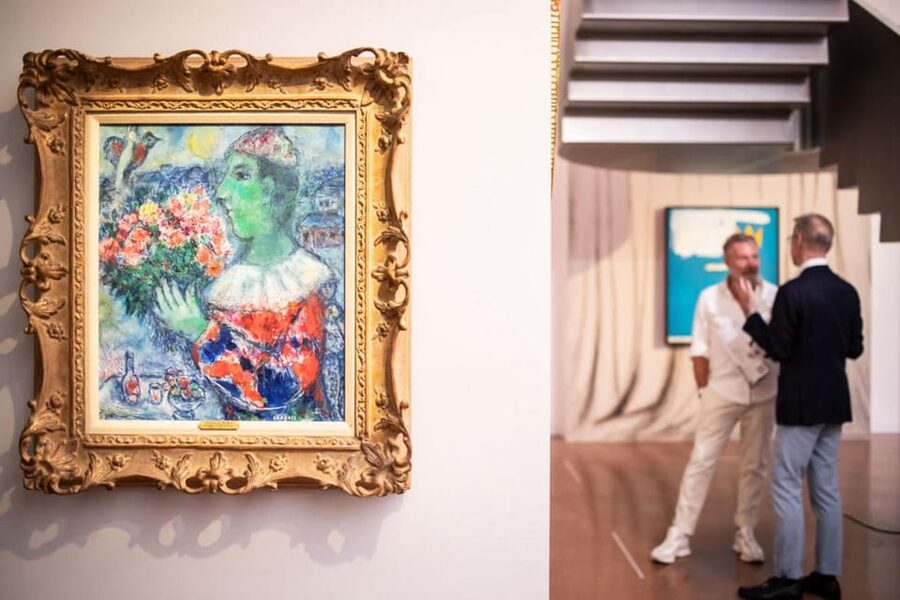
- Klimt meets Warhol: The main exhibition traces modern and contemporary art through famous works by Gustav Klimt, Andy Warhol, and many international artists.
- A palace turned artwork: The former Habsburg city palace uses architecture, lighting, display design, and interiors as part of the museum experience.
- The Tea Room is a curious extra: Markus Schinwald and Hans Kupelwieser created a salon-like room filled with objects and handicrafts from three centuries.
- The Line adds a second artistic theme: This temporary exhibition follows the many ways artists have used lines, from Vienna around 1900 to the present day.
- Free English audio guide: You use Smartify on your own mobile phone, with German also available.
- Important 2026 restriction: From March 9 through March 26, 2026, only one floor is accessible and the admission price is reduced from EUR 16 to EUR 12.
A small palace with a modern attitude
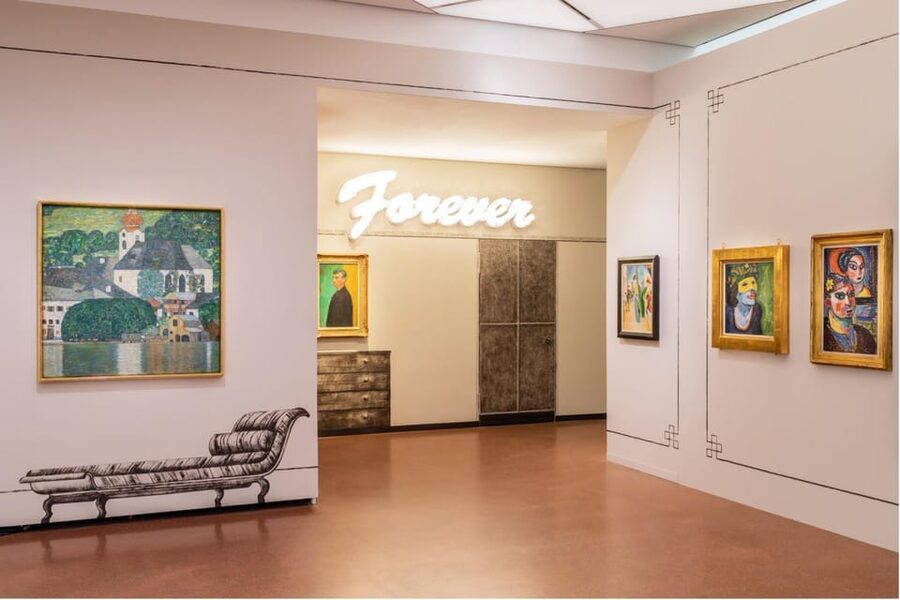
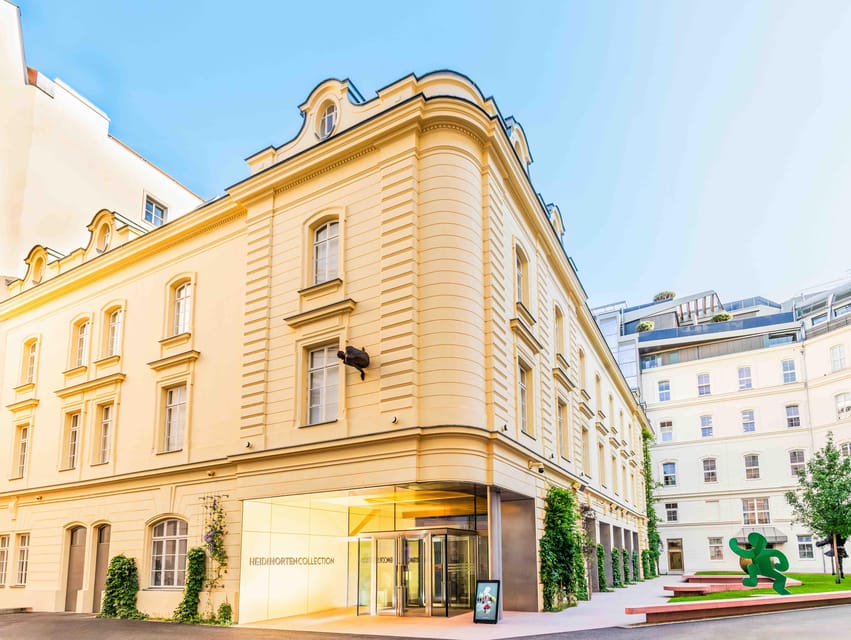
The Heidi Horten Collection sits in Vienna’s historic center, inside a former Habsburg city palace. That setting matters. You are not entering a neutral white box on the edge of town. You are walking into an old aristocratic shell that has been reworked for modern art.
Before reaching the entrance, look at the sculpture garden directly in front of the building. It gives you a first taste of the collection without committing to the indoor visit. The garden also helps you see the museum as a place where architecture and art are meant to work together.
Inside, the building becomes part of the display. The museum presents itself as a total work of art, with the rooms, transitions, colors, and exhibition structures carefully shaped around the collection. I find this most useful when you want more than a standard gallery walk. You are not only moving from painting to painting. You are also watching how the museum changes the way those paintings are seen.
The design may not suit everyone. Some visitors prefer plain walls and plenty of space around each object. Here, the visual setting can compete with the art at times. If you like quiet, traditional galleries, give yourself extra time and pause in the less crowded areas rather than rushing through the sequence.
More Attraction Tickets in Vienna
- Vienna: Classic Ensemble Vienna in St. Peter’s Church Ticket
★ 4.7 · 4,819 reviews - Vienna Kunsthistorisches Museum Day Admission Ticket
★ 4.6 · 3,690 reviews - Vienna: Tickets for Mozarthaus Vienna with Audio Guide
★ 4.2 · 2,344 reviews
Start with the sculpture garden and palace details
The outdoor sculpture garden is an easy first stop because it sits directly in front of the museum. It is not described as a separate ticketed attraction, so you can take a look before entering and decide how much time to spend there.
The location also gives you a useful sense of scale. The palace facade connects the museum with Vienna’s imperial past, while the sculpture outside signals that this is not a preserved historic house. The collection is firmly focused on 20th-century and contemporary art, even though the building carries older associations.
Once inside, notice how the museum uses the historic rooms rather than hiding them completely. The contrast between classicist interiors and bold modern art creates some of the visit’s most interesting moments. A familiar painting can feel different when it is placed near palace details, sculptural forms, or a room designed like a cabinet of curiosities.
The Tea Room: a pause between art and collecting
The Tea Room is one of the museum’s most unusual features. Markus Schinwald and Hans Kupelwieser designed it as a blend of parlour and cabinet of curiosities, with valuable handicrafts and treasures from three centuries.
This room broadens the idea of what a collection can be. The main galleries focus on modern art, but the Tea Room turns your attention to objects made for use, display, ceremony, and personal fascination. You may find this room more intimate than the larger exhibition spaces.
I recommend treating it as a deliberate pause, not just a room to pass through on the way to the paintings. Look at the arrangement and the relationship between the objects. The point is not simply that the room contains old things. It shows how collecting can create a world of its own.
The Tea Room also gives the visit a change of pace. After large paintings and strong colors, a salon-like room can make the museum feel more personal. If you are visiting with someone who is less interested in modern art, this may be one of the spaces that holds their attention.
KLIMT ⇄ WARHOL covers a wide stretch of art
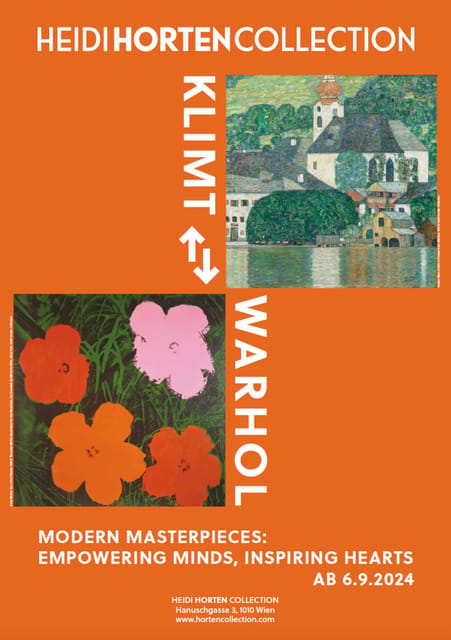
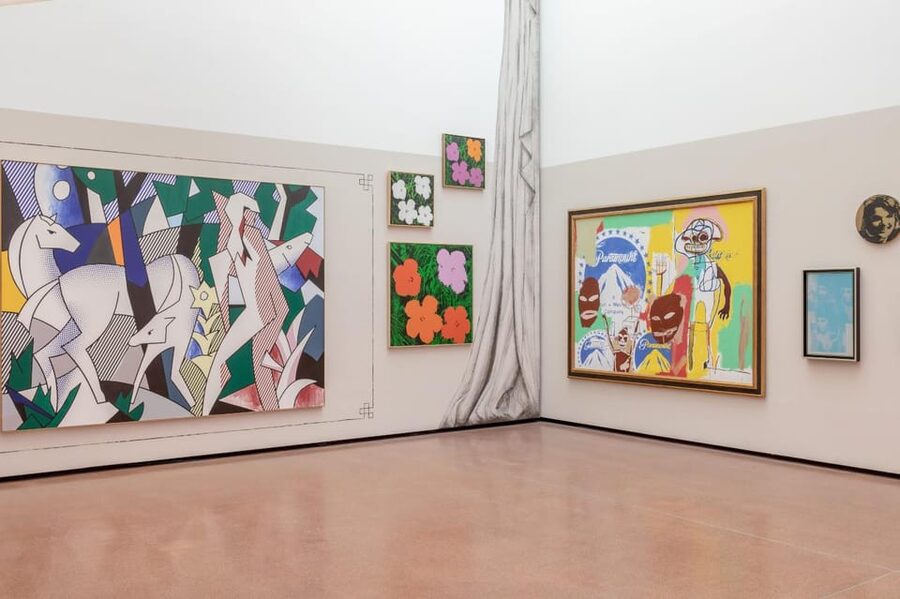
The central exhibition, KLIMT ⇄ WARHOL. Modern Masterpieces, brings together painting, drawing, and sculpture from modern and contemporary art. The title gives you two clear reference points, but the show is not limited to those artists.
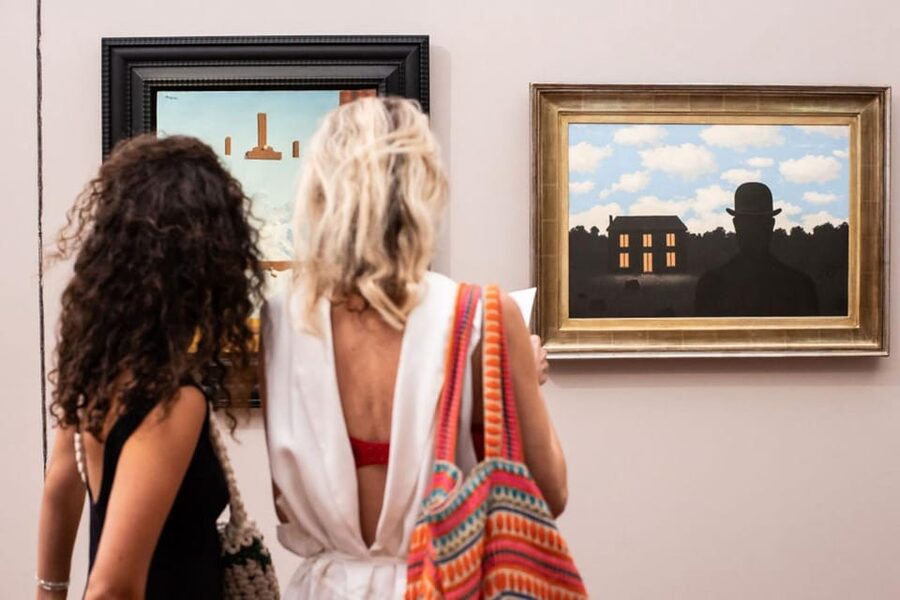
You can expect works connected with Francis Bacon, Georg Baselitz, Jean-Michel Basquiat, Marc Chagall, Kees van Dongen, Lyonel Feininger, Lucio Fontana, Keith Haring, Damien Hirst, Ernst Ludwig Kirchner, Paul Klee, Yves Klein, Gustav Klimt, Roy Lichtenstein, René Magritte, Franz Marc, Henri Matisse, Joan Miró, Emil Nolde, Pablo Picasso, Robert Rauschenberg, Gerhard Richter, Mark Rothko, and Andy Warhol.
That list tells you what kind of visit this is. You get a broad survey rather than a single artist’s life story. The collection moves between movements, countries, decades, and media. One room may invite you to look closely at a drawing, while another asks you to consider scale, color, repetition, or the force of a sculpture.
Klimt gives the exhibition a strong Viennese connection. Warhol brings the language of mass culture and repetition. Between them, the show lets you compare very different ideas about beauty, identity, popular imagery, and the role of the artist.
The exhibition design was created by Austrian artist Markus Schinwald. This is important because the presentation is not an afterthought. The arrangement has a creative identity of its own, and the rooms are designed to shape your response to the works.
That approach has a clear benefit: you are likely to make connections across periods that a strict chronological display might not encourage. The tradeoff is that you may need the audio guide or your own background knowledge to understand how each work fits into the larger story. The display is expressive, but it may not always explain itself.
More museums:
- Vienna: Skip-the-Line Sisi Museum, Hofburg and Gardens Tour
★ 4.8 · 5,918 reviews - Tickets for the Albertina Exhibitions
★ 4.7 · 2,126 reviews - Vienna: Chocolate Workshop in Chocolate Museum w/ Tasting
★ 4.5 · 1,802 reviews - Sigmund Freud Museum Ticket
★ 4.6 · 1,668 reviews
The Line follows one simple mark through modern art
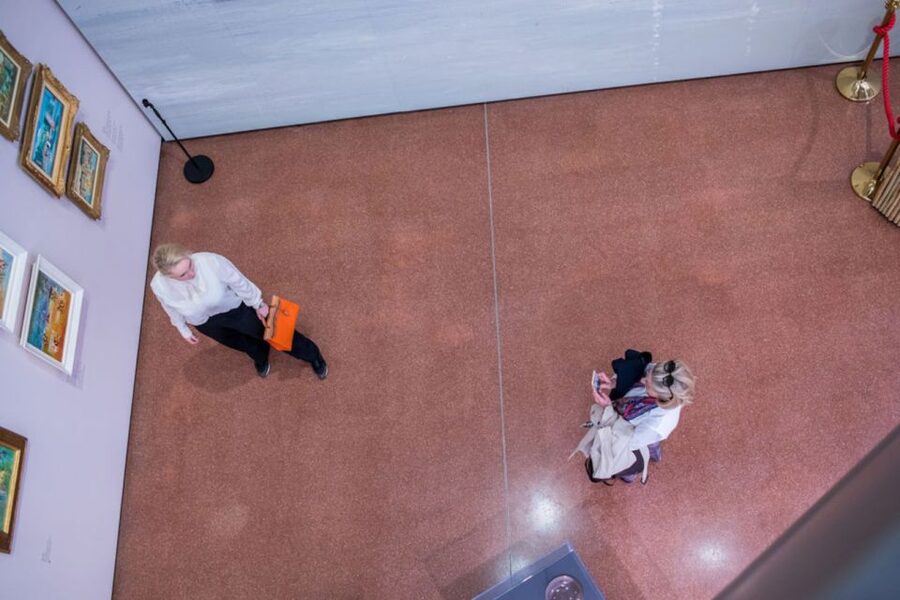
The temporary exhibition The Line adds another substantial reason to visit. It examines the line as one of art’s basic elements and follows that idea from Vienna around 1900, through the art of the 1960s, and into the present.
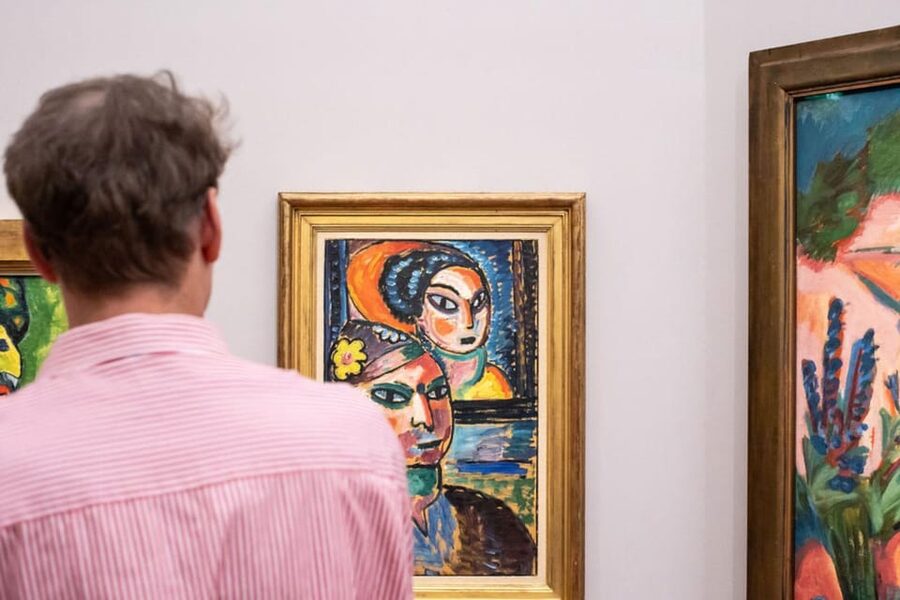
The show includes works by Paul Klee, Lucio Fontana, Roy Lichtenstein, Egon Schiele, Jackson Pollock, Agnes Martin, Andy Warhol, Chiharu Shiota, and many others. That range suggests a useful way to approach the exhibition: do not look only for drawn lines. Look for lines made by cuts, drips, gestures, borders, repeated marks, threads, and implied movement.
The subject is simple enough for a first-time museum visitor but broad enough to reward close attention. You can ask how a line describes a person, divides a surface, creates tension, or disappears into a larger composition.
The exhibition runs until March 8, 2026. If you visit before that date, it can turn a visit focused mainly on famous names into a more focused study of how artists think. If you visit from March 9 through March 26, only one museum floor is accessible, and the ticket price is reduced. Check the current display conditions before booking, especially if seeing both exhibitions is your main reason for going.
Use the Smartify guide, but keep your visit flexible
The free audio guide works through Smartify on your own phone. It is available in English and German, and it offers an informative, entertaining way to add context without joining a scheduled group.
I like this setup because you control the pace. You can listen to the works that interest you, skip pieces that do not, and return to a favorite room without waiting for a guide. It also makes the ticket useful for different kinds of visitors. An art enthusiast can spend more time with selected works, while a casual visitor can get a clear introduction without reading every wall label.
There is a practical weakness. You need a charged phone and a readable ticket on your screen. Large bags and luggage are not allowed, and umbrellas are also excluded, so pack lightly. Flash photography is not permitted. Assistance dogs are allowed, but other pets are not.
The museum also offers private guided tours and creative workshops in the museum studio, but those are not included in this admission. This ticket is for independent entry and the mobile audio guide.
How much time should you allow?
The ticket is valid for one day, but the supplied information does not set a fixed visit length. That is helpful because you can shape the stop around your Vienna schedule.
For a quick look, you could focus on the main exhibition, the Tea Room, and the sculpture garden. For a more satisfying visit, allow enough time for both KLIMT ⇄ WARHOL and The Line, with pauses for the architecture and audio guide.
I would not treat this as a ten-minute stop between other sights. The collection includes a large number of major artists, and the temporary exhibition adds another layer. The exact time depends on how closely you look, but the one-day validity gives you flexibility if you want to leave and return within the permitted period.
The central location makes the museum easy to pair with other sights in Vienna’s historic center. Still, avoid squeezing it into the last few minutes of a busy sightseeing day. The presentation is dense, and tired eyes do not do justice to Rothko, Klimt, Schiele, or Fontana.
Is the $18 ticket good value?
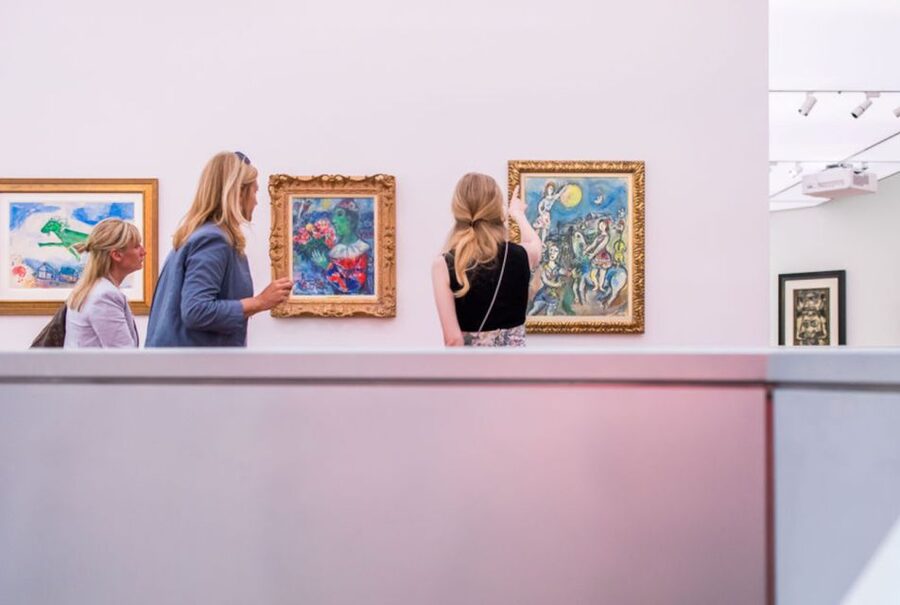
At about $18 per person, the admission is a reasonable buy if you plan to see both exhibitions. You are paying for access to a notable private collection, a creatively designed museum, a sculpture garden, the Tea Room, and a free audio guide.
The value is strongest for people who enjoy variety. You can see Viennese modernism, postwar art, Pop Art, contemporary work, sculpture, and works on paper in one place. The ticket also saves you from choosing a single artist-focused museum.
The value is less certain if your main goal is a long, scholarly study of Klimt alone. The exhibition uses Klimt as one of its anchors, but it also gives significant attention to many other artists. Likewise, if you want a large museum with dozens of rooms and a vast collection, this compact palace setting may feel limited.
Pricing changes during the partial-access period. From March 9 to March 26, 2026, the price is reduced from EUR 16 to EUR 12 because only one floor is open. The supplied price is also shown as about $18, so check the amount in your booking currency and confirm which floors and exhibitions are available on your date.
Free cancellation up to 24 hours before the visit and reserve-now, pay-later booking add flexibility. Those terms are useful when your Vienna plans are still shifting, but the main decision remains simple: book it if the collection and exhibition themes appeal to you.
Who will enjoy this museum most?
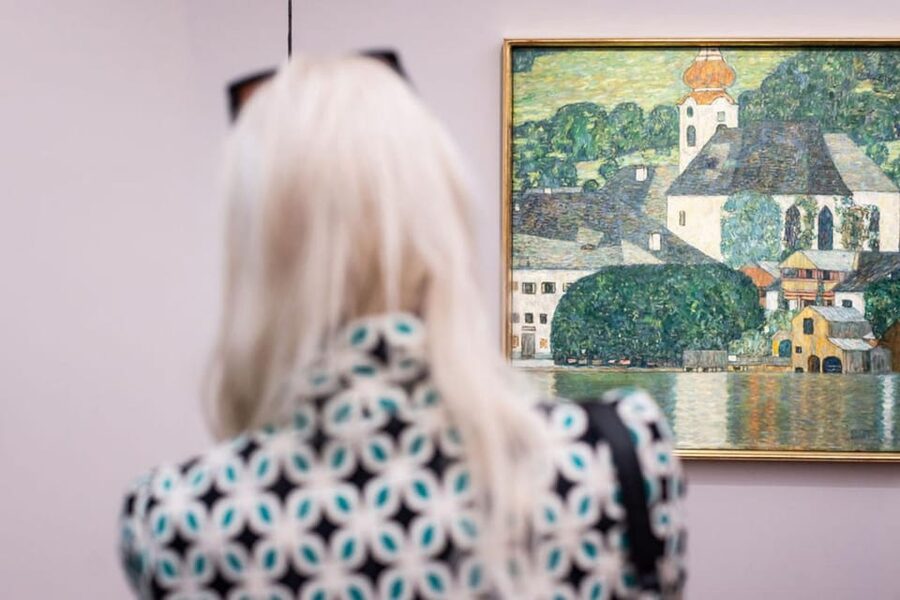
I would recommend the Heidi Horten Collection to you if you like famous names but do not want a museum devoted to only one period. It is also a good choice if you enjoy architecture as much as art and like seeing a historic building given a modern purpose.
The museum suits couples, solo visitors, and families with older children who can handle a concentrated art visit. The free audio guide helps if you want context, while the visual design gives younger visitors something to notice beyond the paintings.
It may be less suitable if you dislike dense displays or want a strictly chronological lesson in art history. You should also check the access notice if your visit falls between March 9 and March 26, 2026, since only one floor will be open during that period.
Should you book the Heidi Horten Collection?
Book this ticket if you want a compact, high-quality art stop in central Vienna with major modern and contemporary names, unusual interiors, and a free English audio guide. The strongest reasons are the combination of KLIMT ⇄ WARHOL, The Line through March 8, 2026, and the palace setting.
I would skip it only if your schedule is too tight for a thoughtful museum visit or if you want a single-artist collection with lots of open gallery space. For most art-minded visitors, the price is fair, the location is convenient, and the mix of palace architecture with bold 20th-century art makes this a memorable addition to a Vienna day.
FAQ
Where is the Heidi Horten Collection located?
The museum is in Vienna’s historic center, inside a former Habsburg city palace.
What does the admission ticket include?
It includes entry to the Heidi Horten Collection and a free Smartify audio guide on your mobile phone.
Is the audio guide available in English?
Yes. The audio guide is available in English and German.
What is the main exhibition called?
The main exhibition is called KLIMT ⇄ WARHOL. Modern Masterpieces.
Which artists can I see in the collection?
The collection includes artists such as Gustav Klimt, Andy Warhol, Pablo Picasso, Francis Bacon, Jean-Michel Basquiat, Paul Klee, Egon Schiele, Roy Lichtenstein, Mark Rothko, and many others.
Is there a temporary exhibition?
Yes. The Line examines the use of the line in art and runs until March 8, 2026.
What artists are included in The Line?
The exhibition includes Paul Klee, Lucio Fontana, Roy Lichtenstein, Egon Schiele, Jackson Pollock, Agnes Martin, Andy Warhol, Chiharu Shiota, and others.
Can I see a sculpture garden?
Yes. A sculpture garden is located directly in front of the museum.
What is the Tea Room?
The Tea Room is a room designed by Markus Schinwald and Hans Kupelwieser as a combination of parlour and cabinet of curiosities. It presents treasures and handicrafts from three centuries.
Are large bags and luggage allowed?
No. Luggage and large bags are not allowed. Flash photography, umbrellas, and pets are also not permitted, although assistance dogs are allowed.
Is the museum wheelchair accessible?
Yes, the museum is wheelchair accessible.
What happens from March 9 through March 26, 2026?
Only one floor of the museum is accessible during that period, and the admission price is reduced from EUR 16 to EUR 12.
Can I cancel the booking?
Yes. Cancellation is free up to 24 hours in advance for a full refund. You can also reserve now and pay later.
Just added around Vienna
- Mobile puzzle rally tour at the Vienna Central Cemetery★ 4.5 · 3 reviews
- RAXI (E-Rickschaw) big private Vienna tour★ 4.5 · 3 reviews
- 8 days European Highlights PRIVATE TOUR from Budapest including Budapest Vienna Prague and Bratislava★ 5.0 · 3 reviews
- Private Transfer from Vienna to Prague with 1 hour Stop in Kutna Hora★ 4.5 · 3 reviews
- Palais Lobkowitz Audio Guide Tour★ 4.0 · 3 reviews
- Private Tour from Vienna to Melk and Dürnstein★ 4.5 · 3 reviews
- Vienna: Designer Fashion Time Capsule Experience★ 5.0 · 3 reviews
- Private day trip from Munich to Eagle’s Nest & Hallstatt★ 4.7 · 3 reviews
Museums, compared.

Skip-the-Line Sisi Museum, Hofburg and Gardens Tour
Read our review →
Vienna Kunsthistorisches Museum Day Admission Ticket
Read our review →

Chocolate Workshop in Chocolate Museum w/ Tasting
Read our review →

St. Stephen’s Cathedral & Dom Museum Wien Tickets
Read our review →

Browse the lists this tour appears in