
Reviewed · MUSEUMS
Vienna: Leopold Museum Skip-the-Line Entry Ticket
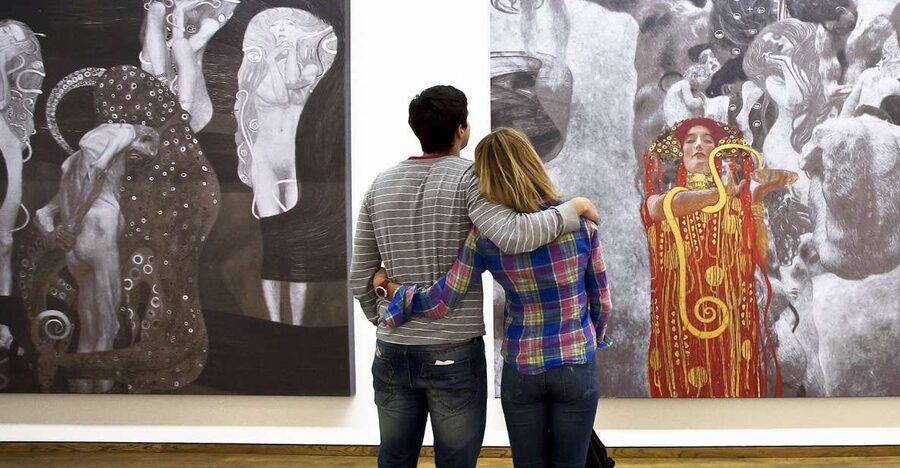
Art can still feel unruly here. The Leopold Museum brings Vienna around 1900 to life through the world’s largest Egon Schiele collection, striking works by Gustav Klimt, and fine examples of Wiener Werkstätte design. I like the museum’s clear focus and its bright modern building, especially the panoramic views toward the Hofburg. My main caution is that the museum can feel small if you expect several hours of nonstop Klimt and Schiele.
You get access to both the permanent collections and all special exhibitions for about $22 per person. That makes the ticket a fair deal when a major temporary show is on, though discounts for seniors, students, or families may make buying at the door cheaper than the single online price.
In This Review
- Key points to know before you go
- Why the Leopold Museum matters in Vienna
- The world’s largest Egon Schiele collection
- Klimt’s masterpieces and lesser-seen works
- Oskar Kokoschka and Vienna’s artistic break
- Wiener Werkstätte design beyond the paintings
- A striking building in the MuseumsQuartier
- How to plan your one-day admission
- Is $22 a fair price?
- Food, comfort, and practical limits
- Who will enjoy the Leopold Museum most?
- Should you book the Leopold Museum ticket?
- FAQ
- Where is the Leopold Museum located?
- What is the Leopold Museum best known for?
- What does the ticket include?
- Are special exhibitions included?
- Is an audio guide included?
- Are guided tours included?
- What are the museum’s opening hours?
- Is the Leopold Museum wheelchair accessible?
Key points to know before you go
- About 130 Schiele paintings and letters: The collection gives you more than a quick look at the artist’s best-known drawings.
- Klimt beyond the usual postcard images: Look for works such as Life and Death alongside early and lesser-seen pieces.
- Vienna around 1900 in one building: Schiele, Klimt, Oskar Kokoschka, Art Nouveau, and Wiener Werkstätte design all share the story.
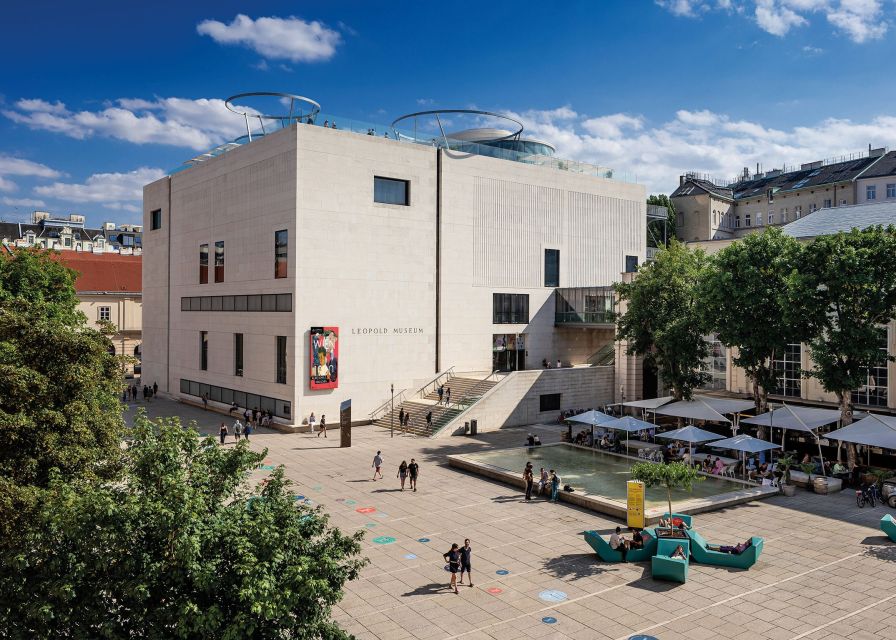
- A modern museum in former imperial stables: White shell limestone and a light-filled atrium create a sharp contrast with the historic MuseumsQuartier.
- City views are part of the visit: The upper windows look toward Maria-Theresien-Platz, the Hofburg, and central Vienna.
- Useful timing detail: The museum is open from 10:00 AM to 6:00 PM daily except Tuesdays, with daily opening in June, July, and August.
Why the Leopold Museum matters in Vienna
The Leopold Museum is not simply a place to check off a few Klimt paintings. It tells the story of a moment when Vienna’s artists challenged old academic rules and helped make the city one of Europe’s great cultural centers.
Around 1900, the Habsburg Empire was still wrapped in ceremony, rank, and tradition. At the same time, artists were looking for a freer visual language. The Vienna Secession gave that movement a public home, while Art Nouveau supplied its decorative style. Schiele and Kokoschka pushed the human figure into more tense and personal territory.
I like this setting because you can see the change happen from room to room. A polished decorative work by Klimt may be followed by the sharp, exposed lines of Schiele. Then you may encounter furniture, objects, or patterns linked to the Wiener Werkstätte. The result is less a single-artist museum than a portrait of Vienna at a turning point.
The museum’s collection is especially useful if you want context. Klimt is often treated as a maker of beautiful gold surfaces, but the Leopold also helps place him within the Secession and among artists who were searching for new forms. Schiele, meanwhile, comes across as more than a provocative draughtsman. His letters and many paintings show his speed, ambition, and intense interest in the body and the inner life.
More Attraction Tickets in Vienna
- Vienna: Classic Ensemble Vienna in St. Peter’s Church Ticket
★ 4.7 · 4,819 reviews - Vienna Kunsthistorisches Museum Day Admission Ticket
★ 4.6 · 3,690 reviews - Vienna: Tickets for Mozarthaus Vienna with Audio Guide
★ 4.2 · 2,344 reviews
The world’s largest Egon Schiele collection
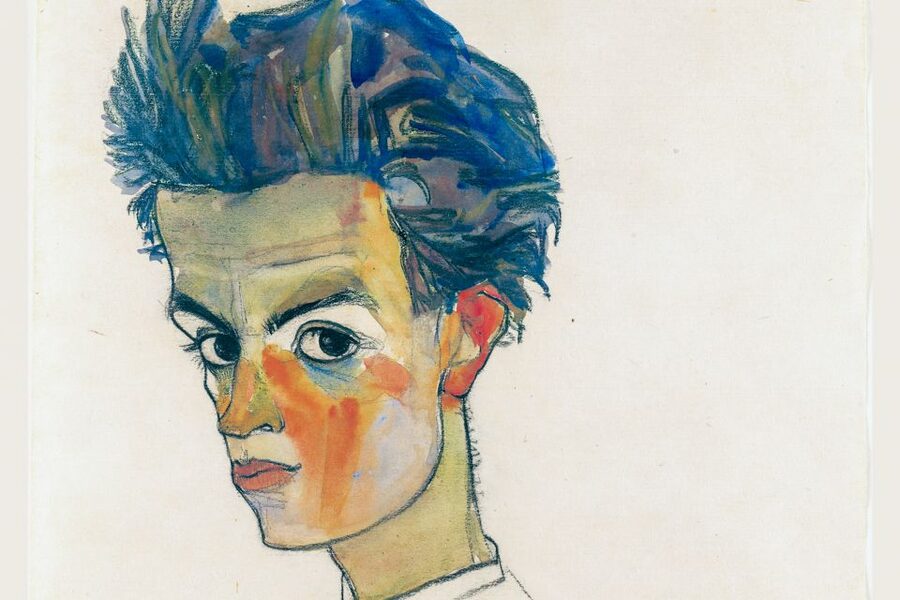
Schiele is the main reason many people come to the Leopold, and the museum gives him serious room. The collection includes roughly 130 paintings and letters, providing a much fuller view than a display built around only one or two famous images.
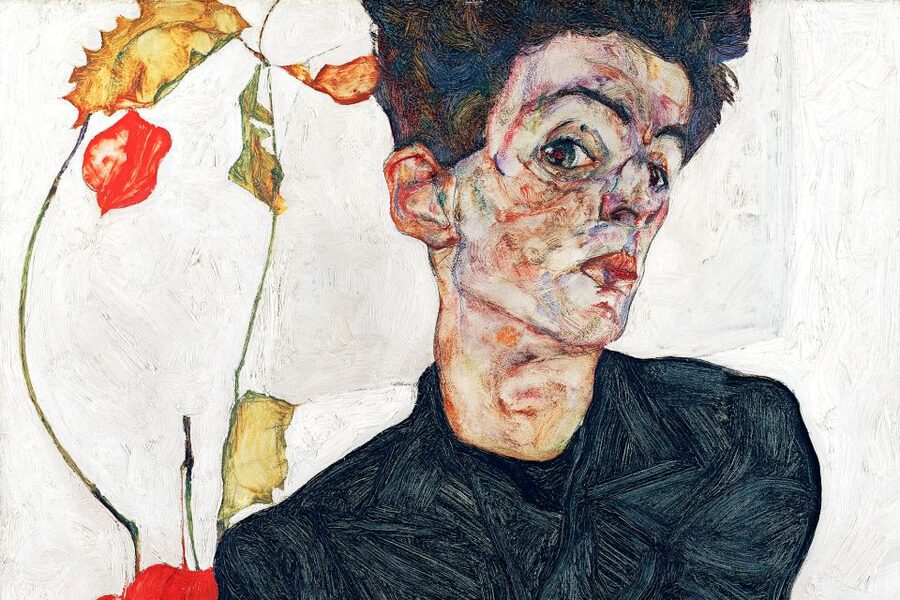
You can expect the work to be direct and sometimes uncomfortable. Schiele’s figures are angular, exposed, and emotionally charged. He did not smooth away awkwardness for the sake of pretty pictures. That raw quality is part of the reason his work still feels startling.
I recommend giving yourself time with the less famous pieces. A celebrated painting can draw the eye first, but the early works and letters help you follow his development. You may find the artist’s quick changes in line, posture, and color more interesting than a single headline masterpiece.
The collection also gains weight from Schiele’s short life. He and his wife, Edith, died during the Spanish flu pandemic in 1918. You do not need to turn the visit into a biography lesson, but that fact adds a sad edge to the urgency of his work. His career burned quickly, and the museum lets you see how much he produced before it ended.
If you are sensitive to explicit or psychologically intense art, prepare for a frank experience. Schiele’s nudes and portraits are not presented as polite salon decoration. They are central to his artistic language.
Klimt’s masterpieces and lesser-seen works
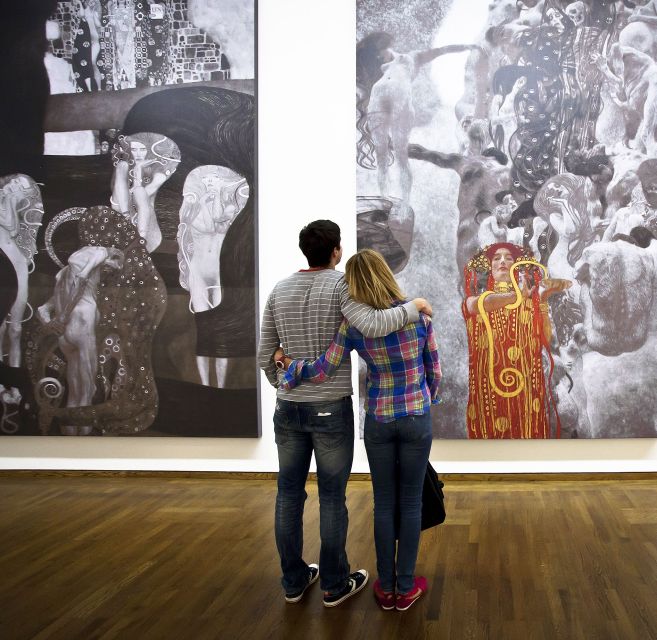
Klimt offers a different kind of visual pleasure. His surfaces can be ornate, patterned, and lush, but his work here also fits into the larger story of artistic rebellion in Vienna.
One important highlight is Life and Death. It gives you a chance to see Klimt handling a serious human theme through decorative form. The contrast between ornamental beauty and the subject’s darker meaning is part of what makes the painting memorable.
I also like the chance to encounter early-career works and pieces that do not appear on every standard Vienna art itinerary. The Leopold is not only about the most reproduced Klimt images. That broader selection helps you see how his style developed and how his work relates to the artists around him.
If you have already visited the Belvedere to see The Kiss, the Leopold makes a useful companion stop. It gives you another angle on Klimt rather than simply repeating the same famous image. If Klimt is your only interest, though, you may find the museum’s Schiele focus more dominant than expected.
Oskar Kokoschka and Vienna’s artistic break
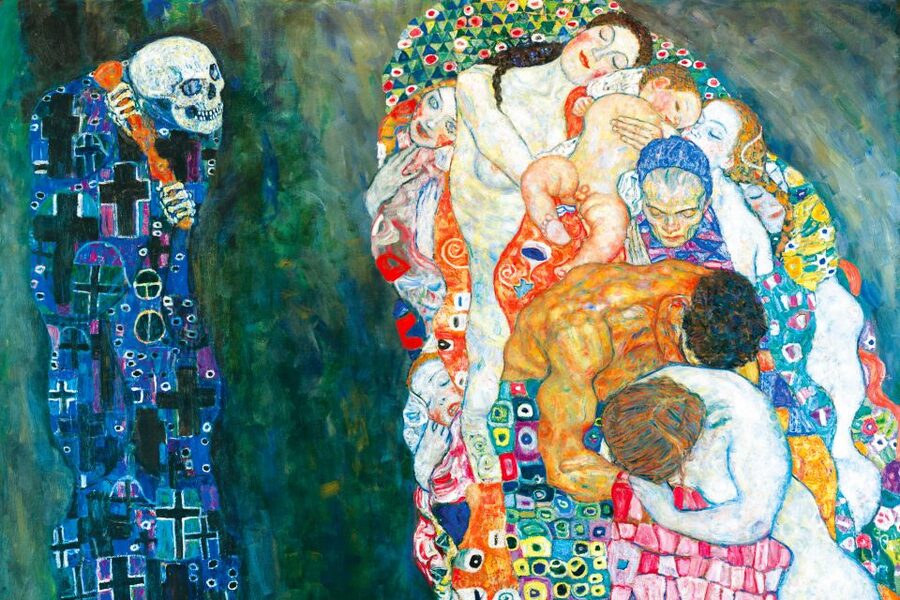
The Leopold places Schiele and Klimt within a wider group, including Oskar Kokoschka and other artists who helped push Vienna away from older traditions.
This matters because Schiele’s sharp style did not appear from nowhere. The museum’s mix of artists and media shows a cultural argument taking shape. Some works emphasize decoration and design. Others use distorted figures, nervous lines, or unusual color to express something less comfortable.
I find this part of the collection helpful for first-time visitors. You do not need a degree in modern art to understand the basic shift. The artists were asking how painting could show feeling, identity, and modern life instead of simply recording respectable appearances.
The displays also keep the visit from becoming too narrow. A person who comes for Schiele can discover Klimt’s place in the Secession, then notice how Kokoschka and other artists carried the break with tradition in different directions.
More museums:
- Vienna: Skip-the-Line Sisi Museum, Hofburg and Gardens Tour
★ 4.8 · 5,918 reviews - Tickets for the Albertina Exhibitions
★ 4.7 · 2,126 reviews - Vienna: Chocolate Workshop in Chocolate Museum w/ Tasting
★ 4.5 · 1,802 reviews - Sigmund Freud Museum Ticket
★ 4.6 · 1,668 reviews
Wiener Werkstätte design beyond the paintings
The museum also includes objects linked to the Wiener Werkstätte, with figures such as Josef Hoffmann and Kolo Moser. This section shows that Vienna’s artistic revolution was not limited to canvases and drawings.
The Wiener Werkstätte treated design as part of daily life. Furniture, decorative objects, and patterns could all carry the same new visual ideas found in painting. These pieces are considered important milestones in international design history, and they give the collection a welcome change of pace.
I enjoy this section because it makes the period feel more complete. Vienna around 1900 was not just a city of painters in studios. It was also a place where artists considered how a chair, household object, or interior should look and function.
Do not rush past these displays on the way to Schiele. They may appeal especially to anyone interested in architecture, furniture, fashion, or graphic design. The variety also helps if your companions are less keen on portraiture and nude studies.
A striking building in the MuseumsQuartier
The Leopold Museum occupies a modern white cube faced with shell limestone. Its pale color recalls the bright buildings along Vienna’s Ringstrasse, including structures where Art Nouveau details can still be seen.
The building’s clean lines contrast with the historic imperial stables around it. That contrast is fitting. The museum is devoted to artists who broke with older traditions, so a contemporary structure inside a historic complex reinforces the theme before you even reach the galleries.
Inside, the atrium is light-filled and spacious. It offers views into the building and unexpected glimpses of Vienna beyond. The architecture is not just a container for art. It gives you pauses between galleries, which can be useful after a concentrated stretch of Schiele’s work.
The panoramic windows are a genuine highlight. You can look toward Maria-Theresien-Platz, the Hofburg, and central Vienna. I would allow a few minutes for these views rather than treating them as a quick photo stop. They connect the museum’s story to the city that produced the movement.
How to plan your one-day admission
The ticket is valid for one day, but this is not a guided tour with a fixed route or group schedule. You set your own pace and decide how much time to give the permanent displays and temporary exhibitions.
The museum is open from 10:00 AM to 6:00 PM daily except Tuesdays. In June, July, and August, it opens every day from 10:00 AM to 6:00 PM. Holidays are also listed as 10:00 AM to 6:00 PM, but I would still check the current schedule before setting out.
A practical visit might look like this:
- Start with the Schiele collection while your attention is fresh.
- Move through Klimt and the other Vienna around 1900 material.
- Spend time with the Wiener Werkstätte objects.
- Visit the temporary exhibition included with admission.
- Finish with the atrium and city views.
Special exhibitions change several times a year and may include important loans from museums and collections around the world. This is where repeat visits make sense. A returning visitor may find a completely different reason to come back, even if the permanent collection is familiar.
The ticket includes admission to the permanent collections and all special exhibitions. It does not include an audio guide, guided tour, food, or drinks. If you want interpretation beyond the wall texts, you will need to arrange that separately.
Is $22 a fair price?
At $22, the ticket is reasonably priced for a museum with a major Schiele collection and access to temporary exhibitions. The value improves when a special exhibition interests you, since you do not pay an extra admission for it.
The online price may not be the cheapest option for every person. A senior, student, or family may find a better deal at the museum door, while the standard online ticket can cost about the same as buying at the entrance. One useful advantage is convenience: you can keep the ticket on your phone and scan the QR code at the entrance.
There has been some inconsistent information about printed tickets, so I would keep your booking available digitally and follow the current instructions shown with your purchase. A past visitor found that the electronic QR code was accepted even when printed tickets had been mentioned.
The skip-the-line label should also be viewed sensibly. The ticket is handy when there is a queue, but the museum may have little or no line at quieter times. In that case, you are paying mainly for advance planning and easy entry, not a dramatic time saving.
Food, comfort, and practical limits
Cafe Leopold is at the museum and works well for a light lunch or a break. If you plan to eat there, booking ahead is sensible, particularly when the MuseumsQuartier is busy.
The building is wheelchair accessible, which makes the modern design easier to navigate than some historic Vienna museums. You should still check current arrangements if you need a particular access service, since the supplied information confirms accessibility but does not describe every facility.
The museum can be a good half-day cultural stop, but the exact length depends on your interest. One person may move through the collection in a couple of hours. Another may linger over Schiele, Klimt, design objects, and the special exhibition for much longer.
The main limitation is scale. Some people find the museum compact and wish the collection were larger. Five floors of mixed art can still make a satisfying visit, but you should not expect the size of a giant national museum.
Who will enjoy the Leopold Museum most?
I would choose this museum if you have a clear interest in Schiele, Klimt, Art Nouveau, Expressionism, or design. It is also a smart choice if you want to understand Vienna’s creative life around 1900 rather than see isolated famous paintings.
It suits repeat visitors to Vienna particularly well. The permanent collection gives you a reliable base, while changing exhibitions provide a fresh reason to return.
Families and mixed-interest groups may find the range useful, although Schiele’s frank nudes and tense portraits are not for every child. People who want a guided explanation should note that tours and audio guides are not included.
If you have only a short time in Vienna and want one famous Klimt painting, compare the Leopold with other museums first. If you want a focused look at the period and the strongest Schiele collection available, the Leopold deserves a place near the top of your list.
Should you book the Leopold Museum ticket?
Book it if Schiele is a priority, if a current special exhibition catches your eye, or if you value the ease of carrying a phone ticket into the MuseumsQuartier. The collection is unusually deep, the Klimt material adds balance, and the city views make the building itself part of the experience.
Skip it if you want only a quick parade of Klimt’s most famous works or if your schedule is so tight that you cannot give the museum more than a brief stop. At $22, it is a fair purchase for serious art interest, but not an automatic bargain for every kind of museum visit.
FAQ
Where is the Leopold Museum located?
The Leopold Museum is in MuseumsQuartier Vienna, in Vienna State, Austria.
What is the Leopold Museum best known for?
It is best known for the world’s largest collection of Egon Schiele’s work and for masterpieces by Gustav Klimt.
What does the ticket include?
The ticket includes admission to the permanent collections and all special exhibitions at the Leopold Museum.
Are special exhibitions included?
Yes. Admission to all special exhibitions is included with this ticket.
Is an audio guide included?
No. The audio guide is not included.
Are guided tours included?
No. Guided tours are not included with the admission ticket.
What are the museum’s opening hours?
The museum is open from 10:00 AM to 6:00 PM daily except Tuesdays. In June, July, and August, it is open every day from 10:00 AM to 6:00 PM. Holidays are listed with the same 10:00 AM to 6:00 PM hours.
Is the Leopold Museum wheelchair accessible?
Yes. The museum is wheelchair accessible.
More Skip-the-Line Tickets
- Vienna: Schönbrunn Palace & Gardens Skip-the-Line Tour
★ 4.7 · 7,739 reviews - Vienna: Skip-the-Line Schönbrunn Palace & Gardens Tour
★ 4.8 · 5,411 reviews - Vienna: Bus & Schönbrunn Palace Skip-the-Line Guided Tour
★ 4.3 · 2,802 reviews - Vienna: Skip-the-Line Entrance Ticket to the Danube Tower
★ 4.5 · 2,303 reviews
Just added around Vienna
- Mobile puzzle rally tour at the Vienna Central Cemetery★ 4.5 · 3 reviews
- RAXI (E-Rickschaw) big private Vienna tour★ 4.5 · 3 reviews
- 8 days European Highlights PRIVATE TOUR from Budapest including Budapest Vienna Prague and Bratislava★ 5.0 · 3 reviews
- Private Transfer from Vienna to Prague with 1 hour Stop in Kutna Hora★ 4.5 · 3 reviews
- Palais Lobkowitz Audio Guide Tour★ 4.0 · 3 reviews
- Private Tour from Vienna to Melk and Dürnstein★ 4.5 · 3 reviews
- Vienna: Designer Fashion Time Capsule Experience★ 5.0 · 3 reviews
- Private day trip from Munich to Eagle’s Nest & Hallstatt★ 4.7 · 3 reviews
Museums, compared.

Skip-the-Line Sisi Museum, Hofburg and Gardens Tour
Read our review →
Vienna Kunsthistorisches Museum Day Admission Ticket
Read our review →

Chocolate Workshop in Chocolate Museum w/ Tasting
Read our review →

St. Stephen’s Cathedral & Dom Museum Wien Tickets
Read our review →
Browse the lists this tour appears in