Reviewed · TOURS
Vienna: Sightseeing Tour in an 8 seats electric classic car
Vienna looks even better from a classic car. This private electric tour gives you a quiet, weather-friendly ride past major sights, with a driver explaining the city as you go. I like the old-fashioned electric car, which adds character without exhaust fumes, and I like the chance to keep the whole family together in one vehicle. The main drawback is seating: people at the back may face the wrong direction and have trouble hearing the commentary.
For a group of up to eight, the $182 price can make good sense, especially if you want a relaxed introduction before exploring on foot. The ride covers an impressive amount in 40 to 60 minutes, but it is still a panorama tour, not a stop-and-explore outing. I would confirm the exact meeting point before setting off, since the details list both Herrengasse 12 and Cafe Mozart at Albertinaplatz.
In This Review
- Key points to know before booking
- Why a classic electric car works well in Vienna
- Starting near Vienna’s grand Ringstrasse
- Palaces, artists, and quiet garden corners
- The Hofburg and Vienna’s imperial center
- Old streets, cafés, and the heart of the city
- Stephansdom and Vienna’s central shopping streets
- What the commentary adds to the ride
- Is $182 good value for your group?
- Who should book this Vienna ride?
- Should you book the electric classic-car tour?
- FAQ
- How long is the Vienna electric classic-car tour?
- How many people can join the private tour?
- What languages are available?
- Where does the tour start?
- Where does the tour end?
- What sights are included on the 60-minute route?
- Is the tour private?
- Can I cancel the booking?
Key points to know before booking
- A private electric classic car keeps your group together: The listed price covers a group of up to eight people, so the per-person cost improves sharply when the car is full.
- The 60-minute route covers central Vienna’s greatest hits: You pass the Opera, Hofburg, Parliament, Rathaus, Stephansdom, Stadtpark, and many grand Ringstrasse buildings.
- The ride works in any weather: The enclosed old-fashioned car offers sightseeing without depending on sunshine.
- The guide drives and provides commentary: English and German are available, giving you a useful introduction to Vienna’s landmarks and culture.
- Back-seat placement matters: One person specifically found it difficult to hear while sitting at the rear against the direction of travel.
- Pickup information deserves a quick check: One set of details names Herrengasse 12, in front of the Radisson Blu Hotel, while the route description says Cafe Mozart at Albertinaplatz 2.
Why a classic electric car works well in Vienna
Vienna is easy to admire from the street. Its grand buildings line broad avenues, formal squares, and the Ringstrasse, so you can see a great deal without climbing stairs or changing trains. A small electric classic car gives the ride a more personal feel than a large sightseeing bus.
The electric motor is a practical touch. You get a quiet, emission-free journey through the center, with fewer distractions while the driver explains what you are seeing. It also suits Vienna’s polished historic center, where a vintage-style vehicle feels at home among palaces, museums, cafés, and monuments.
I would treat this as an orientation tour. In one hour, you can spot the places you want to revisit, learn how the central districts fit together, and decide where to spend the rest of your day. You will not have time to tour each museum or pause at every monument. That is not a flaw, but it is important to book the ride for what it is: a moving overview.
The private format is the real advantage for families and small groups. You are not sharing the route with a large coach party, and the driver can provide commentary in English or German. The vehicle is described as seating up to eight people for the booking, although another description mentions up to ten. I would use eight as the safe planning number and ask the operator about larger groups before paying.
A few more trips of this kind worth comparing:
- Vienna: Vivaldi’s Four Seasons Concert in Karlskirche
★ 4.7 · 14,951 reviews - Vienna: Spanish Riding School Training
★ 3.9 · 9,281 reviews - Vienna: Skip-the-cashier-desk-line Giant Ferris Wheel Ride
★ 4.5 · 7,859 reviews
Starting near Vienna’s grand Ringstrasse
The route takes you through the central part of Vienna, beginning and ending near the Albertina area according to the sightseeing description. The separate meeting-point details give Herrengasse 12, in front of the Radisson Blu Hotel. Since these locations are not the same, check the confirmation carefully before you go.
The first section brings you near the Albertina, one of Vienna’s best-known art museums, and the old city wall. The vanished fortifications help explain the city’s shape. Vienna’s historic center was once tightly protected, then opened outward as the city expanded. That change made room for the Ringstrasse and its grand public buildings.
You also pass the Vienna State Opera, one of the city’s major music landmarks. Even from the car, the building helps set the tone for the tour: Vienna’s center is not just a collection of pretty façades. It was shaped by imperial power, music, art, and public ceremony.
The driver points out the Ringstrasse, described here as the world’s longest boulevard street. That wording is promotional, so I would not book the tour for the claim itself. The useful point is that the Ringstrasse forms a broad circuit around the old center, lined with many of the buildings you will see during the ride.
Palaces, artists, and quiet garden corners
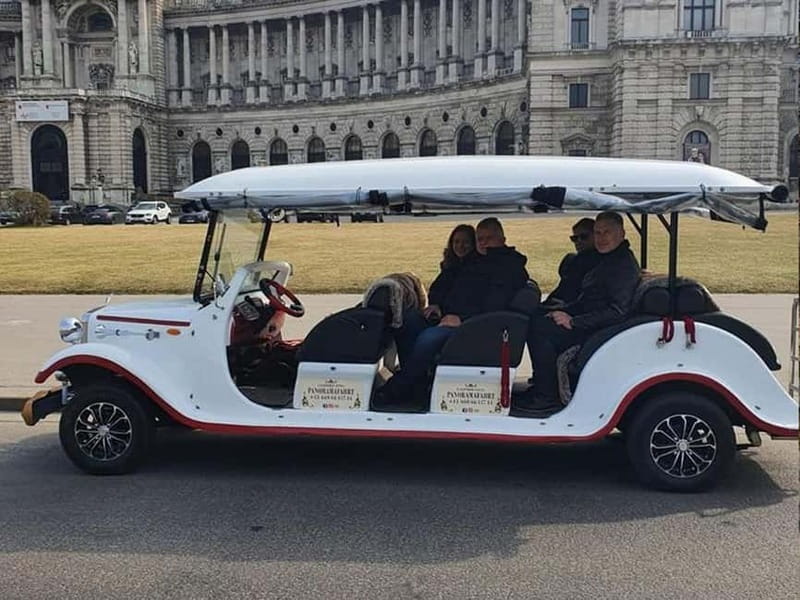
The route continues past Palais Schy, the Goethe Monument, the Schiller Monument, and the Academy of Fine Arts. These stops give the tour a cultural focus beyond the most obvious imperial sights. Goethe and Schiller represent the German literary tradition, while the academy points to Vienna’s long connection with painting and formal art education.
You then pass the Burggarten, the Palmenhaus, and the Butterfly House. The Burggarten is a former imperial garden, while the glass Palm House adds a softer, more ornamental note to the grand center. The Butterfly House is another reminder that Vienna sightseeing is not limited to palaces and government buildings.
Mozart’s monument follows, along with the Neue Burgtor and Heldenplatz. This is one of the most memorable parts of the route because the spaces are broad and ceremonial. Heldenplatz sits beside the Hofburg, the former imperial palace complex, and gives you a strong sense of the scale of Habsburg Vienna.
The car also passes the National Library, Weltmuseum, the presidential palace, and statues of Prince Eugene, Archduke Charles, and Maria Theresa. You may not remember every name after a single ride, but the sequence shows how Vienna uses monuments and public buildings to tell its political story.
The Hofburg and Vienna’s imperial center
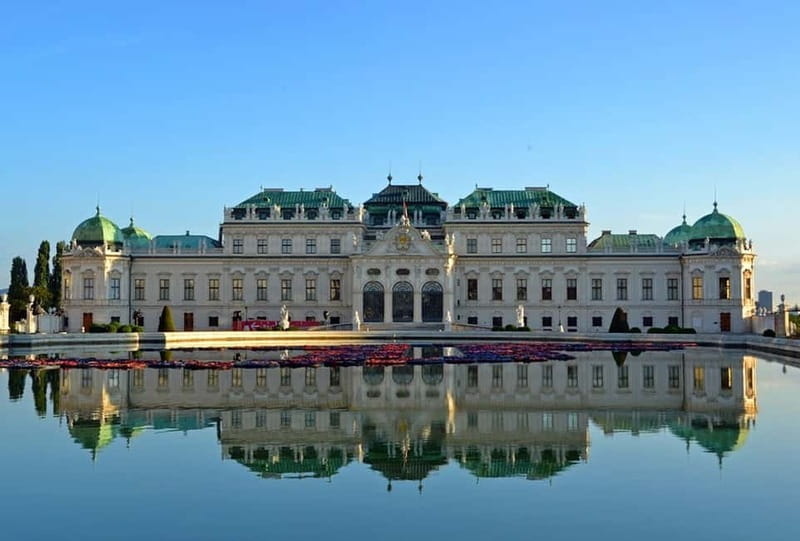
The Hofburg is the heart of the central route. It was the seat of the Habsburg rulers and now contains several important institutions and museums. From the car, you get an architectural overview rather than an indoor visit, which is useful if your schedule is short or your group includes people who do not want a museum-heavy day.
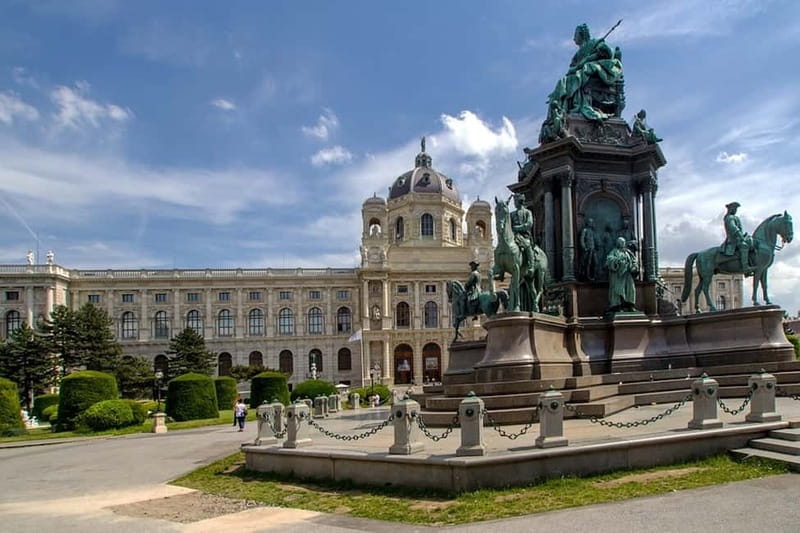
The Natural History Museum and Kunsthistorisches Museum appear across from one another near Maria-Theresien-Platz. Their matching façades create one of Vienna’s most recognizable urban spaces. Even if you do not enter either museum, the pair helps you understand the city’s imperial taste for grand, carefully planned public architecture.
You also pass Palais Epstein, Parliament, the Burgtheater, Rathaus, and the University. This stretch is a strong reason to choose the 60-minute option. The buildings come one after another, and each serves a different purpose: lawmaking, theater, city government, and higher education.
The Parliament building represents the political side of the Ringstrasse. The Burgtheater brings the performing arts into the picture, while Rathaus and the University add civic and academic weight. Seeing all of them in one ride helps you understand why walking the Ringstrasse can take much longer than expected.
A completely different kind of day out in Vienna:
- Vienna: Schönbrunn Palace & Gardens Skip-the-Line Tour
★ 4.7 · 7,739 reviews - Vienna: Light of Creation Votive Church Immersive Light Show
★ 4.8 · 6,779 reviews - Vienna Spanish Riding School Guided Tour
★ 4.7 · 6,765 reviews - Vienna: Classical Concert in the World-Famous Musikverein
★ 4.6 · 6,673 reviews
Old streets, cafés, and the heart of the city
After the large Ringstrasse buildings, the route turns toward older central streets and smaller landmarks. You pass the Liebenberg Monument, another stretch of the old city wall, and the Drei-Mädel-Haus. You also see one of the houses connected with Beethoven.
The Beethoven reference is particularly useful for music lovers, though the tour does not include an interior visit. Vienna’s musical identity is built into its streets, monuments, concert halls, cafés, and former residences. A quick drive lets you mark these places for a later visit.
The route then includes Palais Daum Kinski, Palais Harrach, Palais Ferstel, and Café Central. Palais Ferstel is especially associated with the grand café tradition of Vienna. Café Central is one of the city’s famous historic coffeehouses, and even a brief view from the vehicle can help you recognize it when you return on foot.
The car continues through Am Hof, past the Hohe Brücke, Salzgries, Marc-Aurel-Strasse, and Hoher Markt. This section feels more like the old urban core than the wide imperial boulevard. Streets tighten, landmarks become closer together, and the city’s layers are easier to see.
At Hoher Markt, the Wedding Fountain and the Anker Clock are key sights. The Anker Clock is an ornate historic clock known for its moving figures, although you should not expect to watch its full performance during a moving vehicle tour. The value here is spotting it and learning where to return if you want a closer look.
Stephansdom and Vienna’s central shopping streets
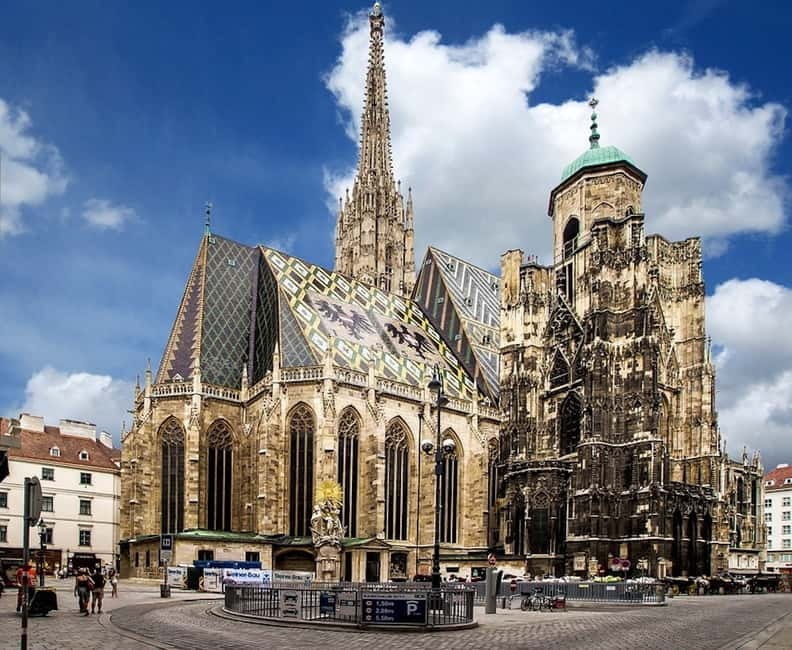
Stephansdom is the route’s major church landmark. Its patterned roof and tall tower are among Vienna’s most familiar sights, and seeing it from the car gives you a useful first impression of its place in the city center.
The car continues along Wollzeile, then toward Stadtpark. Wollzeile connects the cathedral area with other central streets and shops. Stadtpark provides a change of pace, with open green space inside the city and the famous Johann Strauss monument.
The Strauss monument is one of the tour’s most photogenic listed sights, but the moving car may not give you a long chance to study it. If you want a close photo, note its location and return later on foot. This is a recurring theme on the tour: the vehicle helps you find places, while walking gives you time to appreciate them.
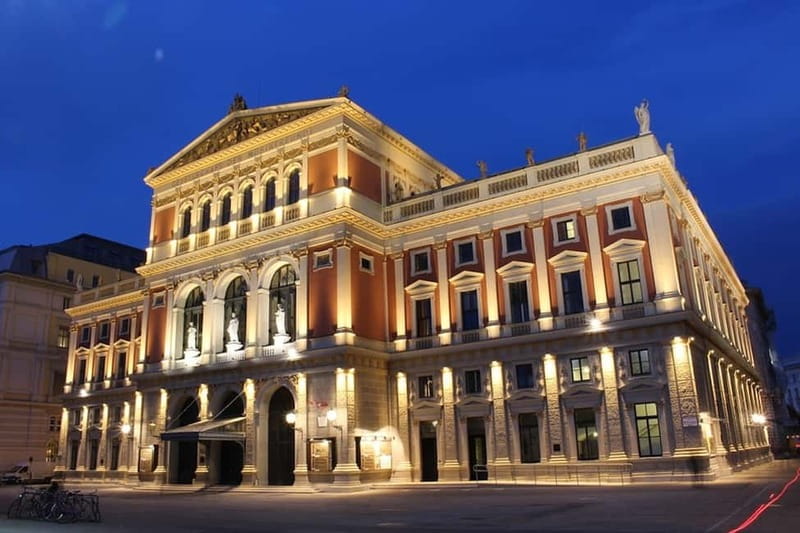
The final section includes Kursalon Hübner, Schwarzenbergplatz, Café Schwarzenberg, the Musikverein, Hotel Imperial, Grand Hotel, Hotel Bristol, the State Opera, and Hotel Sacher. This is a fine finish for anyone interested in Vienna’s music and café culture.
The Musikverein is one of the city’s celebrated concert halls. The hotels and cafés around the Opera show another side of Vienna, one built around grand travel, evening concerts, formal dining, and old coffeehouse traditions. The ride returns toward the Albertina and Cafe Mozart area.
What the commentary adds to the ride
The driver provides the tour and audio commentary, in English or German. That means you are not simply being transported past buildings with no context. The explanations help connect names, monuments, and streets to Vienna’s past and present.
The quality of a short city tour often depends heavily on the driver’s manner. The available feedback includes a strong five-star account describing the guide as very nice and friendly, with a great deal seen and heard during the ride. That is the kind of guide you want here: someone who keeps the tour warm and understandable rather than turning it into a list of dates.
There is one clear practical warning. A three-star assessment points out that a person sitting at the back, facing against the direction of travel, may not hear the explanations. If you have children, older relatives, or anyone who depends on clear audio, place that person where the driver’s voice or speaker can be heard best. You can also ask about seating before departure.
The tour is private, so you can focus on your own group rather than keeping up with strangers. Still, private does not mean fully flexible. The supplied information describes a set route and a return to the meeting point, not hop-on, hop-off service or extended stops.
Is $182 good value for your group?
The price is $182 per group of up to eight. That works out to about $23 per person for eight people, $30 per person for six, and about $46 per person for four. For a full family or friend group, that is a fair way to get a private introduction to the center.
For two people, the value is less obvious. You are paying for privacy, the unusual vehicle, and the comfort of a dedicated ride rather than simply buying a low-cost public transport ticket. If you prefer museums, long walks, or detailed historical talks, you may get more from spending the same money on another type of activity.
The 40-minute to one-hour duration also affects the price calculation. Choose the 60-minute option if available and if this is your main city overview. The longer route includes the widest range of sights, from the Albertina and Opera to Stephansdom, Stadtpark, and the concert halls.
The tour is also useful on a rainy or cold day. You can see a large portion of central Vienna without committing to a long outdoor walk. That weather flexibility adds real value, particularly for families or anyone who wants to save energy for an evening concert.
Free cancellation up to 24 hours before the activity and reserve-now, pay-later booking make planning easier. Keep in mind that the meeting-point discrepancy still needs attention. A flexible booking policy does not replace confirming where the car actually waits.
Who should book this Vienna ride?
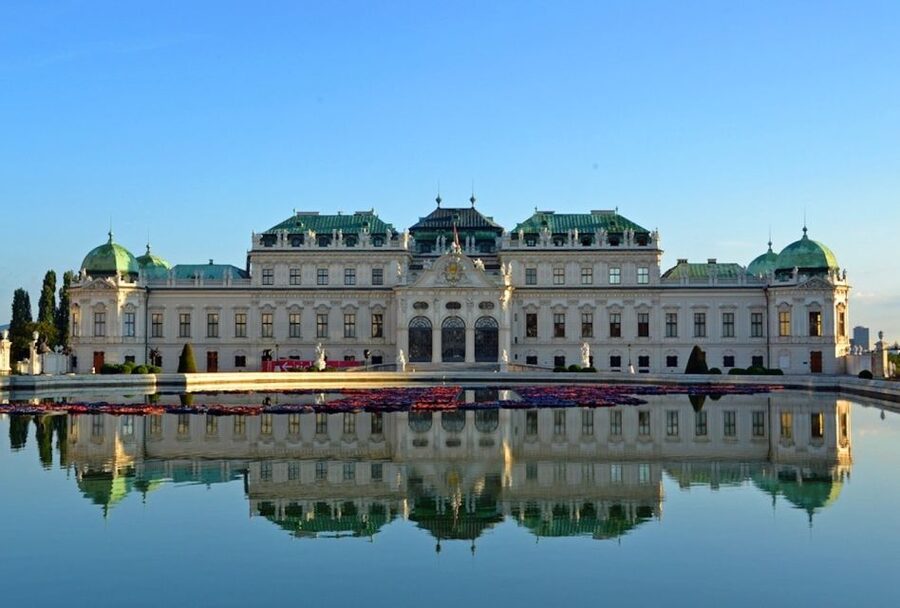
I would recommend it most strongly to families, couples traveling with relatives, and small groups who want to stay together. The private vehicle avoids splitting up, and the ride offers a gentle way to see many landmarks without a demanding walk.
It also suits first-time visitors who want to get their bearings quickly. After the tour, you can choose which places deserve more time: the Hofburg, the museums, Stephansdom, a coffeehouse, or a concert venue.
The tour may be less suitable if you want frequent stops, interior access, or long photo breaks. The itinerary is packed, and most sights are viewed from the car. You should also think carefully about seating if someone in your group may struggle to hear commentary from the back.
English and German are the listed languages. If your group needs another language, the available information does not confirm that one is offered, so do not assume it.
Should you book the electric classic-car tour?
Book it if you want a private, comfortable orientation ride through Vienna’s central sights, especially with a group of four to eight people. The quiet electric vehicle, broad itinerary, friendly guide experience, and all-weather design make it a pleasant first look at the city.
I would choose the 60-minute tour, confirm the pickup location, and request a front or easy-to-hear seat. If you want to explore each landmark in depth, use this as a scouting trip, then return on foot. At 4.6 out of 5 from the available ratings, it looks like a well-liked introduction with one sensible caveat about rear seating and commentary.
FAQ
How long is the Vienna electric classic-car tour?
The activity lasts between 40 minutes and one hour. A 60-minute tour is available, subject to the starting times shown when you check availability.
How many people can join the private tour?
The booking information lists a private group of up to eight people. Another description mentions up to ten, so groups larger than eight should confirm capacity with E-Oldtimer-Tours before booking.
What languages are available?
The driver and commentary are available in English and German.
Where does the tour start?
The meeting-point information gives Herrengasse 12, in front of the Radisson Blu Hotel, in 1010 Vienna. The route description says the tour starts and ends at Cafe Mozart, Albertinaplatz 2. Confirm the exact pickup location before departure.
Where does the tour end?
The activity ends back at the meeting point.
What sights are included on the 60-minute route?
The route includes the Albertina, Vienna State Opera, Ringstrasse, Hofburg, Heldenplatz, National Library, Parliament, Burgtheater, Rathaus, University, Stephansdom, Stadtpark, Musikverein, Hotel Sacher, and many other central landmarks.
Is the tour private?
Yes. The activity is listed as a private group experience.
Can I cancel the booking?
You can cancel up to 24 hours in advance for a full refund. Reserve-now, pay-later booking is also available.
Just added around Vienna
- Mobile puzzle rally tour at the Vienna Central Cemetery★ 4.5 · 3 reviews
- 8 days European Highlights PRIVATE TOUR from Budapest including Budapest Vienna Prague and Bratislava★ 5.0 · 3 reviews
- RAXI (E-Rickschaw) big private Vienna tour★ 4.5 · 3 reviews
- Private Transfer from Vienna to Prague with 1 hour Stop in Kutna Hora★ 4.5 · 3 reviews
- Palais Lobkowitz Audio Guide Tour★ 4.0 · 3 reviews
- Private Tour from Vienna to Melk and Dürnstein★ 4.5 · 3 reviews
- Vienna: Designer Fashion Time Capsule Experience★ 5.0 · 3 reviews
- Vienna Sight & Gourmet Tour – individual private tour★ 4.5 · 3 reviews
Tours, compared.

Schönbrunn Palace & Gardens Skip-the-Line Tour
Read our review →

Skip-the-Line Sisi Museum, Hofburg and Gardens Tour
Read our review →
Skip-the-Line Schönbrunn Palace & Gardens Tour
Read our review →

Guided Walking Tour of City Center Highlights
Read our review →